• ABOUT
  • BIRDING 2018
  • Birding 2019
  • BLOG POSTS
  • Butterflies 2018
  • Resources

earthstar

~ a celebration of nature

earthstar

Tag Archives: Blue-tailed damselfly

Three blues

11 Wednesday May 2022

Posted by sconzani in nature

≈ Leave a comment

Tags

Azure damselfly, Blue-tailed damselfly, British damselflies, Coenagrion puella, Common blue damselfly, Enallagma cyathigerum, Ischnura elegans, Odonata

After spotting my first damselflies of the year (Large reds) on 21 April, there was quite a lull (probably dull-weather-induced) until any further species appeared. But, on a warmer, sunnier day last week (3 May), all three of the more common blue species appeared together. They are:

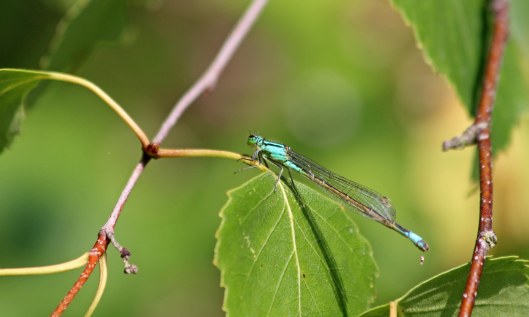
220511 azure damselfly

Azure damselfly (Coenagrion puella)

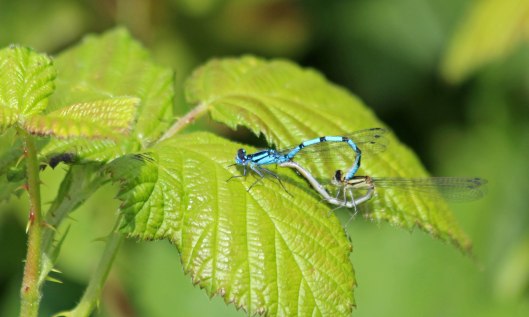
220511 common blue damselfly

Common blue damselfly (Enallagma cyathigerum)

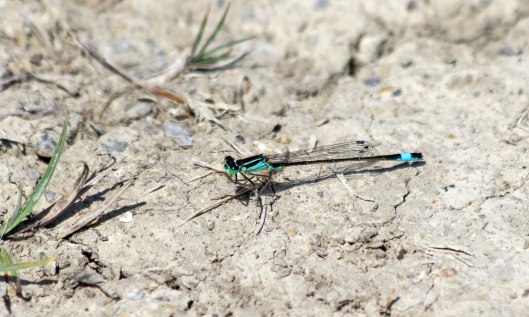
220511 blue-tailed damselfly

Blue-tailed damselfly (Ischnura elegans)

Like Loading...

192/366 Damsels and dragons

10 Friday Jul 2020

Posted by sconzani in insects, nature

≈ 2 Comments

Tags

Blue-tailed damselfly, British damselflies, British dragonflies, Broad-bodied Chaser, Common blue damselfly, Common Darter, Emperor dragonfly

Last summer was so hot and dry that many of the local ponds dried up completely, which may be why I’m not seeing as many damselflies and dragonflies as I have in previous years – perhaps their larvae didn’t survive that dry period. Here are a few I have seen in recent weeks …

200710 blue-tailed damselfly

Blue-tailed damselfly: though the females come in several colour forms, both they and the males, like this one, have the blue spot on their lower abdomen, which is how they got their name.

200710 common blue immature female
200710 common blue male

Common blue damselflies, here an immature female, a male and, below, a pair in classic mating pose.

200710 common blues mating200710 broad-bodied chaser

And the dragons: a glowing female Broad-bodied chaser

200710 common darter

I’ve seen my first two Common darters in recent days, which is late, as they can appear as early as May.

200710 emperor female ovipositing

A female Emperor laying her eggs (ovipositing) under the vegetation of a local pond. Let’s hope that pond retains enough water this year for her offspring to survive the winter months.

Like Loading...

196/365 Ether’s nild

15 Monday Jul 2019

Posted by sconzani in 365DaysWildin2019, insects, nature

≈ 4 Comments

Tags

#365DaysWild, Blue-tailed damselfly, British damselflies, damselfly, damselfly and devil, Ischnura elegans rufescens

The damselfly and the devil – not a combination I’d have thought of but this, from Paul Evans, Field Notes from the Edge: Journeys through Britain’s secret wilderness (Rider, London, 2015) is fascinating:

In her novel Precious Bane, Mary Webb … used a Shropshire name for damselfly, ether’s nild: the ether or adder’s nild or needle because of its shape and stitching flight. Country lore had it that damselflies hovered over an adder coiled in the heath or bog as lookouts for their venomous master or mistress … Elsewhere called the Devil’s darning-needle, naughty children, scolding women and swearing men were warned that the damselfly would come and sew their eyes and mouths shut if they did not mend their ways.

190715 blue-tailed damselfly

The damselflies in my images are both Blue-tailed damselflies (Ischnura elegans). The females come in five different colour variations – this, with the reddish thorax, is called rufescens.

190715 blue-tailed damselfly rufescens

Like Loading...

Lively Lavernock

12 Tuesday Jun 2018

Posted by sconzani in insects, nature

≈ Leave a comment

Tags

#30DaysWild, 30 Days Wild, Blue-tailed damselfly, Broad-bodied Chaser, Common blue butterfly, Emperor dragonfly, Large Red damselfly, Large skipper, Lavernock Nature Reserve, Six-spot burnet, Small copper, Speckled wood

Day 12 of my #30DaysWild was spent wandering around the nature reserve at Lavernock. Though it’s not yet the riot of colour it will be in another month or so, many wildflowers are already blooming, including the Common spotted and Pyramidal orchids, and plenty of critters were feasting on nectar and pollen.

180612 creature 1
180612 creature 2
180612 Pyramidal & Common spotted orchids

Today’s highlights included my first Six-spot burnet moth of the year, which was dazzling in the bright sunlight, and my second Small copper butterfly, a rather tatty looking specimen but still lovely to see. The Large skippers, Common blues and Speckled woods were abundant, and I also saw whites, a Brimstone and several Meadow brown butterflies.

180612 2 6-spot burnet moth
180612 3 6-spot burnet moth

180612 1 small copper

180612 Large skipper
180612 Speckled wood
180612 Common blue

The pond was alive with dragon- and damselfly action, with both a female Emperor and a female Broad-bodied chaser ovipositing. There were three male Broad-bodied chasers constantly squabbling over territory and a Four-spotted chaser trying to avoid them all. Damselflies included Large reds, Common blues, Azures and Blue-tailed. ’Twas a very lively place today!

180612 Broad-bodied chaser male180612 Broad-bodied chaser emale

180612 Blue-tailed damselfly
180612 Emperor female
180612 Large red damselfly
Like Loading...

National Dragonfly Week: Blue-tailed Damselfly

28 Thursday Jul 2016

Posted by sconzani in insects, nature

≈ 2 Comments

Tags

Blue-tailed damselfly, damselflies, damselfly, exuvia, Ischnura elegans, National Dragonfly Week 2016

Let’s continue National Dragonfly Week today with a delightful damselfly, the little Blue-tailed (Ischnura elegans), another very common damselfly that can be seen flying throughout Britain from May through to September. Though there is also a Scarce blue-tailed damselfly, it is, well, scarce, so chances are if you see a dark-coloured damsel with that distinctive all-blue segment towards the end of its body, it will be the Blue-tailed damselfly. The females are a little more tricky, as their abdomens and tail spots can be different colours – pink, violet, pale green, pale brown – depending on their type and state of maturity.

160728 blue-tailed (1)

160728 blue-tailed (2)

I don’t have any female photos so thought I would show you, instead, earlier stages in a damselfly’s lifecycle. The eggs the females lay in their local pond, lake, or slow-moving stream or river hatch into nymphs that live in that water, preying on other larvae and small insects. After as little as six months or as long as two years, and having gone through a series of skin moults as their bodies grow in size, the nymphs leave the water and climb a plant stem, branch or tree trunk, where they undergo the ultimate change, emerging from their final skin to fly as an adult.

160728 damsel exuvia
160728 damsel new

As you can see above, they are often very pale when they emerge as it takes them a while to colour up. You can often find the discarded skin cases (known as exuvia) near watery places – I found a tree alongside my local lake that was covered in them.

Like Loading...

About me

sconzani

sconzani

I'm a writer and photographer; researcher and blogger; birder and nature lover; countryside rambler and city strider; volunteer and biodiversity recorder.

View Full Profile →

Follow earthstar on WordPress.com

Enter your email address to follow this blog and receive notifications of new posts by email.

Recent blog posts

  • Weevil: Mecinus pyraster January 10, 2026
  • Red in beak and claw January 9, 2026
  • Who’s watching who? January 8, 2026
  • Springtail: Orchesella cincta January 7, 2026
  • A good year for Redwings January 6, 2026

From the archives

COPYRIGHT

Unless otherwise acknowledged, the text and photographs on this blog are my own and are subject to international copyright. Nothing may be downloaded or copied without my permission.

Fellow Earth Stars!

  • Unknown's avatar
  • Unknown's avatar
  • Unknown's avatar
  • Unknown's avatar
  • Unknown's avatar
  • Unknown's avatar
  • Unknown's avatar
  • Unknown's avatar
  • Unknown's avatar
  • Unknown's avatar
  • Unknown's avatar
  • Unknown's avatar
  • Unknown's avatar
  • Unknown's avatar
  • Unknown's avatar
  • Unknown's avatar
  • Unknown's avatar
  • Unknown's avatar
  • Unknown's avatar
  • Unknown's avatar
  • Unknown's avatar
  • Unknown's avatar
  • Unknown's avatar
  • Unknown's avatar
  • Unknown's avatar
  • Unknown's avatar
  • Unknown's avatar
  • Unknown's avatar
  • Unknown's avatar
  • Unknown's avatar
  • Unknown's avatar
  • Unknown's avatar
  • Unknown's avatar
  • Unknown's avatar
  • Unknown's avatar
  • Unknown's avatar
  • Unknown's avatar
  • Unknown's avatar
  • Unknown's avatar
  • Unknown's avatar
  • Unknown's avatar
  • Unknown's avatar
  • Unknown's avatar
  • Unknown's avatar
  • Unknown's avatar
  • Unknown's avatar
  • Unknown's avatar
  • Unknown's avatar
  • Unknown's avatar
  • Unknown's avatar

Blog at WordPress.com.

Privacy & Cookies: This site uses cookies. By continuing to use this website, you agree to their use.
To find out more, including how to control cookies, see here: Cookie Policy
  • Subscribe Subscribed
    • earthstar
    • Join 669 other subscribers
    • Already have a WordPress.com account? Log in now.
    • earthstar
    • Subscribe Subscribed
    • Sign up
    • Log in
    • Report this content
    • View site in Reader
    • Manage subscriptions
    • Collapse this bar
 

Loading Comments...
 

You must be logged in to post a comment.

    %d