• ABOUT
  • BIRDING 2018
  • Birding 2019
  • BLOG POSTS
  • Butterflies 2018
  • Resources

earthstar

~ a celebration of nature

earthstar

Tag Archives: British birds

The Herring gull alarm clock

13 Saturday Aug 2016

Posted by sconzani in birds, nature

≈ 7 Comments

Tags

birding, birdwatching, British birds, Herring gull, Larus argentatus

When I went to stay with my friend Jill in East Sussex this week I didn’t expect to be woken early each morning by Herring gulls (scientific name Larus argentatus) screeching and squawking on hers and her neighbours’ rooftops as she lives several miles from the sea as the gull flies and nowhere near something that might attract them, like a rubbish tip. It seems the gulls have started moving inland in her area and she’s certainly noticed more of them about in the past year or so. According to the RSPB, Herring gull numbers have been declining in recent years so perhaps they are expanding their range in search of food.
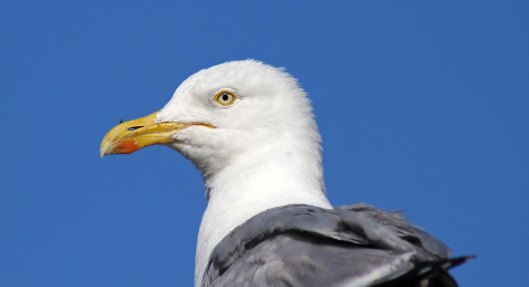
160813 herring gulls (7)

I enjoyed hearing them as it made me feel like I was on holiday at the seaside, though they could be very cheeky. Although Jill doesn’t feed them, they do scavenge food put out for the smaller birds, and one rather insistent gull has taken to tapping at the French doors in her bedroom in the morning in the hope of getting some breakfast. And I took these photos of the same (or another, equally brazen bird) outside the back door, giving me a very imperious ‘feed me now’ look, then mewing like a young gull when the glare didn’t produce the desired results. I’m afraid it went away hungry.

160813 herring gulls (1)
160813 herring gulls (2)
160813 herring gulls (3)
160813 herring gulls (4)
160813 herring gulls (5)
160813 herring gulls (6)
Like Loading...

The ‘Ugly ducklings’ grow up

01 Monday Aug 2016

Posted by sconzani in birds, nature

≈ 6 Comments

Tags

birding, birdwatching, British birds, cygnet, Hans Christian Andersen, Mute swan, swan, The Ugly Duckling

You know Hans Christian Andersen’s story of ‘The Ugly Duckling’, right? The unlovely little bird, who is bullied and abused by his farmyard companions because he doesn’t look like the other ducklings, grows up to become not just another duck but, instead, a very beautiful swan. It was one of my favourite stories as a child, perhaps because I was bullied at a young age for wearing spectacles – not common when I was a kid – and I hoped, in vain, for a similar transformation.

160801 cygnets (1)

Ever since, I have had a special love of swans, and it has been wonderful as the summer has progressed to watch the little Mute Swan cygnets at Roath Park lake grow into their beauty. Here are just a few of the very many photos in my swan album.

160801 cygnets (2)
160801 cygnets (3)

160801 cygnets (4)160801 cygnets (5)

Like Loading...

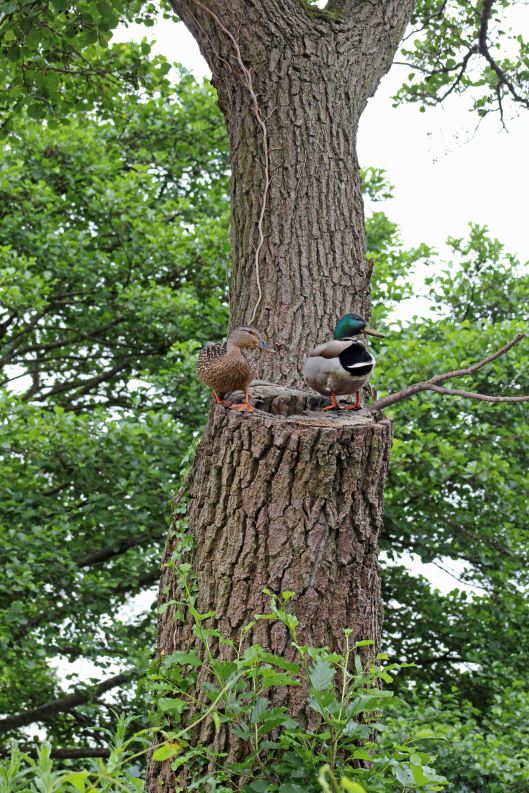
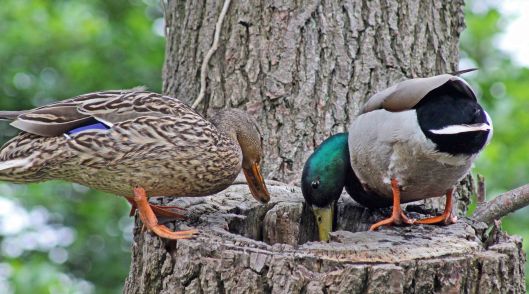
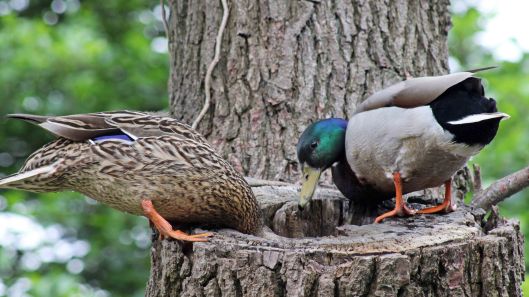
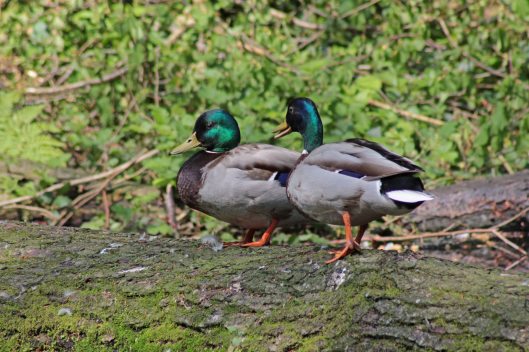
Two mallards up a tree

27 Monday Jun 2016

Posted by sconzani in birds, nature

≈ 11 Comments

Tags

birding, birdwatching, British birds, duck, Mallard

160627 mallards in tree (1)

This was the scene I encountered during a recent walk around Roath Park Lake. It immediately struck me as odd as you almost never see mallards in trees, so what on earth were they doing? There’s a story here. I was on my way to catch a train so couldn’t linger long, so I don’t know what the story is, but there’s definitely a story. Feel free to post your suggestions in the comments below. Sensible or silly, I’d welcome your ideas.
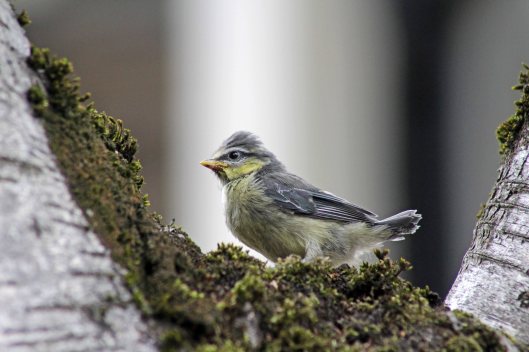
160627 mallards in tree (2)160627 mallards in tree (3)160627 mallards in tree (5)160627 mallards in tree (6)

Like Loading...

A heron learns to fish

18 Saturday Jun 2016

Posted by sconzani in birds, nature

≈ 12 Comments

Tags

birding, birdwatching, British birds, Grey heron, heron fishing

It must be hard being a young heron. When they’re still in the nest, their food comes via home delivery, courtesy of mum and dad, but once they’re fledged, what then? It’s not like they can go to school to learn how to fish. There’s no one to teach them stealth, no lessons in stillness or focus, no tutors to advise on the best way to sneak up on a fish or a frog. What if they have poor eyesight, or two left feet? What if their natural inclination is to blunder noisily through the shallows? The reality is it’s just practice, practice, practice, all day long.

160619 heron fishing (1)
160619 heron fishing (2)
160619 heron fishing (3)
160619 heron fishing (4)
160619 heron fishing (5)
160619 heron fishing (6)
160619 heron fishing (7)
160619 heron fishing (8)
160619 heron fishing (9)
160619 heron fishing (10)

Luckily, it seems practice really does make perfect.

160619 heron fishing (11)

Like Loading...

‘Dedicated Naturalist’: The Stormcock

14 Tuesday Jun 2016

Posted by sconzani in 'Dedicated Naturalist' Project, birds, nature

≈ 6 Comments

Tags

birding, birdwatching, British birds, Dr Mary Gillham, Mistle thrush

A snippet from my volunteer work on the ‘Dedicated Naturalist’ Project, helping to decipher and digitise, record and publicise the life’s work of naturalist extraordinaire, Dr Mary Gillham.

Written in her fifth form year at Ealing Grammar School for Girls, Mary’s poignant poem about a mistle thrush was subsequently published in the school’s annual yearbook.

The Stormcock
The thunder roared from the clouds on high;
The lightning flashed across the darkened sky;
The woods were lone and drear and drenched with rain,
And not a soul passed by along the lane.

The raindrops glistened on the leaves like gems,
The flowers drooped low upon their slender stems,
And all the birds save one had gone to rest
While this one lingered on beside his nest.

It was a missel-thrush that perched aloft,
With speckled breast, bright eyes, and plumage soft;
His song rose through the branches clear and sweet,
Above the noise of wind and rain and sleet.

160602 mistle thrush (3)

The hen bird on the nest beside her mate
Had heard him singing frequently of late,
But still she listened with attentive air
While he sang gaily on without a care.

His song defied the tumult of the storm:
The eggs within the nest were safe and warm,
And that was what he cared for most of all,
And so his praise came forth in joyous call.

Despite the elements that tried to quell
The joyous sounds that from his being swell,
The bird sang on through wind and sleet and rain
Until the storm at last began to wane.

160602 mistle thrush (1)
160602 mistle thrush (2)

You can follow our progress with this project on Facebook and on Twitter. A website will follow soon.

Like Loading...

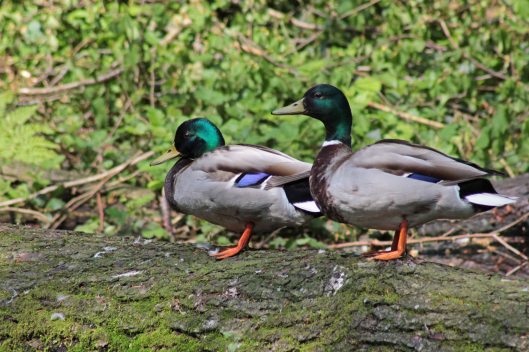
The mallard muppets

28 Saturday May 2016

Posted by sconzani in birds, nature

≈ 2 Comments

Tags

birding, birdwatching, British birds, Mallard

160528 mallards (1)

Bert: ‘Ernie, don’t look now but there’s a woman over there with one those gadgets with the long black tube attached. What do you think she’s doing?’

160528 mallards (2)

Ernie: ‘I don’t know, Bert. You see a lot of humans with them, and they point them right at you. Total invasion of privacy, I reckon’
Bert: ‘Maybe if we look the other way, she’ll stop doing it.’

160528 mallards (3)

Like Loading...

Baby, you’re adorable!

26 Thursday May 2016

Posted by sconzani in birds, nature

≈ 5 Comments

Tags

baby birds, birding, birdwatching, Blue tit, British birds, chicks, Coot, duckling, gosling, Greylag goose, Mallard, nuthatch

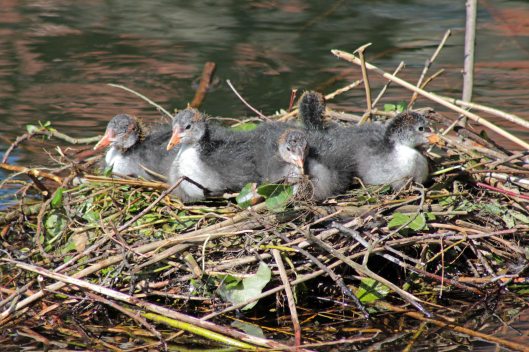
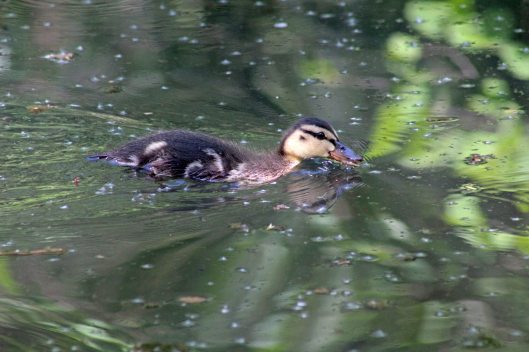
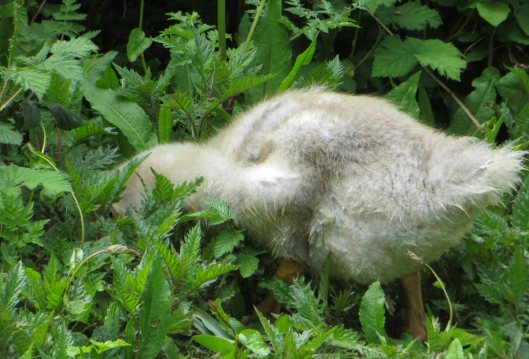
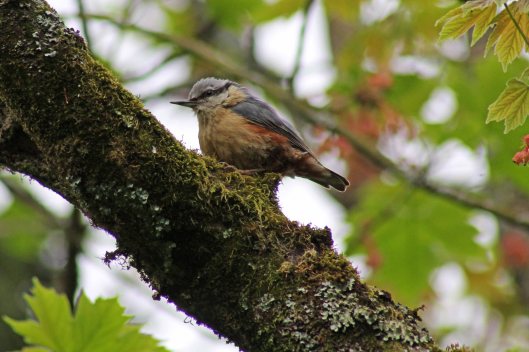
After having the very upsetting experience of seeing a Lesser black-backed gull grab and devour, whole, a little coot chick earlier this week, I want to celebrate today the birds that have made it … so far. There seem so many obstacles in the paths of baby birds, so many predators looking for an easy meal, problems with inexperienced parents not caring for their chicks properly, and also, in some cases, a lack of sufficient food. It seems a miracle any of them make it to adulthood. Here are some that are doing better than most.

IMG_0447

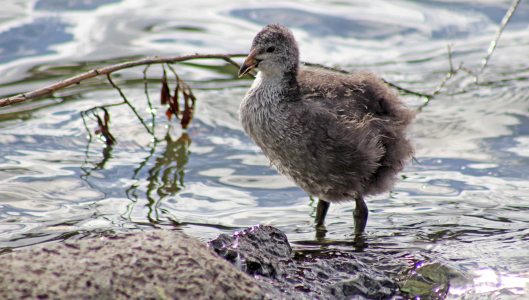
These Coot siblings are doing well, and are looking much more adult now they’ve lost their orange and red head feathers.

IMG_1038

This little Mallard duckling was so cute, scooting along quickly, feeding actively, keeping closely behind mum. Fingers crossed for him/her!

IMG_1274

You’ve heard of the ostrich hiding its head in the sand? Well, it seems this Greylag gosling is trying the ‘hiding its head in the nettles’ version.

IMG_1894

Baby Blue tit was sitting on the pavement outside my house yesterday but quickly, though slightly erratically, fluttered up to the nearest tree as I approached. Luckily, one of its parents was nearby and flew down with some food. Its big eyes make it look surprised by the big wide world outside the nest!

IMG_1909

This Nuthatch is the most advanced chick I’ve seen and was actively feeding itself on a tree in a local park, though it was stopping often to preen. Moulting its baby fluff must be an itchy process.

Like Loading...

Moorhen multiplication

19 Thursday May 2016

Posted by sconzani in birds, nature, spring

≈ Leave a comment

Tags

birding, birdwatching, British birds, chicks, Forest Farm Nature Reserve, Gallinula chloropus, Moorhen

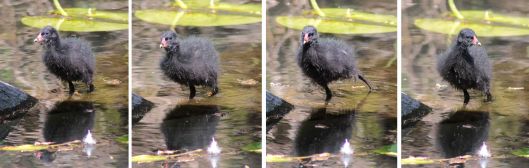
Are you ready for more cute bird babies? The Moorhen (Gallinula chloropus) chicks at Forest Farm Nature Reserve last Friday were the first I’d seen, so I just had to take lots of photos of them. They looked a lot like coot chicks to me, except perhaps with even bigger feet!

160521 moorhen chicks (2)

According to the RSPB website there are around 270,000 breeding pairs in Britain so the chances of seeing them are fairly good, especially in lowland areas. The adults build a nest on the ground, in amongst thick shrubs for protection, and lay between 5 and 8 eggs that take about three weeks to incubate, with both male and female taking turns on the nest.

160521 moorhen chicks (5)
160521 moorhen chicks (3)
160521 moorhen chicks (4)
160521 moorhen chicks (6)

The parents also share the feeding of their offspring, though the chicks are able to feed themselves after a few days, and are fully fledged 6 to 7 weeks after hatching. A few weeks after that, the chicks head off on their own and the parents will often raise a second brood. That sounds like an awful lot of moorhens in the making but, sadly, as with most birds, predators take their toll.

160521 moorhen chicks (1)

chick callisthenics?

If you want to know more about moorhens, I found a delightful article online here. Meantime, I hope my photos make you smile as much as I did while watching these little cuties.

Like Loading...

Pigeons: ‘rats with wings’?

14 Saturday May 2016

Posted by sconzani in birds, nature

≈ 4 Comments

Tags

birding, birdwatching, British birds, domestic pigeon, feral pigeon, pigeon, rats with wings

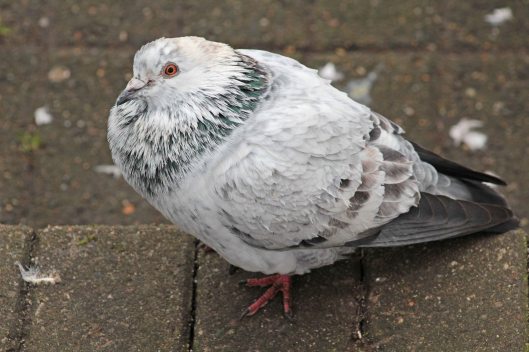
Humans have a love-hate relationship with the Feral pigeon (Columba livia domestica). On the one hand, we love to feed them – until recently, crowds would flock to London’s Trafalgar Square to be photographed feeding the birds (an activity now banned), and what child didn’t learn to love birds through feeding pigeons (or ducks). On the other hand, we hate the mess they make and spend millions defacing our buildings with anti-pigeon spikes and wires to stop pigeons roosting on their handy ledges.

160514 pigeons (3)

Yet, the pigeon has long been a friend of humankind. It was probably our first tame bird, having been domesticated as early as c. 4000 BC; it has seen war service and been awarded medals as a carrier of messages; it has been admired for its homing abilities; and it was once an important source of food.

160514 pigeons (2)

While many feral pigeons have the grey colouring of their Rock dove ancestors, others display a multitude of colour combinations, ranging from almost completely white through red and brown to almost completely black. The reds are my favourites, just because they’re so different, but I think all pigeons are pretty and I would never call them ‘rats with wings’, like Woody Allen did in his 1980 film Stardust Memories.

160514 pigeons (1)

Like Loading...

Cute coots!

08 Sunday May 2016

Posted by sconzani in birds, nature

≈ 4 Comments

Tags

birding, birdwatching, British birds, Coot, Eurasian coot, Fulica atra, nesting birds

Around the British Isles, near rivers and lakes, ponds and meres, reservoirs, flashes and gravel pits, the Eurasian coot (scientific name Fulica atra, and commonly just called coot) can currently be found nesting. In shallow water, sometimes using the support of an underwater obstacle (two pairs in Cardiff are using the lights that illuminate the council building!), they build nests of sticks and grasses, and bits of human detritus like plastic, paper and other assorted rubbish.

160509 cute coots (1)160509 cute coots (3)

Mrs Coot lays between 5 and 10 eggs then incubates these for around three weeks, while hubby brings her food and continues to beautify the nesting platform. Though exceptionally cute, the chicks are bizarre-looking wee things, little bundles of black fluff with reddish-orange heads and a ruff of yellow feathers around their necks. The vibrant colour fades during their two-month fledgling period and juveniles look more greyish-brown, with a lighter throat and face.

160509 cute coots (5)
160509 cute coots (4)

Though both parents feed the chicks, they rarely all survive. This can be due to predation by Lesser black-backed gulls, mink and pike, though sometimes, if there is a lack of food, coot parents will occasionally kill their own chicks, sacrificing one for the good of the others.

160509 cute coots (6)
160509 cute coots (7)

160509 cute coots (7)

Like Loading...
← Older posts
Newer posts →

About me

sconzani

sconzani

I'm a writer and photographer; researcher and blogger; birder and nature lover; countryside rambler and city strider; volunteer and biodiversity recorder.

View Full Profile →

Follow earthstar on WordPress.com

Enter your email address to follow this blog and receive notifications of new posts by email.

Recent blog posts

  • First dragon of 2026 May 4, 2026
  • Lords-and-ladies May 3, 2026
  • The Fox and the crow May 2, 2026
  • More Green tigers May 1, 2026
  • Cute cootlet April 30, 2026

From the archives

COPYRIGHT

Unless otherwise acknowledged, the text and photographs on this blog are my own and are subject to international copyright. Nothing may be downloaded or copied without my permission.

Fellow Earth Stars!

  • Unknown's avatar
  • Unknown's avatar
  • Unknown's avatar
  • Unknown's avatar
  • Unknown's avatar
  • Unknown's avatar
  • Unknown's avatar
  • Unknown's avatar
  • Unknown's avatar
  • Unknown's avatar
  • Unknown's avatar
  • Unknown's avatar
  • Unknown's avatar
  • Unknown's avatar
  • Unknown's avatar
  • Unknown's avatar
  • Unknown's avatar
  • Unknown's avatar
  • Unknown's avatar
  • Unknown's avatar
  • Unknown's avatar
  • Unknown's avatar
  • Unknown's avatar
  • Unknown's avatar
  • Unknown's avatar
  • Unknown's avatar
  • Unknown's avatar
  • Unknown's avatar
  • Unknown's avatar
  • Unknown's avatar
  • Unknown's avatar
  • Unknown's avatar
  • Unknown's avatar
  • Unknown's avatar
  • Unknown's avatar
  • Unknown's avatar
  • Unknown's avatar
  • Unknown's avatar
  • Unknown's avatar
  • Unknown's avatar
  • Unknown's avatar
  • Unknown's avatar
  • Unknown's avatar
  • Unknown's avatar
  • Unknown's avatar
  • Unknown's avatar
  • Unknown's avatar
  • Unknown's avatar
  • Unknown's avatar
  • Unknown's avatar

Blog at WordPress.com.

Privacy & Cookies: This site uses cookies. By continuing to use this website, you agree to their use.
To find out more, including how to control cookies, see here: Cookie Policy
  • Subscribe Subscribed
    • earthstar
    • Join 643 other subscribers
    • Already have a WordPress.com account? Log in now.
    • earthstar
    • Subscribe Subscribed
    • Sign up
    • Log in
    • Report this content
    • View site in Reader
    • Manage subscriptions
    • Collapse this bar

Loading Comments...

You must be logged in to post a comment.

    %d