• ABOUT
  • BIRDING 2018
  • Birding 2019
  • BLOG POSTS
  • Butterflies 2018
  • Resources

earthstar

~ a celebration of nature

earthstar

Tag Archives: British birds

Birding at Kenfig

17 Monday Sep 2018

Posted by sconzani in birds, nature, walks

≈ 4 Comments

Tags

birding, birdwatching, British birds, Glamorgan Bird Club, Golden plover, Kenfig beach, Kenfig National Nature Reserve, Ringed plover, Sanderling, Shag, Sker Rocks, starling, Stonechat

180917 birding at Kenfig (1)

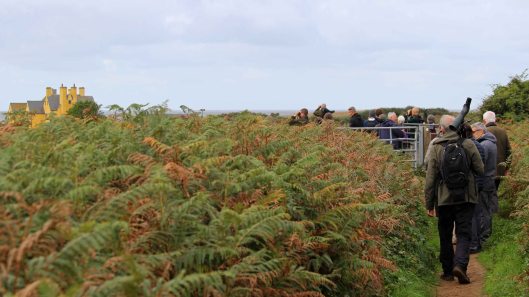
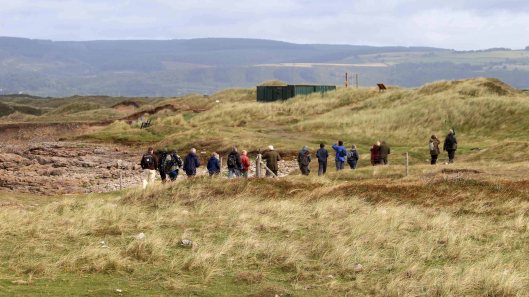
Last Saturday was the monthly Glamorgan Bird Club walk at Kenfig National Nature Reserve on the south Wales coast and this time, as the high tide time worked in perfectly, our large group of 28 enthusiasts headed down the eastern side of the reserve towards Sker.
180917 birding at Kenfig (2)

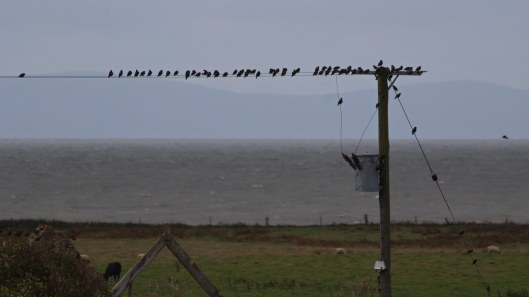
With so many eyes on the look out as we walked through scrub and across parts of the golf course, we soon had a respectable total of small birds but the highlights came as we got closer to the sea. Near Sker House, a small Starling murmuration swirled about in ever-changing formations before pausing to rest on overhead wires.
180917 birding at Kenfig (3)

Then, we were entertained by a small party of Stonechats, dotting in and out of the vegetation surrounding a wire fence.

180917 birding at Kenfig (4)

Moving on, we had distant views of Curlews and godwits in a field. At first we thought the godwits were Black-tailed but, on closer examination and with the help of reserve ranger Dave’s local knowledge, they were identified as Bar-tailed godwits, not particularly common hereabouts.
180917 birding at Kenfig (5)

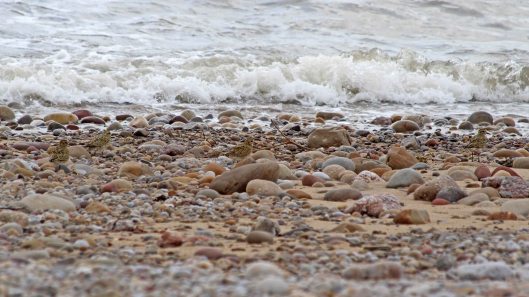
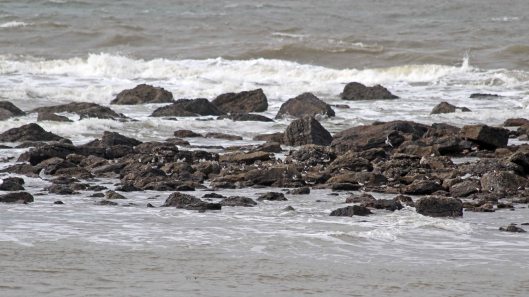
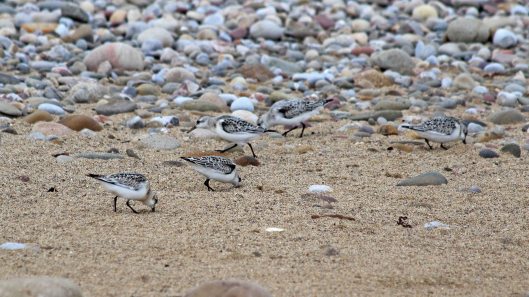
The best part of the day for me was at Sker Rocks, where we enjoyed really close views of several wader species. Small flocks of Sanderlings flitted back and forth from the rocks to the beach and, at times, were less than 20 feet away, scurrying hurriedly along the sand, poking about for food. A single Ringed plover sat alone by the water’s edge for a time, and then was replaced by four beautifully marked Golden plovers. (I got some reasonable photos of the Sanderlings and Golden plovers so will post separate blogs on them.)

180917 birding at Kenfig (6)180917 birding at Kenfig (7)180917 birding at Kenfig (8)

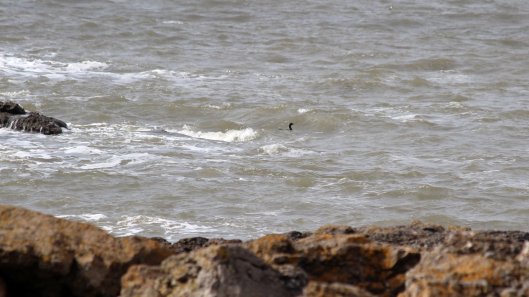
As we headed back inland, one of our younger birders, Tate, spotted a Shag fishing very close to the rocks – not a bird that’s seen much locally so a nice sighting.
180917 birding at Kenfig (10)

And some of us headed down to Kenfig Pool for a quick look but there wasn’t anything of note, and fishermen sitting much closer to the bird hide than they’re supposed to meant that wasn’t worth visiting.
180917 birding at Kenfig (9)

It was an excellent day’s birding and my species total was a very respectable 48: Mute Swan, Greylag Goose, Canada Goose, Mallard, Grey Heron, Shag, Sparrowhawk, Kestrel, Coot, Oystercatcher, Ringed Plover, European Golden Plover, Sanderling, Dunlin, Bar-tailed Godwit, Eurasian Curlew, Turnstone, Black-headed Gull, Lesser Black-backed Gull, Herring Gull, Feral Pigeon, Woodpigeon, Collared Dove, Magpie, Jay, Jackdaw, Carrion Crow, Blue Tit, Skylark, Swallow, House Martin, Cetti’s Warbler, Wren, Starling, Blackbird, Song Thrush, Robin, European Stonechat, Dunnock, House Sparrow, Yellow Wagtail, Pied Wagtail, Meadow Pipit, Rock Pipit, Goldfinch, Linnet, Bullfinch, and Reed Bunting.
Also seen/heard but not by me: Sand Martin, Common Buzzard, Tufted Duck, Raven, Common Chiffchaff, Northern Wheatear, and Water Rail (this last one was a shame, as it would’ve been a year tick for me, but them’s the birding breaks!).

Like Loading...

White vs Pied wagtails

13 Thursday Sep 2018

Posted by sconzani in autumn, birds, nature

≈ 5 Comments

Tags

autumn migration, birding, birdwatching, British birds, difference between Pied and White wagtail, Motacilla alba alba, Motacilla alba yarrellii, Pied wagtail, White wagtail

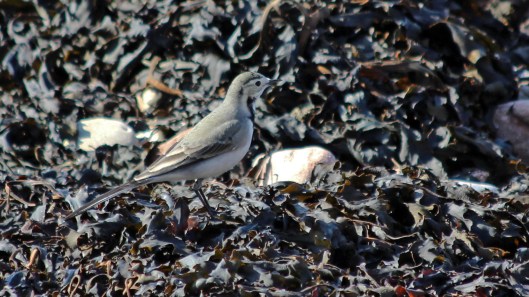
It’s taken me a couple of years to find and recognise White wagtails for myself. I would hear other birders talk about them and look at the photos they posted, but not really see any difference between Pied and White wagtails. Finally, I found some and it was immediately obvious they had a different look.

180913 white wagtail (1)

To be clear, these are not two different species of bird: Pied Wagtails (Motacilla alba yarrellii) and White Wagtails (Motacilla alba alba) are different subspecies of the same species, which rather confusingly is known as the White Wagtail (Motacilla alba).
180913 white wagtail (2)

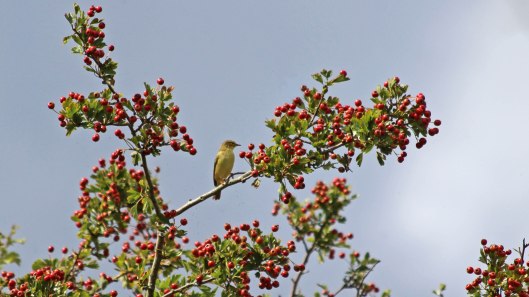
In Britain, we mostly see Pied wagtails, with the Whites passing through during the spring and autumn migration periods, and the White wagtails tend to have a much lighter grey back and a very clean, white belly and flanks.
180913 white wagtail (4)

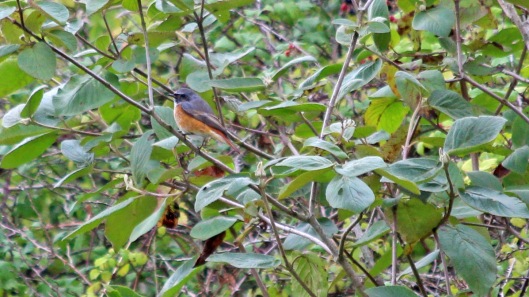
Thanks to an excellent blog post I found, I discovered the reason why it was easier for me to tell these particular Whites from the Pied wagtails they were with. The blog has much more detail but, essentially, the Whites complete their moult sooner (usually by the end of August) because of their need to migrate in peak condition from northern latitudes (most of our western Britain White wagtail migrants pass through from Iceland to the southern Mediterranean and Africa, and vice versa), whereas the Pieds, being mostly resident in Britain, don’t complete their moult until mid to late September.

180913 white wagtail (3)

So, the plumage of the Whites I saw looked clean and crisp and fresh, whereas the Pieds were still looking rather scruffy, as you can see below.

180913 pied wagtail (1)
180913 pied wagtail (2)
180913 pied wagtail (3)
180913 pied wagtail (4)
180913 pied wagtail (5)
180913 pied wagtail (6)
Like Loading...

A jovial of Dunnocks

12 Wednesday Sep 2018

Posted by sconzani in birds, nature

≈ 2 Comments

Tags

a jovial of dunnocks, birding, birdwatching, British birds, collective noun for dunnock, dunnock, fledgling birds, fledgling Dunnock, Prunella modularis

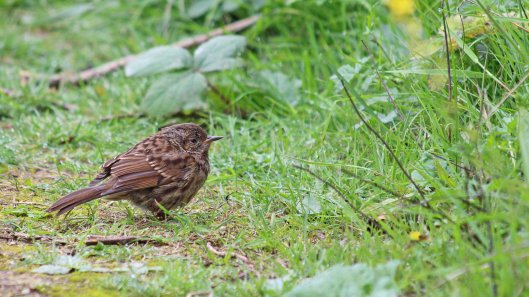
Apparently, a jovial is one of the traditional collective nouns for the Dunnock (Prunella modularis). Now don’t get me wrong, I love these little brown birds, I really do, but jovial is not an adjective I would normally use to describe them.

180912 dunnock (1)

Indeed, I can empathise with the sarcasm of this birder’s comments: ‘Any birdwatcher worth his salt knows of the joy brought about by watching a dull brown bird dullishly dull about in a dull shrub. Indeed, I find myself incredibly jovial every time I think I’ve seen a good bird and it turns out to be a dunnock.’

180912 dunnock (2)

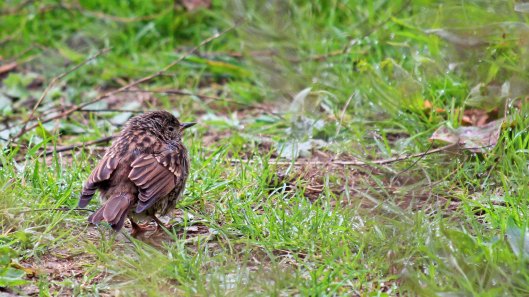
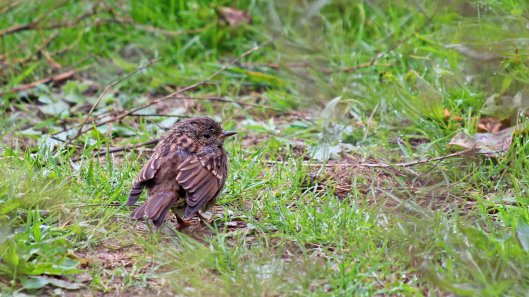
However, while this little fledgling didn’t look anything like jovial, it certainly did make me smile. And, though my wander around Cosmeston produced some nice migrating birds, the highlight of my Monday was watching this little dumpling hopping along the path in front of me.

180912 dunnock (3)

Like Loading...

A Whinchat family

08 Saturday Sep 2018

Posted by sconzani in autumn, birds, nature

≈ 2 Comments

Tags

autumn migration, bird migration, birding, birdwatching, British birds, Cosmeston, Cosmeston Lakes Country Park, migrating birds, Saxicola rubetra, Whinchat

180908 2 whinchats (1)

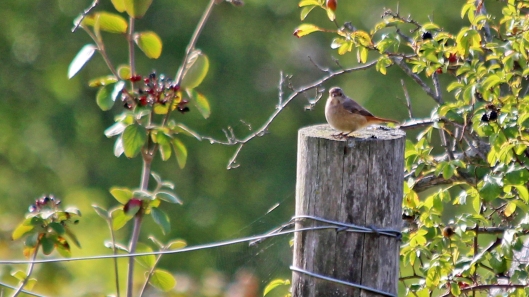
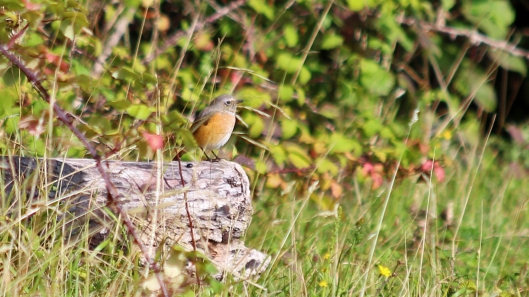
One of the highlights of this week at Cosmeston Lakes Country Park has been watching the party of three Whinchats that have stopped off to feed up prior to their migration to central and southern Africa. I think they’re a family group because this one appears still to have the plumage of a juvenile.

180908 whinchat (1)

Another (below) is still part way through the moulting process. I read recently that birds don’t usually migrate until after their moult is complete, as the lack of all their proper flight feathers, in particular, can affect their ability to fly long distances. Perhaps that’s another reason why they’ve broken their journey at Cosmeston.

180908 whinchat (2)

This is the third Whinchat, or Saxicola rubetra, to give it its scientific name.

180908 whinchat (3).jpg

Their common name, as with many birds, reflects their behaviour – whin is another word for gorse, as these little birds are commonly found amongst gorse and bracken and areas of low shrubs and bushes. Chat relates to their call, which combines the sound of two stones being tapped together with a series of melodic whistles.

180908 2 whinchats (2).jpg

Like Loading...

I got a Gropper!

06 Thursday Sep 2018

Posted by sconzani in birds, nature

≈ Leave a comment

Tags

birding, birdwatching, British birds, Cosmeston, Cosmeston Lakes Country Park, Grasshopper warbler, Gropper, Locustella naevia

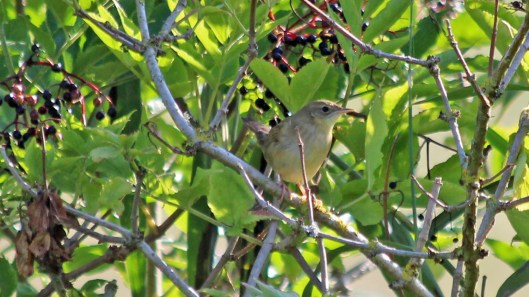
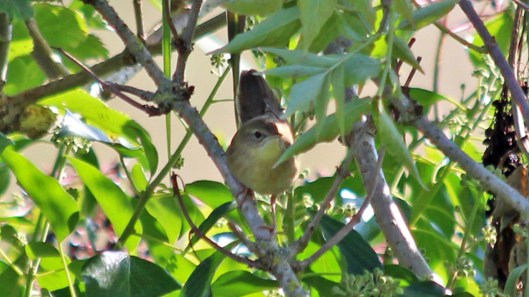
Non-birders will be wondering what on earth my title is about; birders, on the other hand, will immediately recognise the name and understand the reason for my excitement. Gropper is birder shorthand for Grasshopper warbler (Locustella naevia) and this is one difficult bird to photograph, except perhaps in the springtime, when it pops up a little more often to advertise itself to potential mates. Although Groppers are present in many parts of Britain, it’s usually their grasshopper-chirping-like song (called reeling) that lets you know one’s about.

180906 grasshopper warbler (3)

I was alerted to this bird’s presence by my birding friend Graham, who got a photo the previous day, and he’d also seen migrating birds in this general location, one of the outer fields at Cosmeston Lakes Country Park, so I figured it was worth a look.

180906 grasshopper warbler (2)
180906 grasshopper warbler (4)
180906 grasshopper warbler (5)

I found this particular bird and stood still watching it for so long that a grasshopper (the insect, not the bird) started climbing up the inside of my trouser leg, which, sadly, didn’t end well for the grasshopper as I freaked slightly about what it might be. And, to be completely honest, not having seen a Gropper up close before, I actually thought the bird I was watching was an immature Reed warbler. It was only when I sent Graham a photo later that he confirmed its identity. I might just have to go back and see if I can find it again.

180906 grasshopper warbler (1)

Like Loading...

Wild word: feather

05 Wednesday Sep 2018

Posted by sconzani in birds, nature

≈ 5 Comments

Tags

#WildWords, bird feathers, birding, birdwatching, British birds, feather, wild words

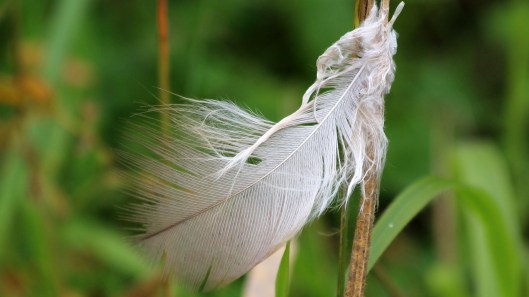
Feather: Noun; any of the flat appendages growing from a bird’s skin and forming its plumage, consisting of a partly hollow horny shaft fringed with vanes of barbs (Oxford Dictionary).

180905 feather (1)

I often come across discarded feathers when I’m out walking and try to guess which birds they’ve come from, though, unless they’re very distinctively patterned, that can be virtually impossible. Sometimes the feather just has to come home with me … like these three below. I think the bottom one’s probably from a Pheasant – not sure about the other two.

180905 feather (3)
180905 feather (4)

180905 feather (5)

Like Loading...

Birding out the window: Collared doves

02 Sunday Sep 2018

Posted by sconzani in birds, nature

≈ Leave a comment

Tags

birding, birding out the window, birdwatching, British birds, Collared dove, garden birds

180902 collared dove (1)

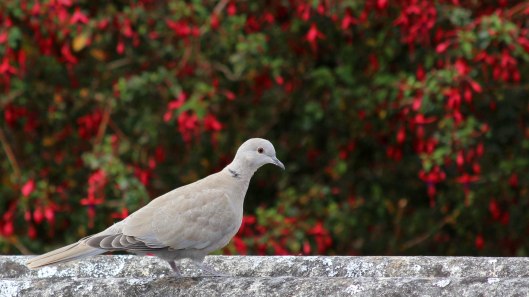
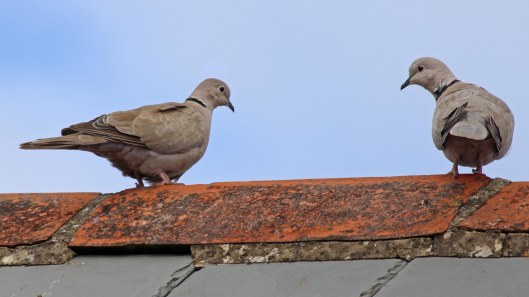
Sometimes you don’t even have to leave home to watch wildlife, even when you live in a first-floor flat with no garden. These two beautiful Collared doves were visiting the garden of a neighbour across the back lane. Although I can’t see them, this kindly person obviously has bird feeders that are always kept topped up with delicious bird treats, as quite a variety of birds visit the garden on a regular basis.

180902 collared dove (2)

I wonder if they’re speculating about whether I also have food for them?

180902 collared dove (4)
180902 collared dove (3)
Like Loading...

More migrants passing through

01 Saturday Sep 2018

Posted by sconzani in birds, nature

≈ 4 Comments

Tags

autumn migration, birding, birdwatching, British birds, Chiffchaff, Cosmeston, Cosmeston Lakes Country Park, migrating birds, Pied plycatcher, Redstart, Wheatear, Whinchat, Whitethroat, Willow warbler

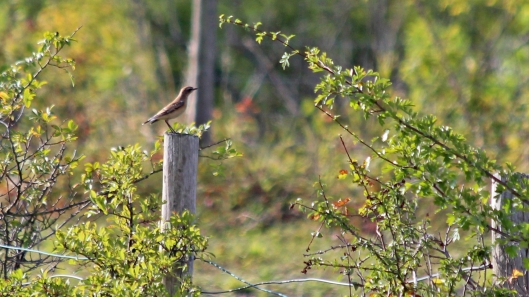
My local country park, Cosmeston Lakes, has been awash with migrating birds this past week. And it’s not just me getting better at finding them – according to birders who’ve been checking the area much longer than I’ve lived nearby, this has been a bumper year for sightings.

180901 Redstart female 2408180901 Redstart male 2408

On 24 August I found two Redstarts, a male and another that may have been a female or an immature bird that hadn’t yet developed its full adult colouration.

180901 wheatear 2408

Also on the 24th I had a very fleeting view of a Wheatear that popped up from grass to fencepost, then was off in the blink of an eye.

180901 whinchat 2708

On the 27th my birding friend Della texted me to say she’d found a Whinchat. That was the fastest I’d ever walked to Cosmeston and, luckily, the bird waited for me – and, in fact, stayed around most of the week so I saw it several times.

180901 common whitethroat

180901 chiffchaff180901 willow warbler

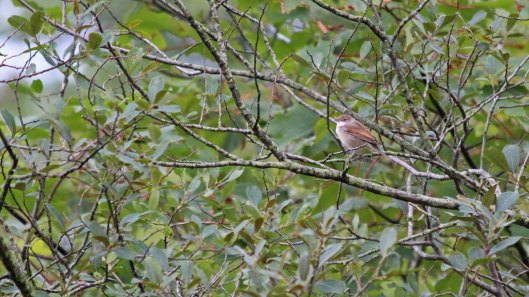
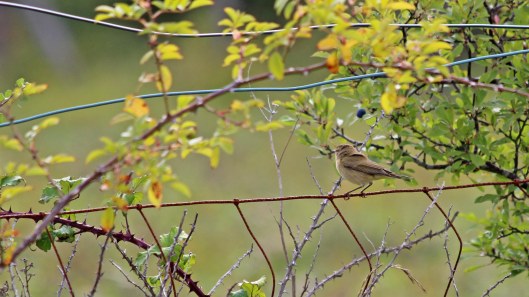
During my frequent visits to Cossie this week, I’ve seen ones and twos of Whitethroat and Chiffchaff, and tens of Willow warblers. These are the ones I spotted on the 30th.

180901 redstart 2908

Also on 30 August, I spotted another Redstart and, from the dark head colours, I could tell this one was definitely a male.

180901 pied flycatcher

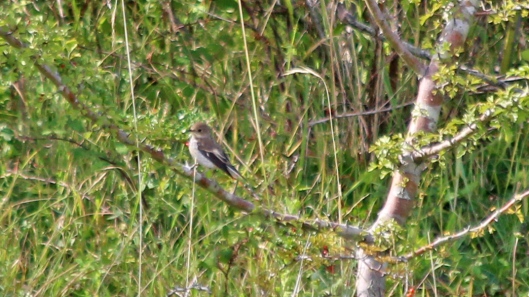
The week ended with a bang! My birding friend, Graham, let me know that he’d seen a Pied flycatcher with a small group of Spotted flycatchers, a most unusual visitor. Luckily, I was on the coastal path heading homeward so was able to divert towards Cosmeston and, with Graham’s help, got distant views of this beautiful little bird catching flies along the tree line. What a stunning week it has been!

Like Loading...

Seeing spots before my eyes

27 Monday Aug 2018

Posted by sconzani in autumn, birds, nature, seasons

≈ Leave a comment

Tags

autumn migration, bird migration, birding, birdwatching, British birds, Cosmeston, Cosmeston Lakes Country Park, Muscicapa striata, Spotted flycatcher

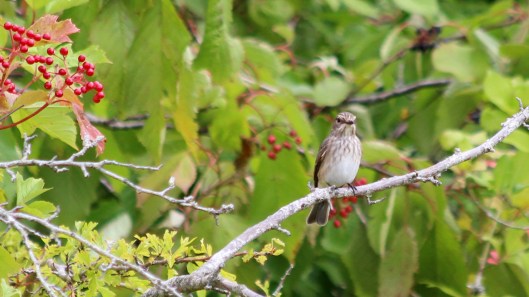
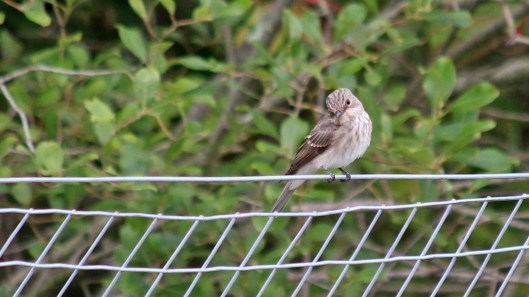
The autumn bird migration is now in full swing in south Wales and almost every day migrating birds are being spotted at Cosmeston Lakes Country Park, where they’re stopping off to refuel before they tackle their long flights to warmer over-wintering locations in Europe and Africa. One that I find particularly charming is the Spotted flycatcher (Muscicapa striata), which is not really spotted at all, more streaky and stripy. The scientific name is more accurate: Muscicapa is a combination of the Latin word musca, meaning fly, and capere, meaning to catch, and the epithet striata is from the Latin striatus, meaning striated.

180827 spotted flycatcher (1)

I saw my first Spotted flycatcher at Cossie on 7 August.

180827 spotted flycatcher (2)
180827 spotted flycatcher (3)

A week later, on the 15th, I had two sightings.

180827 spotted flycatcher (4)
180827 spotted flycatcher (5)
180827 spotted flycatcher (6)

The 20th was a bumper day, with three birds, two obviously travelling together, and another doing its own thing.

180827 spotted flycatcher (7)

And last Friday, the 24th, a birding friend put me on to a single bird, that was catching flies in the paddock I walked through on my way home. Fingers crossed I manage to see a few more before they all disappear for the winter.

Like Loading...

Fish for lunch again?

25 Saturday Aug 2018

Posted by sconzani in birds, nature

≈ Leave a comment

Tags

birding, birdwatching, British birds, little grebe, Little grebe chick, Little grebe feeding chick, Tachybaptus ruficollis

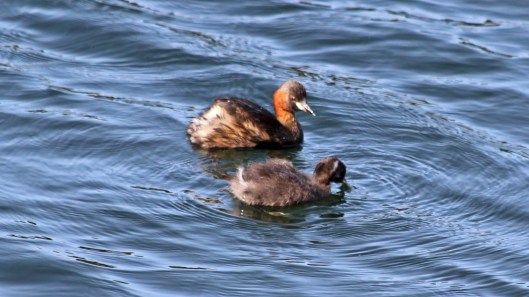
Last Saturday we had photos of a Great crested grebe feeding its youngster. Today I spent a delightful 20 minutes watching a Little Grebe (Tachybaptus ruficollis) catch and feed fish to its offspring. Here are some photos …

180825 Little grebes (1)

The adult Little grebe, on the left, is still in its summer/breeding plumage. I’m not sure if it’s a male or female as, from various websites I’ve checked, their plumage appears to be the same, and both parents share the incubation and care of their young. The little one was constantly peeping at its parent for food so the adult was diving in search of the small fish and aquatic invertebrates they like to eat.

180825 Little grebes (2).jpg

This is looking hopeful.

180825 Little grebes (3)

A not-so-small fish!

180825 Little grebes (4)

The youngster waits not-so-patiently for its parent to subdue the fish.

180825 Little grebes (5)

The handover.

180825 Little grebes (6)

Waiting to see if the young one can/will swallow the fish or drop it.

180825 Little grebes (7)

Still waiting …

180825 Little grebes (8)

The little one is struggling with the size of the fish but, at this point, the parent has given up waiting and dived down to find more.

180825 Little grebes (9)

One more big gulp and it’s down! I wonder how many fish it eats in a day.

Like Loading...
← Older posts
Newer posts →

About me

sconzani

sconzani

I'm a writer and photographer; researcher and blogger; birder and nature lover; countryside rambler and city strider; volunteer and biodiversity recorder.

View Full Profile →

Follow earthstar on WordPress.com

Enter your email address to follow this blog and receive notifications of new posts by email.

Recent blog posts

  • Thrift March 29, 2026
  • The day of the Wheatears March 28, 2026
  • Cetti’s warblers March 27, 2026
  • Goose barnacles March 26, 2026
  • Black-tailed godwits fighting March 25, 2026

From the archives

COPYRIGHT

Unless otherwise acknowledged, the text and photographs on this blog are my own and are subject to international copyright. Nothing may be downloaded or copied without my permission.

Fellow Earth Stars!

  • Unknown's avatar
  • Unknown's avatar
  • Unknown's avatar
  • Unknown's avatar
  • Unknown's avatar
  • Unknown's avatar
  • Unknown's avatar
  • Unknown's avatar
  • Unknown's avatar
  • Unknown's avatar
  • Unknown's avatar
  • Unknown's avatar
  • Unknown's avatar
  • Unknown's avatar
  • Unknown's avatar
  • Unknown's avatar
  • Unknown's avatar
  • Unknown's avatar
  • Unknown's avatar
  • Unknown's avatar
  • Unknown's avatar
  • Unknown's avatar
  • Unknown's avatar
  • Unknown's avatar
  • Unknown's avatar
  • Unknown's avatar
  • Unknown's avatar
  • Unknown's avatar
  • Unknown's avatar
  • Unknown's avatar
  • Unknown's avatar
  • Unknown's avatar
  • Unknown's avatar
  • Unknown's avatar
  • Unknown's avatar
  • Unknown's avatar
  • Unknown's avatar
  • Unknown's avatar
  • Unknown's avatar
  • Unknown's avatar
  • Unknown's avatar
  • Unknown's avatar
  • Unknown's avatar
  • Unknown's avatar
  • Unknown's avatar
  • Unknown's avatar
  • Unknown's avatar
  • Unknown's avatar
  • Unknown's avatar
  • Unknown's avatar

Blog at WordPress.com.

Privacy & Cookies: This site uses cookies. By continuing to use this website, you agree to their use.
To find out more, including how to control cookies, see here: Cookie Policy
  • Subscribe Subscribed
    • earthstar
    • Join 642 other subscribers
    • Already have a WordPress.com account? Log in now.
    • earthstar
    • Subscribe Subscribed
    • Sign up
    • Log in
    • Report this content
    • View site in Reader
    • Manage subscriptions
    • Collapse this bar
 

Loading Comments...
 

You must be logged in to post a comment.

    %d