• ABOUT
  • BIRDING 2018
  • Birding 2019
  • BLOG POSTS
  • Butterflies 2018
  • Resources

earthstar

~ a celebration of nature

earthstar

Tag Archives: British flora

Variable and promiscuous

06 Friday Apr 2018

Posted by sconzani in flowers, nature, spring, wildflowers

≈ Leave a comment

Tags

British flora, British wildflowers, purple violets, Sweet violet, Viola odorata, violets, white violets
OLYMPUS DIGITAL CAMERA

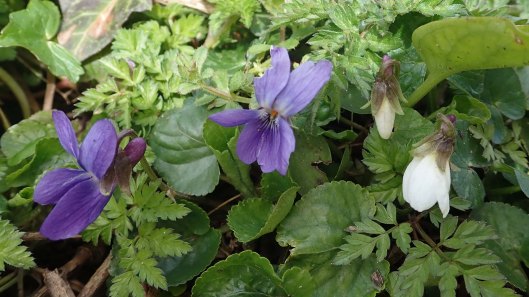
In Flora Botannica Richard Mabey’s opening statement on the violet family reads: ‘The violets are a variable and promiscuous family, apt to throw up all kinds of sports and hybrids.’ This once meant that botanists split the family into as many as 40 different species, depending on their colour variations. Fortunately, common sense and modern scientific analysis has now prevailed and that number has been almost halved. Still, violets are not always easy to identify.

180406 sweet violets (1)
OLYMPUS DIGITAL CAMERA

Although the violets in my photos are both purple and white, they are, I believe, all Sweet violets (Viola odorata), as they all had the distinctive scent of this variety – Common dog violets (Viola riviniana) are so called because they do not smell. In olden times, Sweet violets were one of the herbs that were strewn on floors to improve the smell of your home, and they have also been used by herbalists to treat insomnia, depression and headache. All that, and pretty too!

180406 sweet violets (7)

Like Loading...

Wild words: strobilus

04 Wednesday Apr 2018

Posted by sconzani in nature, plants

≈ Leave a comment

Tags

#WildWords, British flora, Equisetum arvense, Equisteum, Field horsetail, Horsetail, strobilus, wild words

Strobilus: noun; a botanical term, which came originally from the Greek strephein meaning ‘to twist’, and which is used to describe the cone of a pine, fir or other conifer; and also ‘a structure resembling the cone of a conifer, such as the flower of the hop’ (Oxford Dictionary).

180404 strobilus

I have the lovely Helen of Plantlife Cymru to thank for this word because, when I originally posted this photo on Twitter, she responded by saying that ‘the strobilus is ascending’. My photo shows the newly emerged stalks of Equisetum (possibly Field horsetail, Equisteum arvense), which is a dinosaur of the plant world, a plant that reproduces using spores rather than seeds. The spores are produced in the strobili, the cone-like structures you can see on the tips of the stems.

Like Loading...

Wildflower challenge: The Borage family

01 Sunday Apr 2018

Posted by sconzani in flowers, nature, spring, wildflowers

≈ 6 Comments

Tags

#WildflowerHour, Borage family, British flora, Forget-me-nots, spring flowers, wildflower challenge, wildflowers

Forget-me-not

This week’s challenge for #WildflowerHour was to try to find flowering members of the Borage family – and, in case you don’t know which plants they are (as I didn’t), they include such beauties as the Comfreys, the Gromwells, the Buglosses, Green alkanet, the Lungworts and the Forget-me-nots, as well as Borage itself, of course. Having found Lungwort last week, I didn’t feel I could count that for this week’s challenge, and I knew from a recent visit to Bute Park that the Green alkanet and Comfrey I usually find there were scarcely out of the ground yet – certainly, not flowering.

Forget-me-not

So, I set off on a six-and-a-half-mile walk around Cardiff Bay yesterday, hoping I might find something along the way. Nothing! There were wildflowers, of course, just none of the Borages. I was almost home again, when I thought I’d check a little lane alongside one of my local train stations, and bingo! Forget-me-nots, growing amongst the nettles and clinging to the stone wall. I don’t know which variety they are and they may originally have been garden escapees, but I was just happy to find them.

Forget-me-not
Forget-me-not
Forget-me-not
Forget-me-not
Forget-me-not
Forget-me-not
Forget-me-not
Forget-me-not
Forget-me-not
Forget-me-not
Forget-me-not
Forget-me-not


Like Loading...

Lovely Lungwort

30 Friday Mar 2018

Posted by sconzani in flowers, nature, plants, spring, wildflowers

≈ 7 Comments

Tags

British flora, British wildflowers, Jacob's coat, Lungwort, Mary spilt the milk, Pulmonaria officinalis, Soldiers and sailors, spring flowers

OLYMPUS DIGITAL CAMERA

I kid you not – Lungwort really is this wildflower’s common name (scientific name: Pulmonaria officinalis). And why? Well, it goes back to the times when people believed that the physical qualities of a plant – its shape, colour, features – reflected its uses (a theory also known as the doctrine of signatures). In this case, the freckled oval-shaped leaves were thought to resemble diseased lungs (and I thought I had a good imagination!) and so the plant was (and still is) used as a treatment for various respiratory ailments.

OLYMPUS DIGITAL CAMERA

Those blotchy leaves are also the reason for one of the plant’s many common names, ‘Mary-spilt-the-milk’. And the variety of pinks and blues in its flowers are behind its other vernacular names, ‘Jacob’s coat’ and ‘Soldiers and Sailors’ – all much more understandable.

OLYMPUS DIGITAL CAMERA
Like Loading...

This week in wildflowers

23 Friday Mar 2018

Posted by sconzani in flowers, nature, spring, wildflowers

≈ Leave a comment

Tags

#FloralFriday, British flora, British wildflowers, Colt's-foot, Daisy, dandelion, gorse, Groundsel, Lesser Celandine, Red dead-nettle, Speedwell, Three-cornered garlic, wildflowers

What a week it’s been weather wise! We’ve gone from a generous dumping of snow and temperatures hovering around -5°C last Sunday through occasional rain, sunny periods, UV factors up and down, zephyr winds and mustang gales. Is it spring or isn’t it? Well, I’m seeing increasingly more wildflowers so I guess it must be. Here’s a selection from this week’s wanders.

180323 colt's-foot

Colt’s-foot (Tussilago farfara)

180323 daisy

Daisy (Bellis perennis)

180323 dandelion sp

a type of Dandelion (Taraxacum sp.)

180323 gorse

a type of Gorse (Ulex sp.)

180323 groundsel

Groundsel (Senecio vulgaris)

180323 lesser celandine

Lesser celandine (Ficaria verna)

180323 red dead nettle

Red dead-nettle (Lamium purpureum)

180323 speedwell

a species of Speedwell (probably Germander) (Veronica sp.)

180323 three-cornered leek

Three-cornered leek (Allium triquetrum)


Like Loading...

Pavement plants

11 Sunday Mar 2018

Posted by sconzani in nature, plants, wildflowers

≈ Leave a comment

Tags

#PavementPlants, #WildflowerHour, British flora, Groundsel, Hairy bittercress, Lesser Celandine, plants in pavement, Shepherd's purse, wild plants, wildflowers

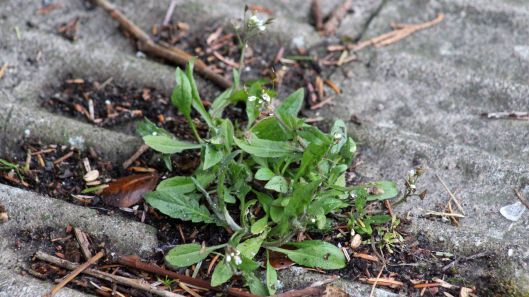
This week’s Wildflower Hour challenge was to check out your local pavement for #PavementPlants. As the challenge says: ‘It is amazing how many plants are able to eke out a living where they were never invited. Growing in seemingly inhospitable cracks and crevices, thriving where there is little soil, these tough little plants are often overlooked.’ So, it was eyes down this week as I wandered around Penarth and, though I decided to look just for plants that were flowering and ignore the ubiquitous grasses and mosses, I did manage to find a few little treasures in my local pavements, steps and paths.

180311 pavement plant groundsel

Groundsel (Senecio vulgaris)
I’m sure most people recognise Groundsel when they see it, as it’s very common in areas of disturbed ground. I just learned today that Senecio comes from the Latin for ‘old man’, a reference to the bare ‘scalp’ that remains once the plant’s fluffy white seeds have blown away.

180311 pavement plant hairy bittercress (2)

Hairy bittercress (Cardamine hirsuta)
I was initially confused about which bittercress this was, Hairy or Wavy but my trusty wildflower guide tells me that Hairy has four stamens and Wavy usually has six, so that clinched it. Apparently, this plant is edible, though bitter – hence its name: I think I’ll pass.

180311 pavement plant lesser celandine

Lesser celandine (Ficaria verna)
Once known as Pilewort, as it was believed to be a remedy for haemorrhoids, Lesser celandine contains high levels of vitamin C and was also used to prevent scurvy.

180311 pavement plant Shepherd's purse

Shepherd’s purse (Capsella bursa-pastoris)
This very common wild plant’s common name comes from the purse-like shape of its seed pods.

Like Loading...

Ring-ting!

09 Friday Feb 2018

Posted by sconzani in flowers, nature, spring, wildflowers

≈ Leave a comment

Tags

British flora, British wildflowers, primrose, William Allingham poem

180209 primroses (1)
180209 primroses (2)

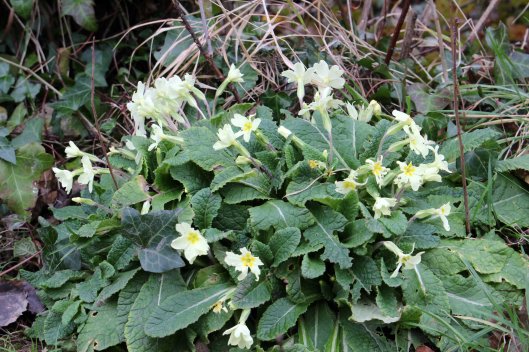
‘Ring-ting! I wish I were a Primrose,
A bright yellow Primrose blowing in the spring!
The stooping boughs above me,
The wandering bee to love me,
The fern and moss to creep across,
And the elm-tree for our king!’

~  from William Allingham, ‘Wishing, A Child’s Song’. Allingham (1824-1889) was an Irish poet and man of letters.

180209 primroses (3)

Like Loading...

Another winter ten

28 Sunday Jan 2018

Posted by sconzani in flowers, nature, wildflowers, winter

≈ Leave a comment

Tags

#theWinter10, British flora, January flowers, wildflowers, winterf-flowering wildflowers

It was about time I had another go at WildflowerHour’s current challenge: ‘our weekly winter challenge is #thewinter10 which is to find ten different wild flowers in bloom each week. Once you’ve found them, work out what they are, and post them for the rest of us to see.’

So, on Thursday’s walk, though I was really looking for birds, I also remembered to cast my eyes downwards for flowers. And, on one relatively short stretch along the western edge of Cardiff Bay, I found my ten: Creeping buttercup (I think). a Dandelion species, Nipplewort, Petty spurge, possibly Common mouse-ear, Red dead nettle, Groundsel, Sweet meadow grass, Gorse, and Red clover.

180128 Winter ten (1)
180128 Winter ten (2)
180128 Winter ten (3)
180128 Winter ten (5)
180128 Winter ten (6)
180128 Winter ten (8)
180128 Winter ten (9)
180128 Winter ten (10)
180128 Winter ten (11)
180128 Winter ten (12)
Like Loading...

Spurge laurel

19 Friday Jan 2018

Posted by sconzani in flowers, nature, plants, wildflowers

≈ 2 Comments

Tags

British flora, British native daphne, British native flowers, Daphne laureola, Spruge laurel, winter flowers

Spurge laurel is such an uninspiring name for this lovely British native, which I was surprised and delighted to find in full flower when I was walking the south Wales coastal path at Lavernock last weekend.

180119 Spurge laurel (2)

Any gardener will recognise this plant as a member of the Daphne family – its scientific name is Daphne laureola – and, not only does it flower from the middle of winter through spring and into early summer, it also has a delicious honey smell. It’s evergreen and prefers to have its roots in rich, shaded soil, growing best on the edge of woodlands on chalk or limestone.

180119 Spurge laurel (4)
180119 Spurge laurel (1)

I must add one note of caution, though: everything about this plant is poisonous to humans, from the sap (which can cause a nasty skin rash) to the black berries that appear in late summer. Luckily, the berry toxins do not appear to affect birds, and there are reports of robins and greenfinches enjoying an autumn feast.

180119 Spurge laurel (3)
180119 Spurge laurel (5)
Like Loading...

The bending reed

03 Sunday Dec 2017

Posted by sconzani in nature, plants

≈ Leave a comment

Tags

Aesop's fable, British flora, common reed, quotes about reeds, reed, sayings about reeds, The reed and the oak

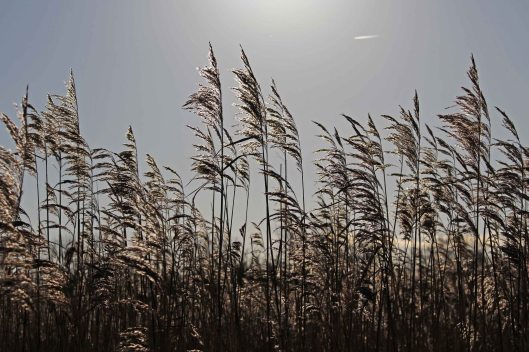
‘The little reed, bending to the force of the wind, soon stood upright again when the storm had passed over.’ ~ Aesop, from ‘The Oak and the Reed’, Fable 127 of Aesop’s Fables

171203 reeds (5)

A quick google and a read of the article on Wikipedia about Aesop’s fable revealed that the comparison between the flexible reed and the strong but inflexible oak is a very old one. Confucius is credited with the saying, ‘The green reed that bends in the wind is stronger than the mighty oak that breaks in a storm’, and Geoffrey Chaucer wrote ‘A reed before the wind lives on, while mighty oaks do fall’ in Troilus and Criseyde. It’s a thought-provoking idea but, personally, what appealed to me most about these reeds was the beauty of their form, whether standing tall and upright or swaying in the breeze.

171203 reeds (1)

171203 reeds (3)
171203 reeds (4)

171203 reeds (2)

Like Loading...
← Older posts
Newer posts →

About me

sconzani

sconzani

I'm a writer and photographer; researcher and blogger; birder and nature lover; countryside rambler and city strider; volunteer and biodiversity recorder.

View Full Profile →

Follow earthstar on WordPress.com

Enter your email address to follow this blog and receive notifications of new posts by email.

Recent blog posts

  • Birch polypore January 30, 2026
  • The Marl Med gull January 29, 2026
  • Recording Grey squirrels January 28, 2026
  • Jimmy Wren January 27, 2026
  • Millipede: Nanogona polydesmoides January 26, 2026

From the archives

COPYRIGHT

Unless otherwise acknowledged, the text and photographs on this blog are my own and are subject to international copyright. Nothing may be downloaded or copied without my permission.

Fellow Earth Stars!

  • Unknown's avatar
  • Unknown's avatar
  • Unknown's avatar
  • Unknown's avatar
  • Unknown's avatar
  • Unknown's avatar
  • Unknown's avatar
  • Unknown's avatar
  • Unknown's avatar
  • Unknown's avatar
  • Unknown's avatar
  • Unknown's avatar
  • Unknown's avatar
  • Unknown's avatar
  • Unknown's avatar
  • Unknown's avatar
  • Unknown's avatar
  • Unknown's avatar
  • Unknown's avatar
  • Unknown's avatar
  • Unknown's avatar
  • Unknown's avatar
  • Unknown's avatar
  • Unknown's avatar
  • Unknown's avatar
  • Unknown's avatar
  • Unknown's avatar
  • Unknown's avatar
  • Unknown's avatar
  • Unknown's avatar
  • Unknown's avatar
  • Unknown's avatar
  • Unknown's avatar
  • Unknown's avatar
  • Unknown's avatar
  • Unknown's avatar
  • Unknown's avatar
  • Unknown's avatar
  • Unknown's avatar
  • Unknown's avatar
  • Unknown's avatar
  • Unknown's avatar
  • Unknown's avatar
  • Unknown's avatar
  • Unknown's avatar
  • Unknown's avatar
  • Unknown's avatar
  • Unknown's avatar
  • Unknown's avatar
  • Unknown's avatar

Blog at WordPress.com.

Privacy & Cookies: This site uses cookies. By continuing to use this website, you agree to their use.
To find out more, including how to control cookies, see here: Cookie Policy
  • Subscribe Subscribed
    • earthstar
    • Join 670 other subscribers
    • Already have a WordPress.com account? Log in now.
    • earthstar
    • Subscribe Subscribed
    • Sign up
    • Log in
    • Report this content
    • View site in Reader
    • Manage subscriptions
    • Collapse this bar
 

Loading Comments...
 

You must be logged in to post a comment.

    %d