• ABOUT
  • BIRDING 2018
  • Birding 2019
  • BLOG POSTS
  • Butterflies 2018
  • Resources

earthstar

~ a celebration of nature

earthstar

Tag Archives: British hoverflies

A bumblebee and its mimic

11 Monday Mar 2024

Posted by sconzani in insects, spring

≈ Leave a comment

Tags

Blackthorn blossom, Bombus terrestris, British bumblebees, British hoverflies, Buff-tailed bumblebee, Criorhina ranunculi, Large bearfly

Though there was a cold nor’easterly wind blowing, occasional sunny periods brought out a few insects during my visit to Cardiff’s Grangemoor Park last Friday, and I was lucky enough to spot a couple of Buff-tailed bumblebee (Bombus terrestris) queens feeding on Blackthorn blossom.

240311 buff-tailed bumblebee

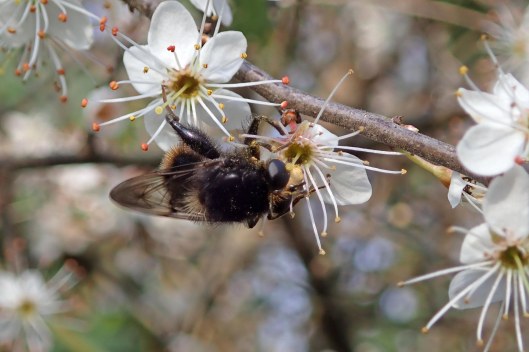
Even better, on one tree I found one of Britain’s larger hoverflies, one that mimics bumblebees, a Large bearfly (Criorhina ranunculi), one that can often be seen in early Spring on the blossom of willows, Blackthorn and Wild cherry. This hoverfly’s tail end can be white, orange or red in colour (this one’s was reddish); to see these variations, and his superb images of this hoverfly, check out Steven Falk’s Flikr album.

240311 Criorhina ranunculi

Like Loading...

Out they pop

09 Tuesday Jan 2024

Posted by sconzani in insects

≈ Leave a comment

Tags

British flies, British hoverflies, Buff-tailed bumblebee, early invertebrate emergence, Honey bee, winter insects

Invertebrates in the winter: some warm sunshine in a sheltered spot and out they pop: my first hoverflies of the year, several species of fly, a couple of Honey bees and a queen Buff-tailed bumblebee.
I should probably add that these images were taken on Sunday, before freezing Baltic air came blasting in from the east, causing temperatures to plummet. I imagine these critters have all now taken shelter once more, in amongst dense vegetation like Ivy or within cosy holes in the earth.

240108 invertebrates awake

Like Loading...

Hoverfly larvae

26 Thursday Oct 2023

Posted by sconzani in insects

≈ Leave a comment

Tags

British hoverflies, Dasysyrphus species, Dasysyrphus species larva, Epistrophe grossulariae larva, hoverfly, hoverfly larvae, Syrphus species, Syrphus species larvae

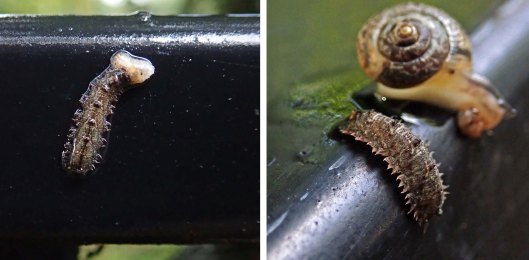
It’s that time of year when, especially after rain, hoverfly larvae can be found washed off their leaves on to fence posts, railings and stones (e.g. gravestones), particularly under Sycamore trees. Twice in the past week I’ve checked the roadside railings of a local park and found several larvae each time, of three different species.

First, a little cannibalism. The first shot shows a Dasysyrphus species larva that has almost finished eating a larva of one of the Syrphus species of hoverfly. When I returned this way a couple of hours later, the Dasysyrphus sp. larva hadn’t moved far (image on the right) and almost looked like it was considering the snail as prey but I think that would be biting off more than it could chew!

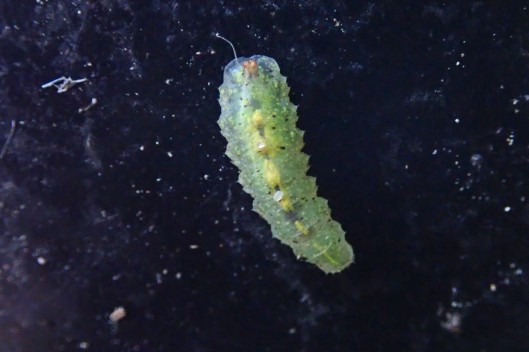
This is just the second Epistrophe grossulariae I’ve seen so I was very pleased to spot it. If you’re wondering what it will grow in to, click this link.

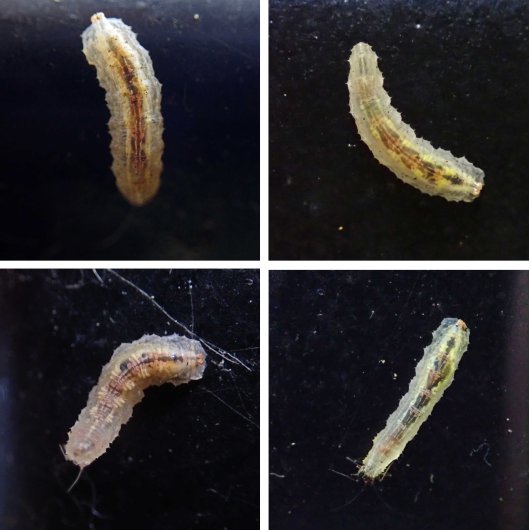
Syrphus species larvae were the most abundant (as with many of these larvae, it’s almost impossible to identify them accurately unless they’re retained and breed through to adulthood). And, as a final treat (?), here’s a little video of one of those Syrphus larvae munching on an aphid (slightly gross but compelling viewing!).

Like Loading...

A rat-tailed maggot

03 Tuesday Oct 2023

Posted by sconzani in insects

≈ 4 Comments

Tags

British hoverflies, hoverfly, hoverfly larva, hoverfly larva on Sycamore, Myathropa florea, Myathropa florea larva

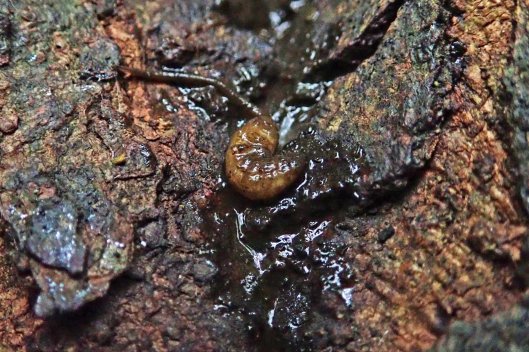
‘What fresh hell is she sharing with us now’, I sense you thinking. For me, though, this was Sunday’s star find, something I’ve wanted to find for ages. This is the larva of a Myathropa florea species of hoverfly that I found living in a sap run on a Sycamore tree. The ‘tail’ is actually its breathing tube, a bit like a long snorkel.

231003 myathropa florea larva

When I spotted it at the edge of a cleft in the Sycamore, I used a stick to move it gently out into the open a little more so I could get some photos. I expected to have to nudge it back but, as you can see in this short video, it turned itself around and slowly undulated itself back in to its home in the puddle of watery sap, leaf litter and insects. Now to find more maggots!

Like Loading...

The mimics

01 Thursday Jun 2023

Posted by sconzani in insects

≈ Leave a comment

Tags

British hoverflies, hoverflies mimicking bumblebees, hoverfly, insect mimicry, Red-tailed bumblebee, Volucella bombylans, Volucella bombylans var. bombylans, Volucella bombylans var. plumata, White-tailed bumblebee

You may have seen on social media and, indeed, be experiencing for yourself our ‘silent spring’, where the lamentably small numbers of invertebrates are causing grave concern. I have also found this – places where I would normally be seeing good numbers of bees, flies, butterflies and bugs are almost empty of life. So, I was even more pleased than usual last Monday when I spotted two Volucella bombylans hoverflies, one of each of the two colour variations, in a corner of a local field. These are bumblebee mimics, deliberately imitating bumble species so as to enter the nests of bumblebees to lay their eggs within.

230601 volucella bombylans (1)

Volucella bombylans var. plumata above mimics the White-tailed bumblebee (Bombus lucorum). I’ve included a photo of Bombus lucorum, above right, so you can see the two side by side. And, as you can see, the colouring of the second Volucella bombylans below is quite different. This is Volucella bombylans var. bombylans, which mimics the Red-tailed bumblebee (Bombus lapidarius) shown lower right. The mimicry isn’t perfect but it obviously works – if it didn’t, these hoverflies wouldn’t exist.

230601 volucella bombylans (2)

Like Loading...

Meliscaeva auricollis

14 Tuesday Mar 2023

Posted by sconzani in insects, nature

≈ Leave a comment

Tags

British hoverflies, hoverfly, Meliscaeva auricollis

In just a few days we’ve gone from sleet and snow to a high of 11ºc. We humans can easily change our clothes to suit the conditions but the see-sawing temperatures must be creating problems for the insect world.

230313 meliscaeva auricollis (1)

Some, like these Meliscaeva auricollis hoverflies, emerge from their winter hibernation when the temperatures start to rise, then get knocked sideways when the mercury plummets and the snow starts to fall. Hopefully, they’re able to find shelter from the icy blasts so they can re-emerge at a later date.

230313 meliscaeva auricollis (2)

Like Loading...

First hoverfly

03 Friday Feb 2023

Posted by sconzani in insects

≈ Leave a comment

Tags

British hoverflies, Eristalis pertinax, Eristalis tenax, hoverfly

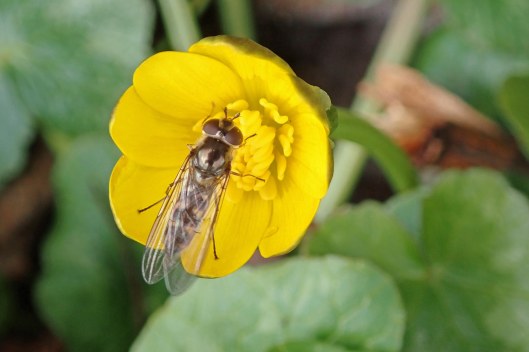
During Monday’s walk along the local section of the Wales Coastal Path, I spotted my first hoverfly of the year, and immediately got the identification wrong. It seems that every winter I forget the basics for these creatures and have to refresh my memory over and over again (old age, or hoverfly blindness?).

230203 eristalis tenax (1)

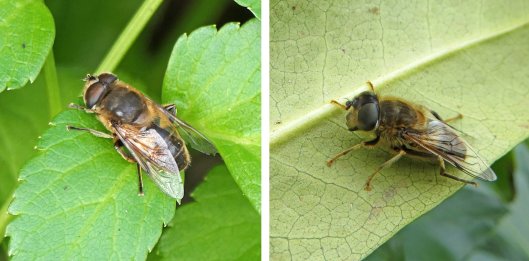
In my defence, these are two very similar species but it took a friendly follower on Twitter to remind me that, for the hoverfly I found, the ‘feet are darker than E.[Eristalis] pertinax and it has a bendy rear tibia and hairy bands on its eyes so this is Eristalis tenax‘. (The ‘foot’ is the final segment of the leg.) To remind me, and help you, I’ve included comparison photos below – Eristalis tenax, he of the darker front feet, is on the left, and Eristalis pertinax, with the pale feet, is on the right.

230203 eristalis tenax and pertinax (2)

Like Loading...

The aphid munchers

06 Tuesday Sep 2022

Posted by sconzani in insects, plants

≈ Leave a comment

Tags

British hoverflies, hoverfly larvae, hoverfly larvae on Wild parsnip, Melangyna sp larvae, Melangyna species, Syrphus sp larvae, Syrphus species, Wild parsnip

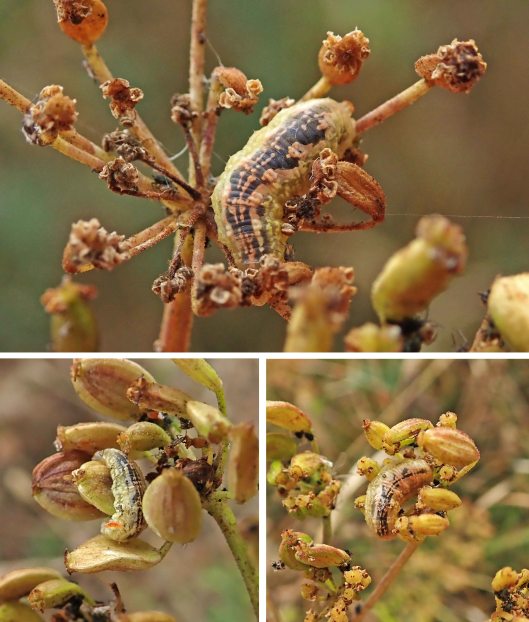
Today’s focus is on one of the smaller things in life, specifically every gardener’s friend, one of the aphid munchers, the hoverfly larva.

220906 syrphus sp

In fact, not just one larva, but many, and from more than one species, feasting on aphid-infested Wild parsnip plants. The larvae in the photos above have been identified as being one of the Syrphus species of hoverfly, while those below, according to an expert, are probably Melangyna compositarum agg / umbelltarum. All would need rearing to adulthood for more precise identification.

220906 Melangyna sp

It’s worth checking the stems, leaves, seedheads of plants with aphid infestations as hoverfly larvae are almost certain to be lurking there somewhere.

Like Loading...

The big four

23 Tuesday Aug 2022

Posted by sconzani in insects

≈ Leave a comment

Tags

British hoverflies, hoverfly, Volucella bombylans, Volucella inanis, Volucella pellucens, Volucella species, Volucella zonaria

These are the big beasties of the hoverfly world, the bumblebee, wasp and hornet mimics. Though their size can be a little intimidating, they are all completely harmless to humans, and wonderful to watch going about their daily lives. There are actually five Volucella species in Britain – the woodland species Volucella inflata does occur locally (see A new hoverfly, June 2020) but I’ve not noticed one this year. The big four below are Volucella bombylans, Volucella pellucens (commonly known as the Great pied hoverfly, due to its colouring), Volucella inanis and Volucella zonaria – these are the two mostly easily confused with each other but the most obvious difference is the chestnut colouring of V. zonaria‘s thorax.

220823 volucella hoverflies

Like Loading...

Hovering, summer 2022

20 Wednesday Jul 2022

Posted by sconzani in insects

≈ Leave a comment

Tags

British hoverflies, hoverfly, hoverfly larva

A little video slideshow of some of the hoverflies that have recently caught my eye, including one new species larva – always a treat to find these strange-looking aphid eaters.

Like Loading...
← Older posts
Newer posts →

About me

sconzani

sconzani

I'm a writer and photographer; researcher and blogger; birder and nature lover; countryside rambler and city strider; volunteer and biodiversity recorder.

View Full Profile →

Follow earthstar on WordPress.com

Enter your email address to follow this blog and receive notifications of new posts by email.

Recent blog posts

  • Weevil: Mecinus pyraster January 10, 2026
  • Red in beak and claw January 9, 2026
  • Who’s watching who? January 8, 2026
  • Springtail: Orchesella cincta January 7, 2026
  • A good year for Redwings January 6, 2026

From the archives

COPYRIGHT

Unless otherwise acknowledged, the text and photographs on this blog are my own and are subject to international copyright. Nothing may be downloaded or copied without my permission.

Fellow Earth Stars!

  • Unknown's avatar
  • Unknown's avatar
  • Unknown's avatar
  • Unknown's avatar
  • Unknown's avatar
  • Unknown's avatar
  • Unknown's avatar
  • Unknown's avatar
  • Unknown's avatar
  • Unknown's avatar
  • Unknown's avatar
  • Unknown's avatar
  • Unknown's avatar
  • Unknown's avatar
  • Unknown's avatar
  • Unknown's avatar
  • Unknown's avatar
  • Unknown's avatar
  • Unknown's avatar
  • Unknown's avatar
  • Unknown's avatar
  • Unknown's avatar
  • Unknown's avatar
  • Unknown's avatar
  • Unknown's avatar
  • Unknown's avatar
  • Unknown's avatar
  • Unknown's avatar
  • Unknown's avatar
  • Unknown's avatar
  • Unknown's avatar
  • Unknown's avatar
  • Unknown's avatar
  • Unknown's avatar
  • Unknown's avatar
  • Unknown's avatar
  • Unknown's avatar
  • Unknown's avatar
  • Unknown's avatar
  • Unknown's avatar
  • Unknown's avatar
  • Unknown's avatar
  • Unknown's avatar
  • Unknown's avatar
  • Unknown's avatar
  • Unknown's avatar
  • Unknown's avatar
  • Unknown's avatar
  • Unknown's avatar
  • Unknown's avatar

Blog at WordPress.com.

Privacy & Cookies: This site uses cookies. By continuing to use this website, you agree to their use.
To find out more, including how to control cookies, see here: Cookie Policy
  • Subscribe Subscribed
    • earthstar
    • Join 669 other subscribers
    • Already have a WordPress.com account? Log in now.
    • earthstar
    • Subscribe Subscribed
    • Sign up
    • Log in
    • Report this content
    • View site in Reader
    • Manage subscriptions
    • Collapse this bar
 

Loading Comments...
 

You must be logged in to post a comment.

    %d