A little video slideshow of some of the hoverflies that have recently caught my eye, including one new species larva – always a treat to find these strange-looking aphid eaters.

20 Wednesday Jul 2022
Posted in insects
A little video slideshow of some of the hoverflies that have recently caught my eye, including one new species larva – always a treat to find these strange-looking aphid eaters.
09 Wednesday Mar 2022
Posted in insects
I’ve always been envious of people who manage to entice insects to sit on their hand / head / shoulder etc. You know what I mean – those photos on social media of a butterfly / dragonfly / moth etc seemingly content to perch for several minutes on a finger or palm or even face. So, I was exceedingly chuffed a couple of days ago when this Eristalis species of hoverfly graced my hand with its presence, even staying long enough for me to reach into a pocket for my camera and take a few photos. A special moment!

29 Wednesday Dec 2021
Posted in insects
If it weren’t for hoverflies, this letter might well have proven rather tricky. Fortunately, there are three genera of hoverfly in Britain with names beginning with X: Xanthandrus, Xanthogramma and Xylota. I have seen none of the first but I have seen one of the Xanthogramma species, X. pedissequum (there are two others that have so far eluded me, X. stackelbergi and X. citrofasciatum).

There are seven British species of Xylota, of which I have so far encountered only two, X. segnis (below left) and X. sylvarum (below right). I’m still finding hoverflies a rather tricky family to identify but these particular finds have been confirmed through a series of photos by those much more expert than I will ever be.


16 Tuesday Nov 2021
Posted in insects
Tags
British hoverflies, Epistrophe grossulariae larva, hoverfly larva, parasitic wasp, wasp parasitising hoverfly larva
During Sunday morning’s meander around Cosmeston, I watched this little drama play out on a fence post: the larva of one of the Syrphus* species of hoverfly was being injected with eggs by a parasitic wasp. The poor larva was bucking about, desperately trying to get rid of the intruder, but to no avail. The wasp’s ovipositor was firmly wedged into the hoverfly larva, pumping eggs into its body. The larva will be eaten from the inside by the wasp’s larvae when they hatch.


*My ID was wrong. When I recorded this find, I got the following message from national recorder Geoffrey Wilkinson: ‘This is a small 3rd-stage Epistrophe grossulariae – the rear breathing tube is longer than broad and is two-toned in colour (brown tipped, clear base). Although the colour pattern has yet to fully develop you can just see the fish-bone pattern of green and make out the black dorsal dashes.’
06 Saturday Nov 2021
Tags
British hoverflies, hoverfly larva, hoverfly larva on Sycamore, insects on Sycamore, sycamore, Syrphus sp larvae, Syrphus species
We’ve seen the Godzilla of hoverfly larvae, one of the Dasysyrphus species, and, back in February 2020, I featured my very first hoverfly larva, one of the Platycheirus family, and then in September we saw the larva and adult of Scaeva pyrastri. However, I haven’t yet shown you the larvae I see most often, those of the Syrphus species of hoverfly.
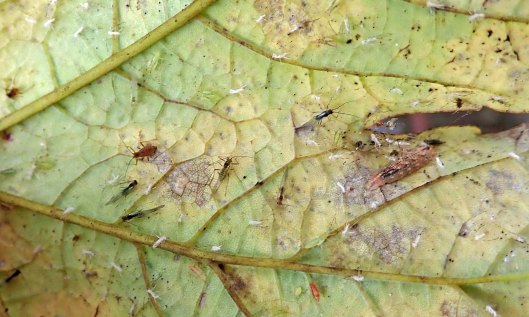
I usually find these on Sycamore leaves, the undersides of which are home to thriving families of aphids, the hoverfly larvae’s favourite food. Occasionally, I’ve found larvae on the tops of leaves or on branches, perhaps on the move to a new leaf. And yesterday, on Twitter, I saw a short video by my go-to hoverfly larvae expert on the various species of hoverfly larvae he had found on gravestones under Sycamore trees in his local cemetery. I’ll be checking out that idea during one of next week’s nature walks. Meantime, try turning over some Sycamore leaves – you never know what might be lurking underneath.


26 Tuesday Oct 2021
Tags
British hoverflies, Dasysyrphus larva, hoverfly larva, hoverfly larva eating an aphid, hoverfly larva on Sycamore
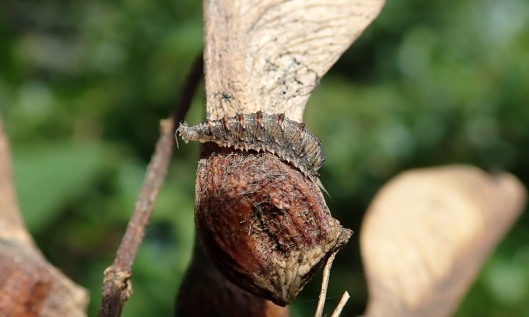
The highlight of Friday’s walk was marvelling at this hoverfly larva catch an aphid. The larva sat, perfectly camouflaged on its Sycamore seed, waiting for an unsuspecting aphid to tootle past. Though these larvae are blind, they can obviously sense movement, as this one rapidly twisted its body towards any approaching larvae. As I watched, it missed the first one but the next larva to chance its luck was grabbed and was in the process of having its life juices sucked out when I moved on.
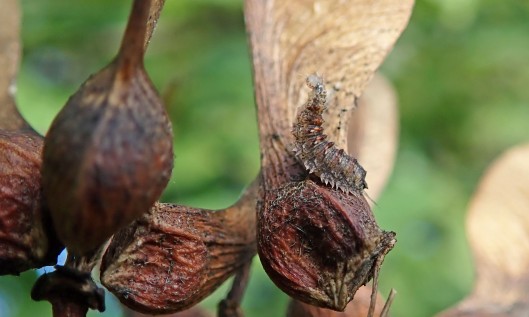
Geoff, a hoverfly larvae expert I consulted on Twitter, was able to confirm a species but not a precise identification: ‘The Godzilla of hoverfly larvae! Certainly Dasysyrphus sp. probably albostriatus. Need a dorsal view of the rear breathing tube to be certain.’ Yes, you read that right – not only is the larva blind but it also breathes through tubes in its rear end!
04 Saturday Sep 2021
Posted in nature
It’s quite the transformation, from this green larva that looks a bit like a cross between a slug and a caterpillar …
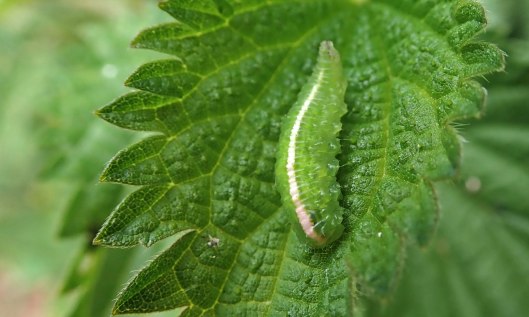
to this black-and-white flying creature.

This is the hoverfly Scaeva pyrastri and, amazingly, it’s a migrant from mainland Europe. A bit like the Red admiral butterfly, Scaeva pyrastri has good years and bad years, sometimes visiting lowland Britain in large numbers, sometimes hardly at all. And, when it comes here, it does often breed locally (and here, I must add a caveat – the larva in my first image may actually be the other Scaeva species, S. selentica, though that species hasn’t actually been recorded in my area).

06 Saturday Mar 2021
Posted in insects
Tags
British hoverflies, Episyrphus balteatus, Eristalis tenax, hoverfly, Meliscaeva auricollis, spring hoverflies
These three are often the first hoverflies seen in the springtime as they all over-winter as adults, so it’s no surprise that I’ve now seen these three species as well my first for 2021, the Melanostoma scalare I blogged about 10 days ago (First hoverfly, 25 February). We’ll need a bit more sun and warmer temperatures before more hoverflies are out and about though.
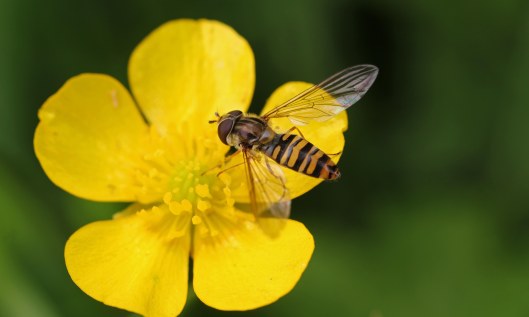 Episyrphus balteatus
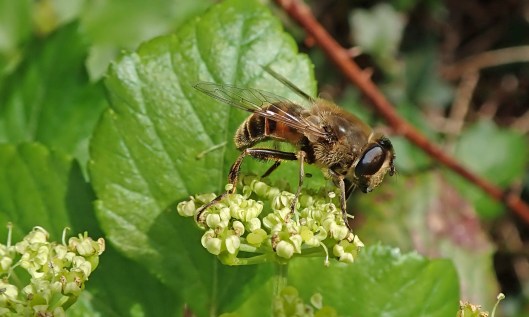 Eristalis tenax
 Meliscaeva auricollis
25 Thursday Feb 2021
Posted in spring
Tags
Alexanders, British hoverflies, Chequered hoverfly, first hoverfly of year, hoverfly, Melanostoma scalare
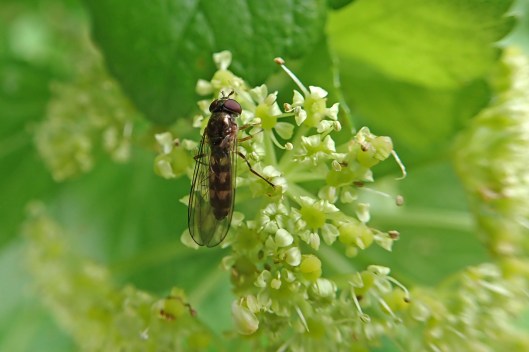
Yesterday’s exercise walk was a long meander around local paths looking for wildflowers in bloom (those pictures will be coming on Sunday), and in the process I spotted my first hoverfly of the year, this tiny Chequered hoverfly (Melanostoma scalare), nectaring on Alexanders. With temperatures forecast to rise and the prospect of some sunshine over the coming days, I’m hoping for more … and maybe even my first butterfly of the year. Fingers crossed!
30 Wednesday Dec 2020
Posted in insects
Tags
British hoverflies, British insects, British leafhoppers, Cicadella viridis, Helophilus trivittatus, hoverfly larva, Italian Alder aphid, leafhopper
These are some of the highlights of my year in insects:

I found my First hoverfly larva (and I’ve since found another, though not been able to identify either) …
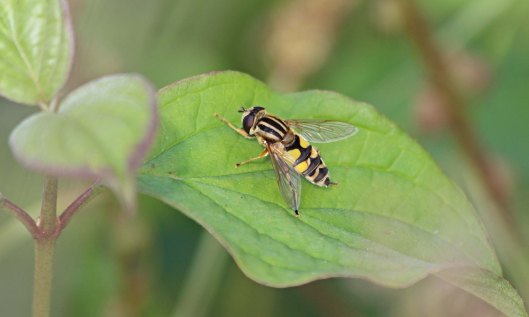
… and my first examples of the hoverfly species Helophilus trivittatus.

And, very recently, my first Italian Alder aphids, which I’ve since found on another Italian Alder tree on the other side of town.

Here’s one I haven’t blogged – it’s a leafhopper, Cicadella viridis, which I saw for the first time during one of the two times this year that I actually caught a train to venture out of my local walking area (this was immediately after our first lockdown ended, when I dared to make two local train journeys – not been on a train or bus since).
 earthstar
You must be logged in to post a comment.