• ABOUT
  • BIRDING 2018
  • Birding 2019
  • BLOG POSTS
  • Butterflies 2018
  • Resources

earthstar

~ a celebration of nature

earthstar

Tag Archives: British leafmines

Leafmines: Phyllonorycter comparella

04 Monday Nov 2024

Posted by sconzani in insects, leaves, trees

≈ 2 Comments

Tags

British leafmines, British moths, leaf-mining moth larvae, leafmines on Poplar, Phyllonorycter comparella, Poplar leaf-miner

This was a wonderful surprise! I was checking Poplar leaves, not searching for anything in particular, when I turned over a leaf and found this tiny moth, presumably only just emerged from the pupa within its silken mine as its wings had not fully expanded.
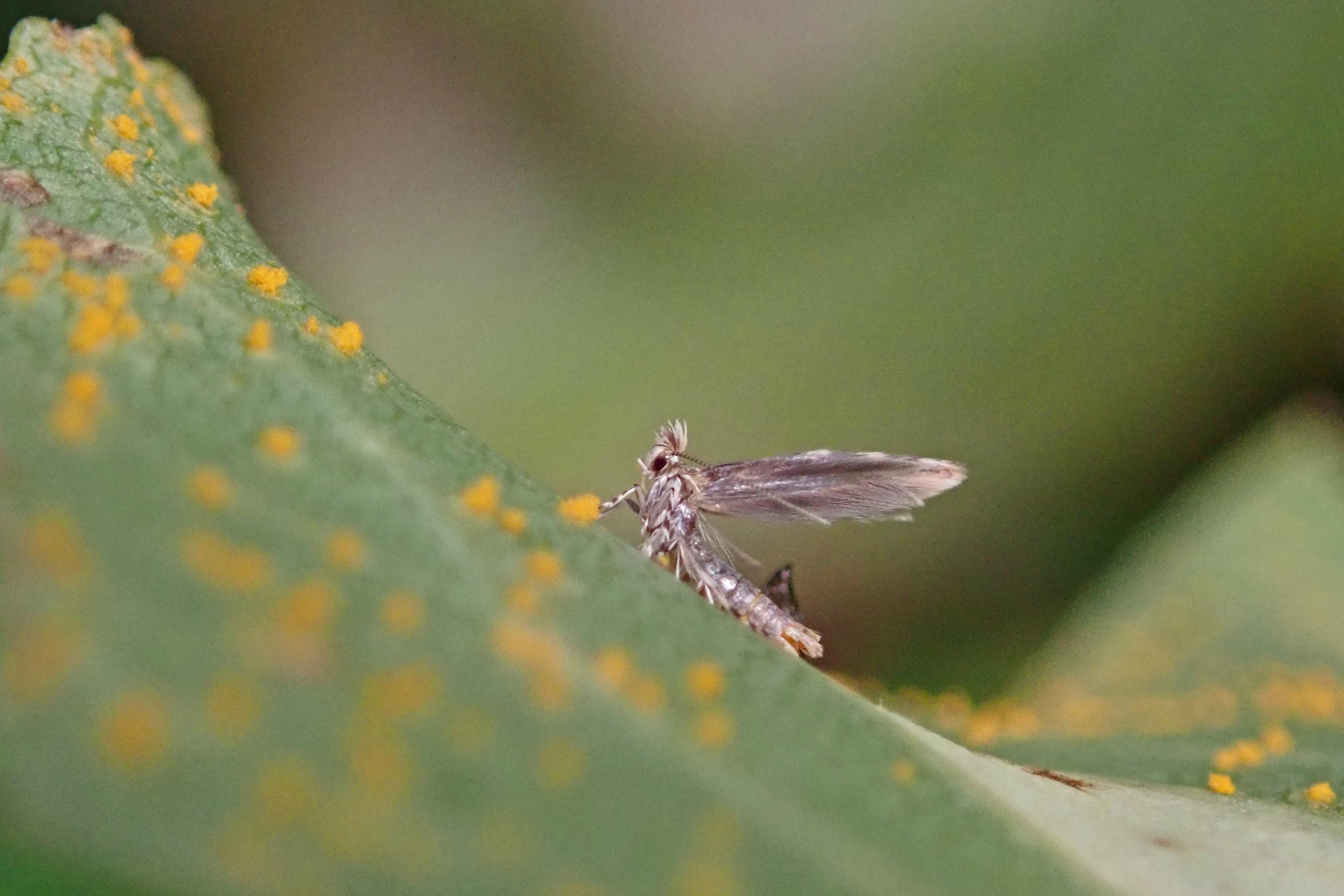
241104 Phyllonorycter comparella (1)

I didn’t know what it was until I got home and checked my photos, and then was fairly sure I must have got my identification wrong as the Welsh biodiversity database was showing just four Welsh records, all closer to England, in the county of Gwent. The name I’d come up with was Phyllonorycter comparella (common name Poplar leaf-miner).
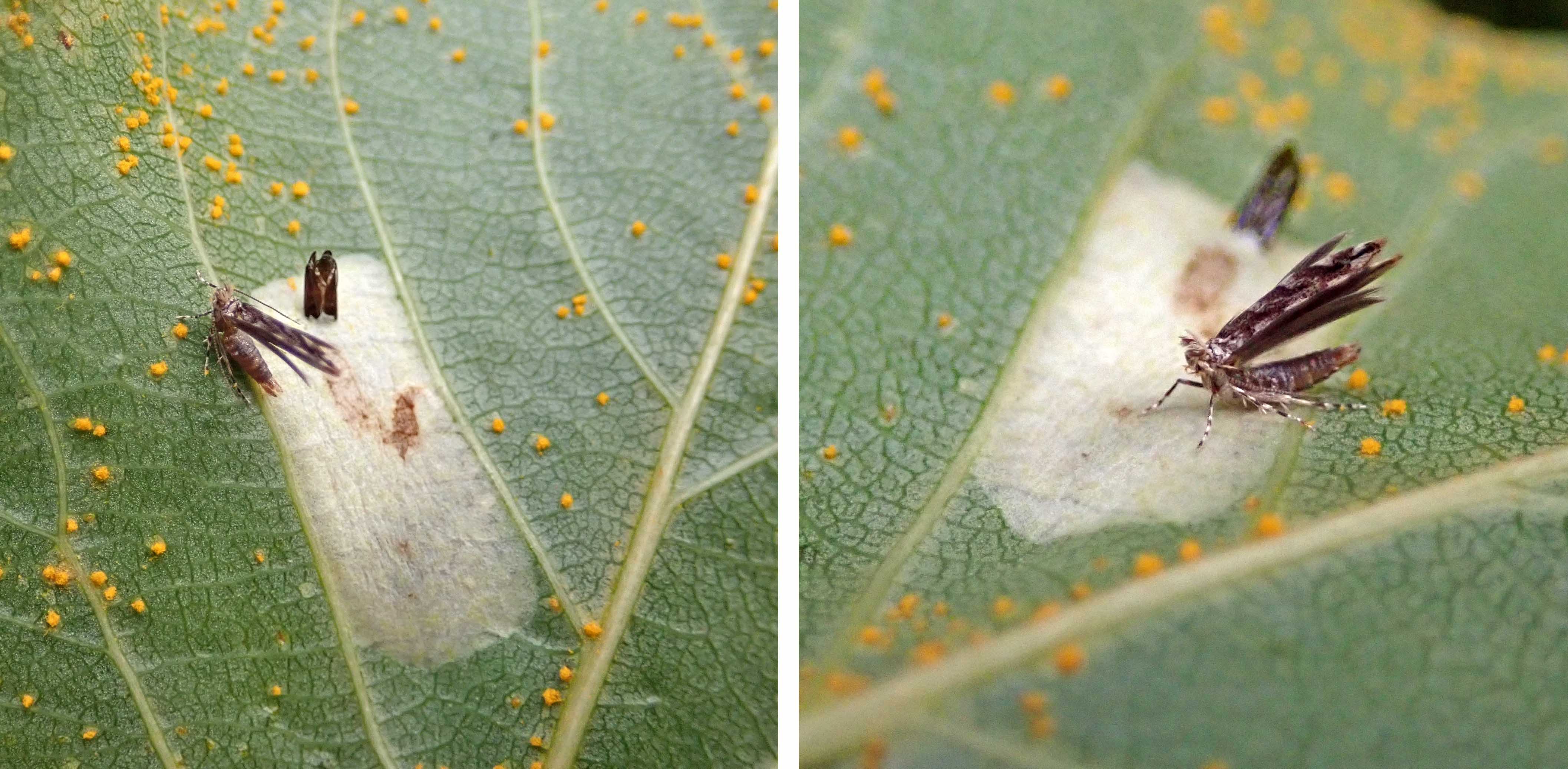
241104 Phyllonorycter comparella (2)

The mine certainly looked right, though it was difficult to be certain of the moth from what I had been able to see of its markings. But when I posted photos on social media, one of the moth experts I know almost immediately popped up with a comment ‘Blimey …’ and ‘I can’t think of any plausible alternatives’, and then another expert commented ‘Very good find’. And now my county moth recorder has confirmed my record. You can read more about this Poplar-leaf-mining moth on the British Leafminers website and see better photos of the adult moth on the UK Moths website.
Like Loading...

Leafmines: Cephalomyza labiatarum

26 Monday Aug 2024

Posted by sconzani in insects, wildflowers

≈ Leave a comment

Tags

Amauromyza labiatarum, British leafmines, Cephalomyza labiatarum, fly mines on Hedge woundwort, Hedge woundwort, leaf-mining fly, Stachys sylvatica

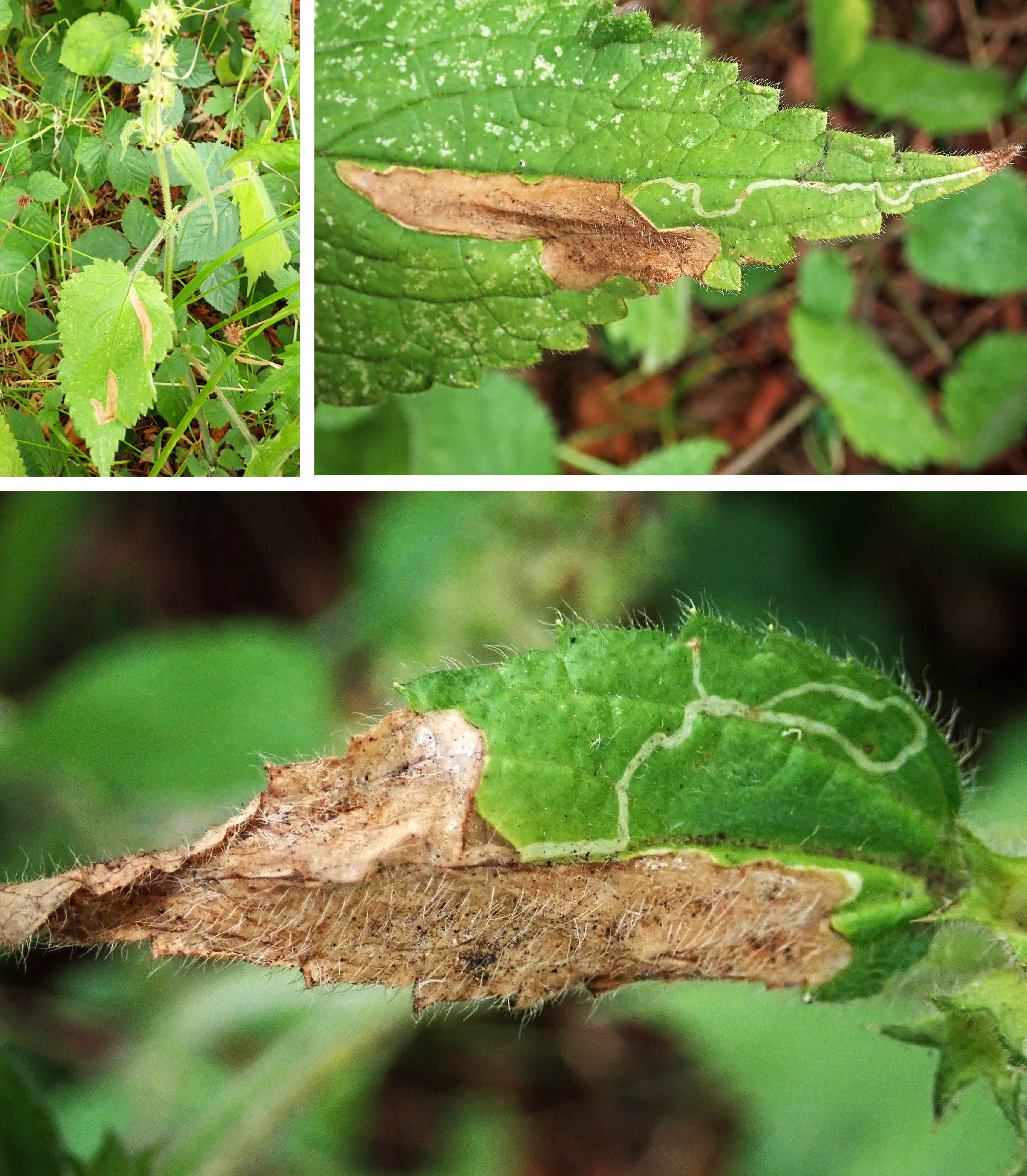
Since I read earlier in the year about the larvae of one of the case-bearing moths living on Hedge woundwort (Stachys sylvatica), I’ve been checking those plants whenever I see them. I’ve not yet found the Coleophora species but, a week or so ago, I did find some leafmines I’d never seen before. These are the larval mines of the fly Cephalomyza (formerly Amauromyza) labiatarum and they can, in fact, be found on a very wide range of plants (the Agromyzidae Recording Scheme website lists the following species: Ajuga, Ballota, Galeopsis, Glechoma, Lallemantia, Lamiastrum, Lamium, Leonurus, Lycopsis, Marrubiam, Melissa, Mentha, Prunella, Satureja, Scutellaris, Stachys, Teucrium, and Verbena). As you can hopefully see from my photos, the larva’s initial feeding creates a long thin line, which later becomes a large blotch mine. You can see more images on the Agromyzidae RS site referenced above and on the British Leafminers website.

240826 Cephalomyza labiatarum

Like Loading...

Leafmines: Agromyza albitarsis

17 Monday Jun 2024

Posted by sconzani in insects, trees

≈ Leave a comment

Tags

Agromyza albitarsis, British leafmines, leaf-mining fly larvae, leafmine, leafmine on White poplar, White poplar

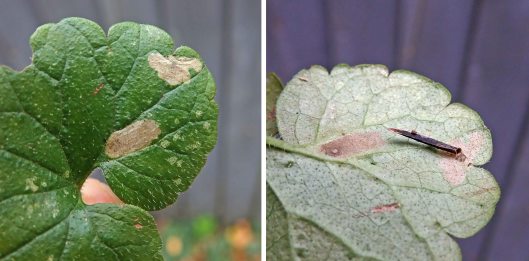
I hadn’t found any new leafminers for a while so was delighted recently to find two within five minutes of each other. These two mines were the first I spotted, here on the leaves of White poplar (Populus alba), though they can also be found on other Poplar (Populus) and Willow (Salix) species.

240617 agromyza albitarsis

These are the larval mines of the little fly Agromyza albitarsis – you can see what the adult fly looks like by clicking on the ‘images’ tab on the National Agromyzidae Recording Scheme website. I couldn’t actually count how many larvae were present in these mines but have read that they often feed communally, forming large green blotches that eventually turns a dark brown-black colour.

Like Loading...

Leafmines: Orchestes quercus

27 Monday May 2024

Posted by sconzani in insects, trees

≈ Leave a comment

Tags

British leafmines, leafmine on Oak, leafmining weevil, oak tree, Orchestes quercus, weevil leafmines

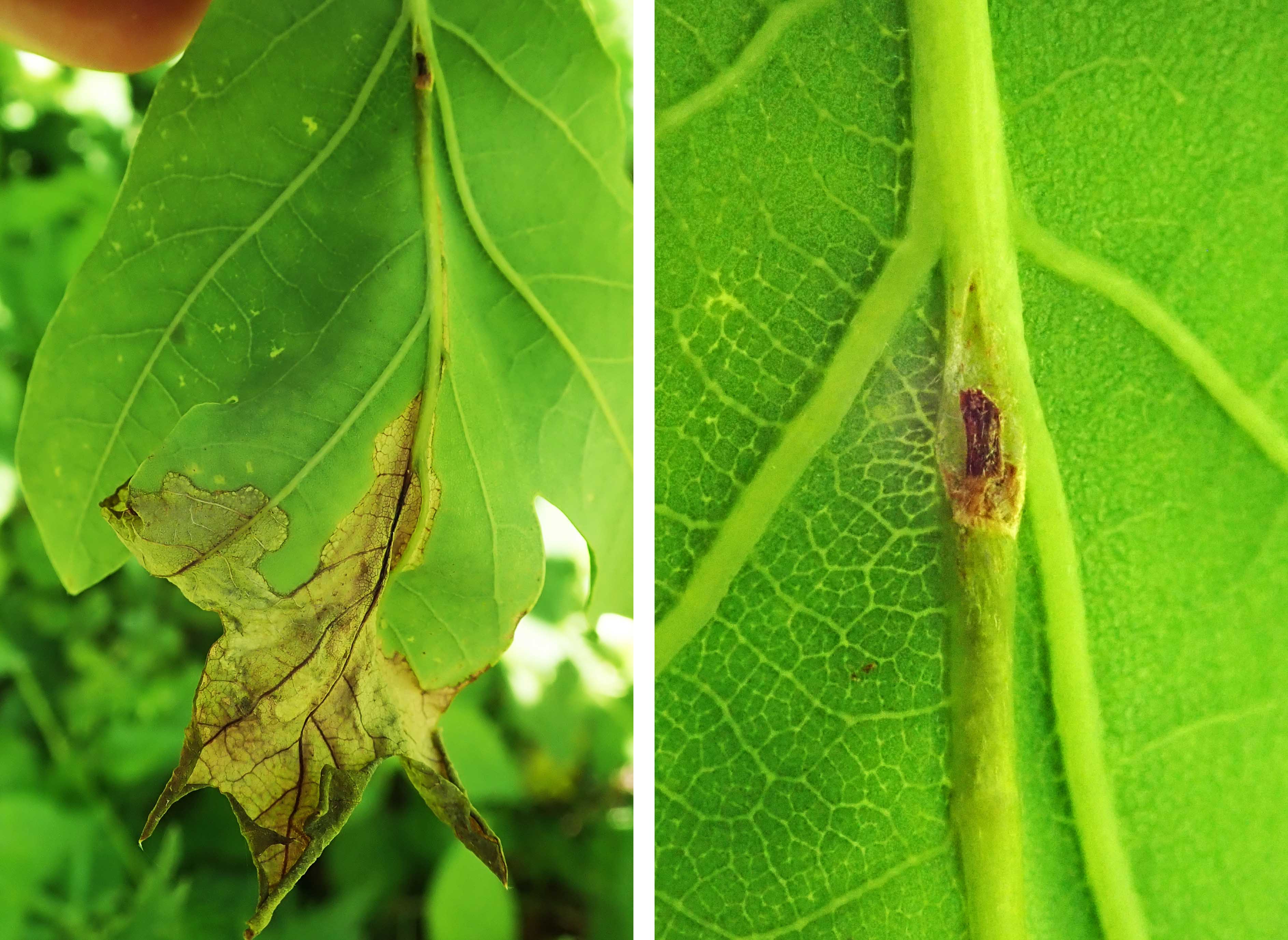
During a wander along the woodland rides of Casehill Woods last Saturday, I spent some time checking Oak leaves for whatever creatures might be living amongst them. One of my finds was this leafmine, a new one for me, made not by a moth or a fly as most leafmines are, but by a weevil.

240527 Orchestes quercus (1)

A female Orchestes quercus weevil laid her egg in the central rib of the leaf (you can see the scar in the photo on the right, below). Once hatched, the larva munched its way down the side of the leaf rib, creating a thin gallery in the epidermis, before its more voracious feeding as it grew created a large blotch mine at the tip of the leaf.

240527 Orchestes quercus (2)

The UK Beetles website has a photo of the adult weevil, a tiny brown hairy creature around 3mm long. Although I searched for any weevils amongst the Oak leaves (I also found the larval mines of another weevil, Orchestes hortorum, formerly O. signifier), I found none.

Like Loading...

Leafmines: Gracillaria syringella

04 Monday Dec 2023

Posted by sconzani in insects, plants

≈ Leave a comment

Tags

British leafmines, Gracillaria syringella, leafmines, leafmines on privet, leafmining moth larvae, Ligustrum vulgare

These finds date from early November but it’s taken a while to get their identity confirmed. These are the larval leafmines of the gorgeous little moth Gracillaria syringella, shown here on Wild privet (Ligustrum vulgare) though they can also be found mining the leaves of Lilac species (Syringa, hence the epithet in their scientific name), Ash (Fraxinus excelsior) and Jasmine (Jasminum sp.).

231204 Gracillaria syringella (1)

Once hatched from their eggs, the larvae initially feed within a gallery mine (difficult to see in my images so I’ve marked them with a red arrow), then broaden their horizons into a large blotch. My finds were late in the year – the mines of Gracillaria syringella can usually be found in June and then again during August-September.

231204 Gracillaria syringella (2)

Like Loading...

Leafmines: Lyonetia prunifoliella

09 Monday Oct 2023

Posted by sconzani in insects, leaves, trees

≈ Leave a comment

Tags

British leafmines, British moths, leaf mines, leafmines on Blackthorn, leafmining moth larvae, leafmining moths, Lyonetia prunifoliella

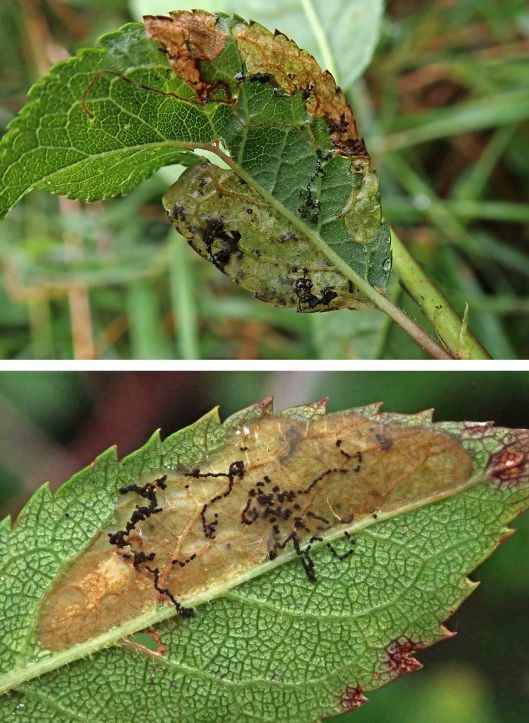
For over 100 years, the lovely little micro moth Lyonetia prunifoliella was thought to be extinct in the UK until it was rediscovered in the 2000s in southern England. It took a while to spread across the country but was found new to Wales, near Holyhead, last autumn and, soon afterwards, found here in south Wales, at Kenfig National Nature Reserve, though just one larval mine was found despite much searching by Butterfly Conservation’s senior moth ecologist George Tordoff.

231009 lyonetia prunifoliella (1)

This year, though, George says, it’s really taken off in south Wales: he’s found it in various Cardiff parks and at Lavernock Nature Reserve. When I heard this news last Sunday, 1 October, I immediately decided to go searching, focussing in particular on the suckering growth of Blackthorn (Prunus spinosa), the tree this moth appears to favour locally for its larval leafmines (though it is known to use other roseaceous trees elsewhere).

231009 lyonetia prunifoliella (2)

Last Monday I found Lyonetia prunifoliella mines immediately at the first place I looked, and have since found it at six locations in my surrounding area, sometimes in abundance, other times just one or two mines, despite a plentiful supply of young Blackthorn leaves. The mines are relatively easy to identify, as the larvae eject their frass from the mines in a ‘string of black pearls’, a rather poetic description from someone on Twitter but easy to remember. (The photographs above show the upper and under sides of the same leaf, with the larva apparent above and its frass ejected below.)

231009 lyonetia prunifoliella (3)

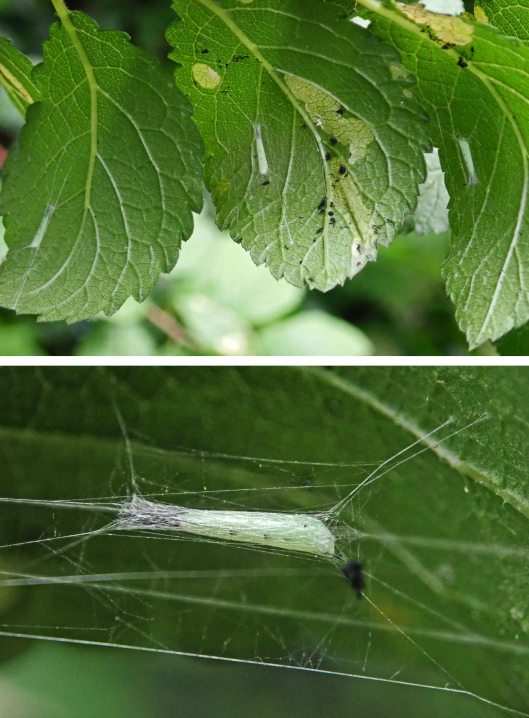
Although most mines I’ve seen have been empty (this moth overwinters as an adult), a few have held larvae, and I was particularly delighted last Thursday to find a group of five cocoons, strung like hammocks on the underside of leaves with silk produced by the larvae before they pupate. I’ve yet to see an adult moth but will definitely share that exciting moment when it happens.

Like Loading...

Leafmines: Bucculatrix bechsteinella

02 Monday Oct 2023

Posted by sconzani in insects, trees

≈ Leave a comment

Tags

British leafmines, Bucculatrix bechsteinella, Hawthorn bent-wing, leafmine on Hawthorn, moth leafmines

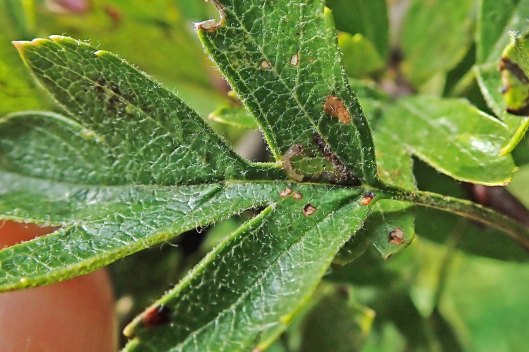
This is another of my ‘I think it might be this but it might not be’ posts. One of the people I follow on Twitter (I refuse to call it X) has begun sharing a ‘Lepidoptera leafmines to find’ monthly post, and one of this month’s six is Bucculatrix bechsteinella, found on Hawthorn.

231002 bucculatrix bechsteinella (1)

The post warns that Bucculatrix bechsteinella (also known as Hawthorn bent-wing) ‘may be confused with those of Paraswammwerdammia nebulella, which tend to be smaller, more numerous and with irregular exits and occurring anywhere on the leaf, but those of B. bechsteinella usually occur in a vein axil.’ This description leads me to think my finds are correct but I’ll need to await verification of my records to be sure. (You can see the adult moth on the UK Moths website.)

231002 bucculatrix bechsteinella (2)

Like Loading...

New year, first insect

04 Wednesday Jan 2023

Posted by sconzani in insects

≈ Leave a comment

Tags

British leafmines, leaf-mining moth larvae, leaf-mining moths, Phyllonorycter leucographella

Appropriately enough for someone who likes finding leaf mines, the first insect I spotted this year was a leafminer, the larva of the moth Phyllonorycter leucographella. I blogged about these back in November 2020 (Leafmines: Phyllonorycter leucographella), when, as now, I found the mines on the orange-berried variety of Firethorn (Pyracantha coccinea). As the entry on this species on the British Leafminers website explains, the autumn generation of these larvae, like this one, overwinter in their mine, before pupating and emerging in the spring.

230104 Phyllonorycter leucographella on pyracantha

The larvae can also be found on many other plant species: the photo below shows the same moth species mining the leaf of a Plane tree in October 2021. In this case, you can see the empty pupal case still in the mine and the exuvia poking out at the top of the mine, from where the moth has emerged.

230104 Phyllonorycter leucographella on plane

Like Loading...

Leafmines: Coleophora albitarsella

14 Monday Nov 2022

Posted by sconzani in insects, plants

≈ Leave a comment

Tags

blotch leafmines, British leafmines, case-bearing larva, Case-bearing moth, Coleophora albitarsella, leafmines on Ground-ivy, leafmining moth larvae

For months, both earlier this year and in recent weeks, I’ve been casting an eye over all the patches of Ground-ivy (Glechoma hederacea) I’ve noticed so I was delighted, last Friday, to finally find what I’ve been searching for, a new leafminer. Even better, as well as the tell-tale blotches on several leaves, when I turned over one leaf there was also an empty larval case.

221114 coleophora albitarsella (1)

These are the feeding signs for the larvae of the little moth Coleophora albitarsella (also known as the White-legged case-bearer, you can see the rather non-descript adult moth on the UK Moths website here), which munches on a wide variety of different plants (see full list on the British Leafminers website here). This moth species is relatively scarce in Glamorgan, with just a few sightings this millennium; in fact, it’s not very common anywhere in the UK, with just 109 records currently showing in the NBN Atlas (110, when mine is added) , so I feel rather privileged to have found these leafmines.

221114 coleophora albitarsella (2)

Like Loading...

Leafmines: Stigmella speciosa

20 Tuesday Sep 2022

Posted by sconzani in insects, leaves, trees

≈ Leave a comment

Tags

Barred Sycamore pigmy moth larval mines, British leafmines, leafmines on Sycamore, leafmining moth larvae, Stigmella speciosa, Sycamore leafminer

While searching out Sycamore tarspot fungi on local Sycamore trees, I’ve also been keeping a look out for leafmines, specifically for the mines of the Barred Sycamore Pigmy moth, Stigmella speciosa. (You can see the very attractive adult moth on the UK Moths website by clicking here.)

220920 stigmella speciosa (1)

Although I’ve found the tarspot fungi, in varying quantities, on almost every Sycamore tree I’ve seen, the leafmines, though supposedly common, are not so easily spotted. Despite checking over a hundred Sycamore trees now, I’ve only found Stigmella speciosa mines in one location, where there were just three mines within the limits of my visibility. Perhaps more will turn up as I continue my search for Sycamore tarspot.

220920 stigmella speciosa (2)

Like Loading...
← Older posts
Newer posts →

About me

sconzani

sconzani

I'm a writer and photographer; researcher and blogger; birder and nature lover; countryside rambler and city strider; volunteer and biodiversity recorder.

View Full Profile →

Follow earthstar on WordPress.com

Enter your email address to follow this blog and receive notifications of new posts by email.

Recent blog posts

  • N is for nest December 19, 2025
  • M is for mite December 18, 2025
  • L is for lepidopteran lifers December 17, 2025
  • K is for Keeled skimmers December 16, 2025
  • J is for Jersey tiger December 15, 2025

From the archives

COPYRIGHT

Unless otherwise acknowledged, the text and photographs on this blog are my own and are subject to international copyright. Nothing may be downloaded or copied without my permission.

Fellow Earth Stars!

  • Unknown's avatar
  • Unknown's avatar
  • Unknown's avatar
  • Unknown's avatar
  • Unknown's avatar
  • Unknown's avatar
  • Unknown's avatar
  • Unknown's avatar
  • Unknown's avatar
  • Unknown's avatar
  • Unknown's avatar
  • Unknown's avatar
  • Unknown's avatar
  • Unknown's avatar
  • Unknown's avatar
  • Unknown's avatar
  • Unknown's avatar
  • Unknown's avatar
  • Unknown's avatar
  • Unknown's avatar
  • Unknown's avatar
  • Unknown's avatar
  • Unknown's avatar
  • Unknown's avatar
  • Unknown's avatar
  • Unknown's avatar
  • Unknown's avatar
  • Unknown's avatar
  • Unknown's avatar
  • Unknown's avatar
  • Unknown's avatar
  • Unknown's avatar
  • Unknown's avatar
  • Unknown's avatar
  • Unknown's avatar
  • Unknown's avatar
  • Unknown's avatar
  • Unknown's avatar
  • Unknown's avatar
  • Unknown's avatar
  • Unknown's avatar
  • Unknown's avatar
  • Unknown's avatar
  • Unknown's avatar
  • Unknown's avatar
  • Unknown's avatar
  • Unknown's avatar
  • Unknown's avatar
  • Unknown's avatar
  • Unknown's avatar

Blog at WordPress.com.

Privacy & Cookies: This site uses cookies. By continuing to use this website, you agree to their use.
To find out more, including how to control cookies, see here: Cookie Policy
  • Subscribe Subscribed
    • earthstar
    • Join 667 other subscribers
    • Already have a WordPress.com account? Log in now.
    • earthstar
    • Subscribe Subscribed
    • Sign up
    • Log in
    • Report this content
    • View site in Reader
    • Manage subscriptions
    • Collapse this bar
 

Loading Comments...
 

You must be logged in to post a comment.

    %d