• ABOUT
  • BIRDING 2018
  • Birding 2019
  • BLOG POSTS
  • Butterflies 2018
  • Resources

earthstar

~ a celebration of nature

earthstar

Tag Archives: British moths

A good year for Jersey tigers

30 Saturday Aug 2025

Posted by sconzani in insects

≈ Leave a comment

Tags

British moths, climate change affecting wildlife, Euplagia quadripunctaria, Jersey tiger, Jersey tiger moth, moth

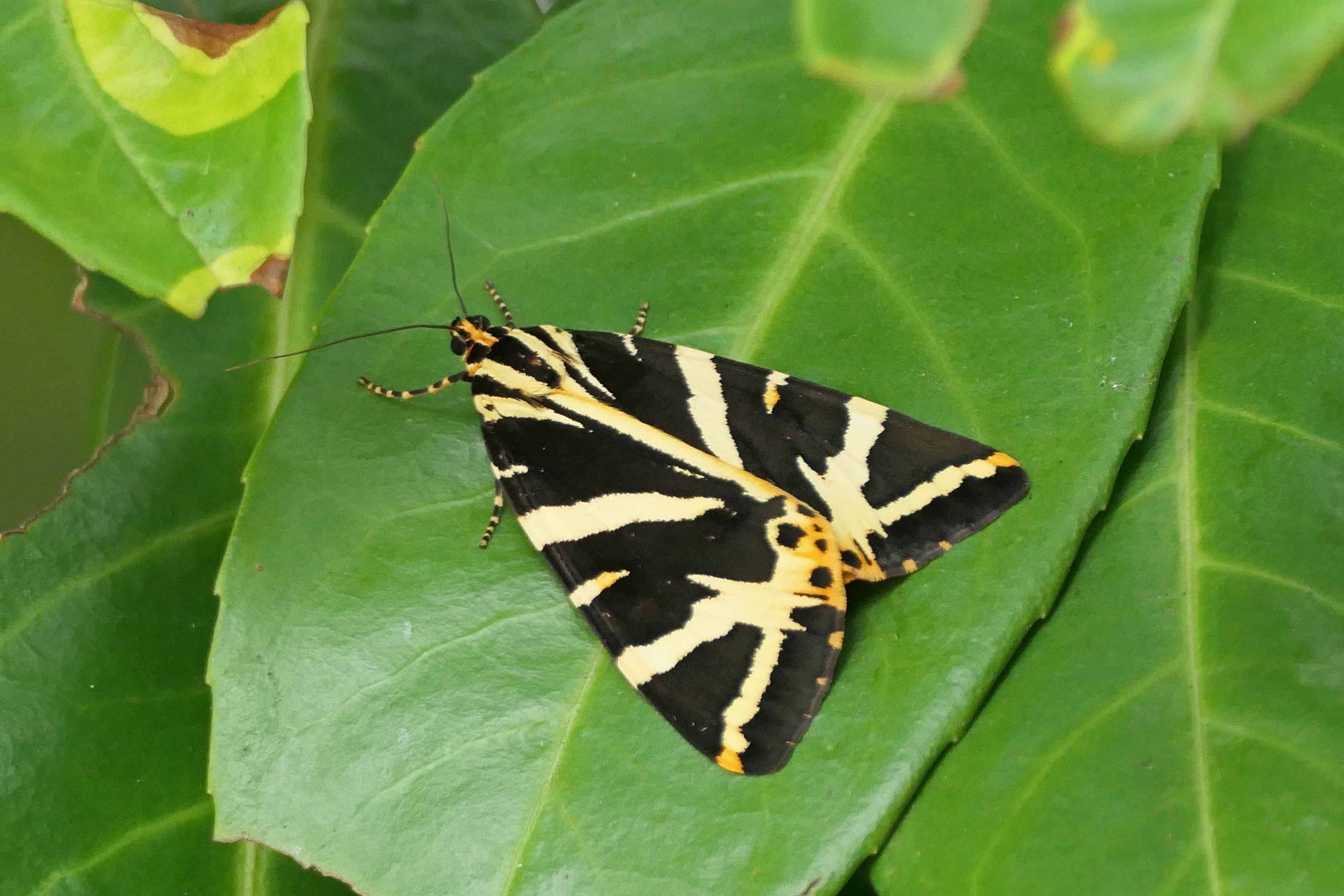
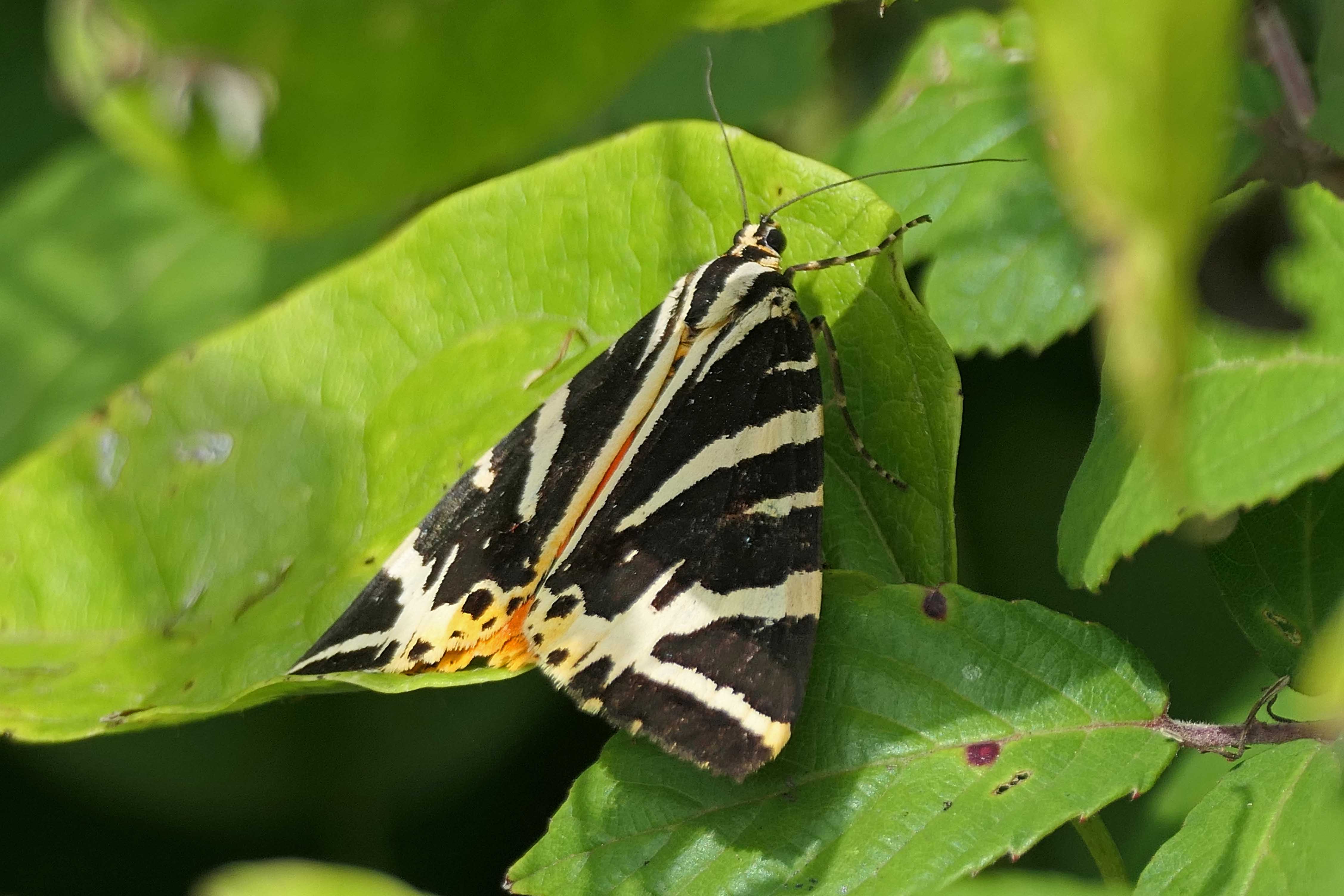
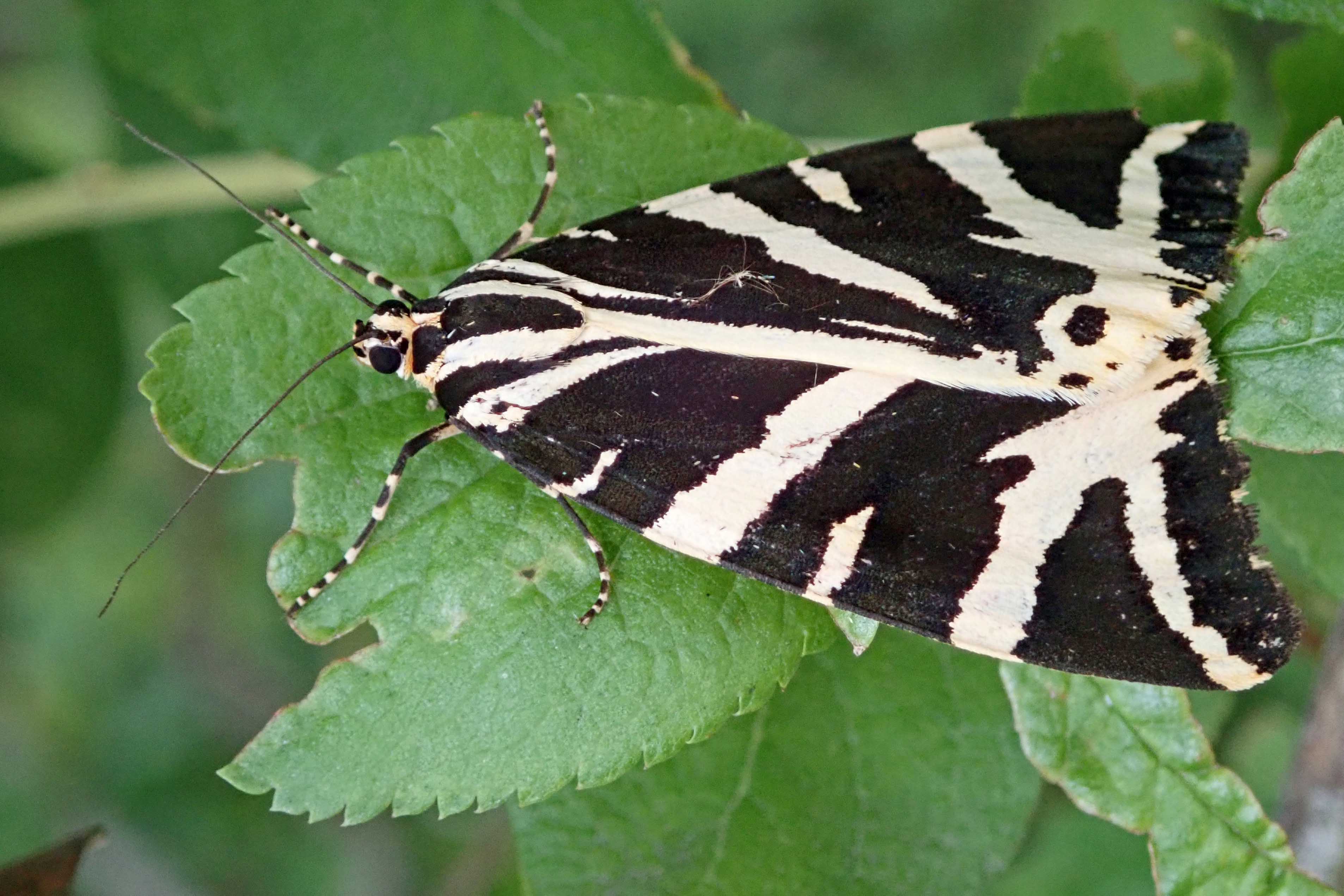
In the summers of 2018, 2019 and 2020 one of the local nature reserves near me held what seemed like a healthy population of Jersey tiger moths (Euplagia quadripunctaria), then they vanished. I don’t know why this was but several people have looked for them at the reserve in the intervening years and, though the occasional single moth has been sighted, the healthy population is no more. Away from that reserve, I would struggle to see any Jersey tigers, and saw none at all in 2021 and 2022.

So, this year, it has been an absolute delight for me to have enjoyed many, seemingly random sightings of these beautiful moths. By random, I mean that there haven’t been any large numbers concentrated in any specific location or area; instead, either I’ve spotted them lurking on trees and bushes, or my passing has disturbed them, there’s been a flash of their vibrant orange underwings as they’ve fluttered out and I’ve seen them once they’ve resettled.

And it seems my experience of seeing greater numbers of Jersey tigers this year has not been unique. This is a species that is included in Butterfly Conservation’s Big Butterfly Count, and, even before the count had ended, with 7 of the count’s 24 days remaining, that organisation had noted a ‘whopping 78%’ increase in reported Jersey tigers this year compared to last year. Butterfly Conservation’s blog post speculates that the dramatic increase was due to this summer’s record-breaking high temperatures.

As Dr Richard Fox, BC’s Head of Science is quoted as saying

The increase we’re seeing in Jersey Tiger moth sightings is a striking example of how climate change is reshaping the distribution of wildlife.
While it’s a delight to spot such a vibrant moth in gardens, parks and green spaces, it’s also a reminder of how rising temperatures are altering our natural environment.

Like Loading...

Leafmines: Phyllonorycters on Alder

14 Monday Jul 2025

Posted by sconzani in insects, trees

≈ Leave a comment

Tags

British leafmines, British moths, leaf-mining moth larvae, leafmines on Alder, moth larvae on Alder, Phyllonorycter rajella, Phyllonorycter stettinensis

It’s been a while since I’ve blogged about a new leaf-mining moth, and today you get two for the price of one.

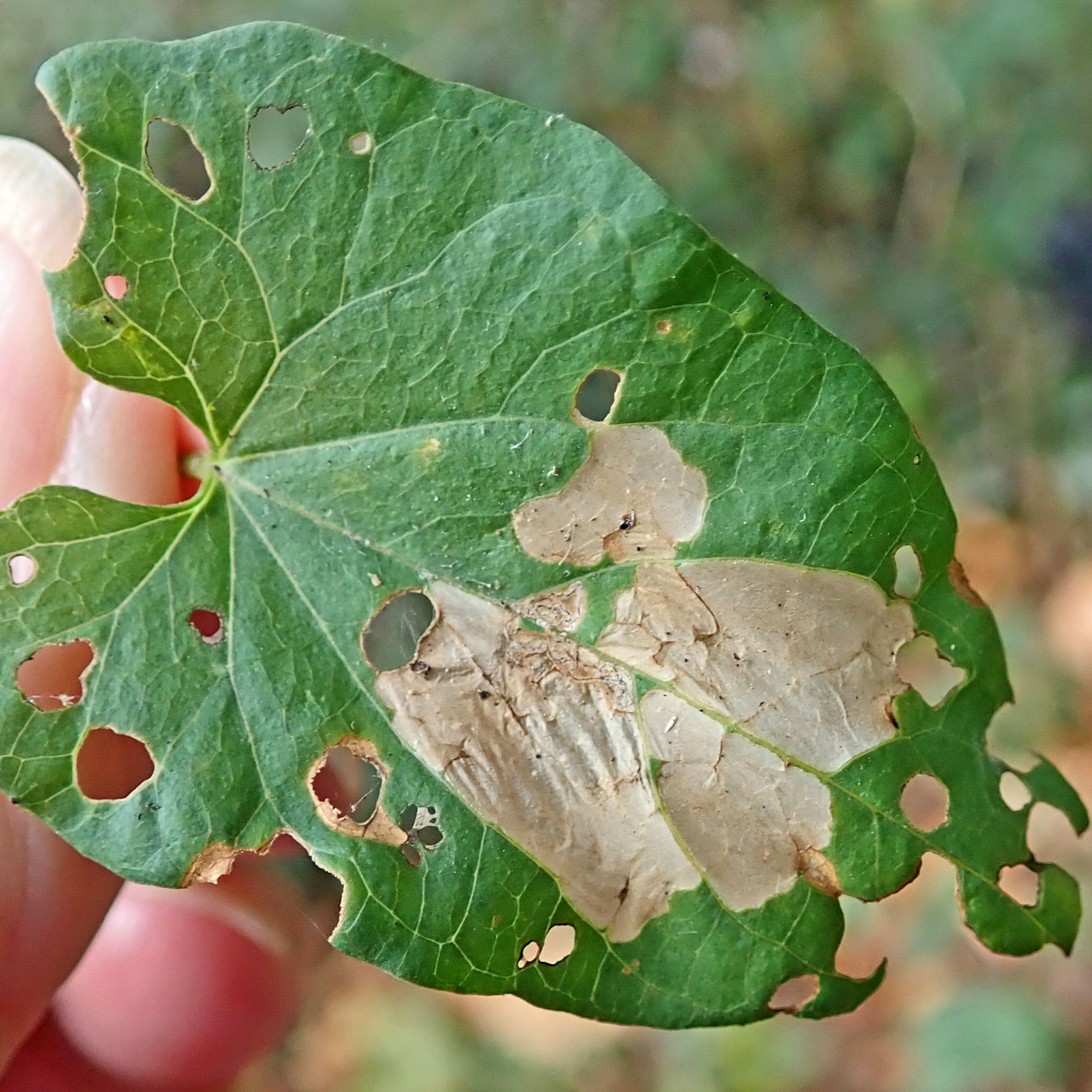
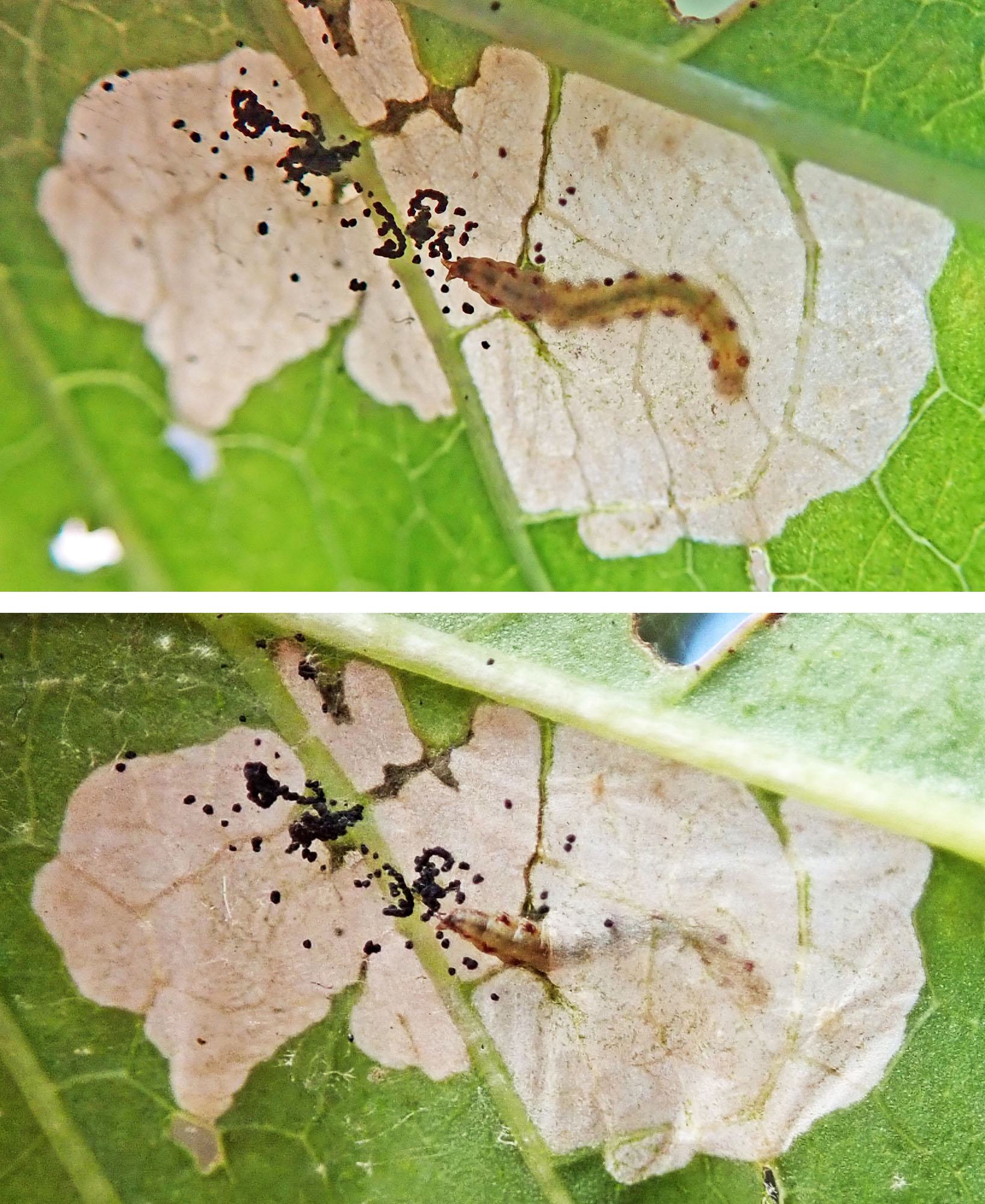
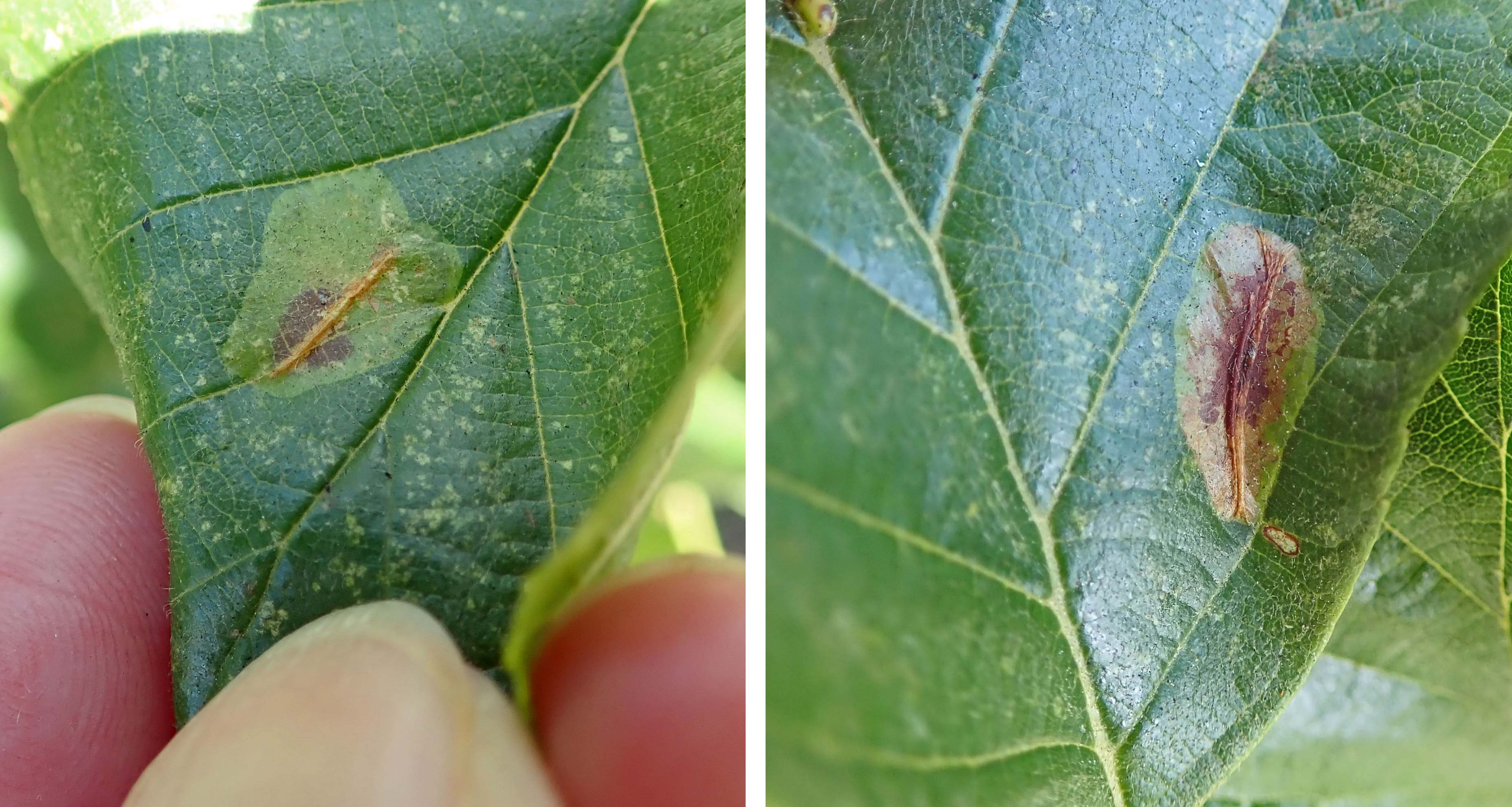
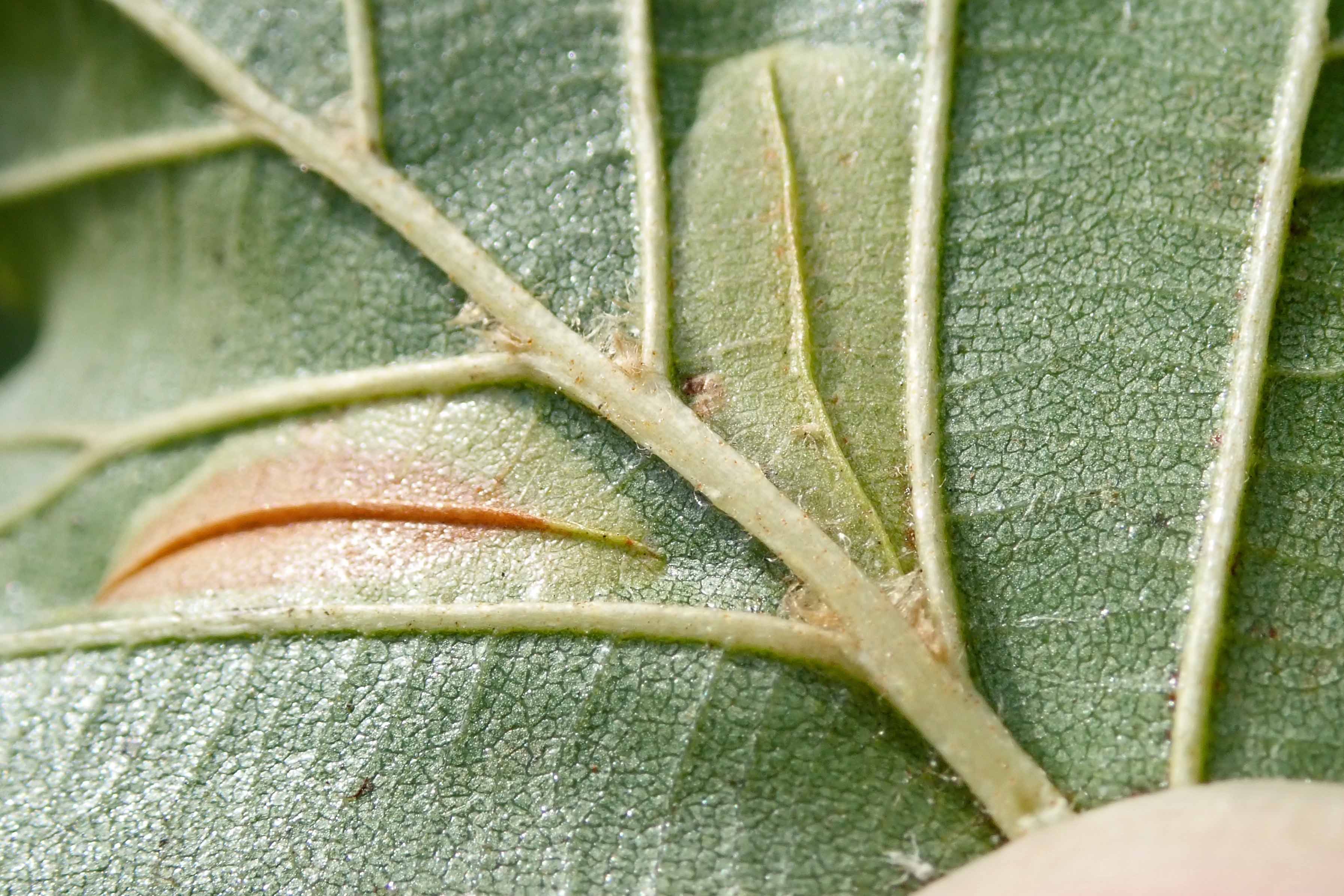
You see, the larvae of both these moths mine the leaves of Alder trees, creating a blotch with a single strong crease along the mine’s centre but, fortunately for those of us trying to identify these mines, there is one vital difference: the larval mines of Phyllonorycter rajella (below) can be found on the underside of the leaf, whereas the mines of Phyllonorycter stettinensis (above) are on the upper side of the leaf.

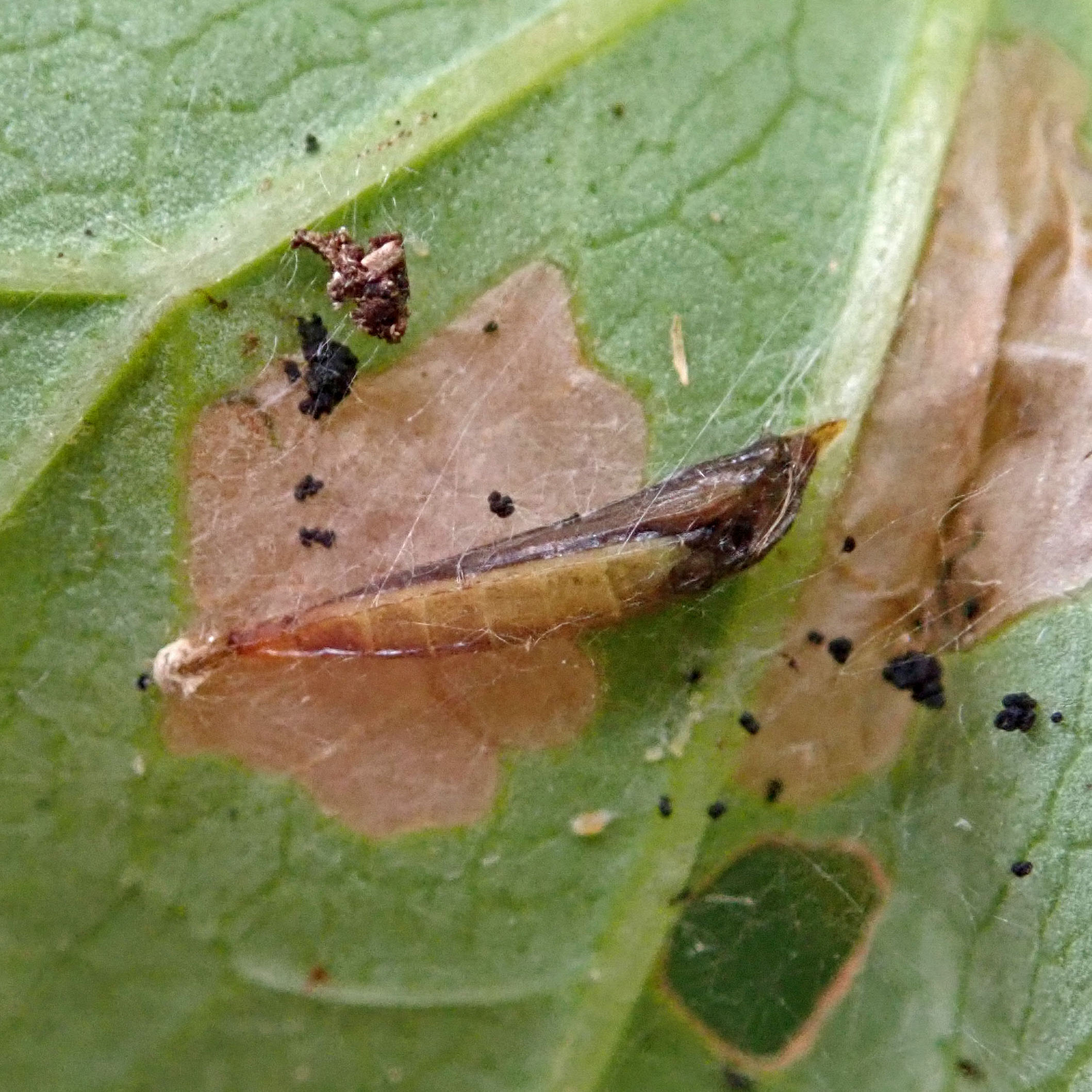
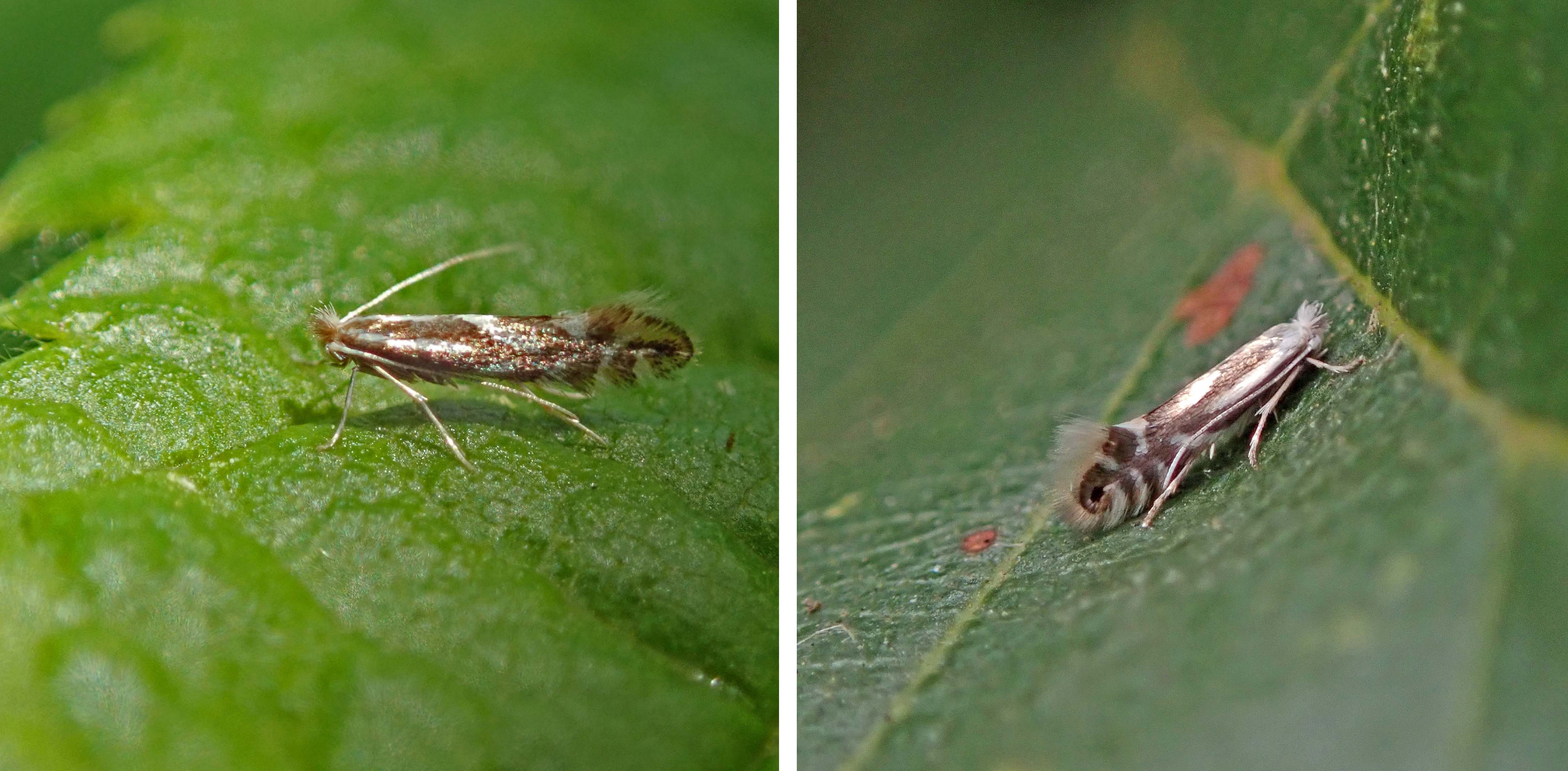
Both moths are bivoltine, i.e. they produce two generations each year; in both cases, the adult moths are active in May and again in August, so there’s a good chance of seeing the mines right through the summer. Amazingly, I’ve actually seen the adult Phyllonorycter rajella moth several times – two instances are shown below, but you can see better images of the very pretty adult moths of both these species on the UK Moths website: click the name to see Phyllonorycter rajella here, and Phyllonorycter stettinensis here.

Like Loading...

Depressaria daucella larvae

30 Monday Jun 2025

Posted by sconzani in insects, plants, wildflowers

≈ 2 Comments

Tags

British moths, caterpillar eating Hemlock water-dropwort, Depressaria daucella, Hemlock water-dropwort, moth larvae, Oenanthe crocata, Water-dropwort brown, Water-dropwort brown larvae

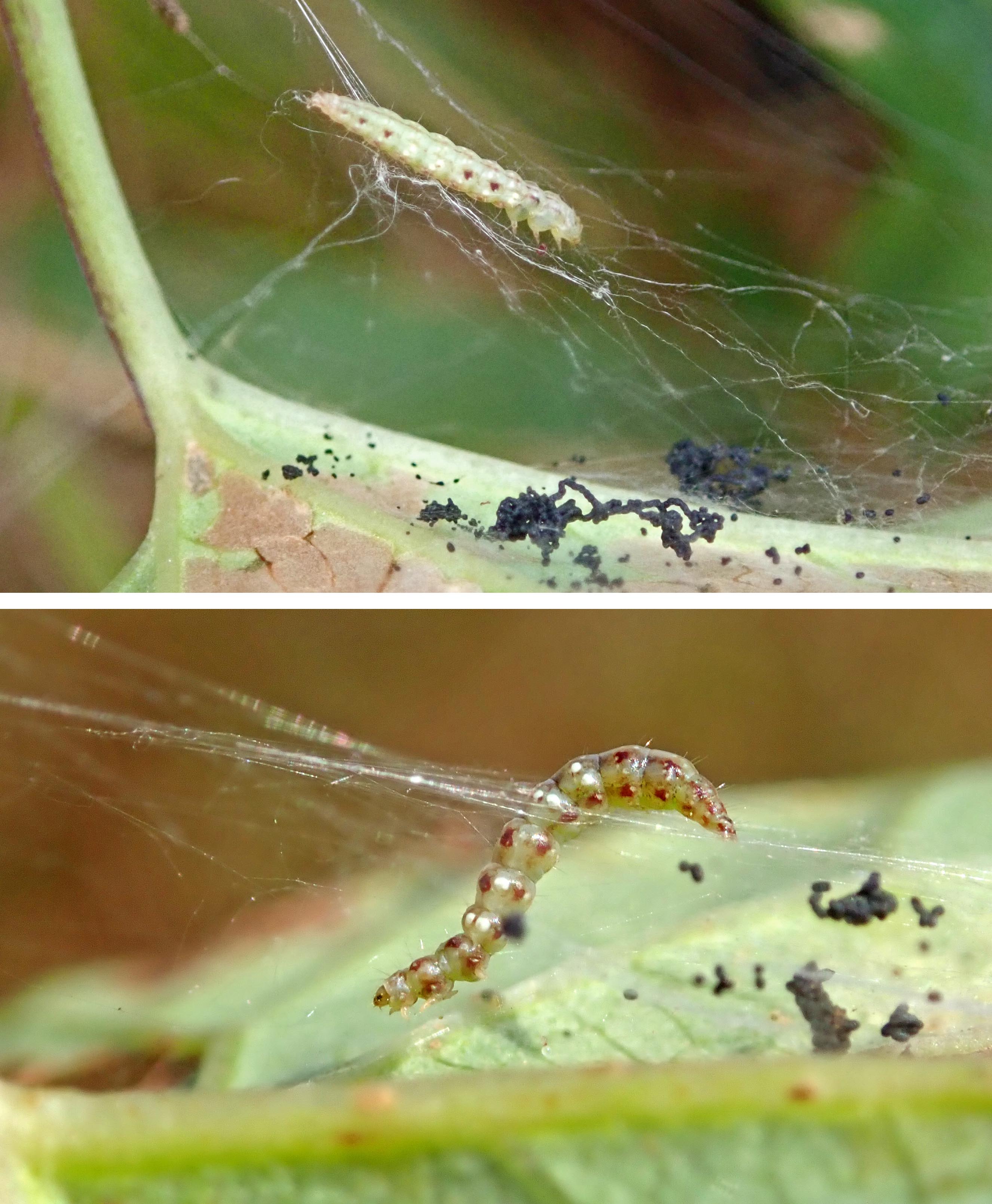
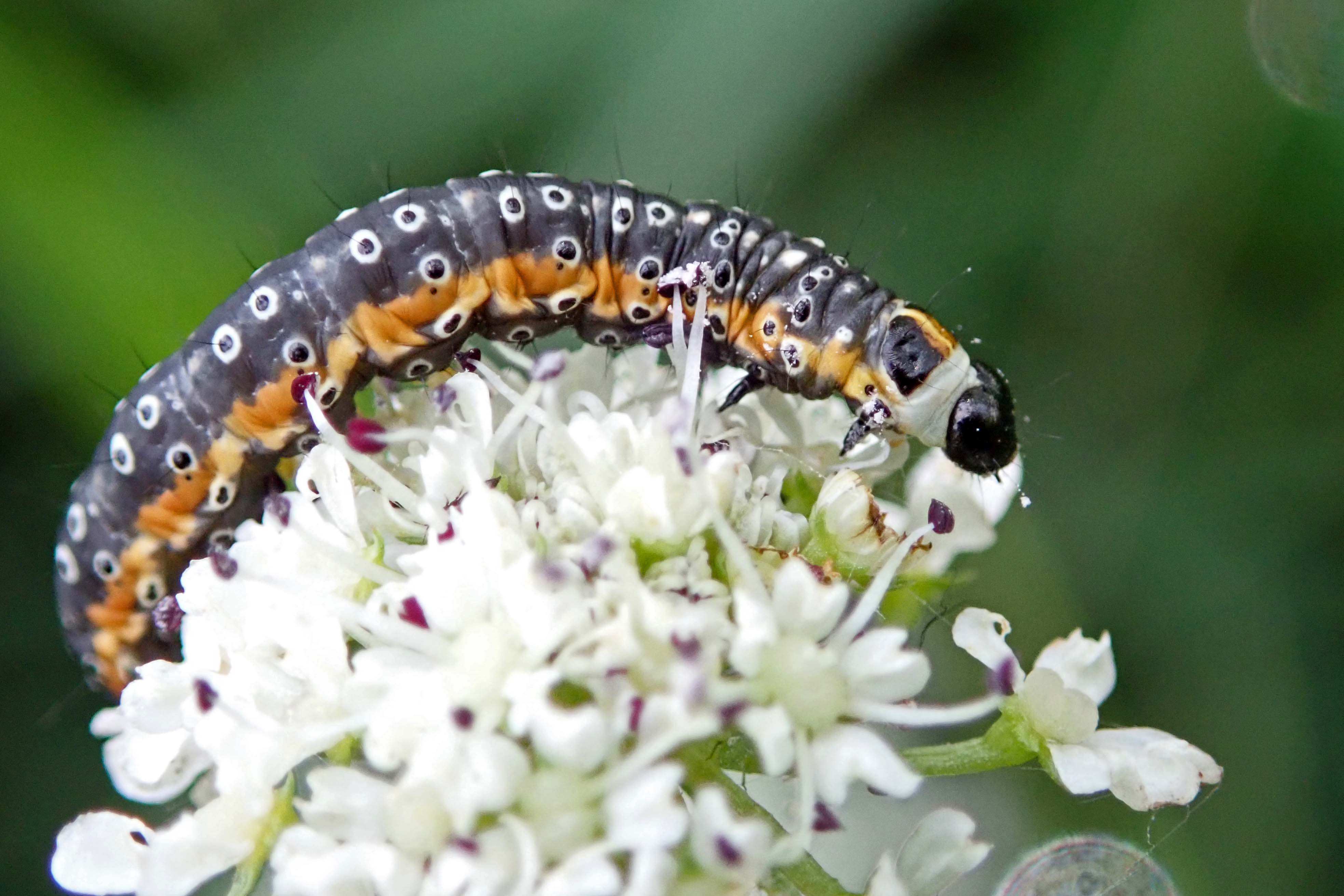
All parts of Hemlock water-dropwort (Oenanthe crocata) are highly poisonous; from the roots to the leaves, no part of it should be ingested, and the Royal Horticultural Society even recommends wearing gloves to handle the plant. Yet, somewhat surprisingly, when I was wandering around the RSPB Radipole Lakes reserve, where Hemlock water-dropwort is abundant, I found a huge number of these small caterpillars happily munching away on its stems and flowers.

These very attractive creatures are the larvae of the moth Depressaria daucella, common name Water-dropwort brown. They can be seen, on this and a few other species of plants, in the months of June and July, either out in the open when eating or resting within a loosely woven silken spinning.

The UK Moths website rather flatteringly says that the adult moth is a ‘fairly distinctive species with its chestnut-brown ground colour and darker streaking’; all I see is yet another little brown job, rather drab when compared to its caterpillars.

Like Loading...

Leafmines: Coleophora paripennella

09 Monday Jun 2025

Posted by sconzani in insects, plants

≈ Leave a comment

Tags

British coleophora, British moths, case-bearing moth larva, case-bearing moth larva on Knapweed, Coleophora, Coleophora paripennella, leaf-mining moth larvae, moth larva on Knapweed

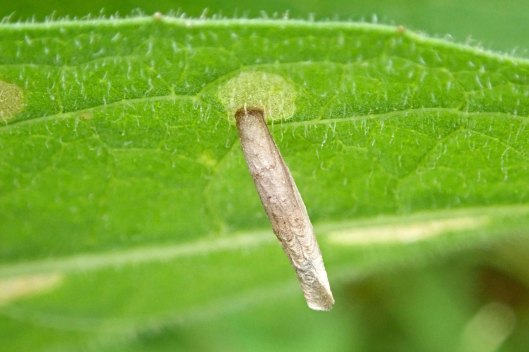
When I got home and checked my photos of this Coleophora, much head scratching ensued. From the British Leafminers website, I could see that there are only three species of case-bearing moth larvae known to feed on Knapweed (Centaurea nigra) and this case didn’t look like any of them. The case of Coleophora conspicuella is described as black and glossy, and has a peculiar almost keel-like shape. Coleophora peribenanderi mostly mines thistle species, is only occasionally seen on Knapweed, and the larvae is active from August to October. Coleophora paripennella‘s case looked the most likely, but is also usually much darker, almost black. So, I ‘phoned a friend’.

And my friendly expert from British Leafminers also ‘phoned a friend’, checking with another moth larvae expert. Their opinions concurred: this was Coleophora paripennella, just with a much lighter-coloured case than usual. Like C. peribenanderi, C. paripennella uses both thistles and Knapweed as larval plants, but in this case, those larvae that use thistle are fully grown by the autumn, whereas those that munch on Knapweed, top up their larval development by feeding again from April to May/June. You can see the sleek and glossy adult moth that eventually results from all this leaf munching on the UK Moths website here.

Like Loading...

Cocksfoot moths

17 Saturday May 2025

Posted by sconzani in insects

≈ Leave a comment

Tags

British moths, Cocksfoot moths, Glyphipterix simpliciella, moths, tiny moths on buttercups, tiny moths on Oxeye daisy

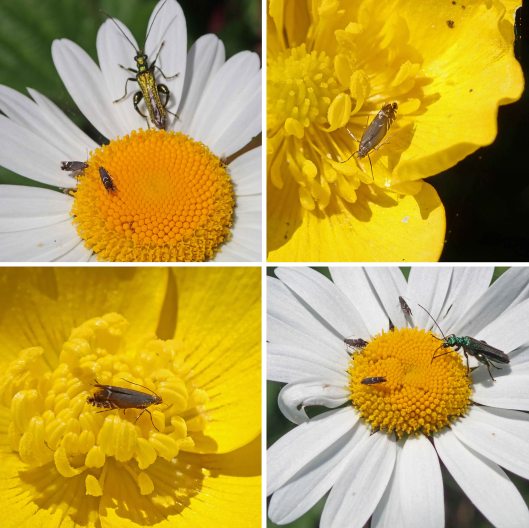
These tiny moths were one of yesterday’s highlights, as I wandered slowly around some of the local coastal fields.

With the scientific name Glyphipterix simpliciella but known more commonly as Cocksfoot moths, because their larvae feed on the seeds of the grass Cock’s-foot (Dactylis glomerata), they are found most often on the flowers of the various members of the buttercup family and, yesterday, I also found lots on Oxeye daisy flowers (often, as you see, in the company of Swollen-thighed beetles). Between now and the end of July, they can often be seen in large numbers but are easily overlooked due to their miniscule size (just 3-4mm long).

Like Loading...

Bagworms

16 Friday May 2025

Posted by sconzani in insects

≈ Leave a comment

Tags

bagworm, British moths, case-bearing larva, case-living moth larvae, Grey bagworm, Luffia lapidella, moth larvae, Ramshorn bagworm, Virgin smoke

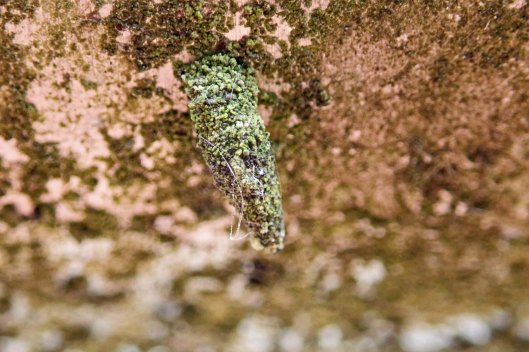
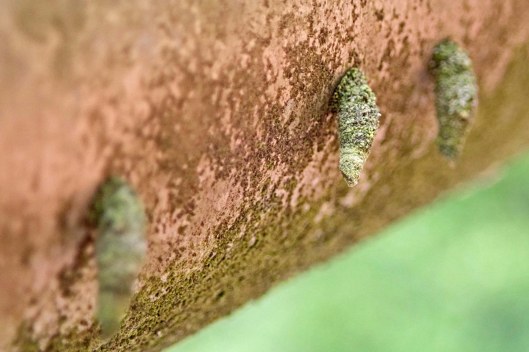
You may initially think the title of today’s post is move related and that I found worms in my baggage when packing/unpacking, but no. Bagworm is the rather unflattering name for the moth Luffia lapidella, also known as Ramshorn bagworm, Virgin smoke, and Grey bagworm, whose larvae create cases to live in from the lichen they also like to eat. I’ve only ever found single cases before (see Casebearer: Luffia lapidella, February 2024), and those only twice in the ten years I’ve been living in the UK, so, when I found this site with well over 20 cases, I thought the species was worth revisiting with another blog.

The location was unexpected: they are all living on the metal railings that run along one side of a path by the River Ely in Cardiff but the waterside location means the undersides of all those railings are covered in lichen and, fortunately, they’re never cleaned, so the bagworms have found the perfect place to live.

Luffia lapidella is a very odd moth. The main moth websites in the UK all say that ‘only the self-fertile wingless female is known’, though I did find a blog, British Lepidoptera, that says males do occur in Cornwall. That website also shows a photo of a deceased female and photos of the larvae that lives in their colourful lichen ‘bags’.

Like Loading...

Anyone for a mocha?

07 Wednesday May 2025

Posted by sconzani in insects

≈ Leave a comment

Tags

British moths, Cyclophora annularia, moth, The Mocha

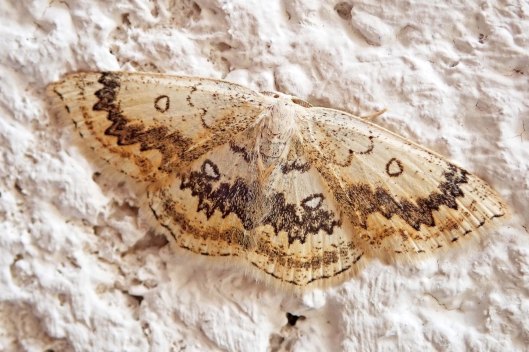
I’m not a coffee drinker but perhaps the person who gave this moth its common name was. Meet The Mocha (Cyclophora annularia), a gorgeous moth that’s described as scarce on the UK Moths website, though it seems from looking at the NBN Atlas for this species that sightings are concentrated in southern Britain so scarce the further north you go. Perhaps surprisingly, I found this one sitting on a house wall as I walked past this morning.

Like Loading...

Whack a snack!

16 Wednesday Apr 2025

Posted by sconzani in birds, insects

≈ Leave a comment

Tags

birding, birdwatching, blackbird, Blackbird eating moth, British birds, British moths, Herald moth, Scoliopteryx libatrix, The Herald

Wouldn’t you know it? This was my first ever Herald moth (Scoliopteryx libatrix) and it ended up being snatched, whacked, and snacked on by a Blackbird. I guess a bird’s gotta eat. (If you want to see what an intact Herald looks like, there are some cracking photos on the UK Moths website.)

Like Loading...

First moth of 2025

15 Wednesday Jan 2025

Posted by sconzani in insects, winter

≈ 2 Comments

Tags

Angle shades, British moths, first moth of 2025, moth in winter

Yesterday I spotted my first moth of the year, perched on my favourite park railings, this lovely Angle shades.

250115 angle shades (1)

If you’ve been following along here for a while, you might remember the saga of Colin, the Angle shades moth I reared from a caterpillar. If you’re new and interested – it’s a lovely little series – these are the posts: Colin the caterpillar, 2 February 2022, followed the next day by Colin’s story; then, on 21 February, Colin the chrysalis; and, an update on his progress, Colin’s coloured up, on 23 February. Then, the final instalment, the joyful announcement, on 26 March 2022, He’s arrived!.

250115 angle shades (2)

Like Loading...

Vapourer cocoon and eggs

02 Thursday Jan 2025

Posted by sconzani in insects, winter

≈ Leave a comment

Tags

British moths, moth eggs, moth pupa, Orgyia antiqua, Vapourer, Vapourer cocoon, Vapourer eggs

Here’s another find from December, this one attached to the local park railings. It’s the empty cocoon of a Vapourer moth (Orgyia antiqua), covered in the moth’s eggs. (I’ve blogged about finding one of these cocoons before, though that one was very fresh – see A Vapourer cocoon, 13 October 2023, which also included an image of the caterpillar.) Female Vapourers can’t fly (the UK Moths website has a photo of the female, which, at first sight, doesn’t look like a moth at all) – their sole purpose is to attract a mate and lay eggs. Presumably, this female scarcely moved from her cocoon, immediately emitting male-attracting pheromones as soon as she emerged. A male found and mated with her, and her empty cocoon became a very close and convenient place to lay her eggs.

250102 vapourer

Like Loading...
← Older posts
Newer posts →

About me

sconzani

sconzani

I'm a writer and photographer; researcher and blogger; birder and nature lover; countryside rambler and city strider; volunteer and biodiversity recorder.

View Full Profile →

Follow earthstar on WordPress.com

Enter your email address to follow this blog and receive notifications of new posts by email.

Recent blog posts

  • M is for mite December 18, 2025
  • L is for lepidopteran lifers December 17, 2025
  • K is for Keeled skimmers December 16, 2025
  • J is for Jersey tiger December 15, 2025
  • I is for Ichneumon December 14, 2025

From the archives

COPYRIGHT

Unless otherwise acknowledged, the text and photographs on this blog are my own and are subject to international copyright. Nothing may be downloaded or copied without my permission.

Fellow Earth Stars!

  • Unknown's avatar
  • Unknown's avatar
  • Unknown's avatar
  • Unknown's avatar
  • Unknown's avatar
  • Unknown's avatar
  • Unknown's avatar
  • Unknown's avatar
  • Unknown's avatar
  • Unknown's avatar
  • Unknown's avatar
  • Unknown's avatar
  • Unknown's avatar
  • Unknown's avatar
  • Unknown's avatar
  • Unknown's avatar
  • Unknown's avatar
  • Unknown's avatar
  • Unknown's avatar
  • Unknown's avatar
  • Unknown's avatar
  • Unknown's avatar
  • Unknown's avatar
  • Unknown's avatar
  • Unknown's avatar
  • Unknown's avatar
  • Unknown's avatar
  • Unknown's avatar
  • Unknown's avatar
  • Unknown's avatar
  • Unknown's avatar
  • Unknown's avatar
  • Unknown's avatar
  • Unknown's avatar
  • Unknown's avatar
  • Unknown's avatar
  • Unknown's avatar
  • Unknown's avatar
  • Unknown's avatar
  • Unknown's avatar
  • Unknown's avatar
  • Unknown's avatar
  • Unknown's avatar
  • Unknown's avatar
  • Unknown's avatar
  • Unknown's avatar
  • Unknown's avatar
  • Unknown's avatar
  • Unknown's avatar
  • Unknown's avatar

Blog at WordPress.com.

Privacy & Cookies: This site uses cookies. By continuing to use this website, you agree to their use.
To find out more, including how to control cookies, see here: Cookie Policy
  • Subscribe Subscribed
    • earthstar
    • Join 667 other subscribers
    • Already have a WordPress.com account? Log in now.
    • earthstar
    • Subscribe Subscribed
    • Sign up
    • Log in
    • Report this content
    • View site in Reader
    • Manage subscriptions
    • Collapse this bar
 

Loading Comments...
 

You must be logged in to post a comment.

    %d