• ABOUT
  • BIRDING 2018
  • Birding 2019
  • BLOG POSTS
  • Butterflies 2018
  • Resources

earthstar

~ a celebration of nature

earthstar

Tag Archives: British moths

Colin’s coloured up

23 Wednesday Feb 2022

Posted by sconzani in insects

≈ Leave a comment

Tags

Angle shades, Angle shades larva, Angle shades moth, Angle shades pupa, British moths, moth pupa

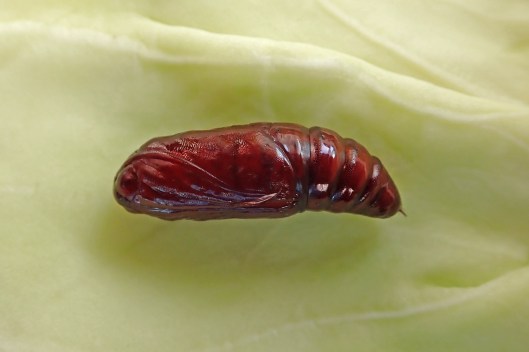
Don’t worry – I won’t be posting too many updates on Colin the caterpillar, now chrysalis. I just thought it was interesting to see how quickly he has changed from looking like a caterpillar to looking like a moth-in-the-making. During Monday morning, after he’d just pupated, he squirmed around a lot, sometimes quite violently. By the end of the day, he had turned a wonderful golden brown colour and showed definite structural signs of the moth he will become, a process that will apparently take between two and three weeks.

220223 Colin in colour

Like Loading...

Colin the chrysalis

21 Monday Feb 2022

Posted by sconzani in insects

≈ Leave a comment

Tags

Angle shades caterpillar, Angle shades moth, Angle shades pupa, British moths, moth chrysalis, moth pupa

For various reasons (illness – mine, not his, and this run of stormy weather) I was not able to return Colin the caterpillar to the area where I think he must have been living before he hitched a ride home with me. So, I’ve been keeping him in a jar on my desk, where he’s munched happily on a diet of cabbage and Alexanders leaves. For the past 24 hours, I’ve been a bit worried as he’d stopped eating but this morning I discovered why – he’s pupated!

220221 colin the chrysalis

Like Loading...

Leafmines: Coleophora peribenanderi

18 Monday Oct 2021

Posted by sconzani in autumn, insects, plants

≈ 2 Comments

Tags

British leafminers, British moths, case-bearing moths, Coleophora peribenanderi, leaf-mining larvae, leaf-mining moth, moth larvae on thistles, Pale Thistle case-bearer

Searching for leafmines on thistles is not for the faint-hearted, writes she with multi-punctured fingers. But it has been worth every drop of blood to find these mines (and I must be a masochist, as, having found them in one place, I then went determinedly searching in other locations – two successes so far, which I’m rather pleased about as there are very few records in south Wales).

211018 Coleophora peribenanderi (1)

The larvae of the moth Coleophora peribenanderi, also known as the Pale Thistle case-bearer (you can see the adult on UK Moths here), builds itself a tube-like case to live in and ventures out of said case to munch happily on the leaves of whichever species of thistle its mother laid her eggs on (in the three I’ve found so far, Creeping thistle). The marks this feeding makes on the plant’s leaves are quite distinctive but, to clinch the identification, you need to look under the leaf and find the case.

211018 Coleophora peribenanderi (2)

Interestingly, the larva feeds up for a couple of months, from July to September, then suspends its development (the scientific word is diapause, a new one for me) through the winter until either feeding up a bit more in April or passing straight to pupation in May. Fascinating stuff!

Like Loading...

In Sycamore seeds

12 Tuesday Oct 2021

Posted by sconzani in insects, trees

≈ Leave a comment

Tags

British moths, Moth larvae in Sycamore seeds, moth mines in Sycamore seeds, Pammene aurita larva, Pammene regiana larva, Sycamore seeds

This is the sequel to yesterday’s post …

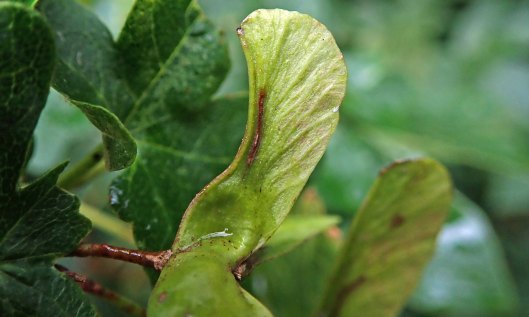
30 September: While I was searching for the larval mines of the moth Ectoedemia decentella on the few Sycamore seeds I could reach, I found one seed with a hole in it. Thinking it might be relevant, I brought it home and later posted a photo and query on Twitter. Butterfly Conservation senior moth ecologist George replied that this is ‘the exit hole made by a tortrix [moth] larva – likely Pammene aurita, though Pammene regiana also feeds on Sycamore seeds’. Then followed a discussion, prompted by George, between he and 3 other moth-ers about whether Pammene regiana makes an exit hole like this. No one knew for sure.

211012 pammene larval mine (1)

1 October: The next morning, when I picked up the little group of three joined seeds, I noticed what looked like frass sitting below. I mentioned this on Twitter and was advised to put the seeds on tissue in a jar in case the larva was still inside.

211012 pammene larval mine (2)

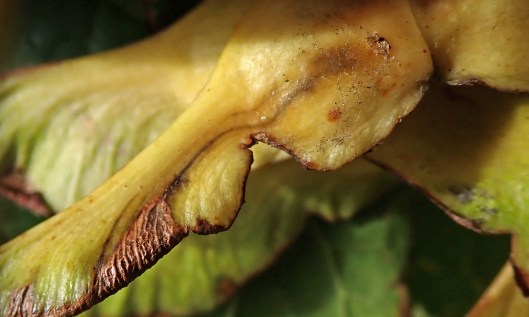
2 October: My tweet: ‘Exciting news: we have a larva! Not from the original hole. I put that seed, with 2 attached, in a jar, and a larva has emerged from one of the other seeds. It’s currently doing a circuit of the tissue – hoping it will pupate.’ It wasn’t until later, when I was looking at the photos I had taken, that I realised the photo above shows where that larva had begun to eat its way out of the seed (indicated by the yellow arrow).

211012 pammene larval mine (3)211012 pammene larval mine (4)

3 October: The larva pupated. I haven’t been able to get a good image as it’s under the tissue and seems partly stuck to the glass jar. And I realised that I’ll now need to wait until at least next May, maybe later to see which moth emerges. What’s that about patience being a virtue?!


211012 pammene larval mine (5)

Like Loading...

Moth mines in Acer seeds

11 Monday Oct 2021

Posted by sconzani in insects, trees

≈ Leave a comment

Tags

British moths, Ectoedemia sericopeza, Etainia louisella, larval mines of moths, Mines in Field maple seeds, mines in Norway maple seeds, moth mines in Acer seeds, moth mines in samaras

On 29 September, SEWBReC (the South East Wales Biodiversity Records Centre) posted the following tweet:

Calling keen members of #TeamLeafmine. [The county moth recorder] is hoping for Glamorgan records of seed miners of Acer species this year: Etainia louisella on Field Maple / Ectoedemia sericopeza on Norway Maple / Ectoedemia decentella on Sycamore.

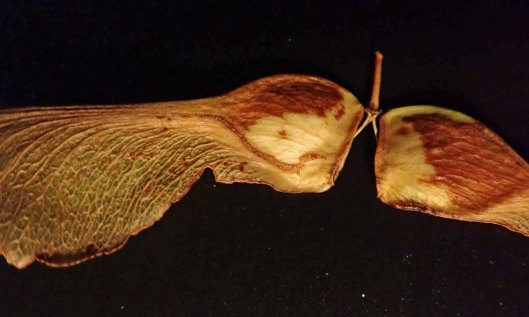
Being a keen member of Team Leafmine, I had to take up the challenge. Field maples are quite common locally so the mines in their seeds have been the easiest to find, though they’re by no means common. I’ve managed to find them in two locations so far.

211011 Ectoedemia louisella on Field maple (1)OLYMPUS DIGITAL CAMERA

There are not so many Norway maples in my area – they’re not native, of course, and seem mostly to have been planted in parks, in housing developments, along roadside verges. So far, I’ve found Ectoedemia sericopeza mines on Norway maples at two sites.

OLYMPUS DIGITAL CAMERA211011 Ectoedemia sericopeza on norway maple (2)

As for the mines in Sycamore seeds, well, I quickly realised that most of the local trees are quite tall so the seeds are unreachable. And trees planted in parks and gardens often have their lower branches trimmed off, which also doesn’t help. The solution I’ve found is to search through seeds once they’re fallen off the trees, though they are then very brown, often dirty and sometimes damaged so the mines are not easy to spot. I’ve failed in this search so far but I have found something else in Sycamore seeds … more on that tomorrow.

Like Loading...

Moth hot spot

06 Wednesday Oct 2021

Posted by sconzani in insects

≈ Leave a comment

Tags

British moths, Large ranunculus, moths, Mottled umber, Peppered moth, Small dusty wave, Winter moth

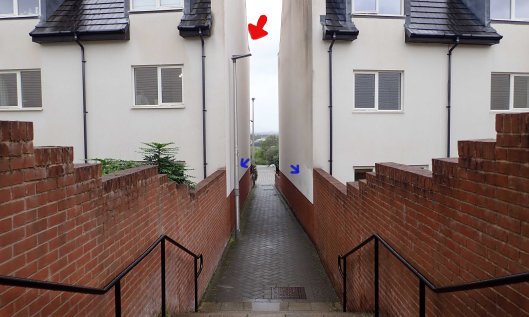
As I’ve mentioned before, my living situation doesn’t lend itself to having a moth trap but there is a local site where I often see moths if I’m out walking in the early mornings. As you can see from the photo below, a streetlight (red arrow) sits above a footpath between two blocks of terraced houses. The light attracts the moths, which then sometimes shelter on the walls (blue arrows) during the day.

211006 mothing spot

As well as the Early grey and Early thorn found back in 2018, I’ve since discovered several more beautiful moths on these walls. The first three, seen last year, are Mottled umber (Erannis defoliaria), the Peppered moth (Biston betularia), and the Winter moth (Operophtera brumata) – you might remember I blogged about the larva of this last moth earlier in the year (Caterpillar in a tent, May 2021).

211006 1 Mottled umber
211006 2 Peppered
211006 3 winter moth

These next two are more recent sightings, both spotted in the past month. The first is Small dusty wave (Idaea seriata), the second Large ranunculus (Polymixis flavicincta).

211006 4 Small Dusty Wave211006 5 Large Ranunculus

Like Loading...

Elephant hawk-moth caterpillar

28 Saturday Aug 2021

Posted by sconzani in insects

≈ 2 Comments

Tags

British moths, Elephant hawk-moth, Elephant hawk-moth caterpillar, moth caterpillar, moth larva

I was heading home from Cosmeston after a lovely wander but not having seen much in the way of wildlife when this superb creature appeared on the pavement in front of me – actually, it was lucky I didn’t stand on it!

210828 elephant hawk-moth (2)

There was a family walking along not far behind me and I feared their combination of feet, pushchair and trike wheels might squish the creature so I quickly scooped it up and walked to a small area of waste ground where it might take shelter amongst the tall grasses, wildflowers and low scrub.

210828 elephant hawk-moth (1)

If you’ve never seen one, this is the caterpillar of the Elephant hawk-moth. It feeds on a variety of plants, particularly Rosebay willowherb, but also the other willowherbs, bedstraws, even Himalayan balsam, so can be found where those wildflowers grow. This particular caterpillar looked very well grown so may have been seeking a place to pupate (remember that pupal case I found back in April?). Let’s hope it found a cosy spot under the leaf litter in its new location.

210828 elephant hawk-moth (3)
210828 elephant hawk-moth (4)
Like Loading...

Latticed heaths

21 Saturday Aug 2021

Posted by sconzani in insects

≈ 2 Comments

Tags

British moths, Grangemoor Park, Latticed heath, moth

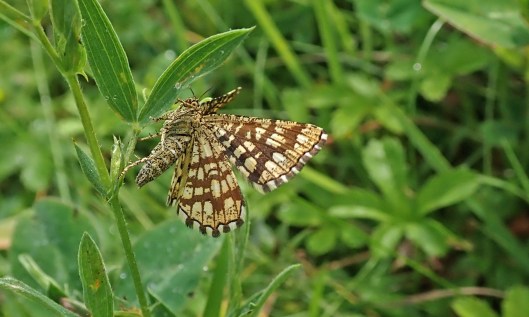
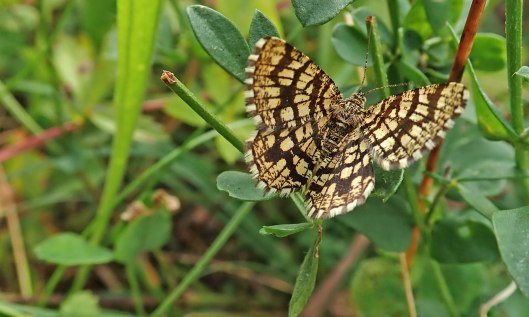
Latticed heath moths have featured many times before on this blog (see here and here) but, after seeing over a dozen during a wander around Cardiff’s Grangemoor Park this week, I can’t resist featuring them again. These are three I managed to get close enough to for macro photos.

210821 latticed heath (1)210821 latticed heath (2)210821 latticed heath (3)

Like Loading...

Grey dagger

20 Friday Aug 2021

Posted by sconzani in insects

≈ 2 Comments

Tags

British moths, Grey dagger, Grey dagger caterpillar, Grey dagger larva, moth caterpillar, moth larva

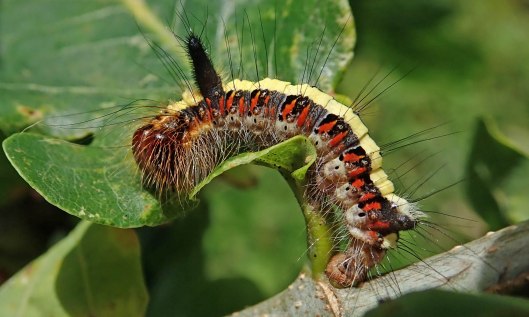
The Butterfly Conservation website says the dagger moths get their name from the dagger-like markings on their wings but check out the hump on the back of this Grey dagger larva – in the infamous words of Lady Macbeth from the Scottish play, ‘is this a dagger I see before me’?

210820 grey dagger

Like Loading...

Buff-tip larvae

18 Wednesday Aug 2021

Posted by sconzani in insects, nature

≈ Leave a comment

Tags

British moths, Buff-tip moth, Buff-tip moth caterpillars, moth caterpillars, moth larvae, Moth larvae on Oak leaves

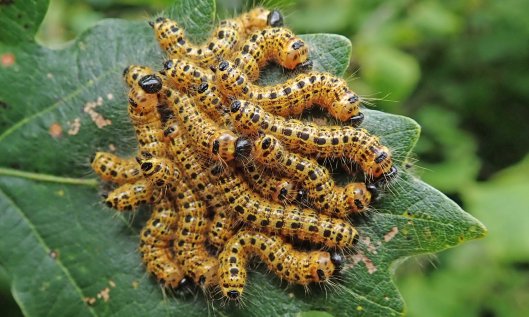
I’ve never seen a Buff-tip moth (Phalera bucephala) except in photographs (they look incredibly like twigs – see images on the Butterfly Conservation website here). But yesterday I found their larvae, lots of them, all huddled together on the top side and underside of an Oak leaf.

210818 buff tip moth larvae (1)

The adult moth, which flies from May to early August, lays clusters of eggs under the leaves of the trees their caterpillars feed on, which, as well as Oak, include Hazel and the various birches and sallows, amongst others.

210818 buff tip moth larvae (2)

The larvae hatch out after 2-3 weeks and start eating. It takes just a month for them to go through their four instars, after which they move down into the ground to pupate. Come the spring, the whole process begins again.

210818 buff tip moth larvae (3)

Like Loading...
← Older posts
Newer posts →

About me

sconzani

sconzani

I'm a writer and photographer; researcher and blogger; birder and nature lover; countryside rambler and city strider; volunteer and biodiversity recorder.

View Full Profile →

Follow earthstar on WordPress.com

Enter your email address to follow this blog and receive notifications of new posts by email.

Recent blog posts

  • Cormorants, young and old March 12, 2026
  • Bay bunnies March 11, 2026
  • Beating the gloom March 10, 2026
  • No booming Bittern but … March 9, 2026
  • Danish scurvygrass March 8, 2026

From the archives

COPYRIGHT

Unless otherwise acknowledged, the text and photographs on this blog are my own and are subject to international copyright. Nothing may be downloaded or copied without my permission.

Fellow Earth Stars!

  • Unknown's avatar
  • Unknown's avatar
  • Unknown's avatar
  • Unknown's avatar
  • Unknown's avatar
  • Unknown's avatar
  • Unknown's avatar
  • Unknown's avatar
  • Unknown's avatar
  • Unknown's avatar
  • Unknown's avatar
  • Unknown's avatar
  • Unknown's avatar
  • Unknown's avatar
  • Unknown's avatar
  • Unknown's avatar
  • Unknown's avatar
  • Unknown's avatar
  • Unknown's avatar
  • Unknown's avatar
  • Unknown's avatar
  • Unknown's avatar
  • Unknown's avatar
  • Unknown's avatar
  • Unknown's avatar
  • Unknown's avatar
  • Unknown's avatar
  • Unknown's avatar
  • Unknown's avatar
  • Unknown's avatar
  • Unknown's avatar
  • Unknown's avatar
  • Unknown's avatar
  • Unknown's avatar
  • Unknown's avatar
  • Unknown's avatar
  • Unknown's avatar
  • Unknown's avatar
  • Unknown's avatar
  • Unknown's avatar
  • Unknown's avatar
  • Unknown's avatar
  • Unknown's avatar
  • Unknown's avatar
  • Unknown's avatar
  • Unknown's avatar
  • Unknown's avatar
  • Unknown's avatar
  • Unknown's avatar
  • Unknown's avatar

Blog at WordPress.com.

Privacy & Cookies: This site uses cookies. By continuing to use this website, you agree to their use.
To find out more, including how to control cookies, see here: Cookie Policy
  • Subscribe Subscribed
    • earthstar
    • Join 668 other subscribers
    • Already have a WordPress.com account? Log in now.
    • earthstar
    • Subscribe Subscribed
    • Sign up
    • Log in
    • Report this content
    • View site in Reader
    • Manage subscriptions
    • Collapse this bar
 

Loading Comments...
 

You must be logged in to post a comment.

    %d