• ABOUT
  • BIRDING 2018
  • Birding 2019
  • BLOG POSTS
  • Butterflies 2018
  • Resources

earthstar

~ a celebration of nature

earthstar

Tag Archives: British wildflowers

Grasslands wildflowers

18 Sunday Jun 2023

Posted by sconzani in flowers, wildflowers

≈ 5 Comments

Tags

Aberbargoed Grasslands, British wildflowers, Common milkwort, Devil's-bit scabious, Marsh lousewort, Ragged robin

Presumably as a result of our lingering hot dry weather, the wildflowers at Aberbargoed Grasslands NNR were neither as prolific nor as exuberant as I’ve seen in previous years. The Bluebells had already gone over, the Heath spotted-orchids were looking as frazzled as I was soon feeling but there were some floral highlights I enjoyed seeing.

230618 devil's-bit scabious

  • Devil’s-bit scabious (Succisa pratensis)

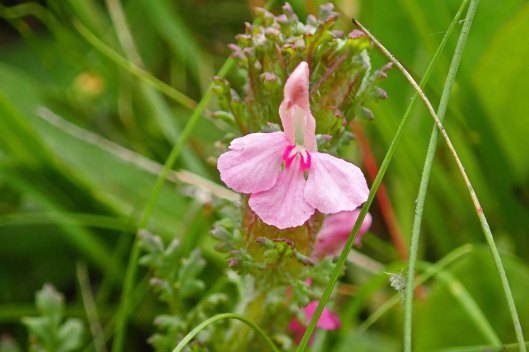
230618 marsh lousewort

  • Marsh lousewort (Pedicularis palustris)

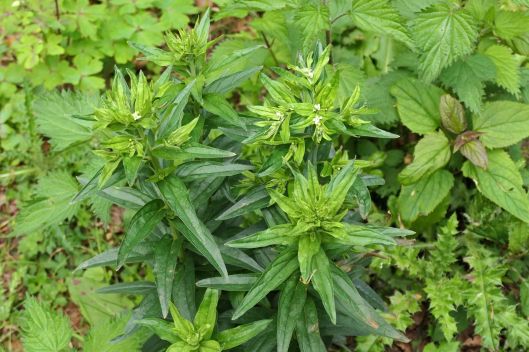
230618 milkwort

  • Common Milkwort (Polygala vulgaris)

230618 ragged robin

  • Ragged-robin (Silene flos-cuculi) and butterfly friend (Small pearl-bordered fritillary)
Like Loading...

Common rock-rose

11 Sunday Jun 2023

Posted by sconzani in flowers, wildflowers

≈ Leave a comment

Tags

British wildflowers, Common rock-rose, Helianthemum nummularium, yellow wildflowers

This lovely wildflower was another new find for me last Thursday, growing along the roadside on the walk to and from Charlton King’s Common near Cheltenham. I couldn’t help but notice these glorious, bright yellow flowers that looked superficially like the many buttercups all around them but their leaves were quite different, slim, oblong and quite hairy. You can read more about the Common rock-rose (Helianthemum nummularium) on the Naturespot website here.

230611 common rock-rose

Like Loading...

Common gromwell

21 Sunday May 2023

Posted by sconzani in wildflowers

≈ Leave a comment

Tags

British wildflowers, Common gromwell, European stoneseed, Lithospermum officinale, Slade Wood

This was the third highlight of my visit to Slade Wood on Wednesday, a plant I’d never seen before. It wasn’t too difficult to identify once I got home, as the flowers looked a lot like those of Forget-me-not so I turned straight to that section of my wildflower guide. Say hello to Common gromwell (Lithospermum officinale) (also known as European stoneseed).

230521 common gromwell (1)

It’s a perennial, flowers from May to August, and is quite prominent in the landscape, a rough hairy plant growing up to one metre tall, so must’ve been in situ during my previous visits to this woodland. Perhaps I was so focused on butterflies, I didn’t notice it. Woodland rides – and rough, stony scrubby areas – are where this native plant thrives, but only in the southern parts of Britain, so any northerners out there will have to come south to see it.

230521 common gromwell (2)

Like Loading...

Six Speedwells

14 Sunday May 2023

Posted by sconzani in wildflowers

≈ Leave a comment

Tags

British wildflowers, Field speedwell, Germander speedwell, Heath speedwell, Ivy-leaved speedwell, Speedwell, Thyme-leaved speedwell, Wood speedwell

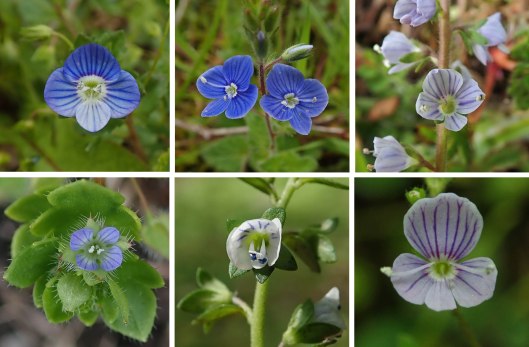
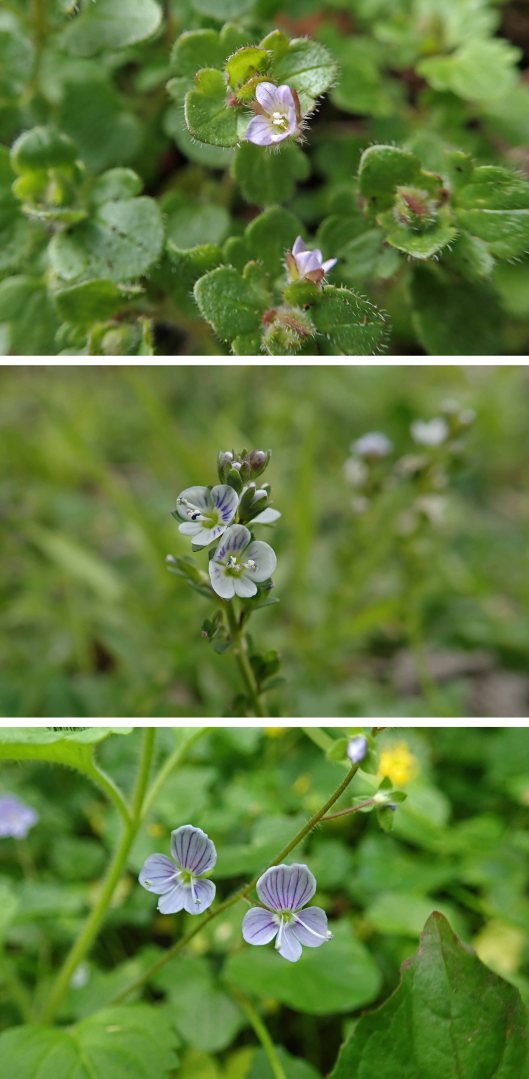
This week’s #WildflowerHour challenge was to find and identify as many of the Speedwell species as possible. I managed to find six, had hoped for more but will just have to keep searching on future walks. Close-ups of the flowers of my six are shown below – they are Field, Germander, Heath, Ivy-leaved, Thyme-leaved and Wood speedwell.

230514 six speedwells (1)

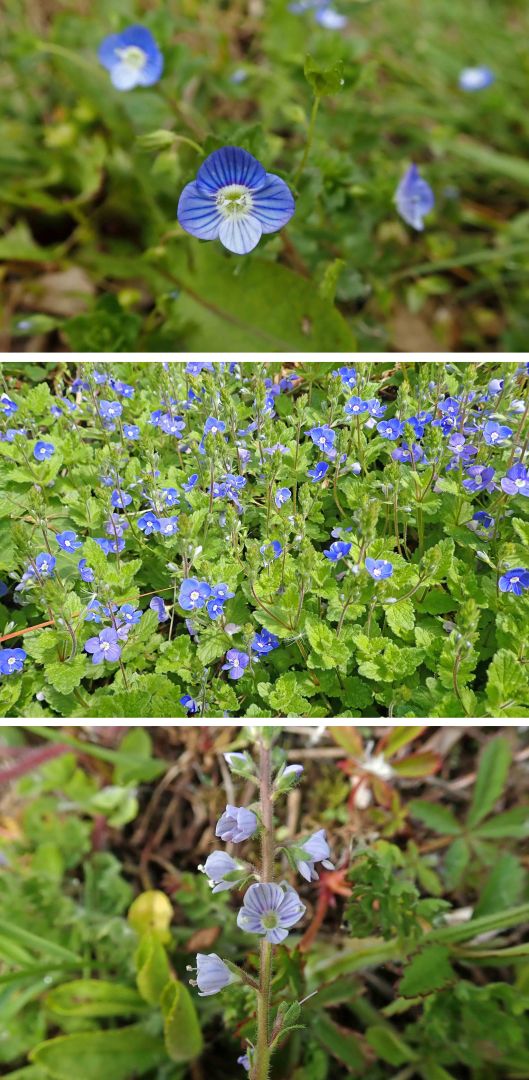
And here are photos showing their more general features. These are in the same order as above – their scientific names are Veronica agrestis, Veronica chamaedrys, and Veronica officinalis.

230514 six speedwells (2)

And the final three: Veronica hederifolia, Veronica serpyllifolia, and Veronica montana. If, like me, you’re confused about the Speedwells and what some hints on how to identify them, Moira (@NatureLark on Twitter) has produced an excellent crib sheet which you can find here.

230514 six speedwells (3)

Like Loading...

Field madder

07 Sunday May 2023

Posted by sconzani in flowers, wildflowers

≈ 2 Comments

Tags

British wildflowers, Field madder, Sherardia arvensis

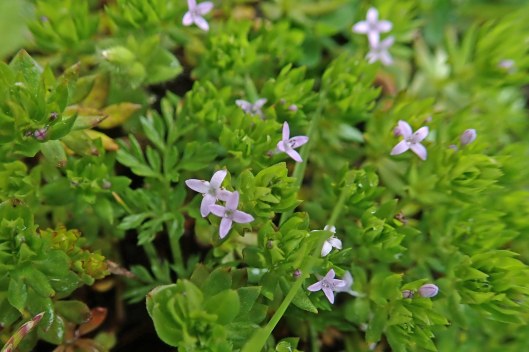
A member of the Bedstraw family, Field madder (Sherardia arvensis) is a low-growing annual that supposedly grows in both disturbed and cultivated ground on chalky soils. I write ‘supposedly’ because the Field madder pictured here grows along a sheltered damp and mossy road verge next to blocks of flats. Also, I’ve read – and my wildflower book states – that Field madder can grow up to 30cm tall but the plants I’ve seen have been tiny, only 5-10 cm. I guess wildflowers don’t read what’s written about them!

230507 field madder (2)

Popping out like stars against a dense background of bristly whorls of leaves, the clusters of four-petalled tiny flowers range in colour from pale pink to mauve. And, as you may have guessed from the name, the roots of Field madder can be used to make a red dye, though it is described as ‘an inferior source’ on the Oxford University Herbaria website. If you’re interested in learning more, the website also explains the source of the Sherardia name.

230507 field madder (1)

Like Loading...

White not pink

05 Friday May 2023

Posted by sconzani in flowers, nature, wildflowers

≈ Leave a comment

Tags

British wildflowers, Cosmeston Lakes Country Park, Dove's-foot crane's-bill, Geranium molle, white flowers, white-flowered Dove's-foot crane's-bill

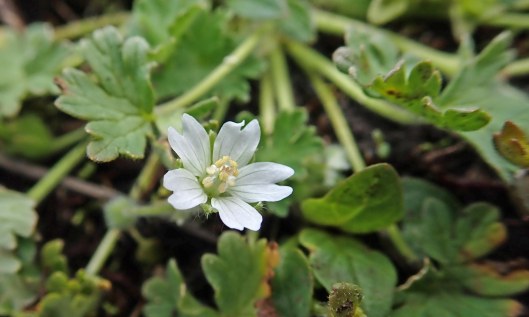
The flowers of Dove’s-foot crane’s-bill (Geranium molle) are usually described as pinkish-purple, and certainly all the plants I’ve seen previously have had tiny pink flowers, as shown in the comparison photos below. But I’ve discovered a small area at the Cosmeston Lakes Country Park where the flowers are a true white.

230505 Geranium molle (2)

I’m not sure what has caused this colour variation but it’s probably something in the soil. Before it became a country park, parts of Cosmeston were quarries, spoil tips and rubbish tips. If you follow this link to the Mary Gillham Archive website (a project I volunteered on, as my older followers will recall), you can see details – including maps and photographs – of Cosmeston during its transformation into a country park.

230505 Geranium molle (3)

One legacy of its former use is undoubtedly the presence of toxic chemicals in some areas. Indeed, the top portion of the east paddock is fenced off, not for conservation purposes but, I am reliably informed, to protect park users from whatever is buried there. Residues in the soil may well account for unusual qualities in the park’s flora and fauna.

230505 Geranium molle (1)

Like Loading...

April flowers

23 Sunday Apr 2023

Posted by sconzani in flowers, spring, wildflowers

≈ 6 Comments

Tags

British wildflowers, Spring colour, spring flowers, wildflowers

As I write this, we actually have April showers but, luckily, they weren’t falling on me or this random selection of April flowers from today’s walk. First one to name them all gets … a gold star!

230423 wildflowers

Like Loading...

The Boraginaceae

16 Sunday Apr 2023

Posted by sconzani in spring, wildflowers

≈ Leave a comment

Tags

#WildflowerHour, Borage family, Boraginaceae, British wildflowers, Comfrey, Forget-me-not, Lungwort, Spring colour, spring wildflowers

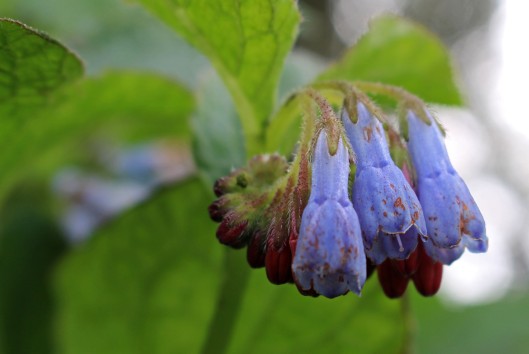
Finding flowering specimens of the Borage family was the target of this week’s Wildflower Hour. This family, the Boraginaceae, includes the various Forget-me-nots (Myosotis species), the Comfries (Symphytum species), Lungwort (Pulmonaria officinalis), Viper’s-bugloss (Echium vulgare), the Gromwells (Lithospermum species), Green alkanet (Pentaglottis sempervirens), Borage (Borago officinalis), of course, and a few other species as well. Unfortunately, our wet Spring, the recent cold spell and storm mean many of these wildflower species are not yet flowering locally but I have managed to find three species.

Comfrey : I’m not sure which of the Symphytum species this is. It’s growing on the edge of a carpark so is probably a wind-blown garden escape or was perhaps seeded via a bird dropping.

Lungwort : Sadly, this isn’t a common plant locally – I only know of two locations where it grows. I wish there was more as the bees love it.

Forget-me-not : Did you know that the yellow ring at the centre of the Forget-me-not flower fades from egg-yolk yellow to white after pollination, which indicates to insects that there’s no more nectar and they should try another flower?

Like Loading...

Rue-leaved saxifrage

09 Sunday Apr 2023

Posted by sconzani in plants, spring, wildflowers

≈ Leave a comment

Tags

British wildflowers, Rue-leaved saxifrage, Saxifraga tridactylites

Another week, another new plant – I’m on a roll!

230409 rue-leaved saxifrage (1)

This hairy little annual, with the sweet white flowers, is Rue-leaved saxifrage (Saxifraga tridactylites). Its three-lobed leaves (hence the tridactyl in its name) are quite distinctive and are often tinged with red, as are the plant’s stems.

230409 rue-leaved saxifrage (2)

In Flora Britannica, Richard Mabey writes that this saxifrage is widespread but declining, though the book is now 25 years old so I’m not sure if that is still the case. Certainly, it’s not a plant I’ve come across before in my meanderings and these few were growing on the much-overgrown route of a former railway line so could originally have been carried this way by a train.

230409 rue-leaved saxifrage (3)

Like Loading...

American winter-cress

02 Sunday Apr 2023

Posted by sconzani in plants, spring, wildflowers

≈ Leave a comment

Tags

American winter-cress, Barbarea verna, British wildflowers, Grangemoor Park, Spring colour, wild salad plant

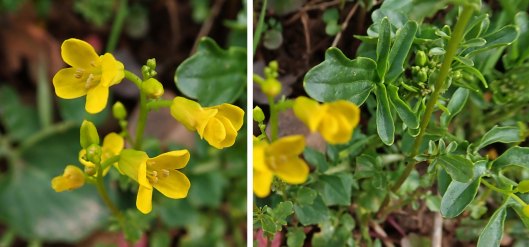
One of my local green spaces, Grangemoor Park, in Cardiff, an old landfill site, has been much churned up over the past year due to the need for repairs to its drainage system. Seeing the amount of damage done to the park, the huge numbers of trees cut down, the wide gravel paths laid down where once were wildflowers and scrub, has been very depressing but I’m hoping Nature will quickly repair the human damage. In the meantime, trying to be positive, I’ve been keeping an eye on the disturbed ground for any botanical surprises. And this is one!
230402 american winter-cress (1)

I’m 99% sure that this lovely little treasure is American winter-cress (Barbarea verna), a new plant for me. I’ve had a botanist confirm my identification but with one proviso. She thought ‘Yes I think it looks like it is B. verna as opposed to B. intermedia. If you should happen to see it again when it is in fruit, it should have long (over 4cm) curved fruits, whereas intermedia has shorter (less than 4cm) straight fruits.’ Needless to say, I will be checking the fruits in due course.

230402 american winter-cress (2)

In Flora Britannica, Richard Mabey writes that Barbarea verna has proven to be ‘popular and successful as a vegetable. Originally from south-west Europe, it has been introduced as a cultivated vegetable not just to the United States and northern Europe, but to South America and Australasia. It has become widely naturalised in all these places.’ I will be tempted, once it has grown, to harvest some of the leaves, which can be used like ‘rocket’ in a salad, though it is growing in the perfect spot for passing canines to anoint so will have to be washed very thoroughly.


230402 american winter-cress (3)

Like Loading...
← Older posts
Newer posts →

About me

sconzani

sconzani

I'm a writer and photographer; researcher and blogger; birder and nature lover; countryside rambler and city strider; volunteer and biodiversity recorder.

View Full Profile →

Follow earthstar on WordPress.com

Enter your email address to follow this blog and receive notifications of new posts by email.

Recent blog posts

  • Local Little egrets March 13, 2026
  • Cormorants, young and old March 12, 2026
  • Bay bunnies March 11, 2026
  • Beating the gloom March 10, 2026
  • No booming Bittern but … March 9, 2026

From the archives

COPYRIGHT

Unless otherwise acknowledged, the text and photographs on this blog are my own and are subject to international copyright. Nothing may be downloaded or copied without my permission.

Fellow Earth Stars!

  • Unknown's avatar
  • Unknown's avatar
  • Unknown's avatar
  • Unknown's avatar
  • Unknown's avatar
  • Unknown's avatar
  • Unknown's avatar
  • Unknown's avatar
  • Unknown's avatar
  • Unknown's avatar
  • Unknown's avatar
  • Unknown's avatar
  • Unknown's avatar
  • Unknown's avatar
  • Unknown's avatar
  • Unknown's avatar
  • Unknown's avatar
  • Unknown's avatar
  • Unknown's avatar
  • Unknown's avatar
  • Unknown's avatar
  • Unknown's avatar
  • Unknown's avatar
  • Unknown's avatar
  • Unknown's avatar
  • Unknown's avatar
  • Unknown's avatar
  • Unknown's avatar
  • Unknown's avatar
  • Unknown's avatar
  • Unknown's avatar
  • Unknown's avatar
  • Unknown's avatar
  • Unknown's avatar
  • Unknown's avatar
  • Unknown's avatar
  • Unknown's avatar
  • Unknown's avatar
  • Unknown's avatar
  • Unknown's avatar
  • Unknown's avatar
  • Unknown's avatar
  • Unknown's avatar
  • Unknown's avatar
  • Unknown's avatar
  • Unknown's avatar
  • Unknown's avatar
  • Unknown's avatar
  • Unknown's avatar
  • Unknown's avatar

Blog at WordPress.com.

Privacy & Cookies: This site uses cookies. By continuing to use this website, you agree to their use.
To find out more, including how to control cookies, see here: Cookie Policy
  • Subscribe Subscribed
    • earthstar
    • Join 668 other subscribers
    • Already have a WordPress.com account? Log in now.
    • earthstar
    • Subscribe Subscribed
    • Sign up
    • Log in
    • Report this content
    • View site in Reader
    • Manage subscriptions
    • Collapse this bar
 

Loading Comments...
 

You must be logged in to post a comment.

    %d