• ABOUT
  • BIRDING 2018
  • Birding 2019
  • BLOG POSTS
  • Butterflies 2018
  • Resources

earthstar

~ a celebration of nature

earthstar

Tag Archives: British wildflowers

Brooklime

23 Sunday Jun 2024

Posted by sconzani in wildflowers

≈ Leave a comment

Tags

British wildflowers, Brooklime, speedwell family, Veronica beccabunga

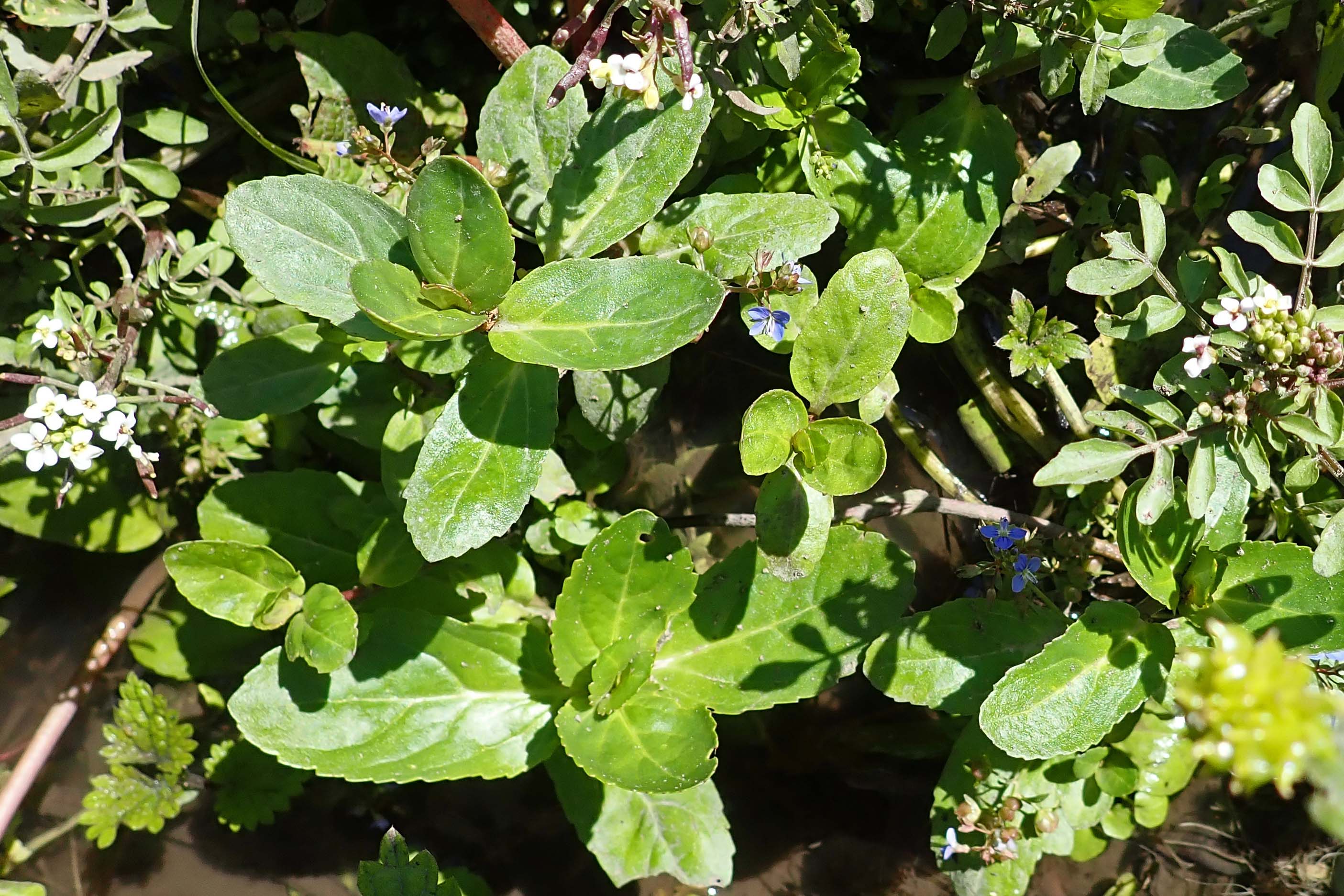
I’ve probably walked past this plant many many times but last Sunday was the first time I knowingly thought ‘Oooo, that must be Brooklime’.

240623 brooklime (1)

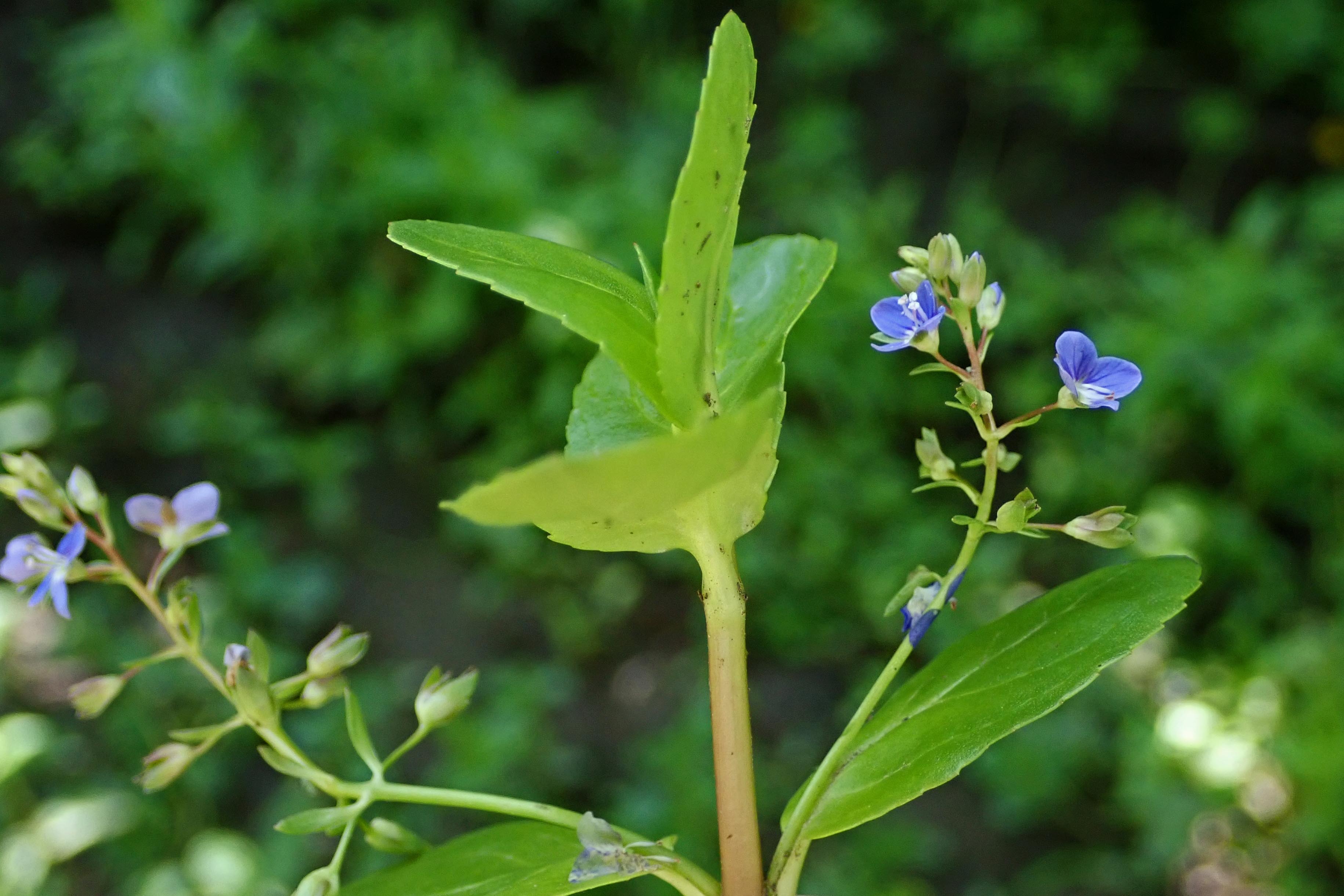
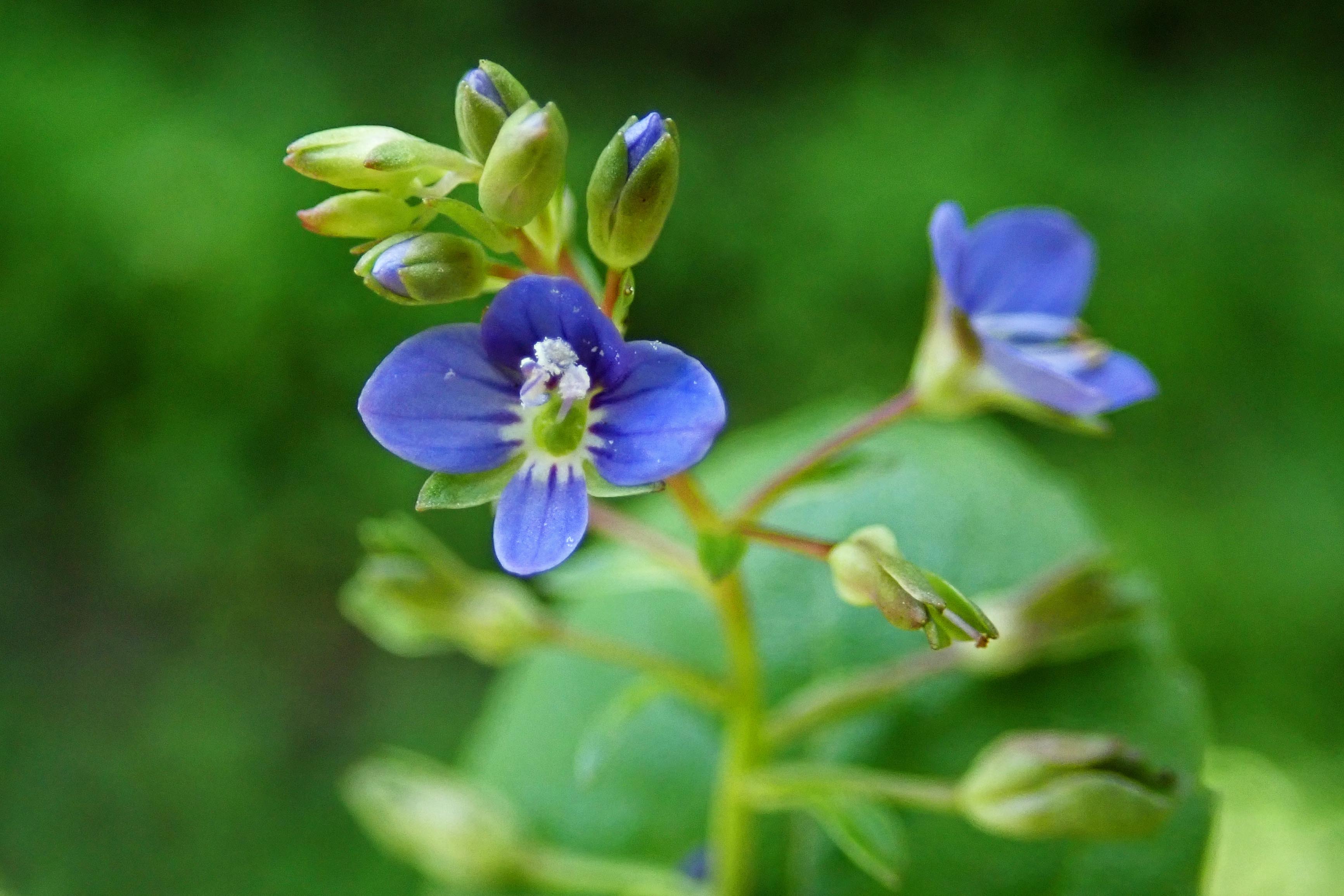
It was the tiny blue flowers that gave it away, and the fleshy succulent-like leaves, and the fact it was growing in the wet muddy area of a local horse field (that has a public footpath running through it, which I often use to get to a favourite local woodland). The flowers of Brooklime (Veronica beccabunga) are the clearest indicator that this is a member of the speedwell family, just one that prefers to live in damp habitats.

240623 brooklime (3)

The Plantlife website has an interesting section on this plant, entitled ‘Things you might not know’:

  • Brooklime was used as a salad plant in much of northern Europe in the past.
  • It used to be eaten with watercress and oranges to help prevent scurvy.
  • Although edible, the leaves are bitter and the same precautions should be taken with them, as with watercress, in order to avoid liver fluke.

240623 brooklime (2)

Like Loading...

Willowherb rust

21 Friday Jun 2024

Posted by sconzani in fungi

≈ Leave a comment

Tags

British rust fungi, British wildflowers, Puccinia pulverulenta, rust fungus, rust on willowherb, Willowherb, Willowherb rust

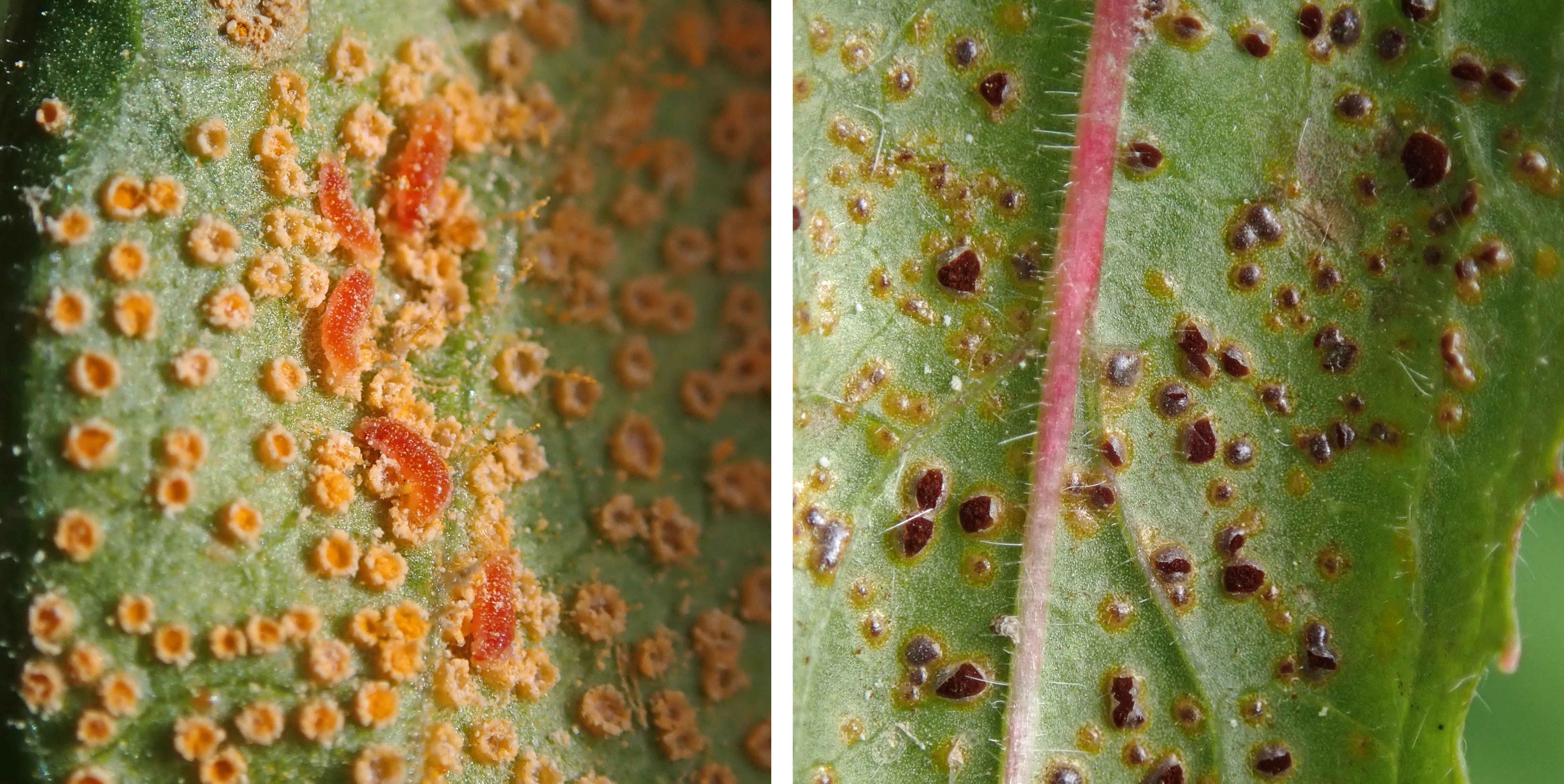
I’ve probably ignored the yellowing leaves of various willowherb species when I’ve seen them previously, thinking they were just drying out or perhaps diseased, but this time I turned a leaf over and discovered a new fungus (and lots of tiny orange grubs – likely fungus gnat larvae – feasting on that fungus).

240621 Puccinia pulverulenta (1)

This is Willowherb rust (Puccinia pulverulenta) (luckily, most rust species are host specific so are easy to identify if you know what the host plant it). The tiny orange rings, which, with their white fringing look a little like miniature flowers, are aecia – it’s from these that the rust releases some of its spores. Later in their complicated life cycle, the rust also produces the brown uredinia that can be seen in the photo on the right below. (Rust fungi have five different spore states – if you want to delve in to that life cycle, Science Direct has a good explanatory, though very technical article on its website.)

240621 Puccinia pulverulenta (2)

Like Loading...

Milkwort

16 Sunday Jun 2024

Posted by sconzani in wildflowers

≈ Leave a comment

Tags

British wildflowers, Common milkwort, milkwort, Polygala vulgaris

It’s always a delightful surprise to spot the tiny blue flowers of Milkwort in amongst the grasses and other wildflowers. Apparently, the flowers, which bloom from May right through to September in some locations, can also be deep purple and white but I’ve only ever seen this wonderful bright blue hue.

240616 milkwort (1)

Wikipedia reports that Classical and Renaissance writers stated ‘common milkwort was used medicinally as an infusion to increase the flow of a nursing mother’s milk’.

240616 milkwort (2)

I have assumed until now that the Milkwort plants I’ve seen, in various locations from grasslands to a coal spoil tip, have all been Common milkwort (Polygala vulgaris) but I admit that I have been so taken with the flowers that I haven’t paid much attention to the leaves. It seems that Heath Milkwort (Polygala serpyllifolia) is another possibility and, in future, I need to check whether the lower leaves are opposite each other on the stems (Heath milkwort) or alternate (Common milkwort).

240616 milkwort (3)

Like Loading...

The hatchling, and family

12 Wednesday Jun 2024

Posted by sconzani in insects, wildflowers

≈ Leave a comment

Tags

British weevils, British wildflowers, Cionus scrophulariae, Common figwort, Figwort weevil, Scrophularia nodosa

My little alien has hatched. As I had begun to suspect, it’s the most gorgeous Figwort weevil (Cionus scrophulariae).

240612 figwort weevil (1)

I’ve just returned from delivering my tiny miracle to the small group of Figwort (Scrophularia nodosa) plants near where I first found its cocoon.

240612 figwort weevil (2)

These are two other Figwort weevils I found on those plants; they are probably some of its siblings. Aren’t they just delightful creatures?

240612 figwort weevil (3)240612 figwort weevil (4)

Like Loading...

On the Oxeyes

09 Sunday Jun 2024

Posted by sconzani in insects, wildflowers

≈ 2 Comments

Tags

British insects, British wildflowers, insects on Oxeye daisies, Oxeye daisy

Perhaps because they are so common and abundant I am guilty of ignoring both the beauty and the usefulness of Oxeye daisies.

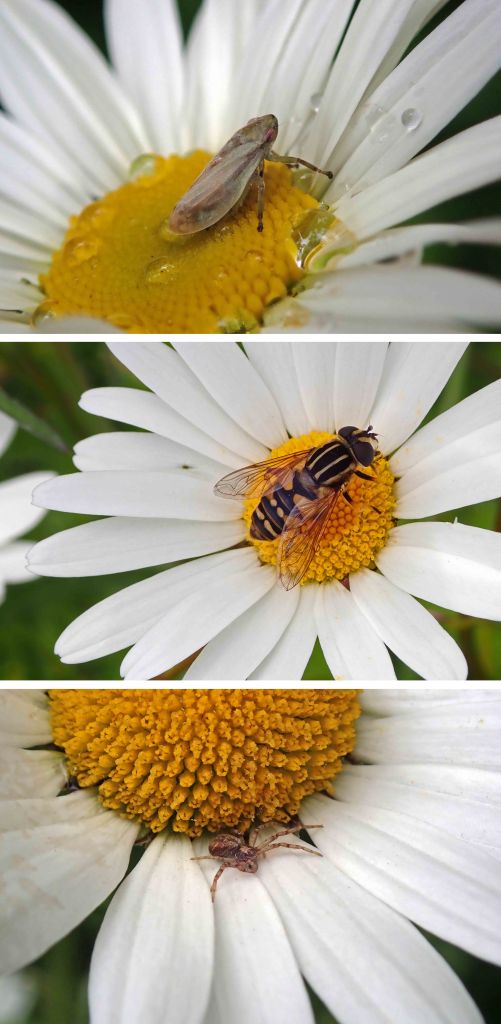
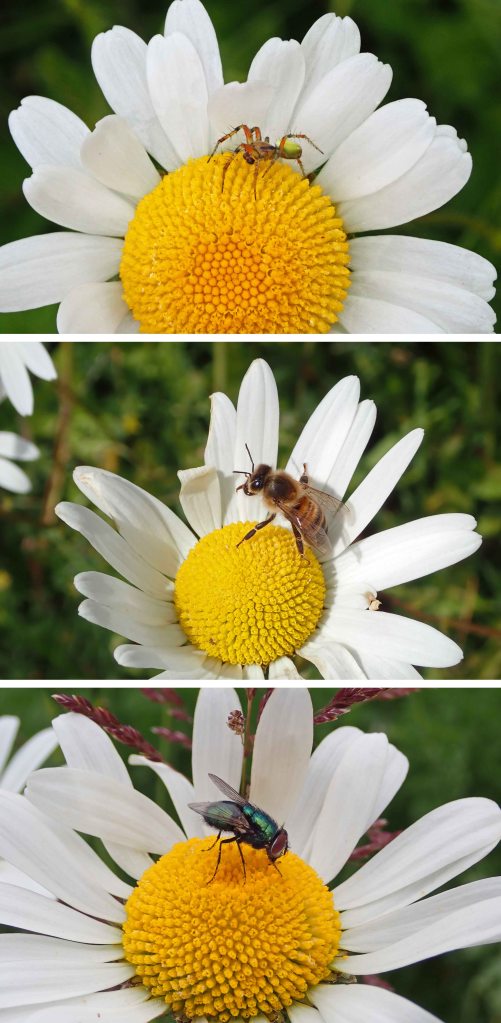
So, during my walks over the past few days I have been taking more notice and taking photos of the creatures either using the daisies as perches or feeding on their pollen.

If the weather had been more cooperative, without the constant breezy conditions, I probably would have got more photos.

Still, it was nice to see such a variety of invertebrates: bees and hoverflies, ladybirds and their larvae, several species of spider, grasshoppers and froghoppers and tiny beetles.

Like Loading...

Common broomrape

26 Sunday May 2024

Posted by sconzani in plants, wildflowers

≈ 2 Comments

Tags

British wildflowers, broomrape, Common broomrape, Orobanchaceae, Orobanche minor, parasitic plant

The broomrapes, the Orobanchaceae, are curious plants – as they’re unable to produce their own chlorophyll they get it by parasitising the roots of other plants. Until last week, I had only ever seen Ivy broomrape (Orobanche hederae) but, on my way to Grangemoor Park for a meander, growing amongst wildflowers along a road verge, I found another of the nine native species of broomrape in Britain. This strange beauty is Common broomrape (Orobanche minor), which most often taps in to the roots of members of the pea family (the Fabaceae) and the daisy family (the Asteraceae), but will also parasitise many other plant species.

240526 common broomrape

Like Loading...

Just peas, no carrots

19 Sunday May 2024

Posted by sconzani in flowers, wildflowers

≈ 2 Comments

Tags

Black medick, British wildflowers, Broom, Bush vetch, Common bird's-foot trefoil, Common vetch, gorse, Grass vetchling, Pea family, red clover, Spotted medick, White clover

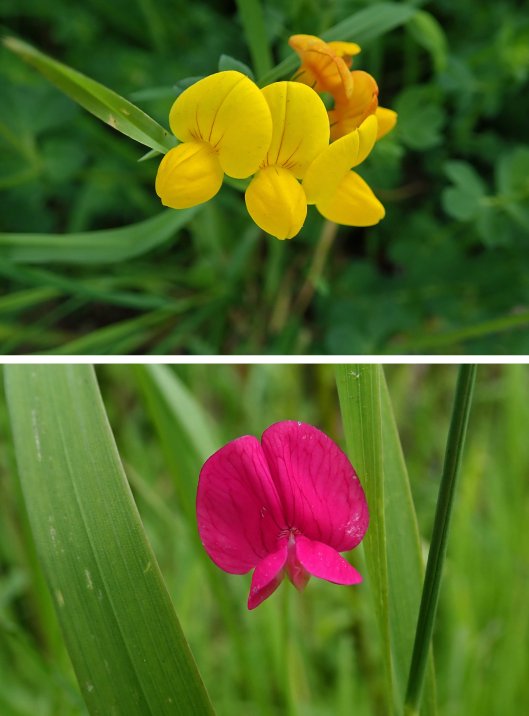
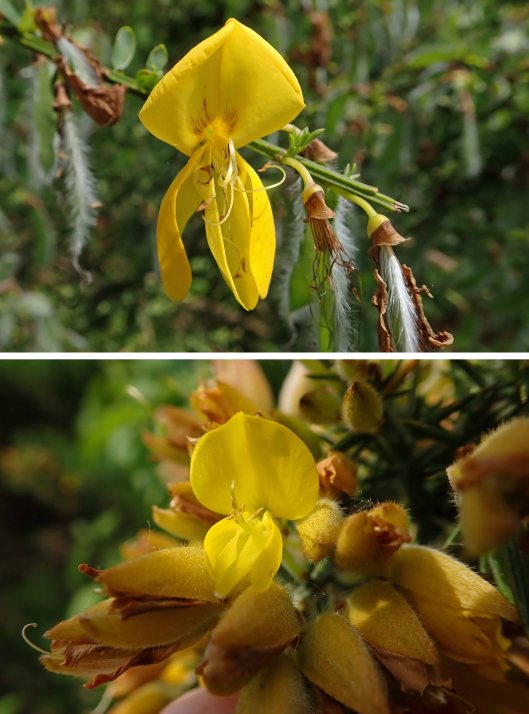
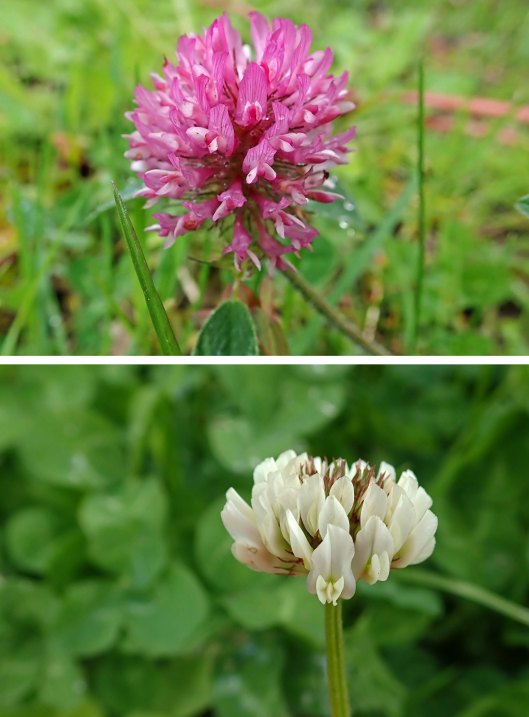
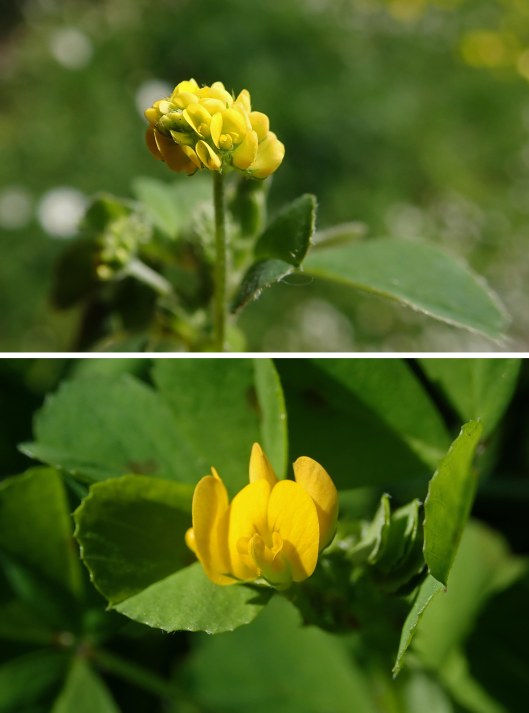
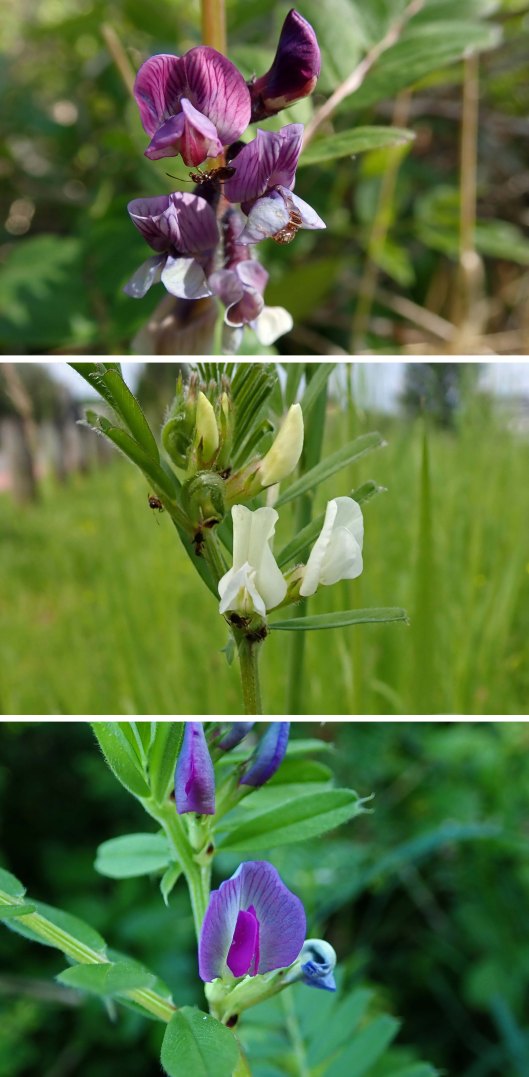
The challenge for the regular Sunday night 8-9pm Wildflower Hour (#WildflowerHour on most social media platforms) this week was to find flowering members of the carrot and pea families (#CarrotsAndPeas). I decided, for no particular reason, to stick with the peas, the Leguminosae, and here they are …

240519 birdsfoot trefoil and vetchling grass

Common bird’s-foot trefoil and Grass vetchling

240519 broom and gorse

Broom and Gorse

240519 clover red and white

Red and White clover

240519 medick black and spotted

Black and Spotted medick. These look very similar so you need to check the leaves: Spotted medick has splotches on its leaves, while the leaves of Black medick have no marks but have tiny points at their ends.

240519 vetch bush and common

Bush vetch (top) and Common vetch (bottom). I’m a bit confused about the white-flowered vetch in the centre – is it Bush or is it Common? I’ll ask the experts on tonight’s Wildflower Hour.

Like Loading...

Yellow flag irises

12 Sunday May 2024

Posted by sconzani in flowers, wildflowers

≈ Leave a comment

Tags

British wildflowers, Iris pseudacorus, wetland plants, Yellow flag iris, Yellow iris

Until this last week of hot dry weather, this large clump of Yellow flag irises (Iris pseudacorus) had its roots in a pool of water, their preferred habitat, the leaves looked lush and verdant, the flowers sunny and glorious.

240512 yellow flag iris (1)

These plants can withstand quite dry conditions, but, as I write this late Sunday afternoon, we have constant thunder and torrential rain, so I think their feet will be damp once again and the irises will be looking lovely for some time yet.

240512 yellow flag iris (2)

Like Loading...

Red-flowered Cowslips

05 Sunday May 2024

Posted by sconzani in flowers, spring, wildflowers

≈ Leave a comment

Tags

British wildflowers, Cosmeston Lakes Country Park, Cowslip, natural colour variation in Cowslip, red-flowered Cowslip, Spring colour

240505 red-flowered cowslips (1)

I wish I’d found these for #WildflowerHour’s recent Cowslip challenge: a small number of red-flowered Cowslips amongst a sea of yellow at Cosmeston Lakes Country Park. This is a natural variation, just like the occasional pink-flowered Primroses you might see growing in the wild, though I’ve only ever seen these at Cosmeston.

240505 red-flowered cowslips (2)

Like Loading...

White-flowered Herb Robert

28 Sunday Apr 2024

Posted by sconzani in flowers, wildflowers

≈ Leave a comment

Tags

British wildflowers, Geranium Robertianum, Herb Robert, whitef-lowered Herb Robert

I’m sure most of you are familiar with Herb Robert (Geranium robertianum), a very common wildflower that can found everywhere from pavement edges to woodland rides, from the southern coasts of England and Wales to Scotland’s northern isles (you can see the 2020 Plant Atlas distribution map here).

240428 herb robert

What I had never seen until very recently was the attractive white-flowered variety of Herb Robert, this one growing alongside a well-trodden path come side road in Cardiff Bay. I don’t think this is a native variety as the Plant Atlas mentions that ‘White-flowered forms, in particular, may be deliberately grown in gardens and sometimes escape’. Though this location is surrounded by multi-storey apartment blocks, I guess the seed must have blown in from somewhere.

240428 herb robert WHITE

Like Loading...
← Older posts
Newer posts →

About me

sconzani

sconzani

I'm a writer and photographer; researcher and blogger; birder and nature lover; countryside rambler and city strider; volunteer and biodiversity recorder.

View Full Profile →

Follow earthstar on WordPress.com

Enter your email address to follow this blog and receive notifications of new posts by email.

Recent blog posts

  • First beetles January 13, 2026
  • City Hall Peregrine January 12, 2026
  • Blackthorn in bloom January 11, 2026
  • Weevil: Mecinus pyraster January 10, 2026
  • Red in beak and claw January 9, 2026

From the archives

COPYRIGHT

Unless otherwise acknowledged, the text and photographs on this blog are my own and are subject to international copyright. Nothing may be downloaded or copied without my permission.

Fellow Earth Stars!

  • Unknown's avatar
  • Unknown's avatar
  • Unknown's avatar
  • Unknown's avatar
  • Unknown's avatar
  • Unknown's avatar
  • Unknown's avatar
  • Unknown's avatar
  • Unknown's avatar
  • Unknown's avatar
  • Unknown's avatar
  • Unknown's avatar
  • Unknown's avatar
  • Unknown's avatar
  • Unknown's avatar
  • Unknown's avatar
  • Unknown's avatar
  • Unknown's avatar
  • Unknown's avatar
  • Unknown's avatar
  • Unknown's avatar
  • Unknown's avatar
  • Unknown's avatar
  • Unknown's avatar
  • Unknown's avatar
  • Unknown's avatar
  • Unknown's avatar
  • Unknown's avatar
  • Unknown's avatar
  • Unknown's avatar
  • Unknown's avatar
  • Unknown's avatar
  • Unknown's avatar
  • Unknown's avatar
  • Unknown's avatar
  • Unknown's avatar
  • Unknown's avatar
  • Unknown's avatar
  • Unknown's avatar
  • Unknown's avatar
  • Unknown's avatar
  • Unknown's avatar
  • Unknown's avatar
  • Unknown's avatar
  • Unknown's avatar
  • Unknown's avatar
  • Unknown's avatar
  • Unknown's avatar
  • Unknown's avatar
  • Unknown's avatar

Blog at WordPress.com.

Privacy & Cookies: This site uses cookies. By continuing to use this website, you agree to their use.
To find out more, including how to control cookies, see here: Cookie Policy
  • Subscribe Subscribed
    • earthstar
    • Join 669 other subscribers
    • Already have a WordPress.com account? Log in now.
    • earthstar
    • Subscribe Subscribed
    • Sign up
    • Log in
    • Report this content
    • View site in Reader
    • Manage subscriptions
    • Collapse this bar
 

Loading Comments...
 

You must be logged in to post a comment.

    %d