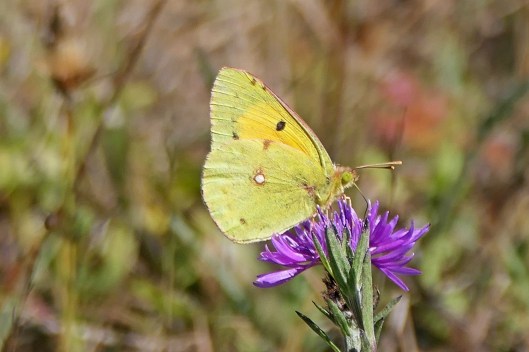
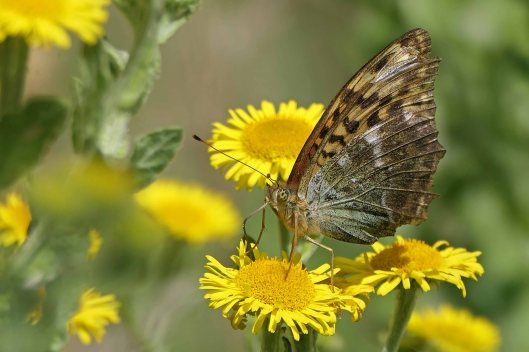
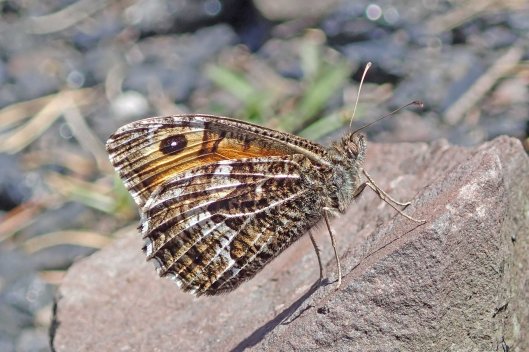
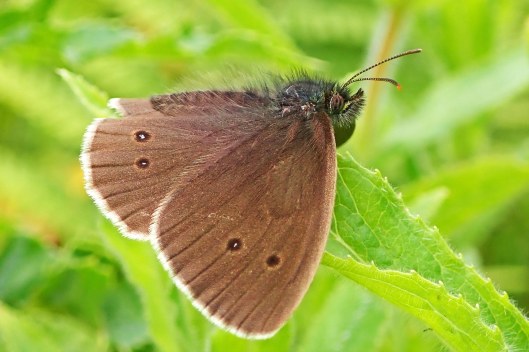
Before I became completely enamoured with butterflies, I mistakenly believed they – that is to say, each species – looked the same. I hadn’t appreciated that the patterns on their wings are like fingerprints, each one different, each unique.

27 Wednesday Jul 2022
Posted in insects
Before I became completely enamoured with butterflies, I mistakenly believed they – that is to say, each species – looked the same. I hadn’t appreciated that the patterns on their wings are like fingerprints, each one different, each unique.

15 Friday Jul 2022
Posted in insects
Starting today and running until 7 August, this year’s big butterfly count is underway. The general public – that’s you! – are crucial in assessing the state of the nation’s butterflies by taking part in this annual count. There’s still time to get involved, as you can download the necessary materials from the Butterfly Conservation website, and it only takes 15 minutes of watching and counting the butterflies in your back garden, your local park or green space, then logging those counts online. Easy peasy! And a massive thank you to everyone who takes the time to make a difference!

14 Thursday Jul 2022
Posted in insects
Tags
British butterflies, butterfly, hairstreak butterflies, mating butterflies, mating White-letter hairstreaks, White-letter hairstreaks
Saturday’s walk to my local woodlands started with a magical experience when I spotted these mating hairstreaks sitting, almost hidden, on a leaf of a small sapling. The tree was a young Oak, so I assumed the butterflies were Purple hairstreaks but a closer look showed these were actually White-letter hairstreaks, though there were no Wych elms, their usual habitat, anywhere in sight. The lessons for me were twofold: I should always check rather than make assumptions, and butterflies don’t always do what you expect them to. And, though I felt a little like a voyeur, the butterflies were a joy to see so close, and they stayed quite still while I took this series of photographs.

11 Monday Jul 2022
Posted in insects
Tags
British butterflies, butterfly, differences between Small and Essex skippers, Essex skipper, Essex skipper identification, Small skipper, Small skipper identification
I’ve blogged about this before but, as it’s the skipper time of year and there are quite a few newbies following along here, I thought I’d do a repeat post. For anyone who finds the little skippers confusing, I hope this helps you. The first two photos illustrate the differences in the length and angle of the male scent brands on the upper wings of the Small and Essex skippers.

Small skipper on the left, Essex skipper on the right
And the two photos below show the differences in the colour of their antenna tips viewed head on, orange on the Small skipper and black on the Essex.

Small skipper on the left, Essex skipper on the right
08 Friday Jul 2022
Posted in insects
I think I picked the hottest day of the year so far to head to the top of the Aberbargoed coal spoil tip to look for Graylings but it was worth every drop of perspiration to spend time with these gorgeous butterflies.

I hadn’t realised before yesterday how territorial Graylings are. They are so well disguised that it’s almost impossible to see them so, as I wandered carefully across the slope of coal spoil, they would fly up almost from under my feet. Then they would land, I’d try to get close for a photo, and they would immediately flit up and around, buzzing me, even landing on me (my shoes twice, see the image below), as if saying ‘this is my place, you’re not welcome’. It wasn’t just the intrusive human they were bombarding – they were defending their territories against each other too. Fascinating to watch.

05 Tuesday Jul 2022
Posted in insects
What’s not to love about a butterfly whose colour is described as chocolate … except that you can’t eat it.

Its rich brown colour enables the Ringlet (Aphantopus hyperantus) to warm itself more quickly than light-coloured butterflies, which means it can be seen bobbing its way through the long grass even on overcast days.

The Ringlet is named for the marks on its underwings, the circles of white, black and caramel, which can vary considerably in size and shape.

30 Thursday Jun 2022
Posted in insects
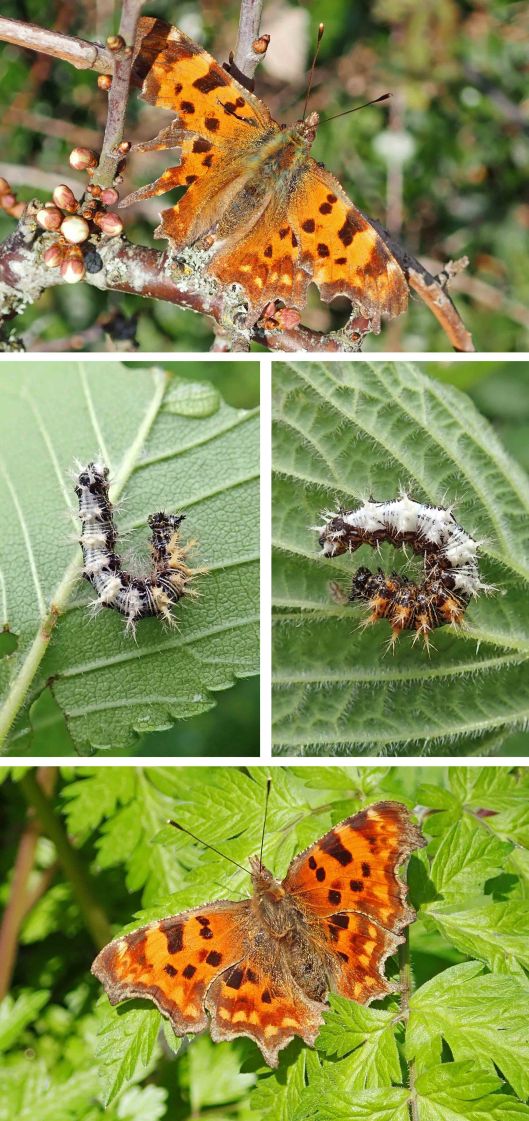
I saw my first Comma butterfly on 18 March and continued to spot them quite regularly until the end of April, by which time they were looking increasingly tatty. Although the adults then died off, the next generation was underway, and I saw my first ever Comma caterpillars on two consecutive days in mid May. Now, the pristine adults have begun to appear, floating along the hedgerows and woodland rides, trying very hard to convince me they’re really Silver-washed fritillaries. Their vibrant orange-and-black patterning is a joy to behold.

27 Monday Jun 2022
Posted in insects
First spotted locally on 15 June, Small skippers are now appearing in greater quantities though, from my observations, both Large and Small skipper numbers are well down on recent years. This may well be climate related but it’s also environmental. In two of the local areas I have previously seen skippers in abundance, humans have been tinkering. In one case, the edges of a field were cut back much more than in previous years, with grassy edges cut to the dirt and the scrub- and bramble-edged hedgerows heavily flailed. And in the other location, an old meadow, the long grasses were cut but the trimmings left to rot, a community orchard was planted where wildflowers and waxcap fungi previously thrived and, once again, the bramble-and-scrub edges have recently been decimated, despite this being bird-nesting season. The good news is that I’ve found another good skipper field though, unfortunately, it has been earmarked for a housing development by the Welsh government (though locals are fighting to preserve their green fields). I fear for our butterflies, such vulnerable little creatures in an increasingly hostile world.

20 Monday Jun 2022
Posted in insects
As well as the Heath spotted-orchids pictured in yesterday’s blog and the Small pearl-bordered fritillaries featured last Thursday, another of the stars of the Aberbargoed Grasslands NNR is the Small heath (Coenonympha pamphilus). Fortunately, this lovely little butterfly has adapted to life in a wide variety of habitats, not just damp grasslands, so, although it is still classed as vulnerable in the most recent conservation status report released last month by Butterfly Conservation, it is in a much better position to cope with environmental changes that those butterflies that require more specialised habitats.

16 Thursday Jun 2022
Posted in insects
Tags
Aberbargoed Grasslands, Boloria selene, British butterflies, butterfly, fritillary, Small Pearl-bordered Fritillary
I can’t think of a nicer way to spend a day than to enjoy a lovely catch up with my friend Shar while wandering around a grasslands reserve looking for butterflies. Having a second pair of sharp eyes was also a bonus as the weather was quite dull, the butterflies few and mostly inactive. Still, we managed some good close sightings of Small pearl-bordered fritillaries (Boloria selene), a butterfly that thrives in the damp grassland habitat of Aberbargoed Grasslands NNR and, though one of the reserve’s largest fields was burnt recently, there are promising signs that both the violets required for this butterfly’s larvae and the thistles, bramble and bugle that provide food for the adults have survived the fire. Let’s hope both the plants and the butterflies bounce back from what could so easily have been a truly tragic event.

You must be logged in to post a comment.