The gorgeous Gatekeeper may well be the last butterfly species to be added to my local list this year, unless I get particularly lucky and manage to spot something unusual. But what a fabulous finale!


22 Friday Jul 2022
Posted in insects
The gorgeous Gatekeeper may well be the last butterfly species to be added to my local list this year, unless I get particularly lucky and manage to spot something unusual. But what a fabulous finale!
07 Saturday Aug 2021
Posted in insects
Tags
British butterflies, Brown argus, butterfly, butterflying, mud-puddling, puddling, the brown blue butterfly
According to my Life Cycles of British & Irish Butterflies, William Lewin named this butterfly the ‘Brown blue’ in his 1795 publication The Papilios of Great Britain, but its current name comes from the earlier 1702 work Gazophylacium naturae et artis by James Pettiver, who gave it the name the ‘edg’d brown Argus’. The argus part of the Brown argus’s name comes from ‘the many-eyed shepherd of Greek mythology, which is a reference to the numerous spots on the butterfly’s underside’.
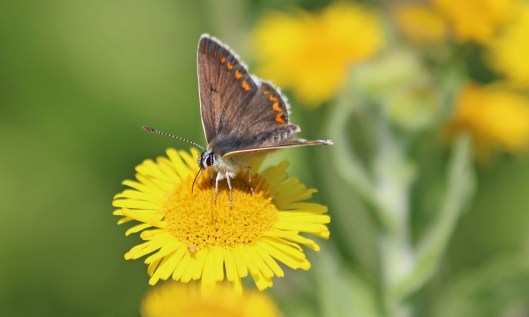
The beauties in my photos are from this year’s second generation of Brown argus, seen in two locations earlier this week. I only saw three of the first generation back in June as, like many local butterflies, their numbers were well down after a very wet spring. I’m hoping this second brood fares better.

I was interested, and just a little revolted, when I watched one of these Brown argus butterflies stocking up on nutrients, probably salts and amino acids, by slurping at a damp mixture of mud and horse pooh, an activity known as puddling or mud-puddling. Don’t try this at home!

28 Wednesday Jul 2021
Posted in insects
My walks in Casehill Woods delivered yet another delightful surprise on Monday, this stunning male Silver-washed fritillary.

I have, in fact, been looking for these butterflies in the Dinas Powys woodlands in recent weeks as this is the closest area to where I live that Silver-washed fritillaries were last seen on a regular basis. Though they were once recorded quite frequently in Cwm George woodland, none have been reported there since 2003. It seems to my untrained eye that the trees in Cwm George have grown too tall so the area no longer provides the sunlit rides and glades, the flourishing banks of nectar-rich brambles, thistles and other wildflowers, and the quantities of its larval food plant Common dog-violet that the Silver-washed fritillary needs to thrive.

Fortunately, this particular butterfly has discovered the younger Millennium woodland area of Casehill Woods, which caters exactly to his needs. Now, let’s hope this male can attract a female so that together they can build a new local population. Fingers crossed!
23 Friday Jul 2021
Posted in insects
My first visit to Slade Wood last week, though a wonderful wander, did not produce any sightings of the particular butterfly I was hoping for. So, when I read on Twitter that evening that they had been seen in a particular spot, and knowing that these butterflies can be territorial so would probably be faithful to that location, I just had to go back for another look. And I’m so very glad I did.
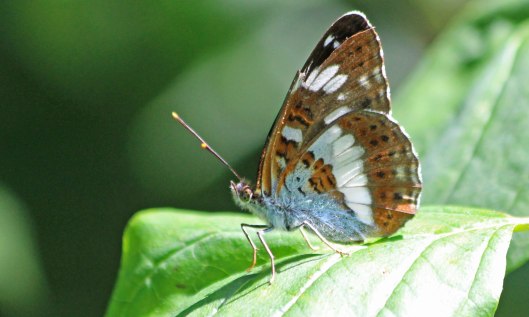
By sheer coincidence, Frank, the person who had provided the site details, was there when I revisited Slade Wood last Friday. We had brief views of one butterfly but it wasn’t until I met Frank again along the main woodland ride that we had these exceptionally close views of another.
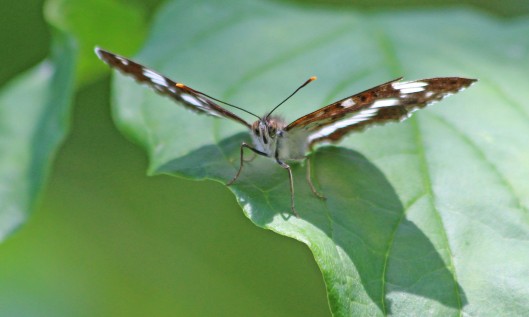
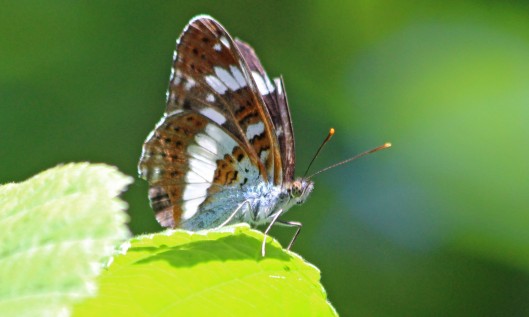
The butterfly, the one true glider of the 59 British butterfly species, is a White admiral (Limenitis camilla) and, as it was patrolling a small territory and defending that territory from other, passing butterflies, it was probably a male. It was amazingly confiding, and I felt incredibly fortunate to be able to observe this gorgeous creature so closely.
19 Monday Jul 2021
Posted in insects
Tags
British butterflies, Butterflies of Oak woodlands, butterfly, butterflying, hairstreaks, Purple hairstreak
You may remember that at the end of May I made the surprise discovery of a Purple hairstreak butterfly larva in my local woodlands. Despite much searching I never found another but, as these butterflies are now on the wing, I’ve been keeping an eye out for any adults when I walk the woodland rides in that area.

And last week I found one … or, I should really say, it found me. I was focused on checking for butterflies flying high in the canopy of the Oak trees when a small grey-looking butterfly flitted close around my head and then disappeared into the branches next to the path. A few seconds later it reappeared and spent a few minutes, feeding on the honeydew on the leaves, before floating back up to the canopy again. A fanciful thought but it was almost like it was saying ‘Here I am. Look at me’, so I did.

Though these butterflies give a predominantly grey impression when you see them, they are named for the deep purple markings on their upper wings. You can catch just a glimpse of that vibrant colour in the photo above.
31 Wednesday Mar 2021
Posted in insects
Tags
British butterflies, butterfly, butterflying, Large white butterfly, Small tortoiseshell, Small white butterfly
‘Stay near me – do not take thy flight!
A little longer stay in sight!’

These are the opening lines of William Wordsworth’s 1802 poem ‘To a Butterfly’, lines I can easily identify with, thoughts I also utter often – though not in Wordsworth’s exact words, of course.

Fortunately, the butterflies occasionally, and unknowingly, heed my pleas and stay long enough for me to take photographs, like these recent new sightings for 2021, the beautiful Large and Small whites, and Small tortoiseshell.

28 Monday Dec 2020
Posted in insects
I’ve often said that the Small copper is my favourite butterfly, and that’s still true, but the butterfly in my spotlight for 2020 is the Small tortoiseshell. And the good news is that this year I’ve seen more Small tortoiseshells, both the butterflies and their larvae, than in previous years. I hope that means they’re enjoying some good luck, and their numbers are bouncing back everywhere, not just in my locality. I’ve blogged about these beautiful butterflies a few times now: the most recent post was The devil’s butterfly?, in April 2020.

24 Saturday Oct 2020
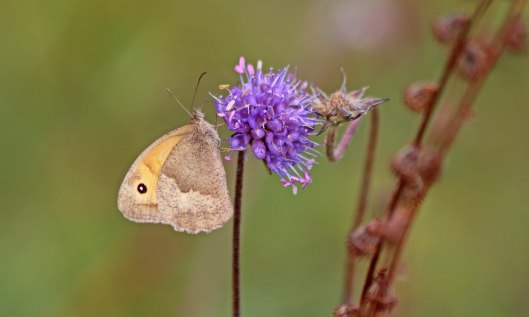
Meadow brown butterflies have a long season, on the wing from early June to the end of October, and those dates are exactly what I’ve observed in my area this year and last.
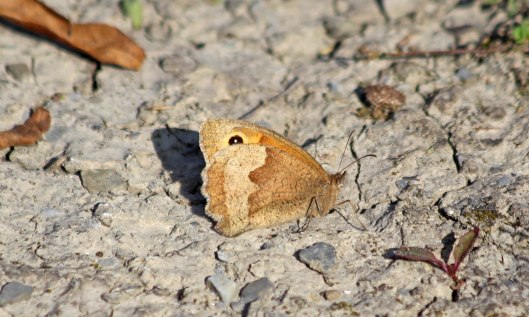
In 2019, I spotted my first Meadow brown on 5 June and the last was a single butterfly seen on 7 October.
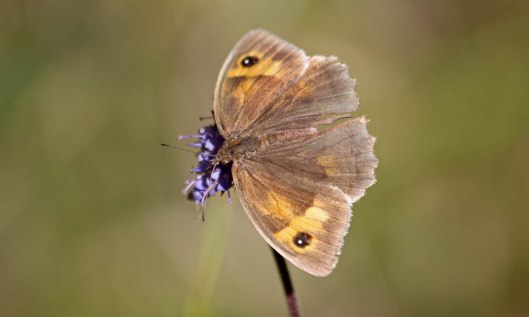
This year, I saw my first Meadow Brown at Cosmeston Lakes Country Park on 1 June.
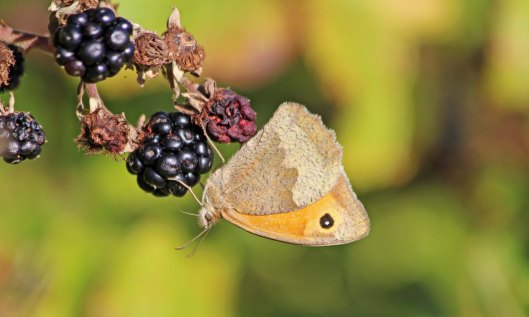
And, as September was drawing to a close, I kept a special eye out for these lovely butterflies, each time taking a photograph and asking myself, ‘Will this be the last Meadow brown of the year?’
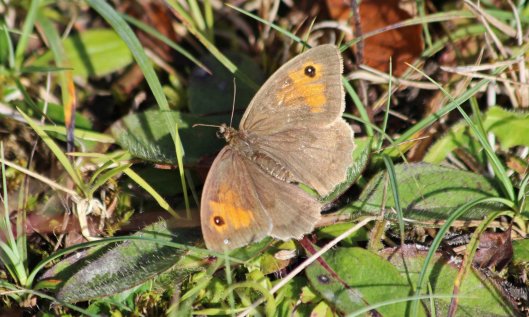
I knew time was fast slipping away for them and, on 5 October, again at Cosmeston, it really was the last time I would see a Meadow brown in 2020. That butterfly is the one shown below … and I’m already looking forward to seeing them again next June.
30 Wednesday Sep 2020
Tags
Aricia agestis, British butterflies, Brown argus, butterfly, butterflying, Cosmeston Lakes Country Park, Lavernock Nature Reserve, second brood Brown argus
This year I saw my first Brown argus butterfly (Aricia agestis) on 11 July and thought I’d seen my last on 26 August, a short but very sweet season of sightings. Then, to my astonishment and absolute delight, I discovered two more on the same day, 16 September, one at Lavernock Nature Reserve and the other at Cosmeston Lakes Country Park.
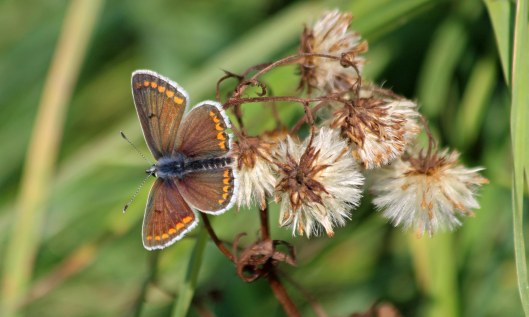
These had to be the product of the first brood of butterflies breeding and so were a second brood, not something I’d seen before with this butterfly. As the local populations of Dingy skippers have also produced a second brood and the Small coppers a third brood this year and nothing has changed in their environments, I can only assume this has been caused by the warmer climate.

I haven’t managed to find the Lavernock Brown argus again but the Cosmeston butterfly was still in the same spot last week. A late summer-early Autumn treat!
26 Saturday Sep 2020
Posted in insects
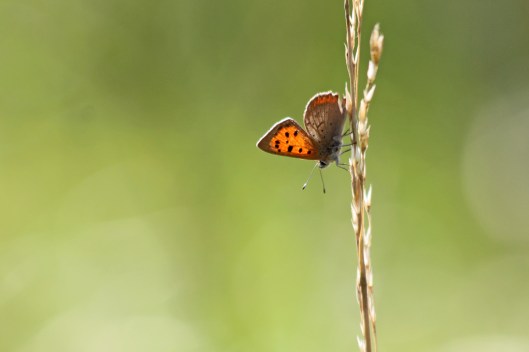
I love the peculiar habit Small coppers have of walking head first down the stems of grasses.
 earthstar
You must be logged in to post a comment.