• ABOUT
  • BIRDING 2018
  • Birding 2019
  • BLOG POSTS
  • Butterflies 2018
  • Resources

earthstar

~ a celebration of nature

earthstar

Tag Archives: Cuckooflower

You know it’s almost summer when …

25 Thursday May 2023

Posted by sconzani in insects, seasons

≈ Leave a comment

Tags

British beetles, Buttercup, Cuckooflower, signs of summer, Swollen-thighed beetle

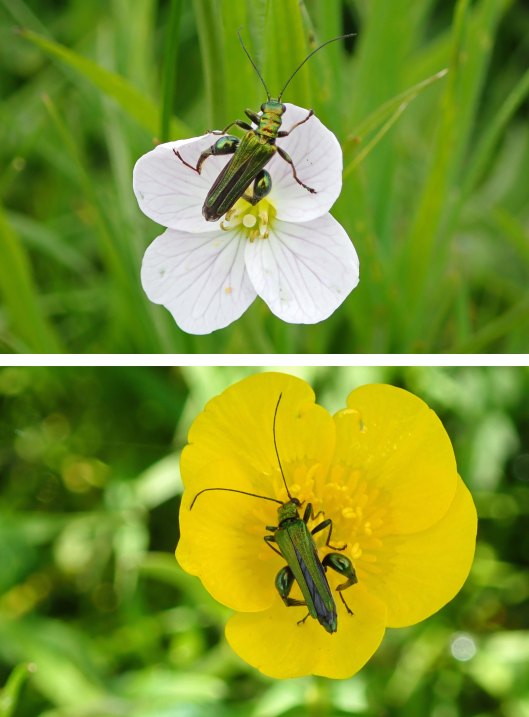
I’m sure you all have things that say ‘it’s almost summer’ to you – when you spot your first Swallow perched on an overhead wire or you hear your first screaming Swifts; when a particular flower blooms; when the morning light wakes you up earlier than your alarm; when you spot your first dragonfly of the year; when it’s warm enough to wear short sleeves. Well, one of the things that says summer to me is the appearance of these metallic-green mini-beasties, the Swollen-thighed beetles, in this case the males with the tell-tale swollen thighs, shown here on a cuckooflower and on a buttercup.

230525 swollen-thighed beetle

Like Loading...

Flowers and Cuckoos

03 Sunday Apr 2022

Posted by sconzani in spring, wildflowers

≈ 2 Comments

Tags

Arum maculatum, British wildflowers, Cardamine pratensis, Cuckoo-pint, Cuckooflower, Lady's-smock, Lords-and-ladies, Milkmaid

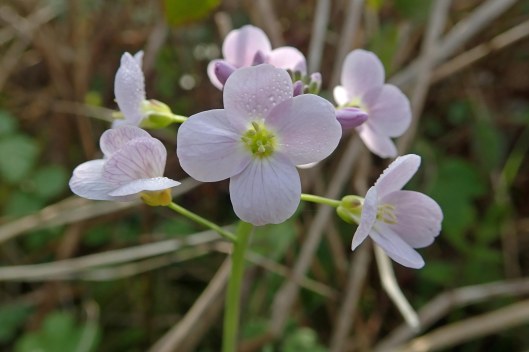
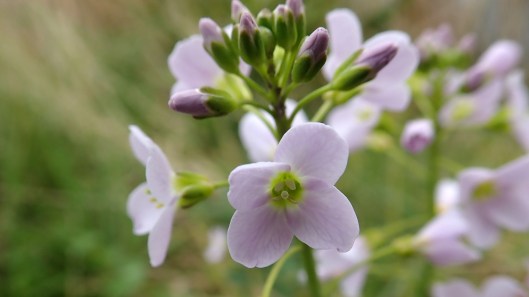
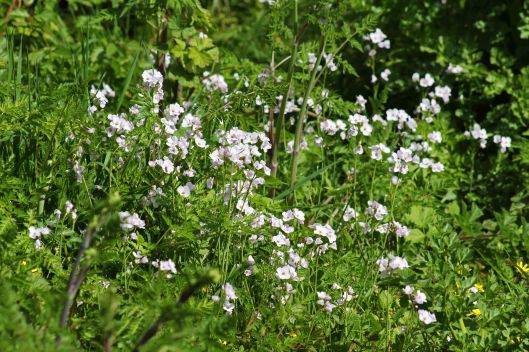
The coincidence of the pale and delicate Cuckooflower (Cardamine pratensis) coming into bloom at the same time as the first Cuckoos arrive back from over-wintering in Africa is the likely origin of this wildflower’s common name, though several other wildflowers also bloom at this time and, with the climate changing, the flower’s blooming and the bird’s arrival no longer coincide very precisely. Perhaps the alternate Lady’s-smock and Milkmaid are more appropriate names.

220403 cuckoo flower

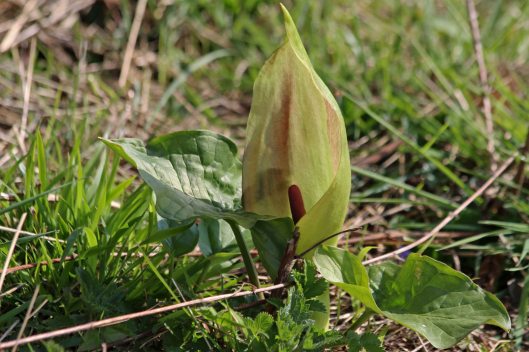
Another wildflower that is known in some areas as Cuckoo flower, as its flowers open around this time, is Arum maculatum. I know it best as Lords-and-Ladies, but many call it Cuckoo-pint (rhymes with mint), for which there is a somewhat more risqué explanation: pint is short for pintle, meaning penis. I’m sure you can all see why.

220403 cuckoo pint

Like Loading...

Shades of pink and blue

04 Sunday Apr 2021

Posted by sconzani in nature

≈ 2 Comments

Tags

Bluebells, British wildflowers, Cornsalad, Cuckooflower, Doves-foot cranes-bill, Ground ivy, Lords-and-ladies, Lungwort, Red dead-nettle, Spring colour

All of a sudden, the countryside has been splashed and daubed and sprinkled with these pretty shades of pink and blue.

210404 bluebells

Bluebell (Hyacinthoides sp.), not the native species but still pretty

210404 corn salad

Common Cornsalad (Valerianella locusta), also known as Lamb’s lettuce

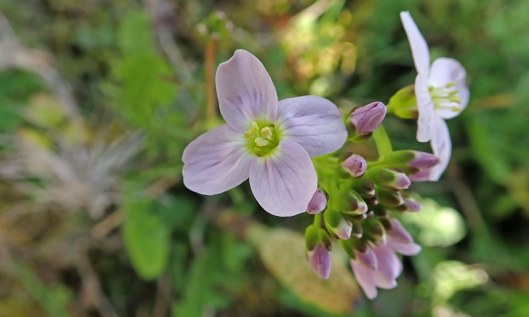
210404 cuckooflower

Cuckooflower (Cardamine pratensis), which you might know as Milkmaids or Lady’s smock

210404 ground ivy

Ground ivy (Glechoma hederacea), this little beauty has some wonderful vernacular names, including Gill-over-the-ground and Run-away Robin

210404 lords and ladies

Lords-and-ladies (Arum maculatum), another wildflower named for a bird: Cuckoopint

210404 lungwort

Lungwort (Pulmonaria officinalis), also known as Our Lady’s milk and Mary’s tears

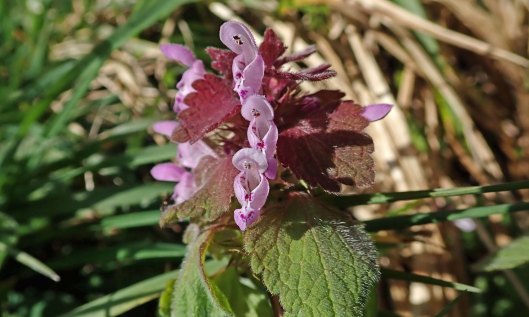
210404 red dead-nettle

Red dead-nettle (Lamium purpureum), which seems to be under every hedge, along every woodland edge right now

210404 Round-leaved crane's-bill

Dove’s-foot crane’s-bill (Geranium molle), found growing around the base of a local power pole yesterday

Like Loading...

82/366 Wildflowerhour : the Brassicas

22 Sunday Mar 2020

Posted by sconzani in nature, spring, wildflowers

≈ 6 Comments

Tags

American winter-cress, Brassicas, British wildflowers, Common whitelowgrass, Cuckooflower, Hoary mustard, Sea radish, Shepherd's purse, Wavy bitter-cress

This week’s challenge for #Wildflowerhour was to find as many of the Brassica family in flower as possible. I’m rather pleased with the number I’ve found, though I’m not 100% sure of my plant IDs, so if you think I’ve got any wrong, please do comment below. And I’ll edit this post if I need to, to reflect the corrected information.
200322 American winter-cress

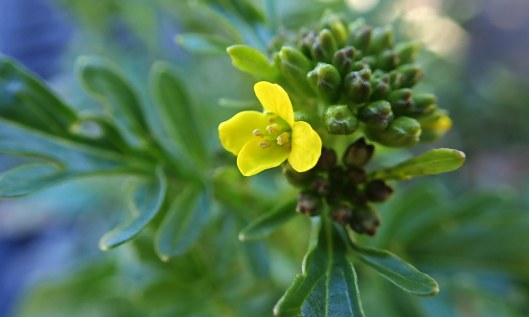
American winter-cress (Barbarea verna): this is the identification I’m least confident about, as it’s a plant I’ve not seen before, and only a couple of flowers were actually open, but the leaf shape seems to fit.

200322 Common whitlow grass

Common whitlowgrass (Erophila verna): his plant is very common in my area but it’s one I often overlook because of its small size. It’s a pretty wee thing though.

200322 cuckooflowers

Cuckooflower (Cardamine pratensis): found earlier this week but this is a new photograph as I’ve since revisited the site. It’s certainly earlier in this particular location than in the other places I’ve usually found this plant, which, I suspect, is due to aggressive cutting by the local council in those other locations (Cardiff Bay and Hamadryad Park).
200322 hoary mustard

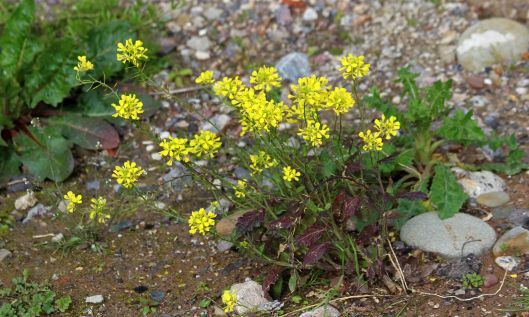
Hoary mustard (Hirschfeldia incana): Argh, so many plants that look similar! The only reason I’m reasonably confident about this one is that I’ve posted a photo of it previously on Twitter and an expert named it for me.

200322 sea radish

Sea radish (Raphanus raphanistrum ssp maritimus): This is another plant previously identified by one of the Twitterati and, though this was a slightly different location, it was also on the shores of Cardiff Bay so hopefully I’ve got this one right.
200322 wavy bitter-cress

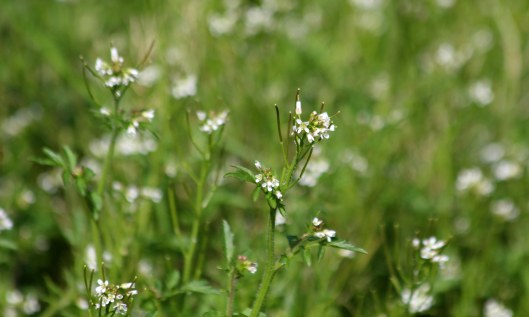
Wavy bitter-cress (Cardmine flexuosa): The bitter-cresses always confuse me but, though it’s hard to see them, these flowers have six stamens, which is a key ID point to confirm this as Wavy rather than Hairy bitter-cress.

200322 Shepherd's-purse

Shepherd’s-purse (Bursa pastoralis): The purse-shaped seedpods of this lovely little plant make it unmistakable, thank goodness.

Like Loading...

78/366 Dainty beauties

18 Wednesday Mar 2020

Posted by sconzani in nature, spring, wildflowers

≈ 3 Comments

Tags

British wildflowers, Cardamine pratensis, Cuckooflower, Lady's smock, spring wildflowers

Yesterday’s star finds, during a walk around Grangemoor Park, were my first Cuckooflowers of 2020. They’re such dainty little beauties and, with a newly arrived Chiffchaff calling in the trees behind, it felt like Spring really had arrived.

This slideshow requires JavaScript.

Like Loading...

100/365 Boy meets girl

10 Wednesday Apr 2019

Posted by sconzani in 365DaysWildin2019, flowers, insects, nature, spring, wildflowers

≈ 12 Comments

Tags

#365DaysWild, British butterflies, Cuckooflower, Orange-tip butterfly, Orange-tip egg, Orange-tip female, Orange-tip male

A sequence of events that unfolded before me this afternoon….

190410 Orange-tip male

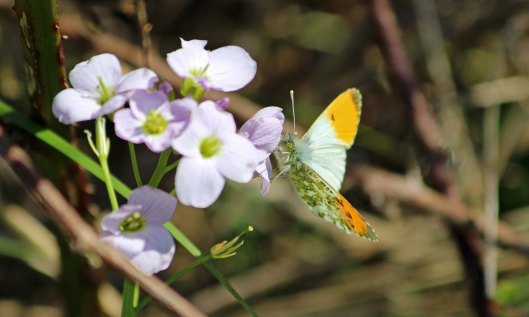
A male Orange-tip butterfly feeding on one of its favourite flowers, and the host plant for its caterpillars, the Cuckooflower.

190410 Orange-tip male and female (1)

Finished feeding on that flower, the male flies on and suddenly smells a female. Woohoo!

190410 Orange-tip male and female (2)

Sadly for him, this female has already mated, which is why she’s holding her body in that odd upright manner. He remains hopeful for a moment or two, then gets the message and flies off.

190410 Orange-tip female

I follow the female who flies to another flower. She’s not eating so what’s she’s doing, I wonder.

OLYMPUS DIGITAL CAMERA

Aha! Can you spot the single egg attached to the flower stalk, in the very centre of the picture? I’ll have to go back in a week or so and see if I can spot any caterpillars on these flowers.

Like Loading...

A host of local names

27 Friday Apr 2018

Posted by sconzani in flowers, nature, spring, wildflowers

≈ 3 Comments

Tags

British wildflowers, Cardamine pratensis, Cuckooflower, Lady's smock, Meadow bittercress, spring flowers

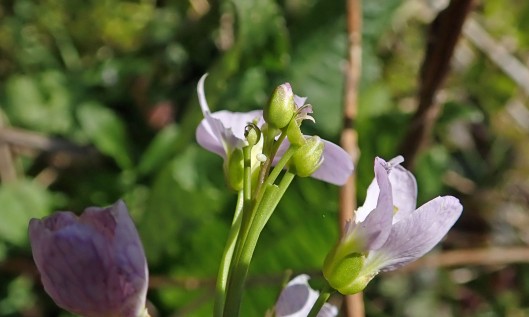
‘Any flower that comes with a host of local names is likely to be of human use, either as food or as medicine’, writes John Lewis-Stempel, in his truly wonderful book Meadowland: The Private Life of an English Field (Doubleday, London, 2014; highly recommended, if you haven’t already read it). And he goes on to mention just a few of the local names that have been given to Cardamine pratensis, namely Cuckooflower (because the pale pink flowers tend to appear around the same time the Cuckoo returns to Britain from its winter sojourn in warmer climes); and Lady’s smock, Lady’s gloves, and Lady’s mantle (due to the flower’s resemblance to those articles of clothing) (though I don’t really see the gloves).

Lewis-Stempel also notes the vernacular Meadow bittercress, so named because ‘the needle-thin leaves … make a peppery edible that used to be sold on medieval market stalls’, which I never knew before. I also didn’t realise that Cuckooflower is the food plant of the caterpillar of the Orange-tip butterfly – reason enough for me not to eat those peppery leaves as I’d love to see more Orange-tips fluttering around.

180427 cuckooflower (2)
180427 cuckooflower (3)
180427 cuckooflower (4)
180427 cuckooflower (5)
Like Loading...

Attracting thunderstorms and adders?

18 Tuesday Apr 2017

Posted by sconzani in flowers, nature, wildflowers

≈ Leave a comment

Tags

Cardamine pratensis, Cuckooflower, Lady's smock, Milkmaid, Spring colour, spring flowers, wildflowers

170418 Cuckooflower (3)

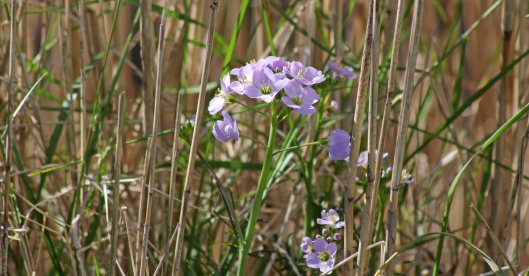
It seems that everywhere I walk at the moment there’s Cuckooflower. With its penchant for damp soggy ground, it can be found sprinkled amongst the reeds at the edge of Cardiff Bay wetlands, underlining the willow scrub along the edges of the River Taff, accentuating the lines of a drying drain at Cosmeston Lakes Country Park. And it’s such a pretty little thing, with its pale lilac flowers sitting high on an upright stalk, all the better for the bees and butterflies to find them.

170418 Cuckooflower (1)
170418 Cuckooflower (2)

Its scientific name is Cardamine pratensis and, if you don’t know it as Cuckooflower (it flowers at the time the cuckoos return to Britain), then you may know it by its other popular names, Milkmaid and Lady’s smock. Milkmaid is the older name, possibly a reference to its feminine colour and blousy shape when the flowers are first opening and I read, in an article in the Darlington & Stockton Times 23 June 2006, that

‘When Christianity came to these islands, that feminine association was transferred to the Virgin Mary, which led to a host of other names for the flower, such as my lady’s smock, lady’s glove and dozens more.
There is one old story which says that St Helena found Our Lady’s smock in a cave near Bethlehem, an article of clothing she left behind. It was later taken to St Sophia and then to Aix la Chapelle, where it was venerated for centuries, with this little wild flower being named in several European countries in honour of that relic.
‘In Europe, a lot of superstition used to surround this flower. It was thought that if anyone picked it, a thunderstorm would break out. It was also thought to generate lightning and for this reason was never taken into a house. In parts of England, it was believed to attract adders, Britain’s only poisonous snake, with a notion that anyone picking the flower would be bitten before the year was out.’

170418 Cuckooflower (5)
170418 Cuckooflower (4)

Luckily, I prefer to leave wildflowers where they are for everyone to enjoy so haven’t picked any, though I’m now almost tempted, just to see what happens … almost.

170418 Cuckooflower (6)

Like Loading...

About me

sconzani

sconzani

I'm a writer and photographer; researcher and blogger; birder and nature lover; countryside rambler and city strider; volunteer and biodiversity recorder.

View Full Profile →

Follow earthstar on WordPress.com

Enter your email address to follow this blog and receive notifications of new posts by email.

Recent blog posts

  • M is for mite December 18, 2025
  • L is for lepidopteran lifers December 17, 2025
  • K is for Keeled skimmers December 16, 2025
  • J is for Jersey tiger December 15, 2025
  • I is for Ichneumon December 14, 2025

From the archives

COPYRIGHT

Unless otherwise acknowledged, the text and photographs on this blog are my own and are subject to international copyright. Nothing may be downloaded or copied without my permission.

Fellow Earth Stars!

  • Unknown's avatar
  • Unknown's avatar
  • Unknown's avatar
  • Unknown's avatar
  • Unknown's avatar
  • Unknown's avatar
  • Unknown's avatar
  • Unknown's avatar
  • Unknown's avatar
  • Unknown's avatar
  • Unknown's avatar
  • Unknown's avatar
  • Unknown's avatar
  • Unknown's avatar
  • Unknown's avatar
  • Unknown's avatar
  • Unknown's avatar
  • Unknown's avatar
  • Unknown's avatar
  • Unknown's avatar
  • Unknown's avatar
  • Unknown's avatar
  • Unknown's avatar
  • Unknown's avatar
  • Unknown's avatar
  • Unknown's avatar
  • Unknown's avatar
  • Unknown's avatar
  • Unknown's avatar
  • Unknown's avatar
  • Unknown's avatar
  • Unknown's avatar
  • Unknown's avatar
  • Unknown's avatar
  • Unknown's avatar
  • Unknown's avatar
  • Unknown's avatar
  • Unknown's avatar
  • Unknown's avatar
  • Unknown's avatar
  • Unknown's avatar
  • Unknown's avatar
  • Unknown's avatar
  • Unknown's avatar
  • Unknown's avatar
  • Unknown's avatar
  • Unknown's avatar
  • Unknown's avatar
  • Unknown's avatar
  • Unknown's avatar

Blog at WordPress.com.

Privacy & Cookies: This site uses cookies. By continuing to use this website, you agree to their use.
To find out more, including how to control cookies, see here: Cookie Policy
  • Subscribe Subscribed
    • earthstar
    • Join 667 other subscribers
    • Already have a WordPress.com account? Log in now.
    • earthstar
    • Subscribe Subscribed
    • Sign up
    • Log in
    • Report this content
    • View site in Reader
    • Manage subscriptions
    • Collapse this bar
 

Loading Comments...
 

You must be logged in to post a comment.

    %d