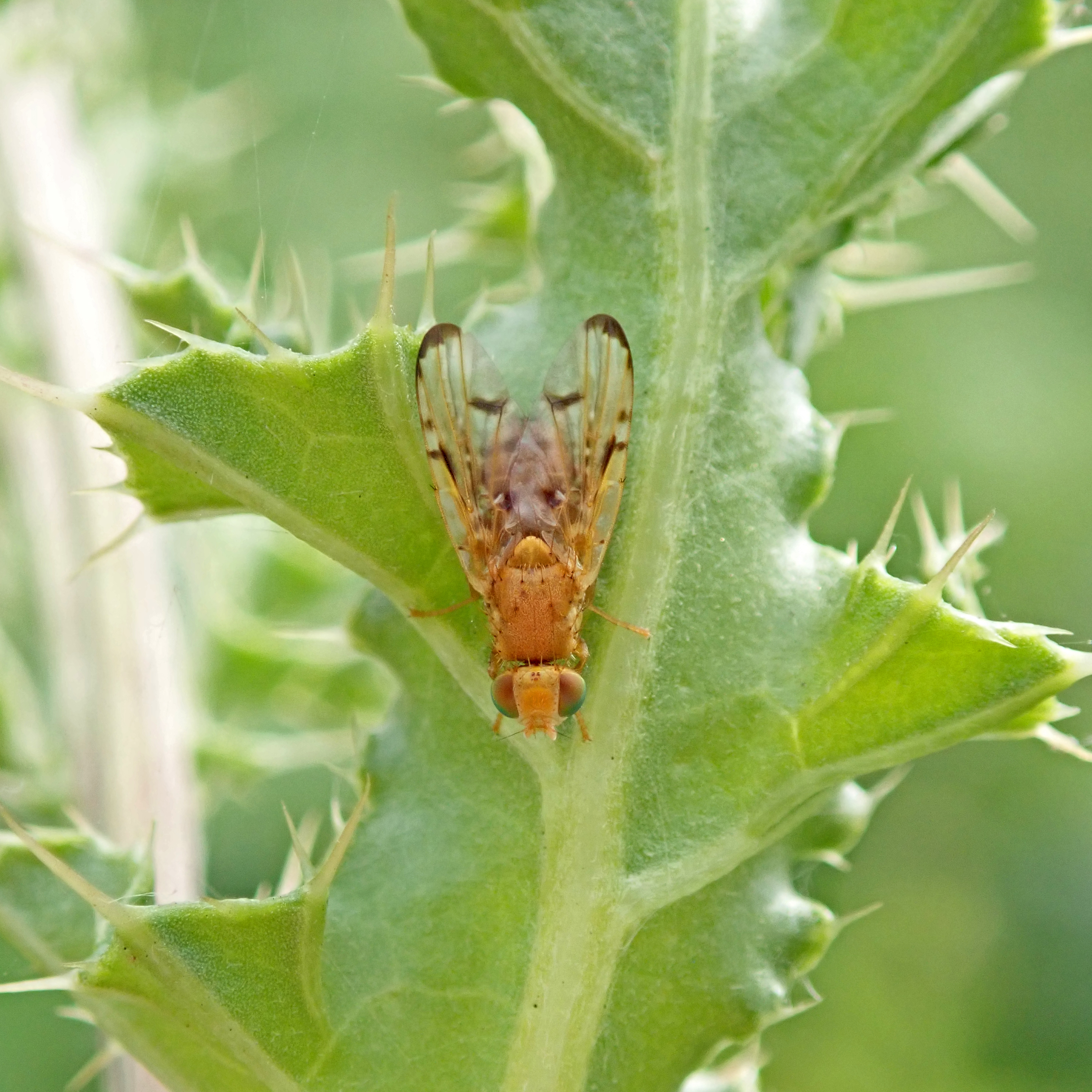
It can be tricky to find a subject for the letter X in this countdown but this year it was made easier when I found a new fly last July (see Fly: Xyphosia miliaria, 31 July). Here is that little cutie.

29 Monday Dec 2025
Posted in insects
It can be tricky to find a subject for the letter X in this countdown but this year it was made easier when I found a new fly last July (see Fly: Xyphosia miliaria, 31 July). Here is that little cutie.
25 Friday Jul 2025
Posted in insects
Tags
bristly black and red fly, British flies, British insects, Eriothrix rufomaculata, fly, insect, parasitic fly larvae
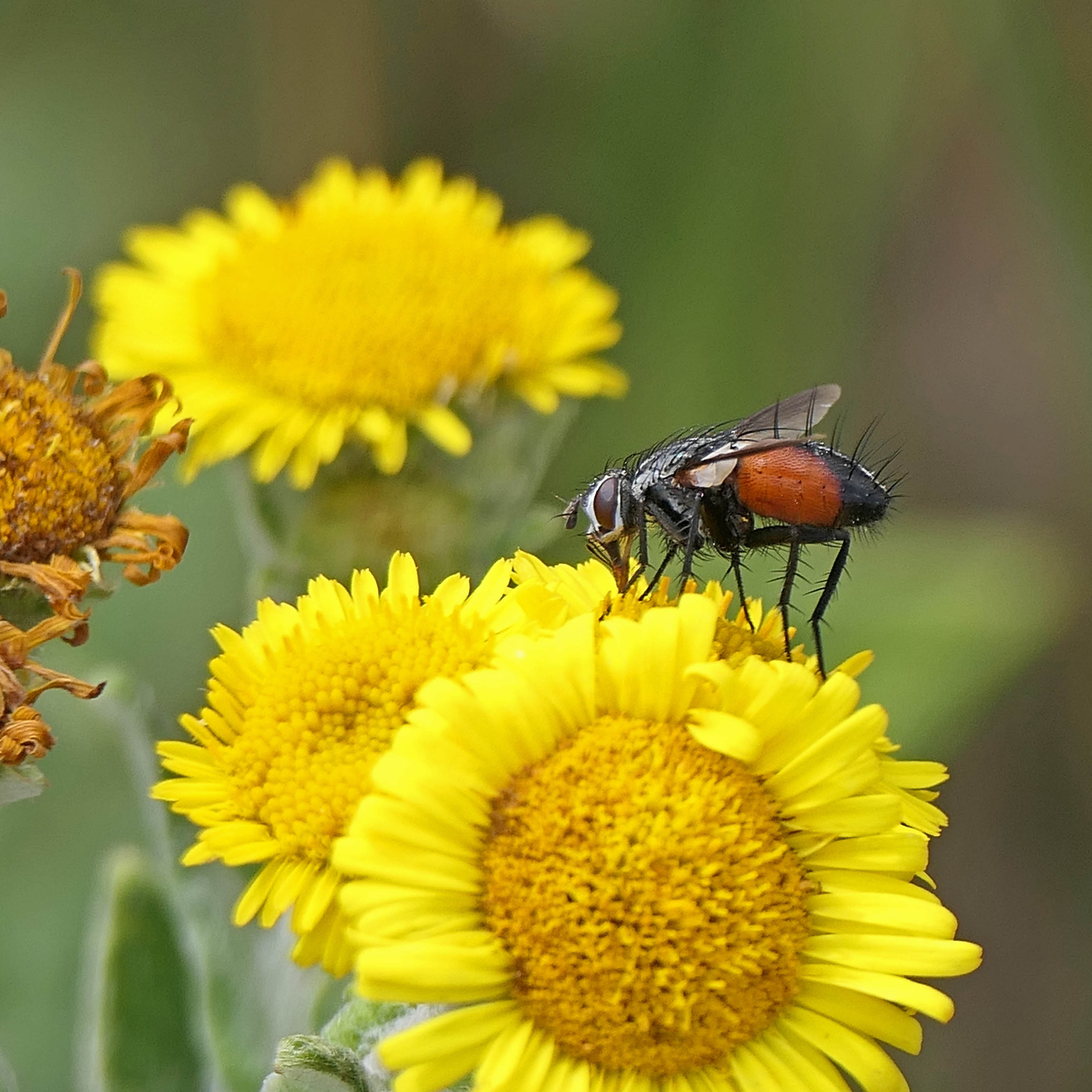
Over the past week I’ve had several sightings of this little fly, Eriothrix rufomaculata, and, though I usually shy away from trying to identify flies, this one is very distinctive. Amongst the checklist of features to look for that are listed on the Naturespot website entry for Eriothrix rufomaculata are the ‘red abdominal side patches’ ♥, ‘silvery face’ ♥, ‘projecting mouth edge’ ♥, and ‘slightly shaded wings’ ♥. It’s also very bristly.
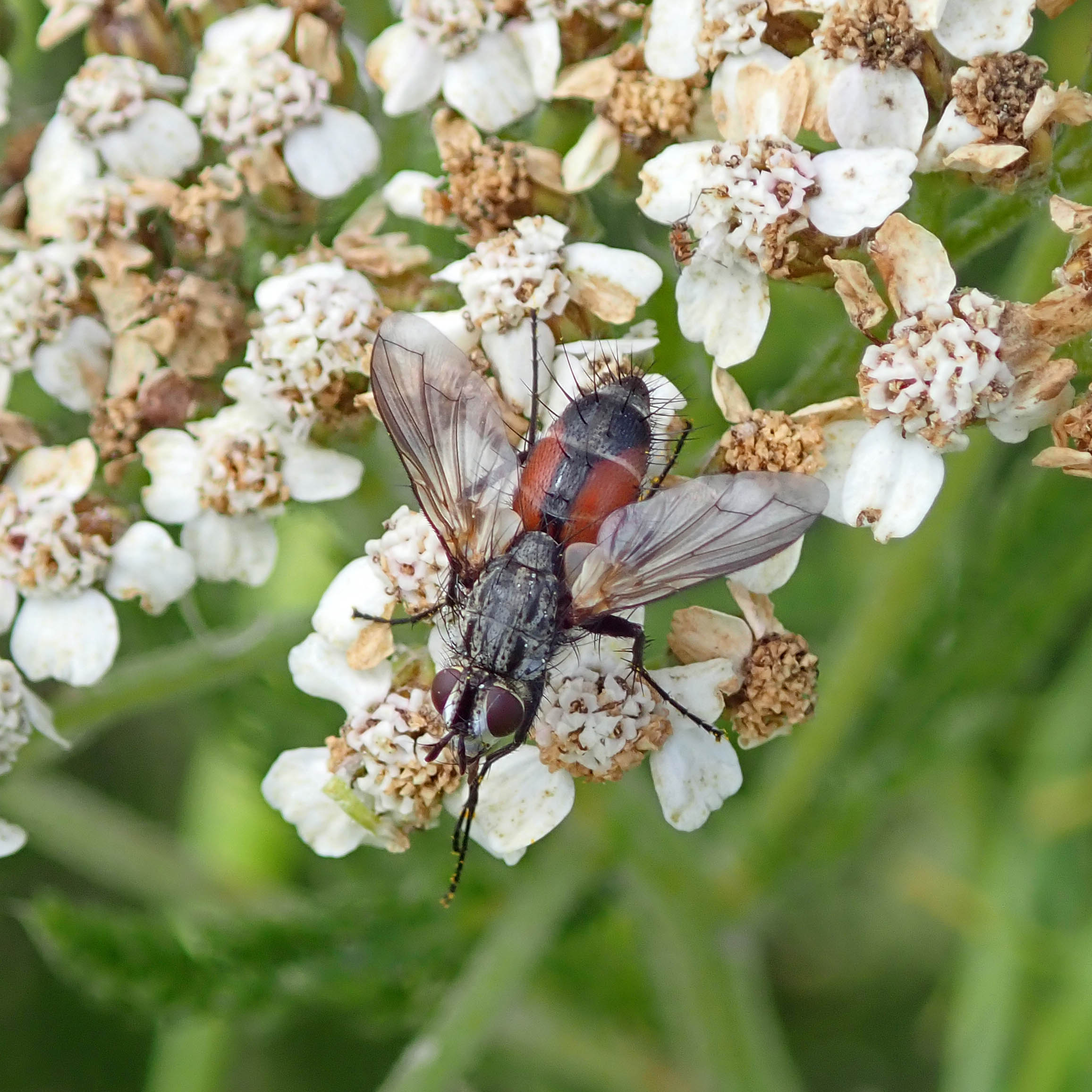
Though the adults are supposedly active from June to October, I presume I’m seeing more of these flies now due to recent hatchings. Look for them feeding on flowers, particularly umbellifers and flowers from the Daisy family, which includes everything from Ragwort to Fleabane, Yarrow to Hemp-agrimony, thistles to Knapweeds, and many more.
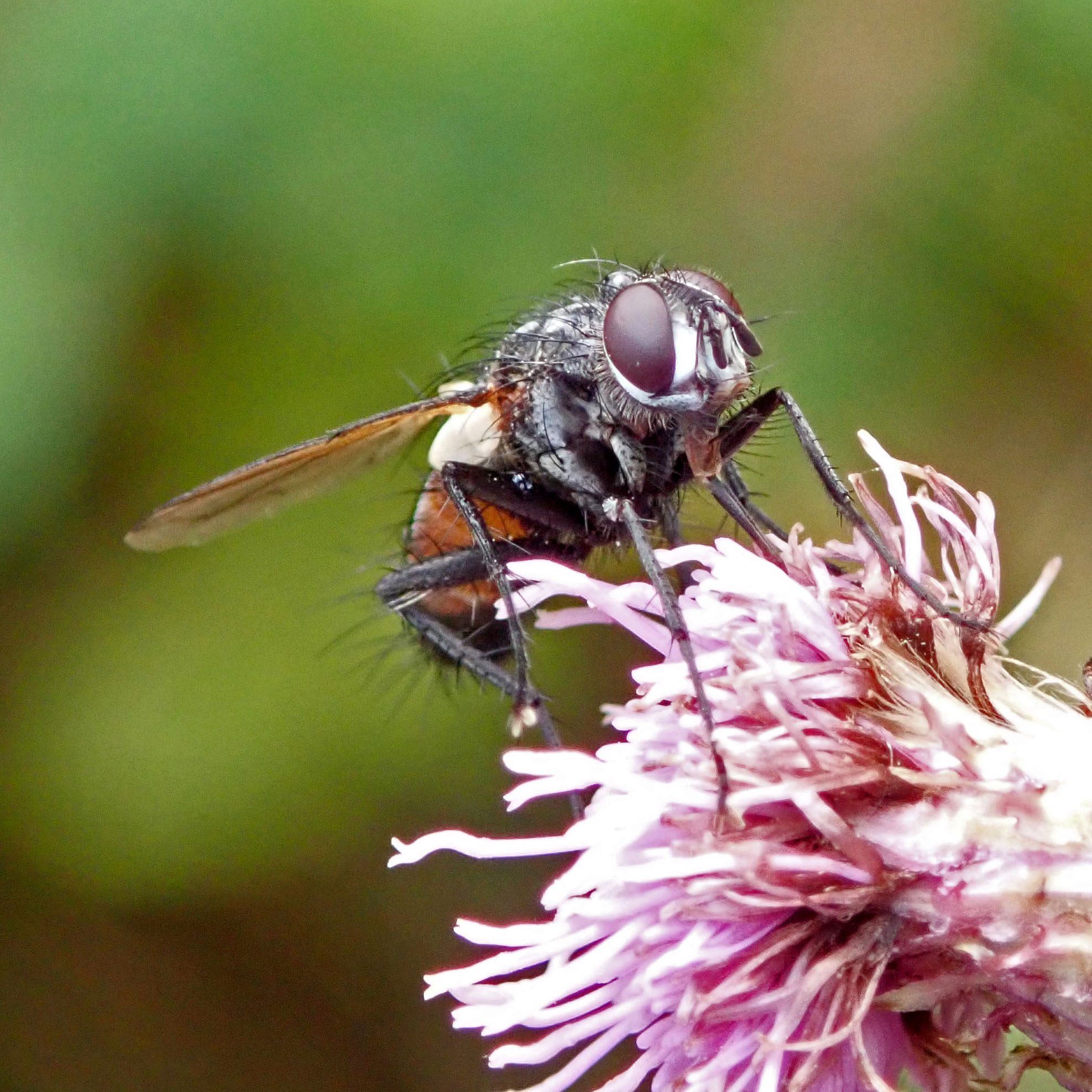
Like many creatures, these flies have a dark side to their life cycle: their larvae are parasitic, feeding on the larvae of various moth species, including the little grass moths (the Crambidae) and the very beautiful tiger moth species (the Erebidae).
26 Monday May 2025
Posted in insects
Its name sounds like an incantation a Harry Potter acolyte might chant to turn an annoying peer into a toad, though Google AI suggests: ‘The genus name Poecilobothrus comes from the Greek words “poikilos” (various, or variegated) and “botryx” (a cluster of grapes), likely referring to the diverse and ornate nature of some dance fly species’ and ‘The species name nobilitatus is derived from the Latin word “nobilitatus,” meaning “made noble” or “ennobled,” which could relate to the elegant or showy appearance of the fly, particularly during courtship.’ I can certainly agree that this little long-legged fly is an ornate and elegantly formed creature.

I don’t usually have much luck identifying fly species but, fortunately for me, this one was a male and so it has distinctive white markings on the end of its wings, which it flashes at potential mates during its courtship display. I spotted this specimen sitting on vegetation next to a local footpath but they are usually to be found in wet locations, often sitting on weed floating on the surface of a pond or slow-moving stream.
14 Friday Mar 2025
Posted in insects
Tags
I mentioned in a recent post that one of the ways in which my local biodiversity records office (SEWBReC) supports its volunteer recorders (like me) is through book grants that we recorders can use to buy species guides to help identify our finds. With my grant I have so far obtained one book on spiders and another on craneflies; the third, A Photographic Guide to Flies of Britain & Ireland won’t, unfortunately, be published until October, and I really need it NOW!
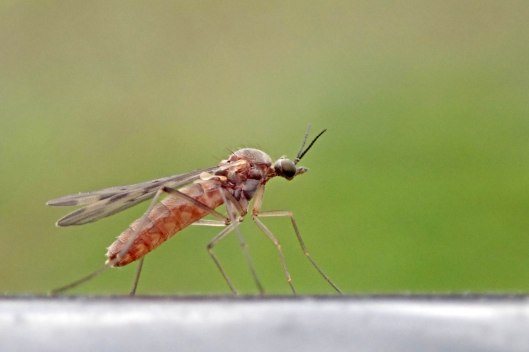
It may be that I still won’t be able to identify some species even when I get the book as many flies require examination of genitalia to accurately determine their species but I’m sure it will help me with many of my finds. In the meantime, this handsome little creature that I photographed on my local park railings yesterday will remain nameless, though I will return and edit this post ** at a later date if I do find out which species it is.
** Well, that didn’t take long. It’s the next day and I might have a name for this little fly, Sylvicola fenestralis, thanks to the very kind help of Gary from the UK Safari website. (It really needs more detailed examination to be certain but this identification looks likely.) If you don’t know the UK Safari site, you really should check it out as it contains a huge treasure trove of information on all aspects of UK wildlife.

17 Tuesday Jan 2023
Posted in insects
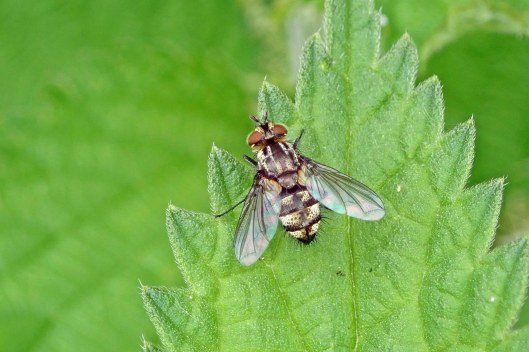
Another day, another summer fly. This one, from last May, is a little bristly beauty called Nemorilla floralis, whose name means something like ‘little visitor to the flowery glade’ (according to a tweet by @ivysuckle). Unfortunately, this fly doesn’t live up to its pretty name as it’s a parasitoid, laying its eggs in the living larvae of various micro moths and butterflies.
03 Thursday Nov 2022
Posted in insects
Tags
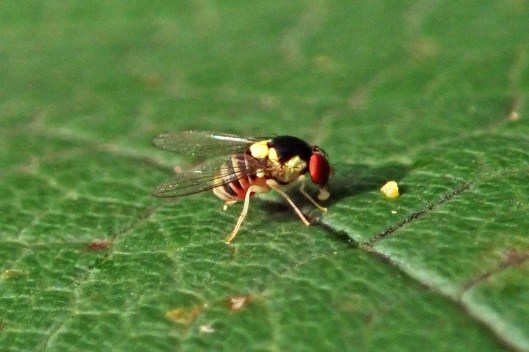
And just like that yesterday’s cute little fly has a name, Acletoxenus formosus, thanks to a fellow biodiversity recorder, Graham. Amazingly, my sighting appears to be just the second record of this species in Wales, though I’m sure that’s due to the fact that it’s under-recorded because of its tiny size, rather than because of its rarity. Once I knew its name, I was able to find a short video of its trademark sideways shuffle, thanks to wildlife photographer and enthusiast Phil Booker, who also gives a bit more information about the fly in the description box of his video.
02 Wednesday Nov 2022
Posted in insects
Tags
Silly me thinking that this tiny fly was so distinctively marked that it would be easy to identify. It may be part of the Chloropidae family of flies but then again it may not. I think it’s a shame the online resources for fly identification are so limited or require a degree of familiarity with the various fly families that the lay person simply doesn’t have. It certainly doesn’t encourage more people to become interested in flies, yet they can be such visually attractive little creatures.

10 Tuesday Sep 2019
Posted in 365DaysWildin2019, insects, nature
Flies are fascinating!


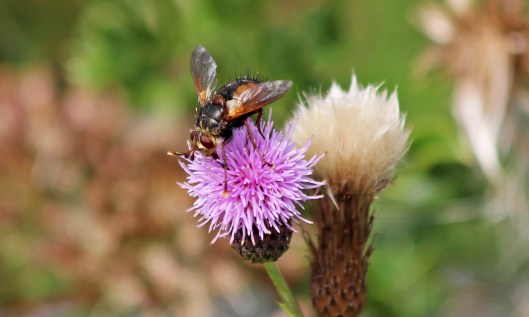
This bristle-backed orange-and-black beauty, Tachina fera, is commonly seen in Wales and England any time between May and October. These flies produce two broods over the summer months but their life cycle is perhaps not what you might think. Like almost 300 other fly species in Britain, these are parasitoids – the eggs they lay on plant leaves hatch as larvae that burrow their way inside the bodies of other larvae, the caterpillars of several species of moth, which they then proceed to eat to death. It’s a larvae-eat-larvae world out there, folks.
05 Sunday Aug 2018
At first glance I thought this big brute was a hoverfly, ’cause I know there are some very large hoverflies, but one look at those eyes told me otherwise. Meet Tachina grossa, the largest Tachnid fly in Britain and Europe.
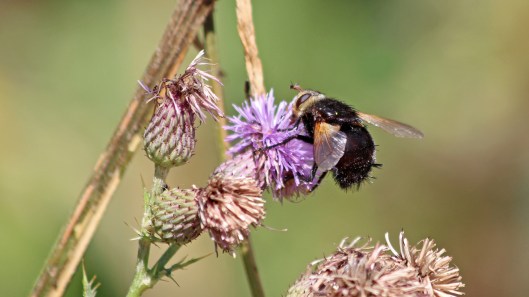
As you can see, it feeds on pollen and nectar and, though it’s harmless to us humans, it’s no friend of moths. The female Tachina grossa lays her eggs on living larvae, in particular the large hairy caterpillars of the Oak eggar moth and the Fox moth. The fly larvae eat the caterpillars from the inside, eventually but not immediately killing them.


So, it may look kind of cute in the photograph below but I’m just glad I’m not a large hairy caterpillar.

17 Saturday Mar 2018
Posted in insects, nature, plants, wildflowers
Tags
Ficaria verna, flies, fly, leaf mines, leaf mining fly, leafminer, Lesser Celandine, Phytomyza ranunculi
I was handing out the cigars last Monday!
Now, you might well think me more than a little mad to be excited about the birth of a fly but this was the first time I had tried rearing one … and it was actually successful, which bodes well for the fact that I’m intending to take part in a fly-rearing investigation this summer (more on that closer to the time).


The fly is Phytomyza ranunculi, a creature whose larvae often make their home in the leaves of Lesser celandine (Ficaria verna). I blogged about this leafminer, its larvae and the pupa here, and it is that pupa which finally hatched earlier this week. I had been told it would take about 3 weeks to hatch but it was, in fact, longer than that – it was 6 February when I found the pupa and 12 March when it hatched, so 34 days in total.

Now, here I must admit to a rookie error. As it was well over the 3 weeks, I had almost given up on its hatching so, on Monday night, when I had a sudden notion to open the container, I didn’t look inside first. The fly popped straight out, perched on the edge for a very brief time – and I managed to get just one photo, and then it flew off. I’ve searched for it in my flat, and it did a quick fly by when I was washing the dishes yesterday, but I haven’t been able to find it, neither to take more photos nor to let it outside.
 earthstar
You must be logged in to post a comment.