• ABOUT
  • BIRDING 2018
  • Birding 2019
  • BLOG POSTS
  • Butterflies 2018
  • Resources

earthstar

~ a celebration of nature

earthstar

Tag Archives: galls on oak trees

K is for Knopper

16 Saturday Dec 2023

Posted by sconzani in insects, plants, trees

≈ Leave a comment

Tags

British galls, bug galls, galls, galls on Ash, galls on Hazel, galls on oak trees, galls on Poplar, galls on willow, galls on Yew, Knopper gall, midge galls, mite galls, wasp galls

This is really a review of the galls I’ve found this year but the letter G simply had to be about my first ever confirmed Goshawk sighting, so K is for Knopper is my alternative lead in.
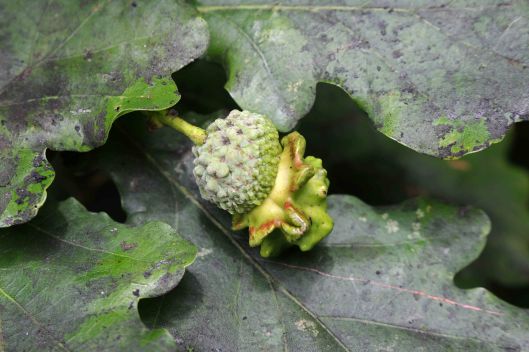
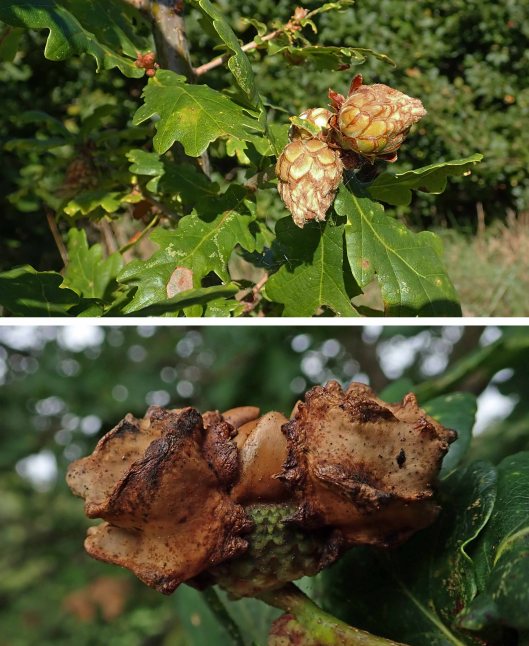
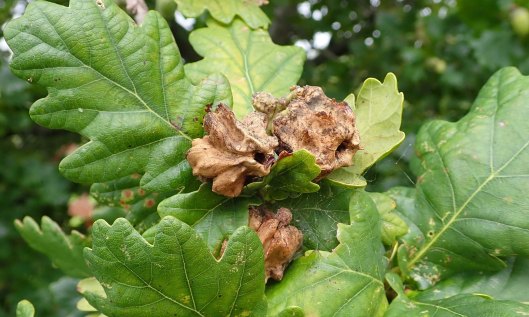
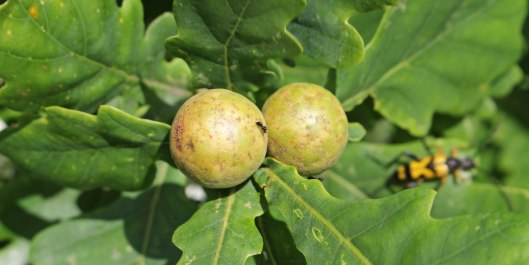
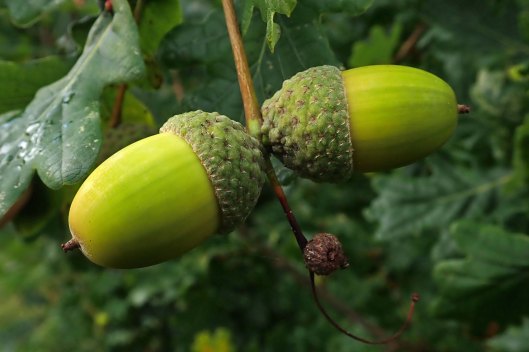
231216 Knopper Andricus quercuscalicis

Knopper galls, like the one shown above, did feature in one post this year, Acorns and galls on 1 October, but there were many other galls, most of which were new finds for me. February saw the year off to a good start with galls on Yew trees caused by a tiny midge (Galls: Taxomyia taxi, 9 February) and galls on Hazel caused by an equally tiny mite (Galls: Phytoptus avellanae, 20 February). In June, it was a small bug that was creating eye-catching galls on the leaves of an Ash tree (Galls: Psyllopsis fraxini, 12 June), and, in July, aphids were the gall causers on a Poplar tree (Galls: Pemphigus spyrothecae, 17 July). In that October blog Acorns and galls I mentioned above, as well as the knoppers, another tiny wasp had caused artichoke galls to form on the same Oak tree. And, a couple of weeks later, I found my final new galls for the year, those caused by midges on Willow trees (Galls: Rabdophaga rosaria, 17 October). All in all, 2023 was quite a galling year!
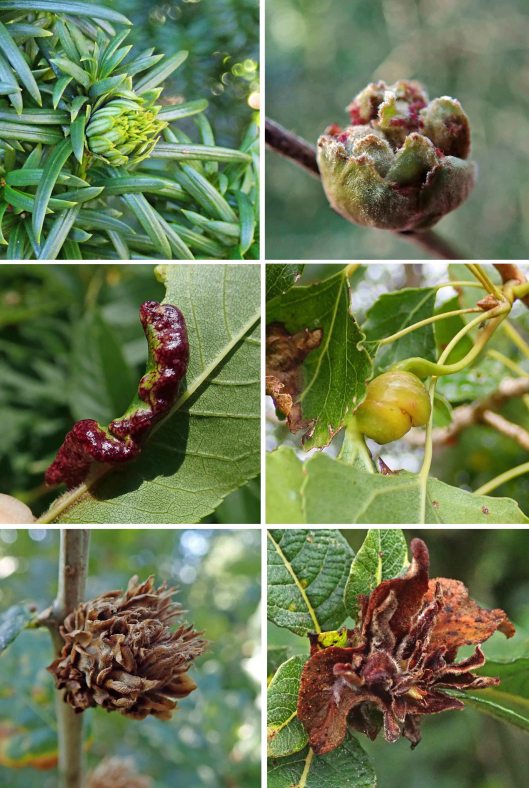
231216 mixed galls

Like Loading...

Acorns and galls

01 Sunday Oct 2023

Posted by sconzani in autumn, insects, trees

≈ Leave a comment

Tags

acorns, Andricus foecundatrix, Andriscus quercuscalicis, artichoke galls, British galls, gall wasps, galls on acorns, galls on oak trees, knoppers, Oak gall wasps, Oak trees

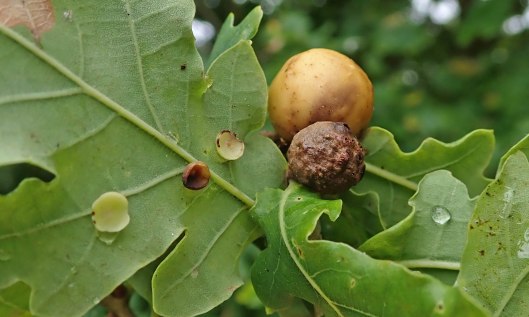
I was taking photos of acorns, thinking I’d perhaps write a blog about the many varied types of nuts, when it occurred to me how many galls I’ve been seeing on acorns this year. The gall-causers are having a good year.

230930 acorns (1)

I’ve covered these before (in Oak galls: knoppers and artichokes, August 2017) so won’t repeat myself here. But if you’re interested in what causes these particular galls, just click on the link to that previous blog. The galls in the first photo are Artichoke galls, caused by the tiny wasp Andricus foecundatrix, and the galls in the second photo, which have almost totally consumed the acorns, have been caused by another wasp Andriscus quercuscalicis.

230930 acorn galls (2)

Like Loading...

Holm oak gall mites

09 Wednesday Feb 2022

Posted by sconzani in insects, trees

≈ Leave a comment

Tags

Aceria ilicis, British galls, gall mites, galls, galls on oak trees, Holm oak, mite galls, mite galls on Holm oak

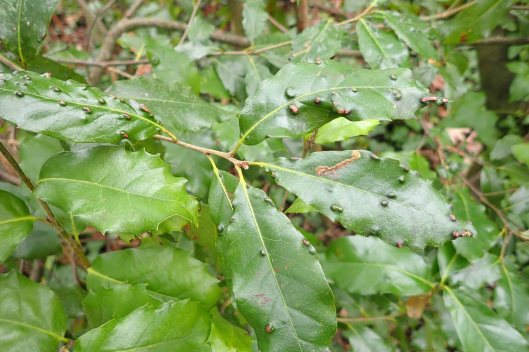
During yesterday’s walk, when checking for leaf mines on the leaves of Holm oak (large numbers of Ectoedemia heringella present – you can see one in the photo below), I noticed a huge abundance of small bumps covering many of the leaves.

220209 Aceria ilicis on holm oak (1)

These are the galls caused by the miniscule mite Aceria ilicis. On the underside (though sometimes also on top), the depression in the leaf is filled with tiny brown hairs (an erineum) where the mites make their home. The galls can be seen throughout the year, so next time you spot a Holm oak, check out its leaves.

220209 Aceria ilicis on holm oak (2)
220209 Aceria ilicis on holm oak (3)
Like Loading...

Oak: a new gall

25 Tuesday May 2021

Posted by sconzani in insects, leaves, spring, trees

≈ Leave a comment

Tags

Andricus curvator, British galls, galls on Oak leaves, galls on oak trees, Oak gall wasps, oak galls, oak tree

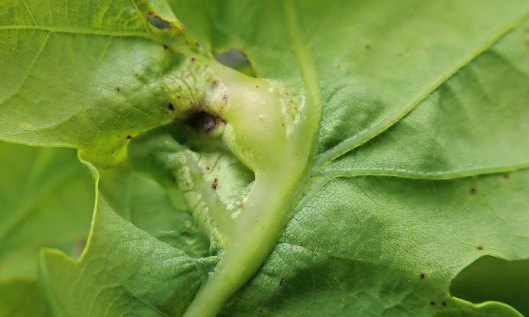
With heavy cloud and occasional rain, Sunday was not a day for finding butterflies in the woodland. So, I decided to look more closely at Oak leaves to see what I might find, and that strategy paid off in spades as the next few days’ blog posts will show. First up, I found a gall I hadn’t seen before, which turns out to be the sexual generation of the gall wasp Andricus curvator.

210525 Andricus curvator (1)

When the adult wasps emerge in the spring from the agamic (asexual) generation galls, which are formed on buds in the autumn and fall to the ground to over-winter, they lay their eggs mostly on Oak leaves but also, sometimes, on twigs or catkins, so these galls can take several forms. The ones I found (and they were numerous) were all on leaves, causing malformations and swellings, as you can see from the photos above and below.

210525 Andricus curvator (2)
210525 Andricus curvator (3)

I was tempted to split a gall open to see what was inside but it turns out I didn’t have to, as something had nibbled away at one gall, revealing a second round gall inside (see below). The larvae within this inner gall will emerge in the autumn to lay its eggs on Oak buds, and so the process will continue.

210525 Andricus curvator (4)

Like Loading...

268/366 Gone galling

24 Thursday Sep 2020

Posted by sconzani in insects, trees

≈ Leave a comment

Tags

Common spangle gall, gall wasps, galls on oak trees, Knopper gall, Marble galls, oak galls, Oyster gall, Silk button galls, Smooth spangle galls

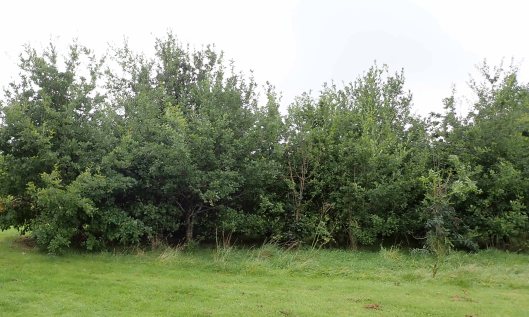
I wanted a relatively short walk between rain showers so headed to a small local green belt where Oak saplings were planted a few years ago, and my wander turned into a challenge to see how many different types of gall I could find in just this one small copse of young Oaks. The answer? Six!

200924 oak galls (1)

First up, Knopper galls, caused by the wasp Andriscus quercuscalicis. For more on that gall, see my August 2017 post Oak galls: knoppers and artichokes.

200924 oak galls (2) knopper

Next, Marbles, which I covered in Oak galls: marbles and apples, August 2017.

200924 oak galls (3) marble

Then, I found some Common spangles (below left), caused by the wasp Neuroterus quercusbaccarum. More on that mouthful in Oak galls: currants and spangles, August 2017.

200924 oak galls (4a) common spangle
200924 oak galls (4b) smooth spangle

You may have noticed my photo of Marble galls also had something else on the leaves. These were Smooth spangles (above right), a product of the wasp Neuroterus albipes.

200924 oak galls (5a) oyster
200924 oak galls (5b) oyster

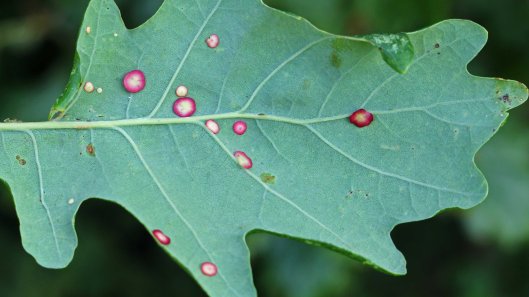
I covered both Smooth spangles and this next gall, the Oyster, in the same blog: Oak galls: spangles and oysters, September 2017. The photo on the left above shows Oysters just beginning to form on the spine of the leaf; the one on the right shows two more developed examples, both on the same tree.

200924 oak galls (6) silk button

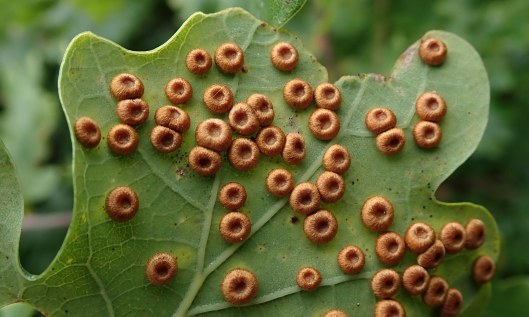
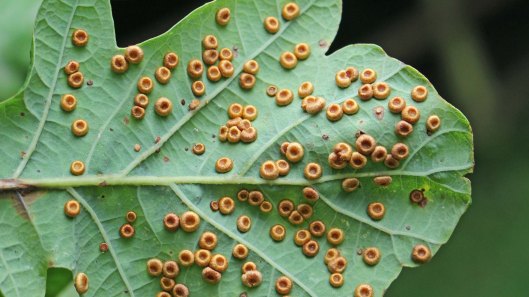
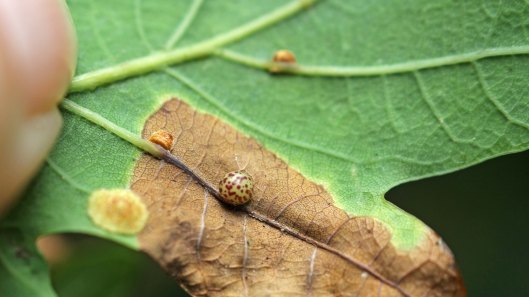
And, last but most certainly not least, as there were thousands of these on all the Oak trees I looked at, Silk button galls, caused by the wasp Neuroterus numismalis. I wrote about those in Oak galls: ram’s-horns and silk buttons, September 2017.

Not a bad haul for an hour turning over leaves and peering amongst branches. I didn’t find examples of all the Oak galls I’ve found before but I was very happy with this sampling.

Like Loading...

155/365 A good crop of apples

04 Tuesday Jun 2019

Posted by sconzani in 365DaysWildin2019, insects, nature, trees

≈ 2 Comments

Tags

Biorhiza pallida, gall wasps, galls, galls on oak trees, Oak apples, oak galls, Pedunculate Oak

190604 oak apples (1)

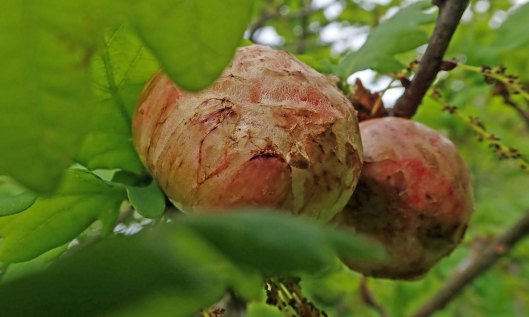
But you wouldn’t want to eat them! These are oak apples, the incredible creations of the larvae of the wasp Biorhiza pallida. By a magical process of chemical interaction, the larvae force the buds of the Pedunculate Oak to change and produce these galls, which the larvae call home until they’re ready to develop into their next stage of life.

190604 oak apples (2)
190604 oak apples (3)

A couple of the young oak trees in some fields near where I live are proving particularly attractive to these wasps so they have a bounty of apples growing on them this year. Yet another of Nature’s miracles!

190604 oak apples (4)

Like Loading...

Andricus kollari, maybe

14 Saturday Apr 2018

Posted by sconzani in insects, nature, trees

≈ 2 Comments

Tags

Andricus kollari, gall wasps, galls, galls on oak trees, Marble gall, oak galls, Oak Marble gall, oak tree

180414 Andricus kollari (3)

If you’re a regular around here, you may recall that in August 2017, I posted a mini-series of posts about some of the galls you can find on Oak trees, which included the Oak Marble gall (see the post here). You might also remember that in late October, I was excited to discover a creature had hatched out of one of my galls and I initially thought it was the gall causer, a minute wasp called Andricus kollari. It was not – turns out it was one of the 29 other species of hymenoptera (bees, wasp, ants and sawflies) that can also be found living in an Oak marble gall (more on that here) (and I never did identify it).

180414 Andricus kollari (1)
180414 Andricus kollari (5)

Well, this time, maybe, just maybe, I have seen the gall-causing wasp itself, A. kollari. A while ago, while out walking, I found a small Oak sapling that was absolutely covered in marble galls and, when I found one that had no holes in it, I couldn’t resist bringing it home. The tiny wasp you see in these photos recently hatched out of this gall and the size of the hole it made, plus comparisons with online photos, has led me to think that this time I may have seen the gall causer. I couldn’t be one hundred percent certain of my identification without killing the wasp and getting an expert to check it but I didn’t want to do that. And, of course, I could be totally wrong yet again. In the meantime, the wasp has been returned to the area where I found it so, weather permitting, it can continue its life cycle.

180414 Andricus kollari (2)
180414 Andricus kollari (4)
Like Loading...

Life in an Oak Marble gall

28 Saturday Oct 2017

Posted by sconzani in insects, nature, trees

≈ 2 Comments

Tags

Andricus kollari, gall wasps, galls on oak trees, hymenoptera in Oak marble galls, hymenoptera living in galls, Marble gall, oak galls, oak tree

Back in August, as part of a mini-series on some of the galls to be found on Oak trees, I posted about the Marble galls caused by the incredibly tiny wasp, Andricus kollari. Although most of the galls I’ve found have had tiny holes in them, meaning the wasps had already pupated and flown, a couple of weeks ago I found a couple with no holes. So, my curiosity got the better of me and I brought them home to see what might eventuate.

171028 Oak marble gall

Note the tiny creature sitting on the gall.

Today, when I looked in the jar I’d put them in, I was so excited to see a tiny creature had appeared. Now, I initially thought this must be A. kollari, the gall-maker, but I was wrong … and, looking at images online, I don’t think I’m the only one who’s ever been fooled by this. However, with the help of friends who questioned and strangers who know much more than me, I’ve discovered there are at least 29 (twenty-nine!!) species of hymenoptera (bees, wasp, ants and sawflies) that might live within an Oak marble gall.

171028 Wasp living in Oak marble gall (1)
171028 Wasp living in Oak marble gall (2)

Though some of these critters simply use the gall for shelter, it seems that, for others, the gall tissue is a good source of nutrients, while still others are parasites whose larvae kill some or all of the larvae of the original gall-making wasp. Without detailed microscopic examination, I’m not able to determine which species this tiny wasp is but I thought you might like to see this little video of it performing its ablutions earlier. I have now released it back in the area where I found it so let’s hope it survives.

Like Loading...

Oak galls: ram’s-horns and silk buttons

18 Monday Sep 2017

Posted by sconzani in insects, nature, trees

≈ 12 Comments

Tags

Andricus aries, gall wasps, galls on oak trees, Neuroterus numismalis, oak galls, oak tree, Ram’s-horn gall wasp, Silk button gall wasp

I can’t resist just one more post about oak galls, because I’ve just this week found one that’s not commonly recorded. So, today we have one that’s uncommon and one that’s very common. Let’s start with the former.

First identified in eastern Europe in 1859, the Ram’s-horn gall wasp, Andricus aries, has slowly been heading westwards and finally reached Britain in 1997. Since that first sighting in Berkshire, it has spread over much of southern England and into Wales. Though there are only a few records in the Aderyn database of Welsh biological records, two of my friends have also found Ram’s-horn galls in the past week so I suspect it’s more common that records suggest.

170918 Andricus aries Ramshorn gall wasp on oak (1)
170918 Andricus aries Ramshorn gall wasp on oak (2)
170918 Andricus aries Ramshorn gall wasp on oak (3)

Like other gall-inducing wasps, Andricus aries lays its eggs on various species of oak and its larvae cause the oak to produce a gall, in this case with an elongated, sometimes spiralling shape, hence aries and its common name Ram’s-horn. Not much is yet known about this wasp, so if you see the gall, please do record it.

170918 Neuroterus numismalis Silk button gall wasp (3)

My second gall today is one many people will have seen, I’m sure, as its beautifully crafted silk-like button-shaped galls are very common on the undersides of oak leaves during the summer months. This gall contains the agamic generation (females needing no males to reproduce) of the Silk button gall wasp, Neuroterus numismalis. The galls fall to the ground in autumn and the larvae within pupate over the winter months. When the all-female wasps emerge in springtime, they lay their eggs on the edges of oak leaves and on the male catkins, where their larvae cause a different blister-shaped gall – that’s another one for me to seek out next spring. It is the female and male wasps of this second, sexual generation produced in the Blister gall that go on to mate and lay the eggs that result in the silk buttons. And so the cycle continues …

170918 Neuroterus numismalis Silk button gall wasp (1)
170918 Neuroterus numismalis Silk button gall wasp (2)
Like Loading...

Oak galls: spangles & oysters

09 Saturday Sep 2017

Posted by sconzani in insects, nature, trees

≈ 1 Comment

Tags

gall wasps, galls on oak trees, Neuroterus albipes, Neuroterus anthracinus, Oak gall wasps, oak galls, oak tree, Oyster gall, Smotth spangle gall

I know you’re all just dying to find out more about oak galls, right? RIGHT? I also know that I covered spangles in a previous post (see Currants & spangles here) but there are two different spangle galls to be found on the much be-galled oak tree: one is the hairy Common spangle and this is the second, the Smooth spangle gall.

170909 Smooth spangle gall (1)

This pretty little gall comes in combinations of pink and yellowish-green. It’s the work of Neuroterus albipes, a tiny wasp that you will probably never see, and inside each colourful saucer is a single larva that you will also probably never see. The galls drop to the ground in autumn and the larvae pupate over winter then female-only wasps hatch out in Spring to lay eggs that cause the entirely different Schenck’s gall (not one I’ve yet seen), from which male and female wasp hatch in the summertime. And so the cycle begins again.

170909 Smooth spangle gall (2)
170909 Smooth spangle gall (3)
170909 Smooth spangle gall (4)

This second gall, the Oyster gall, is also caused by a tiny wasp that has two distinct generations and forms two different galls. The wasp is Neuroterus anthracinus and the Oyster gall also contains the agamic generation of wasps (i.e. the females that need no males to fertilise their eggs). As you can see, these galls form on the veins on the undersides of oak leaves – once they’ve fallen to the ground, you can still see the two brown flaps of tissue where they were attached to the veins. 

170909 Oak Oyster gall (1)
170909 Oak Oyster gall (2)

Once again, the sexual generation of wasps hatch in the Spring to mate and lay their eggs, this time in the buds of the oak tree, hence the name of the gall they produce: the April-bud gall. That’s another I need to look out for come the Spring.

170909 Oak Oyster gall (3)


Like Loading...
← Older posts

About me

sconzani

sconzani

I'm a writer and photographer; researcher and blogger; birder and nature lover; countryside rambler and city strider; volunteer and biodiversity recorder.

View Full Profile →

Follow earthstar on WordPress.com

Enter your email address to follow this blog and receive notifications of new posts by email.

Recent blog posts

  • M is for mite December 18, 2025
  • L is for lepidopteran lifers December 17, 2025
  • K is for Keeled skimmers December 16, 2025
  • J is for Jersey tiger December 15, 2025
  • I is for Ichneumon December 14, 2025

From the archives

COPYRIGHT

Unless otherwise acknowledged, the text and photographs on this blog are my own and are subject to international copyright. Nothing may be downloaded or copied without my permission.

Fellow Earth Stars!

  • Unknown's avatar
  • Unknown's avatar
  • Unknown's avatar
  • Unknown's avatar
  • Unknown's avatar
  • Unknown's avatar
  • Unknown's avatar
  • Unknown's avatar
  • Unknown's avatar
  • Unknown's avatar
  • Unknown's avatar
  • Unknown's avatar
  • Unknown's avatar
  • Unknown's avatar
  • Unknown's avatar
  • Unknown's avatar
  • Unknown's avatar
  • Unknown's avatar
  • Unknown's avatar
  • Unknown's avatar
  • Unknown's avatar
  • Unknown's avatar
  • Unknown's avatar
  • Unknown's avatar
  • Unknown's avatar
  • Unknown's avatar
  • Unknown's avatar
  • Unknown's avatar
  • Unknown's avatar
  • Unknown's avatar
  • Unknown's avatar
  • Unknown's avatar
  • Unknown's avatar
  • Unknown's avatar
  • Unknown's avatar
  • Unknown's avatar
  • Unknown's avatar
  • Unknown's avatar
  • Unknown's avatar
  • Unknown's avatar
  • Unknown's avatar
  • Unknown's avatar
  • Unknown's avatar
  • Unknown's avatar
  • Unknown's avatar
  • Unknown's avatar
  • Unknown's avatar
  • Unknown's avatar
  • Unknown's avatar
  • Unknown's avatar

Blog at WordPress.com.

Privacy & Cookies: This site uses cookies. By continuing to use this website, you agree to their use.
To find out more, including how to control cookies, see here: Cookie Policy
  • Subscribe Subscribed
    • earthstar
    • Join 667 other subscribers
    • Already have a WordPress.com account? Log in now.
    • earthstar
    • Subscribe Subscribed
    • Sign up
    • Log in
    • Report this content
    • View site in Reader
    • Manage subscriptions
    • Collapse this bar
 

Loading Comments...
 

You must be logged in to post a comment.

    %d