• ABOUT
  • BIRDING 2018
  • Birding 2019
  • BLOG POSTS
  • Butterflies 2018
  • Resources

earthstar

~ a celebration of nature

earthstar

Tag Archives: Large white butterfly

Large whites and parasitism, part 2

24 Tuesday Jun 2025

Posted by sconzani in insects

≈ Leave a comment

Tags

British butterflies, butterfly, butterfly pupae, Large white butterfly, Large white pupae, parasitic wasp, Pteromalus puparum, wasp parasitising Large white pupae, White butterfly pupal parasitoid wasp

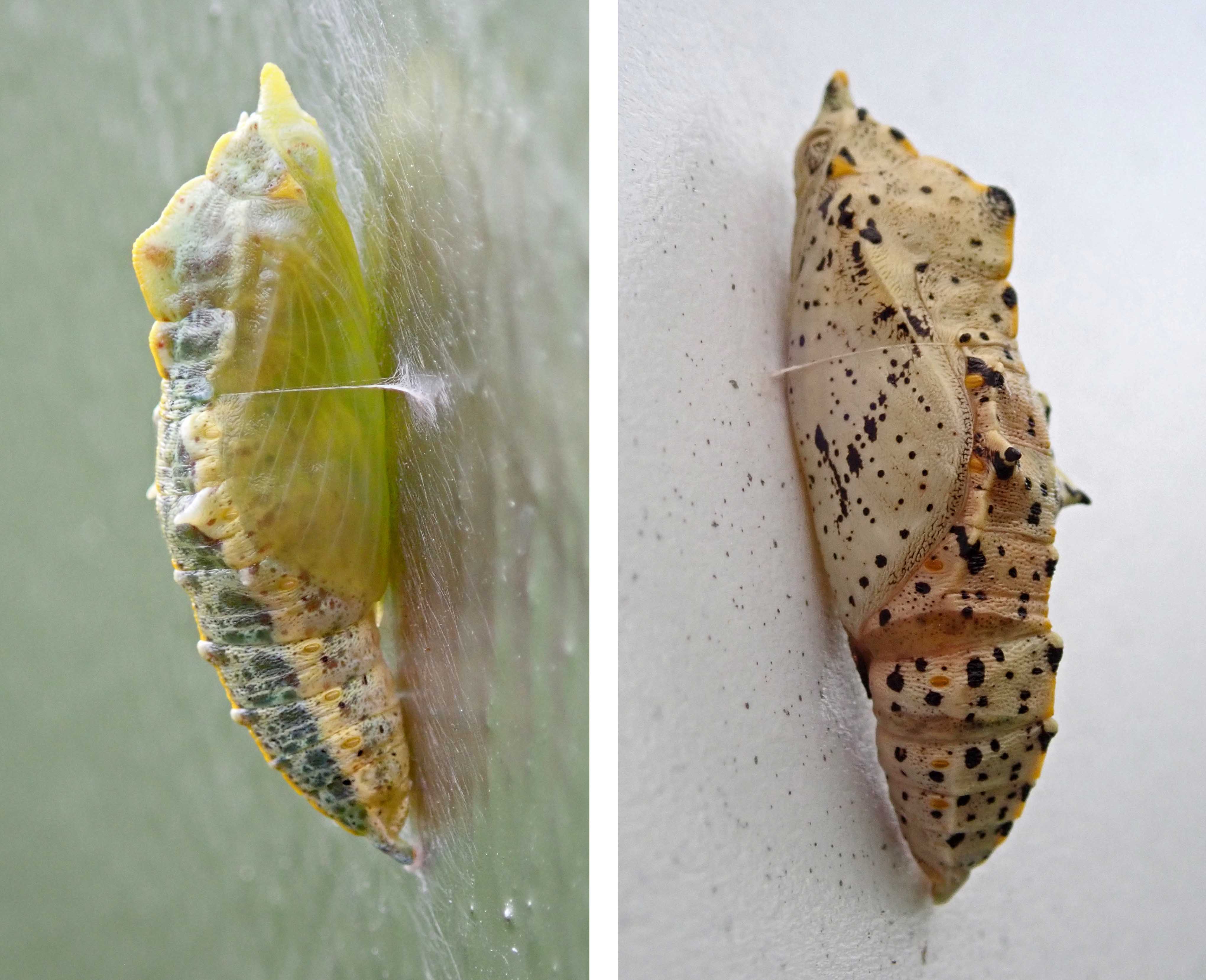
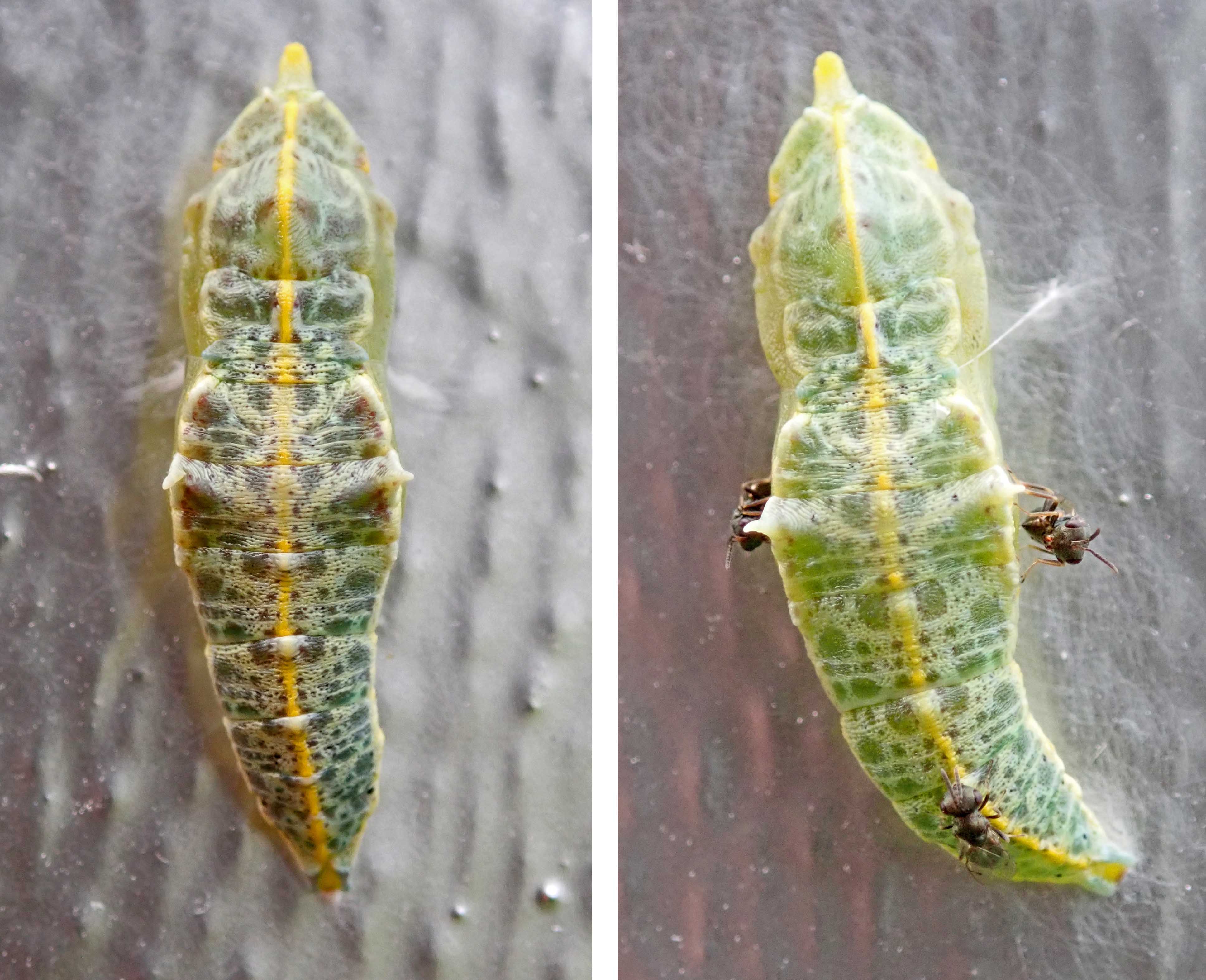
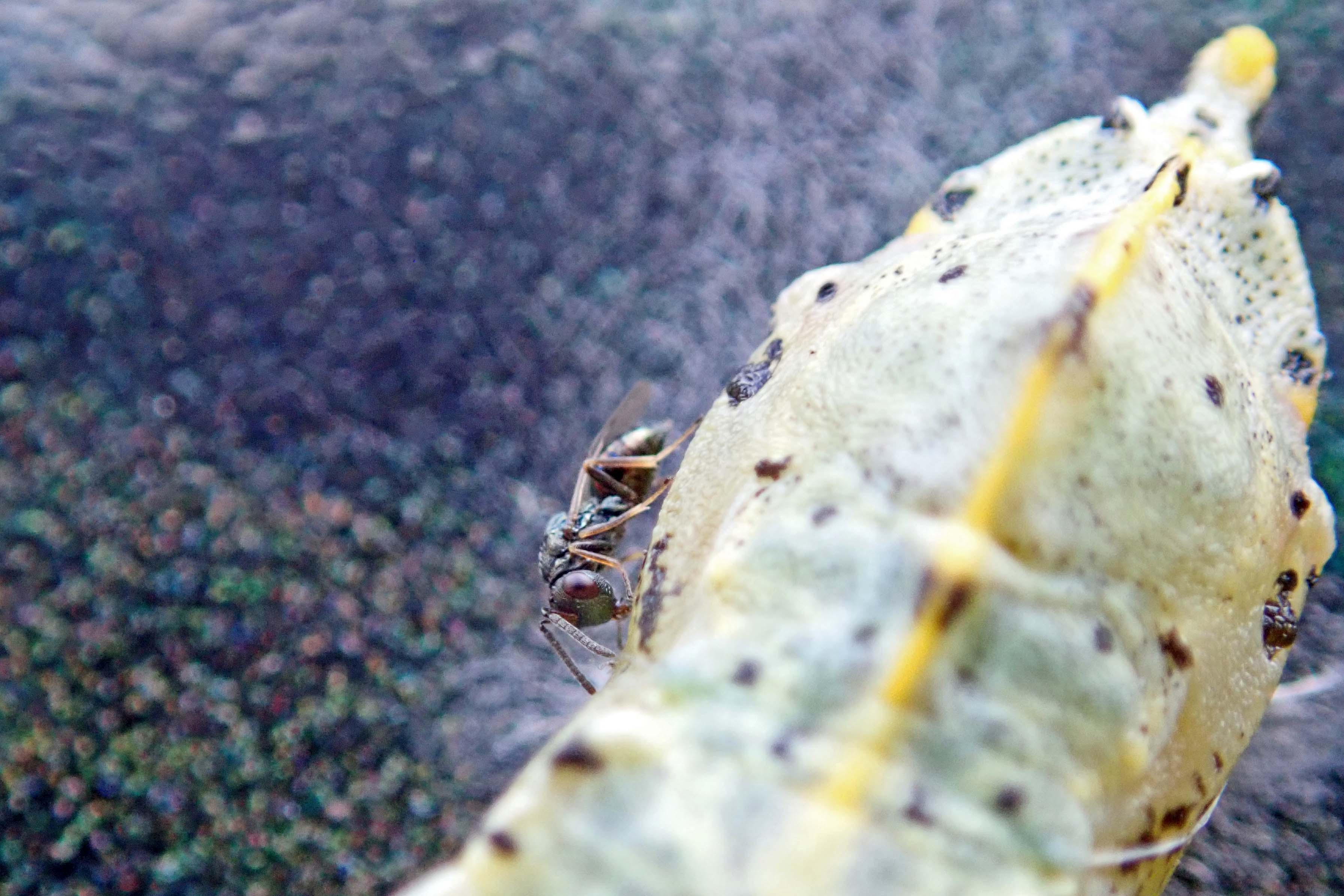
A week after my sighting of Large white butterfly larvae that had been parasitised by wasps (see yesterday’s blog post) I returned to the same location to see what might have changed during that time and was surprised to see six pupae, beautiful sculptural objects whose markings varied depending on how long it was since they had pupated. These can’t have been the parasitised larvae I don’t think, so there must have been a large number of larvae munching unnoticed in the grassy area below the signage they were on.

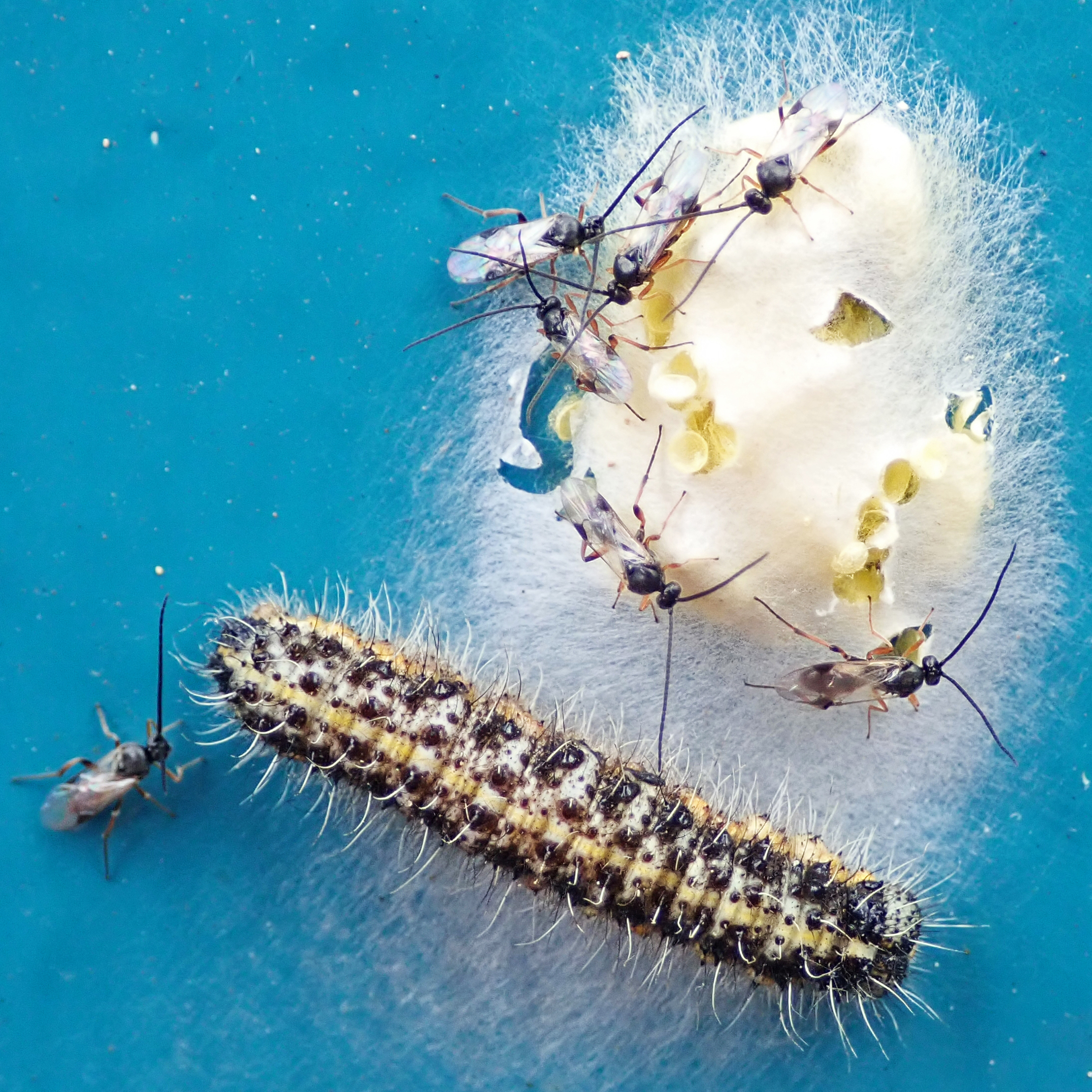
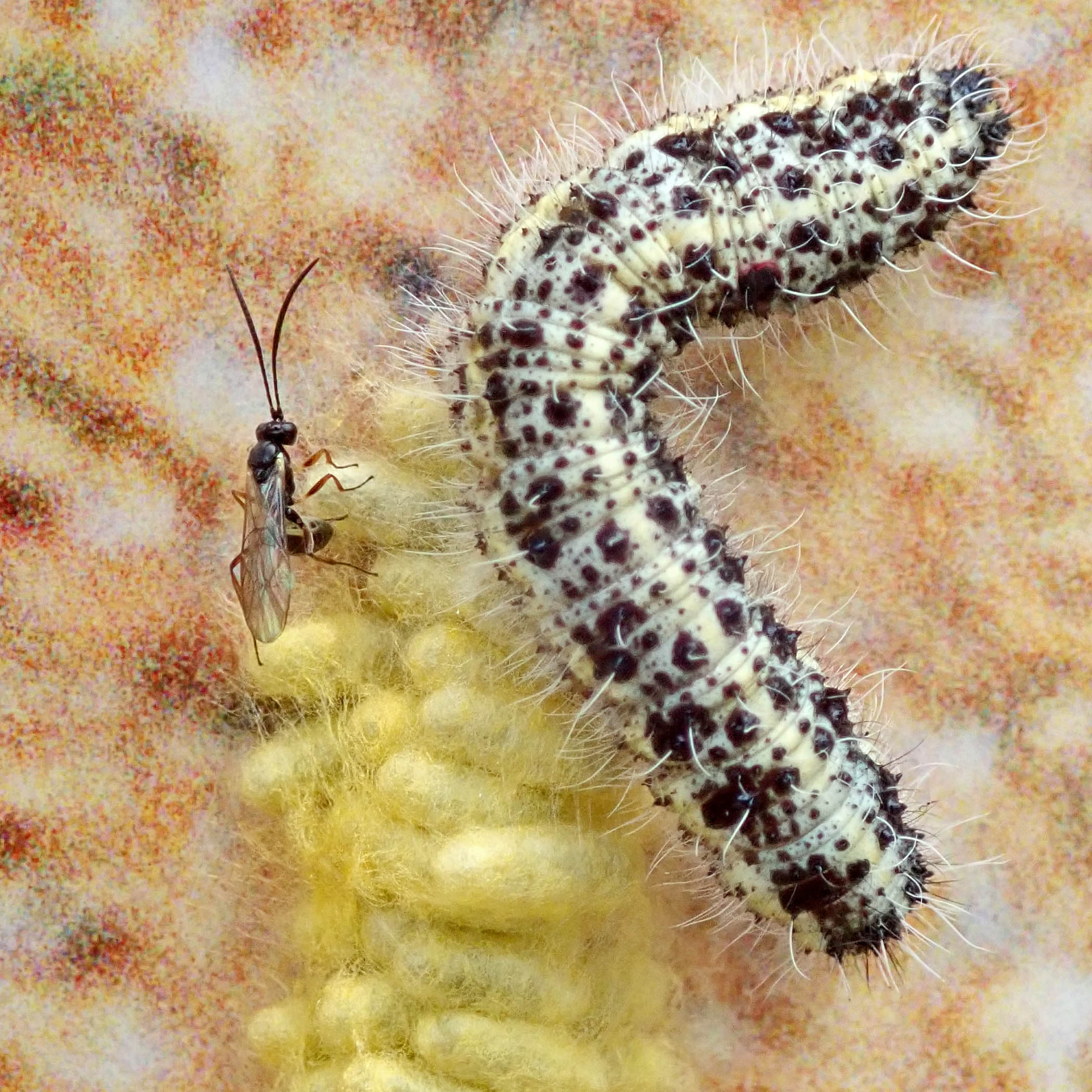
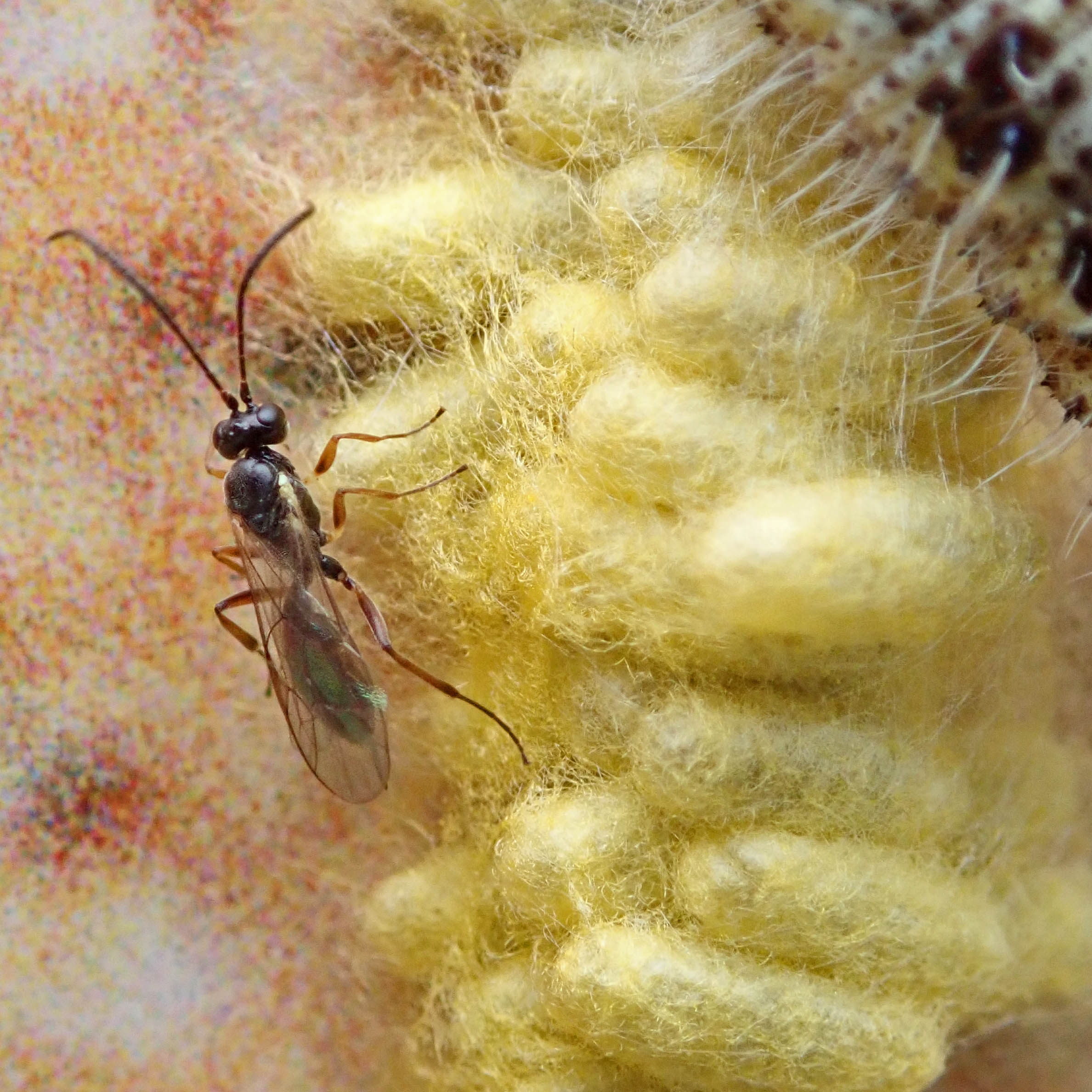
This time, as well as these pupae, a few parasitised larvae and a few caterpillars that looked normal but may still have had wasp larvae in their bodies, there was a new species of parasitic wasp in residence. They looked completely different to the wasp I’d seen the previous week and, rather than the larvae, these tiny wasps were all congregating around the Large white pupae.

As usual, I took a lot of photos and, when I got home, set about researching the possibilities. This time, my guide book offered no assistance but googling produced one probable answer. There exists a wasp that is actually named the White butterfly pupal parasitoid wasp, scientific name Pteromalus puparum, which seems the likely culprit, though this hasn’t yet been confirmed by any experts. I’m intending to revisit the site to see what’s happened while I’ve been away on my little holiday.

Like Loading...

Large whites and parasitism, part 1

23 Monday Jun 2025

Posted by sconzani in insects

≈ Leave a comment

Tags

British butterflies, Cotesia glomerata, hyperparasitism, Large white butterfly, parasitic wasps, parasitism of butterfly larvae, parasitism of Cotesia glomerata, parasitism of Large white larvae

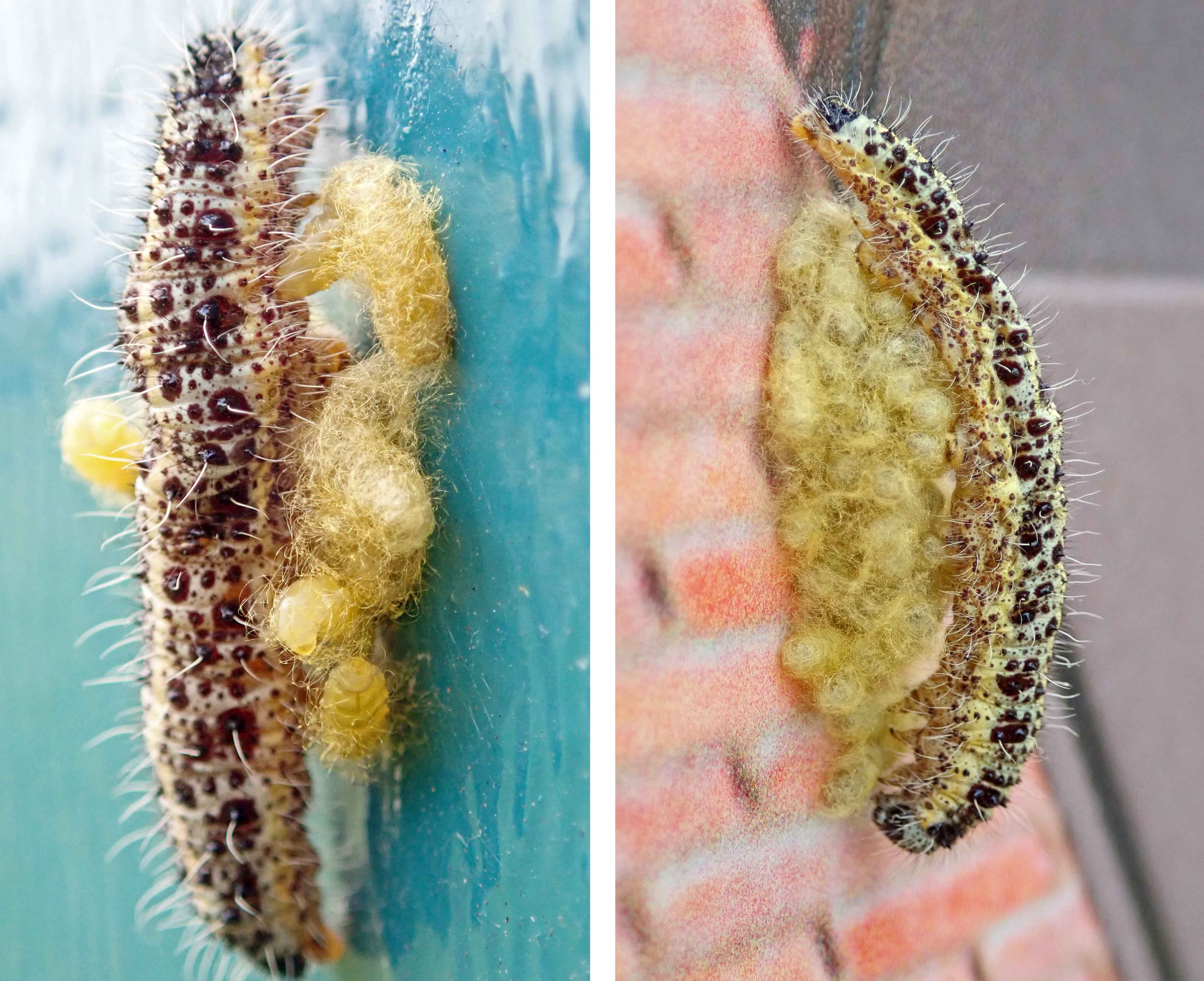
Though I’ve been in Wales almost 10 years and was fascinated by British butterflies even before I settled here, I only saw my first Large white caterpillars in June last year. So, when I spotted several more on the large advertising signage fencing off a local building site, I was delighted … until I looked more closely (and just a warning, this is a bit gruesome!).

The larvae were surrounded by small yellow cocoons and, when I looked even closer, I could see small yellowish larvae squirming between the bodies of the caterpillars and the cocoons. It is highly likely that the Large whites have been parasitised by the wasp Cotesia glomerata. In Life Cycles of British & Irish Butterflies, Peter Eeles writes that the wasp

deposits between 15 and 80 eggs inside each young larva that it parasitizes. The wasp larvae feed on the layer of fat beneath the skin of their host, thereby avoiding vital organs, and, when their host is fully grown, break through the skin and pupate within yellow cocoons on or near their host.

If this wasn’t gruesome enough for one morning’s finds, I then noticed a tiny wasp amongst the cocoons. At first, I thought it must be one of the Cotesia glomerata that had hatched, but no. When I checked at home later, a quick internet image search revealed that this did not resemble C. glomerata and, on Wikipedia, I found the information that C. glomerata is itself parasitised by a couple of other wasp species, Lysibia nana [it is listed as L. nanus in British taxonomic listings] and Gelis agilis. I’ve just been reading that the female G. agilis is wingless so I’m wondering if the wasp I saw is L. nanus. As this species is rarely recorded and there are no Welsh records, I’ve sent a query to the parasitic wasp expert at the Natural History Museum; I’ll update this post if/when I get an answer.

**UPDATE** This is the response I received from Dr Gavin Broad from the Natural History Museum: ‘You are correct, your wasps are most probably Lysibia nanus. There is a very similar species, Lysibia tenax, more rarely recorded but with much the same hosts. I don’t believe it is actually a separate species and L. nanus is certainly the usual suspect reared from Cotesia glomerata cocoons.’

Like Loading...

Large white larvae

25 Tuesday Jun 2024

Posted by sconzani in insects

≈ 2 Comments

Tags

British butterflies, butterfly, Large white butterfly, Large white caterpillars, Large white larvae

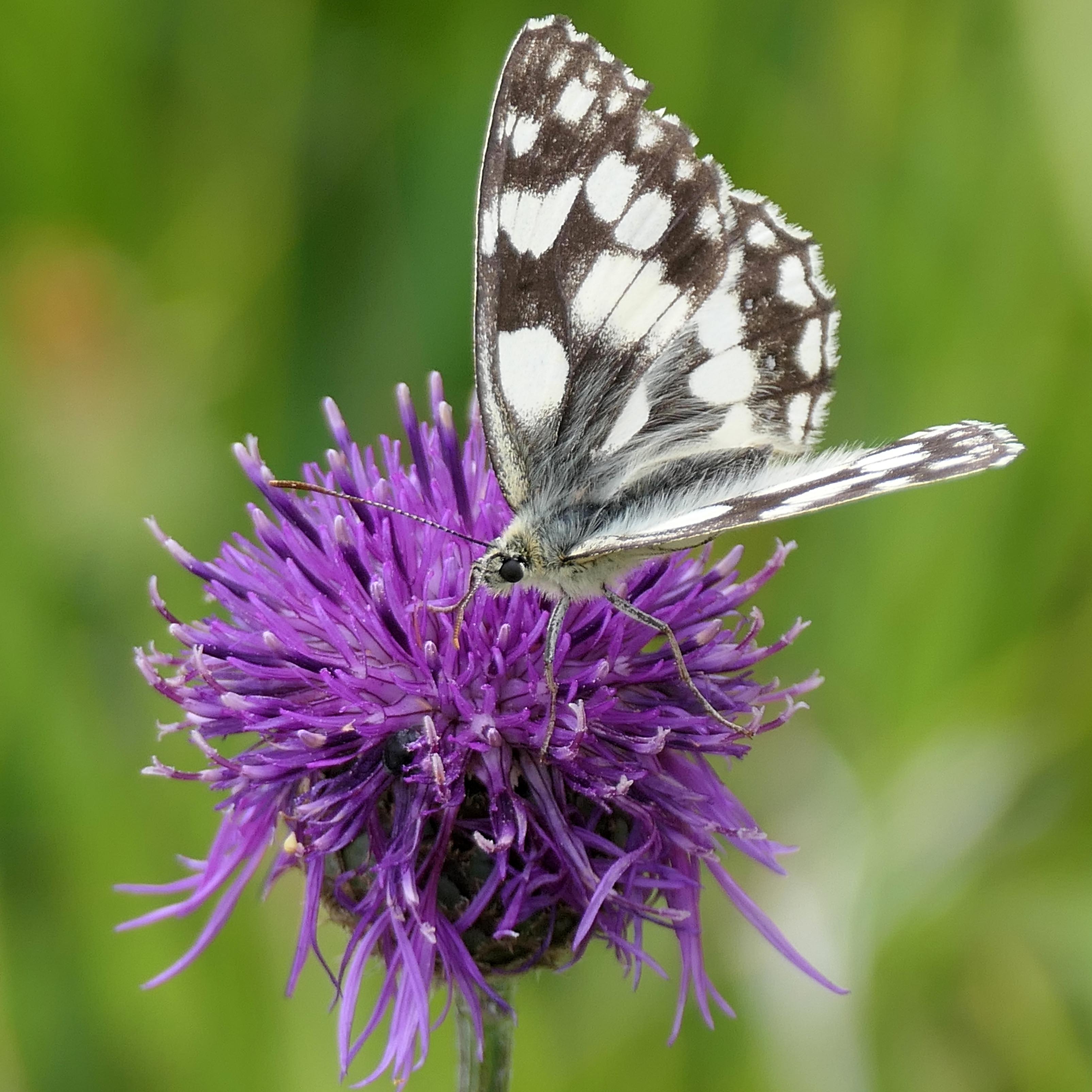
If you’re a gardener living in Britain, you’re probably familiar with today’s creatures, the caterpillars of the Large white butterfly (Pieris brassicae), munching on your cauliflowers or broccoli, but I’d never seen them until last week. I think they’re rather attractive but I can certainly understand why the gardeners amongst you might not think so well of them.

Like Loading...

My first Large white

12 Friday Apr 2024

Posted by sconzani in insects, spring

≈ 2 Comments

Tags

British butterflies, butterfly, Large white butterfly, Pieris brassicae, spring butterflies

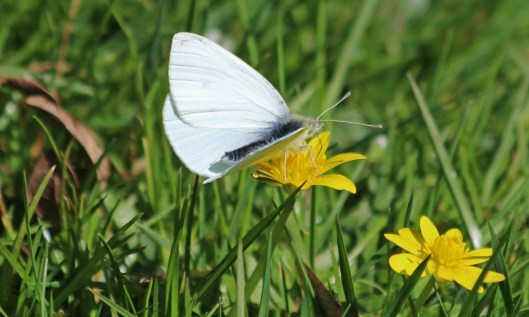
I’d just got home from walking a circuit of Cardiff Bay when a local birder and butterflier sent me a message to say there were some nice butterflies to be seen in a nearby park so out I went again for a look-see. He was right! Though I didn’t see the Green-veined white he had spotted, I did see the beauty shown below, my first Large white butterfly (Pieris brassicae) for the year, and my first two Holly blues, though neither paused long enough for a photo.

240412 large white

Like Loading...

To a Butterfly

31 Wednesday Mar 2021

Posted by sconzani in insects

≈ Leave a comment

Tags

British butterflies, butterfly, butterflying, Large white butterfly, Small tortoiseshell, Small white butterfly

‘Stay near me – do not take thy flight!
A little longer stay in sight!’

These are the opening lines of William Wordsworth’s 1802 poem ‘To a Butterfly’, lines I can easily identify with, thoughts I also utter often – though not in Wordsworth’s exact words, of course.

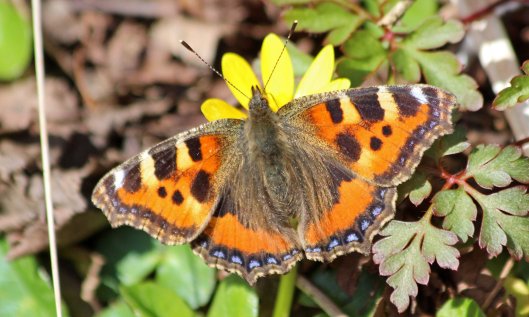
Fortunately, the butterflies occasionally, and unknowingly, heed my pleas and stay long enough for me to take photographs, like these recent new sightings for 2021, the beautiful Large and Small whites, and Small tortoiseshell.

Like Loading...

Aberbargoed Grasslands

08 Friday Jun 2018

Posted by sconzani in insects, nature, parks

≈ 2 Comments

Tags

#30DaysWild, 30 Days Wild, Aberbargoed Grasslands, British butterflies, British moths, Common blue butterfly, Large white butterfly, Long-horn moth, Nemophora degeerella, Small copper

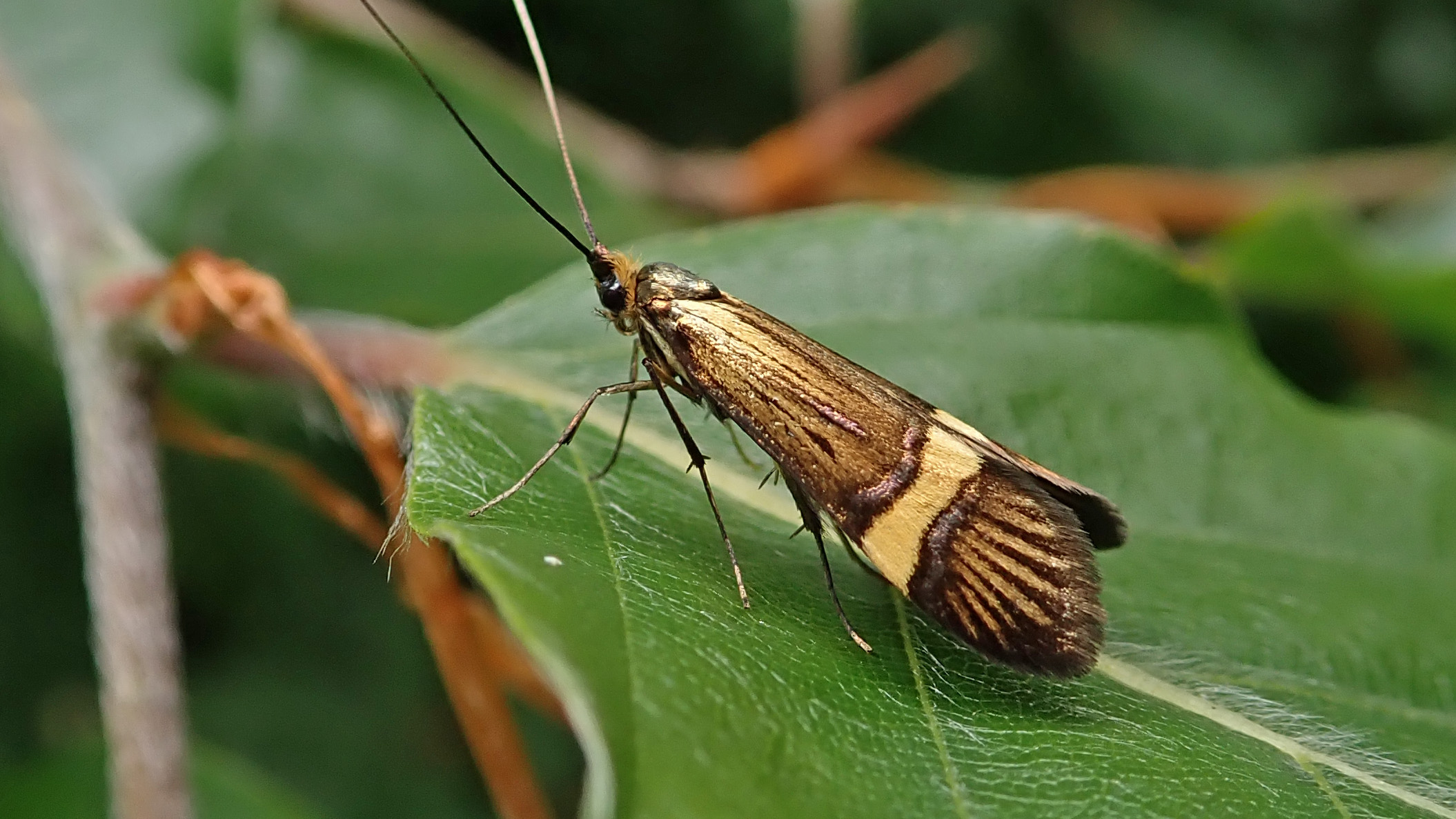
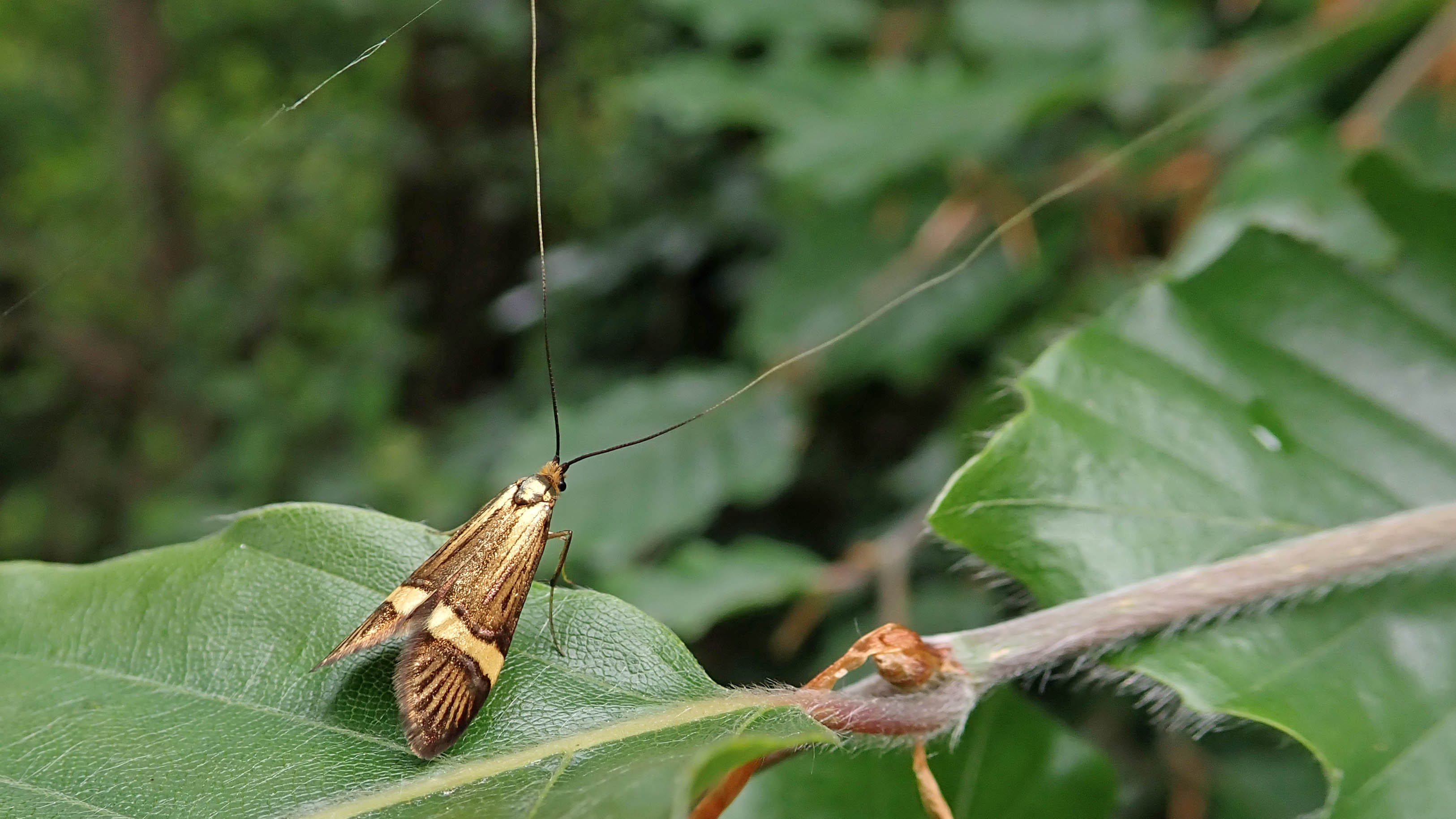
On day 8 of #30DaysWild I paid my first visit to the Aberbargoed Grasslands, with my friend Sharon. We were hoping to spot some of the Marsh fritillaries this National Nature Reserve is known for but, sadly, we didn’t even see one. Perhaps the overcast weather had sent them into hiding. The good news is that I saw my first Small copper butterfly for the year, we saw a small number of Common blue butterflies and a few whites. We also spotted several moths, the most spectacular of which was a group of five male long-horn moths, Nemophora degeerella. They were dazzling, even on a grey day, and just look at the length of those horns!

180608 1 Small copper

Small copper butterfly

180608 2 Common blue

A Common blue butterfly feeding on meadow thistles

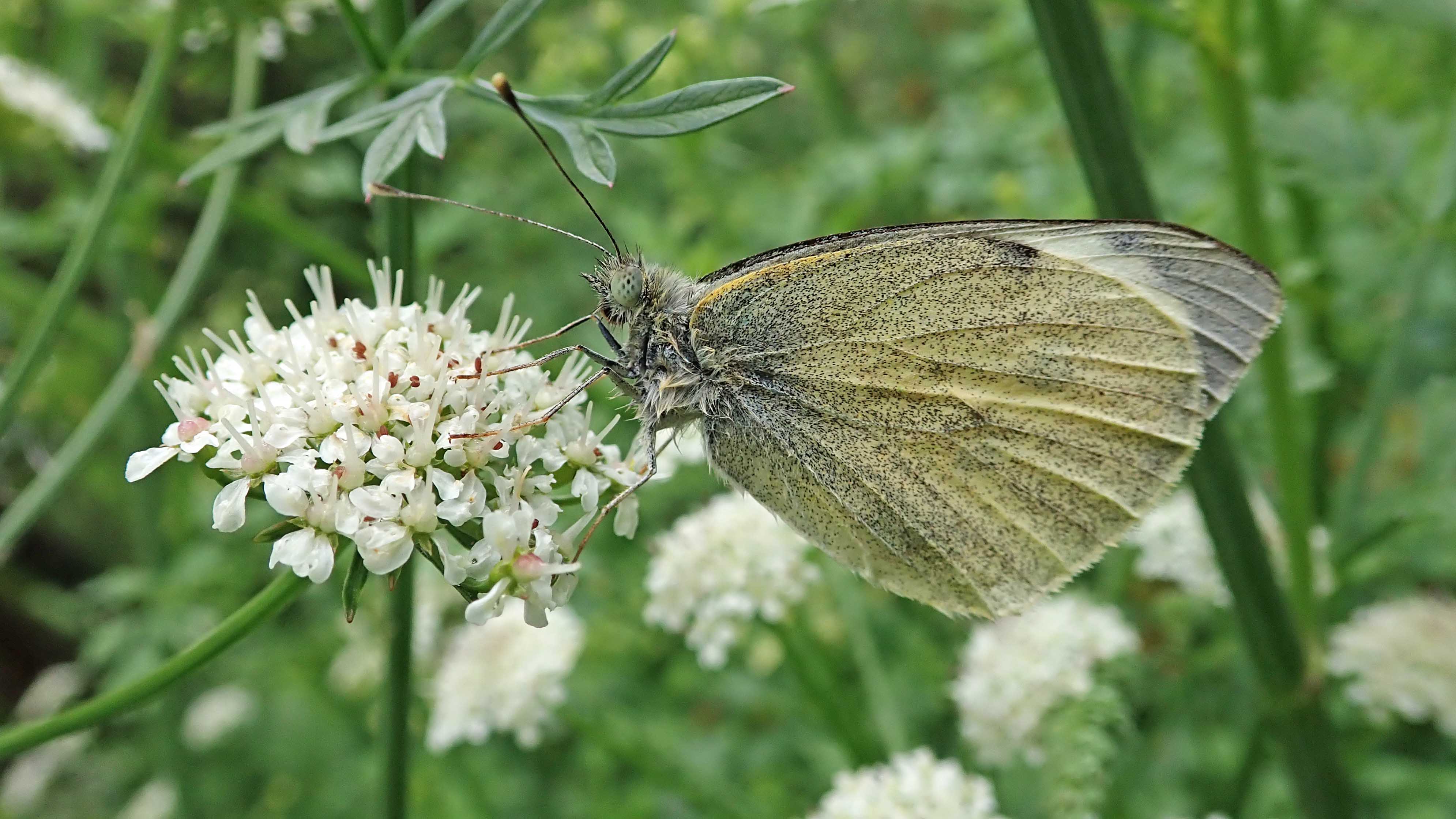
180608 Large white

Large white butterfly

180608 4 Nemophora degeerella

A long-horn moth, Nemophora degeerella

180608 5 Nemophora degeerella

Look at the length of those horns!

Like Loading...

About me

sconzani

sconzani

I'm a writer and photographer; researcher and blogger; birder and nature lover; countryside rambler and city strider; volunteer and biodiversity recorder.

View Full Profile →

Follow earthstar on WordPress.com

Enter your email address to follow this blog and receive notifications of new posts by email.

Recent blog posts

  • M is for mite December 18, 2025
  • L is for lepidopteran lifers December 17, 2025
  • K is for Keeled skimmers December 16, 2025
  • J is for Jersey tiger December 15, 2025
  • I is for Ichneumon December 14, 2025

From the archives

COPYRIGHT

Unless otherwise acknowledged, the text and photographs on this blog are my own and are subject to international copyright. Nothing may be downloaded or copied without my permission.

Fellow Earth Stars!

  • Unknown's avatar
  • Unknown's avatar
  • Unknown's avatar
  • Unknown's avatar
  • Unknown's avatar
  • Unknown's avatar
  • Unknown's avatar
  • Unknown's avatar
  • Unknown's avatar
  • Unknown's avatar
  • Unknown's avatar
  • Unknown's avatar
  • Unknown's avatar
  • Unknown's avatar
  • Unknown's avatar
  • Unknown's avatar
  • Unknown's avatar
  • Unknown's avatar
  • Unknown's avatar
  • Unknown's avatar
  • Unknown's avatar
  • Unknown's avatar
  • Unknown's avatar
  • Unknown's avatar
  • Unknown's avatar
  • Unknown's avatar
  • Unknown's avatar
  • Unknown's avatar
  • Unknown's avatar
  • Unknown's avatar
  • Unknown's avatar
  • Unknown's avatar
  • Unknown's avatar
  • Unknown's avatar
  • Unknown's avatar
  • Unknown's avatar
  • Unknown's avatar
  • Unknown's avatar
  • Unknown's avatar
  • Unknown's avatar
  • Unknown's avatar
  • Unknown's avatar
  • Unknown's avatar
  • Unknown's avatar
  • Unknown's avatar
  • Unknown's avatar
  • Unknown's avatar
  • Unknown's avatar
  • Unknown's avatar
  • Unknown's avatar

Blog at WordPress.com.

Privacy & Cookies: This site uses cookies. By continuing to use this website, you agree to their use.
To find out more, including how to control cookies, see here: Cookie Policy
  • Subscribe Subscribed
    • earthstar
    • Join 667 other subscribers
    • Already have a WordPress.com account? Log in now.
    • earthstar
    • Subscribe Subscribed
    • Sign up
    • Log in
    • Report this content
    • View site in Reader
    • Manage subscriptions
    • Collapse this bar
 

Loading Comments...
 

You must be logged in to post a comment.

    %d