• ABOUT
  • BIRDING 2018
  • Birding 2019
  • BLOG POSTS
  • Butterflies 2018
  • Resources

earthstar

~ a celebration of nature

earthstar

Tag Archives: migrating birds

238/365 Peek-a-bo II

26 Monday Aug 2019

Posted by sconzani in 365DaysWildin2019, birds, nature

≈ Leave a comment

Tags

birding, birdwatching, British birds, fledgling robin, migrating birds, robin

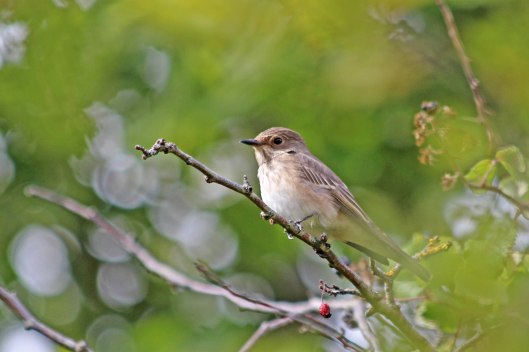
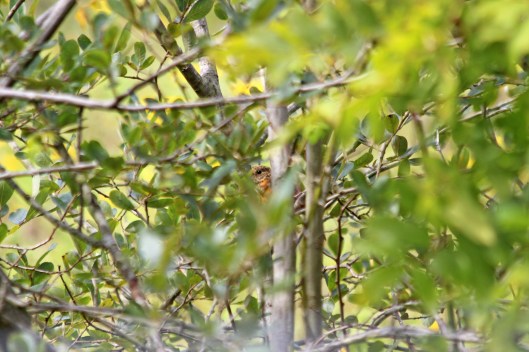
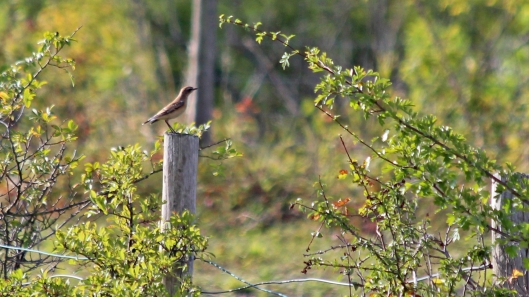
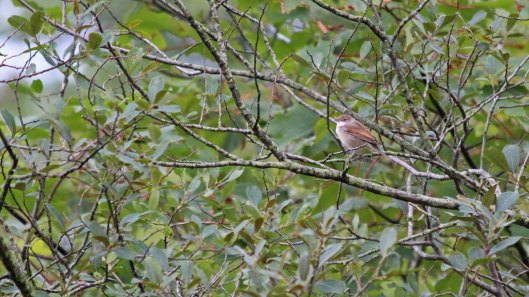
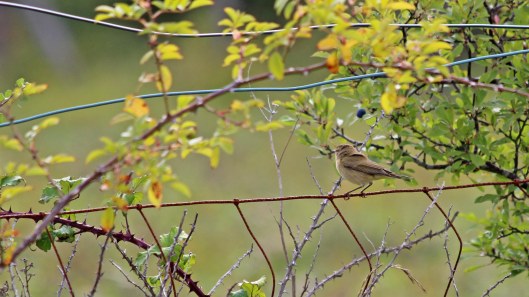
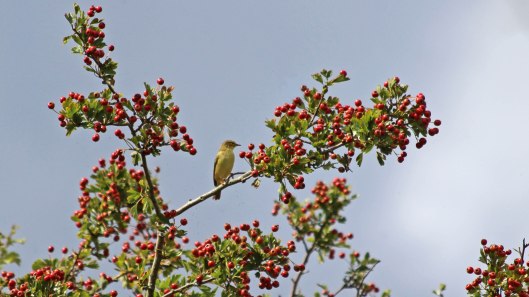
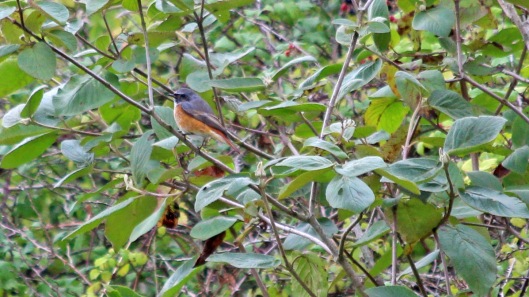
In recent days I’ve been spending some time searching for migrating birds, and I’ve had some success, with several Spotted flycatchers, a couple of Tree pipits, and good numbers of Willow warblers, Chiffchaffs, Blackcaps and both species of whitethroat. Although Redstarts have been seen locally, I haven’t yet managed to find one so, when I caught a reddish flash through the bushes at Cosmeston, I thought I’d got lucky. Unfortunately, it turned out that the flash of red was at the wrong end of the bird – redstart comes from the Anglo-Saxon for ‘red tail’. My little bird had a red breast.

190826 robin

Like Loading...

Scurrying Sanderlings

22 Saturday Sep 2018

Posted by sconzani in autumn, birds, nature

≈ 8 Comments

Tags

autumn migration, bird migration, birding, birdwatching, British birds, Calidris alba, migrating birds, Sanderling, Sker Rocks

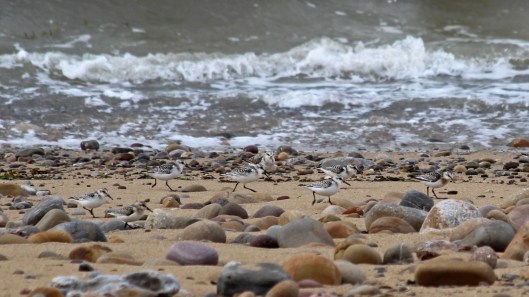
Watching these busy little birds scurrying back and forth along the beach at Sker last Saturday was the highlight of my day.
180922 sanderlings (1)

I had walked away a little from the group of birders I was with as I wanted to try to get better photographs of the waders moving along the water’s edge, and I’m so glad I did, as the birds weren’t as bothered about one person standing very still and silent as they would’ve been about 25 chattering people moving about, and so came up reasonably close to me.

180922 sanderlings (2)

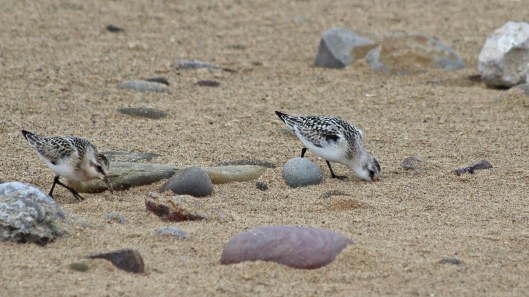
Small flocks of Sanderlings (Calidris alba), and other small waders, were flying back and forth from the rocks to the sandy beach to feed, poking their heads right up to their eyes in the soft sand to probe for their preferred food of small crustaceans and molluscs.

180922 sanderlings (3)180922 sanderlings (3a)

According to the Merriam Webster dictionary, the name Sanderling is a combination of the fairly obvious ‘sand’ and ‘erling’, which probably comes from the Old English yrthling, meaning ploughman (from yrth earth and erian to plough). That certainly makes sense when you see these little birds in action.

180922 sanderlings (4)

Sanderlings are passage migrants that move through Britain in spring and autumn on their way to and from their breeding grounds in the High Arctic and their over-wintering sites in southern Europe and Africa.

180922 sanderlings (5)

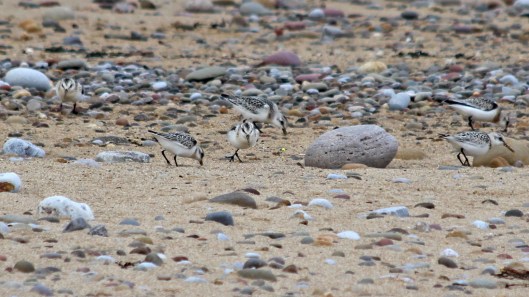
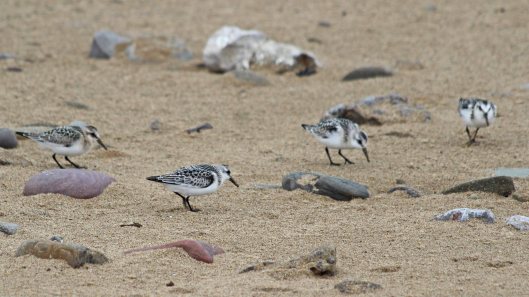
The birds’ plumage changes for the breeding season, becoming much darker, with shades of reddish-brown on the head, neck and back, and you can still see hints of that on some of the birds in my photos. Also, many of my birds seem to be juveniles, with quite chequered markings on their backs and very clean white under-parts.
180922 sanderlings (6)

One fascinating factoid I discovered when reading up about these birds is that they have only three toes on each foot, with no hind toe to provide balance, and this is the reason for their scurrying motion. If you want to see Sanderlings in action, I uploaded a very short video to youtube.

180922 sanderlings (7)

Like Loading...

A Whinchat family

08 Saturday Sep 2018

Posted by sconzani in autumn, birds, nature

≈ 2 Comments

Tags

autumn migration, bird migration, birding, birdwatching, British birds, Cosmeston, Cosmeston Lakes Country Park, migrating birds, Saxicola rubetra, Whinchat

180908 2 whinchats (1)

One of the highlights of this week at Cosmeston Lakes Country Park has been watching the party of three Whinchats that have stopped off to feed up prior to their migration to central and southern Africa. I think they’re a family group because this one appears still to have the plumage of a juvenile.

180908 whinchat (1)

Another (below) is still part way through the moulting process. I read recently that birds don’t usually migrate until after their moult is complete, as the lack of all their proper flight feathers, in particular, can affect their ability to fly long distances. Perhaps that’s another reason why they’ve broken their journey at Cosmeston.

180908 whinchat (2)

This is the third Whinchat, or Saxicola rubetra, to give it its scientific name.

180908 whinchat (3).jpg

Their common name, as with many birds, reflects their behaviour – whin is another word for gorse, as these little birds are commonly found amongst gorse and bracken and areas of low shrubs and bushes. Chat relates to their call, which combines the sound of two stones being tapped together with a series of melodic whistles.

180908 2 whinchats (2).jpg

Like Loading...

More migrants passing through

01 Saturday Sep 2018

Posted by sconzani in birds, nature

≈ 4 Comments

Tags

autumn migration, birding, birdwatching, British birds, Chiffchaff, Cosmeston, Cosmeston Lakes Country Park, migrating birds, Pied plycatcher, Redstart, Wheatear, Whinchat, Whitethroat, Willow warbler

My local country park, Cosmeston Lakes, has been awash with migrating birds this past week. And it’s not just me getting better at finding them – according to birders who’ve been checking the area much longer than I’ve lived nearby, this has been a bumper year for sightings.

180901 Redstart female 2408180901 Redstart male 2408

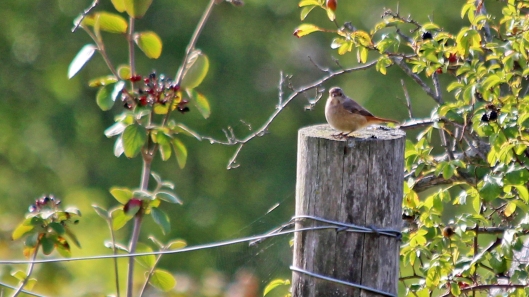
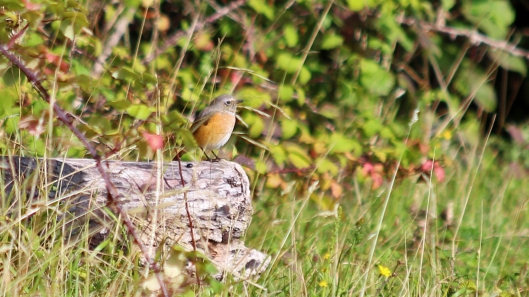
On 24 August I found two Redstarts, a male and another that may have been a female or an immature bird that hadn’t yet developed its full adult colouration.

180901 wheatear 2408

Also on the 24th I had a very fleeting view of a Wheatear that popped up from grass to fencepost, then was off in the blink of an eye.

180901 whinchat 2708

On the 27th my birding friend Della texted me to say she’d found a Whinchat. That was the fastest I’d ever walked to Cosmeston and, luckily, the bird waited for me – and, in fact, stayed around most of the week so I saw it several times.

180901 common whitethroat

180901 chiffchaff180901 willow warbler

During my frequent visits to Cossie this week, I’ve seen ones and twos of Whitethroat and Chiffchaff, and tens of Willow warblers. These are the ones I spotted on the 30th.

180901 redstart 2908

Also on 30 August, I spotted another Redstart and, from the dark head colours, I could tell this one was definitely a male.

180901 pied flycatcher

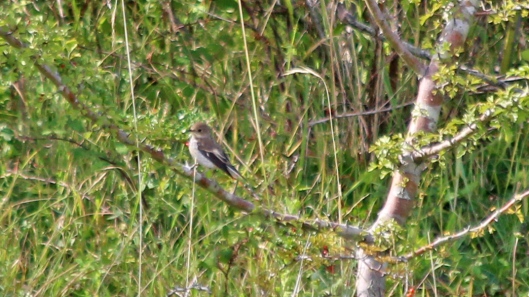
The week ended with a bang! My birding friend, Graham, let me know that he’d seen a Pied flycatcher with a small group of Spotted flycatchers, a most unusual visitor. Luckily, I was on the coastal path heading homeward so was able to divert towards Cosmeston and, with Graham’s help, got distant views of this beautiful little bird catching flies along the tree line. What a stunning week it has been!

Like Loading...

Spring migration: chiffchaff

18 Sunday Mar 2018

Posted by sconzani in birds, nature, spring

≈ 2 Comments

Tags

birding, birdwatching, British birds, Chiffchaff, migrating birds, Phylloscopus collybita, spring migration

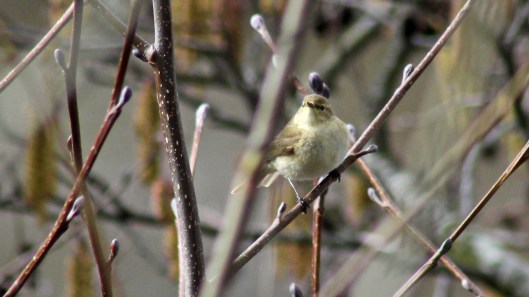
You know it’s really springtime when the migrating birds start to appear and this week has seen those birds arriving, albeit in fairly small numbers yet here in south Wales. Friends have been reporting sightings of Sand martins and Wheatear – I’ve yet to see either, but I am one of the many who have now either heard and/or seen their first Chiffchaff (Phylloscopus collybita) of 2018.

180318 chiffchaff (4)

Though a few Chiffchaffs overwinter in Britain, the vast majority migrate south during autumn and overwinter in the sunshine and warmer temperatures of the Mediterranean and west Africa.

180318 chiffchaff (1)
180318 chiffchaff (3)

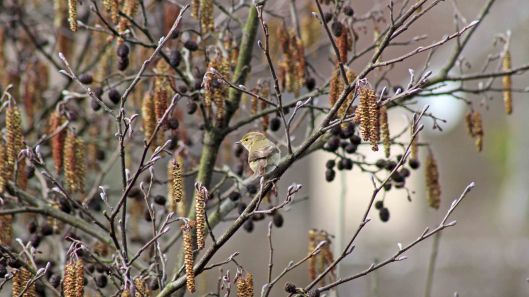
I heard my first of these lovely little birds last Monday, 12 March, at Forest Farm Nature Reserve, and I saw my first, shown here in my photographs, in trees alongside the River Taff in Cardiff on Thursday, the 15th. Welcome back, little Chiffchaffs!

180318 chiffchaff (2)

Like Loading...

Autumn migration: Garganey

30 Saturday Sep 2017

Posted by sconzani in autumn, birds, nature

≈ Leave a comment

Tags

Anas querquedula, autumn migration, birding, birdwatching, British birds, British ducks, ducks, Garganey, migrating birds, Roath Park Lake

When sightings of rare birds are reported, the birds are usually in out-of-the-way locations that are difficult to access by public transport so I can’t go looking but yesterday was different. A ‘scarce and very secretive’ duck had been spotted at Roath Park Lake, my old stomping ground, so I hopped on a train and was there like a shot.

170930 Garganey (1)

The bird was a Garganey (Anas querquedula) and it was certainly living up to its reputation: I spent 30 minutes or so walking and looking and couldn’t spot it (though the Teal and Shovelers were an added bonus amongst the resident water birds). A fellow birder told me he’d seen the Garganey briefly through his ’scope but it had then disappeared under overhanging tree branches. So, I went for a walk around the park, watched a young Heron fishing in the sluice and enjoyed the autumn colour, before heading around the lake again on my way back to the train. And there it was!

170930 Garganey (2)

The female Garganey looks much like a female Mallard at first glance but she is a much smaller duck, the markings on her face are stronger, with the eye stripe giving her quite an exotic look, and she has a bill that shows she’s a dabbler. She was very active, constantly ducking her head under the water for plant material and insects – in fact, most of my photos are of a headless duck!

170930 Garganey (5)
170930 Garganey (6)
170930 Garganey (7)

Garganeys are only seen in small numbers in Britain, as they pass through during spring and autumn migration, so being able to see and watch this beautiful female was a treat indeed!

170930 Garganey (3)
170930 Garganey (4)
Like Loading...

Wheatear

14 Thursday Sep 2017

Posted by sconzani in birds, nature, parks

≈ Leave a comment

Tags

autumn bird migration, birding, birdwatching, British birds, Cosmeston Lakes Country Park, migrating birds, Oenanthe oenanthe, Wheatear

I went looking for Whinchat and Redstart but came home with Wheatear. I’m talking about birds, of course, and I didn’t actually bring the bird home, of course, just photos – and not particularly crisp photos at that, as the bird was perched on a fence post some distance away and I couldn’t get closer without spooking it. But what a lovely little bird it was!

170914 wheatear (1)

This was at Cosmeston, my local country park and nature reserve, which, as it sits very close to the Welsh coast adjacent to the Bristol Channel, is perfectly situated as a sort of springboard location for migrating birds – and the autumn bird migration is well and truly underway now. The Wheatear (Oenanthe oenanthe) breeds in upland areas of northern and western Britain but then, come the cooler days of late summer – early autumn, it wings its way south to spend the winter in central Africa.

170914 wheatear (3)
170914 wheatear (4)

The name Wheatear intrigued me so I consulted my trusty copy of Stefan Buczacki’s Fauna Britannica. It appears that many people assume, as I did, that the name comes from the bird’s tendency to consume ripening wheat. However, the etymology is older and seems to come from a Middle English word meaning ‘white arse’!

170914 wheatear (2)

Like Loading...

The birds are back in town!

08 Saturday Apr 2017

Posted by sconzani in birds, nature

≈ 3 Comments

Tags

birding, birdwatching, Cardiff Bay, migrating birds, Riparia riparia, Sand martin, signs of summer

Not just any old birds – I’m referring to the Sand martins (Riparia riparia), one of the first migrating birds to arrive in the springtime. When you start to see them swooping and diving in the hunt for insects and hear their characteristic chattering sounds, you know summer really is just around the corner.

170408 Sand Martin (1)

The Sand martins have been arriving at various places along the south Wales coast for the past couple of weeks, after a marathon flight from their overwintering spots in the Sahel, south of the Sahara in Africa. For such small birds, it really is a huge effort so it’s no surprise they stop over in Cardiff Bay to refuel and rest up. Though many birds fly on to destinations throughout Britain, some will stay on in Wales to breed and raise their broods of four or five chicks before heading south to Africa again around August-September. It’s usually quite difficult to get photos of these aerial acrobats but this morning I got lucky when this little one sat and sang me a pretty song.

170408 Sand Martin (2)

Like Loading...
Newer posts →

About me

sconzani

sconzani

I'm a writer and photographer; researcher and blogger; birder and nature lover; countryside rambler and city strider; volunteer and biodiversity recorder.

View Full Profile →

Follow earthstar on WordPress.com

Enter your email address to follow this blog and receive notifications of new posts by email.

Recent blog posts

  • Kestrel 2026 : 86 January 31, 2026
  • Birch polypore January 30, 2026
  • The Marl Med gull January 29, 2026
  • Recording Grey squirrels January 28, 2026
  • Jimmy Wren January 27, 2026

From the archives

COPYRIGHT

Unless otherwise acknowledged, the text and photographs on this blog are my own and are subject to international copyright. Nothing may be downloaded or copied without my permission.

Fellow Earth Stars!

  • Unknown's avatar
  • Unknown's avatar
  • Unknown's avatar
  • Unknown's avatar
  • Unknown's avatar
  • Unknown's avatar
  • Unknown's avatar
  • Unknown's avatar
  • Unknown's avatar
  • Unknown's avatar
  • Unknown's avatar
  • Unknown's avatar
  • Unknown's avatar
  • Unknown's avatar
  • Unknown's avatar
  • Unknown's avatar
  • Unknown's avatar
  • Unknown's avatar
  • Unknown's avatar
  • Unknown's avatar
  • Unknown's avatar
  • Unknown's avatar
  • Unknown's avatar
  • Unknown's avatar
  • Unknown's avatar
  • Unknown's avatar
  • Unknown's avatar
  • Unknown's avatar
  • Unknown's avatar
  • Unknown's avatar
  • Unknown's avatar
  • Unknown's avatar
  • Unknown's avatar
  • Unknown's avatar
  • Unknown's avatar
  • Unknown's avatar
  • Unknown's avatar
  • Unknown's avatar
  • Unknown's avatar
  • Unknown's avatar
  • Unknown's avatar
  • Unknown's avatar
  • Unknown's avatar
  • Unknown's avatar
  • Unknown's avatar
  • Unknown's avatar
  • Unknown's avatar
  • Unknown's avatar
  • Unknown's avatar
  • Unknown's avatar

Blog at WordPress.com.

Privacy & Cookies: This site uses cookies. By continuing to use this website, you agree to their use.
To find out more, including how to control cookies, see here: Cookie Policy
  • Subscribe Subscribed
    • earthstar
    • Join 670 other subscribers
    • Already have a WordPress.com account? Log in now.
    • earthstar
    • Subscribe Subscribed
    • Sign up
    • Log in
    • Report this content
    • View site in Reader
    • Manage subscriptions
    • Collapse this bar
 

Loading Comments...
 

You must be logged in to post a comment.

    %d