• ABOUT
  • BIRDING 2018
  • Birding 2019
  • BLOG POSTS
  • Butterflies 2018
  • Resources

earthstar

~ a celebration of nature

earthstar

Tag Archives: moth larvae

Depressaria daucella larvae

30 Monday Jun 2025

Posted by sconzani in insects, plants, wildflowers

≈ 2 Comments

Tags

British moths, caterpillar eating Hemlock water-dropwort, Depressaria daucella, Hemlock water-dropwort, moth larvae, Oenanthe crocata, Water-dropwort brown, Water-dropwort brown larvae

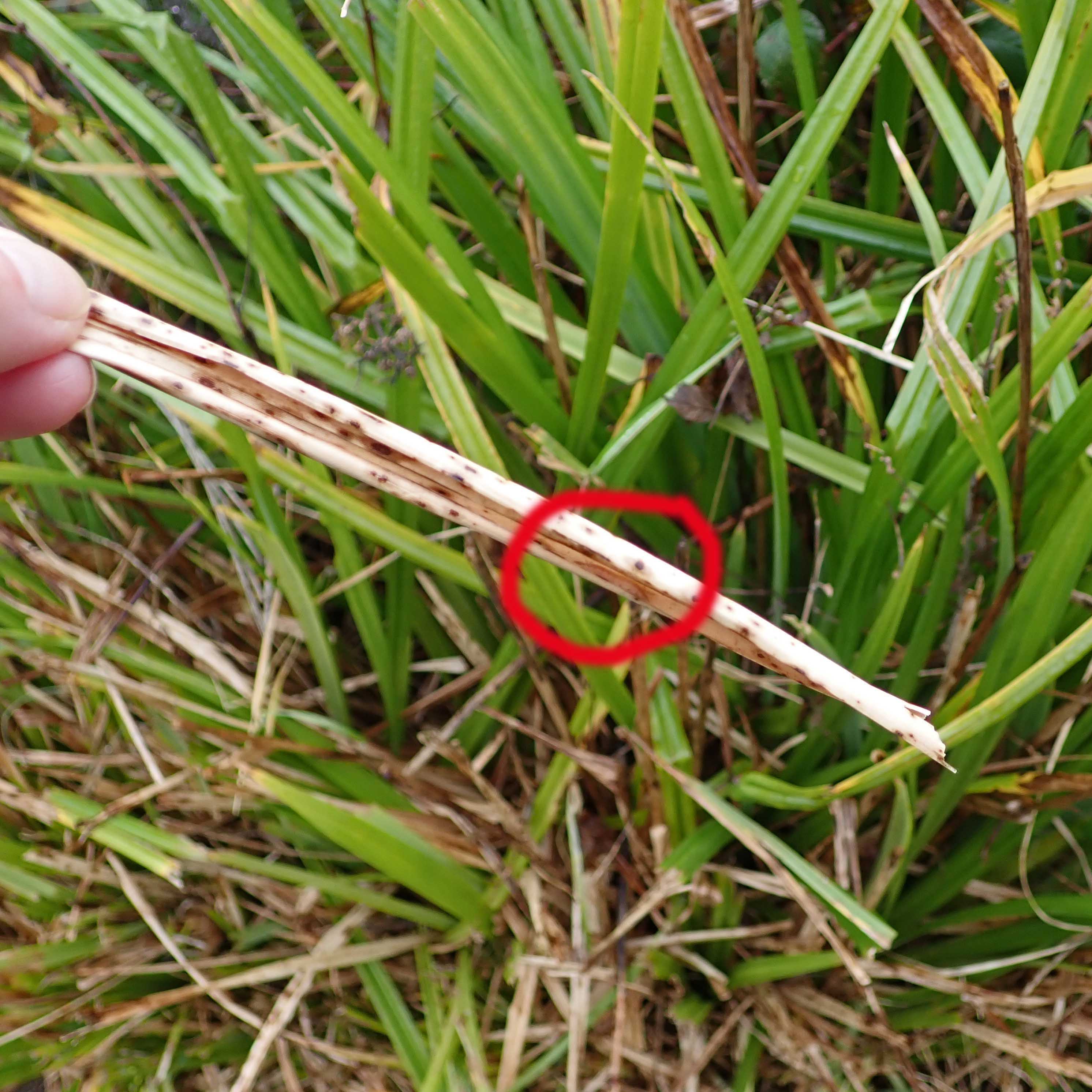
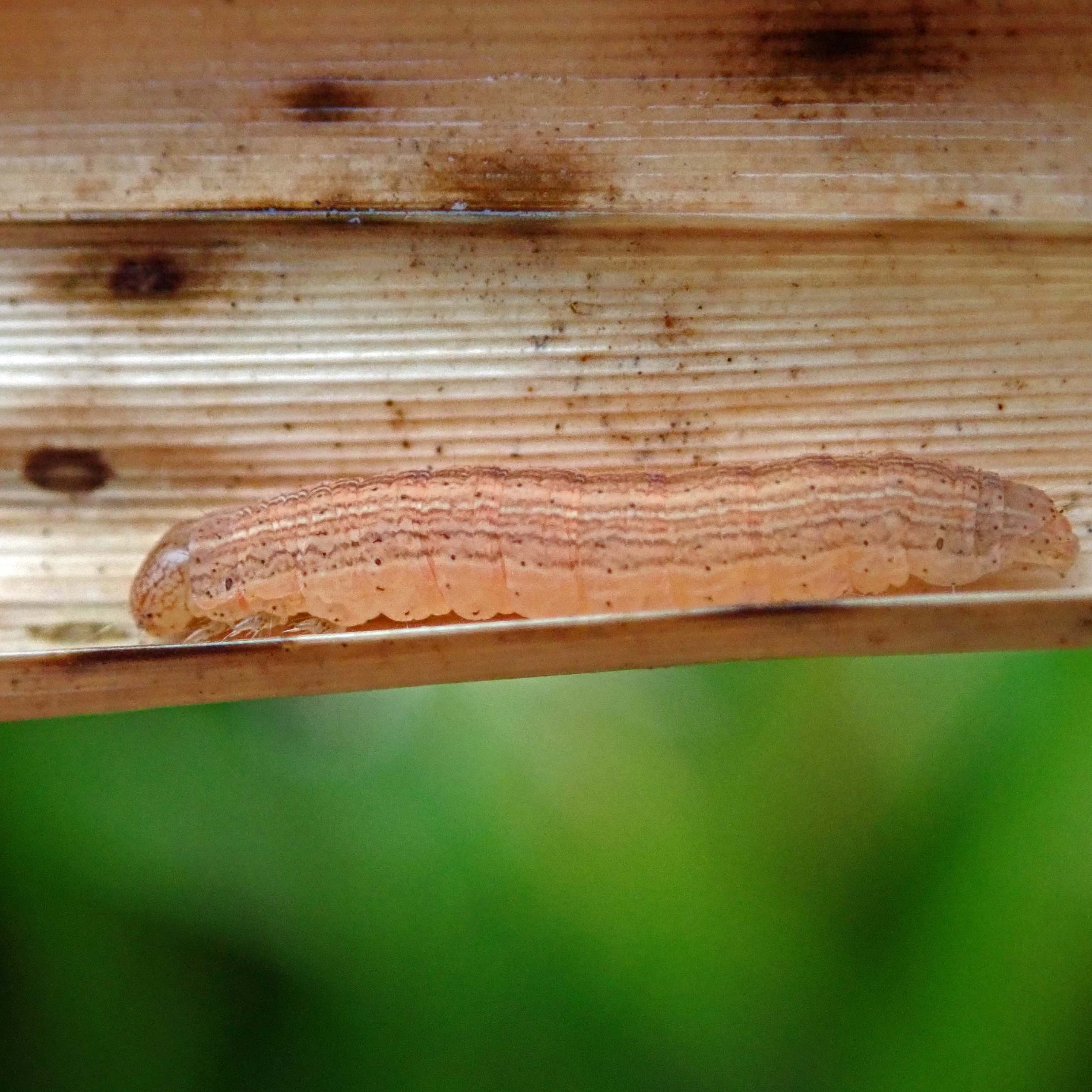
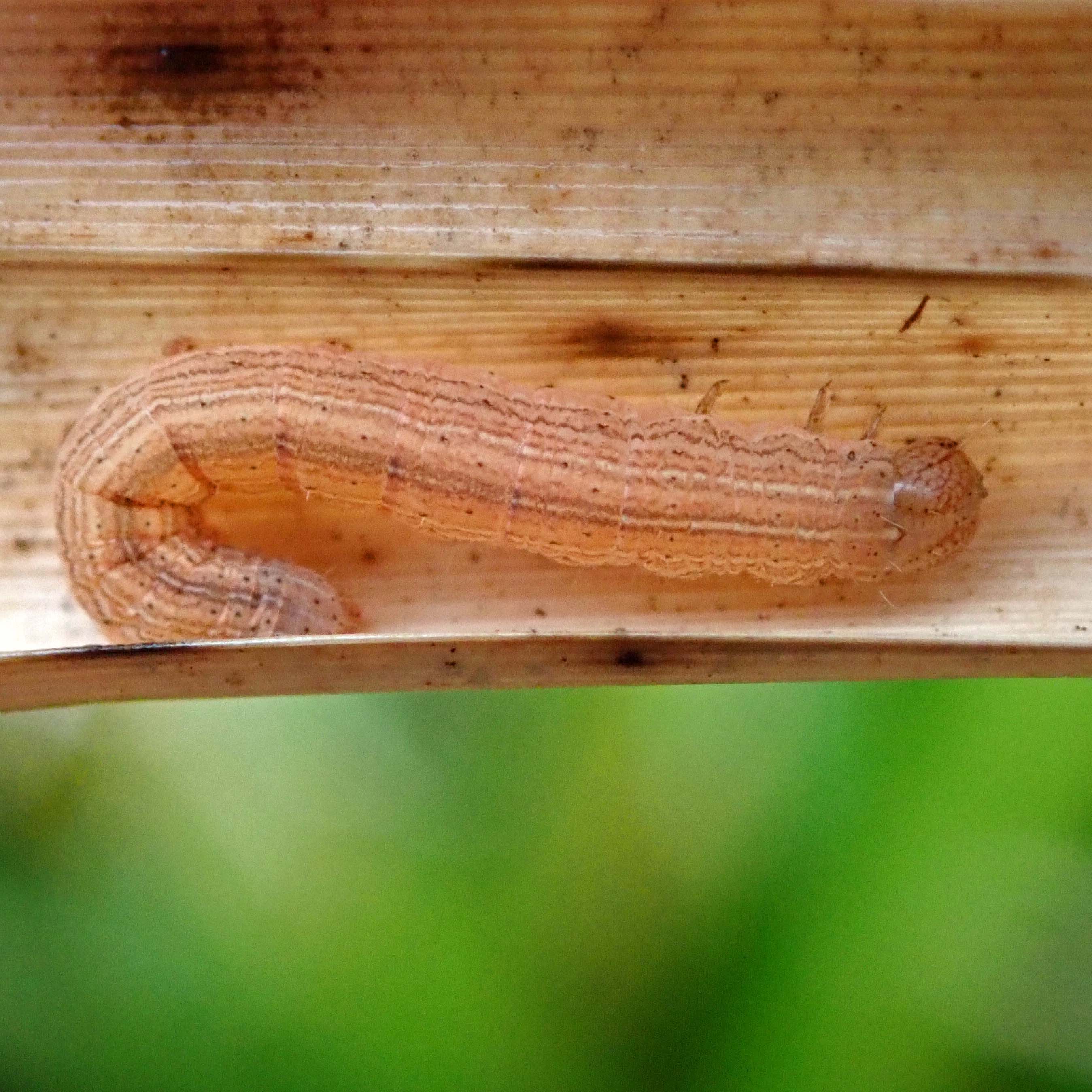
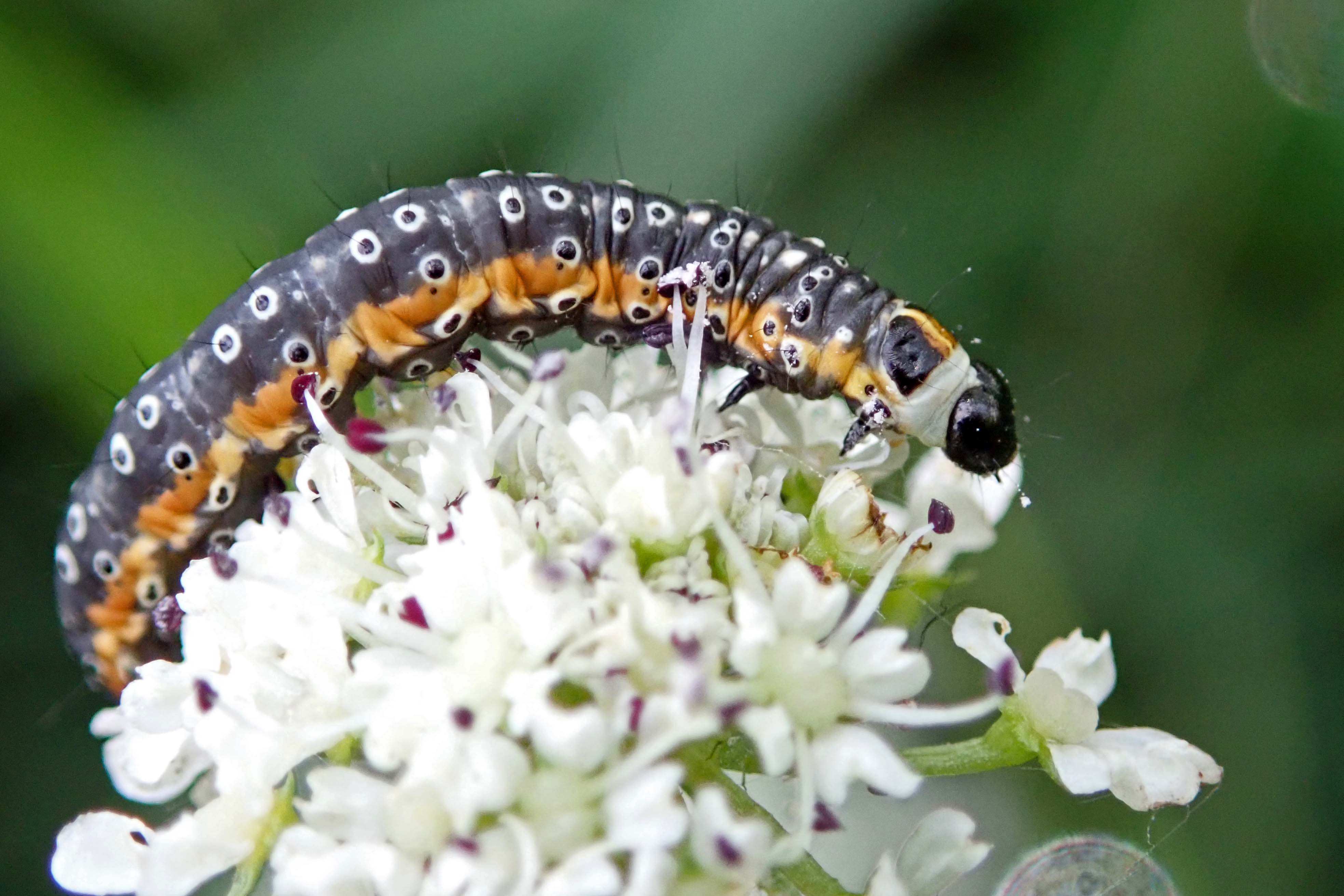
All parts of Hemlock water-dropwort (Oenanthe crocata) are highly poisonous; from the roots to the leaves, no part of it should be ingested, and the Royal Horticultural Society even recommends wearing gloves to handle the plant. Yet, somewhat surprisingly, when I was wandering around the RSPB Radipole Lakes reserve, where Hemlock water-dropwort is abundant, I found a huge number of these small caterpillars happily munching away on its stems and flowers.

These very attractive creatures are the larvae of the moth Depressaria daucella, common name Water-dropwort brown. They can be seen, on this and a few other species of plants, in the months of June and July, either out in the open when eating or resting within a loosely woven silken spinning.

The UK Moths website rather flatteringly says that the adult moth is a ‘fairly distinctive species with its chestnut-brown ground colour and darker streaking’; all I see is yet another little brown job, rather drab when compared to its caterpillars.

Like Loading...

Cool cats, 2

05 Thursday Jun 2025

Posted by sconzani in insects

≈ Leave a comment

Tags

British moth caterpillars, caterpillars, Common quaker caterpillar, Lackey caterpillar, moth caterpillars, moth larvae, Mottled umber caterpillar, Ruby tiger caterpillar, Vapourer caterpillar

When I’m out walking at this time of year, I always keep a look out for leaf damage as that’s often the way to find invertebrates, whether they be weevils or beetle larvae or moth caterpillars or many other things. Today I thought I’d share some of the cool caterpillars I’ve been finding, most of which are relatively common and easy for everyone to identify. (I’ve linked each name to the relevant page on the UK Moths website so the curious amongst you can see what these cats will look like as moths; it always amazes me how different the adults are from their progeny.)

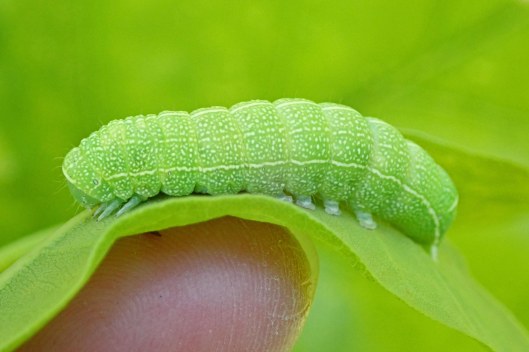
Having said that most of these are relatively common, I’d never actually seen a Common quaker (Orthosia cerasi) caterpillar before but found several recently on one Oak tree. Judging by how plump they were, all had been feeding well, and would be pupating quite soon after I saw them.

As you can perhaps see in my photo, this Lackey (Malacosoma neustria) caterpillar had just moulted (that’s the shed skin on the leaf next to it) and so was looking very vibrant. The Lackey is mostly found in southern parts of Britain and is a good example of how different the adult is – really quite drab.

Do these Mottled umber (Erannis defoliaria) caterpillars think their twig impression will deter hungry birds? Perhaps so. Judging by the fact that I spotted more than 20, of varying sizes and with slight colour variations, on a group of Lombardy poplar trees, their disguise was working.

I have to admit that I wasn’t the first to spot this lovely little Ruby tiger (Phragmatobia fuliginosa) heading purposefully across a local footpath. A young boy, who was out with his parents and their dog, had seen it and was trying, unsuccessfully, to feed it Dandelion leaves.

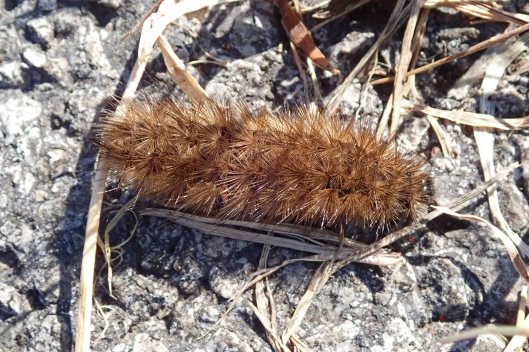
You may recall that, back in January, I blogged about finding a Vapourer cocoon and eggs. Well, though I found this particular caterpillar in a different place entirely, this is what would eventually have emerged from those eggs, the wonderfully flamboyant caterpillar of a Vapourer moth (Orgyia antiqua).

Like Loading...

Bagworms

16 Friday May 2025

Posted by sconzani in insects

≈ Leave a comment

Tags

bagworm, British moths, case-bearing larva, case-living moth larvae, Grey bagworm, Luffia lapidella, moth larvae, Ramshorn bagworm, Virgin smoke

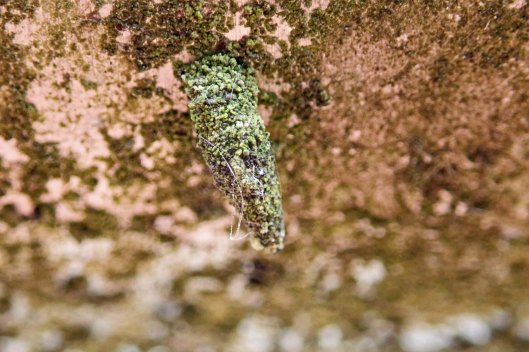
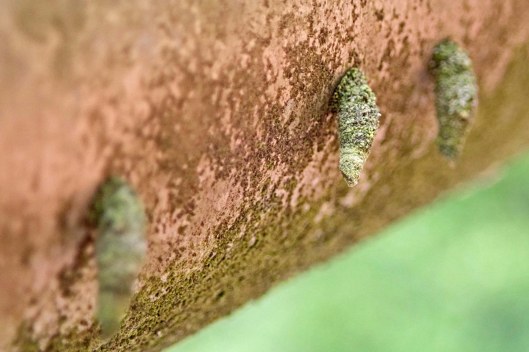
You may initially think the title of today’s post is move related and that I found worms in my baggage when packing/unpacking, but no. Bagworm is the rather unflattering name for the moth Luffia lapidella, also known as Ramshorn bagworm, Virgin smoke, and Grey bagworm, whose larvae create cases to live in from the lichen they also like to eat. I’ve only ever found single cases before (see Casebearer: Luffia lapidella, February 2024), and those only twice in the ten years I’ve been living in the UK, so, when I found this site with well over 20 cases, I thought the species was worth revisiting with another blog.

The location was unexpected: they are all living on the metal railings that run along one side of a path by the River Ely in Cardiff but the waterside location means the undersides of all those railings are covered in lichen and, fortunately, they’re never cleaned, so the bagworms have found the perfect place to live.

Luffia lapidella is a very odd moth. The main moth websites in the UK all say that ‘only the self-fertile wingless female is known’, though I did find a blog, British Lepidoptera, that says males do occur in Cornwall. That website also shows a photo of a deceased female and photos of the larvae that lives in their colourful lichen ‘bags’.

Like Loading...

Cochylis roseana

08 Tuesday Oct 2024

Posted by sconzani in insects, plants

≈ Leave a comment

Tags

British moths, Cochylis roseana, moth larvae, moth larvae in Teasel, moth larvae in Teasel seed heads, Teasel

Last Thursday’s blog was about finding an Endothenia marginana larva in a Teasel seedhead. While checking those particular Teasels, I also found the subjects of today’s blog, the larvae of another moth, Cochylis roseana. As its name suggests, the adult is a rather gorgeous rosy coloured moth, though the UK Moths website says that the rosy colour is not always prominent.

241008 Cochylis roseana (1)

As you can see, the larvae, which are white with a greenish tinge, don’t live within the centre space of the Teasel seedhead like the Endothenia, but rather munch their way through the Teasel’s seeds, creating tunnels that circle the centre. The seedhead I opened contained at least three larvae but here may have been more lurking in their hidey holes.

241008 Cochylis roseana (2)

Like Loading...

M is for moth

18 Monday Dec 2023

Posted by sconzani in insects

≈ 2 Comments

Tags

#MothsMatter, British moths, moth caterpillars, moth larvae, moths

With their intricate patterns and superb colour combinations, I think it’s true to say that moths are amazing! To showcase how visually stunning they are, I’ve pulled together a slideshow of some of the moths, and their larvae, I’ve encountered during 2023. Enjoy!

Like Loading...

C is for Coleophora

08 Friday Dec 2023

Posted by sconzani in insects

≈ Leave a comment

Tags

casebearer, casebearing moth larvae, Coleophora, Coleophora gryphipennella, Coleophora lutipennella, Coleophora serratella, leaf-mining moth larvae, moth larvae

Coleophora: the clue’s in the name, which is a combination of the Greek word koleós meaning sheath and phora meaning carrier. Coleophora is a genus of moths whose larvae construct a case, which they carry around with them and live in, kind of like a snail. These year’s Coleophora finds include Coleophora lutipennella and Coleophora serratella, both in May, and Coleophora gryphipennella just a few weeks ago. You can see from the photos below how diverse their cases are – and these are some of the simpler designs.

231208 Coleophora

Like Loading...

Leafmines: Coleophora serratella

15 Monday May 2023

Posted by sconzani in insects, trees

≈ Leave a comment

Tags

British leafminers, British moths, case-bearing moth larva, Coleophora serratella, Common case-bearer, leafminers on Birch, moth larvae

I’ve been checking Birch trees since their green leaves first started to unfold, prompted by a post I’d seen by Rob Edmunds (@leafminerman on Twitter) of the British Leafminers website to check for the small holes created by the feeding of the tiny Common case-bearer moth, Coleophora serratella. Finally, last Tuesday, I found some on a tree in Cardiff’s Grangemoor Park.

And, luckily, the little case-bearing larva was still in situ, initially checking out some silky seedhead fibres that had lodged on the end of its leaf, then retreating to the patch that marked where it had been feeding and resumed munching. You can read more about this beauty on the British Leafminers website and see the adult moth on the UK Moths website.

Like Loading...

Caterpillars in November

16 Wednesday Nov 2022

Posted by sconzani in autumn, insects

≈ Leave a comment

Tags

Knot grass larva, Knot grass moth, moth caterpillars, moth larvae, Noctiud caterpillar

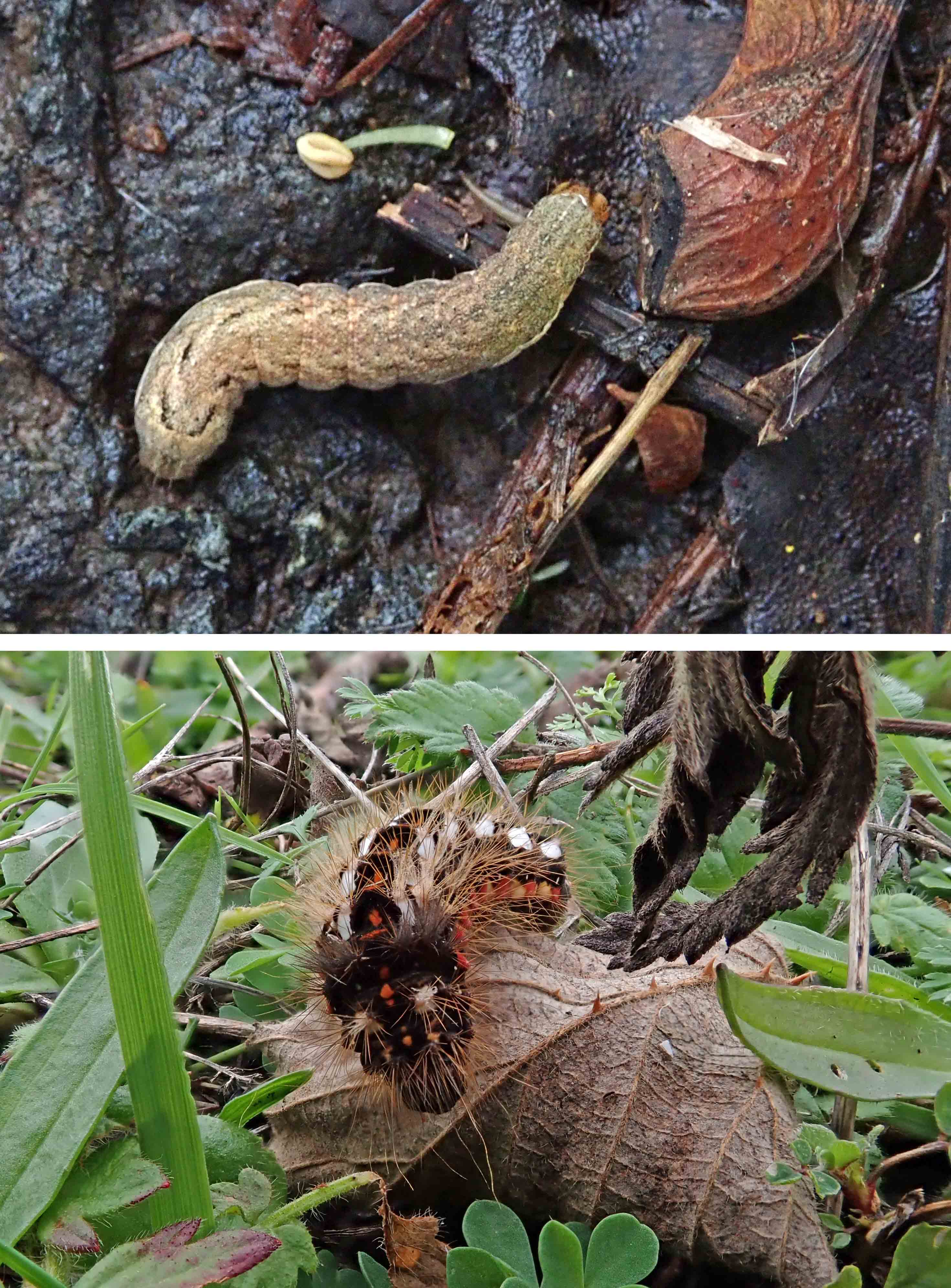
Though I know many Lepidoptera over-winter as caterpillars, and this has been a particularly mild November as well, it was still a surprise to see these two caterpillars on one of my recent walks. From previous sightings, I knew that the black, red and white hairy beastie was the larva of a Knot grass moth (Acronicta rumicis) but I didn’t recognise the other one. One of my Twitter pals was able to tell me it’s one of the Noctuid species of moths but wasn’t able to be more specific, but I’ve just ordered a book I’ve long desired, The Field Guide to Caterpillars of Great Britain and Ireland, so will hopefully be able to update this post soon.

221116 noctuid sp knot grass

Like Loading...

From larva to adult moth

04 Saturday Jun 2022

Posted by sconzani in insects, trees

≈ Leave a comment

Tags

British moths, moth larvae, Spindle ermine, Spindle ermine larvae, Spindle ermine moth, Spindle ermine webs, Spindle tree, Yponomeuta cagnagella

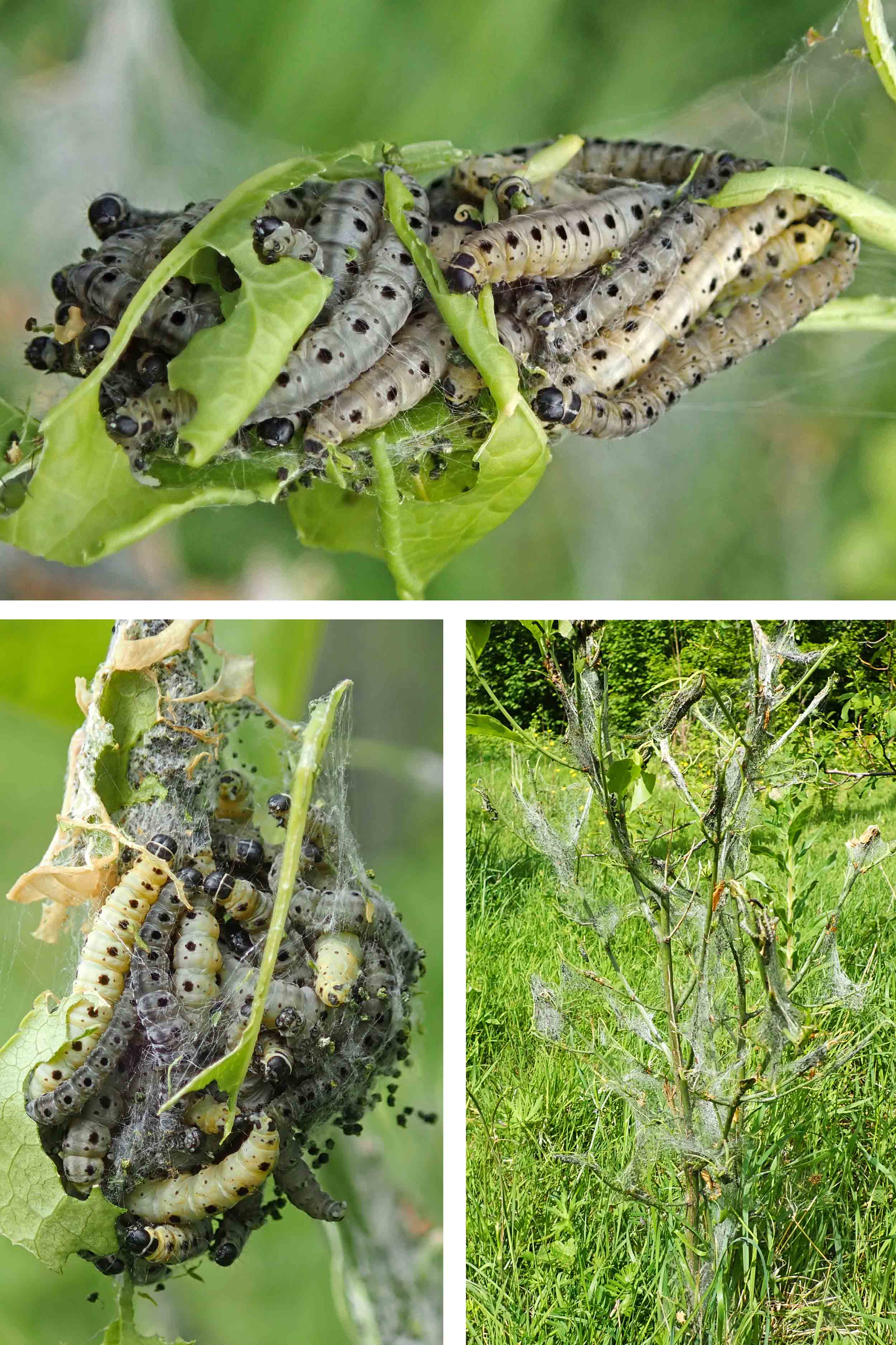
Back in June 2021, I blogged about the webs I was finding on Spindle trees in a local woodland, the silken creations of the larvae of the Spindle ermine moth (Yponomeuta cagnagella), and I’ve been seeing a multitude of these webs and larvae again in recent weeks. They don’t do a lot of damage to the larger Spindle trees but, as you can see below right, the larvae’s voracious appetites can strip the smaller saplings.

220604 spindle ermine 1 larvae

I’d heard that when the larvae are fully grown, they drop to the ground to pupate, often dangling in writhing groups from a silken thread. This was the first time I’d seen the larvae doing just that.

220604 spindle ermine 2 larvae

During my most recent visit to this woodland where Spindle trees – and the Spindle ermine larvae that munch on them – are most plentiful, I finally saw some of the adult moths**, and what beautiful little creatures they are. There were four, all sitting on thistles within a few feet of each other, so I assume they had recently emerged from pupation. And so the life cycle begins again.

220604 spindle ermine 3 adults

** A correction: Well, wouldn’t you know it? My Spindle ermine moths turned out to be Thistle ermine (Myelois circumvoluta). Serves me right for assuming they must be Spindle ermine just because of all the larvae in the area.

Like Loading...

Cool cats

19 Thursday May 2022

Posted by sconzani in insects

≈ Leave a comment

Tags

butterfly caterpillars, butterfly larvae, caterpillars, larvae, moth caterpillars, moth larvae, sawfly caterpillars, sawfly larvae

Butterflies, moths, sawflies – all have larvae that look like caterpillars, cats. It’s that time of year when I feel compelled to check any leaves with holes to try to find the hole-maker, and so I’m finding lots of cool cats. These are just a few of the recent leaf-munchers I’ve discovered, some I can identify, some I can’t but that’s not always important: Lackey, unknown, Mirificarma lentiginosella, unknown, unknown, Drinker, Orange-tip, and Copper underwing.

220519 caterpillars

Like Loading...
← Older posts

About me

sconzani

sconzani

I'm a writer and photographer; researcher and blogger; birder and nature lover; countryside rambler and city strider; volunteer and biodiversity recorder.

View Full Profile →

Follow earthstar on WordPress.com

Enter your email address to follow this blog and receive notifications of new posts by email.

Recent blog posts

  • Location location location November 28, 2025
  • A disabled Coot November 27, 2025
  • Hawthorn flowering in November November 26, 2025
  • A Vapourer update November 25, 2025
  • Meet Beaky November 24, 2025

From the archives

COPYRIGHT

Unless otherwise acknowledged, the text and photographs on this blog are my own and are subject to international copyright. Nothing may be downloaded or copied without my permission.

Fellow Earth Stars!

  • Unknown's avatar
  • Unknown's avatar
  • Unknown's avatar
  • Unknown's avatar
  • Unknown's avatar
  • Unknown's avatar
  • Unknown's avatar
  • Unknown's avatar
  • Unknown's avatar
  • Unknown's avatar
  • Unknown's avatar
  • Unknown's avatar
  • Unknown's avatar
  • Unknown's avatar
  • Unknown's avatar
  • Unknown's avatar
  • Unknown's avatar
  • Unknown's avatar
  • Unknown's avatar
  • Unknown's avatar
  • Unknown's avatar
  • Unknown's avatar
  • Unknown's avatar
  • Unknown's avatar
  • Unknown's avatar
  • Unknown's avatar
  • Unknown's avatar
  • Unknown's avatar
  • Unknown's avatar
  • Unknown's avatar
  • Unknown's avatar
  • Unknown's avatar
  • Unknown's avatar
  • Unknown's avatar
  • Unknown's avatar
  • Unknown's avatar
  • Unknown's avatar
  • Unknown's avatar
  • Unknown's avatar
  • Unknown's avatar
  • Unknown's avatar
  • Unknown's avatar
  • Unknown's avatar
  • Unknown's avatar
  • Unknown's avatar
  • Unknown's avatar
  • Unknown's avatar
  • Unknown's avatar
  • Unknown's avatar
  • Unknown's avatar

Blog at WordPress.com.

Privacy & Cookies: This site uses cookies. By continuing to use this website, you agree to their use.
To find out more, including how to control cookies, see here: Cookie Policy
  • Subscribe Subscribed
    • earthstar
    • Join 669 other subscribers
    • Already have a WordPress.com account? Log in now.
    • earthstar
    • Subscribe Subscribed
    • Sign up
    • Log in
    • Report this content
    • View site in Reader
    • Manage subscriptions
    • Collapse this bar
 

Loading Comments...
 

You must be logged in to post a comment.

    %d