• ABOUT
  • BIRDING 2018
  • Birding 2019
  • BLOG POSTS
  • Butterflies 2018
  • Resources

earthstar

~ a celebration of nature

earthstar

Tag Archives: Odonata

H is for hawkers

13 Saturday Dec 2025

Posted by sconzani in insects

≈ Leave a comment

Tags

dragonfly, British dragonflies, Odonata, Hawker dragonflies, British odonata, Norfolk hawker, Common hawker

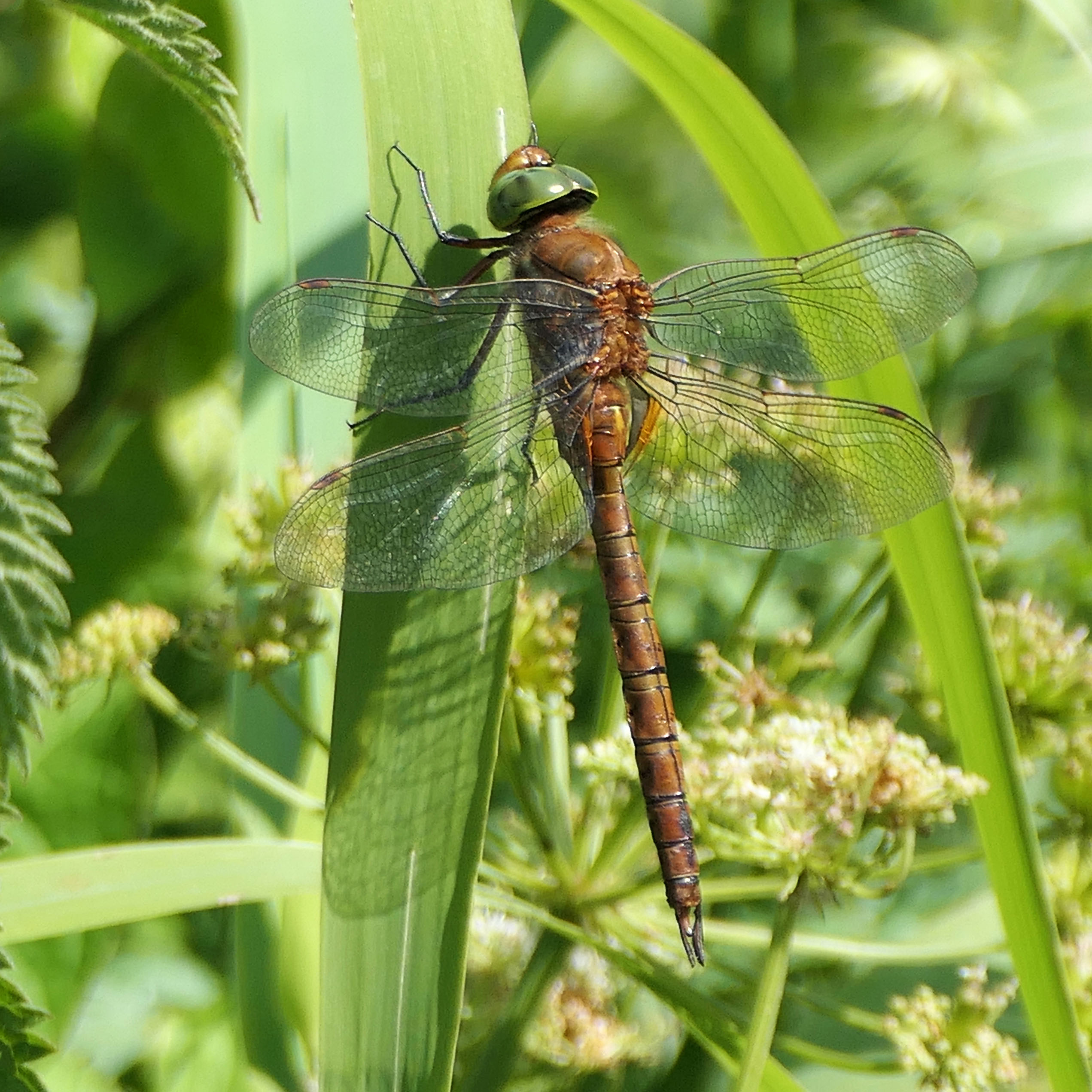
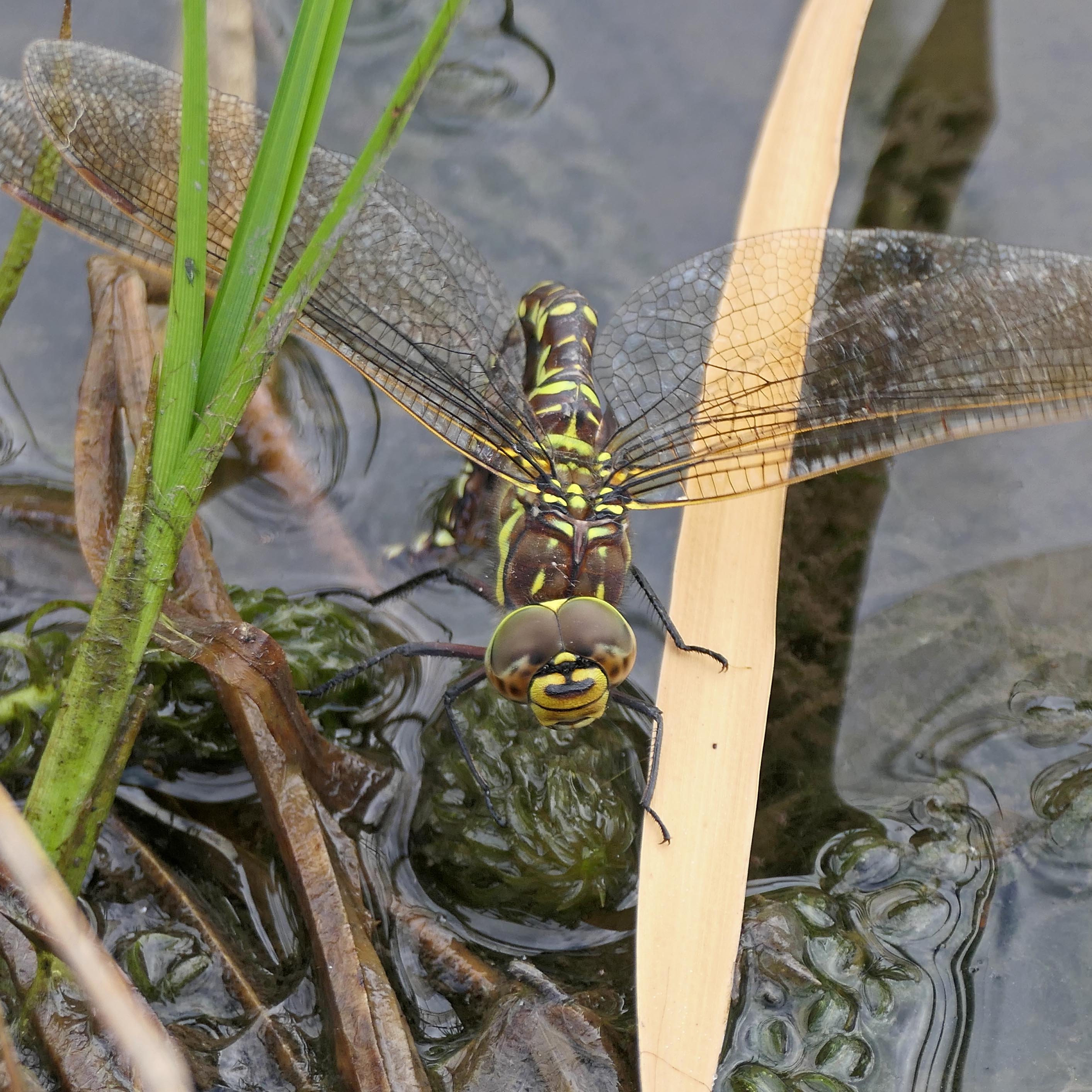
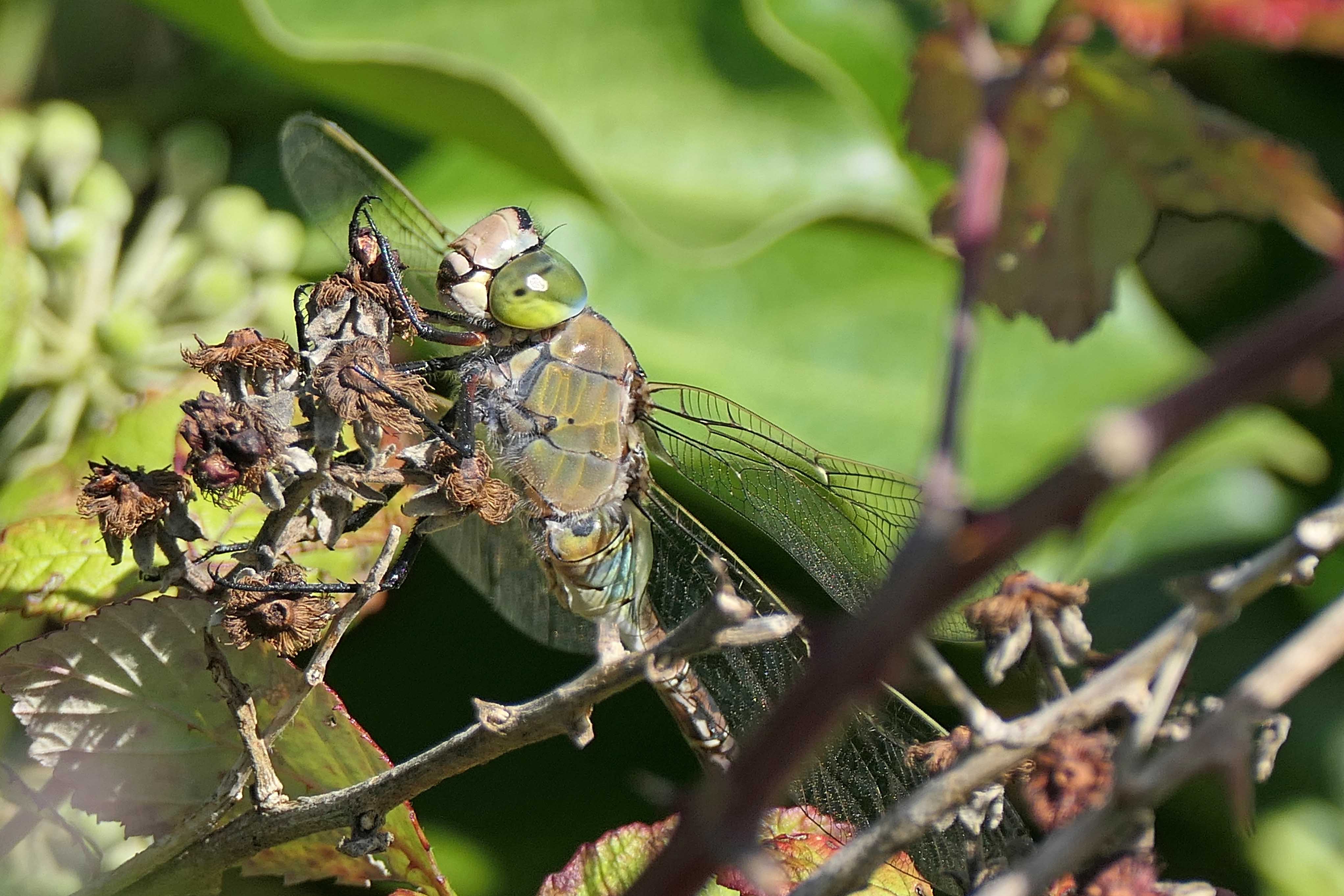
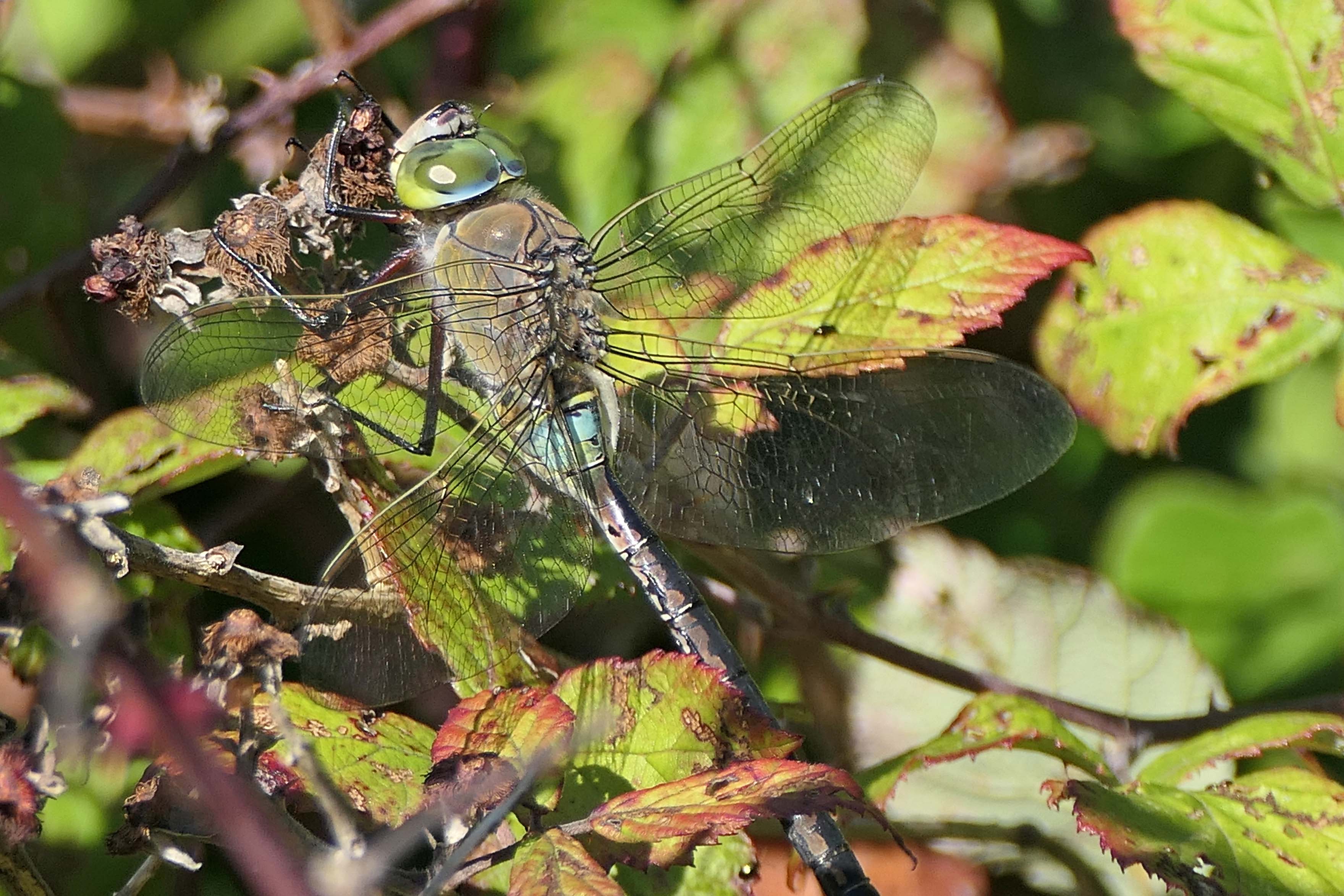
What a grand year 2025 has been for dragonfly sightings, partly because, since downsizing my home situation, I’ve finally been able to afford to venture further afield – nothing too adventurous, no trips abroad, but four lovely little mini-breaks in English locations to look for wildlife I’m not able to see closer to home.

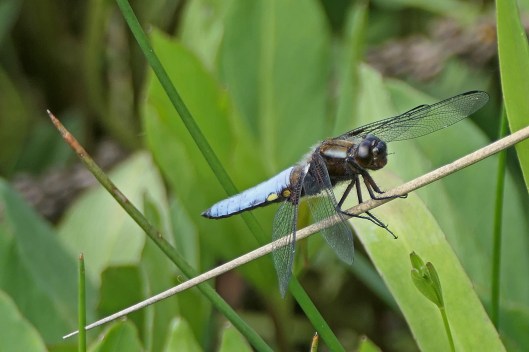
That’s how, during a wonderful week in Weymouth in June, I saw my first ever Norfolk hawkers (see Lifer: Norfolk hawker, 18 June) (above). However, my second ‘first-ever’ hawker species sighting (see Lifer: Common hawker, 22 August) (below) was here in Wales, in a small town high in one of the south Wales valleys that I hadn’t previously visited and didn’t know was home to a pond that held some very nice dragonfly species. That visit was a good reminder to explore more widely here in Wales next year, as well as in England.

Like Loading...

Lingering

23 Thursday Oct 2025

Posted by sconzani in autumn, insects

≈ Leave a comment

Tags

autumn insects, British butterflies, British dragonflies, Common Darter, Odonata, Red Admiral, Speckled wood

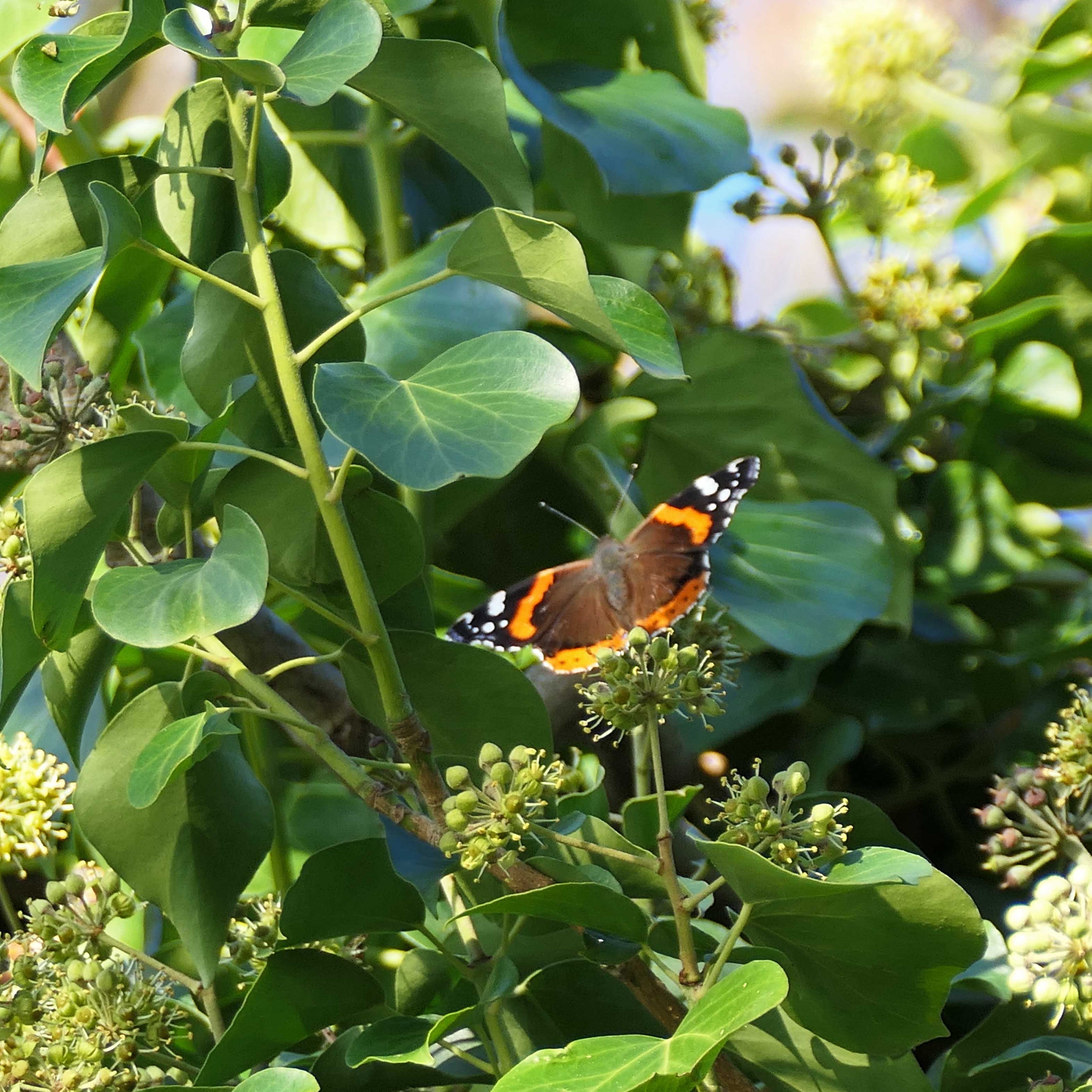
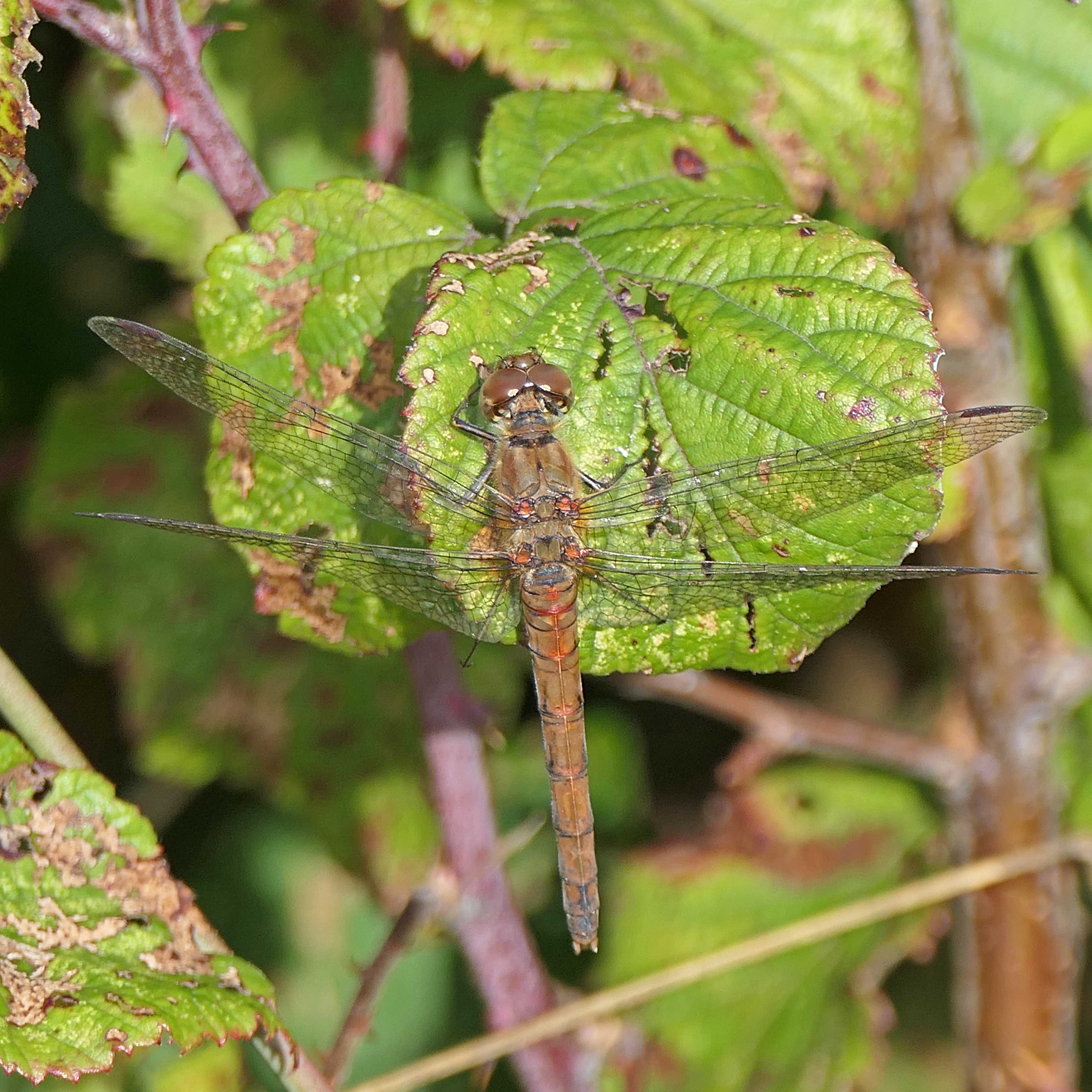
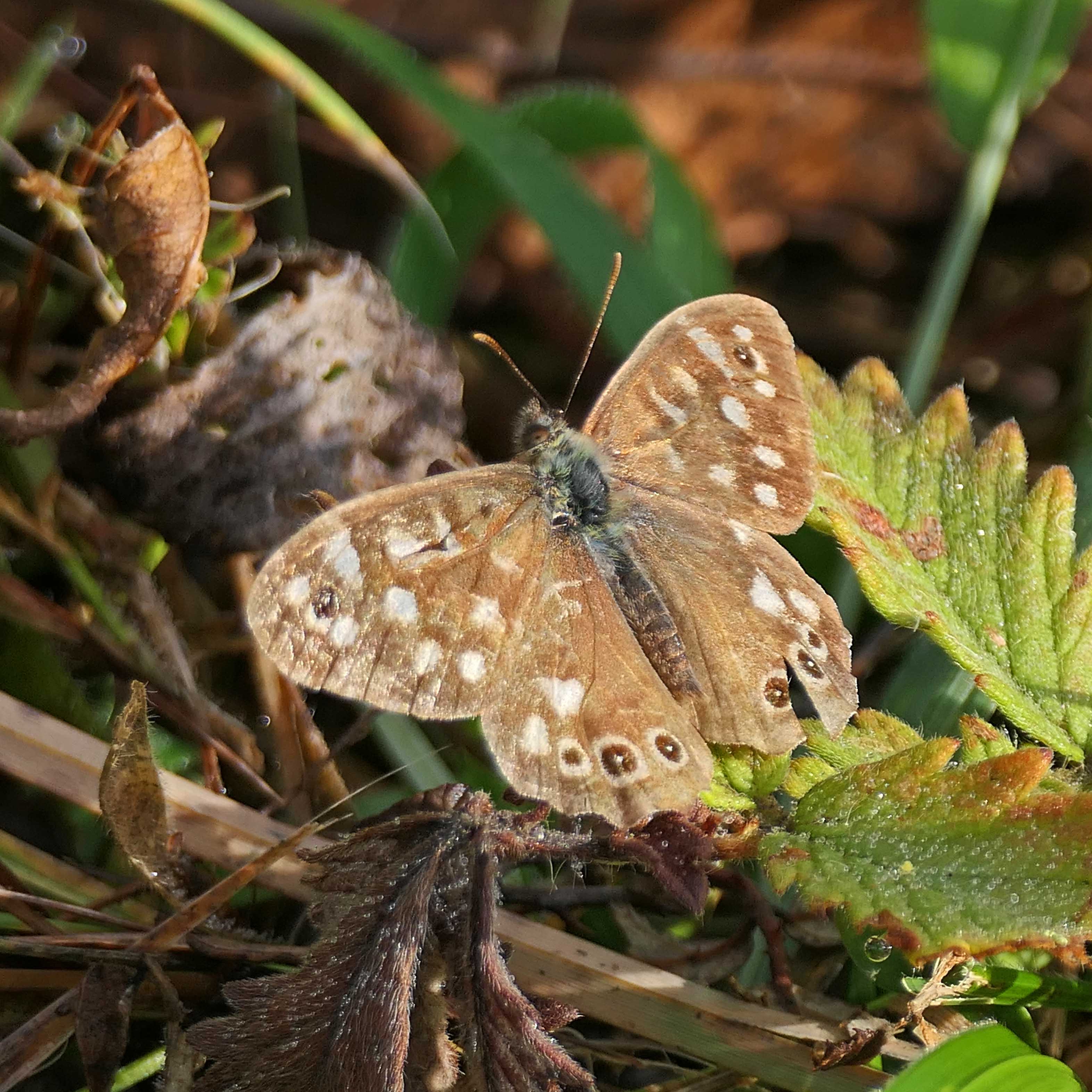
Looking out the window now, as Storm Benjamin drenches us with heavy rain, it seems hard to believe there was some bright sunshine this morning. I happened to be at Lavernock Nature Reserve at exactly the right time to feel the warmth of that sun and I wasn’t the only one to enjoy the feeling. Although I haven’t seen any butterflies or dragonflies for at least a week, and thought I’d probably seen my last for the year, but it turns out they’re still lingering unseen, and out they popped to bask in the sun’s heat:

A Red admiral

A Common darter

And a Speckled wood.

Like Loading...

Lesser emperor

30 Tuesday Sep 2025

Posted by sconzani in insects

≈ Leave a comment

Tags

Anax parthenope, British dragonflies, dragonfly, Lavernock Nature Reserve, Lesser emperor, migrant dragonflies, Odonata

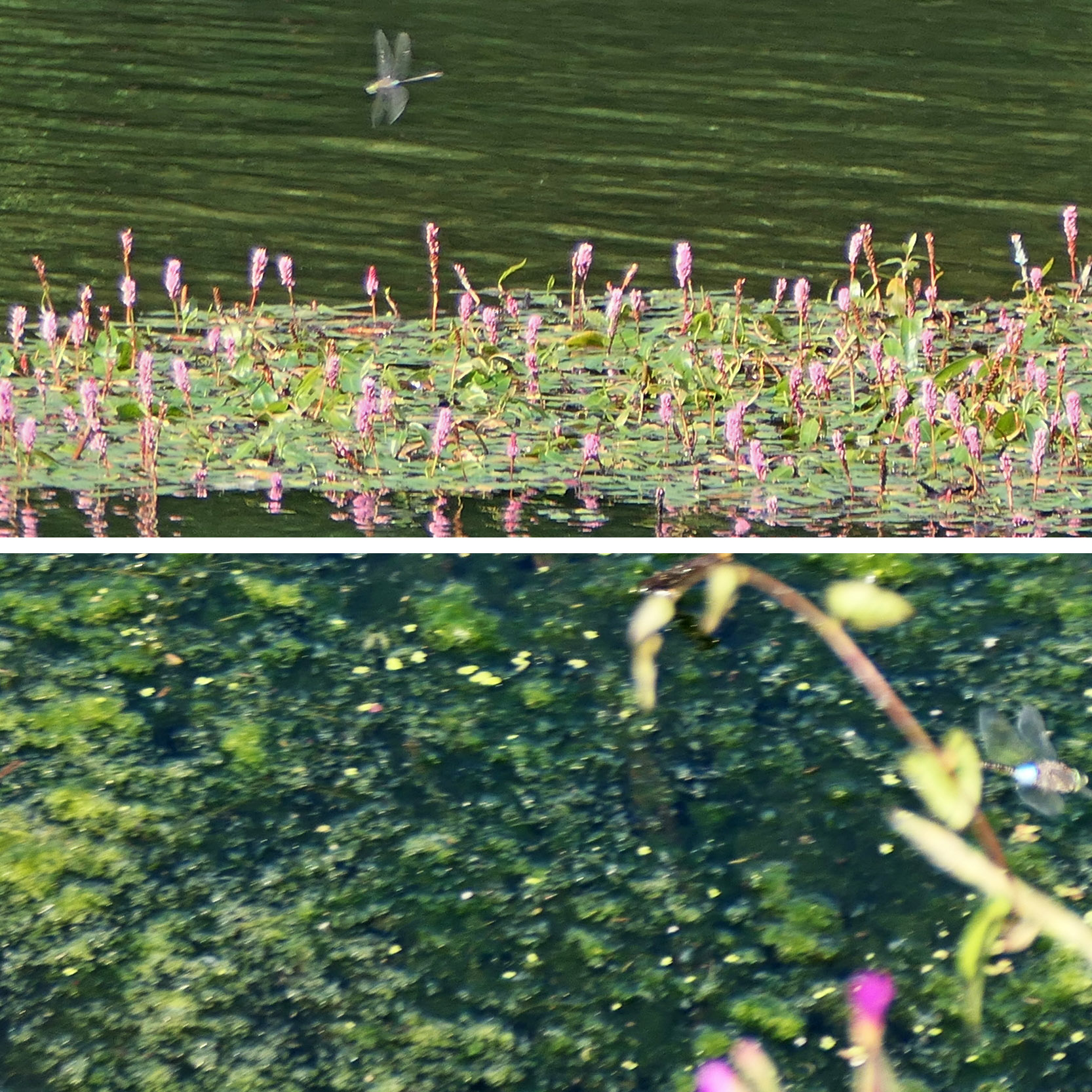
Last Tuesday, though I didn’t realise it until later in the day, I finally saw a stationary Lesser emperor dragonfly (Anax parthenope). My previous encounters with this dragon have been when I’ve seen one, usually fleetingly and at distance, hawking over a body of water. These stunning (ha!) flight shots of the Lesser emperor were taken at Cosmeston’s west lake on 16 August 2023 and looking over the River Ely at Grangemoor Park on 25 July 2025, where I only just managed to catch the dragon before it exited, frame right.

The British Dragonfly Society website reports that this dragonfly was first reported in the UK, in Gloucestershire, in 1996, and first recorded breeding in Cornwall in 1999. I don’t know whether the specimens we see here in south Wales are dragons that have bred here or migrants but I suspect the Lesser emperor I saw last Tuesday was a migrant as I found it at Lavernock Nature Reserve, just a few metres from the sea cliff edge. And, though there is a pond at Lavernock, it routinely dries up during the summer – and certainly did in this year’s drought, so the dragonfly is unlikely to have bred at the reserve.

As I admitted in my opening sentence, I didn’t initially recognise this dragon. ‘It’s just another Migrant hawker’, I thought to myself, and, as it was perched in some scrub and partially obscured by the vegetation, it was difficult to see and photograph. Now, I’m just glad I did take photos or I’d never have realised what I’d seen, nor been able to prove it.

Like Loading...

Emerald damsels

27 Wednesday Aug 2025

Posted by sconzani in insects

≈ Leave a comment

Tags

British damselflies, British dragonflies, damselfly, dragonfly, Emerald damsefly, Lestes sponsa, Odonata

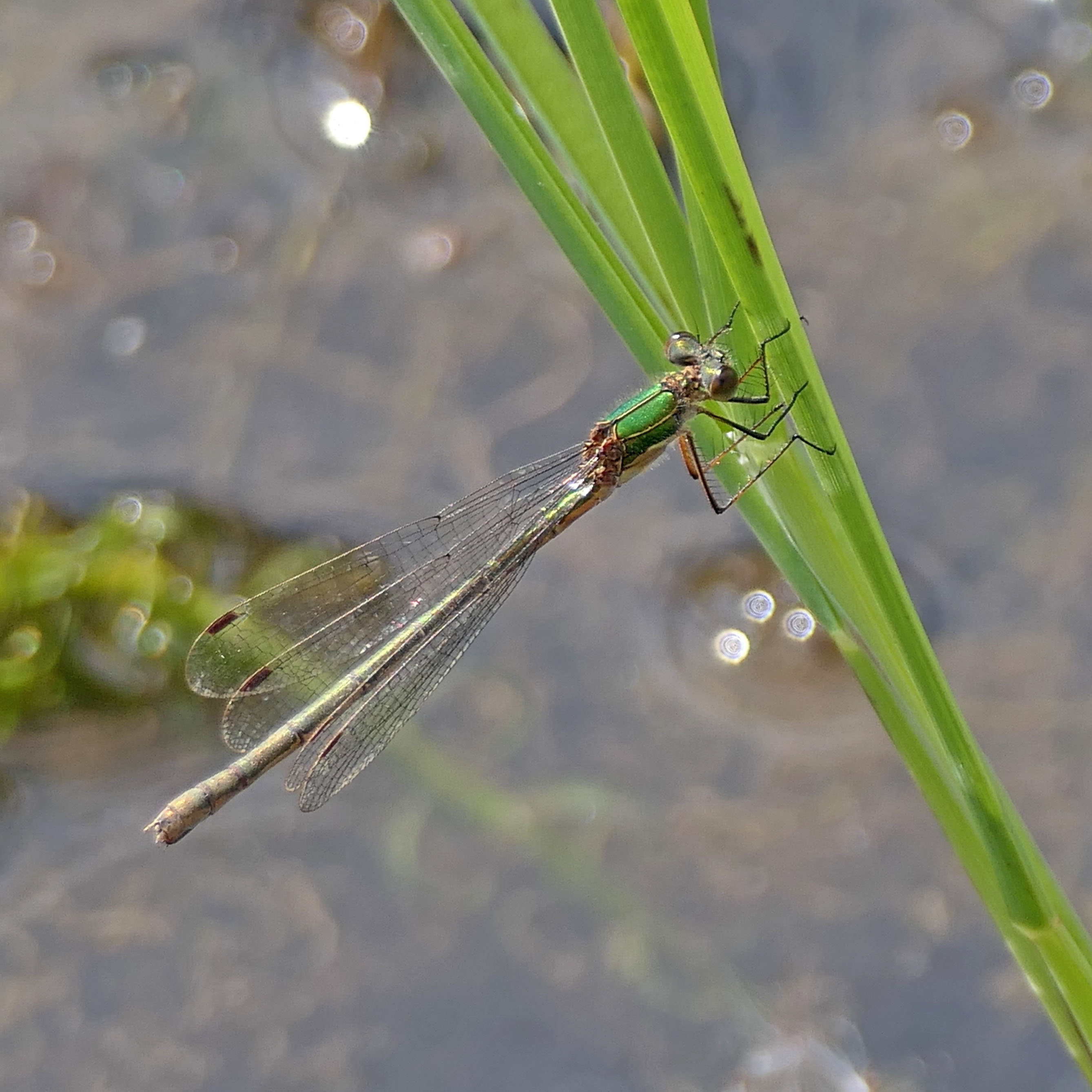
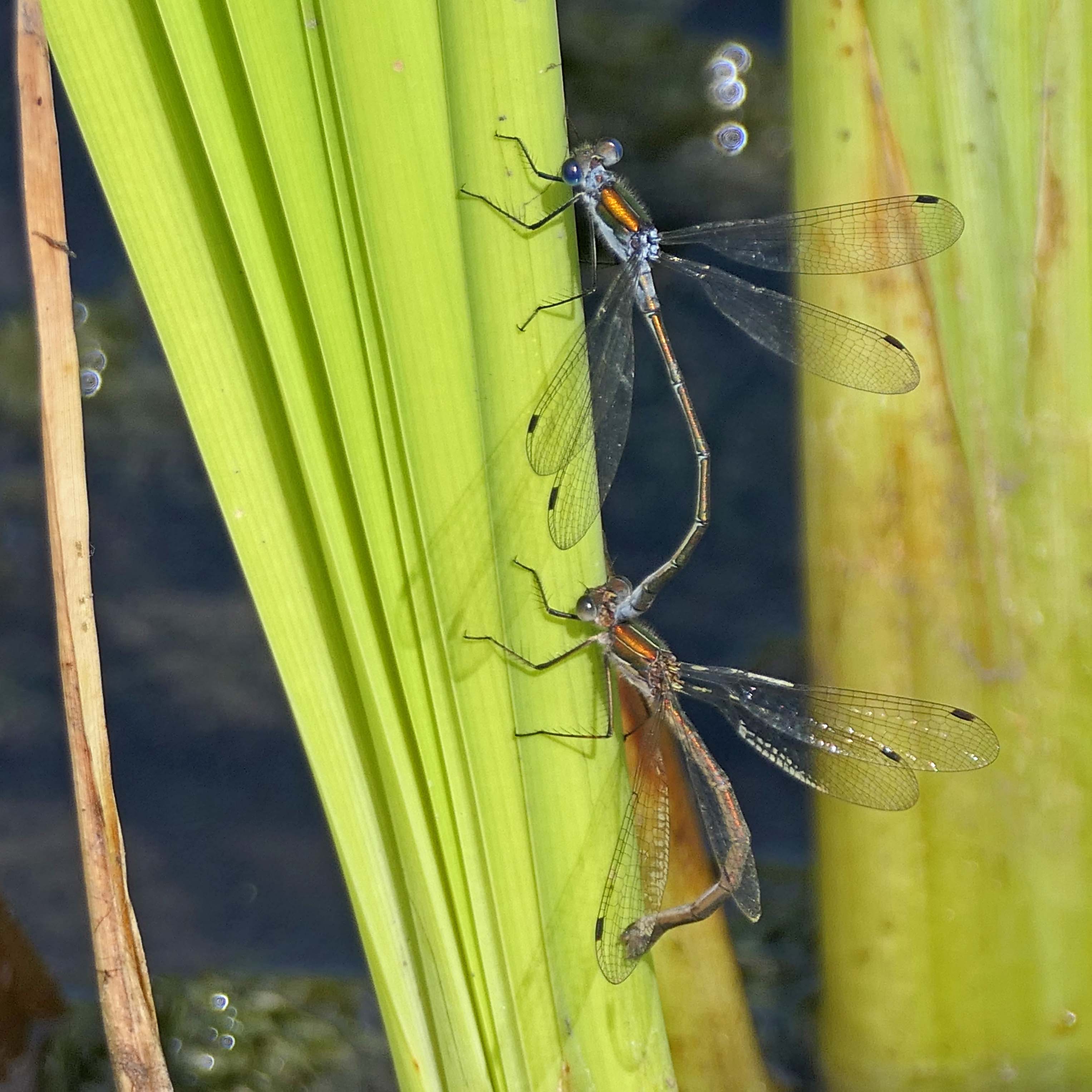
This is the final blog in my short series about the dragonflies I saw during last week’s rail journey up the south Welsh valleys to Maesteg. Today’s subject is the Emerald damselfly (Lestes sponsa), a species I’ve seen only twice before, in August 2017 and in September 2021. I’ve looked for them a couple of times at the 2021 location, Parc Penallta, but the small ponds there quickly dry out in hot summers and dog walkers allow their charges to splash about in them, displacing more water and polluting the water with the dogs’ chemical flea treatments. These are probably some of the reasons why the population of this damselfly species has been in steady decline since the 1990s.

Emeralds are relatively large for damselflies and rest with their wings outspread, hence their European common name, Common spreadwing. Their bodies are metallic green, though the colours of some parts of their abdomens vary depending on whether they are male or female, immature or aging. Emeralds favour shallow standing waters, like bog pools and ponds, especially when these are surrounded by tall grasses, rushes and sedges.

Like Loading...

Black darter

23 Saturday Aug 2025

Posted by sconzani in insects

≈ Leave a comment

Tags

Black darter, Black darter female, Black darter male, British dragonflies, dragonfly, Odonata, Sympetrum danae

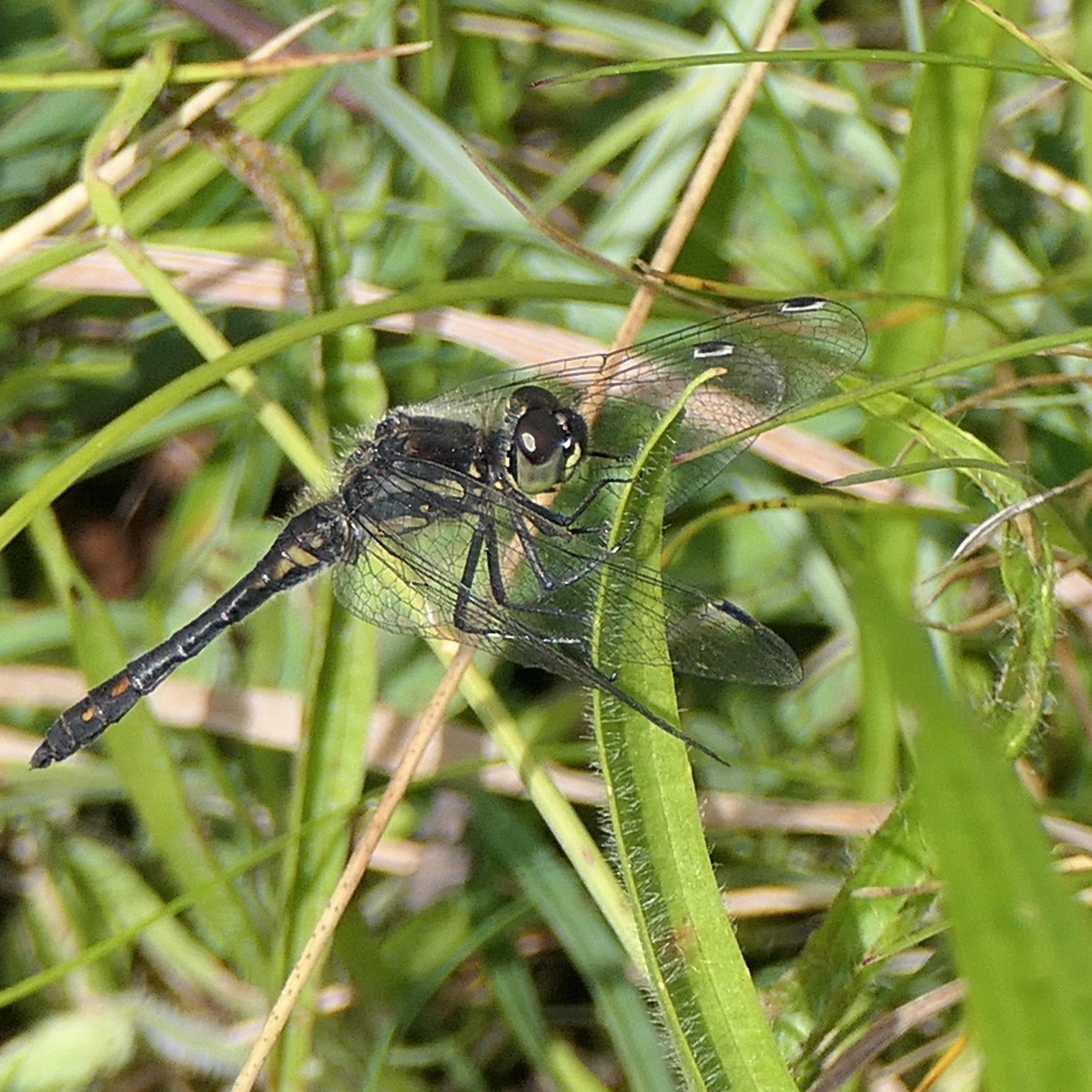
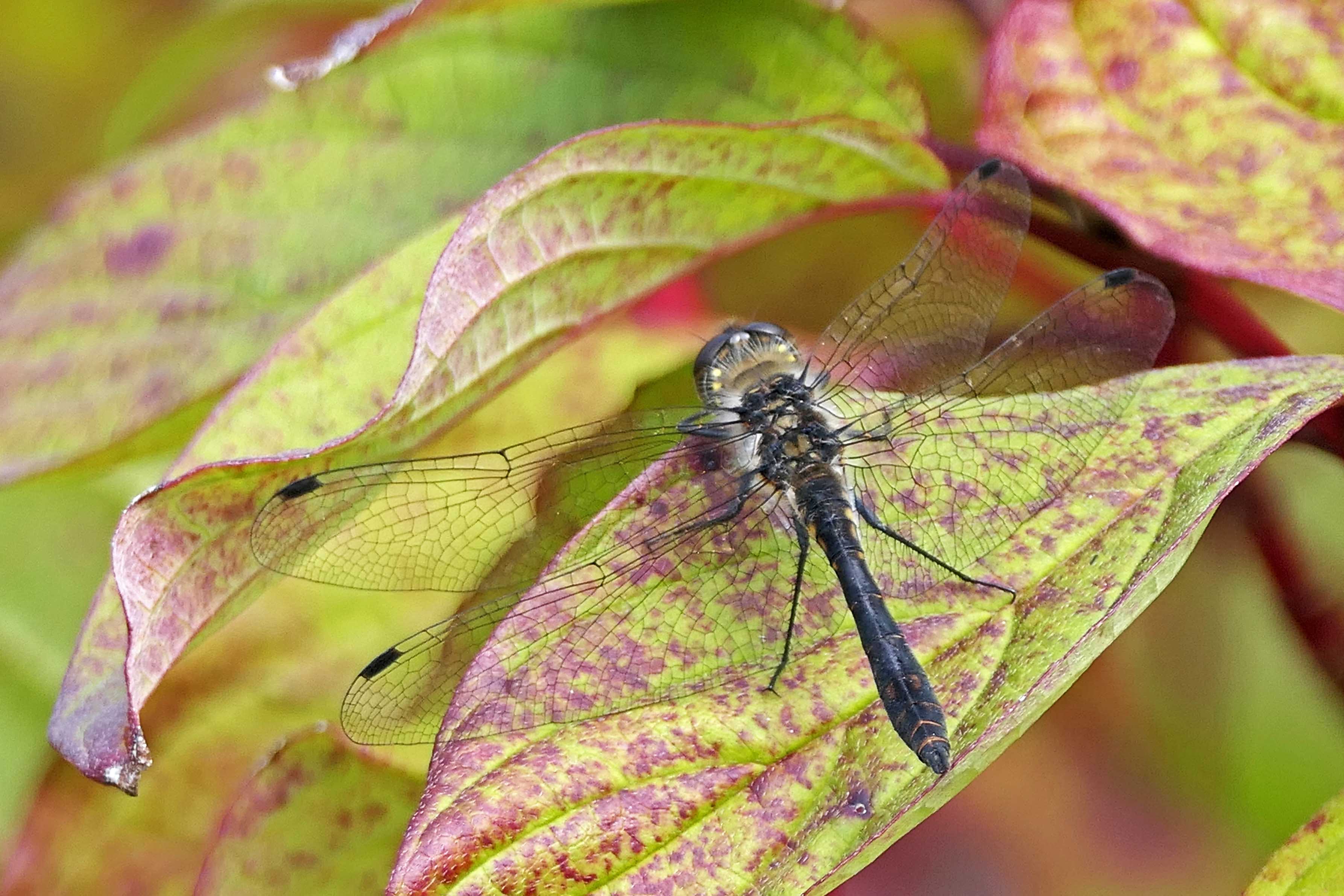
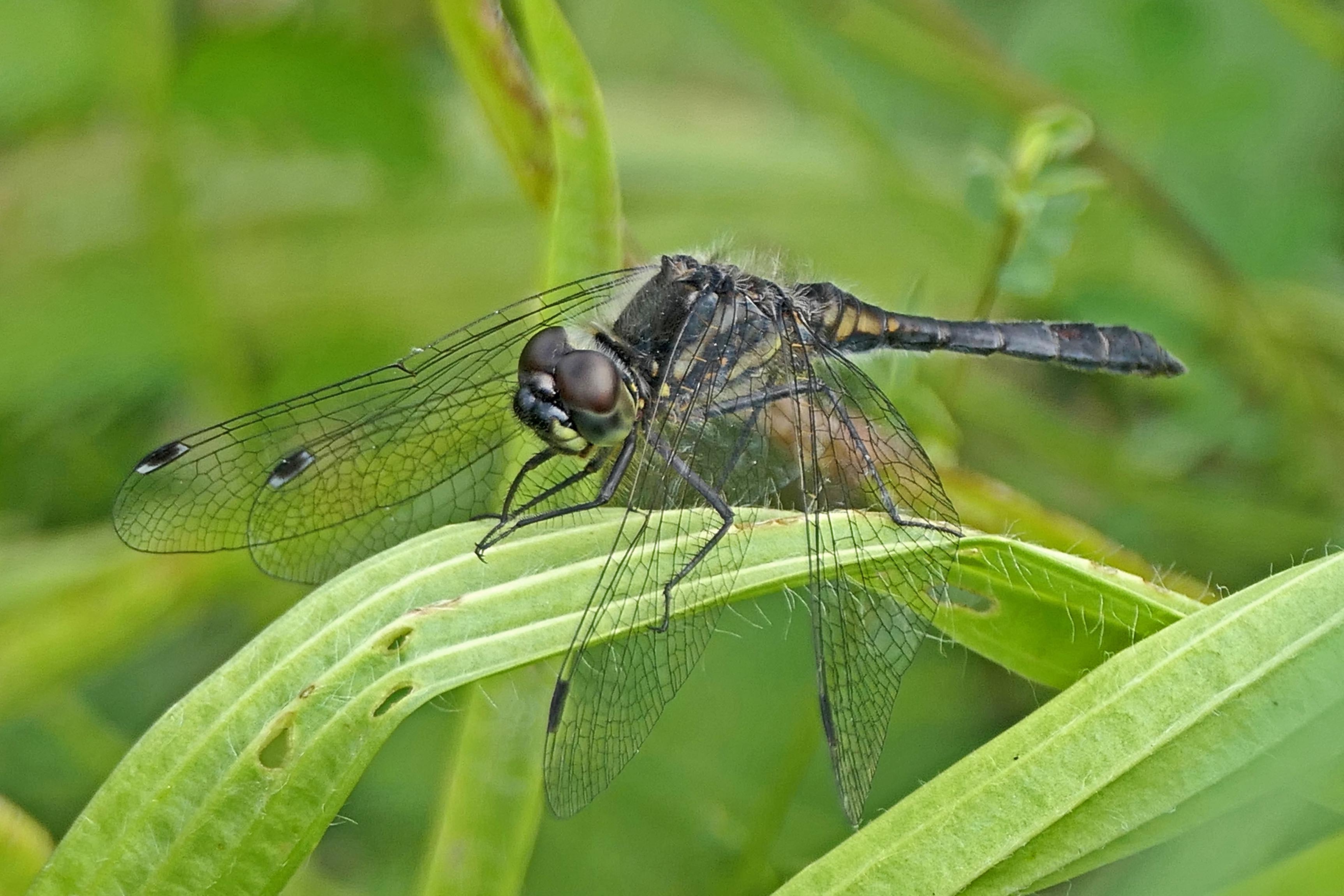
Before Thursday’s trip to Maesteg, I’d only ever seen a Black darter (Sympetrum danae) once before, and that was a fluke sighting at Cosmeston Lakes Country Park back in 2017. I say fluke because, like yesterday’s Common hawker, the Black darter is a dragonfly that prefers the acidic conditions of peat bogs, moorland ponds and ditches. How one got to Cosmeston I have no idea.

I was lucky to find several male Black darters at Maesteg ponds and, as you can see, they really are almost entirely black, with just a few yellow markings on the sides of their thorax and abdomen, and on top of their lower abdomen.

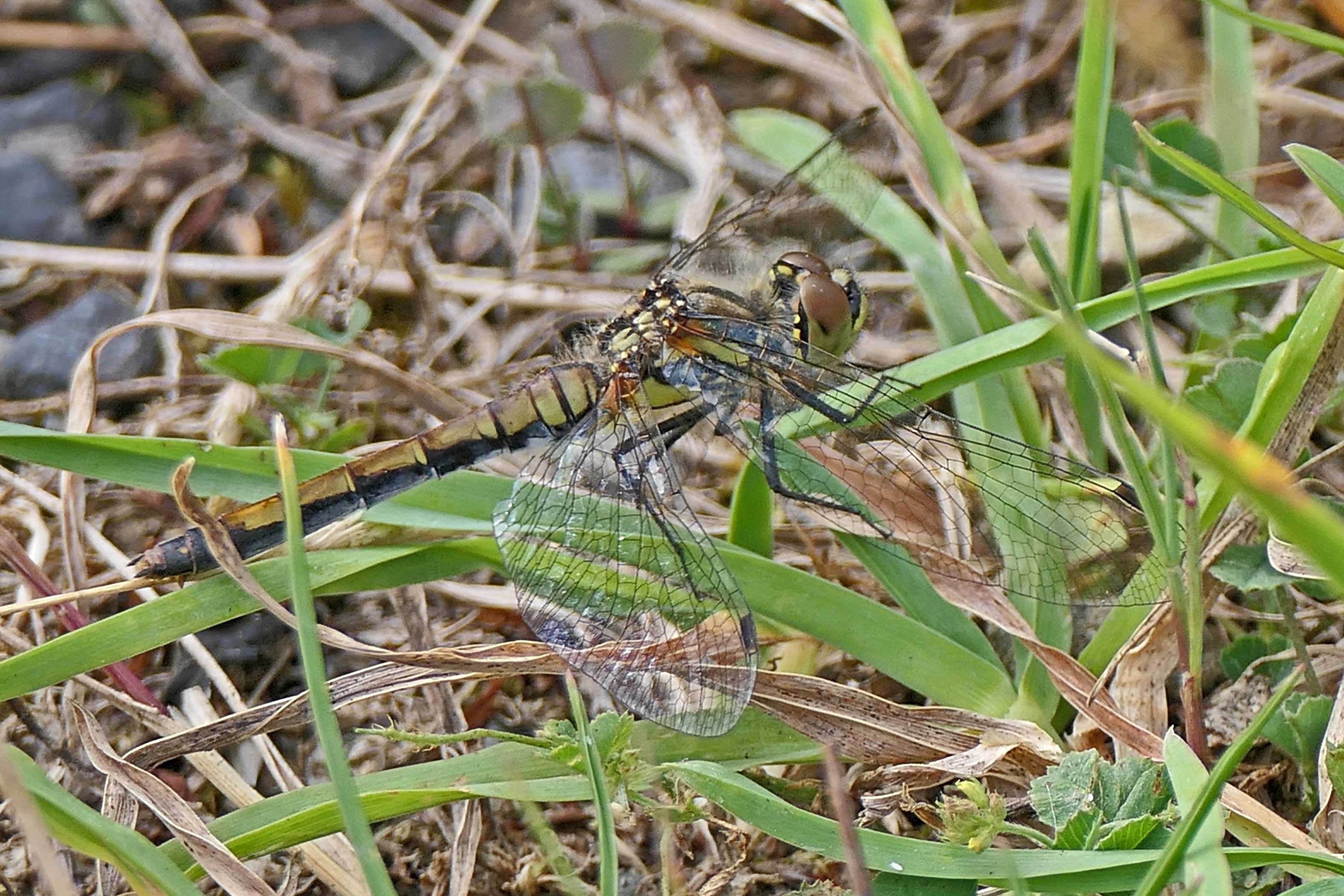
I was also extremely lucky to find a single female, basking on a patch of grass. As the photo below shows, she looks very different from the male, with much more yellow than black. At around 30mm long, both of these darters are quite small, about 10mm smaller than the Common darters that most of us are very familiar with. Now that I know about this location, I’ll be back to visit them again next year.

Like Loading...

Two dragons

28 Wednesday May 2025

Posted by sconzani in insects

≈ Leave a comment

Tags

British dragonflies, Broad-bodied Chaser, dragonfly, Four-spotted Chaser, Libellula depressa, Libellula quadrimaculata, Odonata

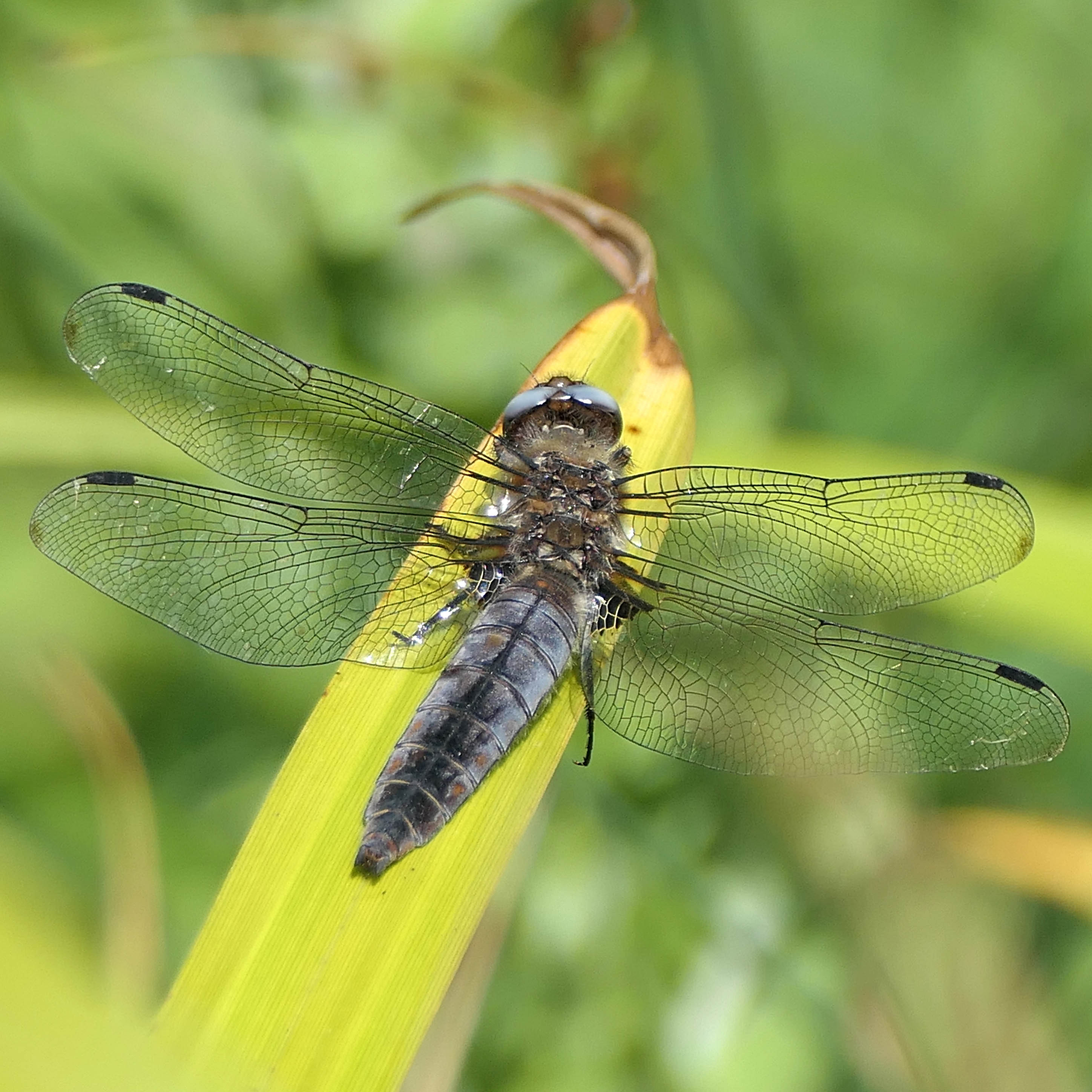
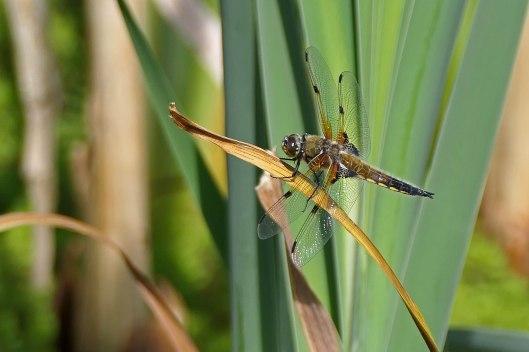
For me, the larger dragonflies have been few and far between this Spring. I’ve seen the odd one but fleetingly and its flown off before I could get a good view. Or I’ve heard one, that distinctive sound of the small wings rustling together as it takes flight. So, finally to have found two dragons that stayed still long enough for me to admire their colours and get some photographs has been very welcome indeed. Below are a Four-spotted chaser (Libellula quadrimaculata) and a Broad-bodied chaser (Libellula depressa). Fingers crossed for more sightings to come.

Like Loading...

Demoiselles

24 Saturday May 2025

Posted by sconzani in insects

≈ Leave a comment

Tags

Banded Demoiselle, Beautiful Demoiselle, British dragonflies, Calopteryx splendens, Calopteryx Virgo, demoiselles, Odonata

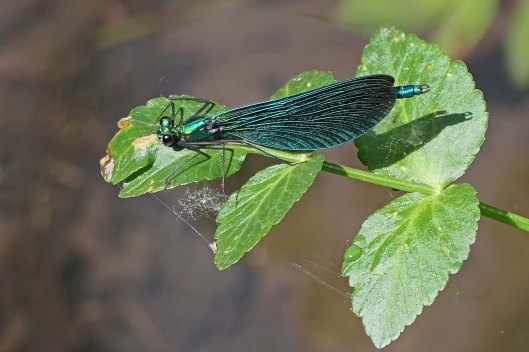
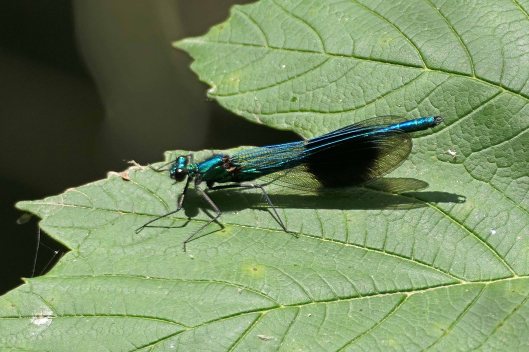
Thursday was a good day for demoiselles. As I strolled along the old Glamorgan canal at Forest Farm Nature Reserve, I was almost constantly entertained by both the Beautiful (Calopteryx virgo) and the Banded demoiselles (Calopteryx splendens), though there were definitely many more of the former than the latter.

 ~ male Beautiful demoiselle

While the females mostly perched quietly on leaves somewhat removed from the males – the only way to escape their attention, the males seldom kept still. They flashed their wings, displaying their metallic blue hues to impress any female that did venture past, and competed with other males for the best territories, those with sun, and shelter, and perches, and suitable places for egg-laying. What was serious breeding business for these stunning creatures was enchanting and magical for me.

~ male Banded demoiselle

Like Loading...

Colour variations in Large reds

10 Saturday May 2025

Posted by sconzani in insects

≈ Leave a comment

Tags

British odonata, colour changes in Large red damselflies, colour variations in Large red damselflies, Large red damselflies, Odonata, Pyrrhosoma nymphula

This was initially going to be a ‘Yay, the dragonflies are on the wing’ blog but then I went down a rabbit hole of how Large red damselflies change colour over time and how there are several variations in their colour patterns, and here we are.
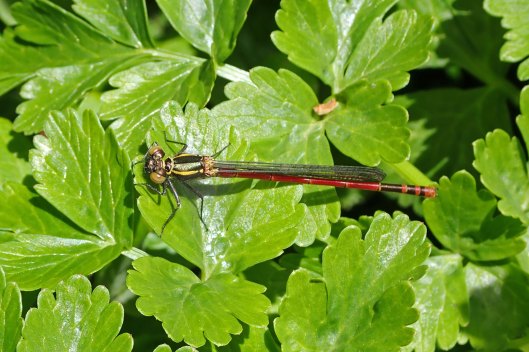
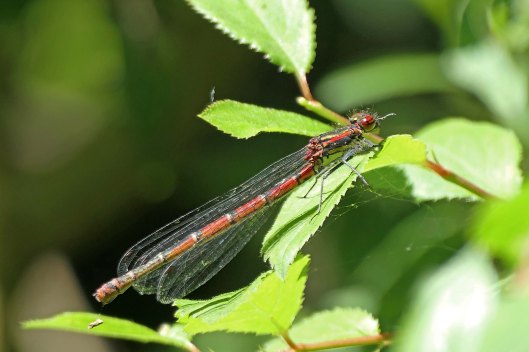
I saw my first odonata of the season, the Large red damselfly (Pyrrhosoma nymphula) shown above, on 21 April, but I’ve been holding off blogging about it until I found one that showed how these beauties change colour as they mature. The photo below was taken this morning, and I hope you can see how the antehumeral stripes (the longitudinal stripes on the sides of the thorax) have changed from yellow in the newly emerged damselfly to red in the older specimen. The eyes also darken to a very deep red as the damselflies age.
The ‘rabbit hole’ article, ‘In-depth Identification Feature – Large Red Damselflies’ by John Curd (which you can read on the British Dragonfly Society website), also pointed out the different colour forms’ based upon the extent of dorsal black on the abdomen’. John’s photos show the variations, which, I am a little ashamed to admit, I had never noticed before, and that led me to go back through my own photos of Large red damselflies.
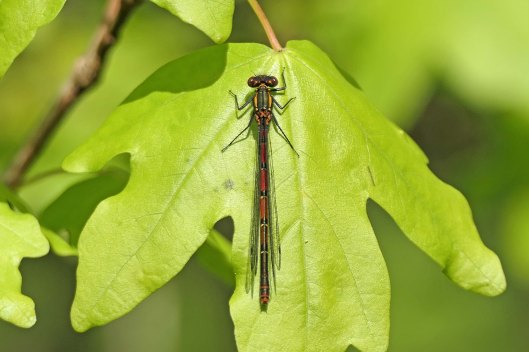
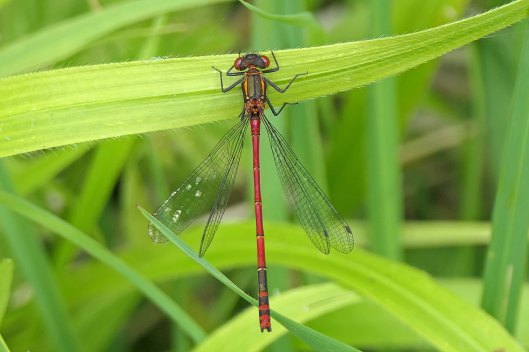
It turns out I’ve only ever photographed two of the variations: f. (form) typica/intermedia, shown above, which has more black at the sutures along the abdomen, and f. fulvipes, below, which has much less black. The latter seems much more common in my area, based on my photographs. The third form (or third and fourth, as some argue this one has two types), f. melanotum, is entirely black and is much rarer.

Like Loading...

R is for Red-eyed damselfly

23 Monday Dec 2024

Posted by sconzani in insects

≈ Leave a comment

Tags

British damselflies, damsefly, Odonata, Red-eyed damselfly

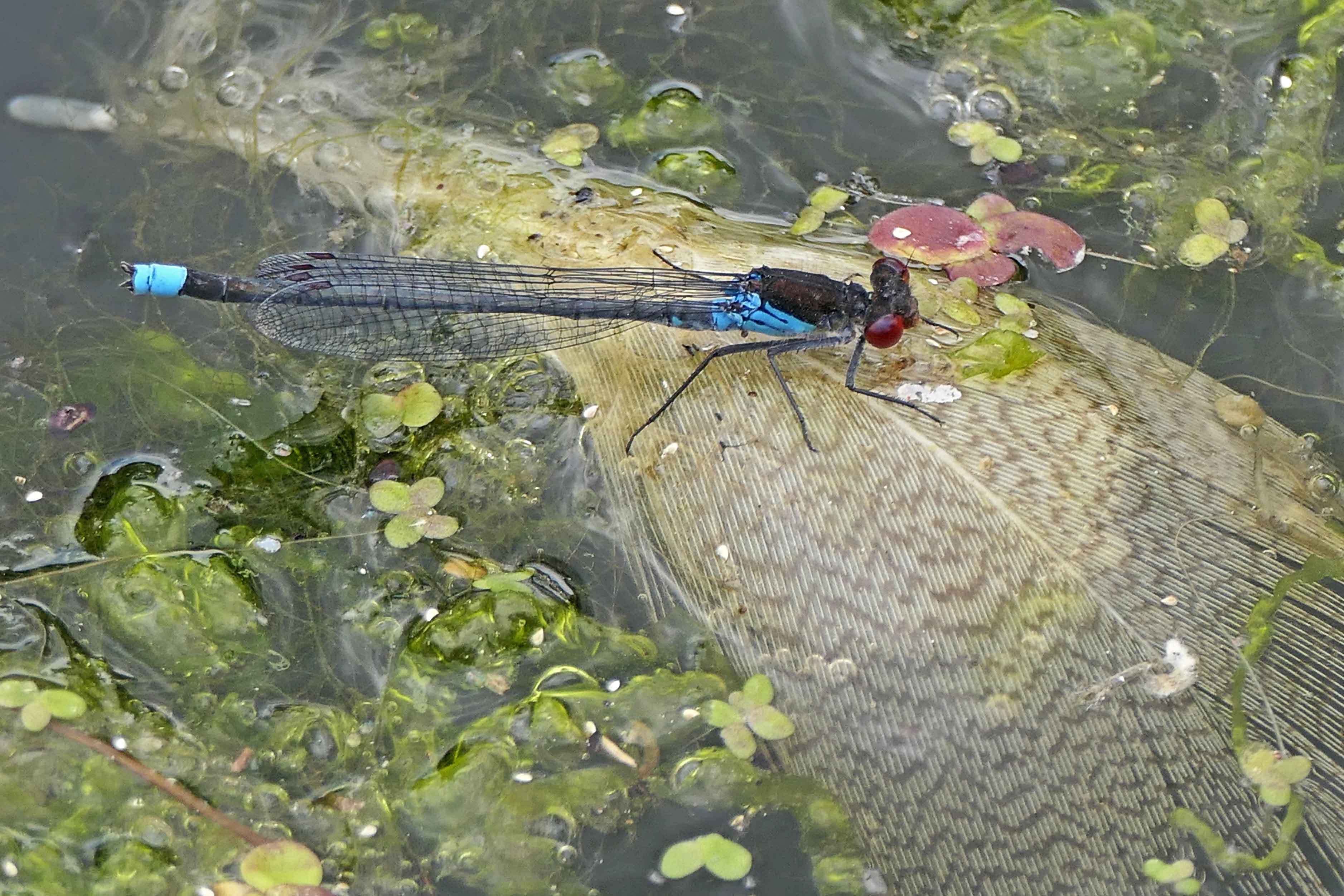
Finding my first-ever Red-eyed damselflies, and at a previously unrecorded local site alongside the River Ely, was another of my most treasured wildlife moments of 2024 (Lifer: Red-eyed damselfly, 24 May). Unfortunately, I’m not going to be able to see them at that location again for at least the next three or four years as the walkway access has recently been closed to pedestrians while adjacent apartment blocks are being re-clad. The good news is that there is another site, along one of Cardiff’s inner city canals (More Red-eyed damsels, 26 June), where I should be able to find them again next summer.

241223 r is for red-eyed damselfly

Like Loading...

Hunting the Migrant hawker

23 Friday Aug 2024

Posted by sconzani in insects

≈ Leave a comment

Tags

Aeshna mixta, British dragonflies, British odonata, Migrant hawker, Odonata

The first Migrant hawker (Aeshna mixta) I spotted this year, on 3 August, flew up into the tree tops almost immediately after I noticed it, and stayed there – I took some photos for recording purposes but they barely showed this dragonfly’s distinguishing features. So, when I spotted my next Migrant hawker, on 9 August, I spent 30 minutes watching and hoping for it to settle. This was all I got before it flew off, disappearing over a hedge, and I moved on.

240823 migrant hawker (1)

Then, finally, a week later, on the 16th, after another 30-minute session watching this beauty hawking back and forth along a tree line, expertly weaving in amongst the branches when it spotted potential prey, occasionally fighting with another of its kind hawking a little further along the ride, it perched very obligingly right in front of me and I managed slowly to approach for some reasonable photos. Dragonflies are amazing to watch, but it is also very satisfying to actually get good photographs of them.

240823 migrant hawker (2)

Like Loading...
← Older posts

About me

sconzani

sconzani

I'm a writer and photographer; researcher and blogger; birder and nature lover; countryside rambler and city strider; volunteer and biodiversity recorder.

View Full Profile →

Follow earthstar on WordPress.com

Enter your email address to follow this blog and receive notifications of new posts by email.

Recent blog posts

  • M is for mite December 18, 2025
  • L is for lepidopteran lifers December 17, 2025
  • K is for Keeled skimmers December 16, 2025
  • J is for Jersey tiger December 15, 2025
  • I is for Ichneumon December 14, 2025

From the archives

COPYRIGHT

Unless otherwise acknowledged, the text and photographs on this blog are my own and are subject to international copyright. Nothing may be downloaded or copied without my permission.

Fellow Earth Stars!

  • Unknown's avatar
  • Unknown's avatar
  • Unknown's avatar
  • Unknown's avatar
  • Unknown's avatar
  • Unknown's avatar
  • Unknown's avatar
  • Unknown's avatar
  • Unknown's avatar
  • Unknown's avatar
  • Unknown's avatar
  • Unknown's avatar
  • Unknown's avatar
  • Unknown's avatar
  • Unknown's avatar
  • Unknown's avatar
  • Unknown's avatar
  • Unknown's avatar
  • Unknown's avatar
  • Unknown's avatar
  • Unknown's avatar
  • Unknown's avatar
  • Unknown's avatar
  • Unknown's avatar
  • Unknown's avatar
  • Unknown's avatar
  • Unknown's avatar
  • Unknown's avatar
  • Unknown's avatar
  • Unknown's avatar
  • Unknown's avatar
  • Unknown's avatar
  • Unknown's avatar
  • Unknown's avatar
  • Unknown's avatar
  • Unknown's avatar
  • Unknown's avatar
  • Unknown's avatar
  • Unknown's avatar
  • Unknown's avatar
  • Unknown's avatar
  • Unknown's avatar
  • Unknown's avatar
  • Unknown's avatar
  • Unknown's avatar
  • Unknown's avatar
  • Unknown's avatar
  • Unknown's avatar
  • Unknown's avatar
  • Unknown's avatar

Blog at WordPress.com.

Privacy & Cookies: This site uses cookies. By continuing to use this website, you agree to their use.
To find out more, including how to control cookies, see here: Cookie Policy
  • Subscribe Subscribed
    • earthstar
    • Join 667 other subscribers
    • Already have a WordPress.com account? Log in now.
    • earthstar
    • Subscribe Subscribed
    • Sign up
    • Log in
    • Report this content
    • View site in Reader
    • Manage subscriptions
    • Collapse this bar
 

Loading Comments...
 

You must be logged in to post a comment.

    %d