• ABOUT
  • BIRDING 2018
  • Birding 2019
  • BLOG POSTS
  • Butterflies 2018
  • Resources

earthstar

~ a celebration of nature

earthstar

Tag Archives: Rock pipit

February on the Ely embankment

03 Saturday Mar 2018

Posted by sconzani in birds, nature, walks, winter

≈ Leave a comment

Tags

birding, birdwatching, British birds, Coot, Ely embankment, Grey wagtail, Redshank, Rock pipit, Turnstone

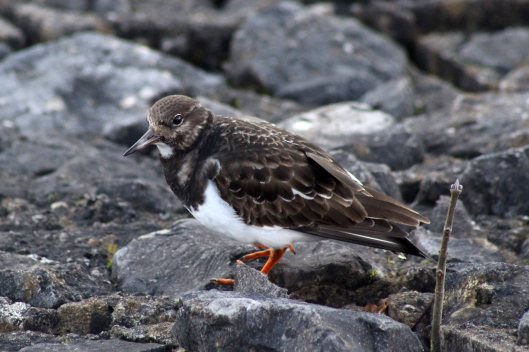
My first February wander alongside the River Ely was in the late afternoon of Saturday the 3rd. It was quiet – were the birds all watching Wales thump Scotland in the 6 Nations rugby, I asked myself? A faint peep alerted me to a Rock pipit tootling along the embankment path towards me. It had been minding its own business, looking for a lunchtime snack, when it suddenly realised there was a stonking great human standing on the path in front of it … at which point it flew off to the relative safety of the water’s edge.

180303 180203 rock pipit (1)180303 180203 rock pipit (2)180303 180203 rock pipit (3)

Shortly afterwards, I could see a roundish form that might’ve been a rock but was, in fact, a Turnstone, the only one seen that day. And, as well as those two birds, one Pied wagtail and two Grey wagtails were in residence. One of the Greys had an interesting plumage aberration, as you can see below.

180303 180203 Grey wagtail (1)
180303 180203 Grey wagtail (2)

I was away for a week mid February so my next visit to the embankment was on Tuesday 20 February. A strong cold wind was blowing small waves on to the stony shore and, initially, there were no birds to be seen. But, about half way along the embankment path, I spotted a huddle of seven Turnstones, looking sleepy, enjoying a little bit of warmth from a shaft of sunlight that had reached their roosting spot from between the nearby houses. And, a minute or two later, I noticed one further Turnstone who was already meandering along, turning stones as it searched for breakfast bugs. Two Grey wagtails, hardy creatures, were also dotting about.

180303 180220 turnstones

The twenty-seventh of February was a bitterly cold day, as Britain was in the grip of a severe blast of polar weather, blown across Europe from Siberia, and even Cardiff had a few snow showers that day (quite unusual in recent years). Hopefully, the birds had found somewhere more sheltered than the embankment, as the stiff easterly was so cold that icicles were forming on branches that littered the shoreline and there was a slab of ice at least a foot wide coating the rocks along the water’s edge.

180303 180227 (3) turnstone180303 180227 (2) coot

In spite of those bitter conditions, I spied one Grey wagtail, one Turnstone, a pair of Coots, and a solitary Redshank. It made me feel cold just looking at that lovely bird standing in the icy water!

180303 180227 (1) redshank

Like Loading...

A stroll at Sully

06 Tuesday Feb 2018

Posted by sconzani in birds, coastal fauna, nature, seaside, walks

≈ Leave a comment

Tags

birding, birdwatching, British birds, Curlew, Grey plover, Little ringed plover, Oystercatchers, Rock pipit, Sully, Turnstone, Wales Coastal Path

At 9:20am yesterday I was on the bus to Sully, looking forward to seeing what seabirds might be scavenging along the shore at the 10:16 high tide. A bonus was seeing my first pheasant of the year in a passing field.

180206 Sully stroll (1)

Walking down the long narrow path to the beach, I was immediately rewarded with the sight of Black-headed gulls and Oystercatchers looking for worms in the neighbouring field, and a Rock pipit flew up from the shore to join them in their foraging.

180206 Sully stroll (2)
180206 Sully stroll (3)

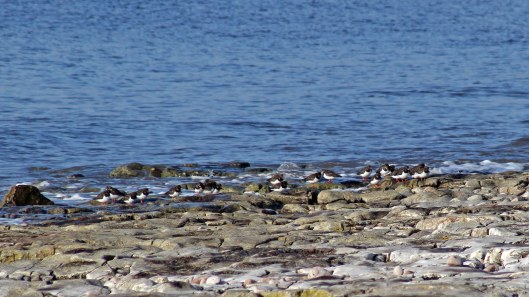
The beach looked empty as I strolled along the ‘coastal path’ – really just a line of rocks and mud here – but a flurry of loud peeping made me turn my head and bring the camera up in time to catch this flock of Turnstones flying in.

180206 Sully stroll (4)180206 Sully stroll (5)

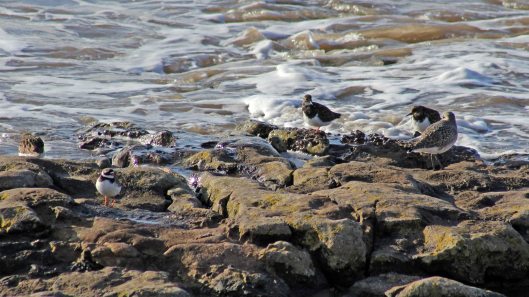
Further east, scanning the water’s edge with my binoculars, I finally spotted an interesting little group of 3 Turnstones, a Little ringed plover and a Grey plover, the latter two year ticks for me, and I’d not seen a Grey plover so close before (I’m still talking a couple of hundred metres away but see-able with bins and long lens). I watched them for perhaps 10 minutes before two loud women and their dog scared the birds off.

180206 Sully stroll (6)

180206 Sully stroll (7)
180206 Sully stroll (8)

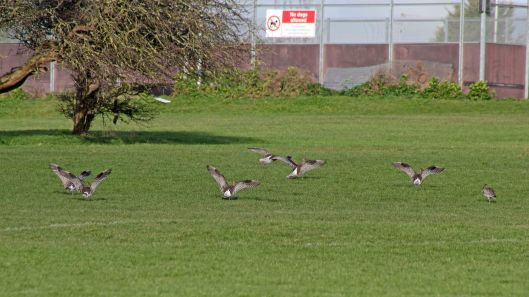
Last, but mostly certainly not least, as these beautiful birds are endangered in Britain, 28 handsome Curlews were using their long curving beaks to probe the playing fields that abut the coastal path in search of worms. After 15 minutes’ watching I left them to their feast, with a silent ‘thanks for being the icing on the cake of my lovely morning at Sully’, and strolled on …

180206 Sully stroll (9)180206 Sully stroll (10)

Like Loading...

January on the Ely embankment

30 Tuesday Jan 2018

Posted by sconzani in birds, nature, walks

≈ 2 Comments

Tags

birding, birdwatching, British birds, Carrion crow, Ely embankment, Goosander, Grey wagtail, little grebe, Pied wagtail, Redshank, River Ely, Rock pipit, Turnstone

31 December 2017 I’m being a bit sneaky here as I managed to fit in one last walk along the embankment before the start of 2018 but after I’d written my December summary. So, on the last day of last year there were 5 Turnstones, 2 Redshanks, 2 Pied wagtails and 2 Grey wagtails, 1 Rock pipit and a couple of Crows.

180130 Ely embankment birds (1)
180130 Ely embankment birds (2)
180130 Ely embankment birds (3)
180130 Ely embankment birds (4)

1 January 2018 The very next day, New Year’s Day, I passed this way as part of a complete circuit of Cardiff Bay. It was a glorious blue-sky day but there were just 3 Turnstones present.

180130 Ely embankment birds (5)

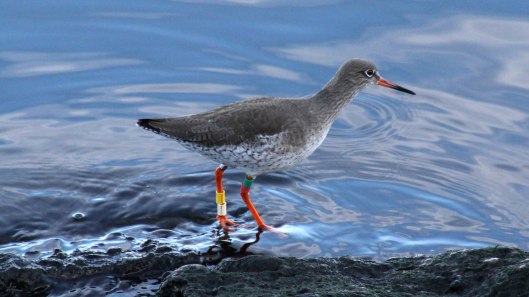
11 January This was another glorious day and another circuit of Cardiff Bay, though in the opposite direction. And it was a bumper day for the Ely embankment, with four Redshanks (including the ringed bird, shown above, which I’ve seen and written about previously), 6 Turnstones, 1 Pied and 4 Grey wagtails, and a Rock pipit.

180130 Ely embankment birds (6)
180130 Ely embankment birds (7)
180130 Ely embankment birds (8)

16 January With 40-mph winds blasting down from snow-covered areas further north, the air temperature was hovering below zero when I walked along the embankment late morning. I wasn’t surprised, then, to find very few birds around – a single Turnstone that was wandering along half way up the embankment (not wanting to put its feet in the chilly water?), which was good for me as it was closer for photos, and just two Grey wagtails. There weren’t many birds on the river either, just a couple of coots, one Great crested grebe and several Black-headed gulls looking hopefully in my direction.

180130 Ely embankment birds

20 January I didn’t get out till late afternoon as it had rained most of the day, so the light was going as I strolled along the embankment path. But I was pleasantly surprised to see a few birds: my friends the Grey wagtails never disappoint (two of those); just one Turnstone poking away amongst the stones; and two Redshanks, including my little buddy the colour-ringed bird. Floating along the river were a Little grebe, a Great crested grebe and a pair of Goosanders – the latter were scared away by a boat cruising by and flew off towards the other side of Cardiff Bay, where I had seen a pair a week or so previously – perhaps the same birds.

180130 Ely embankment birds (9)
180130 Ely embankment birds (10)
180130 Ely embankment birds (11)

25 January I detoured along the embankment on my return from a longer walk and was delighted to find six Turnstones (lovely to see so many), two Redshanks (but not my little ringed mate), two Grey and two Pied wagtails.

Like Loading...

Rock pipit

26 Tuesday Dec 2017

Posted by sconzani in birds, nature

≈ Leave a comment

Tags

Anthus petrosus, birding, birdwatching, British birds, gutter teetan, rock lintie, Rock pipit, teetan, teetuck

171226 rock pipit (2)

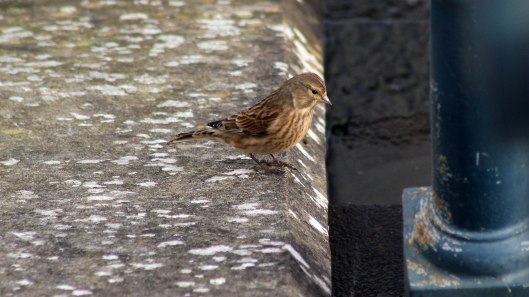
For a relatively non-descript small brown bird the Rock pipit’s alternative names are anything but ordinary. Its Latin name is Anthus petrosus, which sounds for all the world like an incantation Harry Potter might utter against some evil force that was assailing him, and it has a wealth of interesting vernacular names that include dusky lark – understandable; gutter teetan – most peculiar; rock lintie – from Aberdeenshire; from east Yorkshire, sea lark; another from Scotland, sea lintie – is lintie the Scots for linnet perhaps; tangle sparrow, from Orkney and Shetland, as well as teetan and teetuck, also from Shetland.

171226 rock pipit (3)
171226 rock pipit (5)
171226 rock pipit (4)

I see these little birds quite often on the south Wales coast, on the rocks and stone embankments of Cardiff Bay and the rivers that flow into it, and on the sloping stone walls of other dockland areas, like Barry docks. When they’re not perching watchfully on a prominent rock, they’re fossicking busily between the stones for insects and seeds, beetles and, if they’re lucky, small fish.

171226 rock pipit (1)

Like Loading...

November on the Ely embankment

30 Thursday Nov 2017

Posted by sconzani in birds, nature

≈ Leave a comment

Tags

birding, birdwatching, British birds, Cardiff Bay, Coot, Ely embankment, Lesser black-backed gull, Linnet, long-tailed tit, Redshank, River Ely, Rock pipit, Turnstone

171130 9th Ely embankment

The 9th of November was a ‘5 Turnstone, 2 Rock pipit, 1 Grey wagtail’ kind of day at Cardiff Bay, with a cool wind blowing through huge banks of clouds and the odd rain shower. That didn’t deter the birds browsing along the embankment edge though.

171130 9th rock pipits (1)
171130 9th rock pipits (2)

On the 15th, a beautifully marked Song thrush was feasting on berries in the small front garden of one of the apartments that sits on the edge of the embankment (see Berries and Birds a few days ago), and, as well as 2 Rock pipits and 6 Turnstones, there were 3 Redshank grazing along the water’s edge – a nice treat. Also, a Lesser black-backed gull was looking exceedingly pleased with itself for finding a huge dead fish and vociferously defending its prize with loud screeching.

171130 15th redshank (1)
171130 15th redshank (2)

171130 15th LBB and fish

On the 17th – a ‘3 turnstone’ day – the star of the show was a lovely little Linnet. I’d seen a family party of parents and two fledglings grazing amongst the rocks here back in August so perhaps this bird was one of those.

171130 17th Linnet and turnstone
171130 17th Linnet

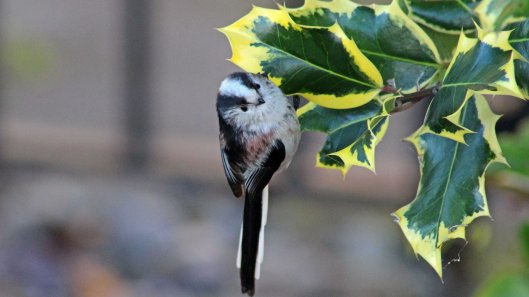
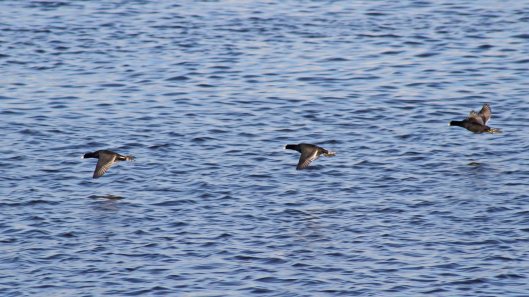
My last November wander by the Ely was on the 25th, when 3 Turnstones, 2 Linnets (nice to see them again), 2 Pied and 2 Grey wagtails, and 1 Redshank were joined by a Dunnock and a small flock of Long-tailed tits passing through the shrubs edging the walkway. Also, something freaked out a group of Coots and, rather than ‘run’ rapidly across the top of the water as they usually do, they actually flew. I’d never seen coots fly before.

171130 25th Long-tailed tit171130 25th Flying coots

Like Loading...

October on the Ely embankment

31 Tuesday Oct 2017

Posted by sconzani in birds, coastal fauna, nature, walks

≈ Leave a comment

Tags

birding, birdwatching, British birds, Cardiff Bay, Ely embankment, Great Crested Grebe, Linnet, little grebe, Pied wagtail, Redshank, River Ely, Rock pipit, Turnstone, Wheatear

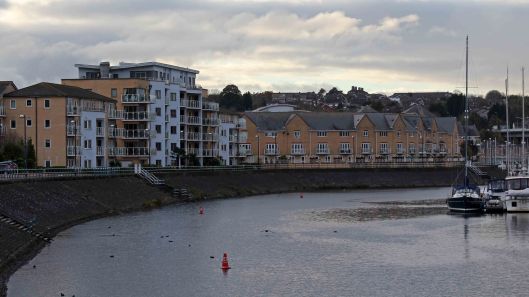
At least once a week I take a turn along the embankment where the River Ely flows out into Cardiff Bay as it makes a nice circular walk from my home on the cliff-top above in Penarth. (It’s good exercise too, as what goes down there must walk back up!) I always record what I see – usually birds – so thought I would share my sightings in an end-of-monthly post.

171031a Ely embankment map
171031b turnstone & coot

A variety of birds make their home in this stretch of water, which they share with a yachting marina and associated water traffic coming and going. There are almost always Turnstones in varying quantities (from one to nine), Mallards, Mute swans, one or two Great Crested Grebes (including their progeny this year), a proliferation of Coots, the occasional Cormorant fishing, usually a couple of Grey wagtails and a couple of Pieds. Gulls fly overhead and there are plenty of hirundines, in the season.

171031c Wheatear
171031d Pied wagtail
171031e Rock pipit

2 October: A Wheatear, an unusual visitor, almost certainly on a migration stopover, was dotting about on the embankment stones; a Pied wagtail was doing its morning stretches, and a Rock pipit was browsing for titbits.

171031f Little grebe

171031g Great crested grebe (1)
171031g Great crested grebe (2)
171031g Great crested grebe (3)

16 October: This was the day before ex-hurricane Ophelia made her presence felt, the day of the jaundiced yellow sky and the rusty red sun, which you can see reflected in my photo of the four Little grebes that were sheltering from the incoming weather. A juvenile Grey wagtail was dotting along the embankment, calling incessantly for its parent; and a Great crested grebe was enjoying a very successful fishing session, coming up with fish in two successive dives.

171031h Linnet

22 October: The day after Storm Brian I walked the embankment to see if any unusual birds had been blown in. The usual suspects were present, except that, most unusually, there wasn’t a single Turnstone. A solitary Linnet flitted back and forth from pavement to stones, and three rather exhausted-looking Redshanks dozed warily along the water line. One of these was colour-ringed and might possibly be the bird I saw back in March but I couldn’t see its rings well enough to be sure.

171031i Redshank

Like Loading...

Why I bought bins

28 Monday Aug 2017

Posted by sconzani in birds, nature

≈ 8 Comments

Tags

benefits of binoculars, birding, birdwatching, British birds, Goldfinch, Little egret, Rock pipit, Yellowhammer

I have always been a bird lover but my birding enjoyment has increased immeasurably since I finally bought myself a pair of binoculars. (I’d previously relied on using the 300mm lens on my camera to bring me closer to distant birds but I now realise how utterly inadequate that was.) From yesterday’s trip to Gileston and Aberthaw with my bird club, here’s why buying bins has been brilliant …

170828a Goldfinches

I could see these Goldfinches with the naked eye and the camera got a reasonable, though not crisp shot.

170828b Yellowhammer

This was my first sighting of a Yellowhammer this year. You can perhaps just make out a yellow dot perched on top of the hedge.

170828c Sparrowhawk

You’ll have to take my word for this one – there’s a Sparrowhawk in this photo. It was well camouflaged but I could just see it with my bins.

170828e Turnstone Dunlin Ringer plover

There were lots of waders foraging on the beach: Turnstones, Dunlins and cute little Ringed plovers. Just specks through the camera, though.

170828f Rock pipit

This one’s a little easier. Spot the Rock pipit.

170828g Little egrets

Their bright Persil whiteness makes these two Little egrets much easier to see but with the bins I could almost see what they were catching for lunch!

Like Loading...

Seaford Head wildlife walk

21 Sunday May 2017

Posted by sconzani in birds, coastal fauna, nature, plants, wildflowers

≈ Leave a comment

Tags

Brown-tail moth caterpillars, Fulmar, Green-winged orchid, Rock pipit, Rook, Seaford Head Nature Reserve, Seaford Head wildlife walk, Stonechat, Sussex Wildlife Trust, Thrift

One of the highlights of my recent short break in Sussex was a guided wildlife walk around Seaford Head, organised by the Sussex Wildlife Trust and led by knowledgeable and amusing local naturalist Michael Blencowe.

170521 1 Seaford Head walk

The day was very windy and scattered showers kept us clad in rain jackets until lunchtime but that didn’t spoil the walk. The scenery on this coast is magnificent and it’s one of my favourite places in the whole of Britain so, even if we’d not seen any wildlife, I would’ve been happy. As it was, we saw more than I expected, and our guide was a mine of funny stories and fascinating facts.

170521 2 Seaford Head Hound's-tongue
170521 3 Seaford Head Stonechat
170521 4 Seaford Head Fulmar
170521 5 Seaford Head group
170521 6 Seaford Head Rock pipit
170521 7 Seaford Head Flower
170521 8 Seaford Head Brown-tail moth
170521 9 Seaford Head Green-winged orchid
170521 10 Seaford Head Rook

Our flora and fauna sightings included many different plants in flower, like Green alkanet, Hound’s-tongue and Thrift; plus several Stonechats and Linnets, and Rock pipits and Rooks aplenty. We had Fulmars soaring up from the cliffs to the left of us and Skylarks serenading us high in the sky to the right. A grass snake was discovered snoozing under a sheet of corrugated iron, the webs of Brown-tail moth caterpillars adorned the bramble bushes, and Green-winged orchids provided striking bursts of colour in the rough alongside the local golf course. If you ever get the chance, I’d highly recommend this walk.

170521 11 Seaford Head Thrift

Like Loading...

Cardiff Bay birds

02 Thursday Feb 2017

Posted by sconzani in birds, nature

≈ 5 Comments

Tags

Anthus petrosus, Arenaria interpres, birding, birdwatching, British birds, Cardiff Bay, Common redshank, Rock pipit, Tringa totanus, Turnstone

My move closer to the seaside is already paying off with more and different bird sightings. Meet large, the Common redshank (Tringa totanus); medium, the Turnstone (Arenaria interpres); and small, the Rock pipit (Anthus petrosus). (Apologies for the poor images – it’s been a very grey week in Cardiff!)

170202-common-redshank
170202-turnstone
170202-rock-pipit

As they enjoy very similar diets of insects, crustaceans and molluscs, these birds were all foraging together, hipping and hopping, stalking and walking, stumbling and grumbling their way along the water’s edge of the artificial stony seawall where the River Ely now flows into the equally artificial Cardiff Bay. Though some of these birds may be residents, many also come from foreign parts to over-winter in Britain: up to half the winter population of Redshanks comes from Iceland; Turnstones can come from such countries as Canada and Greenland; and some Rock pipits come from Norway. I guess the British winters aren’t so bad after all.

170202-turnstones
170202-redshanks
Like Loading...
Newer posts →

About me

sconzani

sconzani

I'm a writer and photographer; researcher and blogger; birder and nature lover; countryside rambler and city strider; volunteer and biodiversity recorder.

View Full Profile →

Follow earthstar on WordPress.com

Enter your email address to follow this blog and receive notifications of new posts by email.

Recent blog posts

  • O is for Odonata December 20, 2025
  • N is for nest December 19, 2025
  • M is for mite December 18, 2025
  • L is for lepidopteran lifers December 17, 2025
  • K is for Keeled skimmers December 16, 2025

From the archives

COPYRIGHT

Unless otherwise acknowledged, the text and photographs on this blog are my own and are subject to international copyright. Nothing may be downloaded or copied without my permission.

Fellow Earth Stars!

  • Unknown's avatar
  • Unknown's avatar
  • Unknown's avatar
  • Unknown's avatar
  • Unknown's avatar
  • Unknown's avatar
  • Unknown's avatar
  • Unknown's avatar
  • Unknown's avatar
  • Unknown's avatar
  • Unknown's avatar
  • Unknown's avatar
  • Unknown's avatar
  • Unknown's avatar
  • Unknown's avatar
  • Unknown's avatar
  • Unknown's avatar
  • Unknown's avatar
  • Unknown's avatar
  • Unknown's avatar
  • Unknown's avatar
  • Unknown's avatar
  • Unknown's avatar
  • Unknown's avatar
  • Unknown's avatar
  • Unknown's avatar
  • Unknown's avatar
  • Unknown's avatar
  • Unknown's avatar
  • Unknown's avatar
  • Unknown's avatar
  • Unknown's avatar
  • Unknown's avatar
  • Unknown's avatar
  • Unknown's avatar
  • Unknown's avatar
  • Unknown's avatar
  • Unknown's avatar
  • Unknown's avatar
  • Unknown's avatar
  • Unknown's avatar
  • Unknown's avatar
  • Unknown's avatar
  • Unknown's avatar
  • Unknown's avatar
  • Unknown's avatar
  • Unknown's avatar
  • Unknown's avatar
  • Unknown's avatar
  • Unknown's avatar

Blog at WordPress.com.

Privacy & Cookies: This site uses cookies. By continuing to use this website, you agree to their use.
To find out more, including how to control cookies, see here: Cookie Policy
  • Subscribe Subscribed
    • earthstar
    • Join 667 other subscribers
    • Already have a WordPress.com account? Log in now.
    • earthstar
    • Subscribe Subscribed
    • Sign up
    • Log in
    • Report this content
    • View site in Reader
    • Manage subscriptions
    • Collapse this bar
 

Loading Comments...
 

You must be logged in to post a comment.

    %d