• ABOUT
  • BIRDING 2018
  • Birding 2019
  • BLOG POSTS
  • Butterflies 2018
  • Resources

earthstar

~ a celebration of nature

earthstar

Tag Archives: Sanderling

Sanderlings, sand runners

16 Tuesday Sep 2025

Posted by sconzani in birds

≈ Leave a comment

Tags

autumn migration, birding, birdwatching, British birds, Calidris alba, Ferrybridge birding, Sanderling, Wild Chesil Centre

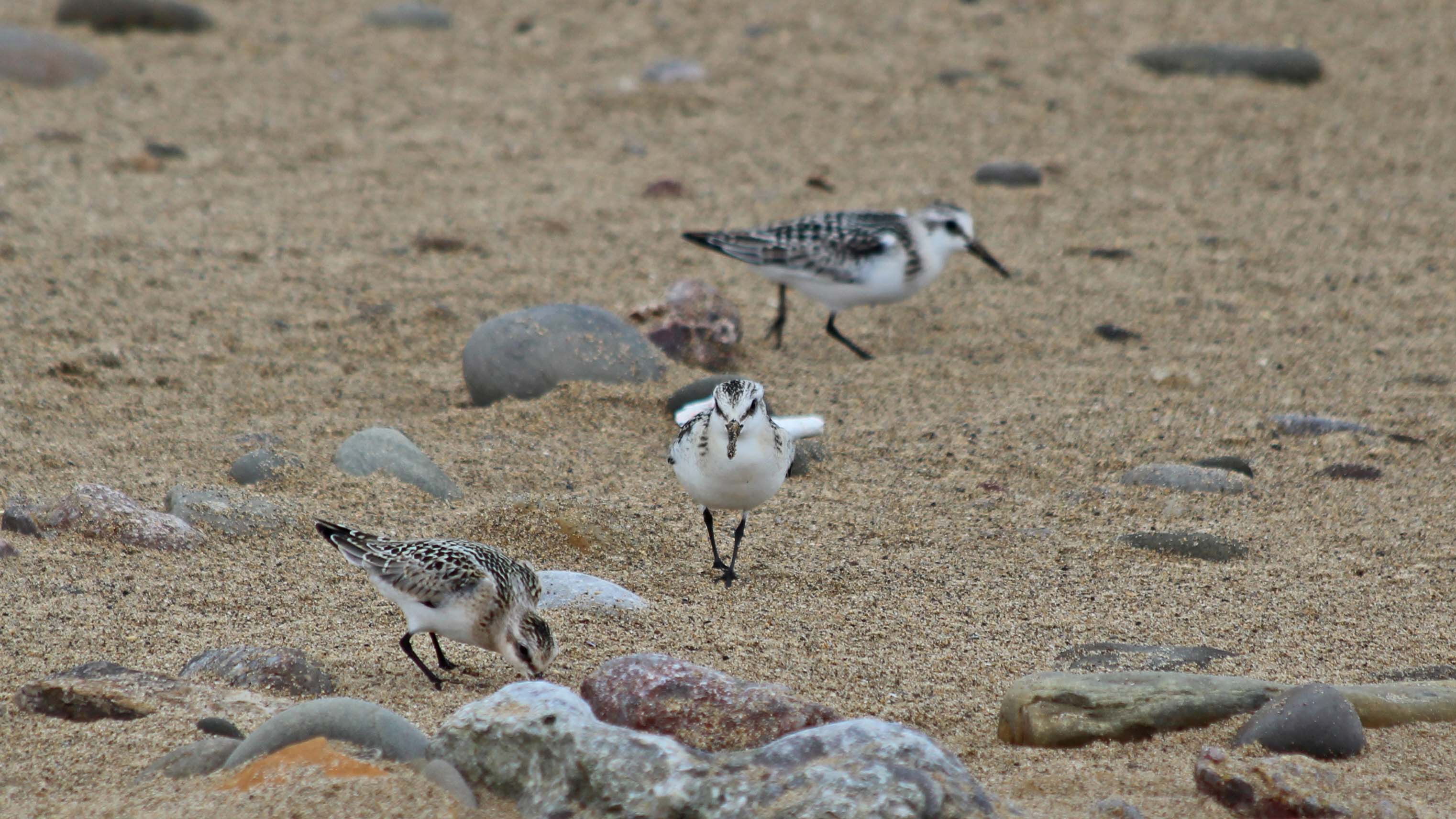
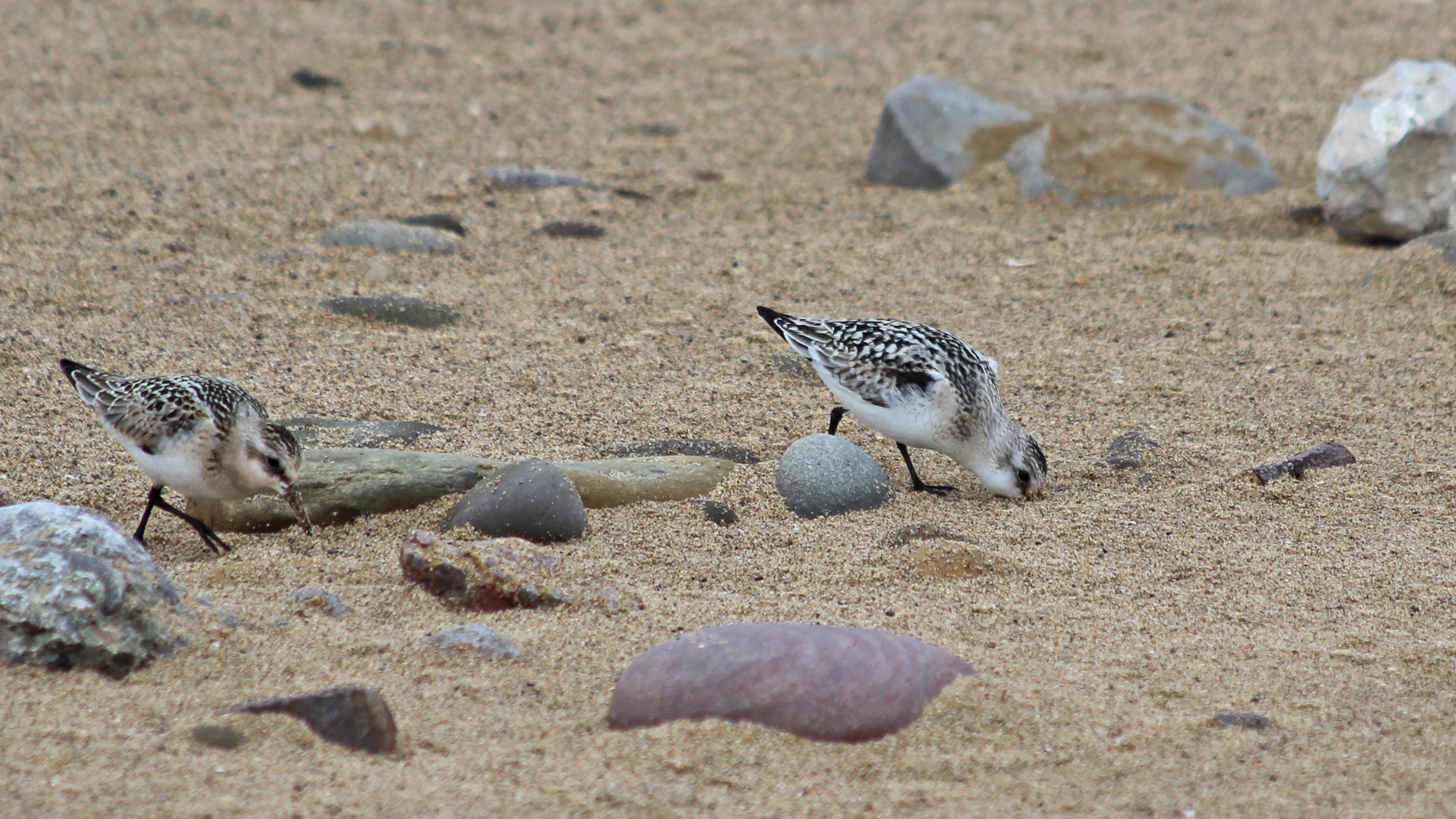
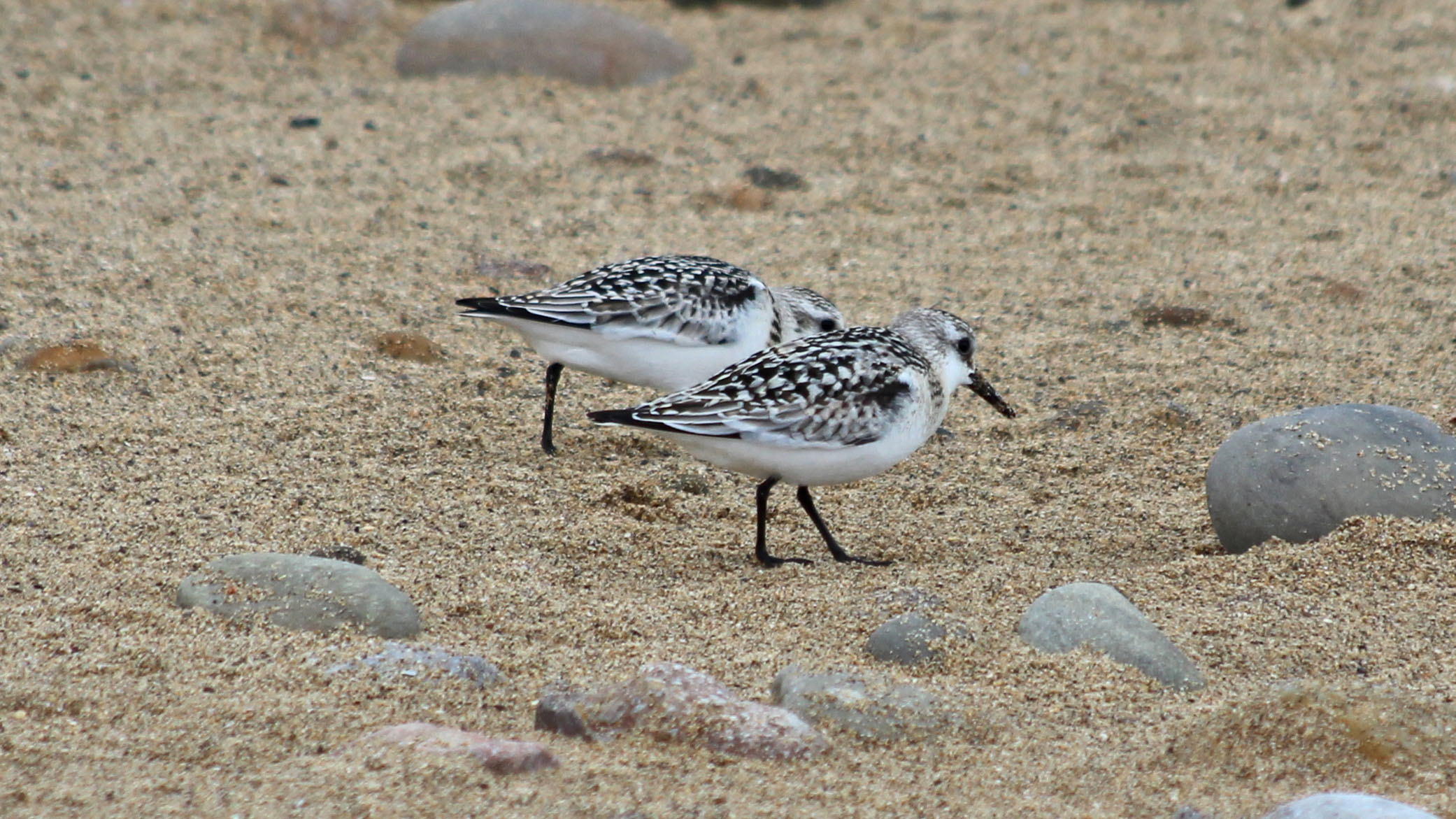
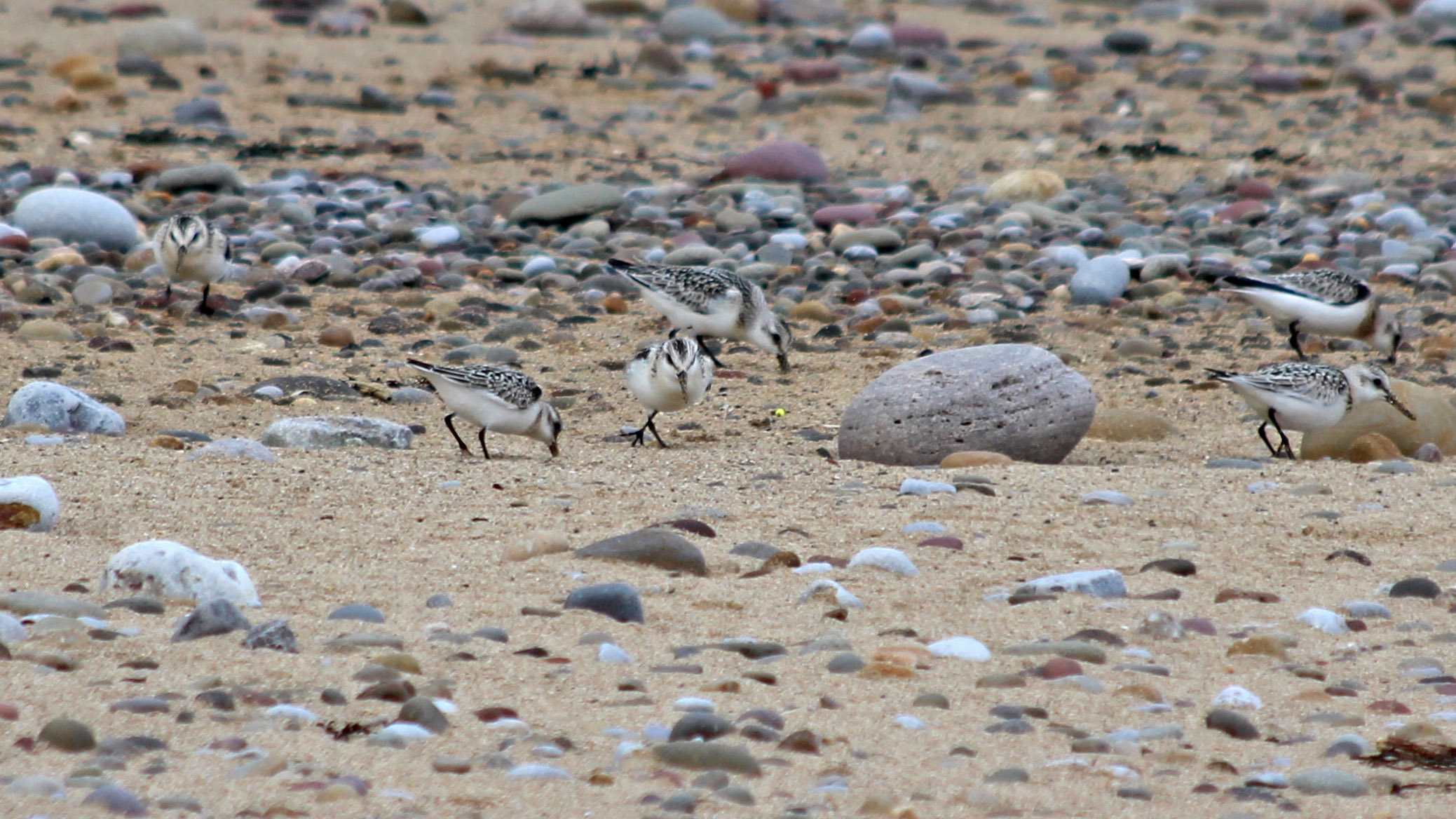
My plans for my days in and around Weymouth last week didn’t quite go as I expected due to the weather: we had a lot of heavy rain showers, and the westerly winds, especially on Thursday, were gale-force and relentless. Luckily, I had gone prepared, with full wet weather gear – I wasn’t going to let rain spoil my birding plans.

I knew from previous visits that the area in front of the Wild Chesil Centre, at Ferrybridge, on the causeway between Weymouth and the Isle of Portland, was a good place to look for birds, especially as autumn migration is well underway now in Britain. I checked that area on Tuesday afternoon, but the tide was already well out so the birds were too distant for me to see with binoculars.

So, on Thursday, after spending the morning at RSPB Lodmoor, I caught the bus to Ferrybridge around noon. Though I could barely stand up in the wind, my tide timing was perfect; as I walked from the bus stop to the Wild Chesil Centre, water was just starting to recede from the mud flats below the footpath, and already a little flock of 12 Turnstones and 2 Sanderling were foraging for any tiny sea creatures that were being exposed by the receding waters.

I admit to being a big fan of waders, which I seldom see in my local area, and I find the Sanderling (Calidris alba) especially attractive, both in looks and in habits; they forage by scurrying rapidly back and forth across the sand and mud. Though photographing these birds was a challenge – I had to wrap my arms around the railing adjacent to the footpath for stability, I managed to get some reasonably decent images of this pair and, though I was very close to them and they were certainly aware of my presence, they were intent on feeding and my photography didn’t disturb them. I clung to those railings for a good 15 minutes, watching their antics, their interaction with the Turnstones and each other, their feeding methods. It was quite magical!

Like Loading...

Winding down with waders, 2

11 Tuesday Oct 2022

Posted by sconzani in birds

≈ Leave a comment

Tags

birding, birdwatching, British birds, British waders, Sanderling

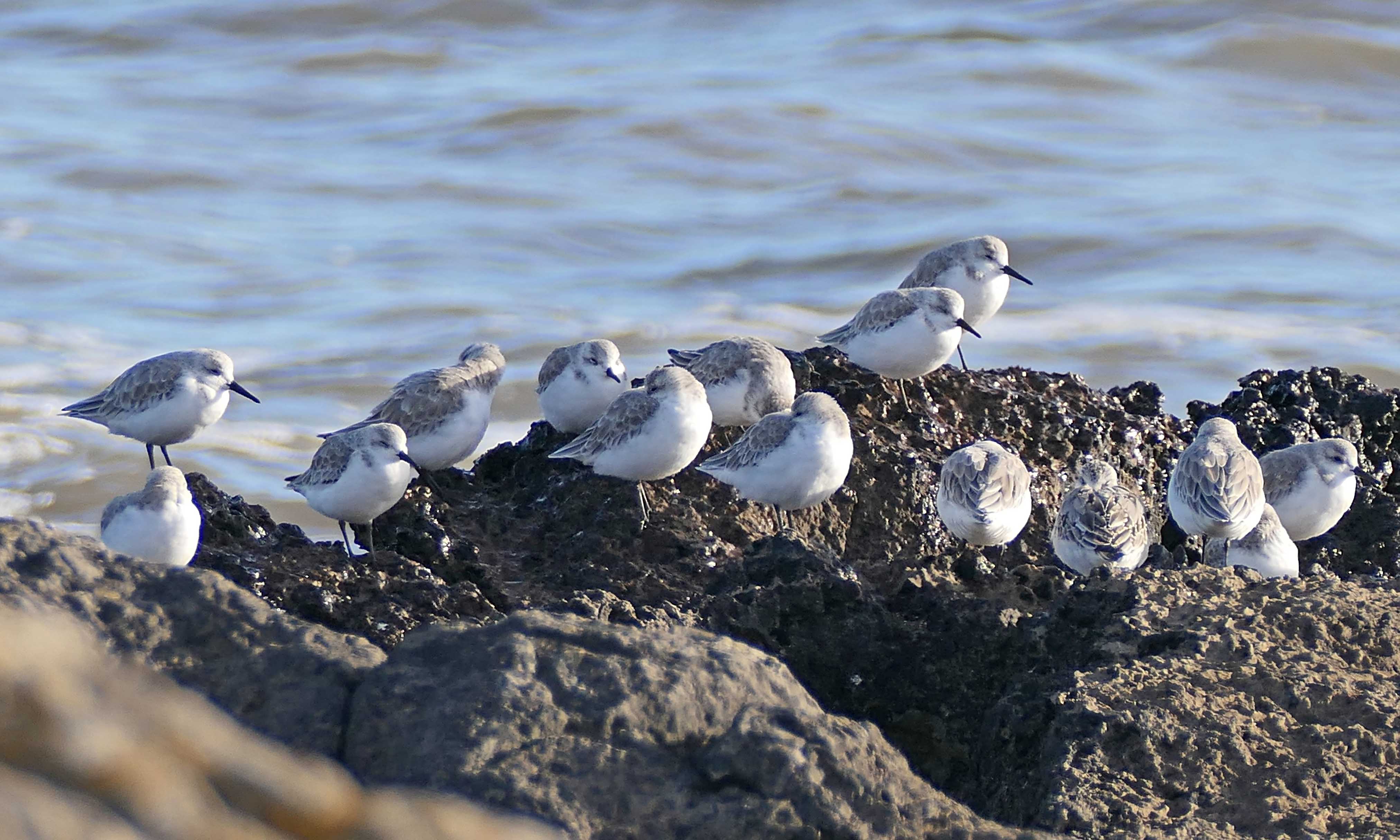
Sanderlings are stunning small waders, usually hyperactive sand scurriers, though these particular beauties were trying to settle in for a night’s sleep. When splashed by a high wave from the incoming tide, they seemed almost to mutter crossly and fluttered forward to the next dry spot.

221011 sanderling (1)

These were my first Sanderling sightings for the year and an absolute joy to be near as they settled to roost, some just closing their eyes and hunching down, others tucking their heads under one wing. Watching these little waders winding down made me feel quite sleepy too.

221011 sanderling (2)

Like Loading...

Scurrying Sanderlings

22 Saturday Sep 2018

Posted by sconzani in autumn, birds, nature

≈ 8 Comments

Tags

autumn migration, bird migration, birding, birdwatching, British birds, Calidris alba, migrating birds, Sanderling, Sker Rocks

Watching these busy little birds scurrying back and forth along the beach at Sker last Saturday was the highlight of my day.

180922 sanderlings (1)

I had walked away a little from the group of birders I was with as I wanted to try to get better photographs of the waders moving along the water’s edge, and I’m so glad I did, as the birds weren’t as bothered about one person standing very still and silent as they would’ve been about 25 chattering people moving about, and so came up reasonably close to me.

180922 sanderlings (2)

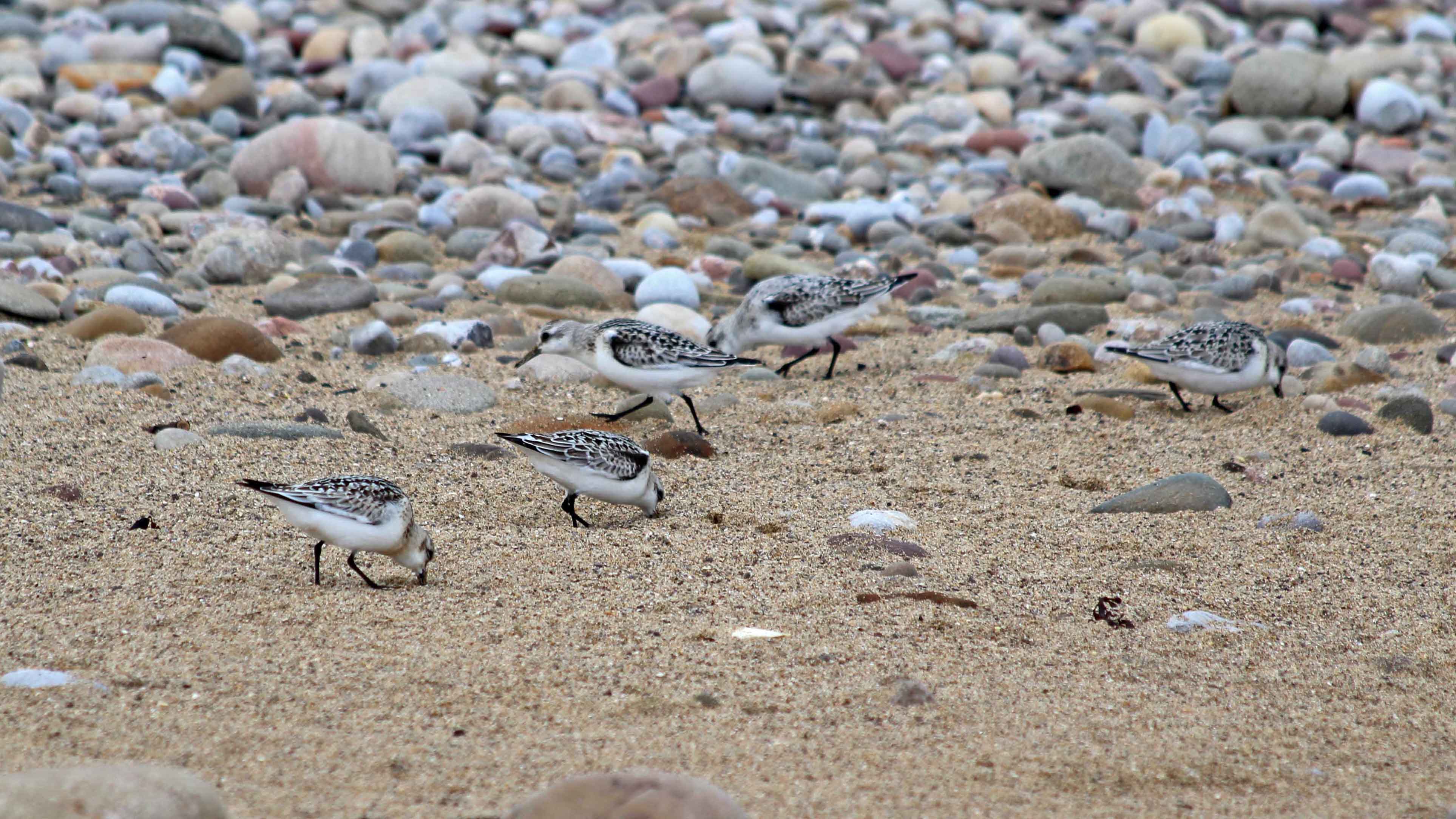
Small flocks of Sanderlings (Calidris alba), and other small waders, were flying back and forth from the rocks to the sandy beach to feed, poking their heads right up to their eyes in the soft sand to probe for their preferred food of small crustaceans and molluscs.

180922 sanderlings (3)180922 sanderlings (3a)

According to the Merriam Webster dictionary, the name Sanderling is a combination of the fairly obvious ‘sand’ and ‘erling’, which probably comes from the Old English yrthling, meaning ploughman (from yrth earth and erian to plough). That certainly makes sense when you see these little birds in action.

180922 sanderlings (4)

Sanderlings are passage migrants that move through Britain in spring and autumn on their way to and from their breeding grounds in the High Arctic and their over-wintering sites in southern Europe and Africa.

180922 sanderlings (5)

The birds’ plumage changes for the breeding season, becoming much darker, with shades of reddish-brown on the head, neck and back, and you can still see hints of that on some of the birds in my photos. Also, many of my birds seem to be juveniles, with quite chequered markings on their backs and very clean white under-parts.

180922 sanderlings (6)

One fascinating factoid I discovered when reading up about these birds is that they have only three toes on each foot, with no hind toe to provide balance, and this is the reason for their scurrying motion. If you want to see Sanderlings in action, I uploaded a very short video to youtube.

180922 sanderlings (7)

Like Loading...

Birding at Kenfig

17 Monday Sep 2018

Posted by sconzani in birds, nature, walks

≈ 4 Comments

Tags

birding, birdwatching, British birds, Glamorgan Bird Club, Golden plover, Kenfig beach, Kenfig National Nature Reserve, Ringed plover, Sanderling, Shag, Sker Rocks, starling, Stonechat

180917 birding at Kenfig (1)

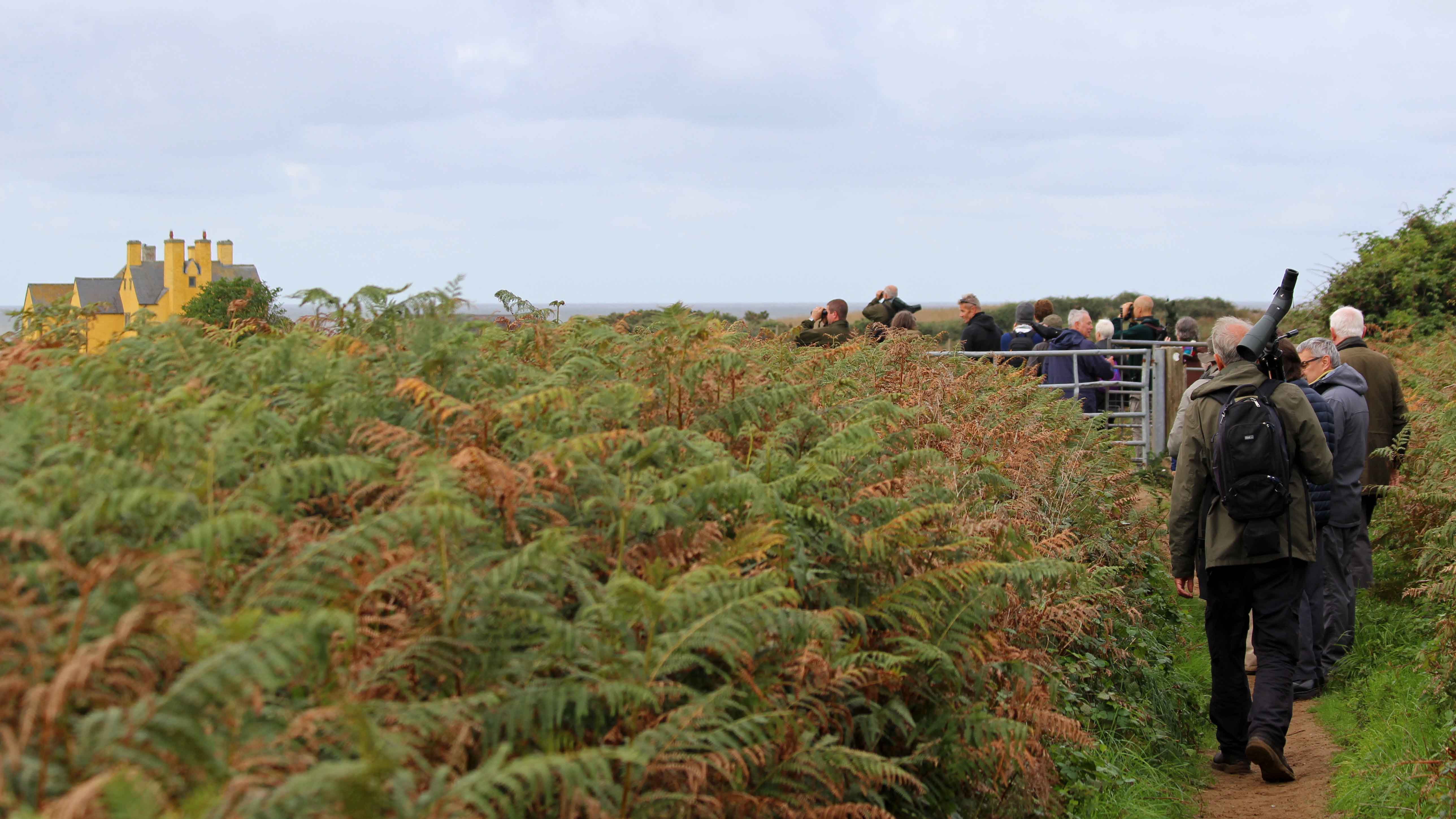
Last Saturday was the monthly Glamorgan Bird Club walk at Kenfig National Nature Reserve on the south Wales coast and this time, as the high tide time worked in perfectly, our large group of 28 enthusiasts headed down the eastern side of the reserve towards Sker.

180917 birding at Kenfig (2)

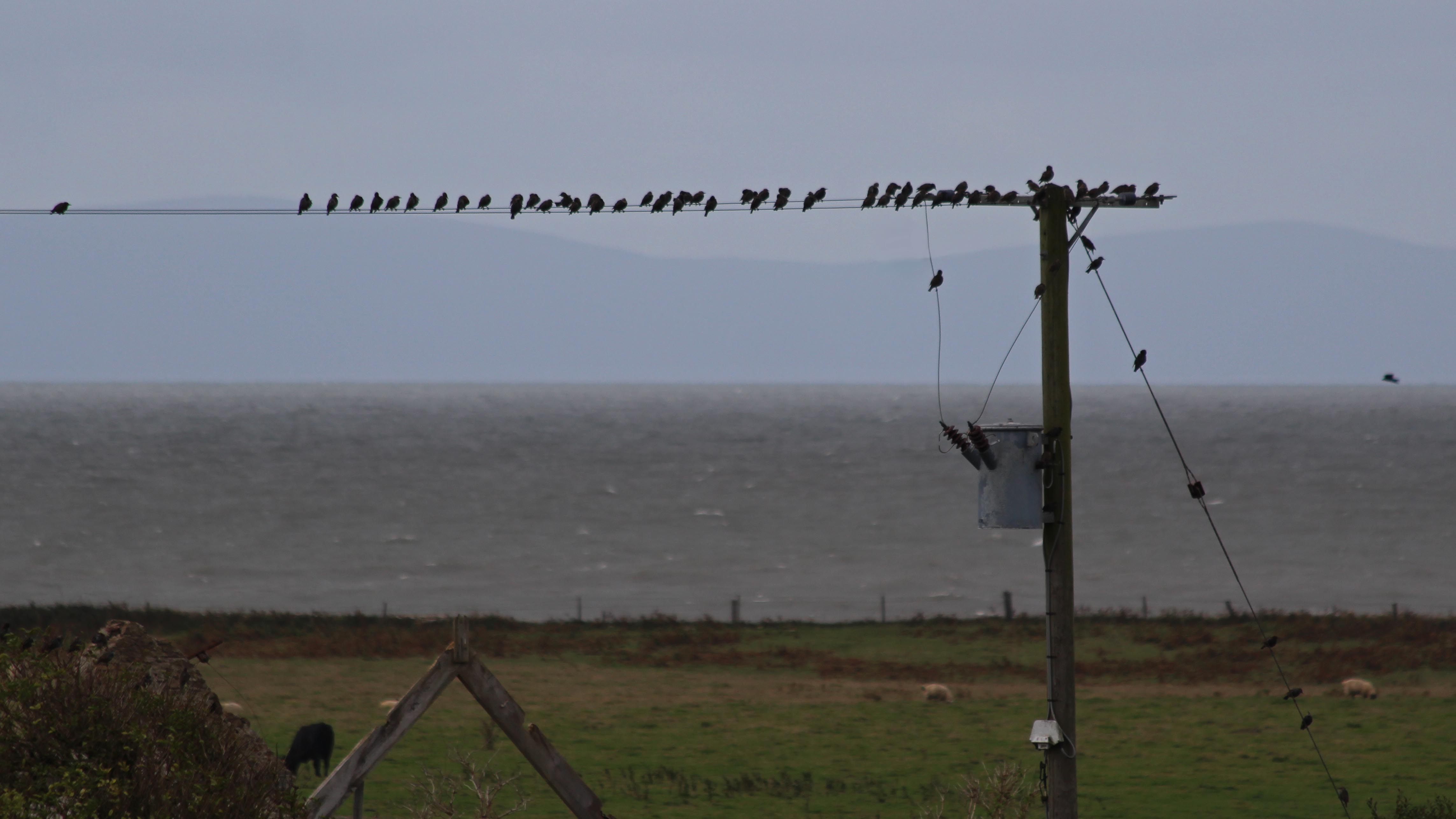
With so many eyes on the look out as we walked through scrub and across parts of the golf course, we soon had a respectable total of small birds but the highlights came as we got closer to the sea. Near Sker House, a small Starling murmuration swirled about in ever-changing formations before pausing to rest on overhead wires.

180917 birding at Kenfig (3)

Then, we were entertained by a small party of Stonechats, dotting in and out of the vegetation surrounding a wire fence.

180917 birding at Kenfig (4)

Moving on, we had distant views of Curlews and godwits in a field. At first we thought the godwits were Black-tailed but, on closer examination and with the help of reserve ranger Dave’s local knowledge, they were identified as Bar-tailed godwits, not particularly common hereabouts.

180917 birding at Kenfig (5)

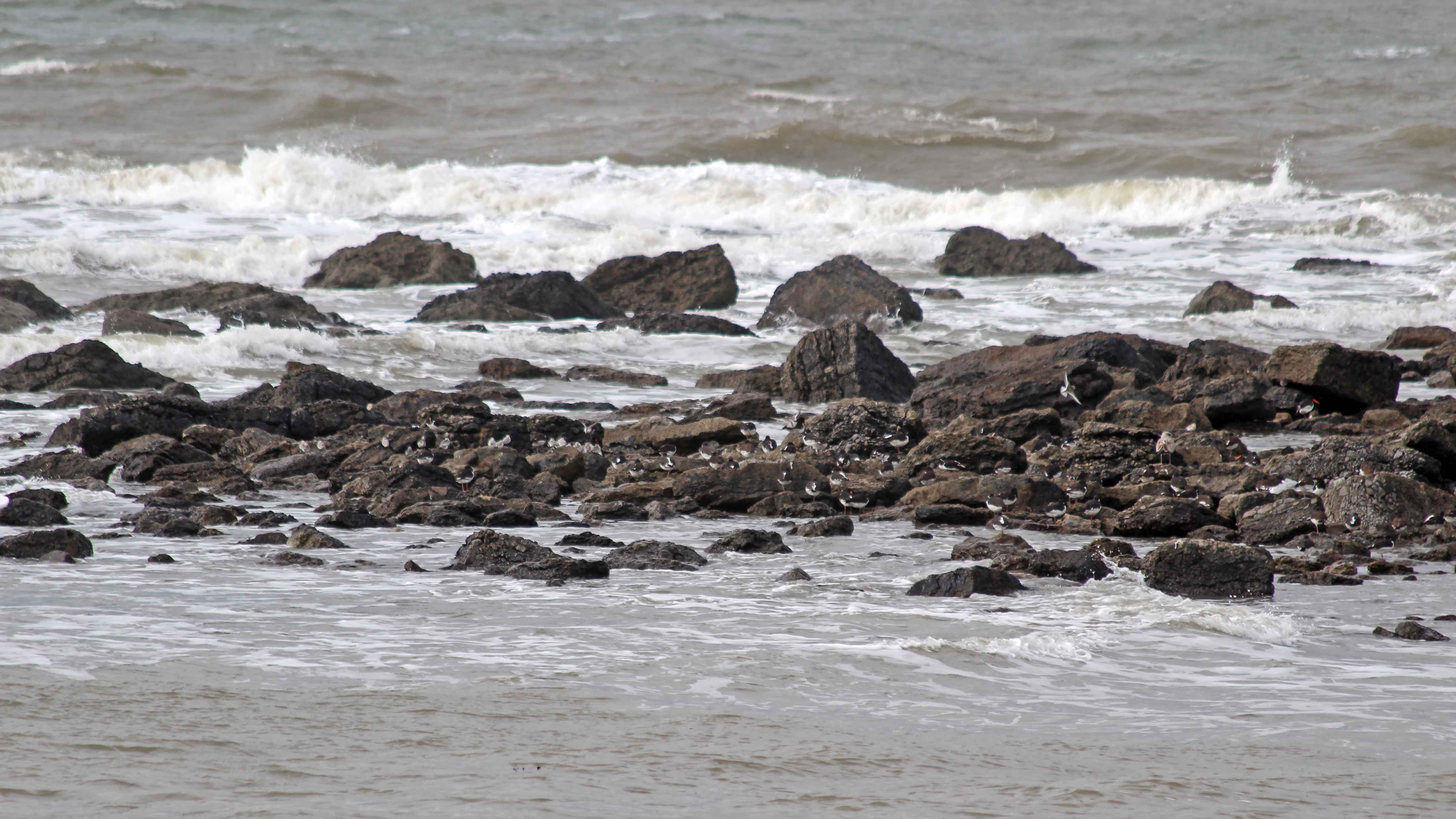
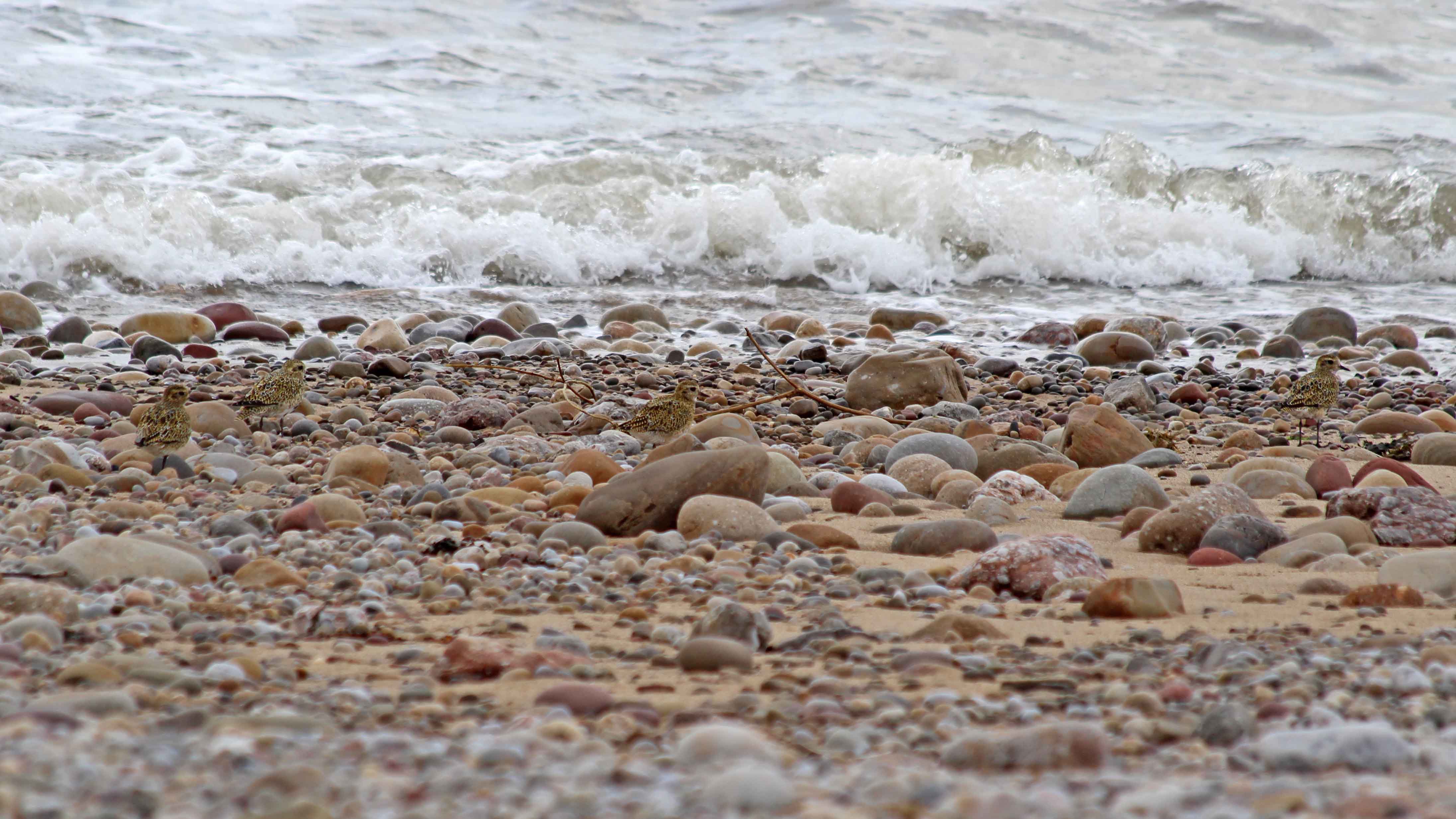
The best part of the day for me was at Sker Rocks, where we enjoyed really close views of several wader species. Small flocks of Sanderlings flitted back and forth from the rocks to the beach and, at times, were less than 20 feet away, scurrying hurriedly along the sand, poking about for food. A single Ringed plover sat alone by the water’s edge for a time, and then was replaced by four beautifully marked Golden plovers. (I got some reasonable photos of the Sanderlings and Golden plovers so will post separate blogs on them.)

180917 birding at Kenfig (6)180917 birding at Kenfig (7)180917 birding at Kenfig (8)

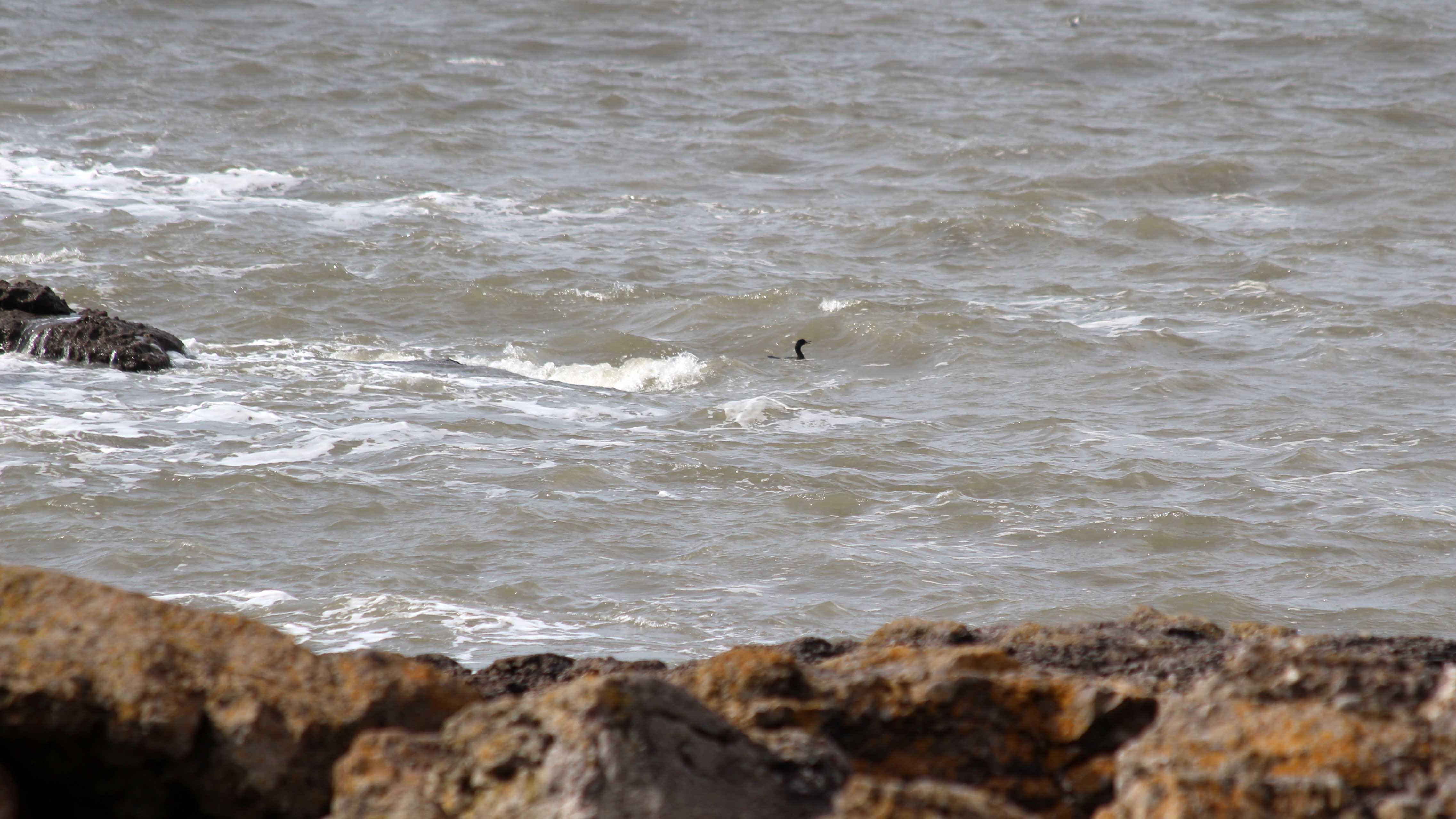
As we headed back inland, one of our younger birders, Tate, spotted a Shag fishing very close to the rocks – not a bird that’s seen much locally so a nice sighting.

180917 birding at Kenfig (10)

And some of us headed down to Kenfig Pool for a quick look but there wasn’t anything of note, and fishermen sitting much closer to the bird hide than they’re supposed to meant that wasn’t worth visiting.

180917 birding at Kenfig (9)

It was an excellent day’s birding and my species total was a very respectable 48: Mute Swan, Greylag Goose, Canada Goose, Mallard, Grey Heron, Shag, Sparrowhawk, Kestrel, Coot, Oystercatcher, Ringed Plover, European Golden Plover, Sanderling, Dunlin, Bar-tailed Godwit, Eurasian Curlew, Turnstone, Black-headed Gull, Lesser Black-backed Gull, Herring Gull, Feral Pigeon, Woodpigeon, Collared Dove, Magpie, Jay, Jackdaw, Carrion Crow, Blue Tit, Skylark, Swallow, House Martin, Cetti’s Warbler, Wren, Starling, Blackbird, Song Thrush, Robin, European Stonechat, Dunnock, House Sparrow, Yellow Wagtail, Pied Wagtail, Meadow Pipit, Rock Pipit, Goldfinch, Linnet, Bullfinch, and Reed Bunting.
Also seen/heard but not by me: Sand Martin, Common Buzzard, Tufted Duck, Raven, Common Chiffchaff, Northern Wheatear, and Water Rail (this last one was a shame, as it would’ve been a year tick for me, but them’s the birding breaks!).

Like Loading...

The Sanderlings and the Dunlins

01 Monday May 2017

Posted by sconzani in birds, nature, spring

≈ 2 Comments

Tags

birding, birdwatching, British birds, Calidris alba, Calidris alpina, Dunlin, passage migrant, Sanderling

Yesterday I told you about my chilly but super exciting birdwatching morning on Saturday and showcased two of the highlights, the Whimbrel and the Bar-tailed Godwit. Today, we have the Sanderlings and the Dunlins, both so well camouflaged against the stones on the seashore that, if they hadn’t been almost constantly moving about in their search for insects, they would’ve been very hard to spot.

170501 sanderling (2)
170501 sanderling (3)

170501 sanderling (1)

Sanderlings to the left, Turnstones to the right

Like yesterday’s birds, the Sanderling (Calidris alba) is a passage migrant, seen in parts of coastal Britain during the spring as it heads to its breeding grounds in the Arctic and in the autumn as it heads south to tropical beaches around the world, a journey that can be as long as 6000 miles. During the breeding season, the birds’ grey plumage takes on a much redder hue on the head, neck and back, which you can clearly see on one of these birds (particularly in the photo top left).

170501 dunlin (1)

The Dunlin (Calidris alpina) – like the Sanderling, a member of the Sandpiper family – is a very common sight on Britain’s coast throughout the year, though breeding birds head to the upland areas of Wales, Scotland and England to nest between April and July. The Dunlin also becomes a more rufous colour during the breeding season and acquires the dark tummy feathers you can see on these birds. I’m guessing they’ll be heading for the hills shortly to find a mate.

170501 dunlin (2)
170501 dunlin (3)

Like Loading...

About me

sconzani

sconzani

I'm a writer and photographer; researcher and blogger; birder and nature lover; countryside rambler and city strider; volunteer and biodiversity recorder.

View Full Profile →

Follow earthstar on WordPress.com

Enter your email address to follow this blog and receive notifications of new posts by email.

Recent blog posts

  • Viviparous umbellifers November 19, 2025
  • A female Vapourer November 18, 2025
  • Birds and Buckthorn berries November 17, 2025
  • Autumn trees: Beech November 16, 2025
  • Bountiful Ground-ivy November 15, 2025

From the archives

COPYRIGHT

Unless otherwise acknowledged, the text and photographs on this blog are my own and are subject to international copyright. Nothing may be downloaded or copied without my permission.

Fellow Earth Stars!

  • Unknown's avatar
  • Unknown's avatar
  • Unknown's avatar
  • Unknown's avatar
  • Unknown's avatar
  • Unknown's avatar
  • Unknown's avatar
  • Unknown's avatar
  • Unknown's avatar
  • Unknown's avatar
  • Unknown's avatar
  • Unknown's avatar
  • Unknown's avatar
  • Unknown's avatar
  • Unknown's avatar
  • Unknown's avatar
  • Unknown's avatar
  • Unknown's avatar
  • Unknown's avatar
  • Unknown's avatar
  • Unknown's avatar
  • Unknown's avatar
  • Unknown's avatar
  • Unknown's avatar
  • Unknown's avatar
  • Unknown's avatar
  • Unknown's avatar
  • Unknown's avatar
  • Unknown's avatar
  • Unknown's avatar
  • Unknown's avatar
  • Unknown's avatar
  • Unknown's avatar
  • Unknown's avatar
  • Unknown's avatar
  • Unknown's avatar
  • Unknown's avatar
  • Unknown's avatar
  • Unknown's avatar
  • Unknown's avatar
  • Unknown's avatar
  • Unknown's avatar
  • Unknown's avatar
  • Unknown's avatar
  • Unknown's avatar
  • Unknown's avatar
  • Unknown's avatar
  • Unknown's avatar
  • Unknown's avatar
  • Unknown's avatar

Blog at WordPress.com.

Privacy & Cookies: This site uses cookies. By continuing to use this website, you agree to their use.
To find out more, including how to control cookies, see here: Cookie Policy
  • Subscribe Subscribed
    • earthstar
    • Join 669 other subscribers
    • Already have a WordPress.com account? Log in now.
    • earthstar
    • Subscribe Subscribed
    • Sign up
    • Log in
    • Report this content
    • View site in Reader
    • Manage subscriptions
    • Collapse this bar
 

Loading Comments...
 

You must be logged in to post a comment.

    %d