• ABOUT
  • BIRDING 2018
  • Birding 2019
  • BLOG POSTS
  • Butterflies 2018
  • Resources

earthstar

~ a celebration of nature

earthstar

Monthly Archives: August 2016

Homage to the Baobab

31 Wednesday Aug 2016

Posted by sconzani in nature, trees

≈ 12 Comments

Tags

Baobab, Maasai, Rachel Sawaya, Tanzania, The Baobab Tree poem

You know he is there, standing
in a field, like all the others
but he is not like them.
from ‘The Baobab Tree’ by Rachel Sawaya

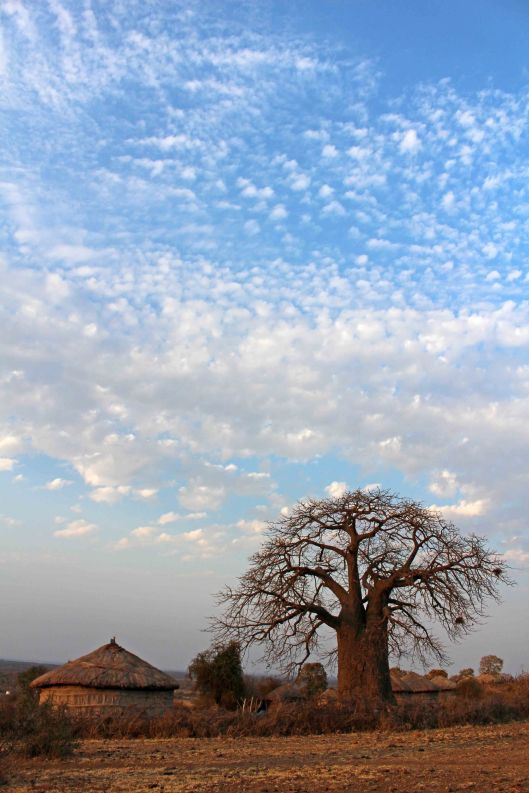
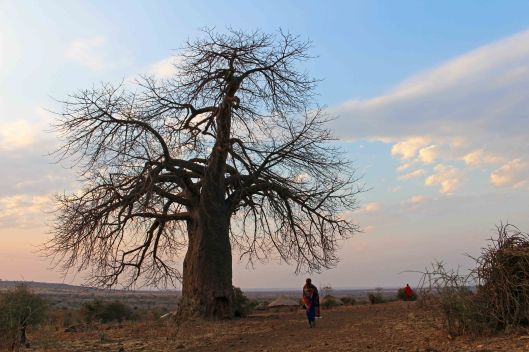
I love these words from Rachel’s prize-winning poem (more about that and her here). In a few deceptively simple words she encapsulates what I love about the baobab: it is not like any other. No facts and figures today. Instead, I hope my photos, taken in Tanzania in 2014, will speak to you of the Baobab.

160831 baobab (1)160831 baobab (2)160831 baobab (3)160831 baobab (4)160831 baobab (5)160831 baobab (6)

Like Loading...

Rocking the Rhodos

30 Tuesday Aug 2016

Posted by sconzani in insects, nature, parks, plants

≈ 7 Comments

Tags

Bute Park, Graphocephala fennahi, leafhopper, plant bug, rhododendron, rhododendron leafhopper

160830 Rhododendron leafhopper (2)

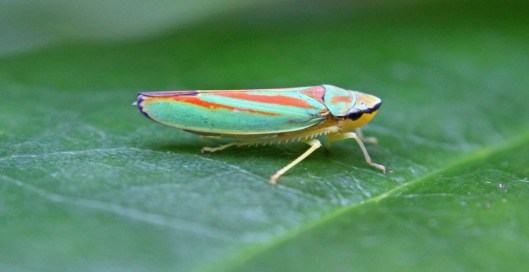
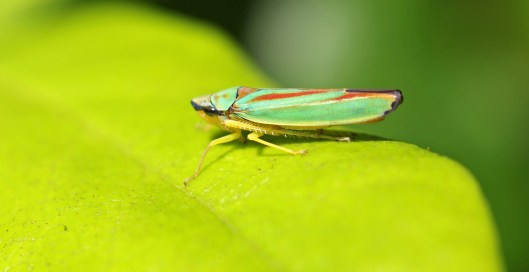
What dapper little critters these are, don’t you think? The fashionistas of the bug world in their pale-green orange-striped suits, with contrasting purple trim and coordinating pale yellow under-wear. No dull dark-grey pinstripes for these hoppers; they’re American immigrants and they’re happy to be noticed. It certainly makes them easy to identify, a huge bonus in the world of plant bugs!

160830 Rhododendron leafhopper (1)

Rhododendron leafhoppers (Graphocephala fennahi) were first introduced to Britain in the early 1900s and I was first introduced to them early last week, when walking a butterfly transect with a colleague, but I’ve been back twice to see them since then, just because they make me laugh. The ones in my pictures make their home in the rhododendron bushes in one small area of Cardiff’s Bute Park, and there are hundreds, if not thousands of them – so many, in fact, that you can actually hear the sproing as they flit from leaf to leaf. And, if you stand in front of the bushes, you’re in serious danger of straining your neck from watching them fly and spring back and forth. Yet another free entertainment package from Mother Nature (with a little voyeurism thrown in)!

160830 Rhododendron leafhopper (3)
160830 Rhododendron leafhopper (4)
160830 Rhododendron leafhopper (5)
160830 Rhododendron leafhopper (6)
Like Loading...

Roath Park’s Giant polypores

29 Monday Aug 2016

Posted by sconzani in fungi, nature

≈ 1 Comment

Tags

bracket fungus, Giant polypore, Meripilus giganteus, polypore fungus, Roath Park

On either side of the path to a beautiful old bridge across the brook that runs through Roath Park Pleasure Gardens there stands a tree. Both trees are huge and old and dead but both are the source of life and habitat of choice of many a beetle and bug, and a wide range of fungi. This month, first one tree and then the other has played host to magnificent large clumps of the Giant polypore, Meripilus giganteus.

160829 Giant polypore (3)
160829 Giant polypore (4)

Their Latin name is most appropriate: Meri means a part and pile means caps and, not surprisingly, giganteus means gigantic, so together we have gigantic caps made of many parts. And they are gigantic! These specimens have reached a combined width of perhaps half a metre but it is not unknown for a single cap to grow that wide. Another common name for this fungus is Black-staining polypore as the pore surface will stain dark brown or black when bruised. Giant polypores are most often found on beech trees and stumps but will also parasitise the roots of various other broadleaf trees, in Britain and much of Europe. If this looks familiar to my North American readers, it’s because a related fungus, Meripilus sumstinei, can be found on your trees.

160829 Giant polypore (1)
160829 Giant polypore (2)
160829 Giant polypore (5)
160829 Giant polypore (6)
Like Loading...

The koru

28 Sunday Aug 2016

Posted by sconzani in nature, plants

≈ 10 Comments

Tags

koru, Maori symbol, meaning of koru, spiral in nature, symbolism of koru, symbolism of spiral

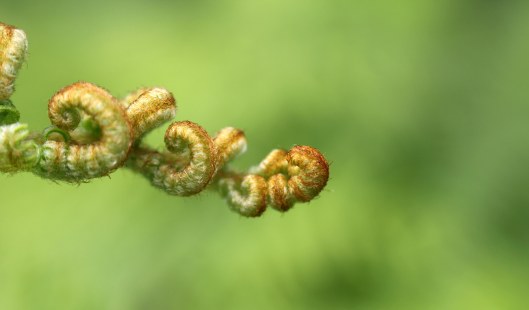
New Zealand Maori have a saying: ‘Ka hinga atu he tete-kura, ka hara-mai he tete-kura’, which loosely translates to ‘As one fern frond dies, one is born to take its place’.

160828 koru (5)

Maori call the newborn, unfurling fern frond a koru. It symbolises creation and new life, and represents strength and peace. The koru also embodies the spiral motif, found in the art of many ancient cultures. Its circular shape suggests perpetual motion, and the spiral itself communicates not only the idea of constant growth through its outward movement but also, through its inward coil, the concept of returning to a point of origin. The koru, with its beautiful promise of hope and new life to come, is one of my favourite things in the natural world.

160828 koru (3)
160828 koru (2)
160828 koru (4)
160828 koru (1)
Like Loading...

Bioblitzing Cwm Saerbren

27 Saturday Aug 2016

Posted by sconzani in birds, fungi, insects, nature, plants, wildflowers

≈ 5 Comments

Tags

bioblitz, biological diversity, biological recording, biological recording centre, Cwm Saerbren Woodland, Cwmsaerbren, SEWBReC

Each summer my local biological records centre, SEWBReC, runs a series of biological recording field days, partly to introduce members of the public to the world of biological recording, allowing them to rub shoulders with wildlife experts and learn species identification skills, and partly to record the biodiversity of particular areas. Last Thursday I went along to the field day-come-bioblitz at the Cwm Saerbren Woodland, adjacent to the small town of Treherbert at the top of the Rhondda Fawr Valley.

160827 Cwmsaerbren bioblitz (12)

This assumed unicorn was the star of the show!

Though the turnout from the locals was disappointing (not a single person!) and despite the sometimes heavy rain (a common feature up the Valleys), we had a great day. With the SEWBReC crew, a couple of guys from Natural Resources Wales, and a few of us volunteers from the Mary Gillham Archives Project, we stomped around the trails of Cwm Saerbren, recording all we saw. And, after meeting up back at the town to identify and write up our afternoon list and then filling up on hot chips from the local takeaway shop, we also got out with the bat recorder and had moth-attracting lights running to see what flying critters we might find. All up, once everything is IDed, I reckon our list will be well over 200 species. Not bad for a day’s work!

160827 Cwmsaerbren bioblitz (2)
160827 Cwmsaerbren bioblitz (1)
160827 Cwmsaerbren bioblitz (4)
160827 Cwmsaerbren bioblitz (5)
160827 Cwmsaerbren bioblitz (9)
160827 Cwmsaerbren bioblitz (13)
160827 Cwmsaerbren bioblitz (6)
160827 Cwmsaerbren bioblitz (10)
160827 Cwmsaerbren bioblitz (8)
160827 Cwmsaerbren bioblitz (15)
160827 Cwmsaerbren bioblitz (16)
160827 Cwmsaerbren bioblitz (11)
160827 Cwmsaerbren bioblitz (17)
160827 Cwmsaerbren bioblitz (7)
160827 Cwmsaerbren bioblitz (3)
Like Loading...

Bramble or blackberry?

26 Friday Aug 2016

Posted by sconzani in flowers, nature, plants, wildflowers

≈ 5 Comments

Tags

autumn fruit, blackberry, bramble, Rubus fruticosus agg, Rubus species, wild fruit

First, the glorious flowers: some look like crushed paper tissue, others like crinkled pieces of silk. They range in colour from bleached white through parchment with the merest blush of pink to a pink that reminds me of the sticky candyfloss I ate as a child at the local fair.

160826 Rubus fruticosus agg (1)
160826 Rubus fruticosus agg (2)
160826 Rubus fruticosus agg (3)
160826 Rubus fruticosus agg (4)
160826 Rubus fruticosus agg (5)
160826 Rubus fruticosus agg (6)

Once the busy little pollinators have done their work, the fruit begins to develop and my taste buds start to stir as I look forward to the delicious juicy treats to come. First, the clusters of little green globes and then, as they ripen in the summer sun, the tinges of red appear, hinting at the lusciousness to come.

160826 Rubus fruticosus agg (7)
160826 Rubus fruticosus agg (8)

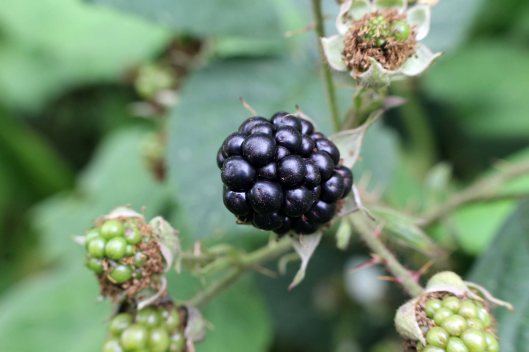
And then one day, when I’m out on one of my wanders, I spot it, the very first black berry. Will it still be a little sour and will it flood my mouth with those delectable full fruit flavours of perfect ripeness?

160826 Rubus fruticosus agg (9)

Here in Britain they are called brambles, in my New Zealand homeland we called them blackberries and, in scientific terms, they are all grouped together under the unprepossessing name of Rubus fruticosus agg. Agg stands for aggregate, as in a grouping together of a range of very closely related biological organisms, because Rubus fruticosus includes a myriad of hybridisations. But, whatever you call them, for me they are one of the things I most love about late summer and, yes, I have already eaten my first yummy blackberries of 2016.

Like Loading...

The Spotted longhorn beetle

25 Thursday Aug 2016

Posted by sconzani in insects, nature

≈ 4 Comments

Tags

Black and Yellow longhorn beetle, Longhorn beetle, Rutpela maculata, Spotted longhorn beetle

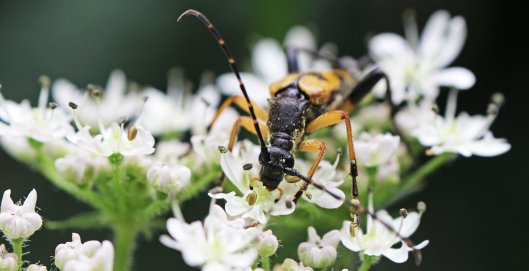
Let me introduce you to Rutpela maculata. It’s called a longhorn beetle, but really I would say it has long antennae rather than long horns, and its common name is the Spotted longhorn, but really it has spots and stripes, so its other common name of Black and Yellow longhorn seems more appropriate. Its colours and patterns roughly mimic those of wasps which, in theory, gives it protection from predators like birds.

160825 Longhorn beetle (1)

I was a little surprised, and somewhat saddened, to learn that the adult beetles have a very short life, of just two to four weeks, but this is actually quite common amongst insects. Most spend the majority of their lives as larvae.

160825 Longhorn beetle (2)
160825 Longhorn beetle (3)
160825 Longhorn beetle (4)

The adult longhorn beetles grow to between 13 and 20mm long, and can be seen any time from May to August, frequenting hedgerows and the edges of woodland trails, often enjoying a feed of pollen or nectar on umbellifers. I’ve only seen two so far, both pictured here, and you can see that the markings and colouration vary from beetle to beetle.

160825 Longhorn beetle (5)

Like Loading...

Meeting the Maasai cattle

24 Wednesday Aug 2016

Posted by sconzani in animals, nature

≈ 8 Comments

Tags

Cattle herding, Maasai, Maasai cattle, Maasai village, Tanzania

Herding cattle, sheep and goats, sleeping in a boma, getting blessed by the chief, making bead jewellery and dancing – all in a day’s work when you spend time with the Maasai!

160824 Maasai cattle (1)

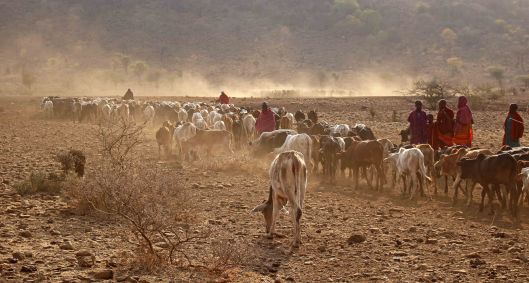
After writing about Cambodia cattle for last Wednesday’s world wildlife post, I just had to show you some Maasai cattle (and people) images this week. In October 2014 I was privileged to spend 3 days and a night in a Maasai village in Tanzania, and it was one of the most memorable experiences of my life.

160824 Maasai cattle (3)
160824 Maasai cattle (2)

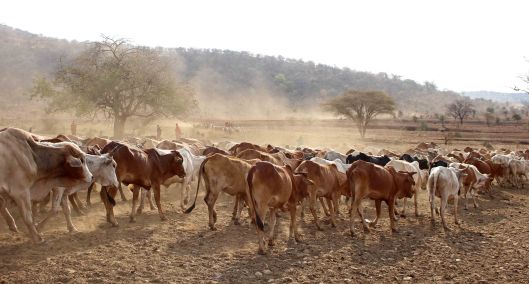
In this and the surrounding villages controlled by chief Meshuku Mappi, the Maasai own approximately 170,000 cattle, sheep and goats. That number seems almost incredible but, after watching huge herds of beasts being driven home to their overnight corrals by the men of the tribe, I can definitely believe it.

160824 Maasai cattle (5)160824 Maasai cattle (4)

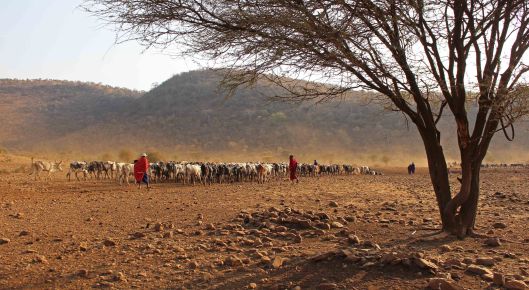
It was the perfect photo opportunity – cloven hooves churned up dust from the bone dry ground, statuesque baobob trees punctuated the landscape like frozen giants, and the bright reds and blues of the men’s clothing popped against the browns of the landscape and the animals.
160824 Maasai cattle (11)160824 Maasai cattle (7)160824 Maasai cattle (6)

And, after an overnight stay in one of the village bomas (mud huts), we were up early next morning to catch the sun rise over the nearby hills and to watch the men driving the animals out for the day’s grazing. Life for the Maasai revolves around their animals – their cows are their primary source of food, and their wealth and status are measured in cattle. The Maasai are very special people and it was a huge privilege to spend time with them and get a glimpse of their daily lives.
160824 Maasai cattle (8)160824 Maasai cattle (9)160824 Maasai cattle (10)

Like Loading...

Camouflage

23 Tuesday Aug 2016

Posted by sconzani in insects, nature

≈ Leave a comment

Tags

Bindweed flower, camouflage, Crab spider, Eupeodes corollae, hoverfly, insect camouflage, Misumena vatia, sawfly larve

On the positive side … this Sawfly larva has its colour co-ordination working very well, though maybe needs to work on its choreography.

160823 camouflage (2)

On the negative side … or positive side, depending on whether you’re identifying with the Crab spider (probably Misumena vatia) using the large white Bindweed flower as its lair, or the spider’s victim, a hoverfly (probably Eupeodes corollae).

160823 camouflage (1)

Like Loading...

Horseflies love me

22 Monday Aug 2016

Posted by sconzani in insects, nature

≈ 13 Comments

Tags

cleg, Haematopota species, horsefly, Tabanidae

And I really wish they didn’t!

160822 Horsefly Haematopota sp (2)

It’s the female Horseflies that are the problem – they’re the biters, of humans, horses and other animals, to get the blood they need to aid egg production and, for some reason, they can smell my blood coming a mile away. I got several bites on my face during a recent fungi foray and had a nasty allergic reaction, was swollen and looked like I had some kind of infectious disease. Antihistamine meds don’t really agree with me, so I retreated from the world for a week till the worst of the swelling had gone down. (I got the bite in my photo four days ago. Luckily, Ms Horsefly was only on me for a second or two, before I noticed and flicked her off.)

160822 Horsefly Haematopota sp (3)
160822 Horsefly Haematopota sp (1)
160822 Horsefly bite

The trouble for me is that Horseflies (a large and diverse group called the Tabanidae family, and also known by the common name of Cleg) are rather lovely creatures and they have the most incredible eyes, so I’m driven to capture photos of them (perhaps I’m a masochist!). The Horsefly in my photos is one of the Haematopota species. They have compound eyes that appear brightly coloured and have incredible patterns – from other photos I’ve seen, each creature seems to have a different pattern, much like fingerprints or retina patterns. So, I will continue to seek them out, just as they continue to seek me out!

160822 Horsefly Haematopota sp (4)

Like Loading...
← Older posts

About me

sconzani

sconzani

I'm a writer and photographer; researcher and blogger; birder and nature lover; countryside rambler and city strider; volunteer and biodiversity recorder.

View Full Profile →

Follow earthstar on WordPress.com

Enter your email address to follow this blog and receive notifications of new posts by email.

Recent blog posts

  • Bearded tit!!! April 3, 2026
  • A Portland Bill Kestrel April 2, 2026
  • A proliferation of Peacocks April 1, 2026
  • Little owl March 31, 2026
  • Distant seabirds March 30, 2026

From the archives

COPYRIGHT

Unless otherwise acknowledged, the text and photographs on this blog are my own and are subject to international copyright. Nothing may be downloaded or copied without my permission.

Fellow Earth Stars!

  • Unknown's avatar
  • Unknown's avatar
  • Unknown's avatar
  • Unknown's avatar
  • Unknown's avatar
  • Unknown's avatar
  • Unknown's avatar
  • Unknown's avatar
  • Unknown's avatar
  • Unknown's avatar
  • Unknown's avatar
  • Unknown's avatar
  • Unknown's avatar
  • Unknown's avatar
  • Unknown's avatar
  • Unknown's avatar
  • Unknown's avatar
  • Unknown's avatar
  • Unknown's avatar
  • Unknown's avatar
  • Unknown's avatar
  • Unknown's avatar
  • Unknown's avatar
  • Unknown's avatar
  • Unknown's avatar
  • Unknown's avatar
  • Unknown's avatar
  • Unknown's avatar
  • Unknown's avatar
  • Unknown's avatar
  • Unknown's avatar
  • Unknown's avatar
  • Unknown's avatar
  • Unknown's avatar
  • Unknown's avatar
  • Unknown's avatar
  • Unknown's avatar
  • Unknown's avatar
  • Unknown's avatar
  • Unknown's avatar
  • Unknown's avatar
  • Unknown's avatar
  • Unknown's avatar
  • Unknown's avatar
  • Unknown's avatar
  • Unknown's avatar
  • Unknown's avatar
  • Unknown's avatar
  • Unknown's avatar
  • Unknown's avatar

Blog at WordPress.com.

Privacy & Cookies: This site uses cookies. By continuing to use this website, you agree to their use.
To find out more, including how to control cookies, see here: Cookie Policy
  • Subscribe Subscribed
    • earthstar
    • Join 642 other subscribers
    • Already have a WordPress.com account? Log in now.
    • earthstar
    • Subscribe Subscribed
    • Sign up
    • Log in
    • Report this content
    • View site in Reader
    • Manage subscriptions
    • Collapse this bar
 

Loading Comments...
 

You must be logged in to post a comment.

    %d