• ABOUT
  • BIRDING 2018
  • Birding 2019
  • BLOG POSTS
  • Butterflies 2018
  • Resources

earthstar

~ a celebration of nature

earthstar

Monthly Archives: August 2016

Bugs in the meadows

21 Sunday Aug 2016

Posted by sconzani in insects, nature

≈ 12 Comments

Tags

bugs in meadows, Leptopterna dolabrata, Meadow plant bug, plant bug

Look closely at the wildflowers and grasses in a meadow during the summer months and you might be surprised at how much life is thriving below the casual gaze of human passers-by. If you live in Britain, Europe or North America (where these critters were accidentally introduced in the 1830s), one of the bugs you are quite likely to see is this aptly named Meadow plant bug (Leptopterna dolabrata).

160820 Leptopterna sp nymph (6)
160820 Leptopterna sp nymph (7)

It’s tiny, only about ⅓ inch (8mm) long, and rather well camouflaged amongst the plant stems and leaves. As you might expect from the name plant bug, it feeds on plants. In fact, it’s an expert sucker, using its stylet (piercing mouthpart) to inject into the plant stem an enzyme-rich saliva, which begins to break down the plant tissues even before the bug sucks out the resulting plant soup.

160820 Leptopterna sp nymph (8)
160820 Leptopterna sp nymph (9)

Leptopterna dolabrata is sexually dimorphic so the males and females have slightly different colouring, plus the males are fully winged whereas the females are usually only partly winged. You can see the differences in the mating pair shown above. And below is a plant bug nymph, probably one of their offspring – I say probably because many of the nymphs look alike so it’s difficult to tell exactly which species they are.

160820 Leptopterna sp nymph (5)

Like Loading...

From photograph to painting

20 Saturday Aug 2016

Posted by sconzani in insects, nature

≈ 9 Comments

Tags

dragonflies, dragonfly, Southern hawker

A few days ago I posted a photo of a Southern hawker dragonfly on the UK Dragonflies & Damselflies page on Facebook, just to be sure of my identification of this beautiful creature.

160820 Southern Hawker (1)

Julie Horner was one of the people who liked my photo and she also commented, asking my permission to paint the dragonfly. I said yes, if she would give me permission to share her painting here on the blog. A deal was struck and I emailed Julie the images I shared on my Southern Hawker blog post last week.

160820 Souther Hawker Julie Horner painting

Yesterday, Julie completed the painting and I am really delighted to be able to share her work with you. I love how she has simplified the subject matter – the iris is the perfect flower for the dragonfly to perch on, I think, and I also admire how well she has captured the detail in the wings. I’m sure you’ll agree that Julie is a really talented artist and I’m thrilled at what this impromptu collaboration has produced. You can check out more of Julie’s gorgeous paintings on her Facebook page, Horner Art Studio, and on her Etsy page.

Like Loading...

A wealth of wildflowers

19 Friday Aug 2016

Posted by sconzani in flowers, nature, wildflowers

≈ 2 Comments

Tags

Creeping jenny, Devil's-bit scabious, Dock, Meadowsweet, Narrow-leaved everlasting pea, Ragged robin, Ribwort plantain, Rosebay willowherb, Sneezewort, Tall Melilot

It’s Friday! It’s Floral Friday! It must be time for more wildflowers. Here’s the latest selection from my wanderings around parks, meadows and reserves:

Creeping jenny (Lysimachia nummularia), Devil’s-bit scabious (Succisa pratensis), Dock (Rumex sp), Meadowsweet (Filipendula ulmaria), Narrow-leaved everlasting pea (Lathyrus sylvestris), Ragged robin (Lychnis flos-cuculi), Ribwort plantain (Plantago lanceolata), Rosebay willowherb (Chamerion angustifolium), Sneezewort (Achillea ptarmica) and Tall Melilot (Melilotus altissimus).

Creeping jenny Lysimachia nummularia
Devil's-bit scabious Succisa pratensis
Dock Rumex sp
Meadowsweet Filipendula ulmaria
Narrow-leaved everlasting pea Lathyrus sylvestris
Ragged robin Lychnis flos-cuculi
Ribwort plantain Plantago lanceolata
Rosebay willowherb Chamerion angustifolium
Sneezewort Achillea ptarmica
Tall Melilot Melilotus altissimus
Like Loading...

Parc Slip Reptile ramble

18 Thursday Aug 2016

Posted by sconzani in 'Dedicated Naturalist' Project, nature, reptiles

≈ 7 Comments

Tags

adder, British reptiles, Common lizard, grass snake, Mary Gillham Archive Project, Parc Slip, Parc Slip Nature Reserve, slow-worm, volunteering, Wildlife Trust, Wildlife Trust for South & West Wales, WTSWW

Partly as a training exercise in wildlife identification, partly as a reward for all our hard work to date, and partly as a fun way for our team to get together, our Mary Gillham Archive Project volunteers were treated to a reptile ramble at Parc Slip Nature Reserve yesterday. And it was fantastic!

160818 reptile ramble (4)

Led by friendly and knowledgeable Wildlife Trust officer Lorna, we explored the research and conservation areas where members of the public don’t normally get to wander. With the excitement palpable and a huge sense of anticipation from us onlookers, Lorna used her trusty snake stick to lift up the reptile refugia (sheets of corrugated iron or heavy plastic under which the reptiles frequently shelter) to see what we could find. Though her initial efforts proved unsuccessful, we did eventually get lucky and were very excited to see one very small, young Common lizard (which scuttled away far too quickly for a photo so my lizard photo here is from another day), a Grass snake (which also slithered away far too quickly to photograph), an Adder and 4 Slow-worms. Success! And a great day out, thanks to the conservation efforts of the wonderful folks who work and volunteer at the Wildlife Trust of South & West Wales.

160818 reptile ramble (2)
160818 reptile ramble (5)
160818 reptile ramble (1)
160818 reptile ramble (7)
160818 reptile ramble (3)
160818 reptile ramble (6)
Like Loading...

Cattle in Cambodia

16 Tuesday Aug 2016

Posted by sconzani in animals, nature

≈ 4 Comments

Tags

bovine, Cambodia, cattle, Cattle in Cambodia, cow, Water buffalo

World wildlife Wednesday has rolled around again, and I was stuck for an idea this week until my friend Viv, who lives in Thailand, posted a photo of one of her local water buffalo.

160817 cambo cattle (11)

My photos, however, were not taken in Thailand but in Cambodia, where I lived and worked for seven months back in 2013. Both water buffalo and the local cattle are common sights there, pulling wagons and ploughs, and wallowing in muddy watering holes. These valuable, well-tended beasts of burden are also farmed for their dairy products, and cow dung has long been used both as fertiliser and as fuel in impoverished countries like Cambodia. Cattle also feature in their ancient religions, and representations can be seen in the stone statues and sculptured reliefs that adorn the world-famous temples of Angkor Wat and the local pagodas. So, today we have a celebration of ‘bovinity’!

160817 cambo cattle (1)
160817 cambo cattle (2)
160817 cambo cattle (3)
160817 cambo cattle (4)
160817 cambo cattle (5)
160817 cambo cattle (6)
160817 cambo cattle (7)
160817 cambo cattle (8)
160817 cambo cattle (9)
160817 cambo cattle (10)
Like Loading...

Seven Sisters Country Park

16 Tuesday Aug 2016

Posted by sconzani in birds, insects, nature, parks, wildflowers

≈ 8 Comments

Tags

birding, birdwatching, British birds, chalk cliffs, Cuckmere River, East Sussex, Seven Sisters Country Park

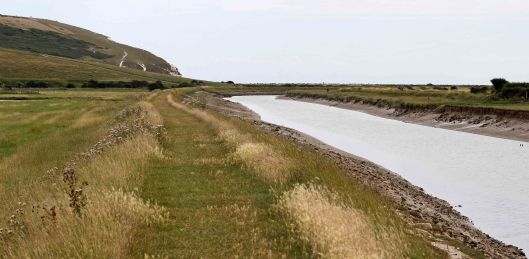
Last Wednesday Jill and I walked the full length of the Seven Sisters Country Park in East Sussex twice, down to the sea and back on one side of the river, followed by a break for a delicious lunch at the Cuckoo Inn, and then down to the sea and back on the other side of the river.

160816 7 sisters (1)

We did the same walk on 13 August 2014 and it was top of my list to do again on this visit. Rather than the cloudless, bright blue sky of two years ago, this time it was quite overcast though no less beautiful as the clouds lent a different atmosphere to the landscape, creating a more moody feel that I almost prefer.

160816 7 sisters (11)

The huge chalk cliffs were just as awe-inspiring, the cliff tops were covered with luxuriant wildflower growth, and we delighted in sightings of birds and insects. It was a magical day!

To walk the landscapes of the Seven Sisters Country Park, check out my Sconzani blog posts: this was on a blue-sky day in 2014 and this was last week.

160816 7 sisters (2)
160816 7 sisters (15)
160816 7 sisters (4)
160816 7 sisters (13)
160816 7 sisters (5)
160816 7 sisters (16)
160816 7 sisters (8)
160816 7 sisters (7)
160816 7 sisters (9)
160816 7 sisters (12)
160816 7 sisters (10)
160816 7 sisters (3)
160816 7 sisters (6)
160816 7 sisters (14)
Like Loading...

A Southern hawker

15 Monday Aug 2016

Posted by sconzani in insects, nature

≈ 1 Comment

Tags

Aeshna cyanea, dragonflies, dragonfly, Southern hawker

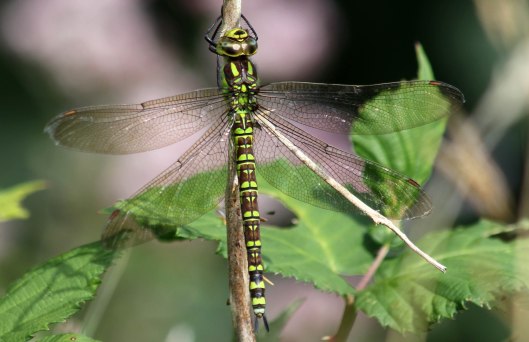
Although I’d seen a Southern hawker dragonfly (Aeshna cyanea) once before, I hadn’t managed to get any good photos until I spotted this little beauty while on an outing to Lewes in East Sussex during last week’s holiday. Though the spot where she settled meant she was slightly obscured by vegetation, she very obligingly stayed put while I got several shots.

160815 Southern Hawker (1)

At around 70mm (2¾ inches) long, Southern hawkers are reasonably large creatures, and my research tells me they can be very inquisitive, sometimes flying right up to the people watching them to check them out. I’ve yet to see a male but imagine them to be rather handsome as they have vivid blue and green colouring with similar dark patterning to the female.

160815 Southern Hawker (3)
160815 Southern Hawker (2)

Neither of the Southern hawkers I’ve seen was near water and this is quite common, apparently. Though they need well-vegetated ponds in which to lay their eggs, they can often be seen hawking for food along tree-lined paths and woodland rides. These dragonflies are common in southern parts of England and Wales, hence the name Southern hawker.

160815 Southern Hawker (4)

Like Loading...

Rye Harbour Nature Reserve

14 Sunday Aug 2016

Posted by sconzani in birds, insects, nature, wildflowers

≈ 4 Comments

Tags

largest coastal shingle area in Europe, Rye Harbour Nature Reserve, shingle beach

On the first full day of my short break in East Sussex, my friend Jill and I enjoyed a long walk around the fabulous Rye Harbour Nature Reserve, which, along with Dungeness, encompasses the largest coastal shingle area in Europe. Former gravel pits now filled with fresh water together with salt-marshes and saline lagoons provide the perfect habitats for a huge number of birds, as well as both common and rare species of plants and insects. I was in biological heaven!

160814 Rye Harbour (18)

The species in my photos are just a very small selection of what you can see: Black-headed gulls (Chroicocephalus ridibundus) and an unidentified small brown wader; Geranium sp; Viper’s bugloss (Echium vulgare); Little egret (Egretta garzetta); Great mullein (Verbascum thapsus); Curlew (Numenius arquata); Pied wagtail (Motacilla alba); Large white butterfly (Pieris brassicae); Field Grasshopper (Chorthippus brunneus); a plant that looks like a dandelion but isn’t (!); Wild teasel (Dipsacus fullonum); Cormorants (Phalacrocorax carbo); Yellow horned poppy (Glaucium flavum); Coots (Fulica atra); Gatekeeper (Pyronia tithonus) and rather raggedy Red admiral (Vanessa atalanta) butterflies; Lapwings (Vanellus vanellus); and Marsh mallow (Althaea officinalis).

For a wander around the landscapes of Rye Harbour Nature Reserve, check out my Sconzani blog post here.

160814 Rye Harbour (1)
160814 Rye Harbour (2)
160814 Rye Harbour (3)
160814 Rye Harbour (4)
160814 Rye Harbour (5)
160814 Rye Harbour (6)
160814 Rye Harbour (7)
160814 Rye Harbour (8)
160814 Rye Harbour (9)
160814 Rye Harbour (10)
160814 Rye Harbour (11)
160814 Rye Harbour (12)
160814 Rye Harbour (13)
160814 Rye Harbour (14)
160814 Rye Harbour (15)
160814 Rye Harbour (16)
160814 Rye Harbour (17)
Like Loading...

The Herring gull alarm clock

13 Saturday Aug 2016

Posted by sconzani in birds, nature

≈ 7 Comments

Tags

birding, birdwatching, British birds, Herring gull, Larus argentatus

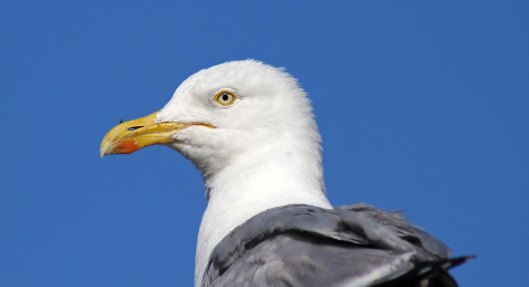
When I went to stay with my friend Jill in East Sussex this week I didn’t expect to be woken early each morning by Herring gulls (scientific name Larus argentatus) screeching and squawking on hers and her neighbours’ rooftops as she lives several miles from the sea as the gull flies and nowhere near something that might attract them, like a rubbish tip. It seems the gulls have started moving inland in her area and she’s certainly noticed more of them about in the past year or so. According to the RSPB, Herring gull numbers have been declining in recent years so perhaps they are expanding their range in search of food.

160813 herring gulls (7)

I enjoyed hearing them as it made me feel like I was on holiday at the seaside, though they could be very cheeky. Although Jill doesn’t feed them, they do scavenge food put out for the smaller birds, and one rather insistent gull has taken to tapping at the French doors in her bedroom in the morning in the hope of getting some breakfast. And I took these photos of the same (or another, equally brazen bird) outside the back door, giving me a very imperious ‘feed me now’ look, then mewing like a young gull when the glare didn’t produce the desired results. I’m afraid it went away hungry.

160813 herring gulls (1)
160813 herring gulls (2)
160813 herring gulls (3)
160813 herring gulls (4)
160813 herring gulls (5)
160813 herring gulls (6)
Like Loading...

A bewilderment of thistles

12 Friday Aug 2016

Posted by sconzani in flowers, nature, wildflowers

≈ 6 Comments

Tags

Common knapweed, Creeping thistle, Lesser burdock, Spear thistle, thistle, thistle lookalikes

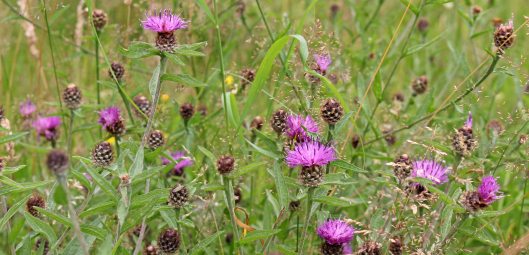
Last Floral Friday I was confused about geraniums; this week it’s thistles and things that look like thistles that are causing my befuddlement.

160812 thistles (14)

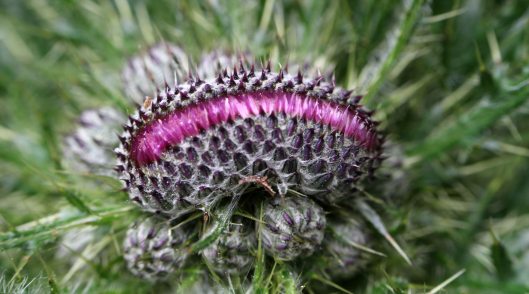
It seems there are thistle lookalikes, like Lesser burdock (Arctium minus agg.) and Common Knapweed (Centaurea nigra), though admittedly, they don’t have thorns but the flowers are very similar. And then there are plants that have ‘thistle’ in their names that don’t look a bit like thistles to me: Smooth sow thistle (Sonchus oleraceus), for example, that looks more like a dandelion, and Globe thistle (Echinops sp.), which looks like a cross between a thistle, a teasel and an allium. And then there are the numerous varieties of actual thistles to decipher. Which genus is it: Cirsium, Carduus (Latin for ‘a kind of thistle’), Silybum (yes, really!) or Onopordum? And is it Spear thistle (Cirsium vulgare) or Creeping thistle (Cirsium arvense) or Milk thistle (Silybum marianum) or Scotch thistle (Onopordum acanthum)?

160812 thistles (13)

I think you can see why I’m not even going to try to identify these photos. I’m going to remain bewildered and simply enjoy their wonderful structures and gorgeous colours.

160812 thistles (1)
160812 thistles (2)
160812 thistles (3)
160812 thistles (4)
160812 thistles (5)
160812 thistles (6)
160812 thistles (7)
160812 thistles (8)
160812 thistles (9)
160812 thistles (10)
160812 thistles (11)
160812 thistles (12)
Like Loading...
← Older posts
Newer posts →

About me

sconzani

sconzani

I'm a writer and photographer; researcher and blogger; birder and nature lover; countryside rambler and city strider; volunteer and biodiversity recorder.

View Full Profile →

Follow earthstar on WordPress.com

Enter your email address to follow this blog and receive notifications of new posts by email.

Recent blog posts

  • Bearded tit!!! April 3, 2026
  • A Portland Bill Kestrel April 2, 2026
  • A proliferation of Peacocks April 1, 2026
  • Little owl March 31, 2026
  • Distant seabirds March 30, 2026

From the archives

COPYRIGHT

Unless otherwise acknowledged, the text and photographs on this blog are my own and are subject to international copyright. Nothing may be downloaded or copied without my permission.

Fellow Earth Stars!

  • Unknown's avatar
  • Unknown's avatar
  • Unknown's avatar
  • Unknown's avatar
  • Unknown's avatar
  • Unknown's avatar
  • Unknown's avatar
  • Unknown's avatar
  • Unknown's avatar
  • Unknown's avatar
  • Unknown's avatar
  • Unknown's avatar
  • Unknown's avatar
  • Unknown's avatar
  • Unknown's avatar
  • Unknown's avatar
  • Unknown's avatar
  • Unknown's avatar
  • Unknown's avatar
  • Unknown's avatar
  • Unknown's avatar
  • Unknown's avatar
  • Unknown's avatar
  • Unknown's avatar
  • Unknown's avatar
  • Unknown's avatar
  • Unknown's avatar
  • Unknown's avatar
  • Unknown's avatar
  • Unknown's avatar
  • Unknown's avatar
  • Unknown's avatar
  • Unknown's avatar
  • Unknown's avatar
  • Unknown's avatar
  • Unknown's avatar
  • Unknown's avatar
  • Unknown's avatar
  • Unknown's avatar
  • Unknown's avatar
  • Unknown's avatar
  • Unknown's avatar
  • Unknown's avatar
  • Unknown's avatar
  • Unknown's avatar
  • Unknown's avatar
  • Unknown's avatar
  • Unknown's avatar
  • Unknown's avatar
  • Unknown's avatar

Blog at WordPress.com.

Privacy & Cookies: This site uses cookies. By continuing to use this website, you agree to their use.
To find out more, including how to control cookies, see here: Cookie Policy
  • Subscribe Subscribed
    • earthstar
    • Join 642 other subscribers
    • Already have a WordPress.com account? Log in now.
    • earthstar
    • Subscribe Subscribed
    • Sign up
    • Log in
    • Report this content
    • View site in Reader
    • Manage subscriptions
    • Collapse this bar
 

Loading Comments...
 

You must be logged in to post a comment.

    %d