• ABOUT
  • BIRDING 2018
  • Birding 2019
  • BLOG POSTS
  • Butterflies 2018
  • Resources

earthstar

~ a celebration of nature

earthstar

Monthly Archives: December 2017

One hundred and sixty-three

31 Sunday Dec 2017

Posted by sconzani in birds, nature

≈ Leave a comment

Tags

Avocet, birding, birdwatching, British birds, Great tit, robin, Sand martin

Neither my age, nor my weight, nor my height (though that comes closest), one hundred and sixty-three is my birding total for 2017 – that is, the total number of species I managed to see in Britain.

171231 avocets

This was the first year I’ve kept a count, and it was just out of interest really but, as my more dedicated birding friends post their totals on our Facebook group page (one has 223, another a whopping 252) , I’ve decided to try for a 200-bird year in 2018. That doesn’t mean I’m going to become a mad twitcher or go haring off all over the country to see rare birds. I’m just going to make more of an effort to see as many as I can because I love them so!

171231 robin

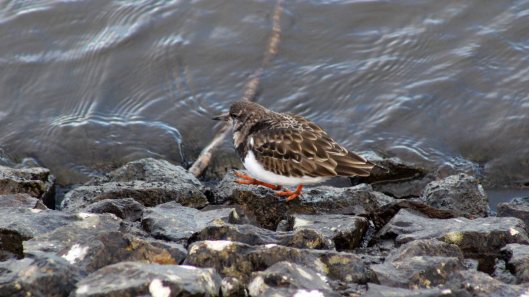
And my favourite birding moments in 2017? There were too many to recount, from marvelling at an encounter between a Bittern and a Marsh harrier at RSPB Ham Wall to my frequent local conversations with Robins and chuckles at Tufted ducks, from the joy of watching Avocets with their chicks at Rye Harbour on my birthday to the thrill of seeing feeding Gannets crashing headfirst into the ocean off Dawlish beach, from the lovely little Turnstones than bumble along the embankment in Penarth Marina to the Sand martin that sat and chattered away to me on a railing at Cardiff Bay.

171231 Sand martin

Why just yesterday I had a Great tit land on my hand to grab itself a piece of the flapjack I was sharing with the hungry birds at Cosmeston! Every moment like that, every second spent watching and hearing my feathered friends is joyous!

171231 Great tit

Like Loading...

December on the Ely embankment

30 Saturday Dec 2017

Posted by sconzani in birds, nature

≈ Leave a comment

Tags

birding, birdwatching, Black-headed gull, British birds, Cardiff Bay, Ely embankment, Great Crested Grebe, Grey wagtail, River Ely, Turnstone, wren

My first embankment stroll this month was on the third and I saw not a single solitary Turnstone – that hasn’t happened since I started doing a regular weekly count along this embankment back in September. The only birds on the stones were three Grey wagtails, and, though there were two Little grebes in the water, even the numbers of Coot and Mute swan were much reduced.

171230 Ely embankment (1)
171230 Ely embankment (2)
171230 Ely embankment (3)

The 8th of December was a bitterly cold day, with the wind so strong it was whipping up small waves against the stones of the embankment. I’m sure that’s the reason I saw so few birds – a single Grey wagtail flitted back and forth, and only six hardy Coots braved the chilly waters, a tiny number compared to usual. There wasn’t a single Mute swan or Mallard or Turnstone, and even gull numbers were low – those that were about were flying quite low around me, as if hoping for food. I had none to give but I did try to grab some flight photos, this Black-headed gull being the best of a blurry bunch.

171230 Ely embankment (4)

The 16th was cold but not sub-zero so relatively pleasant, and perhaps that’s why the Turnstones had returned – well, two of them had, and it was lovely to see them foraging along the water’s edge. I didn’t think there were many gulls about until a Black-headed gull about 50 metres from me found some food and then gulls flew in from every direction – 37 Black-headed and 5 Lesser black-backs, all wheeling and screeching and squabbling over one slice of bread.

171230 Ely embankment (5)

Apart from those, there were two Mute swans, 3 Mallards, about 6 Coots, 3 Great crested grebes and 1 Grey wagtail. Oh, and I mustn’t forget the littlest of all, a tiny Wren bopping in and out of the rocks in search of insects.

171230 Ely embankment (7)
171230 Ely embankment (6)
Like Loading...

The Winter Seventeen

29 Friday Dec 2017

Posted by sconzani in flowers, nature, plants, wildflowers, winter

≈ Leave a comment

Tags

#TheWinterTen, #WildflowerHour, British wildflowers, Ham Hill, Wildflower Hour, wildflowers, winter wildflowers

171229 Ham Hill

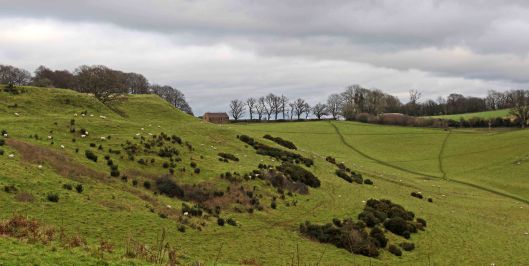
Back in early November I blogged about Wildflower Hour’s winter challenge encouraging us all to try to find ten wildflowers still in bloom each week of winter. Well, I’ve been on holiday in Somerset over Christmas and, when my friend Sarah and I were out walking at Ham Hill on Christmas Eve, we took the challenge and were amazed to find not ten but seventeen wildflowers in bloom. Here (with apologies for the blurry pics – the wind was howling – and the lack of accurate names – I didn’t take my guide book on holiday) they are: ragwort, red campion, white dead nettle, hogweed, bramble, dog’s mercury, possible one of the Hawk’s-beard family, chamomile, cow parsley, ivy, a species of thistle and another of grass, wild parsnip, a variety of speedwell, the ever-reliable daisy, yarrow, and the equally reliable gorse.

p.s. Ham Hill is a fascinating place to explore if you’re ever in that vicinity and I’m already planning another walk there when I visit Sarah again in the summer.

171229 Ham Hill wildflowers (1)
171229 Ham Hill wildflowers (2)
171229 Ham Hill wildflowers (3)
171229 Ham Hill wildflowers (4)
171229 Ham Hill wildflowers (5)
171229 Ham Hill wildflowers (6)
171229 Ham Hill wildflowers (7)
171229 Ham Hill wildflowers (8)
171229 Ham Hill wildflowers (9)
171229 Ham Hill wildflowers (10)
171229 Ham Hill wildflowers (11)
171229 Ham Hill wildflowers (12)
171229 Ham Hill wildflowers (13)
171229 Ham Hill wildflowers (14)
171229 Ham Hill wildflowers (15)
171229 Ham Hill wildflowers (16)

171229 Ham Hill wildflowers (17)

Like Loading...

December at Cosmeston

28 Thursday Dec 2017

Posted by sconzani in birds, mammal, nature, parks, winter

≈ 2 Comments

Tags

birding, birdwatching, British birds, brown rat, bullfinch, Cosmeston, Cosmeston Lakes Country Park, Fieldfare, Great spotted woodpecker, long-tailed tit, Marsh tit, nuthatch, Stonechat, Tufted duck

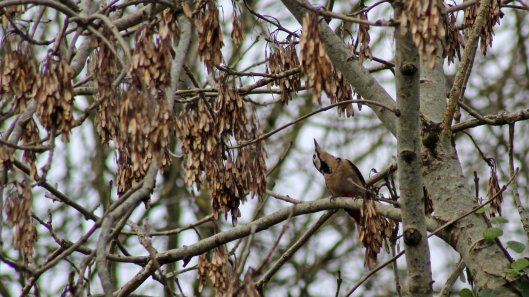
It was fairly quiet bird-wise on my first monthly visit to Cosmeston Lakes Country Park on 2 December, though there were still good numbers of the various thrushes (Mistle, Song, Redwing and Blackbird) around. A Great spotted woodpecker in the west paddock was a nice surprise – I initially thought it a Jay when I saw that peachy belly. The Tufted ducks amused, as always, and, while I sat watching them, the Brown rat I’d seen before at that particular spot came snuffling around for food. There were two more rats foraging by the boardwalk near the café.

171228 Cosmeston (1)

171228 Cosmeston (2)
171228 Cosmeston (3)

It’s a thrush takeover! On 6 December, I’d scarcely left the house to walk to Cosmeston than I was spotting Redwings, Song thrushes, and a Mistle thrush, plus Goldfinches and Chaffinches, in the trees just across the road. And when I got to Cosmeston it was more – much more – of the same, plus the first Fieldfares I’ve seen there. In Cogan Wood, the little birds were hungry so I shared my flapjack with them – there were even two Nuthatches and a half dozen Long-tailed tits picking up the crumbs on the ground. And the prize for the most colourful birds goes to the pair of Bullfinch that were munching on hogweed seeds.

171228 Cosmeston (5)
171228 Cosmeston (6)
171228 Cosmeston (7)
171228 Cosmeston (4)

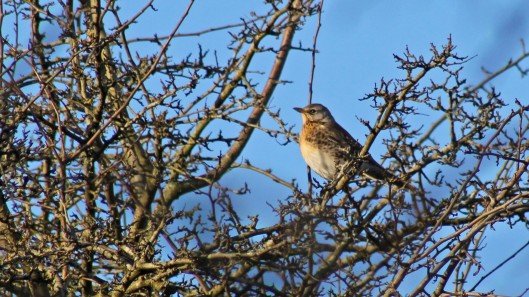
On 15 December, I finally got a reasonable, though not brilliant photo of a Fieldfare – they are very skittish so it’s hard to get close to them. I finally found a spot behind the berry trees they were feasting in, then just had to be patient and wait for one to pop up to the top of a tree.

171228 Cosmeston (8)

In Cogan Wood, one of the resident Marsh tits popped out to say hello – first sighting I’ve had since earlier in the year as they seem to disappear during the breeding season. And there was a Stonechat at the top end of the west paddock. There had been a pair of Stonechats in that area in the autumn but they seemed to have disappeared when the park staff mowed that field, so it was good to see one there again.

171228 Cosmeston (9)
171228 Cosmeston (10)

Something else happened at Cossie during this visit, something that’s never happened to me before. A squirrel climbed up my leg, not once but four times – the first time it grabbed my finger, the second time it touched my camera. I didn’t have food but it obviously thought I did. It certainly made me laugh.

Like Loading...

Wild words: brumous

27 Wednesday Dec 2017

Posted by sconzani in nature, weather, winter

≈ Leave a comment

Tags

#WildWords, brumous, foggy, winter weather, wintry

171227 brumous (1)

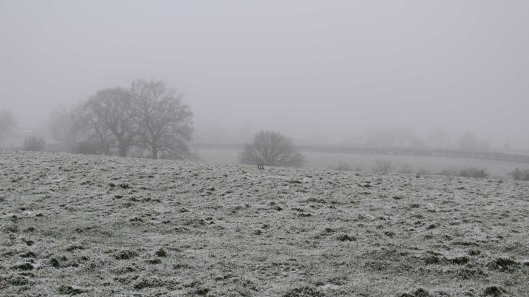
brumous: adjective; meaning foggy and wintry; dating from the mid-19th century; from the French brumeux, meaning misty, from late Latin bruma meaning winter and also the winter solstice (I should have posted this blog last week!). The Merriam-Webster Dictionary gives the following list of synonyms for brumous: beclouded, befogged, hazy, clouded, cloudy, foggy, gauzy, misty, murky, smoggy, soupy. I think you get the idea.

171227 brumous (2)

Like Loading...

Rock pipit

26 Tuesday Dec 2017

Posted by sconzani in birds, nature

≈ Leave a comment

Tags

Anthus petrosus, birding, birdwatching, British birds, gutter teetan, rock lintie, Rock pipit, teetan, teetuck

171226 rock pipit (2)

For a relatively non-descript small brown bird the Rock pipit’s alternative names are anything but ordinary. Its Latin name is Anthus petrosus, which sounds for all the world like an incantation Harry Potter might utter against some evil force that was assailing him, and it has a wealth of interesting vernacular names that include dusky lark – understandable; gutter teetan – most peculiar; rock lintie – from Aberdeenshire; from east Yorkshire, sea lark; another from Scotland, sea lintie – is lintie the Scots for linnet perhaps; tangle sparrow, from Orkney and Shetland, as well as teetan and teetuck, also from Shetland.

171226 rock pipit (3)
171226 rock pipit (5)
171226 rock pipit (4)

I see these little birds quite often on the south Wales coast, on the rocks and stone embankments of Cardiff Bay and the rivers that flow into it, and on the sloping stone walls of other dockland areas, like Barry docks. When they’re not perching watchfully on a prominent rock, they’re fossicking busily between the stones for insects and seeds, beetles and, if they’re lucky, small fish.

171226 rock pipit (1)

Like Loading...

Rockin’ robin!

25 Monday Dec 2017

Posted by sconzani in birds, nature

≈ Leave a comment

Tags

bird, British birds, robin, rockin robin

He rocks in the tree tops all day long
Hoppin’ and a-boppin’ and singing his song
All the little birdies on Jaybird Street
Love to hear the robin go tweet tweet tweet

Rockin’ robin, rock rock
Rockin’ robin
Blow rockin’ robin
‘Cause we’re really gonna rock tonight

~ Leon René (under the pseudonym Jimmie Thomas)

Like Loading...

Seeing blue

24 Sunday Dec 2017

Posted by sconzani in flowers, insects, nature

≈ Leave a comment

Tags

blue, blue butterflies, blue colour, blue feathers, blue flowers, blue petals, seeing blue

Blue feathers, blue water, blue flowers, blue butterflies …

The reasons why our eyes perceive these things as blue (or don’t, if we’re colour-blind) vary depending on what we’re looking at. With birds’ feathers, for example, the blue is actually a ‘structural colour’, because ‘When white light strikes a blue feather, the keratin pattern causes red and yellow wavelengths to cancel each other out, while blue wavelengths of light reinforce and amplify one another and reflect back to the beholder’s eye’ (from the amazing Smithsonian website).

Water looks blue because it more readily absorbs light in red, orange and yellow wavelengths but reflects the blue wavelength, so it’s reflecting the colour of the sky above. Blue flowers occur in plants that are able to chemically modify red anthocyanin pigments to reflect white light as blue, and those butterflies that look blue are also reflecting white light, the blue colour being dependent on the placement of the minute scales on their wings. Colour is so complicated!

171224 blue (1)
171224 blue (2)
171224 blue (3)
171224 blue (4)
171224 blue (5)
171224 blue (6)
171224 blue (7)
171224 blue (8)
171224 blue (9)
Like Loading...

Four and twenty blackbirds

23 Saturday Dec 2017

Posted by sconzani in birds, nature

≈ 4 Comments

Tags

birding birdwatching, birds in culture, birds in society, blackbird, British birds, Turdus merula

This is not a pie recipe! This is a visual celebration of one of our most common birds; one that almost every person can recognise and name; one that loves to sing its happy tune in our gardens and parks. There have been songs entitled ‘Blackbird’ (the Beatles, 1968 song, for example); films and plays, books, poems and short stories (too numerous to mention); people with the Blackbird surname; places named Blackbird (in England and the United States); planes, yachts and locomotives with the Blackbird name; even sports teams and personal computers (Hewlett Packard’s Blackbird 002). What a contribution this humble bird has made to the world!

171223 blackbird (1)
171223 blackbird (2)
171223 blackbird (3)
171223 blackbird (4)
171223 blackbird (5)
171223 blackbird (6)
171223 blackbird (7)
171223 blackbird (8)
171223 blackbird (9)
171223 blackbird (10)
171223 blackbird (11)
171223 blackbird (12)
171223 blackbird (13)
171223 blackbird (14)
171223 blackbird (15)
171223 blackbird (16)
171223 blackbird (17)
171223 blackbird (18)
171223 blackbird (19)
171223 blackbird (20)
171223 blackbird (21)
171223 blackbird (22)
171223 blackbird (23)
171223 blackbird (24)
Like Loading...

Hebe and bumble

22 Friday Dec 2017

Posted by sconzani in flowers, nature, plants, winter

≈ Leave a comment

Tags

Buff-tailed bumblebee, bumblebee, Goddess Hebe, Hebe, Hebe plants

I always have a little smile to myself when I see a Hebe because, of course, it’s a New Zealand native plant and reminds me of my homeland (though I was surprised to read today that they’re also native to South America, the Falkland Islands and one island in French Polynesia).

171222 Hebe (2)
171222 Hebe (1)

They’re tough plants. The two species shown here were photographed in 0° Celsius, in between hail showers, yet they show no signs of being affected by the Welsh winter and, in fact, are providing much-needed food for the few bees (that’s a Buff-tailed bumblebee in my photo) and other insects that are still out and about. As well as the cold, they’re also very tolerant of salty sea air so they’re a good plant for coastal gardens like those here in Penarth.

171222 Hebe (6)
171222 Hebe (7)
171222 Hebe (8)

In case you didn’t know, the plant is named after the Greek goddess Hebe, daughter of chief god Zeus and his wife Hera. Hebe was barista on Mt Olympus, serving ambrosia and nectar to all the other gods and goddesses, until she married Heracles and became a stay-at-home mum to their two kids.

171222 Hebe (4)
171222 Hebe (5)
171222 Hebe (3)
Like Loading...
← Older posts

About me

sconzani

sconzani

I'm a writer and photographer; researcher and blogger; birder and nature lover; countryside rambler and city strider; volunteer and biodiversity recorder.

View Full Profile →

Follow earthstar on WordPress.com

Enter your email address to follow this blog and receive notifications of new posts by email.

Recent blog posts

  • Chiffchaffs chiffchaffing April 4, 2026
  • Bearded tit!!! April 3, 2026
  • A Portland Bill Kestrel April 2, 2026
  • A proliferation of Peacocks April 1, 2026
  • Little owl March 31, 2026

From the archives

COPYRIGHT

Unless otherwise acknowledged, the text and photographs on this blog are my own and are subject to international copyright. Nothing may be downloaded or copied without my permission.

Fellow Earth Stars!
  • Unknown's avatar
  • Unknown's avatar
  • Unknown's avatar
  • Unknown's avatar
  • Unknown's avatar
  • Unknown's avatar
  • Unknown's avatar
  • Unknown's avatar
  • Unknown's avatar
  • Unknown's avatar
  • Unknown's avatar
  • Unknown's avatar
  • Unknown's avatar
  • Unknown's avatar
  • Unknown's avatar
  • Unknown's avatar
  • Unknown's avatar
  • Unknown's avatar
  • Unknown's avatar
  • Unknown's avatar
  • Unknown's avatar
  • Unknown's avatar
  • Unknown's avatar
  • Unknown's avatar
  • Unknown's avatar
  • Unknown's avatar
  • Unknown's avatar
  • Unknown's avatar
  • Unknown's avatar
  • Unknown's avatar
  • Unknown's avatar
  • Unknown's avatar
  • Unknown's avatar
  • Unknown's avatar
  • Unknown's avatar
  • Unknown's avatar
  • Unknown's avatar
  • Unknown's avatar
  • Unknown's avatar
  • Unknown's avatar
  • Unknown's avatar
  • Unknown's avatar
  • Unknown's avatar
  • Unknown's avatar
  • Unknown's avatar
  • Unknown's avatar
  • Unknown's avatar
  • Unknown's avatar
  • Unknown's avatar
  • Unknown's avatar

Blog at WordPress.com.

Privacy & Cookies: This site uses cookies. By continuing to use this website, you agree to their use.
To find out more, including how to control cookies, see here: Cookie Policy
  • Subscribe Subscribed
    • earthstar
    • Join 642 other subscribers
    • Already have a WordPress.com account? Log in now.
    • earthstar
    • Subscribe Subscribed
    • Sign up
    • Log in
    • Report this content
    • View site in Reader
    • Manage subscriptions
    • Collapse this bar
 

Loading Comments...
 

You must be logged in to post a comment.

    %d