• ABOUT
  • BIRDING 2018
  • Birding 2019
  • BLOG POSTS
  • Butterflies 2018
  • Resources

earthstar

~ a celebration of nature

earthstar

Monthly Archives: June 2017

March of the caterpillars

20 Tuesday Jun 2017

Posted by sconzani in insects, nature

≈ 7 Comments

Tags

Aglais io, butterflies, caterpillar, Euproctis similis, Lasiocampa quercus, moth larvae, moths, Oak eggar, Peacock butterfly, Yellow-tail

Perhaps that should really be MUNCH of the caterpillars because these little creatures are really the ultimate food processors. They eat ravenously, they ingest determinedly, they process interminably, and, yes, they pooh prodigiously. What a life!
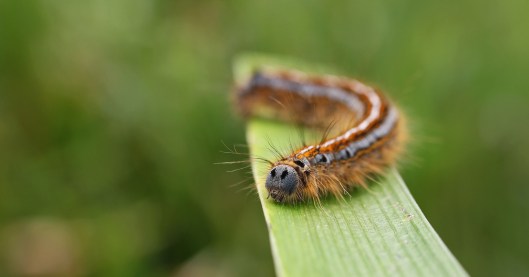
170620 Oak eggar larva (1)

They can be covered in bristles: watch these ones as people with sensitive skin often get a rash from touching them because they can contain chemicals to deter predators from eating them. They can be dull to blend in with the vegetation on their favourite food plant. They can be patterned in startling colours and patterns, again as a warning to predators – ‘Don’t eat me!’

170620 Oak eggar larva (3)
170620 Yellow-tail larva (3)

These particular caterpillars are the larvae of two moths and one butterfly. The hairy ones are the moths, Oak eggar (Lasiocampa quercus) and Yellow-tail (Euproctis similis), and the spiky black one with white dots is the rather surprisingly coloured caterpillar of the Peacock butterfly (Aglais io).

170620 Oak eggar larva (2)
170620 Peacock caterpillars (1)
170620 Peacock caterpillars (2)
170620 Yellow-tail larva (1)
170620 Yellow-tail larva (2)
Like Loading...

Meet the Robins

19 Monday Jun 2017

Posted by sconzani in birds, nature, parks

≈ 6 Comments

Tags

birding, birdwatching, British birds, Cosmeston Lakes Country Park, fledgling robin, robin

Let me introduce you to Mr and Mrs Robin and their two children. They live at Cosmeston Lakes Country Park. Mr (or Mrs – I can’t actually tell male and female robins apart) came to greet me when I was standing by one the lakes yesterday, watching the ducks. He (or she) hopped over to within inches of where my hand was resting on a railing and looked at me with something akin to desperation. “Do you happen to have any food, lady?” Then, Mrs (or Mr) Robin popped up on to the closest fence post and also gave me a pleading look, “Please!”.

170619 Robin family (1)
170619 Robin family (2)

Luckily, I did have some seed in my bag so spread a little on top of another fence post. They were there immediately, picking up two or three seeds and flitting into a nearby tree. And then I saw the reason for their desperation – two ravenous fledglings were nagging them for food. Truth be told, the fledglings were probably old enough to feed themselves and did, in fact, pop down and peck around a bit. But Mum and Dad obviously still felt obliged to feed their youngsters if they could. I was very pleased to help out.

170619 Robin family (3)
170619 Robin family (4)
Like Loading...

Night heron sighting!!!

18 Sunday Jun 2017

Posted by sconzani in birds, nature, parks

≈ 6 Comments

Tags

birding, birdwatching, Black-crowned night heron, Cosmeston Lakes Country Park, Night heron, Nycticorax nycticorax, rare bird, rare bird sighting

We’re having a heatwave here in south Wales at the moment and, as I really don’t like the heat or the burning sun, I almost didn’t bother getting up early and going for a walk this morning. But I’m SO glad I did because, by sheer good luck, I spotted a relatively rare bird at Cosmeston Lakes Country Park.

170618 Night heron (2)

Typical me – at the time I didn’t realise it was rare. In fact, I couldn’t work out what it was. It was across the other side of the lake and, even with my 300mm lens, I couldn’t get a close-up (see above). Was it a juvenile cormorant? The shape looked wrong. Was it a juvenile heron (there were three other Grey herons on the water near by)? The colour looked cream, rather than light grey, and the eye looked wrong.

170618 Night heron (1)
170618 Night heron (3)

So, I took 7 photos and continued my walk. Once home and showered and cooled down, I went through my pics, cropped them hard and posted them on my bird group page on Facebook. Result! It’s a Night heron (Nycticorax nycticorax) and is a fairly uncommon migrant in Britain, with usually less than twenty records per annum. It’s caused a bit of excitement amongst local birders though, unfortunately, those who’ve looked for it this afternoon haven’t managed to see it. Needless to say, I’m rather chuffed at my sighting!

Oh, and sorry about my rubbish photos. Luckily this is a bird I’ve seen before, overseas, so you can see some better images here.

Like Loading...

On a ‘go slow’

17 Saturday Jun 2017

Posted by sconzani in nature, reptiles

≈ 6 Comments

Tags

Anguis fragilis, British fauna, British reptiles, slow-worm

One of this week’s wildlife highlights happened last Tuesday evening …
I had been in the office volunteering all day and had been too lazy (and the weather had been too hot) to walk home, so I had an early tea then went out for a 90-minute walk. And I am SO glad I did because …

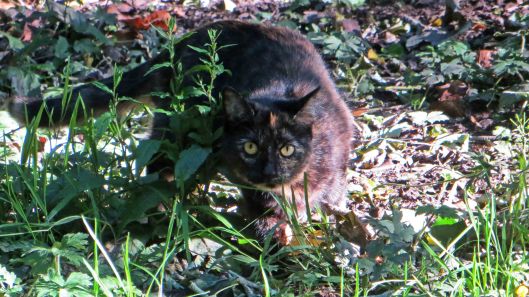
170617 slow worm and cat

I was walking down an old railway line that’s now a foot- and cycle path when I spotted a cat intently watching something in the long grass at the edge of the path. It was tapping then jumping back, tapping then jumping back. As I approached, the cat slunk off, not pleased it had been interrupted but I’m so glad I scared it off because …

170617 slow worm

What I found in the grass was a Slow-worm (Anguis fragilis) – a young one, I think, from the colour. I only had my point-and-click camera so couldn’t get very good photos and, of course, it wouldn’t stay still. It obviously wanted to escape the cat’s attention so decided to slither across the path but it was having trouble with the asphalt and wasn’t making any headway so …

I picked it up and carried it across to the other side and let it go in the long grass on that side. Good deed done and such a special moment!

Like Loading...

Waving the yellow flag

16 Friday Jun 2017

Posted by sconzani in flowers, nature, wildflowers

≈ 3 Comments

Tags

British flora, British native flowers, British wildflowers, Iris pseudacorus, Segg, Yellow flag iris, Yellow iris

The Yellow iris (Iris pseudacorus), also known as the Yellow flag iris, is really a spring bloomer but I’m still seeing some flowers in the damper boggy and waterside areas during my countryside wanders so I thought I’d share some photos of them before they all disappear for the summer.

170616 Yellow iris (3)

Of course, the wonderfully green, spear-like leaves don’t disappear and they are, in fact, where this plant got one of its common names, Segg. According to Richard Mabey’s Flora Britannica, Segg is a variant of sedge and is derived from the Anglo-Saxon word for a short sword, though I have also seen Segg spelt secg and the Oxford Dictionary says sedge came originally from the Old English word secg, which has Germanic origins and whence also came the Latin secare meaning ‘to cut’ – hence secateurs. Here endeth today’s lesson!

170616 Yellow iris (4)
170616 Yellow iris (1)
170616 Yellow iris (2)
Like Loading...

Roots

15 Thursday Jun 2017

Posted by sconzani in nature, plants

≈ 7 Comments

Tags

Chlorophytum comosum, how to grow spider plant, plant roots, roots growing, Spider plant

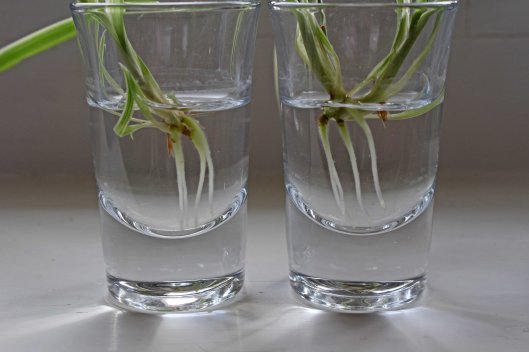
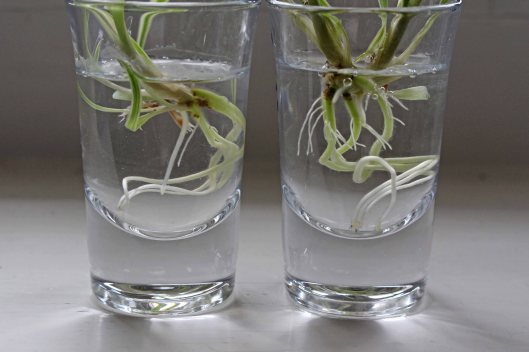
Wanting to have more houseplants in my flat and knowing that Spider plants (Chlorophytum comosum) are very easy to grow, I … ahem … pinched a couple of spiderlings from a much neglected plant in the office toilet and popped them into some water to get them started. I knew they would quickly develop roots but their speed amazed me. The photos below show their development after 2 days, 4 days, 6 days, and 16 days. Time to buy some potting mix, me thinks!

170615 roots (1)170615 roots (2)170615 roots (3)170615 roots (4)

Like Loading...

Here, chook, chook, chook

14 Wednesday Jun 2017

Posted by sconzani in birds, nature

≈ 8 Comments

Tags

chicken, chook, domestic birds, fowl, hens, poultry

I was sorting out some of my older photos (my laptop’s running out of space and I keep far too many photos so I’ve been hitting the delete key a lot) when I found these chooks. The photos were taken in a large park in Auckland, New Zealand (Cornwall Park, for those that know the city), which is also, in part, a farm, with sheep and cows in some of the paddocks and chooks roaming freely. (There used to be a small flock of guinea fowl as well.)

170614 chooks (1)
170614 chooks (2)

I think these chooks are rather lovely so thought I’d share the photos before deleting them. I’m not sure why but I find there’s something strangely comforting about chooks. I like the clucking sounds they make, I love their feather colours and patterns, and they just give the impression of being cosy country characters. I hope you enjoy them too.

170614 chooks (3)
170614 chooks (4)
170614 chooks (5)
170614 chooks (6)
Like Loading...

Critters at RSPB Ham Wall

13 Tuesday Jun 2017

Posted by sconzani in animals, insects, nature, parks

≈ 6 Comments

Tags

Black-tailed skimmer, caddisfly, Common tortoiseshell, damselfly, Four-spotted Chaser, nature reserve, Roe deer, RSPB Ham Wall, Shapwick Heath

The only problem with going on a birding trip is that, in order to get photos of the birdies, I usually have my long lens on my camera, which means it’s then not easy to get photos of all the lovely smaller creatures I see as I’m walking around. And both RSPB Ham Wall Nature Reserve and, just across the road, Shapwick Heath National Nature Reserve have a profusion of delightful, and sometimes rare smaller creatures to be seen.

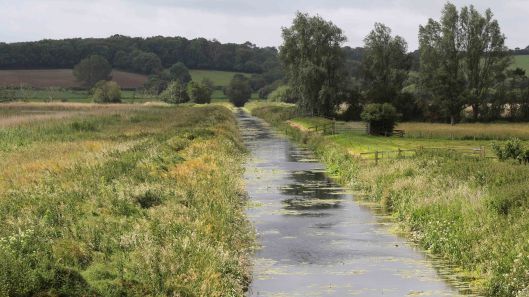
170613 Shapwick Heath

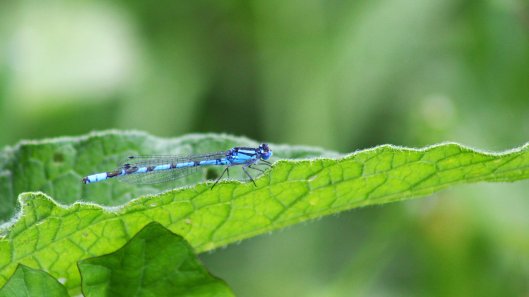
In particular, we saw a wealth of damsel- and dragonflies, including several of the Four-spotted chasers and Black-tailed skimmers shown below and, we think, the unusual Variable damselfly (though this can be tricky to identify). Spiders were particularly abundant on the path-side scrub, as were Dock beetles, judging from all the holey leaves we saw.

170613 4-spotted chaser
170613 Black-tailed skimmer

170613 RSPB Ham Wall critters (1)

170613 RSPB Ham Wall critters (2)

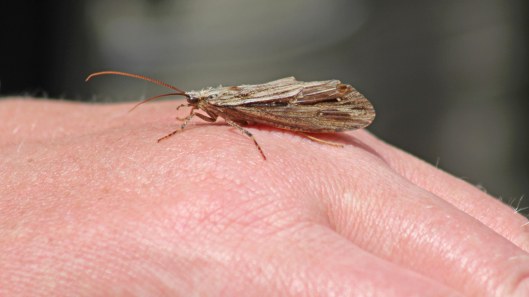
We rescued several large hairy caterpillars which were determinedly marching across the paths but risked annihilation from feet and bicycle tyres, as well as one large and very friendly Caddisfly (above). Butterflies weren’t as plentiful as I expected, though we did see good numbers of very fresh Small tortoiseshells, presumably newly hatched.

170613 Small tortoiseshells (2)
170613 Small tortoiseshells (1)

The most unexpected sighting, and a highlight for me, was a Roe deer on the canal-side bank in Shapwick Heath. Only its head and its very large ears could be seen, as it munched happily on a large green mouthful of vegetation while keeping a close eye on our admiring group of photographers.

170613 Roe deer

As I mentioned in yesterday’s piece on the birds of Ham Wall, you really need a week to explore these superb reserves thoroughly and then you might be lucky enough to see their resident water voles and otters. I have to go back!

Like Loading...

Birding at RSPB Ham Wall

12 Monday Jun 2017

Posted by sconzani in birds, nature

≈ 6 Comments

Tags

birding, birdwatching, Bittern, Black-tailed godwits, Blackcap, British birds, Glossy ibis, Great Crested Grebe, Great white egret, Little egret, Marsh harrier, Mute swan, RSPB Ham Wall, Shapwick Heath

Yesterday was an absolutely fabulous birding day, an outing with my friends from the Glamorgan Bird Club to the RSPB’s Ham Wall Nature Reserve near Glastonbury in Somerset. We also ventured briefly into the neighbouring National Nature Reserve of Shapwick Heath but I reckon you’d need a week at least to explore both places thoroughly and at all times of the day.

170612 RSPB Ham Wall

Most of the birds were rather distant so you’ll have to excuse my poor photos but I was able to see the birds clearly as many of the bird club members have good ’scopes and were happy to share. Some birding highlights were:

170612 Great white egret
170612 Great white egret (2)

* three species of Egret: Cattle, Little and lots of Great whites.

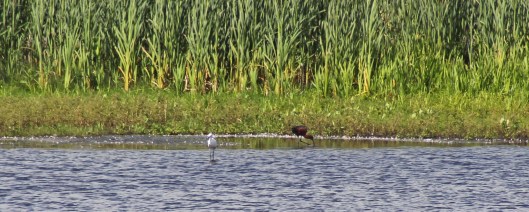
170612 Little egret & Glossy ibis

* my first sightings of a Glossy ibis (seen here with a Little egret) and a Red-footed falcon

170612 Marsh harrier (1)
170612 Marsh harrier (2)
170612 Marsh harrier vs Bittern

* more Bitterns than you could point a lens at and several beautiful Marsh harriers, gliding seemingly effortlessly over the reed beds. These two birds came into conflict at one point (fuzzy photo above right), with the Bittern presumably trying to defend its young against harrier predation.

170612 Baby Great crested grebe
170612 Baby Blackcap

170612 Baby Mute swans

* lots of babies, including those of Great crested and Little grebes, Mute swan, Tufted duck, Coot and Blackcap.

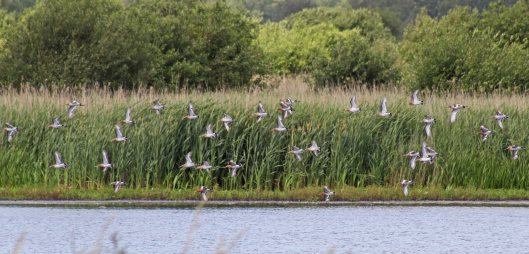
170612 Black-tailed godwits

* the Black-tailed godwits flying over the waters at Shapwick Heath.

On the way home, with the help of my car mates, I came up with an as-yet-unconfirmed list of 57 species seen on the day, and that was only the birds – more on the other creatures in tomorrow’s blog.

Like Loading...

Moths of Kenfig

11 Sunday Jun 2017

Posted by sconzani in insects, nature

≈ 5 Comments

Tags

Beautiful china-mark, British moths, Burnet, Cinnabar, Grass rivulet, Kenfig National Nature Reserve, Lackey, moth, moths, Oak eggar, Small china-mark, Straw dot, Yellow-tail

As the butterflies are still enjoying their summer holidays, I have some moths and soon-to-be moths for you. These were all seen at Wales’s stunning coastal national nature reserve at Kenfig last weekend.

170611 Beautiful china-mark
170611 Burnet
170611 Cinnabar

We have, from left:
Beautiful china-mark (Nymphula nitidulata): It was no surprise to find this near Kenfig pool as its larvae are aquatic.
Burnet: (Zygaena sp.): Not sure which of the Burnet moths this will become as the only difference in the caterpillars is the length of their hairs and I didn’t measure these.
Cinnabar (Tyria jacobaeae): The ‘Jacobaeae’ epithet comes from its larval foodplant, Senecio jacobaea, aka Common ragwort.

170611 Grass rivulet
170611 Lackey
170611 Oak eggar

Grass rivulet (Perizoma albulata): As well as loving grasslands, these little beauties also love a nice sandy beach.
Lackey (Malacosoma neustria): We’ve had these before if you remember (Lackey me).
Oak eggar (Lasiocampa quercus): Don’t go searching around oak trees for this one: its name comes from the acorn-like shape of its cocoon.

170611 Small China-mark
170611 Straw dot
170611 Yellow-tail

Small china-mark (Cataclysta lemnata): Apparently, they don’t often open their wings to show the underwing markings. I got lucky!
Straw dot (Rivula sericealis): Straw coloured with a dot on each wing. I think I might actually remember this one.
Yellow-tail (Euproctis similis): I have yet to see the moth but it seems the female has a yellow tuft of hairs on her bottom.

Like Loading...
← Older posts
Newer posts →

About me

sconzani

sconzani

I'm a writer and photographer; researcher and blogger; birder and nature lover; countryside rambler and city strider; volunteer and biodiversity recorder.

View Full Profile →

Follow earthstar on WordPress.com

Enter your email address to follow this blog and receive notifications of new posts by email.

Recent blog posts

  • Bearded tit!!! April 3, 2026
  • A Portland Bill Kestrel April 2, 2026
  • A proliferation of Peacocks April 1, 2026
  • Little owl March 31, 2026
  • Distant seabirds March 30, 2026

From the archives

COPYRIGHT

Unless otherwise acknowledged, the text and photographs on this blog are my own and are subject to international copyright. Nothing may be downloaded or copied without my permission.

Fellow Earth Stars!

  • Unknown's avatar
  • Unknown's avatar
  • Unknown's avatar
  • Unknown's avatar
  • Unknown's avatar
  • Unknown's avatar
  • Unknown's avatar
  • Unknown's avatar
  • Unknown's avatar
  • Unknown's avatar
  • Unknown's avatar
  • Unknown's avatar
  • Unknown's avatar
  • Unknown's avatar
  • Unknown's avatar
  • Unknown's avatar
  • Unknown's avatar
  • Unknown's avatar
  • Unknown's avatar
  • Unknown's avatar
  • Unknown's avatar
  • Unknown's avatar
  • Unknown's avatar
  • Unknown's avatar
  • Unknown's avatar
  • Unknown's avatar
  • Unknown's avatar
  • Unknown's avatar
  • Unknown's avatar
  • Unknown's avatar
  • Unknown's avatar
  • Unknown's avatar
  • Unknown's avatar
  • Unknown's avatar
  • Unknown's avatar
  • Unknown's avatar
  • Unknown's avatar
  • Unknown's avatar
  • Unknown's avatar
  • Unknown's avatar
  • Unknown's avatar
  • Unknown's avatar
  • Unknown's avatar
  • Unknown's avatar
  • Unknown's avatar
  • Unknown's avatar
  • Unknown's avatar
  • Unknown's avatar
  • Unknown's avatar
  • Unknown's avatar

Blog at WordPress.com.

Privacy & Cookies: This site uses cookies. By continuing to use this website, you agree to their use.
To find out more, including how to control cookies, see here: Cookie Policy
  • Subscribe Subscribed
    • earthstar
    • Join 642 other subscribers
    • Already have a WordPress.com account? Log in now.
    • earthstar
    • Subscribe Subscribed
    • Sign up
    • Log in
    • Report this content
    • View site in Reader
    • Manage subscriptions
    • Collapse this bar
 

Loading Comments...
 

You must be logged in to post a comment.

    %d