
Tags
British moths, caterpillar eating Hemlock water-dropwort, Depressaria daucella, Hemlock water-dropwort, moth larvae, Oenanthe crocata, Water-dropwort brown, Water-dropwort brown larvae
All parts of Hemlock water-dropwort (Oenanthe crocata) are highly poisonous; from the roots to the leaves, no part of it should be ingested, and the Royal Horticultural Society even recommends wearing gloves to handle the plant. Yet, somewhat surprisingly, when I was wandering around the RSPB Radipole Lakes reserve, where Hemlock water-dropwort is abundant, I found a huge number of these small caterpillars happily munching away on its stems and flowers.
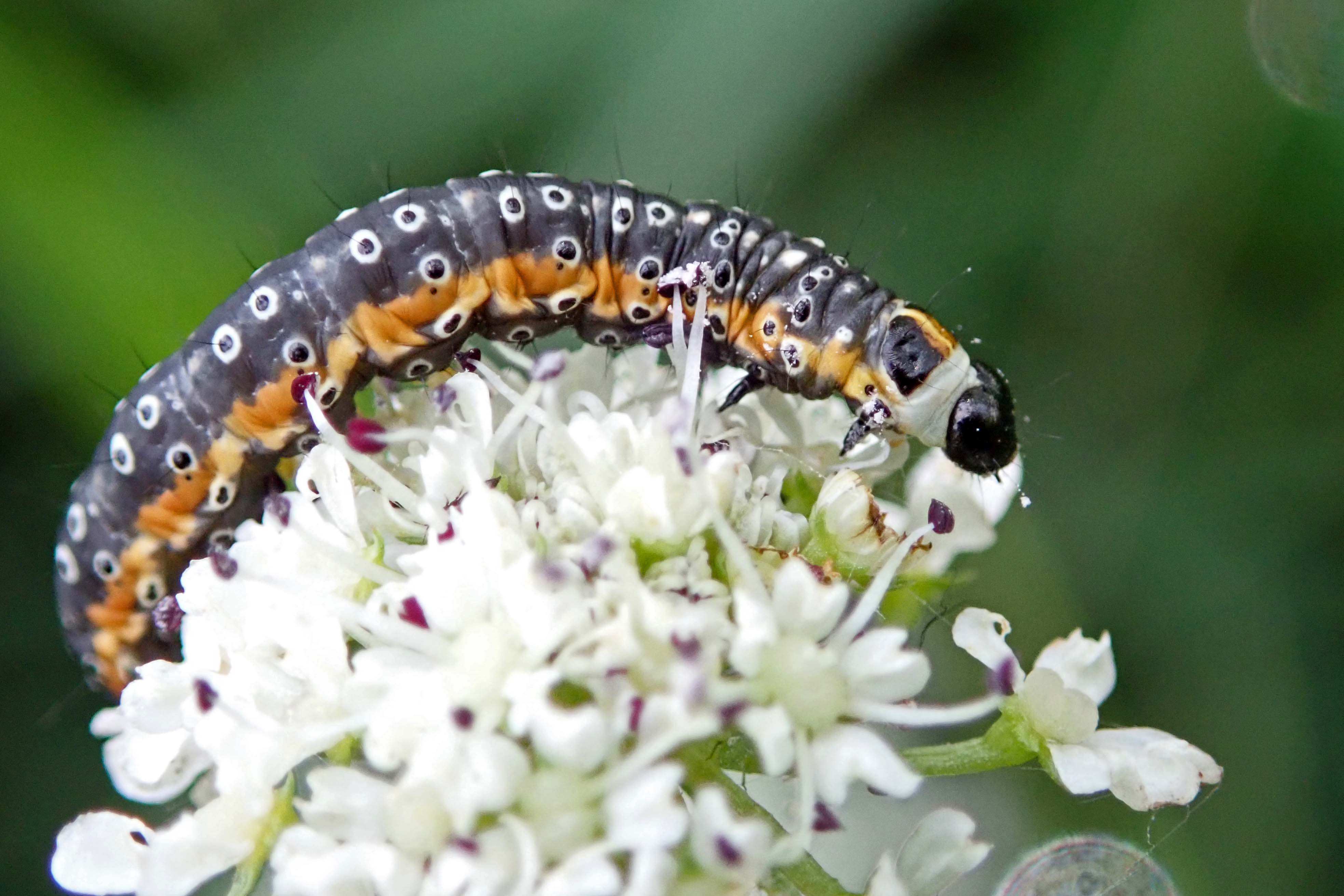
These very attractive creatures are the larvae of the moth Depressaria daucella, common name Water-dropwort brown. They can be seen, on this and a few other species of plants, in the months of June and July, either out in the open when eating or resting within a loosely woven silken spinning.

The UK Moths website rather flatteringly says that the adult moth is a ‘fairly distinctive species with its chestnut-brown ground colour and darker streaking’; all I see is yet another little brown job, rather drab when compared to its caterpillars.

 earthstar
Handsome little chap. How long is he?
LikeLiked by 1 person
Like all caterpillars, , they start small, eat, grow bigger. These were almost fully grown, maybe 20mm – but don’t quote me on that, as I’m just guess-timating. 🙂
LikeLiked by 1 person