• ABOUT
  • BIRDING 2018
  • Birding 2019
  • BLOG POSTS
  • Butterflies 2018
  • Resources

earthstar

~ a celebration of nature

earthstar

Author Archives: sconzani

Harvestman: Nemastoma bimaculatum

08 Saturday Nov 2025

Posted by sconzani in insects

≈ Leave a comment

Tags

British harvestmen, Harvestman, harvestman under bark, Nemastoma bimaculatum

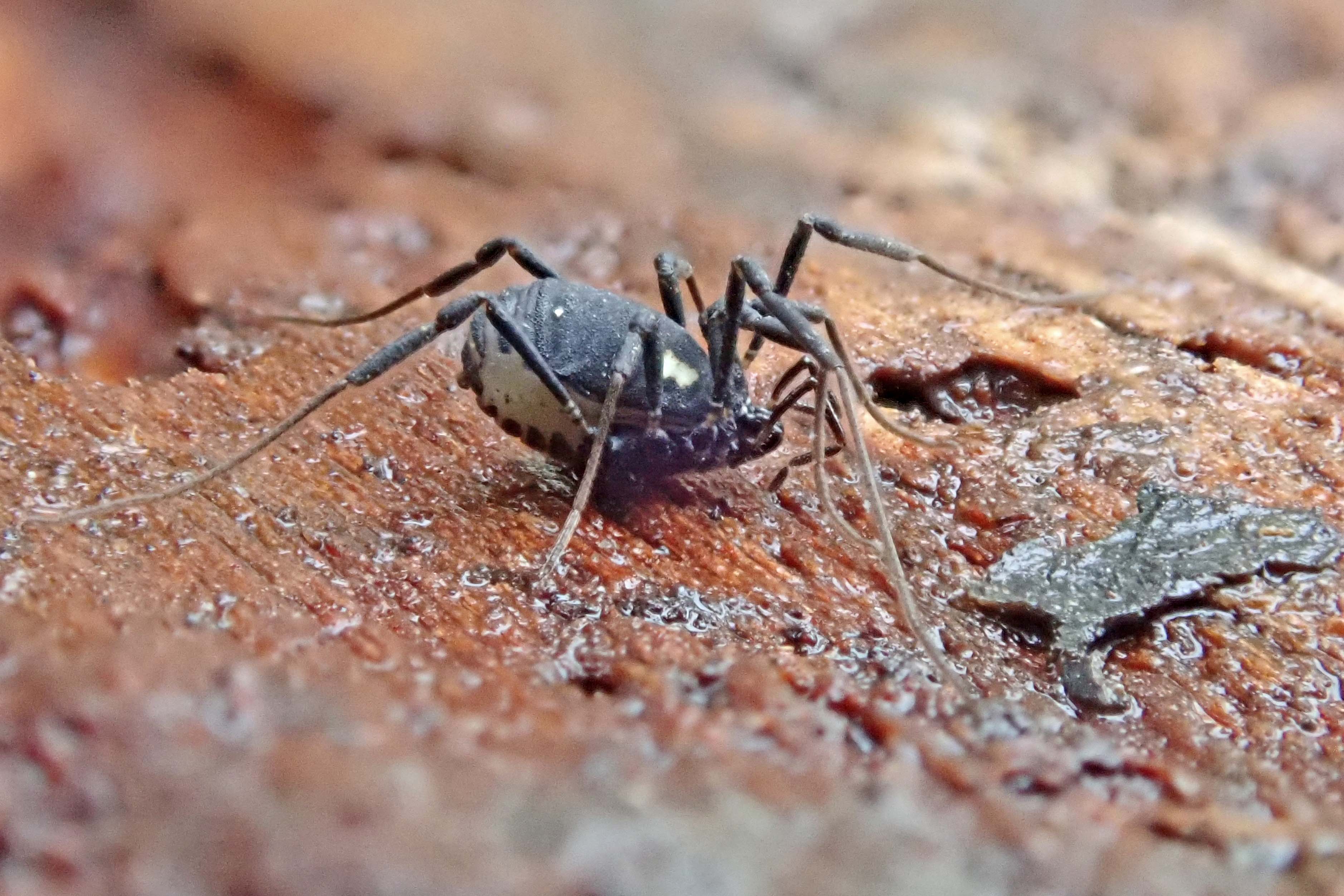
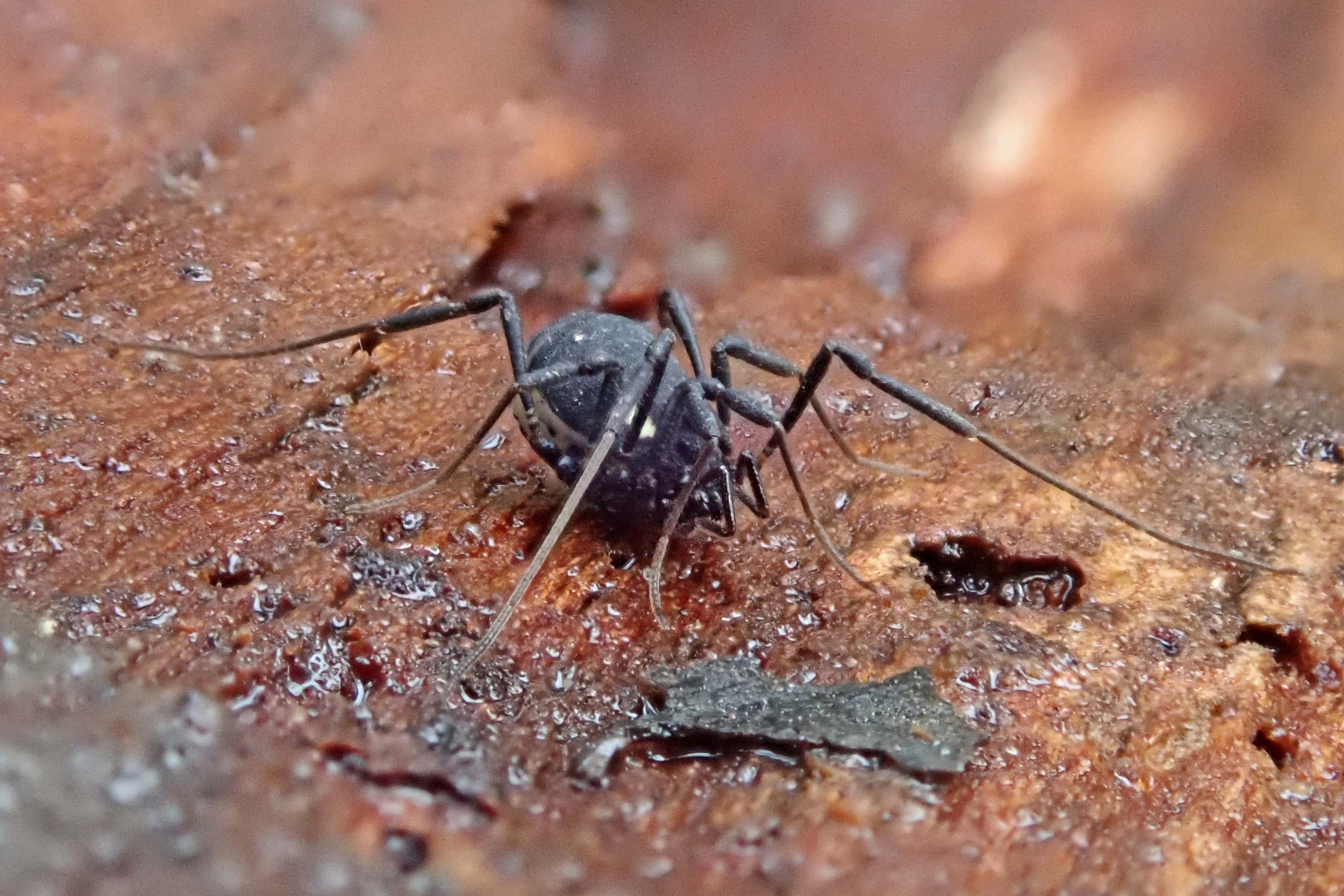
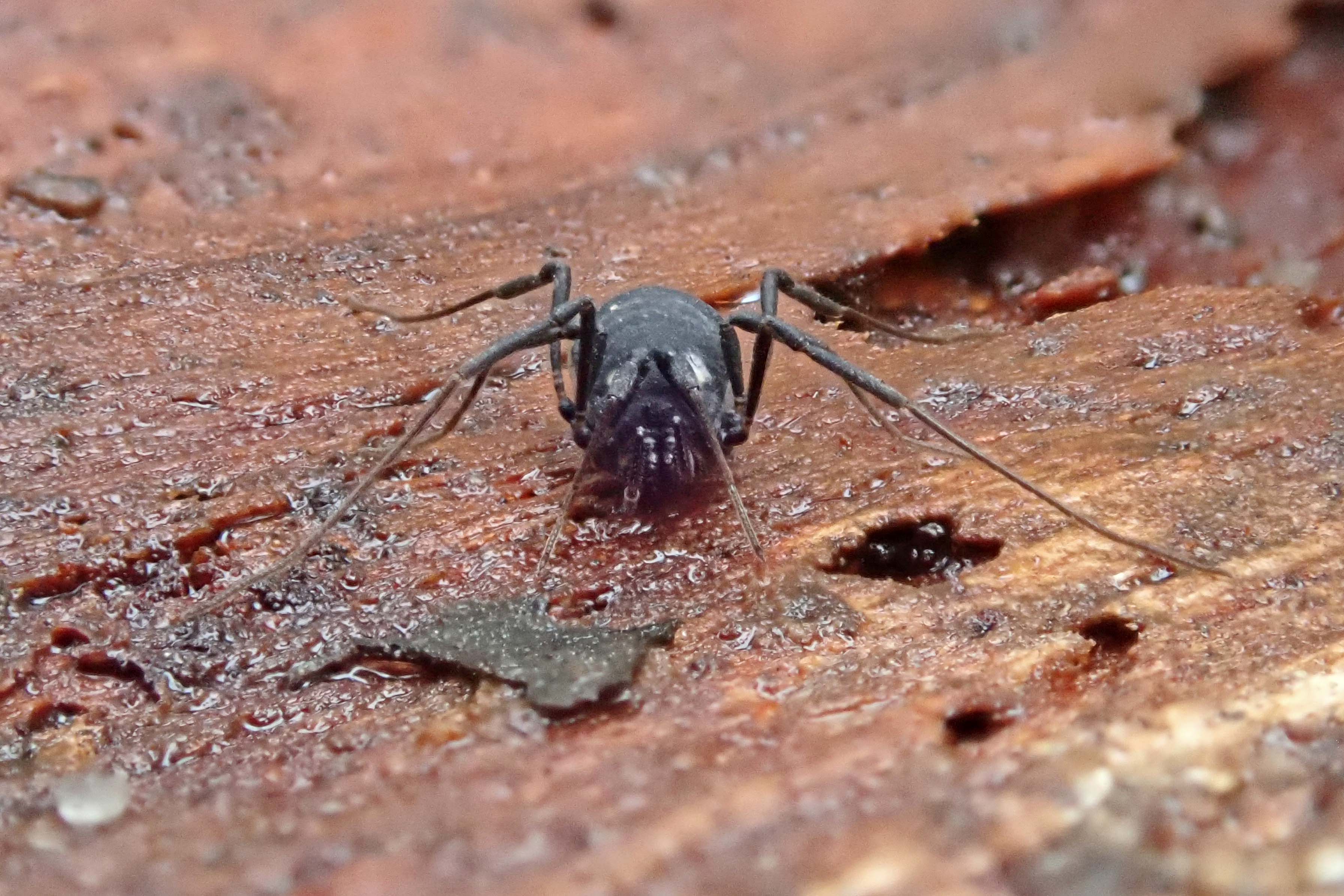
It’s sad when huge old trees fall or need to be felled – I’m not sure what happened to the tree I found at Cardiff’s Heath Park one day last week – but it does provide opportunities for fossicking around logs and branches and under slabs of bark. And on this particular day, when I turned over one of several pieces of bark, I was delighted to find this harvestman, Nemastoma bimaculatum, a species I’d never seen before.

I’m reliably informed, by someone on social media who’s seen many of these harvestmen, that ‘they tend to freeze when you first turn over a log and expose them but then make a sudden run for it’, so I was exceedingly lucky that this one stayed perfectly still the whole time I had its home turned upside down. I was able to focus-stack some images but these harvestmen are tiny, just 2-3mm long, and the light was dull so my photos are not very sharp.

Fortunately for me, Nemastoma bimaculatum has distinctive markings – those two white spots on the black body, so it was easy to identify. This harvestman is not often recorded but the species is probably quite common – it’s just that most people don’t go looking under logs and bark to find them.

Like Loading...

Coral in the grass

07 Friday Nov 2025

Posted by sconzani in autumn, fungi

≈ 4 Comments

Tags

British fungi, CHEG fungi groups, CHEGD fungi groups, Clavulinopsis corniculata, coral fungi, grassland fungi, Meadow coral

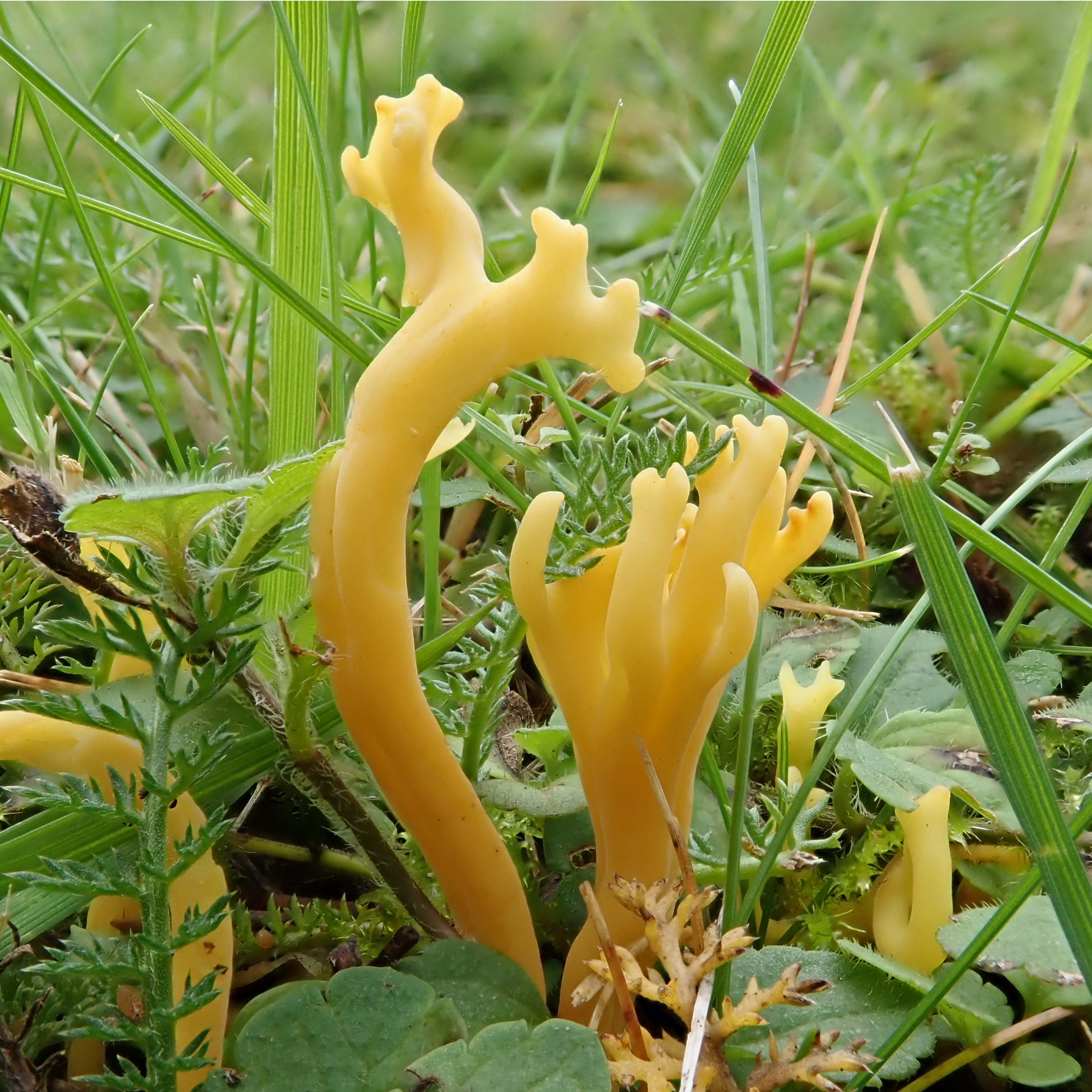
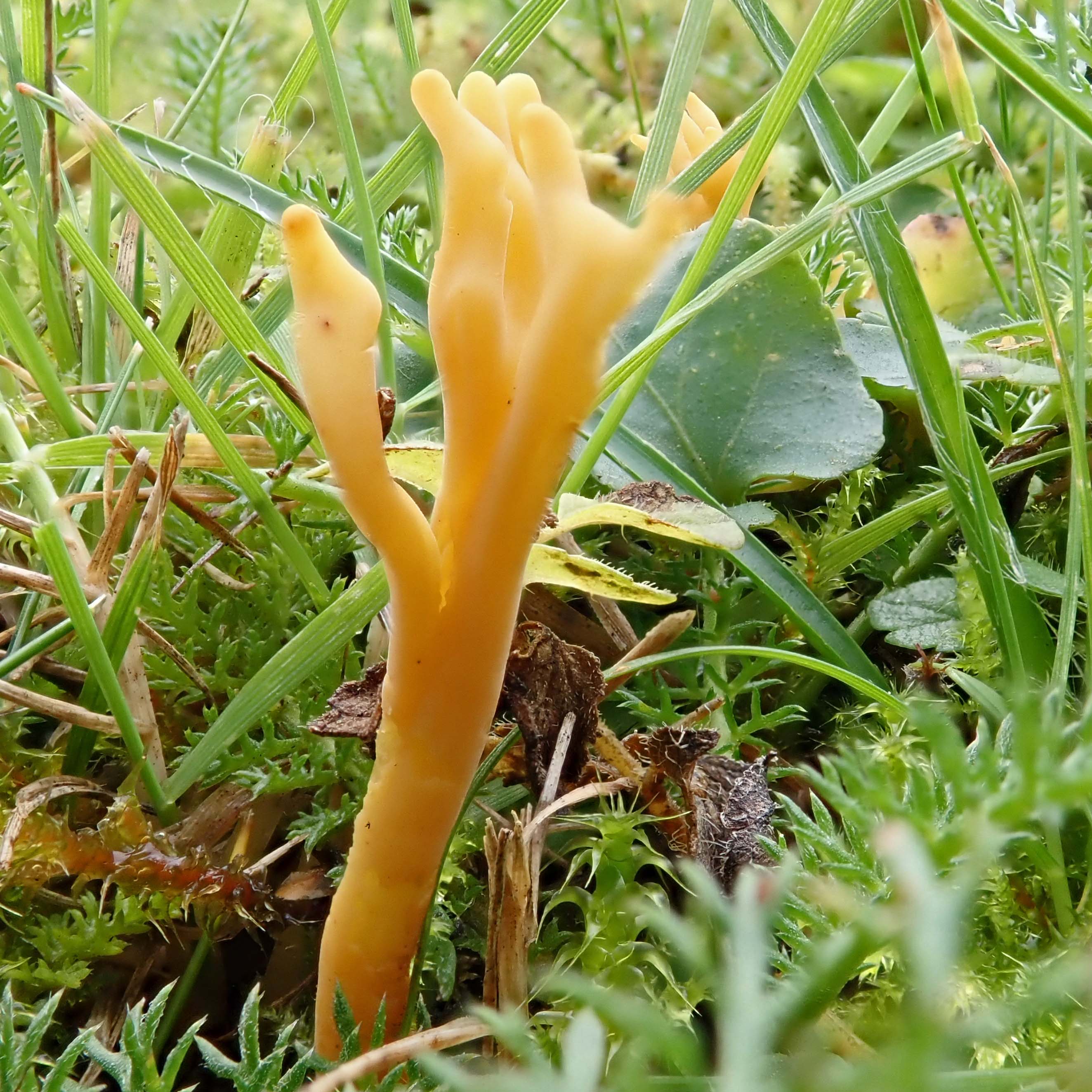
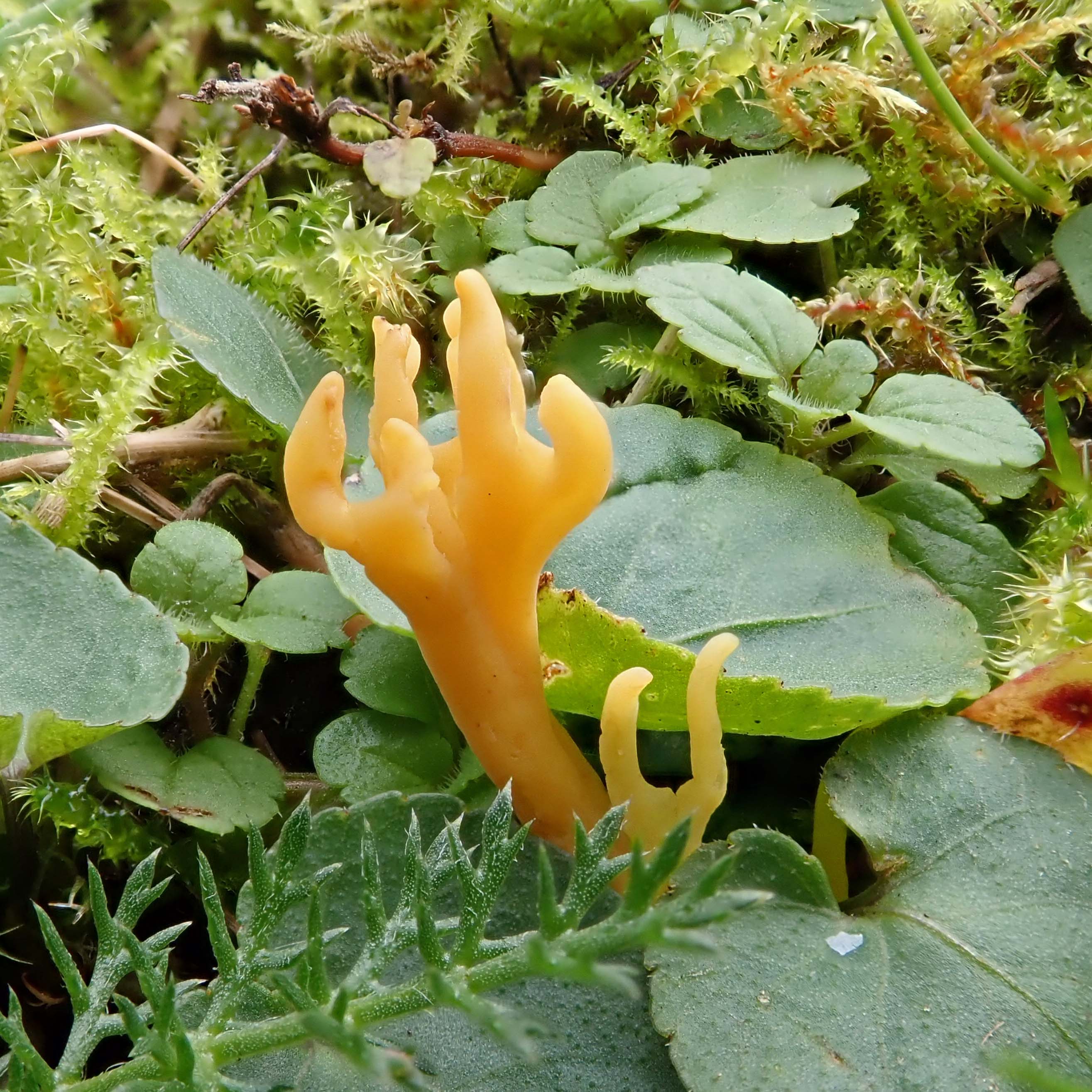
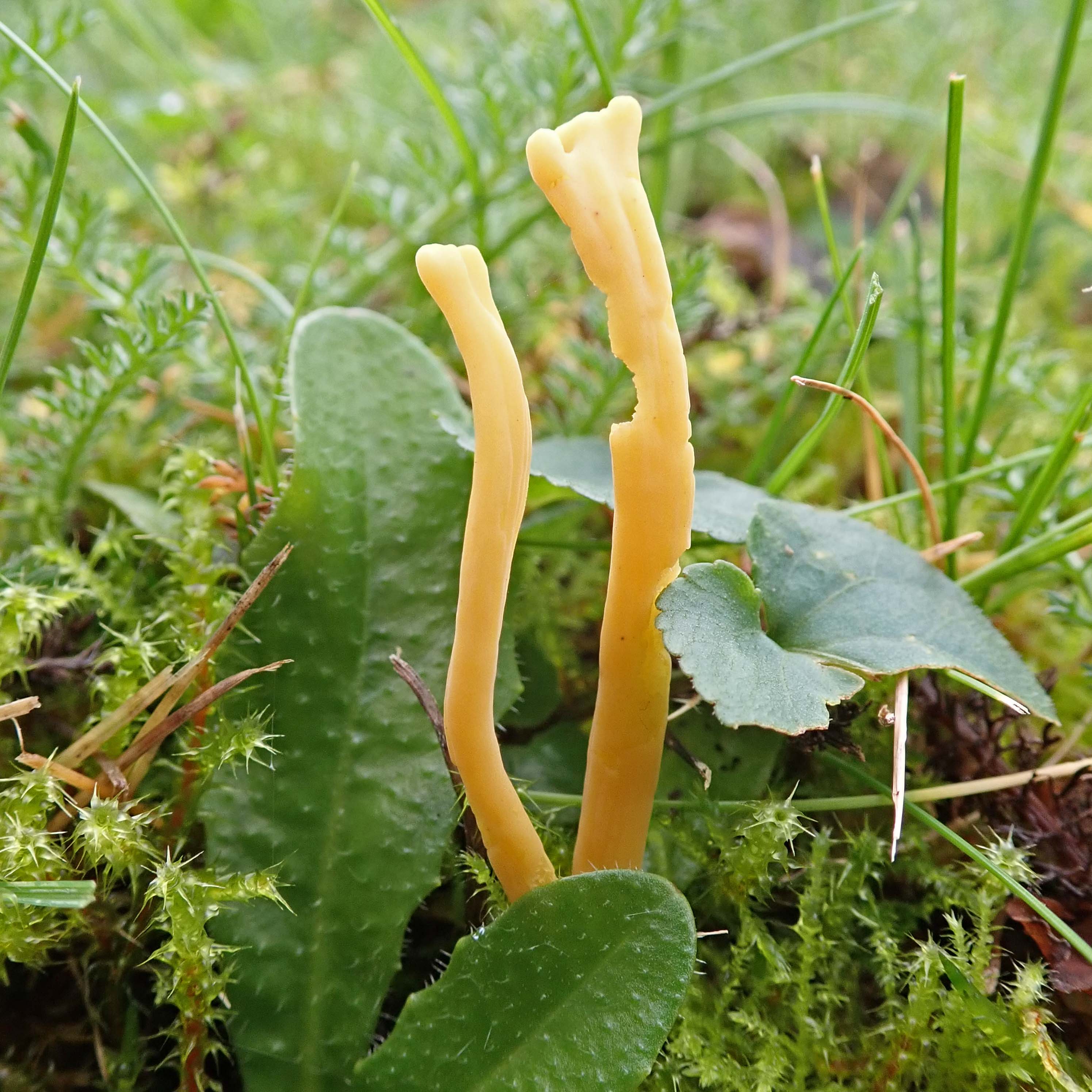
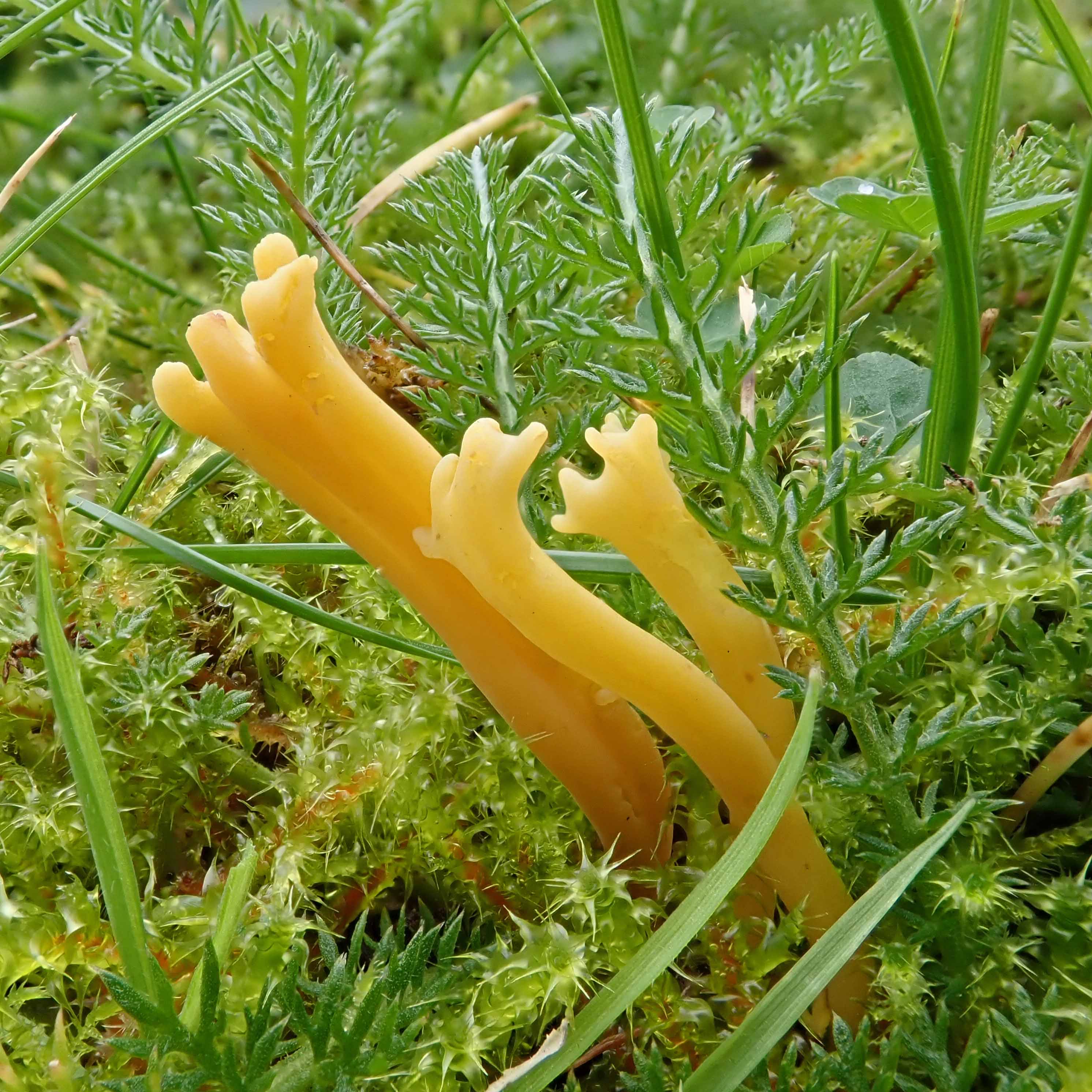
The clubs and corals, properly known as the Clavariacae, come in many shapes and colours; some are small, simple and singular, resembling worms standing upright in the grass, while others form in multi-branching clumps that really do resemble the corals you can find growing under the sea.

Today’s offerings slot somewhere in between the two, sometimes growing as individual stems but mostly in loose clumps of multi-branched stems that divide, like antlers, near the stem tops. Standing between 4 and 8cm tall, these lovely little yellow fungi are Meadow coral (Clavulinopsis corniculata).

Clavarioid fungi are usually found growing in unimproved grasslands and are one of the 4 (or 5) groups used to assess the conservation value of grasslands; the CHEG (or CHEGD) system assigns a value to the number of species of each of the fungal groups found at particular location (see this page on Wikipedia for a more detailed, though still simple explanation).

I found these examples of Meadow coral growing on a road verge that, presumably, was once grassland before houses and roads, a supermarket, a petrol station and a restaurant, and, of course, the ubiquitous car parks were built in the area.

When I spotted them, I was actually looking for the Hairy earthtongue fungi (Trichoglossum hirsutum, another of the CHEG/CHEGD fungi) I’ve found previously at this location. My disappointment at not finding any of those turned quickly to delight when I spotted the Meadow coral, which I don’t often find in my local area.

Like Loading...

Wednesday wash day

06 Thursday Nov 2025

Posted by sconzani in birds

≈ Leave a comment

Tags

birding, birdwatching, Black-headed gull, British birds, Cardiff Bay birding, gulls washing, Mediterranean gull

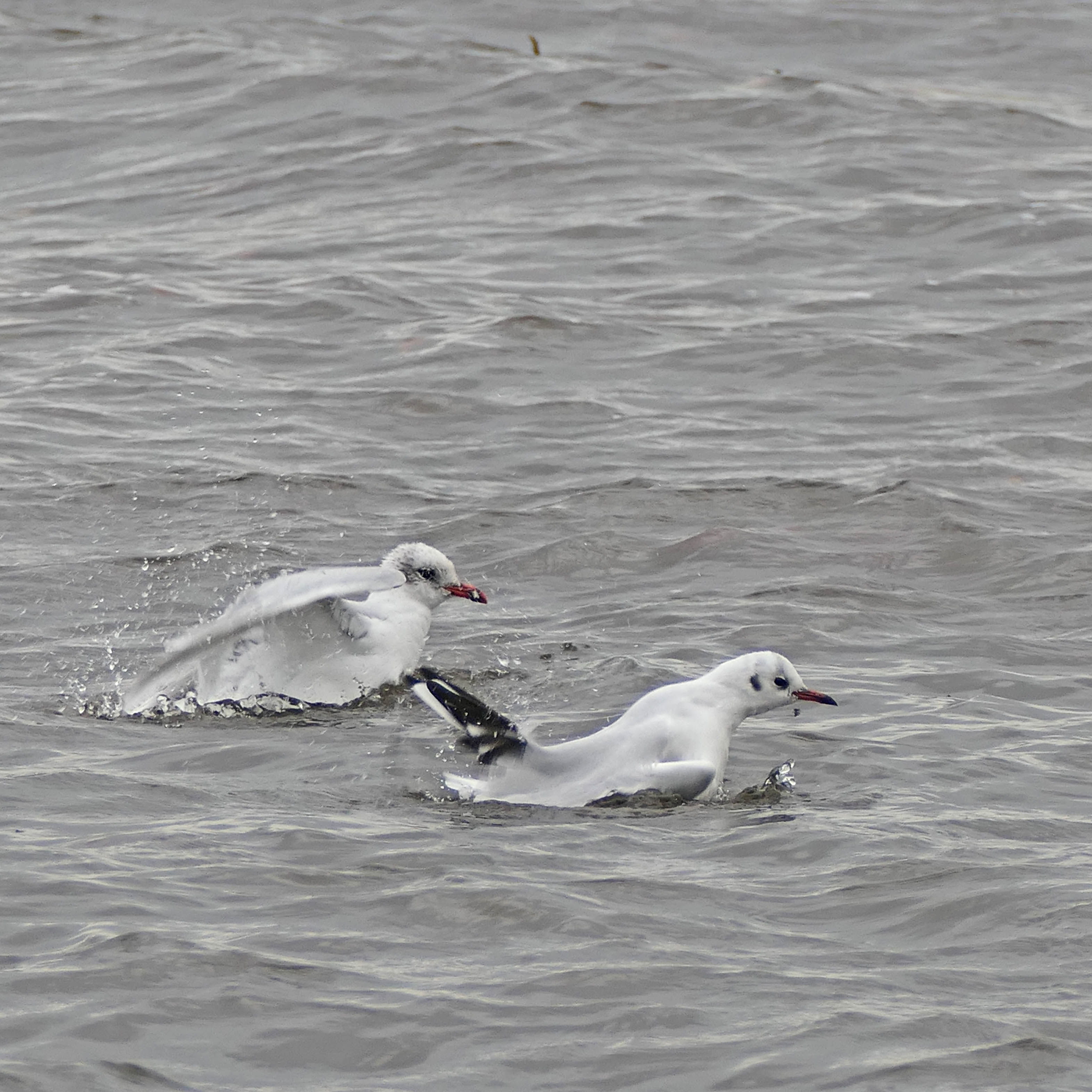
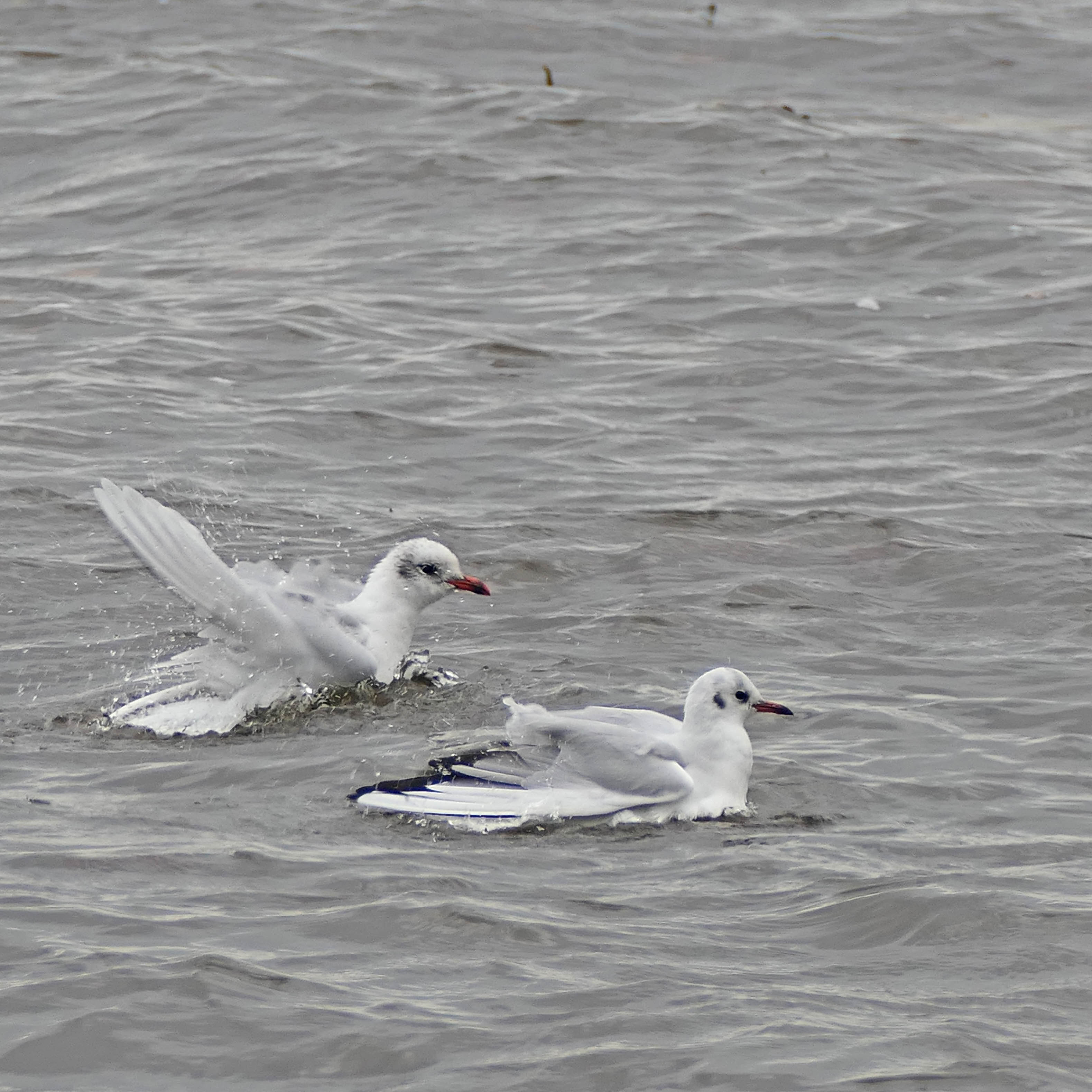
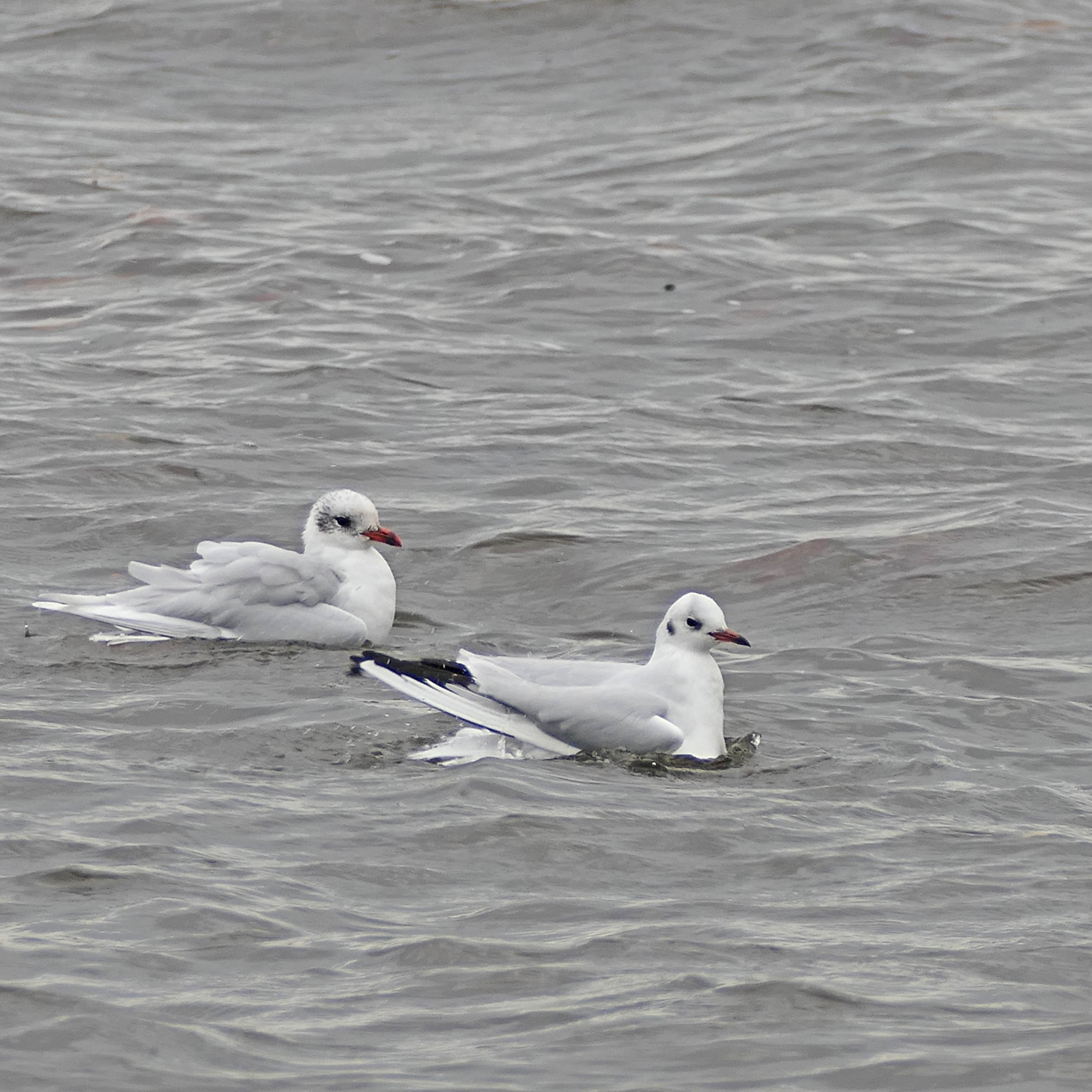
We don’t see very many Mediterranean gulls in Cardiff Bay so it was a real treat yesterday to see this one at Cardiff Bay Wetlands Reserve yesterday.

The resident Black-headed gulls often use this area as a good place to wash, plunging into the water, giving themselves a good shake, flapping their wings … you get the idea. And, if you don’t, here’s a short video.

The Med gull is the one that looks to have a completely white body and wings, though it actually has a very fine dark line along the edge of its wings. In my photos, above and below, the Med gull is the bird at the back, with a Black-headed gull in front so you can compare the two.

Like Loading...

36!

05 Wednesday Nov 2025

Posted by sconzani in insects

≈ Leave a comment

Tags

British hoverflies, British hoverfly larvae, fly larvae, hoverfly larvae, Syrphus larvae, Syrphus species

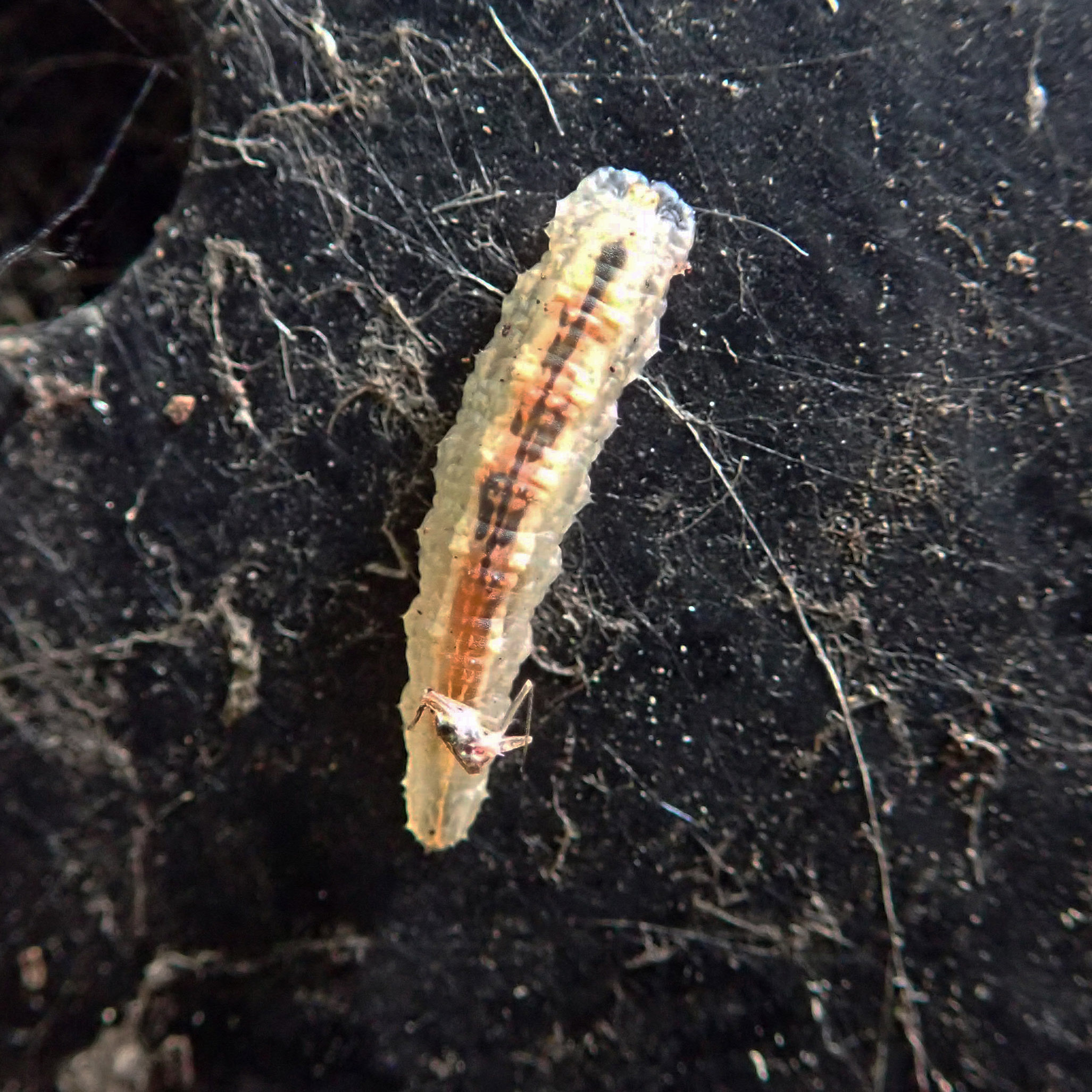
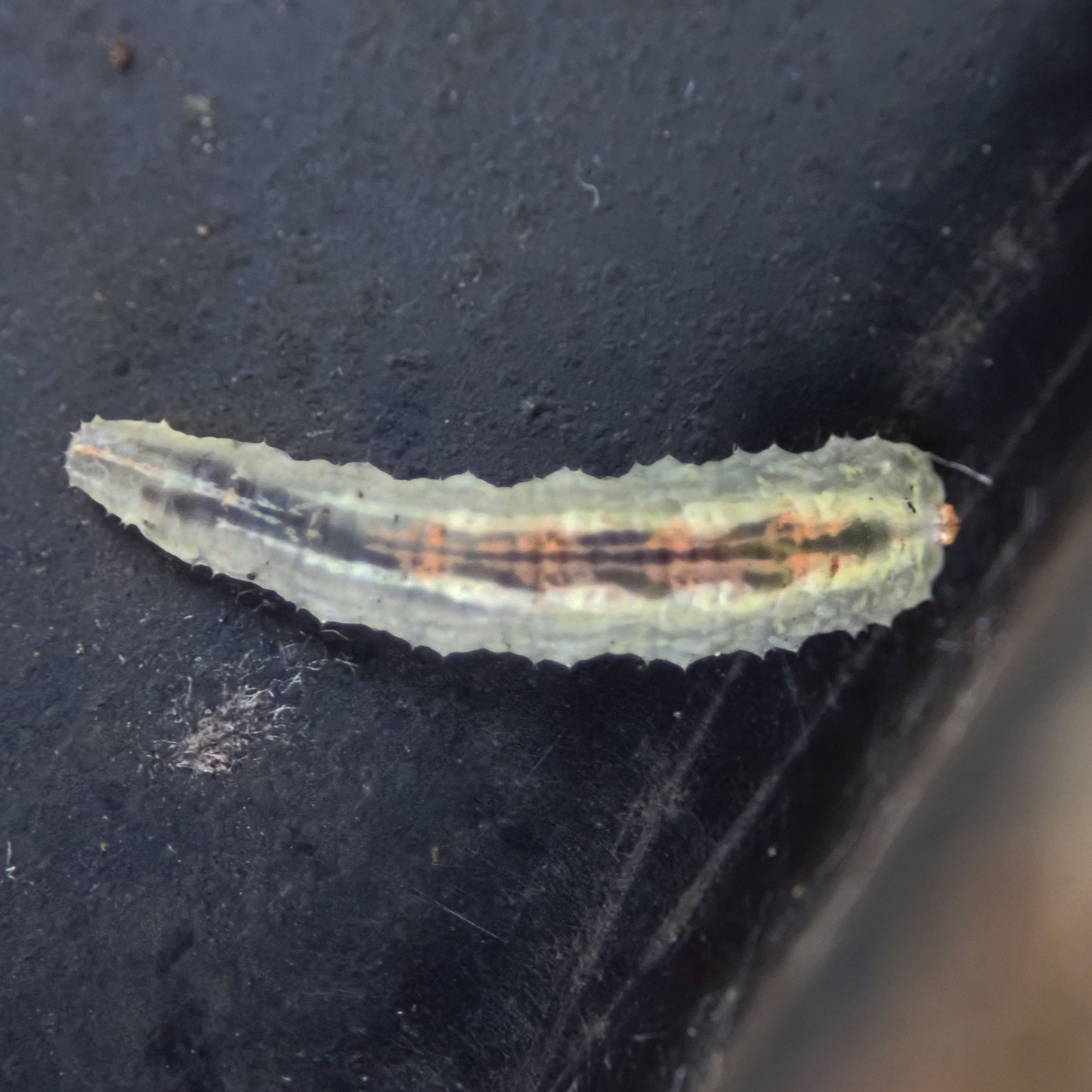
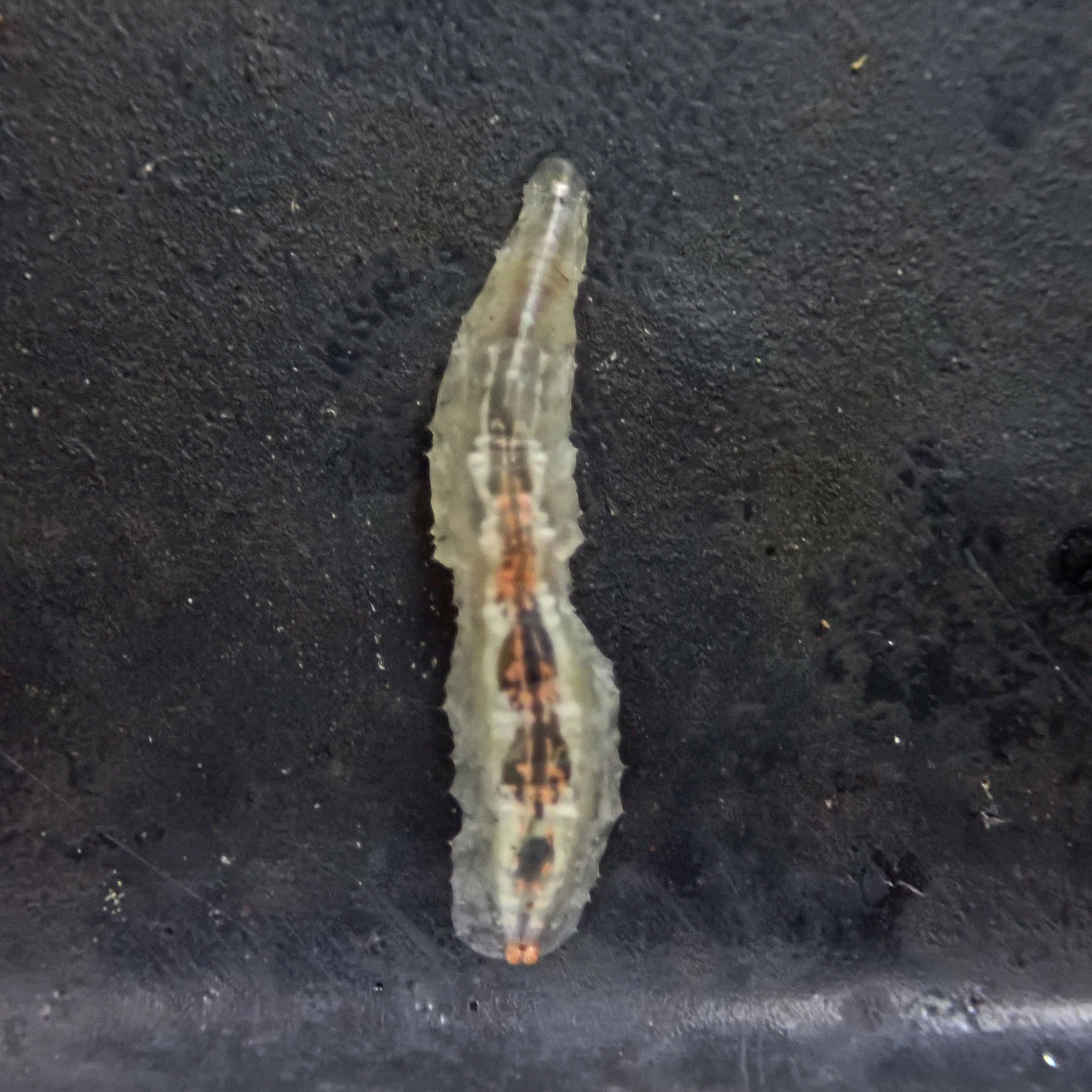
Thirty six is the number of hoverfly larvae I counted on a section of the local park railings, about 10 metres long, as I strolled very slowly past on Monday. They all look to be one of the Syrphus species of hoverfly; it’s not possible to be exact with the larvae of this particular species.

This is a great time of year to look for hoverfly larvae, particularly after stormy weather. They get shaken off the remaining leaves on trees, then try to climb back up to find yummy aphids to eat. So, if you look on railings or fences, even gravestones, particularly under Sycamore trees, you’ll probably be surprised at how many you can find.

And if you want to have a try at identifying any hoverfly larvae you discover, you’ll find a free downloadable pdf Colour Guide to Hoverfly Larvae on the Diptera.info website.

Like Loading...

The consolation prize

04 Tuesday Nov 2025

Posted by sconzani in birds

≈ 2 Comments

Tags

birding, birdwatching, British birds, Cardiff Bay birding, Cormorant, Cormorant drying its wings

Do I give the impression that I always find what I go searching for? If I do, then I apologise because I don’t but, rather than letting that get me down, I’ve learnt to appreciate what I find along the way.

Yesterday was one of those days. Three Firecrests had been reported the previous day, in trees around the edge of a local recreation ground; I couldn’t find them. A female Goldeneye had been seen in Cardiff Bay over several days and, though I’d had a fleeting glimpse, I wanted to try for photos; I couldn’t find her. And, though, as you’ve seen, I have already taken photos of the Red-throated diver that’s still feeding in the channel off the Barrage, I was hoping for closer views; it stayed distant.

But there was a consolation prize from my seven-mile walk: the one bird that did pose well for me, allowing a close look at its stunning plumage and some reasonable photos as I watched it drying its wings, this handsome young Cormorant.

Like Loading...

Lingering Chiffchaffs

03 Monday Nov 2025

Posted by sconzani in autumn, birds

≈ 5 Comments

Tags

autumn migration, bird migration, birding, birdwatching, British birds, Cardiff Bay birding, Chiffchaff

During my most recent circuit of Cardiff Bay, one day last week, I counted at least nine Chiffchaffs, and I’m sure there were probably more.

Most of those Chiffchaffs that intended to migrate should have moved through by now so it’s likely that these remaining birds will linger a while longer, possibly right through the winter, if the weather doesn’t get too cold. It’s lovely to see and hear them still dotting about the trees.

Like Loading...

Autumn trees: Hawthorn

02 Sunday Nov 2025

Posted by sconzani in autumn, leaves, trees

≈ Leave a comment

Tags

autumn colour, autumn leaves, autumn trees, berries, British trees, Crataegus monogyna, Hawthorn, Hawthorn berries, Hawthorn leaves

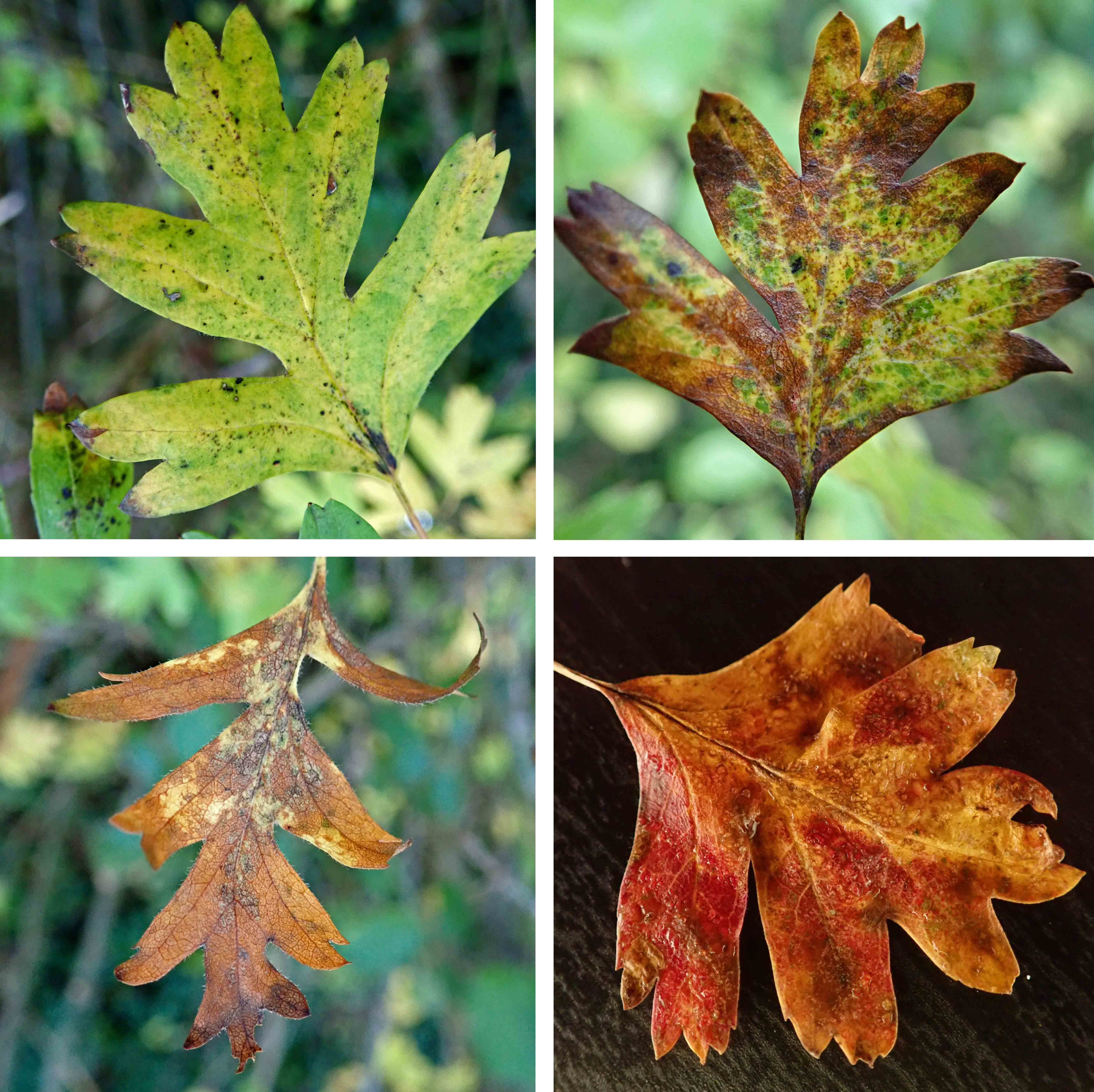
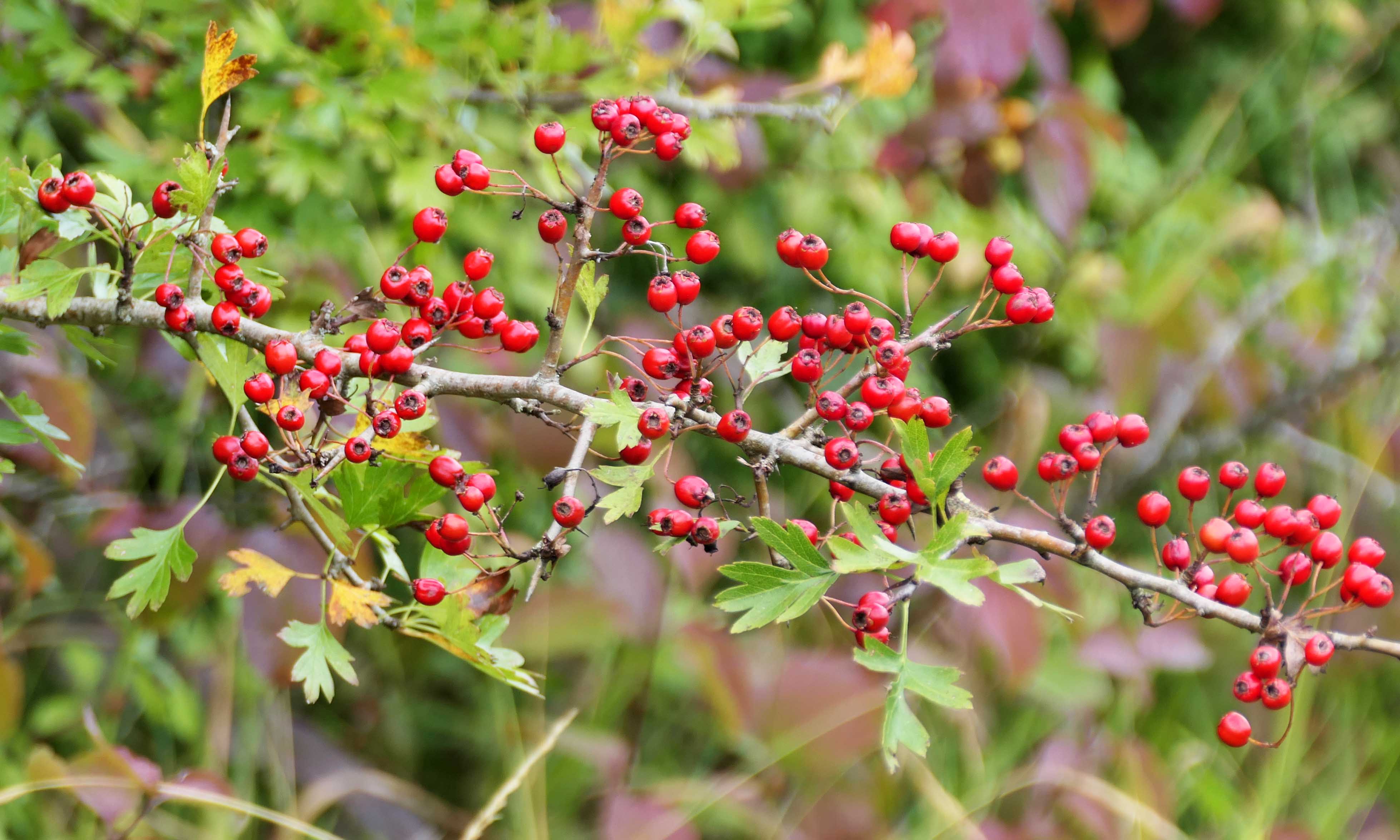
The Hawthorn (Crataegus monogyna) is not really a tree we notice for its foliage, though its leaves were, apparently, one of the models for the foliage that wreathes the faces of Green Men seen in carvings in churches.

And, according to Richard Mabey’s Flora Britannica, Bread-and-cheese is a vernacular name given to the leaves of the Hawthorn in some places around Britain. He says: ‘This is usually explained as referring to their rudimentary culinary qualities’ but then quotes a correspondent who writes:

We would pick the red berries and green leaves in the autumn. These were known as “bread and cheese” – the leaf the bread, the berry the cheese.

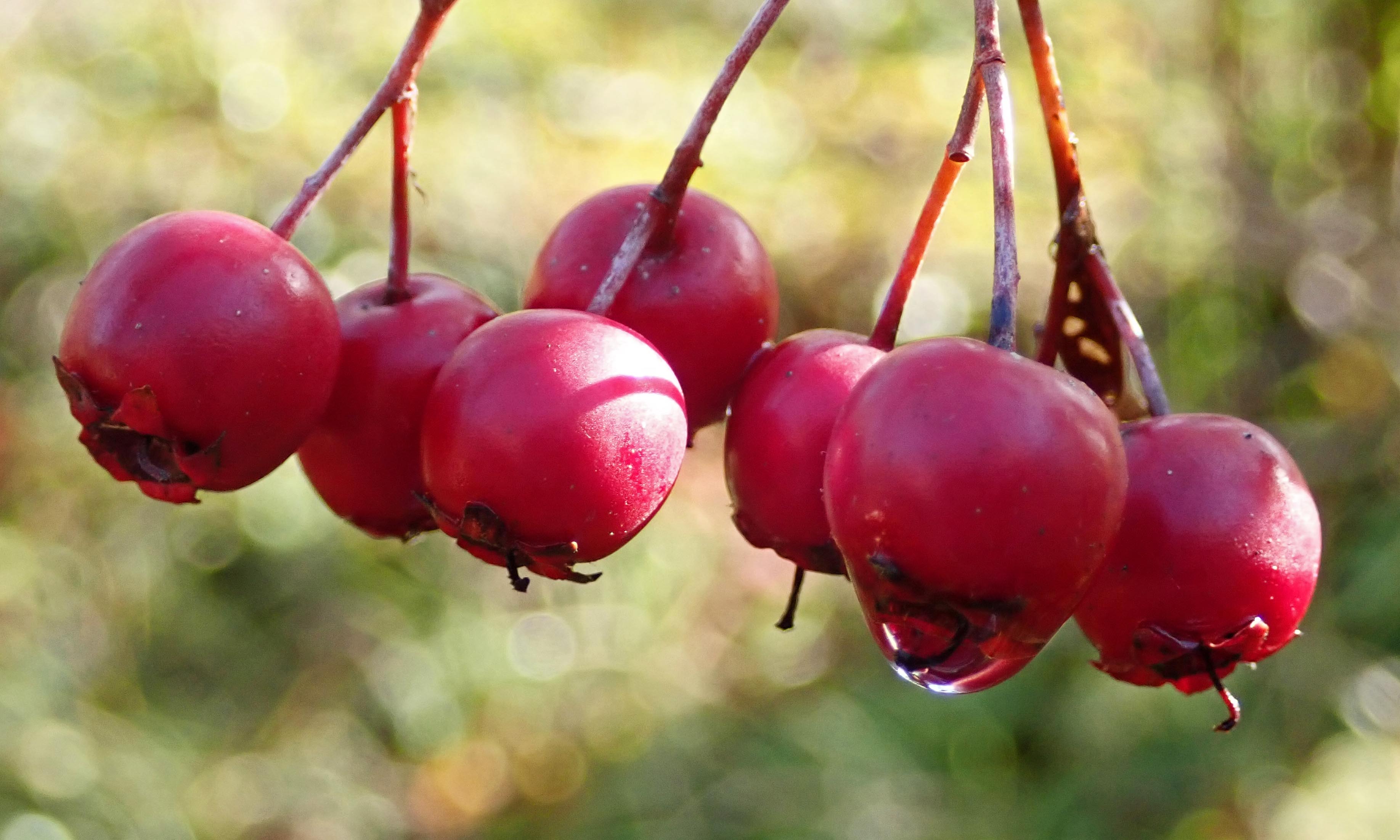
In the autumn, though the leaves of the Hawthorn do, of course, change colour, the hues are mostly yellow and brown, with just the merest hint of red. So it’s the stunning red berries rather than the tree’s leaves that makes the Hawthorn stand out in the autumnal landscape. I’ve never tried eating the berries but Mabey notes that the ‘flesh is a little like overripe avocado pear or, more fancifully, a whey cheese.’ That doesn’t sounds very appetising to me so I think I’ll continue to admire, not to eat them.

Like Loading...

Red-throated diver

01 Saturday Nov 2025

Posted by sconzani in birds

≈ Leave a comment

Tags

birding, birdwatching, British birds, Gavia stellata, Red-throated diver

The identity of this bird, which was first spotted in the sea off Cardiff Bay’s Barrage on Wednesday the 29th, caused a lot of discussion among local birders, which made for an excellent learning experience for me, as I’d only ever seen this species once before. It seems that Black-throated divers (known as Arctic loons in North America) and Red-throated divers (also known as Red-throated loons) can be tricky to tell apart when they’re not in breeding plumage.

The white flank patch on this bird would normally indicate Black-throated but that species, when not in full breeding plumage, almost always has a throat that is mostly black around the back but has a white strip down the front (see this image on Cornell’s All About Birds website). The bills of these species can also be diagnostic; the bill of the Red-throated diver often looks slightly more upswept at the tip, while the Black-throated’s bill looks heavier and straighter; though some birders queried the shape of this bird’s bill, it seems to be within acceptable parameters.

The final decision was that this is a Red-throated diver (Gavia stellata), an adult bird that is still moulting from its stunning breeding plumage into its full winter plumage. Apparently, the white speckling/fringes to the back feathers indicate it’s an adult bird not a juvenile, which would usually have a black back. Cornell’s Macaulay Library has a photo of a similar-looking bird, a much clearer photo that my camera was able to produce at distance and in poor light.

Like Loading...

Ghostly fungi

31 Friday Oct 2025

Posted by sconzani in autumn, fungi

≈ 2 Comments

Tags

British fungi, Helvella crispa, saddle fungi, White saddle

‘Tis All Hallows’ Eve and all round the globe
the spirits are rising to roam and to probe,
to spook and to scare,
while you wonder ‘Who’s there?’

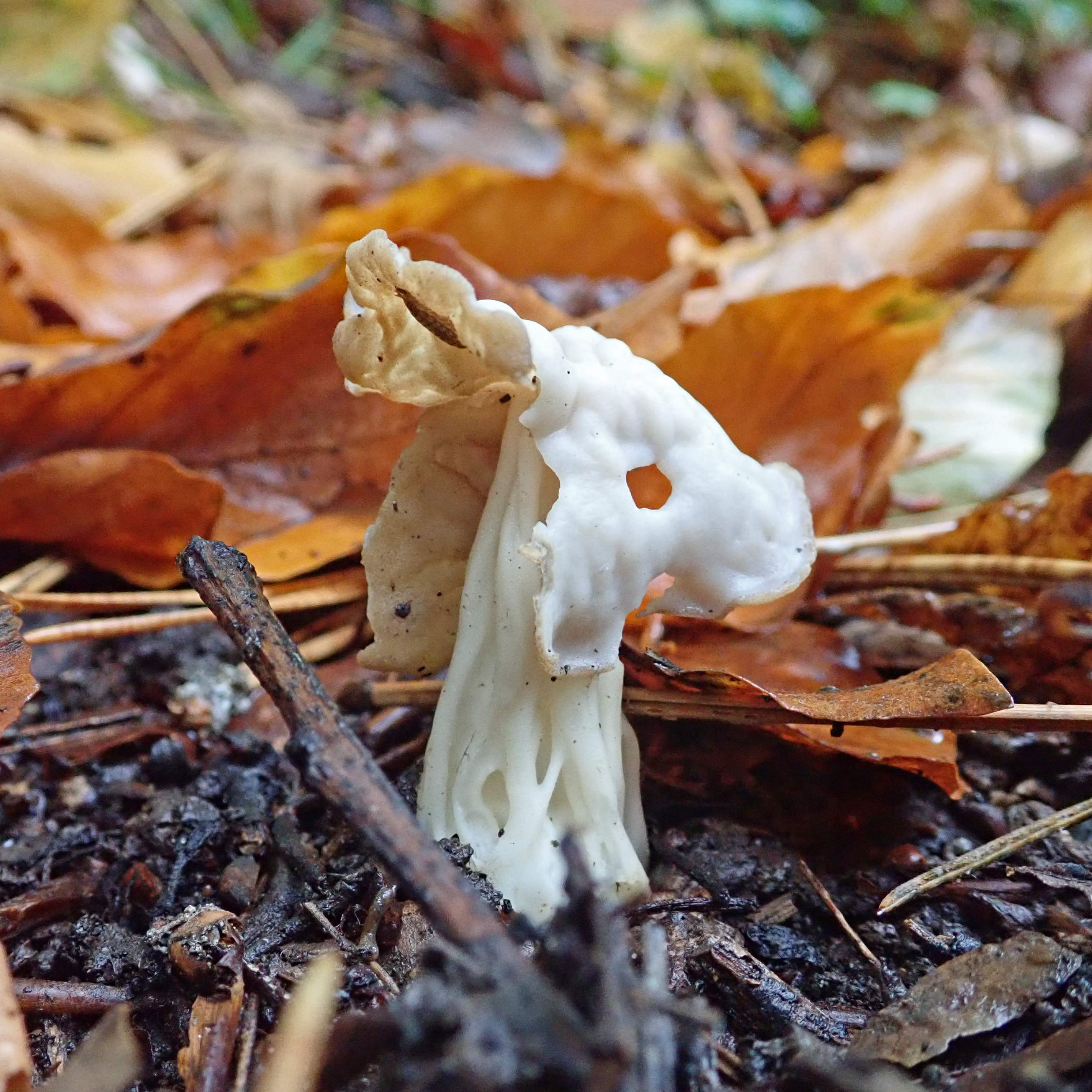
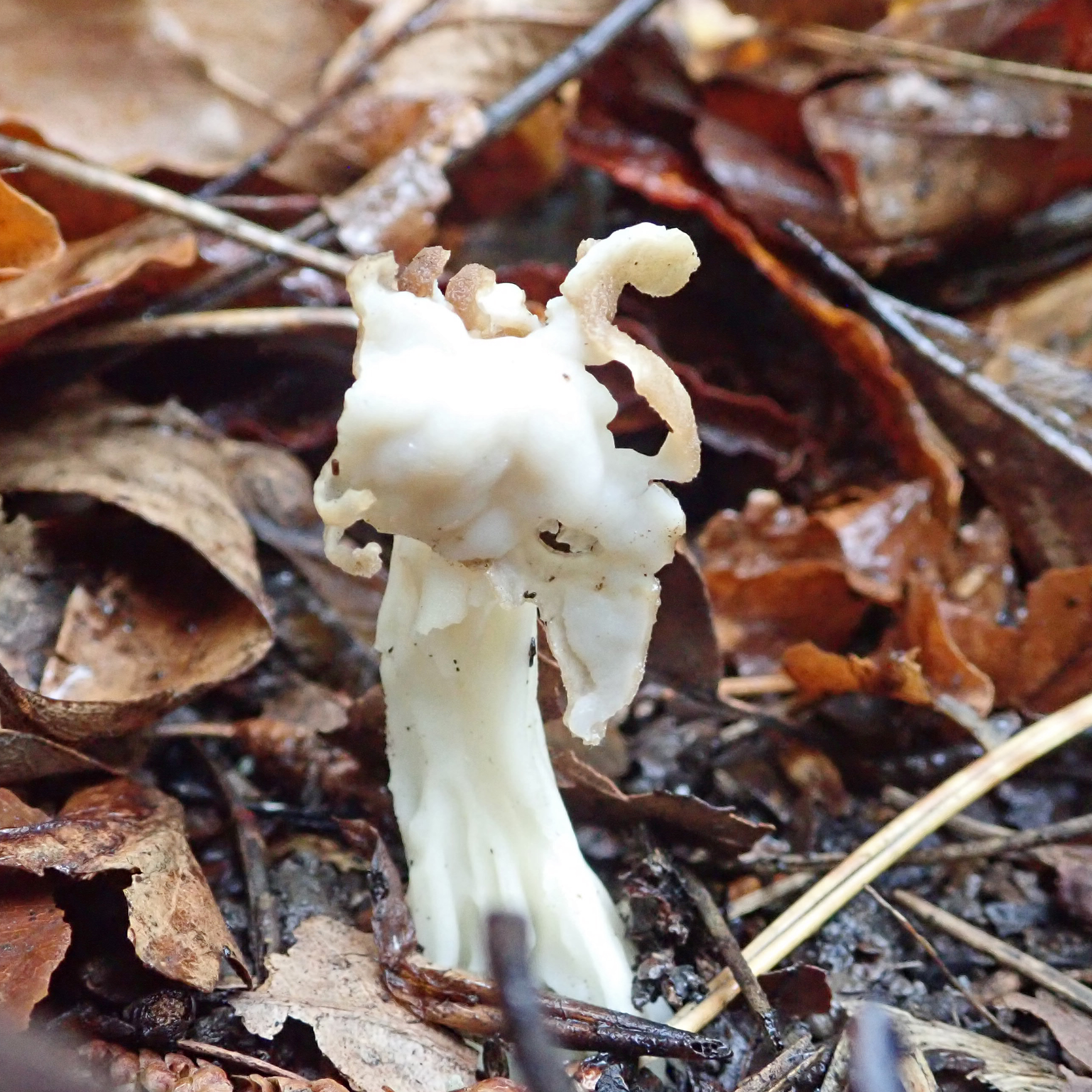
With their white colour and partial resemblance to the classic ‘white sheet over the head with holes for eyes’ ghost imitation, these fungi I found on Wednesday in a local park seem particularly appropriate for Halloween. These are White saddle (Helvella crispa), fungi that grow at this time of year in damp soil in deciduous woodland, often alongside paths, which is exactly where I found these.

Like Loading...

An Egyptian goose comes to town

30 Thursday Oct 2025

Posted by sconzani in birds

≈ 6 Comments

Tags

Alopochen aegypticus, birding, birdwatching, British birds, Cardiff birding, Egyptian Goose, Lamby Lake, non-native birds

The BTO (British Trust for Ornithology) website reckons that the Egyptian goose (Alopochen aegyptiaca) was introduced to England in the 17th century, presumably to enhance the parks and gardens of the rich with an exotic species – not quite a Peacock, but you get the idea.

Like many other introduced species, these geese have since spread their wings and flown to pastures new or, in this case, more likely lakes, though that colonisation has been quite gradual. The BTO site states:

In 1991 the population was estimated at c.900 individuals, 91% of which were in Norfolk. Since then, the species has colonised the rest of East Anglia, much of London and parts of the Home Counties.

And, from further down the page, by 2013-2017 the UK breeding population size had grown to 1850 pairs.
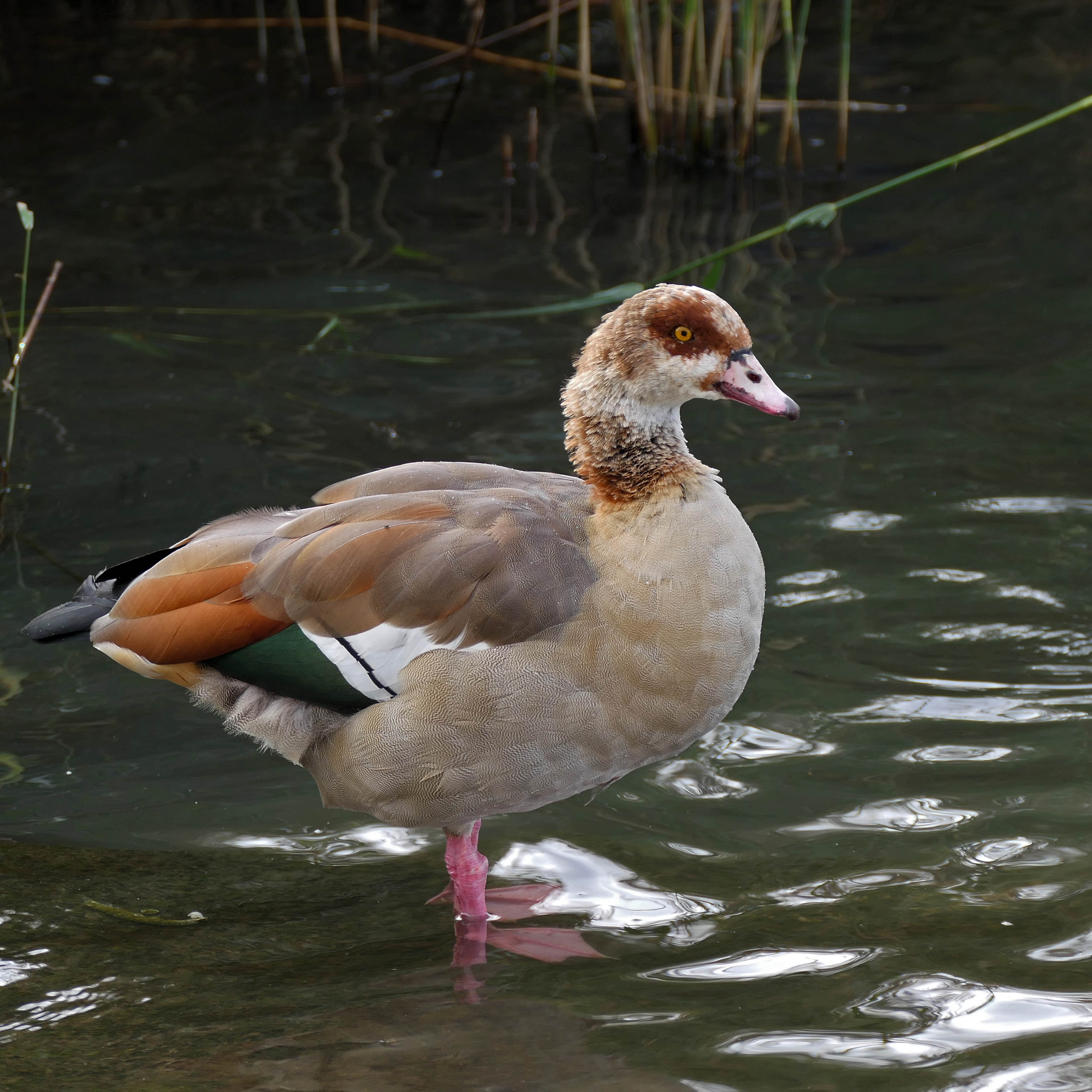
Sightings of these birds in south Wales have been relatively rare but do seem to have been increasing over the past couple of years. An Egyptian goose – possibly this same bird but there’s no way to be sure – spent several months on a local lake earlier in the year; it was first reported in the WhatsApp group on 23 March (though, of course, it may have been there before that, just not reported by any local birders) and then intermittently through April, May and June. Reports then stopped until ten days ago, when a birder posted that an ‘Egyptian goose set up residency a couple of weeks ago’, which would have been in early October.

As I’d not seen one of these geese since I was last in London six years ago, I decided to go take a look at this local bird. The lake it’s calling home is on the other side of Cardiff and I didn’t fancy the six mile walk through a very industrial area on busy roads so it was a bit of a trek by train and bus to get there … but definitely worth it.

With feathers in multiple shades of brown, with rich rust and bottle green highlights, Egyptian geese are very handsome birds, and this one’s no exception. It looked very settled amongst the other waterfowl, though the Coots were keeping a close eye on it. It was certainly not bothered by the presence of people and, though it turned its nose (beak?) up at my offering of suet pellets, which the other birds were happy to scoff, it happily grabbed the white bread thrown in the water by other visitors, so has presumably lived in a public park setting previously. I was very pleased I’d made the effort to go and see this exotic visitor.


Like Loading...
← Older posts
Newer posts →

About me

sconzani

sconzani

I'm a writer and photographer; researcher and blogger; birder and nature lover; countryside rambler and city strider; volunteer and biodiversity recorder.

View Full Profile →

Follow earthstar on WordPress.com

Enter your email address to follow this blog and receive notifications of new posts by email.

Recent blog posts

  • Lifer: Box bug April 27, 2026
  • Peak Wild garlic April 26, 2026
  • First damsels of 2026 April 25, 2026
  • NFY: Green-veined white April 24, 2026
  • The return of the Willow warblers April 23, 2026

From the archives

COPYRIGHT

Unless otherwise acknowledged, the text and photographs on this blog are my own and are subject to international copyright. Nothing may be downloaded or copied without my permission.

Fellow Earth Stars!

  • Unknown's avatar
  • Unknown's avatar
  • Unknown's avatar
  • Unknown's avatar
  • Unknown's avatar
  • Unknown's avatar
  • Unknown's avatar
  • Unknown's avatar
  • Unknown's avatar
  • Unknown's avatar
  • Unknown's avatar
  • Unknown's avatar
  • Unknown's avatar
  • Unknown's avatar
  • Unknown's avatar
  • Unknown's avatar
  • Unknown's avatar
  • Unknown's avatar
  • Unknown's avatar
  • Unknown's avatar
  • Unknown's avatar
  • Unknown's avatar
  • Unknown's avatar
  • Unknown's avatar
  • Unknown's avatar
  • Unknown's avatar
  • Unknown's avatar
  • Unknown's avatar
  • Unknown's avatar
  • Unknown's avatar
  • Unknown's avatar
  • Unknown's avatar
  • Unknown's avatar
  • Unknown's avatar
  • Unknown's avatar
  • Unknown's avatar
  • Unknown's avatar
  • Unknown's avatar
  • Unknown's avatar
  • Unknown's avatar
  • Unknown's avatar
  • Unknown's avatar
  • Unknown's avatar
  • Unknown's avatar
  • Unknown's avatar
  • Unknown's avatar
  • Unknown's avatar
  • Unknown's avatar
  • Unknown's avatar
  • Unknown's avatar

Blog at WordPress.com.

Privacy & Cookies: This site uses cookies. By continuing to use this website, you agree to their use.
To find out more, including how to control cookies, see here: Cookie Policy
  • Subscribe Subscribed
    • earthstar
    • Join 642 other subscribers
    • Already have a WordPress.com account? Log in now.
    • earthstar
    • Subscribe Subscribed
    • Sign up
    • Log in
    • Report this content
    • View site in Reader
    • Manage subscriptions
    • Collapse this bar
 

Loading Comments...
 

You must be logged in to post a comment.

    %d