• ABOUT
  • BIRDING 2018
  • Birding 2019
  • BLOG POSTS
  • Butterflies 2018
  • Resources

earthstar

~ a celebration of nature

earthstar

Author Archives: sconzani

Dead crab

06 Tuesday Aug 2024

Posted by sconzani in seaside

≈ 2 Comments

Tags

British crustaceans, Carcinus maenas, crustaceans, dead crab, Shore crab

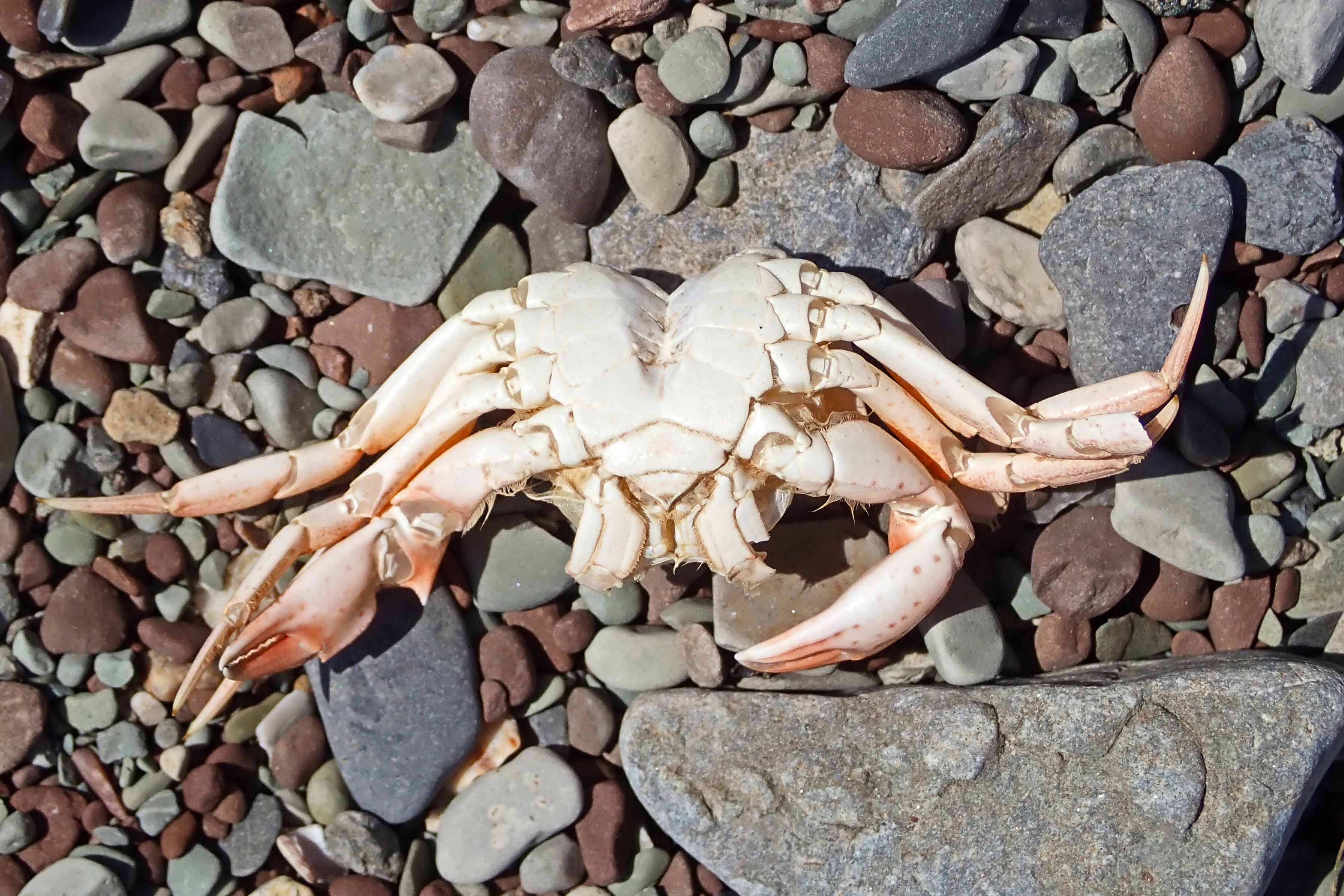
As the Shore crab (Carcinus maenas) is the most common crab found in rock pools on British beaches, I assume this dead crab I found on a local beach is one of those.

240805 shore crab (1)

The reason I can’t be sure is that you need to check the pattern of spikes on a Shore crab’s shell and, as you can see, this one was missing its shell, presumably because a seabird removed it to feast on the meat inside.

240805 shore crab (2)

Like Loading...

Leafmines: Cameraria ochridella

05 Monday Aug 2024

Posted by sconzani in insects, trees

≈ Leave a comment

Tags

British moths, Cameraria ochridella, Horse chestnut leaf-mining moth, Horse chestnut leafminer, Horse chestnut tree, leaf-mining moth larvae

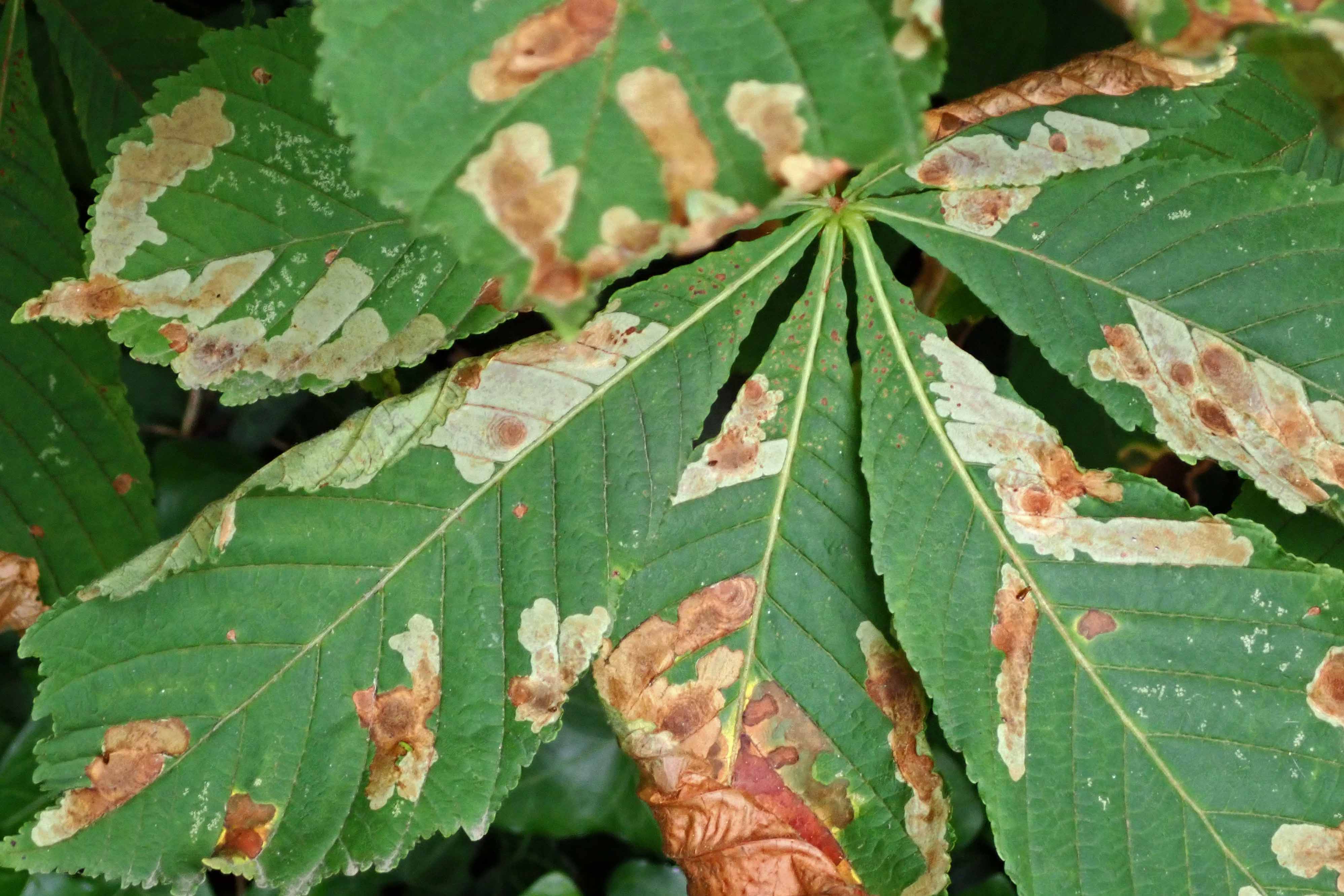
As it’s very common, I’m sure you’ve all seen this damage on the leaves of Horse chestnut trees. These are leafmines, made by the larvae of the Horse chestnut leafminer (Cameraria ochridella) (see my blog Horse chestnut leafminer, 18 July 2018).

240805 Cameraria ochridella (1)

Until last Friday, I’d only ever seen the leafmines, never the adult moth. But, as I walked past this particular Horse chestnut tree, lots of tiny creatures were flitting around its lower leaves. At first, I wasn’t sure what the creatures were – they looked like little flies. Then one of them landed on a leaf in front of me and I managed to get a closer look – a moth, not a fly, and very prettily marked too.

240805 Cameraria ochridella (2)

I must have stood watching for 15 minutes or more, waiting for a moth to settle and snapping a few quick photos before it zipped off … and again … and again. It was a good test of my patience, and I’m really glad I was in the right place at the right time to see these beautiful moths.

240805 Cameraria ochridella (3)

Like Loading...

Upright hedge-parsley

04 Sunday Aug 2024

Posted by sconzani in flowers, wildflowers

≈ 2 Comments

Tags

British wildflowers, Torilis japonica, umbellifers, Upright hedge-parsley

I’m not very good at identifying umbellifers – Wild carrot, Hogweed, Cow parsley, Wild parsnip are fairly straight forward but I tend to ignore the others. So, when I spotted this clump and immediately thought ‘That looks different’, I thought I’d make an effort to work out what it was. I took a few photos but, when I got home and started checking, I quickly realised I needed more detailed and specific images. Luckily, this plant was growing somewhere I often pass so I managed to get more photos last Wednesday. This is how, using photos and information I found on the Wildflower Finder website, I managed to identify the plant as Upright hedge-parsley (Torilis japonica).

240804 upright hedge-parsley (1)

The stems of the plant are quite thin but stiff, and the flowers are held on umbels, which have between 5 and 9 umbellets (little clumps of flowers). The stems (and leaves) are covered in ‘white bristly hairs giving it a slight rough feel’. Beneath the umbels, there are bracts (like narrow leaves), which ‘are often just underneath the “spokes” of the umbels and therefore usually hidden from view’.

240804 upright hedge-parsley (2)

At each join, where a stalk branches out from the main stem, you can see a small leaf. The leaves are larger at the bottom of the plant, smaller towards the top. The shapes of the leaves match those I found on the Wildflower Finder website.
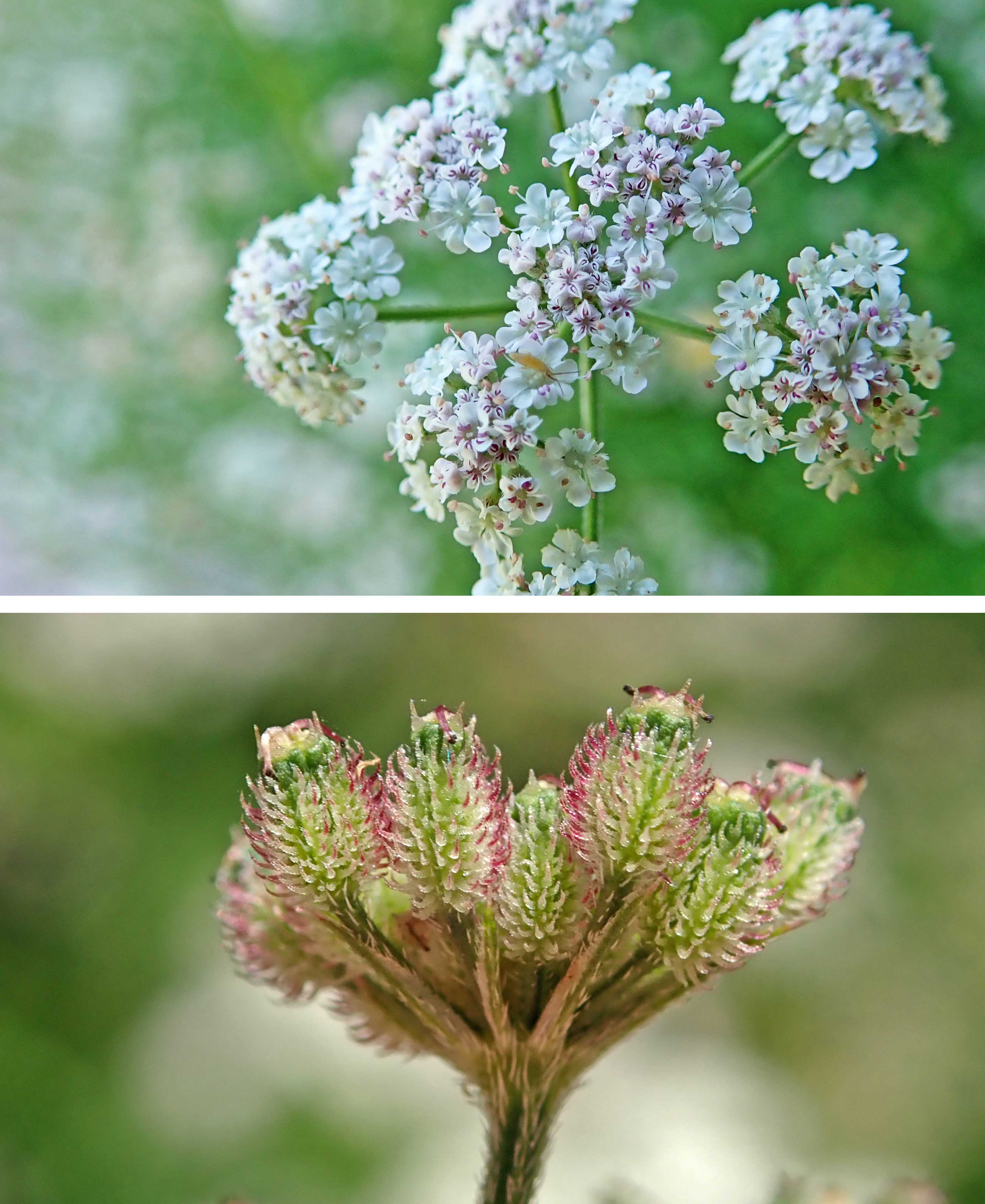
240804 upright hedge-parsley (3)

The flowers are mostly white, though some have a pinkish tinge, all with 5 red anthers. The fruits form immediately underneath the flowers, and can be seen more clearly when all the petals have fallen off. ‘The fruits are barrel-shaped and are surrounded by vertical rows of spines’ and ‘The white and red spines on the fruits are curved inwards like horns, and taper towards the tip….’

Like Loading...

Hoverfly: Melangyna umbellatarum

03 Saturday Aug 2024

Posted by sconzani in insects

≈ Leave a comment

Tags

British hoverflies, egg-laying hoverfly, egg-laying Melangyna umbellatarum, hoverfly eggs, Melangyna umbellatarum

My guide book, Britain’s Hoverflies (Ball and Morris, Princeton, 2015) says the Melangyna ‘is a challenging genus with several species which are very difficult to identify’, and I thought ‘Just my luck! I might as well give up now’.

240803 Melangyna umbellatarum (1)

Fortunately, I didn’t, and, as this particular species has a shiny thorax and pale, almost white abdominal markings, it proved easier than expected to identify my first ever hoverfly from this genus. This little beauty has now been confirmed as Melangyna umbellatarum, a female that was egg-laying on Hogweed in Cardiff’s Heath Park last week.

240803 Melangyna umbellatarum (2)

You may just be able to spot one of her tiny white eggs above her head in the top photo, and I was able to get a close up (photo above). This was also the first time I’d observed a hoverfly laying her eggs.

Like Loading...

Flies: Sciara species

02 Friday Aug 2024

Posted by sconzani in insects

≈ 2 Comments

Tags

British flies, flies, Fungus gnat fly species, Fungus gnats, Sciara hemerobioides, Sciara species

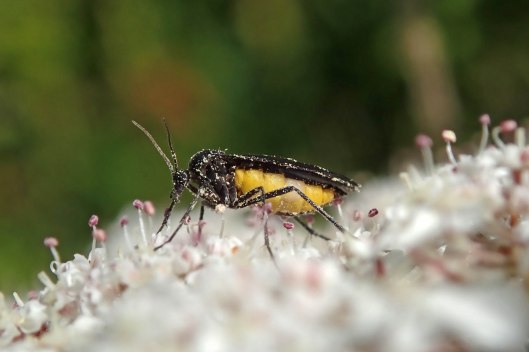
When I first noticed these little flies feasting on the nectar of Wild carrot flowers, I thought perhaps they were sawflies but, when looking at my photos on my laptop later, I realised their heads were far too small.

Turns out these are some kind of fungus gnat though, according to the NatureSpot website, there are several species with the same bright yellow abdomen. So, although these flies look very like the Sciara hemerobioides shown on that website, I’ve recorded them as Sciara species. As you may have worked out, it’s the larvae that feed on fungus, whereas the adults prefer umbellifers and other flora.

Like Loading...

The weird & wonderful world of Sawfly larvae

01 Thursday Aug 2024

Posted by sconzani in insects

≈ Leave a comment

Tags

British sawflies, Caliroa annulipes, Caliroa cerasi, Eriocampa ovata, Euura pavida, Nematus septentrionalis, sawfly larvae

I mentioned earlier in the week, in my post about the sawfly larva Heterarthrus vagans mining the leaves of Alder, that I’d found that miner while checking out leaves to see what small creatures had been munching holes in their leaves. And my recent staring at holey leaves on other trees and shrubs, in other locations, has produced a nice variety of Sawfly larvae, some that look like regular caterpillars, others like slimy slugs. I’ve linked the names to the Sawflies of Britain and Ireland website for those interested in more information on each species.

240801 Caliroa annulipes

Caliroa annulipes on Hawthorn

240801 Caliroa cerasi

Caliroa cerasi, also on Hawthorn

240801 cladius sp

An unidentified Cladius species, on Field rose

240801 eriocampa ovata

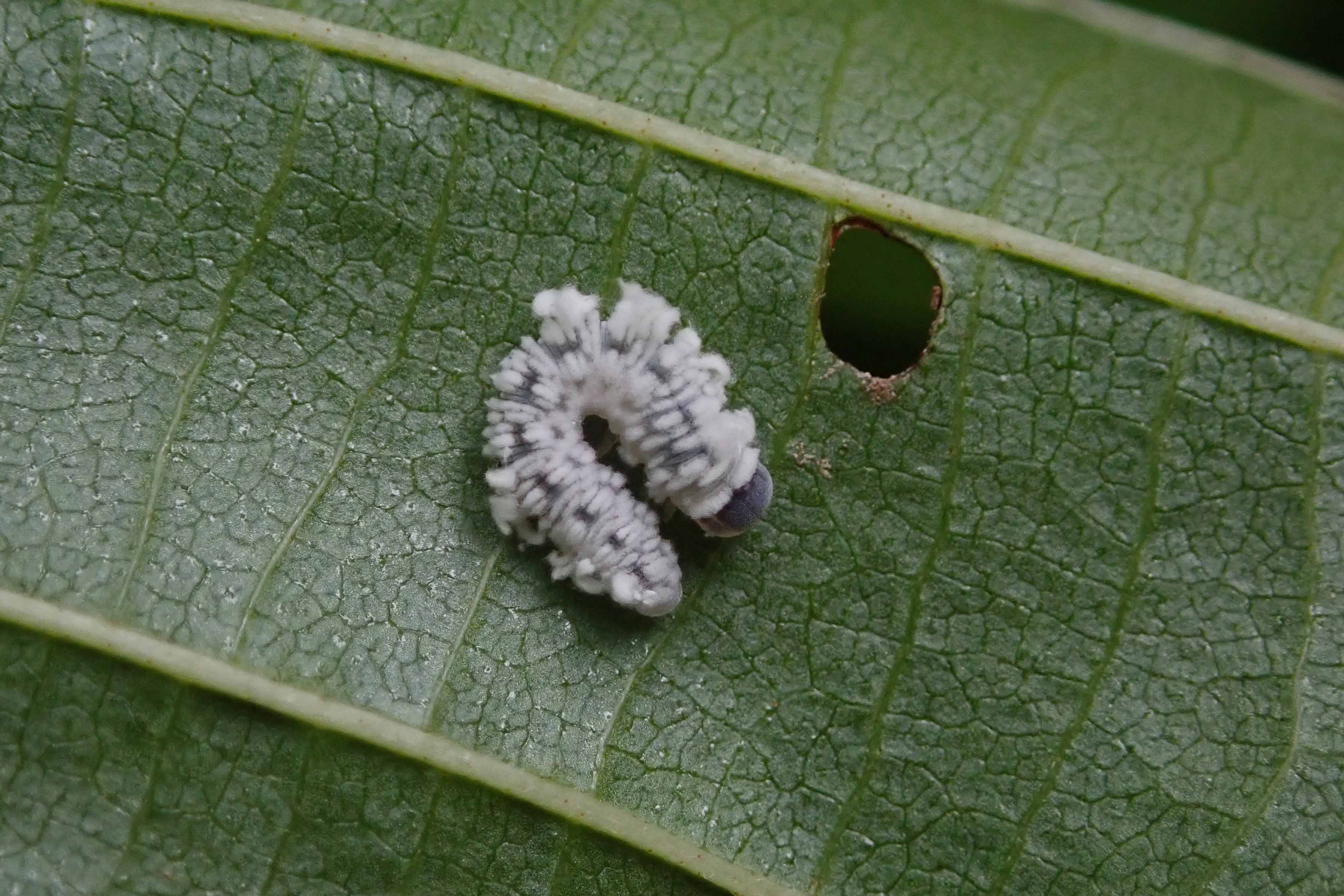
The one that looks like bird poo, Eriocampa ovata, on Alder

240801 Euura pavida

One of the bum-waggling species, Euura pavida, on Willow

240801 Nematus septentrionalis

Another bottom waggler, Nematus septentrionalis, on Birch. I love how their munching has created a heart from their leaf.

Like Loading...

Mrs Crow

31 Wednesday Jul 2024

Posted by sconzani in birds

≈ 2 Comments

Tags

birding, birdwatching, British birds, Carrion crow, crow

This is my beautiful female Carrion crow friend, the mate of the handsome male I’ve featured here before (The look, the glare, 26 October 2022). For some reason, they haven’t raised a family this year – perhaps they tried but were disturbed, or their chicks perished in our dreadful early Spring weather. Or, maybe, after successfully raising three youngsters last year (My crow family, 15 July 2023), they decided to give themselves a break this year (though I think that’s probably me anthropomorphising their decision-making process). Both Mr and Mrs Crow are moulting at the moment so looking a little bedraggled but they still look lovely to me.

240731 mrs crow

Like Loading...

New location for Purple hairstreak

30 Tuesday Jul 2024

Posted by sconzani in insects, trees

≈ Leave a comment

Tags

British butterflies, butterfly, butterfly on Oak, hairstreak butterflies, Heath Park, Oak, Purple hairstreak

Since I discovered a Purple hairstreak, a couple of years ago, at Cosmeston Lakes Country Park, where they’d never been recorded before, I’ve been convinced that these gorgeous little butterflies are more common than most people realise. It’s just that, because they’re very small and spend most of their time high up in the tops of Oak trees, nobody notices them. So, being an habitual leaf-starer anyway, I now spend 10-15 minutes at this time of year staring at Oak trees, just in case. Last week, my leaf-staring paid off once again, when I was exploring Cardiff’s Heath Park. There are lots of large old Oaks in the park so it seemed a likely location, despite there being no recorded sightings. And this was my reward – even better than I expected, as it fluttered down from the top of the tree to a lower branch and posed nicely while I got some photos.

240730 purple hairstreak

Like Loading...

Leafmines: Heterarthrus vagans

29 Monday Jul 2024

Posted by sconzani in insects, trees

≈ Leave a comment

Tags

Alder, British leafminers, Heterarthrus vagans, leaf-mining sawfly larvae, leafmines on Alder, sawfly larva

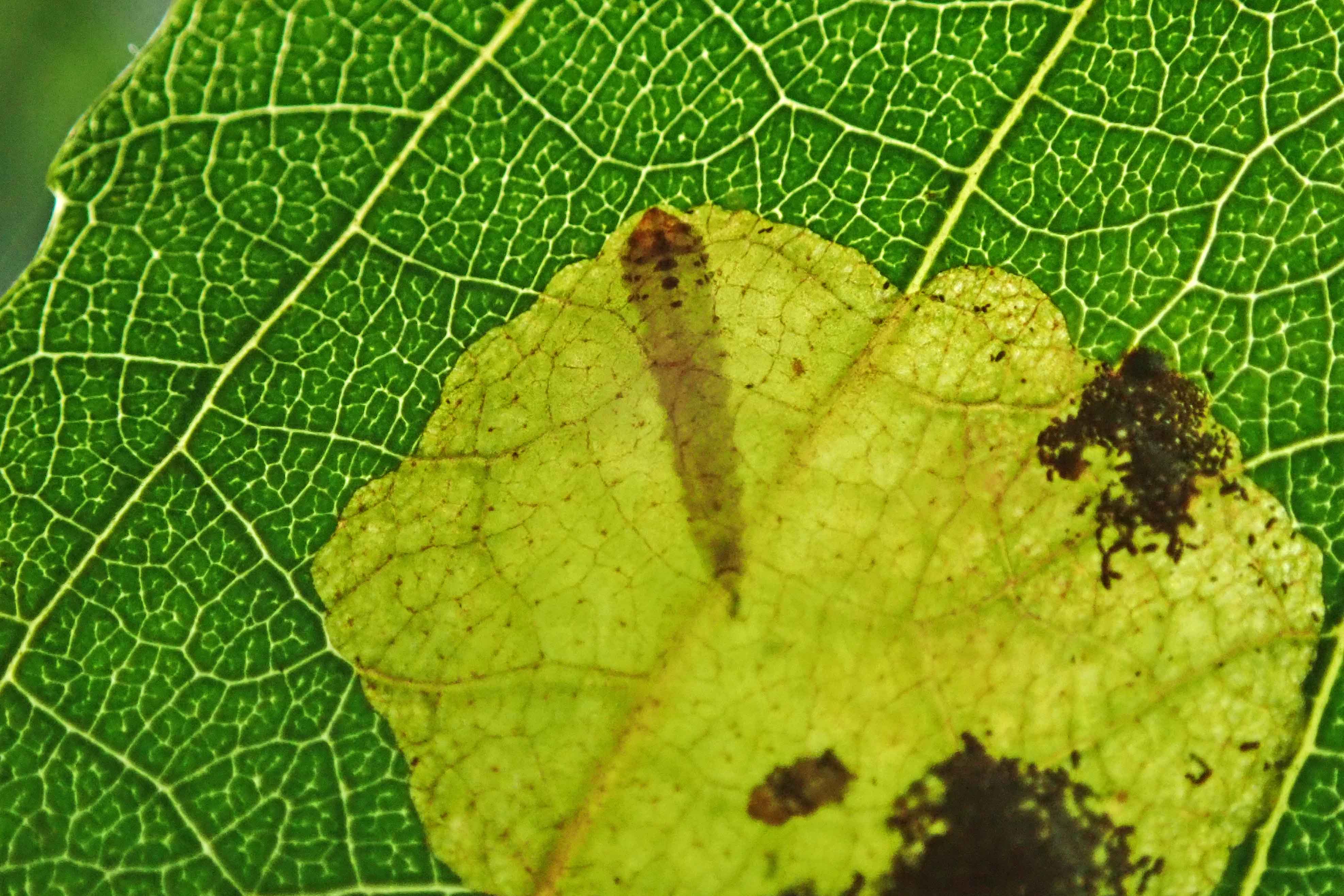
Another Monday, another leafmine. I noticed this one while checking out Alder leaves to see what small creatures had been munching holes in their leaves (more on those later this week). This blotch mine was made by the larva of sawfly Heterarthrus vagans (you can see what the adult sawfly looks like on the Sawflies website here).

240729 Heterarthrus vagans (1)

I thought initially this might have been the larva of sawfly Fenusa dohrnii – I was right about it being a sawfly but had the species wrong. Fortunately, I had held the leaf up to the light to get a slightly clearer photo of the larva within as, from looking at that, British Leafminers expert Rob was able to tell me: ‘It has a black “bow tie” … so is a Heterarthrus and as it is Alder it is Heterarthrus vagans‘. Who knew sawfly larvae wore bow ties? But it seems all the Heterarthrus species larvae have them. Very smart!

240729 Heterarthrus vagans (2)

Like Loading...

Sea-lavender

28 Sunday Jul 2024

Posted by sconzani in flowers, wildflowers

≈ Leave a comment

Tags

British wildflowers, coastal flora, Limonium binervosum agg, Rock sea-lavender, sea-lavender

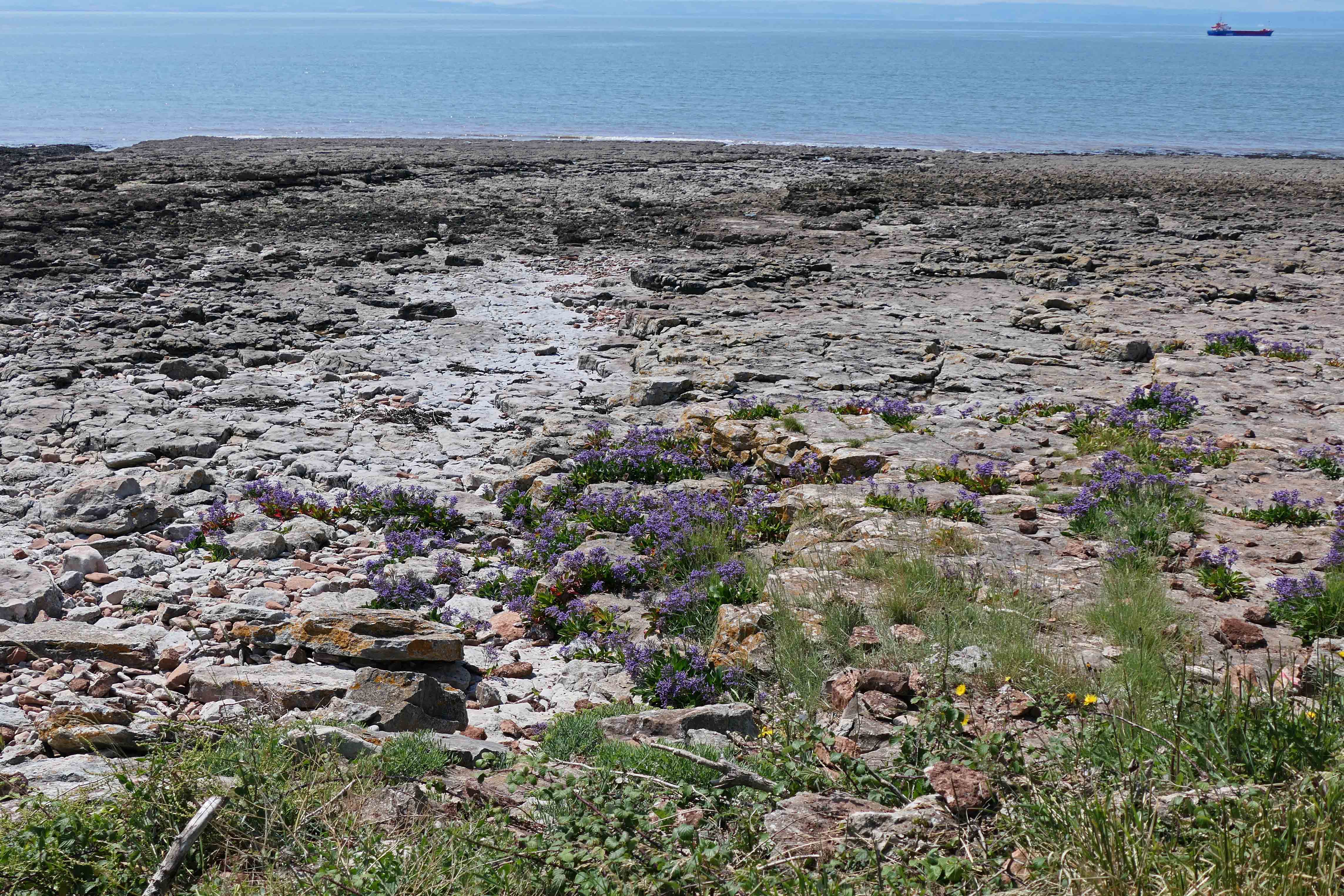
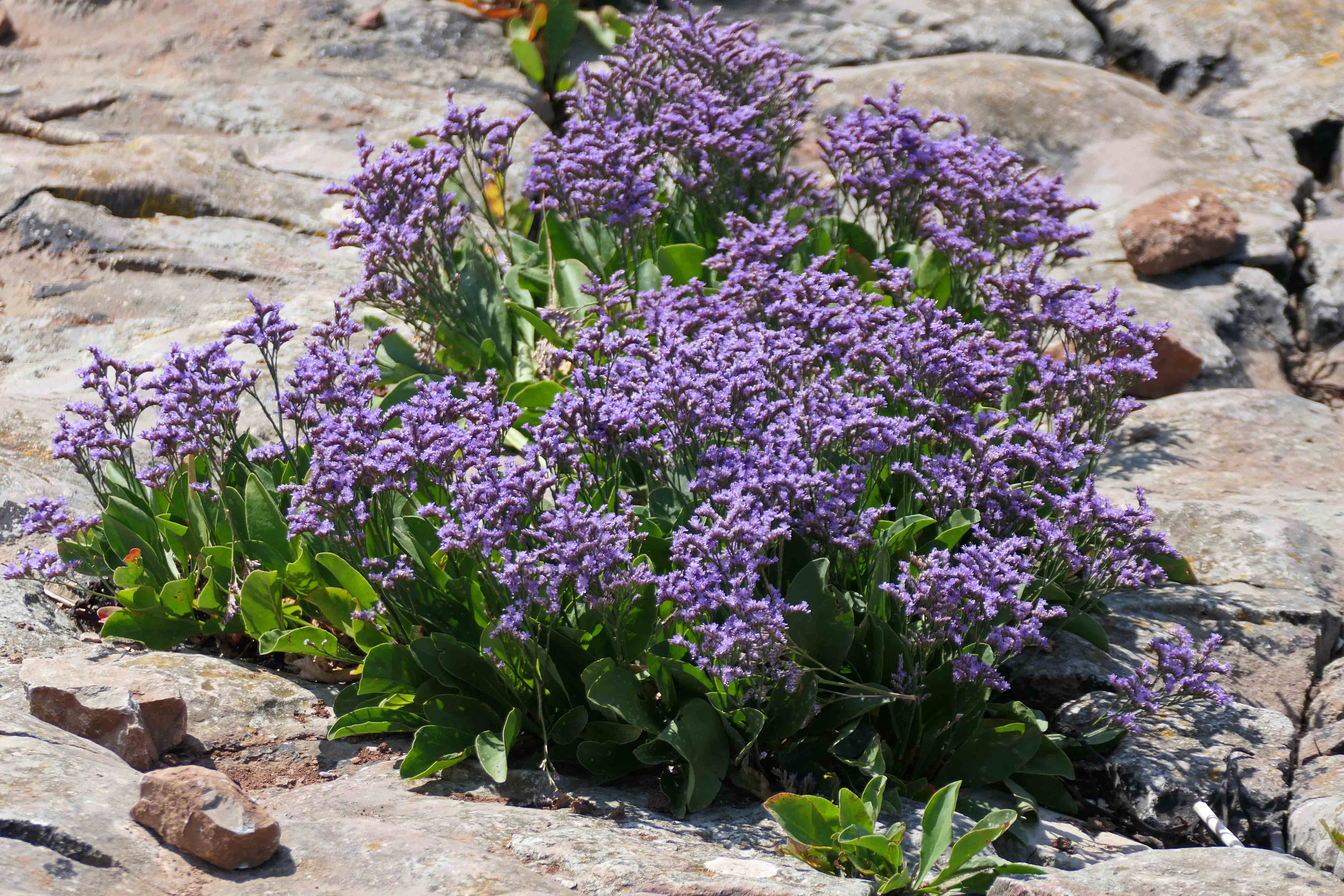
I’m sure I must have walked along the coastal path at Sully beach in the summer months in previous years but, somehow, I’ve never noticed the Sea-lavender before. And how could I not have noticed this glorious swathe of lilac growing from cracks in the layers of rocks?

240728 sea lavender (1)

According to my guide books, Common sea-lavender (Limonium vulgare) usually grows in salt-marshes, whereas Rock sea-lavender (Limonium binervosum agg.), of which there are several subspecies, grows on sea cliffs, rocks by the sea, and in the shingle of drier salt-marshes. So, I assume this is one of the Rock sea-lavender species but I can’t be sure. And, for me, it doesn’t really matter – it’s just beautiful to see.

240728 sea lavender (2)

Like Loading...
← Older posts
Newer posts →

About me

sconzani

sconzani

I'm a writer and photographer; researcher and blogger; birder and nature lover; countryside rambler and city strider; volunteer and biodiversity recorder.

View Full Profile →

Follow earthstar on WordPress.com

Enter your email address to follow this blog and receive notifications of new posts by email.

Recent blog posts

  • The day of the Wheatears March 28, 2026
  • Cetti’s warblers March 27, 2026
  • Goose barnacles March 26, 2026
  • Black-tailed godwits fighting March 25, 2026
  • Singing from every tree top March 24, 2026

From the archives

COPYRIGHT

Unless otherwise acknowledged, the text and photographs on this blog are my own and are subject to international copyright. Nothing may be downloaded or copied without my permission.

Fellow Earth Stars!

  • Unknown's avatar
  • Unknown's avatar
  • Unknown's avatar
  • Unknown's avatar
  • Unknown's avatar
  • Unknown's avatar
  • Unknown's avatar
  • Unknown's avatar
  • Unknown's avatar
  • Unknown's avatar
  • Unknown's avatar
  • Unknown's avatar
  • Unknown's avatar
  • Unknown's avatar
  • Unknown's avatar
  • Unknown's avatar
  • Unknown's avatar
  • Unknown's avatar
  • Unknown's avatar
  • Unknown's avatar
  • Unknown's avatar
  • Unknown's avatar
  • Unknown's avatar
  • Unknown's avatar
  • Unknown's avatar
  • Unknown's avatar
  • Unknown's avatar
  • Unknown's avatar
  • Unknown's avatar
  • Unknown's avatar
  • Unknown's avatar
  • Unknown's avatar
  • Unknown's avatar
  • Unknown's avatar
  • Unknown's avatar
  • Unknown's avatar
  • Unknown's avatar
  • Unknown's avatar
  • Unknown's avatar
  • Unknown's avatar
  • Unknown's avatar
  • Unknown's avatar
  • Unknown's avatar
  • Unknown's avatar
  • Unknown's avatar
  • Unknown's avatar
  • Unknown's avatar
  • Unknown's avatar
  • Unknown's avatar
  • Unknown's avatar

Blog at WordPress.com.

Privacy & Cookies: This site uses cookies. By continuing to use this website, you agree to their use.
To find out more, including how to control cookies, see here: Cookie Policy
  • Subscribe Subscribed
    • earthstar
    • Join 642 other subscribers
    • Already have a WordPress.com account? Log in now.
    • earthstar
    • Subscribe Subscribed
    • Sign up
    • Log in
    • Report this content
    • View site in Reader
    • Manage subscriptions
    • Collapse this bar
 

Loading Comments...
 

You must be logged in to post a comment.

    %d