• ABOUT
  • BIRDING 2018
  • Birding 2019
  • BLOG POSTS
  • Butterflies 2018
  • Resources

earthstar

~ a celebration of nature

earthstar

Category Archives: animals

The Welsh sheep

26 Monday Jun 2017

Posted by sconzani in animals, nature

≈ 2 Comments

Tags

New Zealand sheep, sheep, Welsh sheep

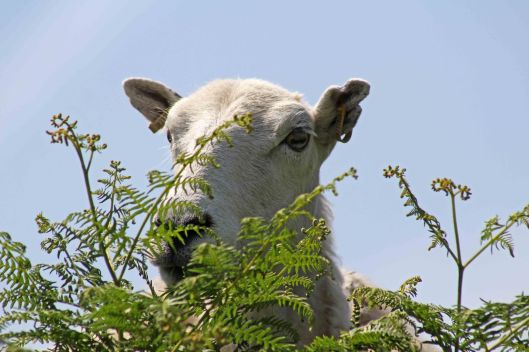
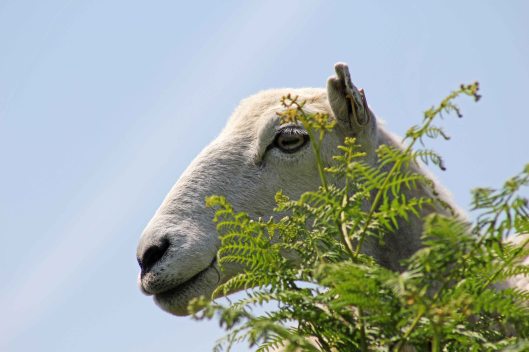
When I relocated from New Zealand to Wales in 2015, it didn’t occur to me that I was swopping one sheep-filled nation with another but so it has turned out.

170626 Welsh sheep (1)

Wales has around 10 million sheep; Welsh lamb is considered a delicacy; beautiful wool is produced locally; and I sometimes hear the same lewd sheep jokes that I used to hear in New Zealand.

170626 Welsh sheep (2)

The Welsh have taken their worship of the sheep one step further than New Zealand – there’s a National Wool Museum and, no, I haven’t been – but New Zealand still has a higher sheep to human ratio than Wales, at 7 to 1 as opposed to a measly 4 to 1.

170626 Welsh sheep (3)

I met this friendly Welsh local on my recent birding trip to Lliw Reservoirs.

Like Loading...

Birding at Lliw Reservoirs

25 Sunday Jun 2017

Posted by sconzani in animals, birds, insects, nature, trees, walks, wildflowers

≈ Leave a comment

Tags

birding, birdwatching, Bog pimpernel, Foxgloves, Glamorgan Bird Club, Grey wagtail, Lliw Reservoirs, Red kite, slow-worm, Tormentil, Victorian dam, Victorian ironwork, Whitethroat

170625 Lliw Reservoirs (3)

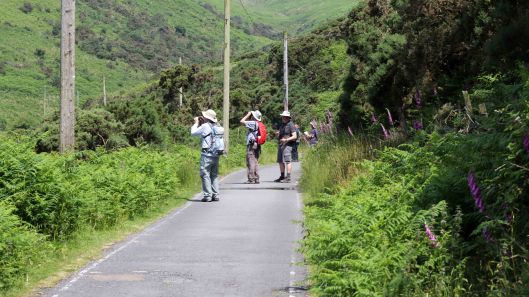
I celebrated the solstice with an outing with my Glamorgan Bird Club buddies to Lliw Reservoirs north of Swansea or, perhaps that should read, I sweated through the solstice – it was one of the hottest days of the year and the middle of a mini heatwave. Still, you know what they say about mad dogs and Englishmen (and Welshmen and a Kiwi) …

170625 Lliw Reservoirs (1)

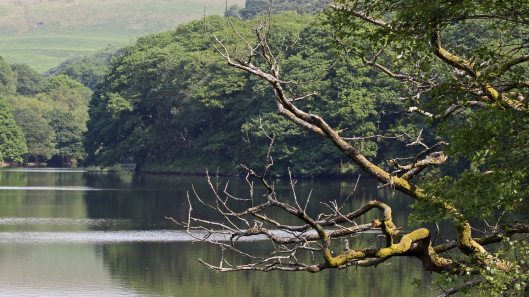
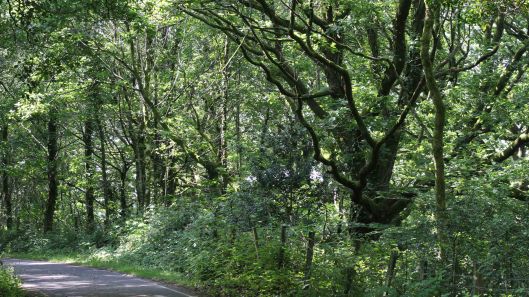
It’s a superb location. The two reservoirs were built in the second half of the 19th century, and still supply water to communities throughout south Wales. We only walked up one side of both reservoirs, through broadleaf woodland and then out onto open areas of grass and scrub and moorland, but there’s an 8-mile circular walk, which would be brilliant in cooler weather and includes large open commons of heath moorland on the hilltops.
170625 Lliw Reservoirs (2)

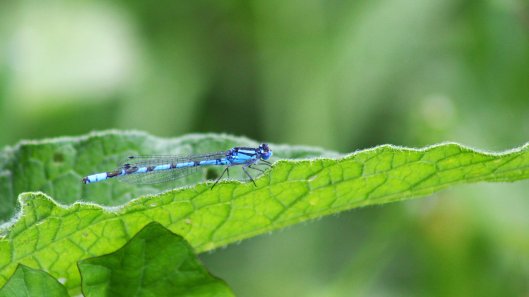
We heard more small birds than we saw (but that’s helping me learn their songs); buzzards and magnificent red kites were soaring overhead; we heard then saw the elusive grasshopper warbler in flight; dragonflies and damsels and the odd butterfly flitted about; and there were lots of lovely wildflowers (my particular favourites were the foxgloves, tormentil and bog pimpernel). Oh and, most importantly, the locals were friendly and the cafe serves delicious ice cream!

170625 Whitethroat
170625 Tormentil
170625 Slow-worm
170625 Lliw Reservoirs uplands
170625 Peacock
170625 Red kite
170625 Foxglove
170625 Grey wagtail
170625 Victorian ironwork
170625 Bog pimpernel
170625 Welsh sheep
170625 Pines & foxgloves
Like Loading...

Critters at RSPB Ham Wall

13 Tuesday Jun 2017

Posted by sconzani in animals, insects, nature, parks

≈ 6 Comments

Tags

Black-tailed skimmer, caddisfly, Common tortoiseshell, damselfly, Four-spotted Chaser, nature reserve, Roe deer, RSPB Ham Wall, Shapwick Heath

The only problem with going on a birding trip is that, in order to get photos of the birdies, I usually have my long lens on my camera, which means it’s then not easy to get photos of all the lovely smaller creatures I see as I’m walking around. And both RSPB Ham Wall Nature Reserve and, just across the road, Shapwick Heath National Nature Reserve have a profusion of delightful, and sometimes rare smaller creatures to be seen.

170613 Shapwick Heath

In particular, we saw a wealth of damsel- and dragonflies, including several of the Four-spotted chasers and Black-tailed skimmers shown below and, we think, the unusual Variable damselfly (though this can be tricky to identify). Spiders were particularly abundant on the path-side scrub, as were Dock beetles, judging from all the holey leaves we saw.

170613 4-spotted chaser
170613 Black-tailed skimmer

170613 RSPB Ham Wall critters (1)

170613 RSPB Ham Wall critters (2)

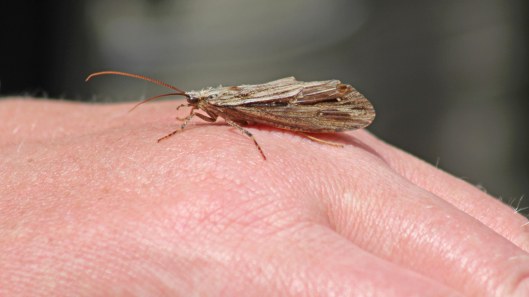
We rescued several large hairy caterpillars which were determinedly marching across the paths but risked annihilation from feet and bicycle tyres, as well as one large and very friendly Caddisfly (above). Butterflies weren’t as plentiful as I expected, though we did see good numbers of very fresh Small tortoiseshells, presumably newly hatched.

170613 Small tortoiseshells (2)
170613 Small tortoiseshells (1)

The most unexpected sighting, and a highlight for me, was a Roe deer on the canal-side bank in Shapwick Heath. Only its head and its very large ears could be seen, as it munched happily on a large green mouthful of vegetation while keeping a close eye on our admiring group of photographers.

170613 Roe deer

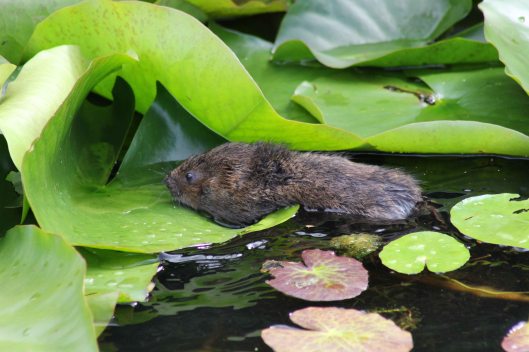
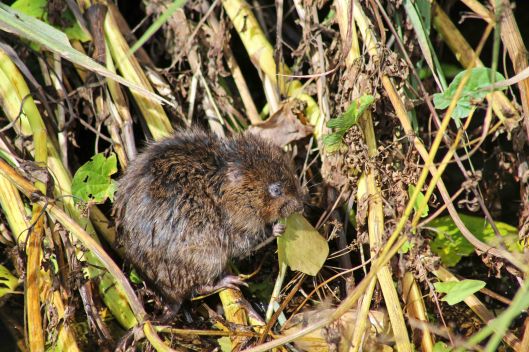
As I mentioned in yesterday’s piece on the birds of Ham Wall, you really need a week to explore these superb reserves thoroughly and then you might be lucky enough to see their resident water voles and otters. I have to go back!

Like Loading...

Botanising, with insects

30 Tuesday May 2017

Posted by sconzani in animals, birds, insects, molluscs, nature, slugs

≈ 4 Comments

Tags

Bloody-nosed beetle, Brynna, Click beetle, Glamorgan Botany Group, grasshopper, moths, Nettle weevil, rooster, sheep, slugs

As I mentioned a couple of days ago, I returned from my last Botany Group walk with more photos of insects – and other living creatures – than plants. The Gorse weevil got a blog of its own yesterday; now here are some of our other finds.

170531 1 weevil
170531 2 Nettle Weevil
170531 3 Click beetle

Firstly, a couple more weevils, both on nettle and the second one is definitely a Neetle weevil (Phyllobius pomacues) but I’m not sure about the first. The Click beetle was also found on nettle.

170531 4 sheep
170531 5 rooster

These two were at a farm we passed through; the sheep was lording it over the home paddock and the rooster was king of the farmyard. Both handsome dudes!

170531 6 slugs
170531 7 grasshopper

A nice little grouping of slug species, with their small friend, the Granny Grey, and a grasshopper. There were lots of these hopping round on grass and rushes in a boggy field. It may be a juvenile Meadow grasshopper but I’m not 100% sure.

170531 8 Micropterix calthella
170531 9 Moth Bactra sp
170531 10 spider

A little flock of Micropterix cathella moths were feasting on this grass flower, and there were lots of other small moths, probably one of the Bactra species, plus an unidentified spider with a distinctive striped body.

170531 11 Bloody-nose beetle larva
170531 12 Bloody-nose beetle

And last, but certainly not least, these Bloody-nosed beetles (Timarcha tenebricosa). The photo on the left shows the chubby larva and on the right is the adult beetle munching on a grass stalk.

Like Loading...

A little fox love

27 Saturday May 2017

Posted by sconzani in animals, nature

≈ 4 Comments

Tags

fox, Red fox, Rye Harbour Nature Reserve

170527 Red fox cub (1)

Across clearings, an eye,
A widening deepening greenness,
Brilliantly, concentratedly,
Coming about its own business
~ from ‘The Thought Fox’ by English poet and children’s writer Ted Hughes (1930-1998), from his 1957 collection The Hawk in the Rain

170527 Red fox cub (2)
170527 Red fox cub (3)
170527 Red fox cub (4)
170527 Red fox cub (5)
Like Loading...

The grass is always greener

18 Thursday May 2017

Posted by sconzani in animals, nature, nature photography

≈ 2 Comments

Tags

sheep, sheep eating grass, sheep on South Downs, South Downs, Sussex sheep, The grass is always greener

170518 Sheep in Sussex (1)

… on the other side of the fence?
These sheep on the South Downs in Sussex certainly seem to think so.

170518 Sheep in Sussex (2)

Like Loading...

The donkeys of Morocco

12 Wednesday Apr 2017

Posted by sconzani in animals, nature

≈ Leave a comment

Tags

#WorldWildlifeWednesday, beasts of burdens, donkeys, donkeys in Morocco, Moroccan donkeys, Morocco

We’ve seen Mary Gillham and her many donkey friends, and we’ve looked at donkeys in Peru; now it’s time for the donkeys (and a horse or two, or perhaps a mule) of Morocco to show their charming faces. Morocco may be a rapidly westernising nation but equine power still rules in the narrow, meandering alleyways of the centuries-old medinas, where motorised vehicles will never fit or be welcomed, and in the more remote rural areas that roads do not, may never reach.

170412 Moroccan donkeys horses mules (1)

If you’re exploring the medinas of ancient Moroccan cities, one word you must immediately commit to memory is balak because, if you don’t take heed and ‘watch out’ or ‘get out of the way’, you may well be bowled over by a donkey carrying anything from full panniers of groceries to back-breaking loads of animal skins bound for the local tanneries. These animals are not pets – they don’t have names – and they are worked hard but, for the most part, they are looked after because they are valuable assets, providing essential transportation services to their owners and customers alike.

170412 Moroccan donkeys horses mules (3)
170412 Moroccan donkeys horses mules (4)
170412 Moroccan donkeys horses mules (5)
170412 Moroccan donkeys horses mules (6)
170412 Moroccan donkeys horses mules (7)
170412 Moroccan donkeys horses mules (8)

If you’re a donkey lover and would like to read more about the donkeys of Morocco, I found this article from their quarterly Journeys magazine on the Smithsonian website – it’s a great read.

170412 Moroccan donkeys horses mules (9)

Like Loading...

Whiskers

09 Thursday Mar 2017

Posted by sconzani in animals, nature

≈ 6 Comments

Tags

cat's whiskers, functions of whiskers, vibrissae, whiskers, whiskers in mammals

170311-whiskers-10

Most land mammals, and even some sea creatures and birds, have whiskers, or vibrissae as they’re more correctly known. Like hair, whiskers are nerve-less and made of keratin but, unlike hair, they are extremely sensitive because they grow from a special hair follicle that contains a nerve-filled capsule of blood. Those nerves mean whiskers are almost like having a sixth sense – they act as well-honed sensors that help with spatial awareness; they help animals detect movement and feel vibrations in the air; they assist with texture and shape discrimination; they help with exploration, especially in low light conditions; and they are believed to play a role in social behaviour. And, let’s face it, they can also be incredibly cute!

170311-whiskers-7
170311-whiskers-3
170311-whiskers-8
170311-whiskers-2
170311-whiskers-9
170311-whiskers-1
170311-whiskers-11
170311-whiskers-4
170311-whiskers-5
170311-whiskers-6
Like Loading...

‘Dedicated Naturalist’: Finger-lickin’ bad!

04 Saturday Mar 2017

Posted by sconzani in 'Dedicated Naturalist' Project, animals, nature

≈ 4 Comments

Tags

archives, diseases from mice, Dr Mary Gillham, mice, mouse, mouse nest

A snippet from my volunteer work on the ‘Dedicated Naturalist’ Project, helping to decipher and digitise, record and publicise the life’s work of naturalist extraordinaire, Dr Mary Gillham.

Do you know how hard it is not to lick your finger when trying to turn pages of flimsy pieces of paper? I recently spent a day at Glamorgan Archives, using their specialist photography equipment to photograph Mary’s PhD thesis – all 607 pages of it – and the only easy way to turn its wafer-thin pages was to lick my finger, much to the horror of the Archives’ staff. ‘Sorry. I know I shouldn’t,’ said I to the woman who told me off. ‘It’s not the material I’m concerned about,’ said she. ‘You could catch all kinds of germs!’

170304-mouse-nest-2
170304-mouse-nest-4

That was not something I had particularly considered but the possibility was brought home to us in the office this week when we started indexing a box of Mary’s files, which had until recently lain forgotten in someone’s garage and has now been gifted to the project. The garage had obviously had some small furry visitors over the years and one of the boxes still contained the remains of a mouse’s nest. There were droppings, the ends of Mary’s notes had been nibbled and – the irony was not lost on us – files were strewn with shredded plastic from a bag of cat food. The contents of a packet of sterile gloves were also not as sterile as they might once have been.

170304-mouse-nest-1
170304-mouse-nest-3

It doesn’t take much googling to realise what nasty diseases we humans can catch from mice urine and faeces, so now, miraculously, I find I am completely cured of my desire to lick my fingers!

For the full story about the Mary Gillham Archive Project, check out our website, and follow our progress on Facebook and on Twitter.

Like Loading...

Happy Hippo day!

15 Wednesday Feb 2017

Posted by sconzani in animals, nature

≈ Leave a comment

Tags

hippo, hippopotamus, Hippopotamus Day, Serengeti National Park, Tanzania

170215-hippopotamus-day-1

‘There is no need to worry about mere size. We do not necessarily respect a fat man more than a thin man. Sir Isaac Newton was very much smaller than a hippopotamus, but we do not on that account value him less.’   ~ Bertrand Russell

170215-hippopotamus-day-2

‘There is an eagle in me that wants to soar, and there is a hippopotamus in me that wants to wallow in the mud.’   ~ Carl Sandburg

170215-hippopotamus-day-3

He thought he saw a Banker’s Clerk
Descending from the bus:
He looked again, and found it was
A Hippopotamus.
`If this should stay to dine,’ he said,
`There won’t be much for us!’
~ Lewis Carroll

170215-hippopotamus-day-4
170215-hippopotamus-day-5
170215-hippopotamus-day-6
Like Loading...
← Older posts
Newer posts →

About me

sconzani

sconzani

I'm a writer and photographer; researcher and blogger; birder and nature lover; countryside rambler and city strider; volunteer and biodiversity recorder.

View Full Profile →

Follow earthstar on WordPress.com

Enter your email address to follow this blog and receive notifications of new posts by email.

Recent blog posts

  • Blackthorn in bloom January 11, 2026
  • Weevil: Mecinus pyraster January 10, 2026
  • Red in beak and claw January 9, 2026
  • Who’s watching who? January 8, 2026
  • Springtail: Orchesella cincta January 7, 2026

From the archives

COPYRIGHT

Unless otherwise acknowledged, the text and photographs on this blog are my own and are subject to international copyright. Nothing may be downloaded or copied without my permission.

Fellow Earth Stars!

  • Unknown's avatar
  • Unknown's avatar
  • Unknown's avatar
  • Unknown's avatar
  • Unknown's avatar
  • Unknown's avatar
  • Unknown's avatar
  • Unknown's avatar
  • Unknown's avatar
  • Unknown's avatar
  • Unknown's avatar
  • Unknown's avatar
  • Unknown's avatar
  • Unknown's avatar
  • Unknown's avatar
  • Unknown's avatar
  • Unknown's avatar
  • Unknown's avatar
  • Unknown's avatar
  • Unknown's avatar
  • Unknown's avatar
  • Unknown's avatar
  • Unknown's avatar
  • Unknown's avatar
  • Unknown's avatar
  • Unknown's avatar
  • Unknown's avatar
  • Unknown's avatar
  • Unknown's avatar
  • Unknown's avatar
  • Unknown's avatar
  • Unknown's avatar
  • Unknown's avatar
  • Unknown's avatar
  • Unknown's avatar
  • Unknown's avatar
  • Unknown's avatar
  • Unknown's avatar
  • Unknown's avatar
  • Unknown's avatar
  • Unknown's avatar
  • Unknown's avatar
  • Unknown's avatar
  • Unknown's avatar
  • Unknown's avatar
  • Unknown's avatar
  • Unknown's avatar
  • Unknown's avatar
  • Unknown's avatar
  • Unknown's avatar

Blog at WordPress.com.

Privacy & Cookies: This site uses cookies. By continuing to use this website, you agree to their use.
To find out more, including how to control cookies, see here: Cookie Policy
  • Subscribe Subscribed
    • earthstar
    • Join 669 other subscribers
    • Already have a WordPress.com account? Log in now.
    • earthstar
    • Subscribe Subscribed
    • Sign up
    • Log in
    • Report this content
    • View site in Reader
    • Manage subscriptions
    • Collapse this bar
 

Loading Comments...
 

You must be logged in to post a comment.

    %d