With no chance of a white Christmas for me, I thought I’d share some of Nature’s whiteness instead.



24 Thursday Dec 2020
With no chance of a white Christmas for me, I thought I’d share some of Nature’s whiteness instead.
01 Sunday Nov 2020
Posted in autumn, flowers, wildflowers
I’ve been feeling the need for bright cheery sunshine yellow this week, to combat the dull weather, the short days, and the almost constant doom and gloom in the news, and the wildflowers have provided it. These are Black medick, a Dandelion species, Meadow buttercup, Nipplewort (actually photographed in sunshine!), Ragwort, and Yellow-wort.


09 Sunday Aug 2020
Posted in flowers, nature, plants, wildflowers
It’s Sunday – I think we need some wildflowers, and this week we have three plants that are all partial to living with damp feet, all with flowers in the pink-purple colour range.


Marsh woundwort (Stachys palustris)
As its common name implies, this wildflower thrives in locations where its roots can keep damp: near lakes and rivers, ponds and bogs. Its scientific name also refers to this: palustris means ‘of swamps’, while Stachys means ‘spike of flowers’, which is exactly what this lovely wildflower exhibits. And, of course, all the ‘woundworts’ were used extensively by herbalists, in this case, as an ointment to aid aching joints and as a dressing to help heal cuts and other wounds.

Purple loosestrife (Lythrum salicaria)
Here’s another widespread plant of marshes and riversides, and that’s exactly where I found this example, alongside the River Ely in Cardiff. Unfortunately, I couldn’t get any closer for better photos of the individual flowers. In Flora Britannica, Richard Mabey gives this explanation for this plant’s intriguing name: ‘“Loose-strife” is a literal translation of the Greek name for the plants, which in classical times was believed to be so powerful “that if placed on the yoke of inharmonious oxen, [it] will restrain their quarrelling”.’


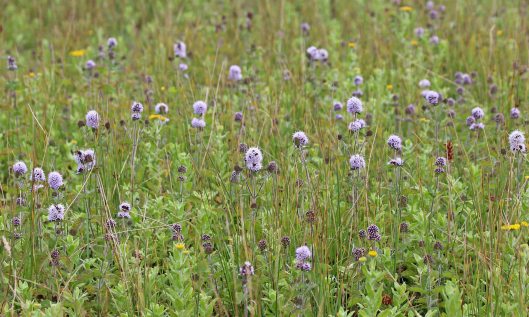
Water mint (Mentha aquatica)
And here’s another plant that prefers living with damp, not necessarily wet feet. Once again, this wildflower’s name tells the story: ‘Water’ and ‘aquatica’; and you only have to rub the leaves to release the delicious minty aroma, which is so refreshing. Insects love it too, as you can see from the hoverfly, butterfly and bee in the photos above.
25 Saturday Jul 2020
Posted in flowers, molluscs, nature, wildflowers
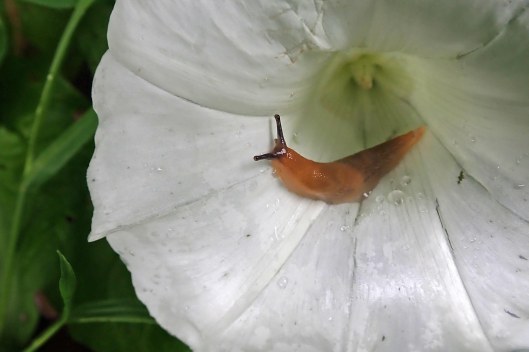
I had to chuckle during this morning’s brief stomp between bouts of heavy rain. The local slugs, which I thought would be at home in such conditions, sliding on the grass, slithering over leaves, were more literally ‘at home’, sheltering in the deep flower cups of bindweed.


16 Thursday Jul 2020
Posted in flowers, nature, wildflowers
Sneezewort (Achillea ptarmica) is not a wildflower I see very often so I was delighted to find a few plants of it blooming in a local meadow during yesterday’s wander.

The First Nature website explains its scientific name: Achillea ‘stems from the belief that Achilles used flowers of this genus to cure his soldiers’ wounds; ptarmica … comes from the Greek and means to cause a sneeze’. And, as well as Sneezewort, it has a host of other wonderful common names, including Sneezeweed, Bastard pellitory, Fair-maid-of-France, and Goose tongue.


12 Sunday Jul 2020
Posted in flowers, nature, wildflowers
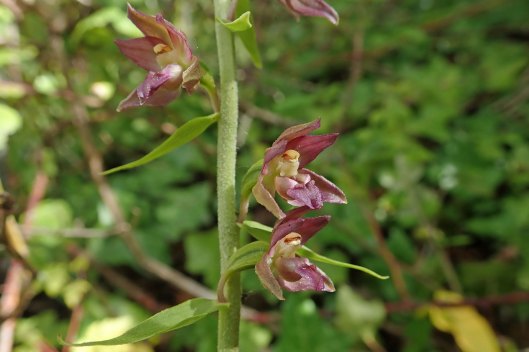
During my lockdown meanders around Cardiff’s Grangemoor Park, I’ve been keeping an eye on these Broad-leaved helleborines, watching and waiting for them to bloom. Though I’d only found them in one location in previous years, this year I’ve spotted them in three different places around the park.
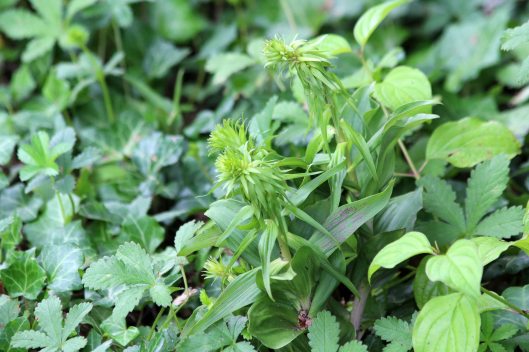
Here they are on 17 June, looking healthy, with lots of lush foliage.

Just over a week later, on 25 June, flower spikes have developed well on a couple of plants, so I’m hopeful of a good display.


I don’t manage to get back this way until 11 July, but I’m full of expectation of a mass of blooms. Unfortunately, though we’ve had plenty of rain, a couple of plants look brown and slightly withered (as they’re adjacent to a well-used footpath, I wonder if passing dogs might have urinated on them). A couple of other plants look as if they’ve been trampled.


Luckily, I have found two plants with spikes intact and a couple of flowers open on each. Such pretty little things.
05 Sunday Jul 2020
Posted in flowers, wildflowers
I was planning a more informed, more specific post about wildflowers for today but I’ve been having trouble with my internet connection for a couple of days – technology is great, until it isn’t! – so here are some general wildflower images instead. Enjoy all these glorious shades of pink!


30 Tuesday Jun 2020
Posted in flowers, nature, wildflowers
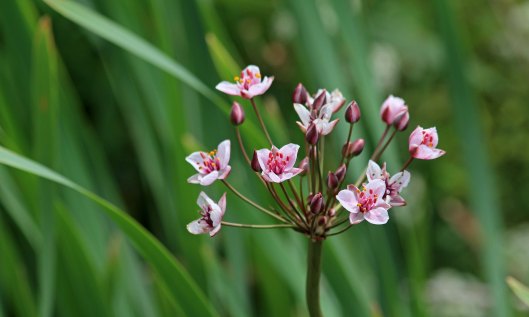
When I see the grasses and sedges and rushes that grow in and around rivers and ponds, canals, ditches and wetlands, I don’t expect to see such gorgeous flowers as these. This is the umbel-shaped flower of Flowering rush (Butomus umbellatus), hence the umbellatus epithet. According to the eFloras website, Butomus is from the Greek bous, meaning cow, and femno, meaning to cut, which refers to the belief that the sharp leaves would cut the mouths of cattle. Fortunately, no cattle are at risk from this particular Flowering rush plant, which is growing at Cardiff Bay wetlands reserve.
07 Sunday Jun 2020
Posted in flowers, insects, nature, wildflowers
I walk past this magnificent display of Oxeye daisies quite often, and it always makes me smile.

It runs alongside a local footpath, behind a wire fence that borders a school playground, and transforms an ugly bank of earth, which prevents footpath walkers from seeing the children at play, into a stunning floral flourish.

You might be forgiven for thinking the flowers look a bit ‘empty’ – where are all the insects that love feasting on these wildflowers? Well, though sunny, this was quite a windy day, with huge clouds scudding rapidly across the sky, changing bright warmth to grey coolness in the blink of an eye. But, when I looked closely in the more sheltered spots, the insects were there, sometimes more than I expected on a single flower head, sharing the nutrient power of these glorious daisies.

24 Sunday May 2020
Posted in flowers, nature, wildflowers
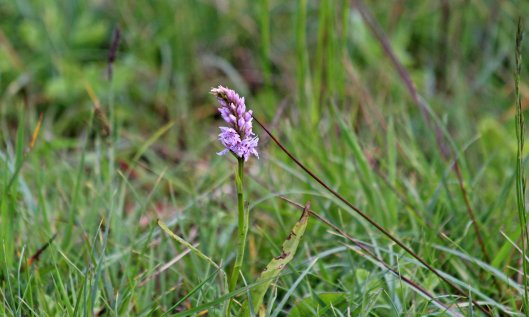
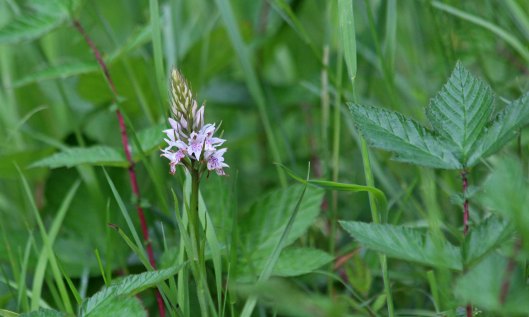
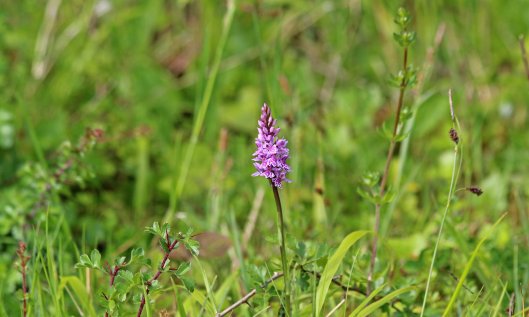
The occasional smatterings of rain we’ve had in the last few days have eased, ever so slightly, the drought conditions hereabouts, and the flush of new growth that was evident during this morning’s early walk through the fields at Cosmeston included my first Common spotted orchids of the year. Superb!

 earthstar
You must be logged in to post a comment.