• ABOUT
  • BIRDING 2018
  • Birding 2019
  • BLOG POSTS
  • Butterflies 2018
  • Resources

earthstar

~ a celebration of nature

earthstar

Category Archives: flowers

Enjoying the roses

10 Saturday Jun 2017

Posted by sconzani in flowers, nature

≈ Leave a comment

Tags

Dale Carnegie quote, perfume of roses, rose, roses, smelling the roses

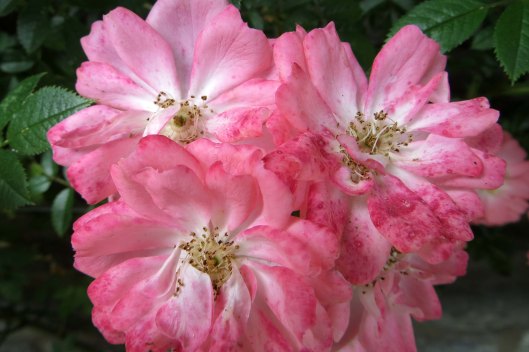
170610 roses

‘One of the most tragic things I know about human nature is that all of us tend to put off living. We are all dreaming of some magical rose garden over the horizon instead of enjoying the roses that are blooming outside our windows today.’ ~ Dale Carnegie

Like Loading...

Orchid overdose!

09 Friday Jun 2017

Posted by sconzani in flowers, nature, wildflowers

≈ 6 Comments

Tags

Anacamptis pyramidalis, Bee orchid, British flora, British orchids, Common spotted orchid, Cosmeston Lakes Country Park, Dactylorhiza fuchsii, Greater butterfly-orchid, native orchids, Ophrys apifera), orchid, Platanthera chlorantha, Pyramidal orchid

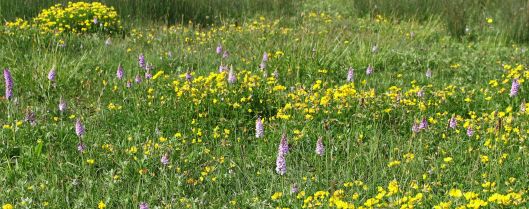
170609 Orchids Cosmeston

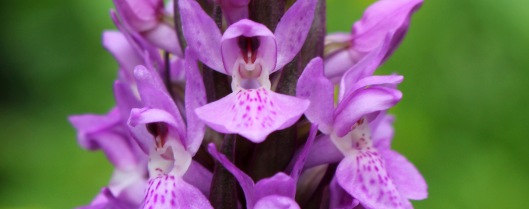
The meadows at Cosmeston Lakes Country Park are awash with orchids, Common spotted-orchids, (Dactylorhiza fuchsii), Bee orchids (Ophrys apifera), Pyramidal orchids (Anacamptis pyramidalis) and, in a secluded location off the beaten track, a tiny smattering of Greater butterfly-orchids (Platanthera chlorantha). To walk along the paths amongst these beauties is simply magical!

170609 Pyramidal orchids Cosmeston (2)
170609 Pyramidal orchids Cosmeston (3)
170609 Greater butterfly-orchid Cosmeston (3)
170609 Common spotted-orchid Cosmeston (1)
170609 Common spotted-orchid Cosmeston (2)
170609 Greater butterfly-orchid Cosmeston (2)
170609 Common spotted-orchid Cosmeston (3)
170609 Greater butterfly-orchid Cosmeston (1)
170609 Bee orchid Cosmeston (3)
170609 Pyramidal orchids Cosmeston (1)
170609 Bee orchid Cosmeston (2)
170609 Bee orchid Cosmeston (1)
Like Loading...

I made a wish …

08 Thursday Jun 2017

Posted by sconzani in flowers, nature, wildflowers

≈ 2 Comments

Tags

dandelion, dandelion seeds, making a wish, wishing on a dandelion

I made a wish, I cast my vote … but will my wish come true?

170608 Wishing on a dandelion

Like Loading...

Marsh orchids at Kenfig

07 Wednesday Jun 2017

Posted by sconzani in flowers, nature, wildflowers

≈ 3 Comments

Tags

British flora, British orchids, Dactylorhiza incarnata, Dactylorhiza praetermissa, Dactylorhiza purpurella, Early Marsh-orchid, Kenfig National Nature Reserve, native orchids, Northern Marsh-orchid, orchid, Southern marsh orchid

170607 Southern marsh-orchid (2)

Apart from 18 species of rust, there wasn’t a lot of fungi to be found during our foray at Kenfig National Nature Reserve last Saturday but what we did see was a lot of stunning marsh orchids.

170607 Southern marsh-orchid (1)
170607 Southern marsh-orchid (4)
170607 Southern marsh-orchid (3)
170607 Southern marsh-orchid (5)

Identifying these beauties can be extremely tricky, even for trained botanists, partly because they look very similar, partly because their colouration can vary quite a lot within species, and partly because they hybridise easily with each other. So, although the chances are that these are Southern Marsh-orchids (Dactylorhiza praetermissa), there may also be some Northern Marsh-orchids (Dactylorhiza purpurella) or a mixture of both. Whatever they are, they’re beautiful!

170607 Early marsh-orchid (1)
170607 Early marsh-orchid (2)

I am, however, quite sure about these next pictures. These are Early Marsh-orchids (Dactylorhiza incarnata). They thrive in damp calcareous habitats so the dune systems at Kenfig suit them perfectly – or, at least they will as long as the dune systems are managed to prevent scrub and trees taking hold: the orchids actually grow best when wind and rain are allowed to destabilise the dunes and move sand and plants around a bit.

Like Loading...

Looking frazzled!

03 Saturday Jun 2017

Posted by sconzani in flowers, nature, wildflowers

≈ Leave a comment

Tags

British flora, British native flowers, British wildflowers, Ragged robin, Silene flos-cuculi

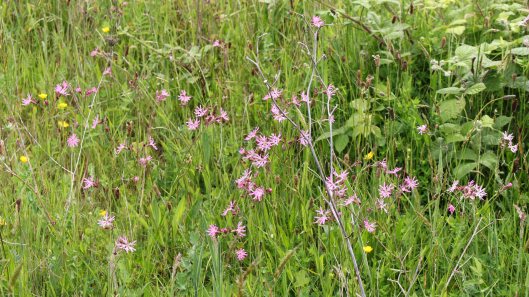
Ragged robin (Silene flos-cuculi) certainly lives up to its name. To me, it always looks a tad stressed, a touch frayed around the edges, a bit frazzled, as if it’s had a long hard day in the meadows, but its distinctive ragged shape does at least make it one of the easiest British wildflowers to identify.

Ragged robin (4)

I say ‘always’ but I don’t actually see this pretty native very often. Perhaps that’s because it prefers to dip its feet into the damper grass- and woodlands, though the word is that it has declined in recent years in many parts of Britain, mostly due to agriculture taking over its habitats.

Ragged robin (2)
Ragged robin (3)

It was, then, even more special to spot these plants in one of my local wild places this week, and I wasn’t the only one smiling at the sight. The bees were obviously pleased to see them too! Ragged Robin flowers from May through to August so I hope you’re lucky enough to spot some too.

Ragged robin (1)

Like Loading...

The bees that don’t buzz

02 Friday Jun 2017

Posted by sconzani in flowers, nature, wildflowers

≈ 6 Comments

Tags

Bee orchid, British orchids, British wildflowers, native orchids, Ophrys apifera), orchid

Finding my very first Bee orchids (Ophrys apifera) in a local park this week made my day! I know they’re designed to entice male bees to attempt mating with their flowers in order to facilitate pollination but to me they actually look like jolly smiling and laughing mouths.

170602 Bee orchid Ophrys apifera (1)
170602 Bee orchid Ophrys apifera (2)

I had to find out more, and I have to say that, when it comes to wild plants, I love the Plantlife website – as well as giving you the straight facts and figures about British plants, they also include the most interesting fact-lets, like these:

*  The aim of the mimicry is to attract passing male bees in the hope they will try to mate and thus aid pollination. In Britain, however, Bee orchids self-pollinate so the deception is not really required.
*  This wild flower was once called the “Humble Bee” orchid (Humble being a variation of Bumble).
*  According to Roman natural historian Pliny the Elder it was used by womenfolk to darken their eyebrows.
*  The Bee orchid is the County Flower of Bedfordshire.
*  In the Language of Flowers it stands for error and industry.

170602 Bee orchid Ophrys apifera (3)
170602 Bee orchid Ophrys apifera (4)
Like Loading...

Southover Grange Gardens

31 Wednesday May 2017

Posted by sconzani in flowers, nature, parks, plants, trees

≈ Leave a comment

Tags

350-year-old Mulberry tree, garden in Lewes, public gardens in East Sussex, Southover Grange Gardens

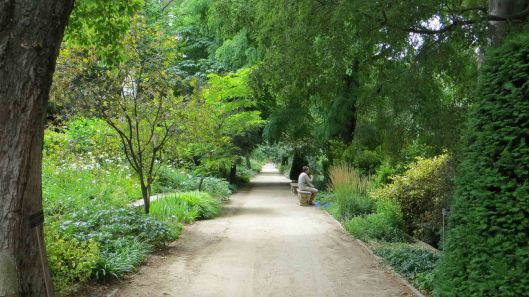
Curiosity can be a good thing. You look through a grill in a stone wall and spy a magical garden. You see people walking to and fro so you think, ‘maybe it’s open to the public’. You walk further along the walls until, at the corner of the street, you find an entrance and, hey presto, you discover the glorious Southover Grange Gardens in Lewes.
170531 Southover Grange Gardens Lewes (1)

The Grange was built by one William Newton in 1572, with stone filched from the old Lewes Priory, but the gardens are the creation of more recent owners. Highlights include a 350-year-old Mulberry tree, one of the oldest in England, as well as many other magnificent old trees; herbaceous borders and formal bedding displays; a box-hedged knot garden full of the scent of roses; a wildflower area; and an impressive collection of public artworks. If you’re ever in Lewes, do pay a visit to this tranquil oasis.

This slideshow requires JavaScript.

Like Loading...

Two orchids

26 Friday May 2017

Posted by sconzani in flowers, nature, wildflowers

≈ Leave a comment

Tags

Common twayblade, Dactylorhiza maculata, Heath spotted-orchid, Merthyr Mawr National Nature Reserve, native orchids, Neottia ovata, orchid, Twayblade

Of the estimated 25,000 different species of orchid that can be found around the world, 56 are native to Britain and, as some of those 56 are now coming in to bloom, I thought I’d share a couple for this week’s Floral Friday.

170526 Twayblade (2)
170526 Twayblade (1)

Twayblade (Neottia ovata)
First up is the Twayblade I saw growing quite prolifically in the woodland at Merthyr Mawr a couple of weeks ago. It’s one of Britain’s most common species but is often overlooked, perhaps because its yellow-green flowers often blend in with their woodland, scrub or grassland habitats. Twayblade means two leaves, as there usually are just two leaves, from the centre of which sprouts the flower stalk, though, like all living things, there are exceptions to the rule and plants with three to five leaves are sometimes found. The thing that most fascinates me about these orchids is the manikin-shaped flower.

170526 Heath spotted-orchid (1)
170526 Heath spotted-orchid (2)

Heath spotted-orchid (Dactylorhiza maculata)
Luckily I was with a group of botanists when I saw my first Heath spotted-orchids last weekend, as they can easily be confused with Common spotted-orchids, though the fact that we were in a damp boggy field at the time was probably also a good species indicator. As the name ‘heath’ implies, this orchid likes to get its feet wet, relishing the sogginess of peaty moors and boggy heaths. As well as being common throughout Europe, this orchid can also be found throughout the British Isles, though it does show a marked preference for northern and western areas. Its gorgeous flowers can be seen from around the middle of May through to mid July.

Like Loading...

The phenomenal poppy

19 Friday May 2017

Posted by sconzani in flowers, nature, nature photography

≈ Leave a comment

Tags

#FloralFriday, poppy, poppy flower, Poppy seeds

170519 poppy

For Floral Friday this week, a most remarkable flower. Did you know
> a single poppy seed head contains 1000 seeds and each plant can have as many as 20 heads?
> of those 20,000 seeds as many as 85% (that’s 17,000) seeds will germinate if conditions are right?
> prior to farmers using chemical weedkillers, a one-acre cornfield could potentially have contained 100 million dormant seeds?

Facts garnered from Richard Mabey, Weeds: How vagabond plants gatecrashed and changed the way we think about nature (Profile Books, London, 2010), a most fascinating read.

Like Loading...

Royal Botanic Garden, Madrid

17 Wednesday May 2017

Posted by sconzani in flowers, insects, nature, parks

≈ 2 Comments

Tags

Madrid, Prado Museum, Royal Botanic Garden, Royal Botanic Garden Madrid

Three years ago I was fortunate to enjoy a short break in the Spanish city of Madrid – and what a beautiful city it is! One of the highlights for me (as well as the fact that King Felipe was kind enough to synchronise his coronation with my visit) was the time I spent wandering in the Royal Botanic Garden. It is situated right next to the incredible Prado Museum and is the perfect dessert to the museum’s main course of artistic masterpieces.

170517 Royal Botanic Garden Madrid (9)

Established by King Charles III in 1781, the Garden is not meant as a park but is rather a museum collection of live plants, a centre for research into historic plants and for the study of plant life, for the preservation of plant species and for the encouragement of the botanical sciences. It is also a feast for the senses!

170517 Royal Botanic Garden Madrid (1)
170517 Royal Botanic Garden Madrid (2)
170517 Royal Botanic Garden Madrid (3)
170517 Royal Botanic Garden Madrid (4)
170517 Royal Botanic Garden Madrid (5)
170517 Royal Botanic Garden Madrid (6)
170517 Royal Botanic Garden Madrid (7)
170517 Royal Botanic Garden Madrid (8)
Like Loading...
← Older posts
Newer posts →

About me

sconzani

sconzani

I'm a writer and photographer; researcher and blogger; birder and nature lover; countryside rambler and city strider; volunteer and biodiversity recorder.

View Full Profile →

Follow earthstar on WordPress.com

Enter your email address to follow this blog and receive notifications of new posts by email.

Recent blog posts

  • Singing from every tree top March 24, 2026
  • Turtle bug March 23, 2026
  • Springtime invasives March 22, 2026
  • Singing Dunnocks March 21, 2026
  • New cat: Large yellow underwing March 20, 2026

From the archives

COPYRIGHT

Unless otherwise acknowledged, the text and photographs on this blog are my own and are subject to international copyright. Nothing may be downloaded or copied without my permission.

Fellow Earth Stars!

  • Unknown's avatar
  • Unknown's avatar
  • Unknown's avatar
  • Unknown's avatar
  • Unknown's avatar
  • Unknown's avatar
  • Unknown's avatar
  • Unknown's avatar
  • Unknown's avatar
  • Unknown's avatar
  • Unknown's avatar
  • Unknown's avatar
  • Unknown's avatar
  • Unknown's avatar
  • Unknown's avatar
  • Unknown's avatar
  • Unknown's avatar
  • Unknown's avatar
  • Unknown's avatar
  • Unknown's avatar
  • Unknown's avatar
  • Unknown's avatar
  • Unknown's avatar
  • Unknown's avatar
  • Unknown's avatar
  • Unknown's avatar
  • Unknown's avatar
  • Unknown's avatar
  • Unknown's avatar
  • Unknown's avatar
  • Unknown's avatar
  • Unknown's avatar
  • Unknown's avatar
  • Unknown's avatar
  • Unknown's avatar
  • Unknown's avatar
  • Unknown's avatar
  • Unknown's avatar
  • Unknown's avatar
  • Unknown's avatar
  • Unknown's avatar
  • Unknown's avatar
  • Unknown's avatar
  • Unknown's avatar
  • Unknown's avatar
  • Unknown's avatar
  • Unknown's avatar
  • Unknown's avatar
  • Unknown's avatar
  • Unknown's avatar

Blog at WordPress.com.

Privacy & Cookies: This site uses cookies. By continuing to use this website, you agree to their use.
To find out more, including how to control cookies, see here: Cookie Policy
  • Subscribe Subscribed
    • earthstar
    • Join 642 other subscribers
    • Already have a WordPress.com account? Log in now.
    • earthstar
    • Subscribe Subscribed
    • Sign up
    • Log in
    • Report this content
    • View site in Reader
    • Manage subscriptions
    • Collapse this bar
 

Loading Comments...
 

You must be logged in to post a comment.

    %d