The aphid-eating hoverfly larva (likely one of the Syrphus species) missed its chance here. As you’ll see, though, the ladybird was more on the ball and the aphid lost its second chance.
(I’ve set the video to mute as this park railing is next to a very busy road but I’m not sure that setting has worked, so best to mute your sound before viewing the video.)
Recently, when checking Hawthorn leaves for leafmines, I spotted two of these larvae spinning on separate but close Hawthorn bushes so took several photos of both and a short video of one.
As the majority of photographs show larvae from above not below, and these both looked to have dark spot-like markings, I was confused about which species they might be, perhapsParornix anglicella or maybe Phyllonorycter oxyacanthae. And I wasn’t the only one scratching my head, as my online expert contacts weren’t sure either – one of them even contacted their own expert to get an opinion. A return visit by me was clearly required, to try to re-find the larvae, possibly get more images, and see what had developed from their spinning activities.
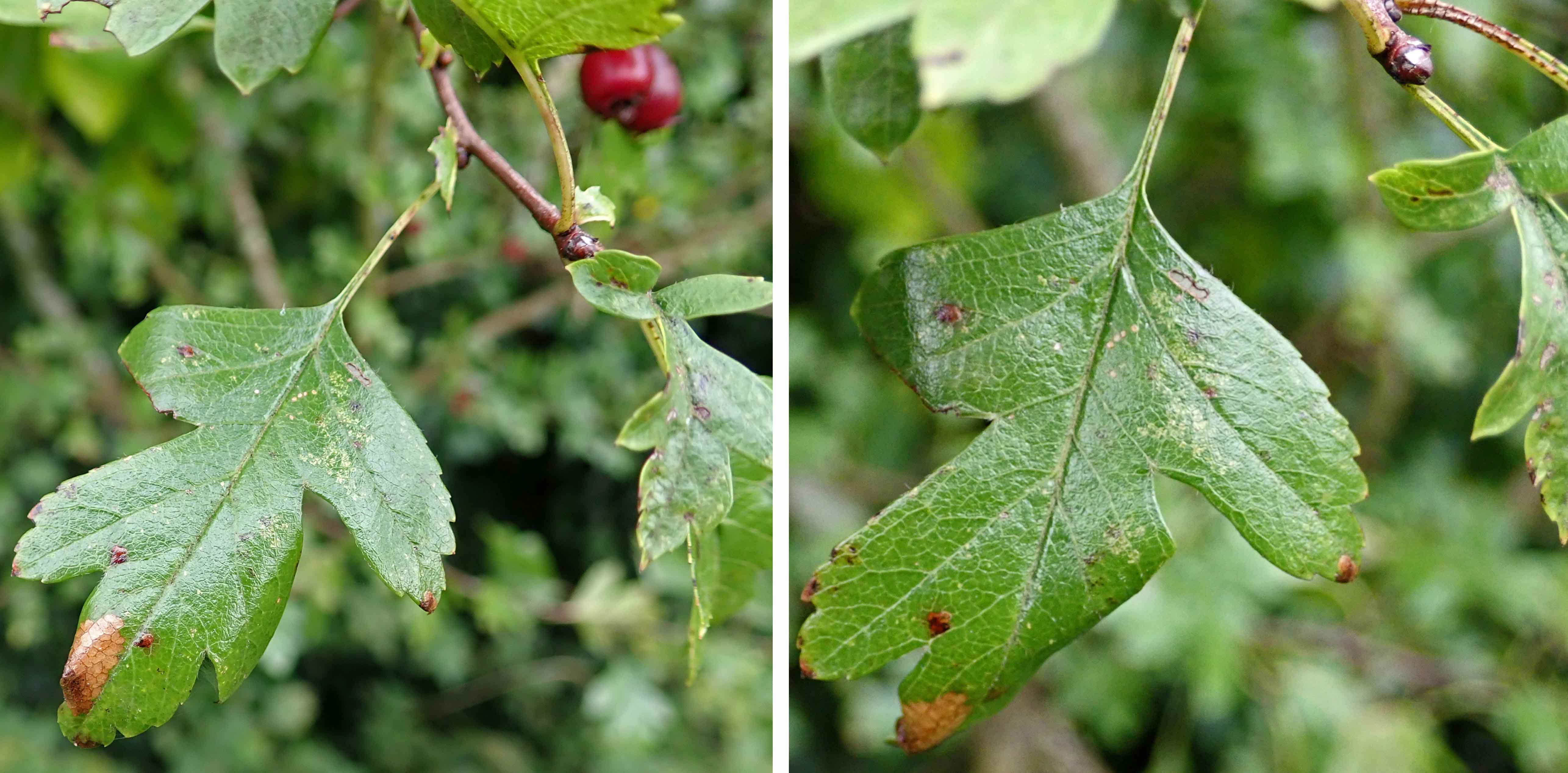
So, while the location was fresh in my memory, I walked that way again the following day, and, amazingly, managed to find one of the leaves – not an easy task finding an individual leaf in a Hawthorn bush but the photo below shows the leaf in question, on consecutive days.
And, when I turned the leaf over, there was the proof of identification, the distinctive cone of Parornix anglicella, still very green as the larva within hadn’t yet had time to eat all the leaf from inside. Turns out the expert’s expert had been correct!
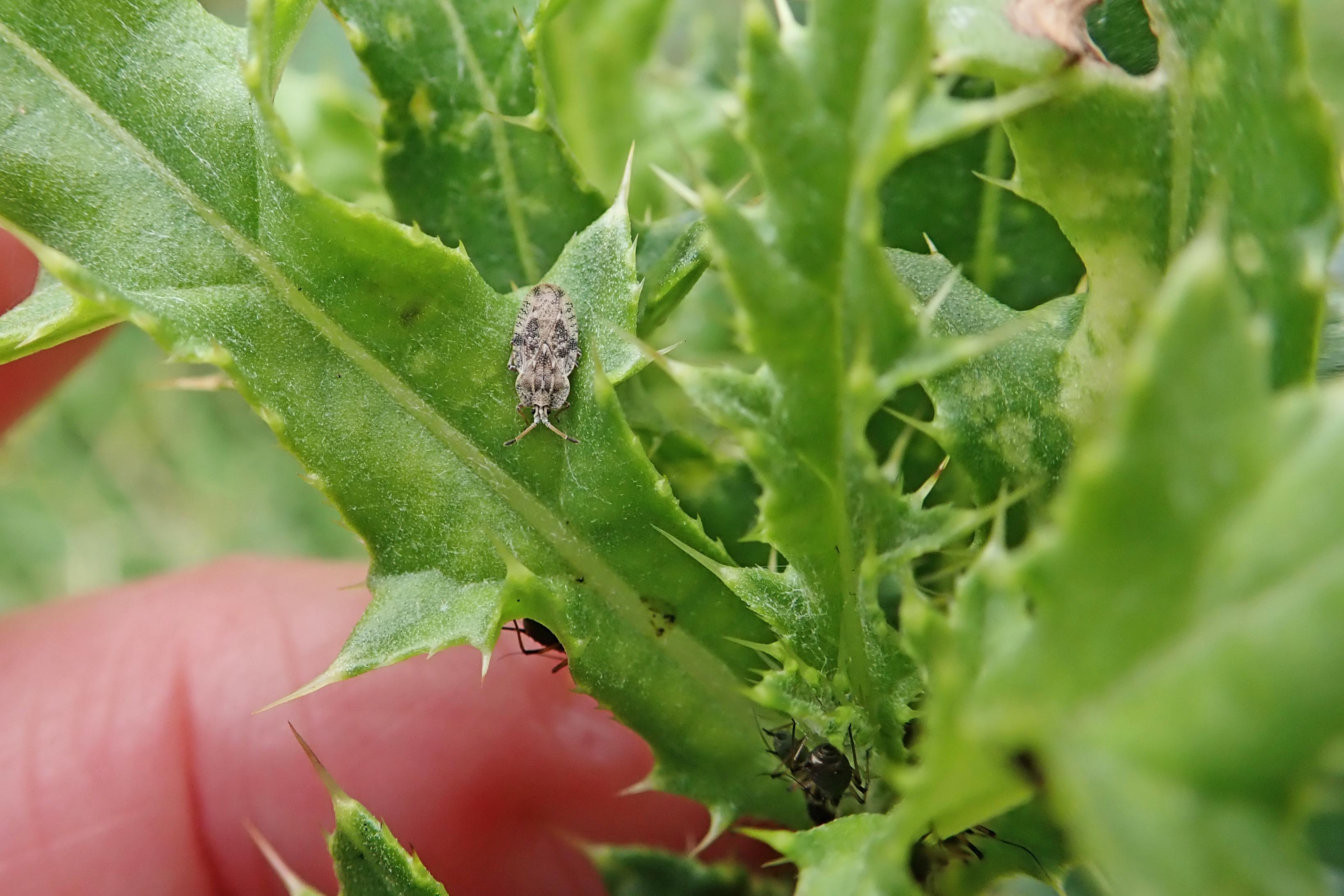
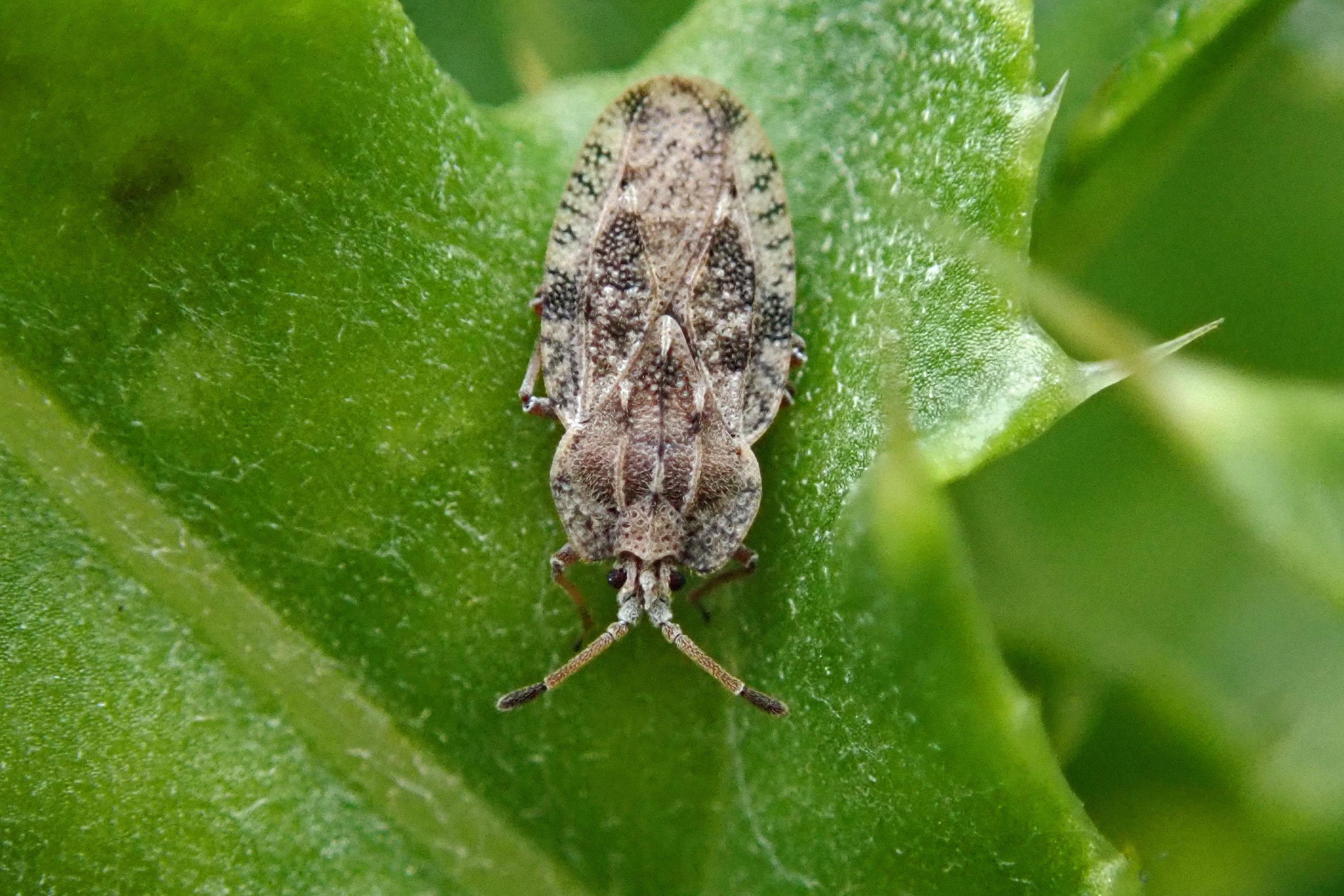
My eye was drawn to this particular Creeping thistle by the presence of four Urophora cardui galls on the plant’s stems (for information on what those are, see More galls, part 2, 4 October 2017) and, when I leant down for a closer look, I noticed this tiny creature, my first ever lacebug. (There were also lots of aphids lurking amongst the leaves, as you can see.)
I’m fairly sure I’ve identified this correctly, as the black tips to its antennae are apparently diagnostic, but, for some reason, it’s living on the wrong species of thistle – this is the Spear thistle lacebug (Tingis cardui). I think you can see why it’s called a lacebug – the intricacy of the structure and patterning of its body is really quite exquisite. You can read more about this beautiful bug on the British Bugs website here.
Last Thursday’s blog was about finding an Endothenia marginana larva in a Teasel seedhead. While checking those particular Teasels, I also found the subjects of today’s blog, the larvae of another moth, Cochylis roseana. As its name suggests, the adult is a rather gorgeous rosy coloured moth, though the UK Moths website says that the rosy colour is not always prominent.
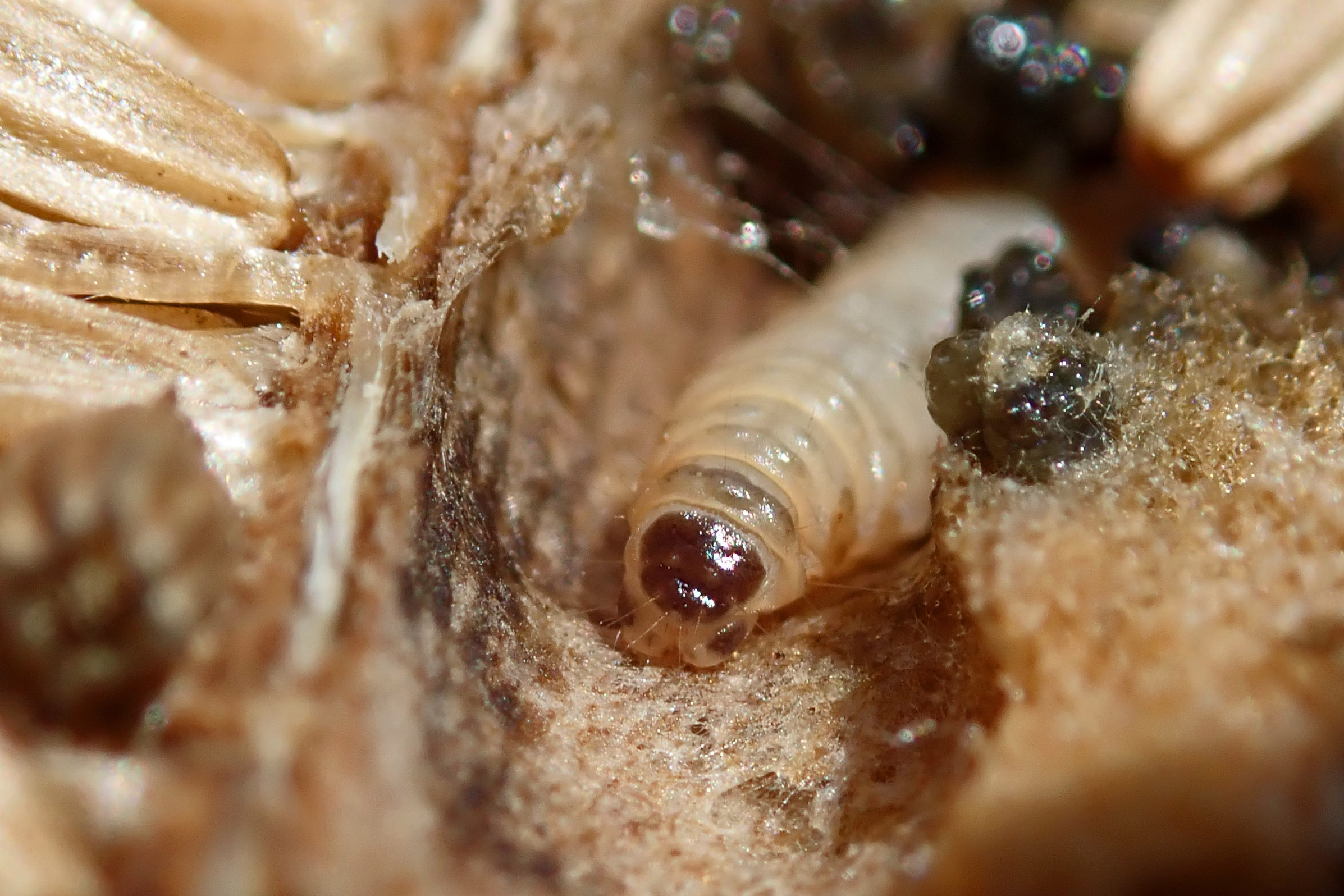
As you can see, the larvae, which are white with a greenish tinge, don’t live within the centre space of the Teasel seedhead like the Endothenia, but rather munch their way through the Teasel’s seeds, creating tunnels that circle the centre. The seedhead I opened contained at least three larvae but here may have been more lurking in their hidey holes.
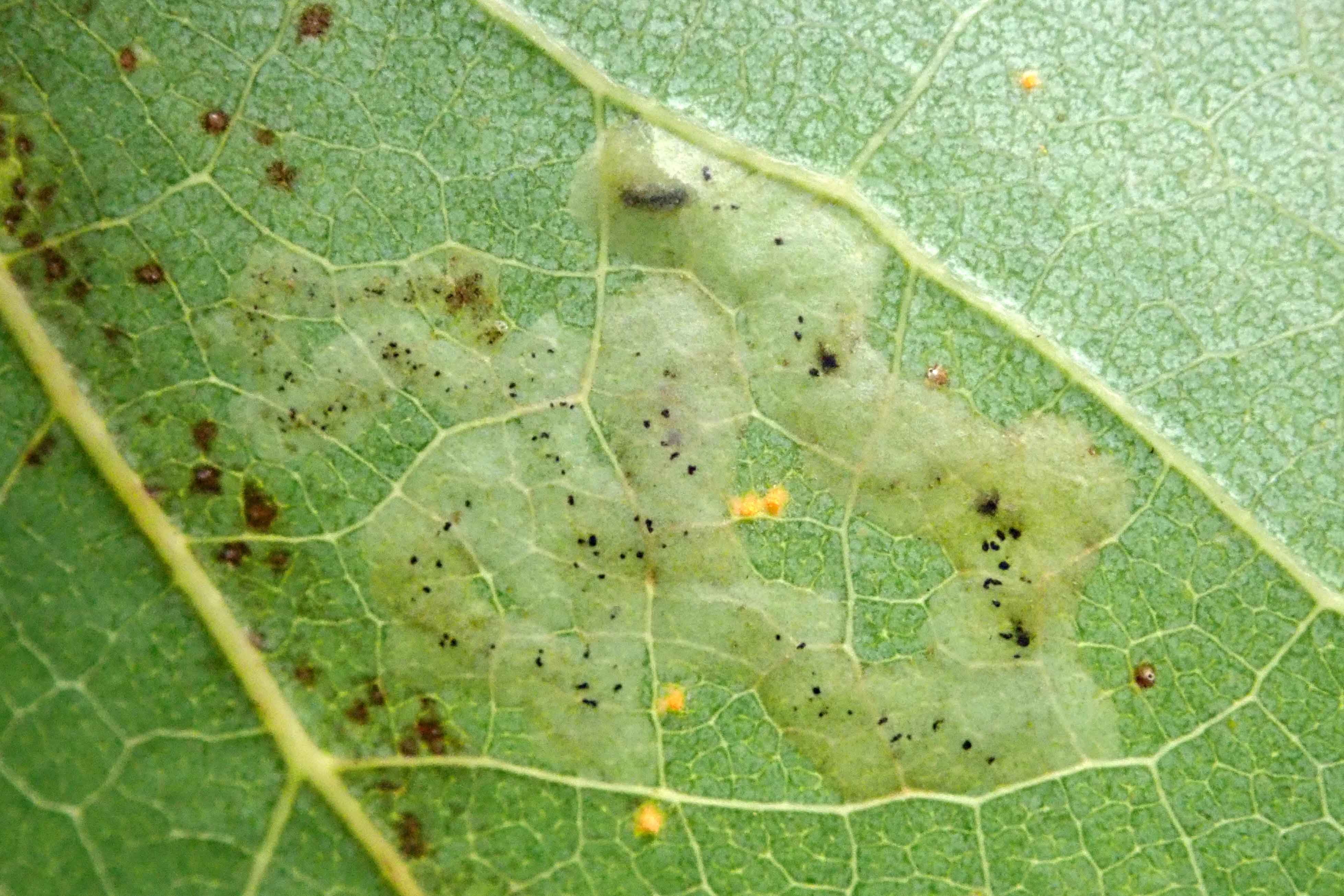
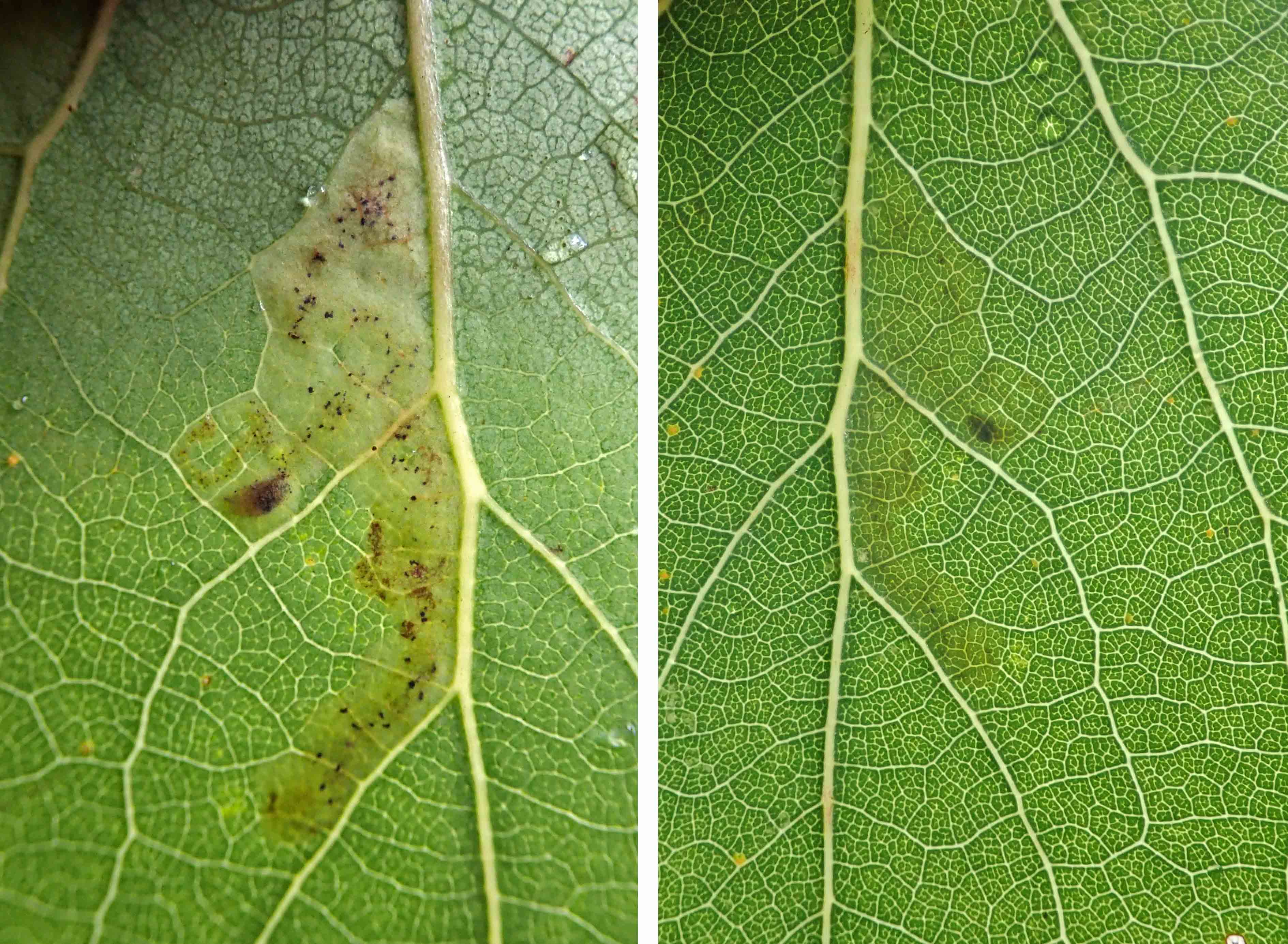
I don’t find many leafmines on Aspen, probably because there aren’t a lot of Aspen trees growing locally. Also, I haven’t been finding many mines made by creatures other than moths but today’s find is an exception, as these silvery meandering gallery mines on Aspen leaves were made by the larva of the tiny fly Aulagromyza tremulae.
If I hadn’t been doing a spot of leaf-turning, I could easily have missed these mines, as they are almost exclusively made in the lower surface of the leaf (see images below showing the lower and upper leaf surfaces). This is one of the characteristics that distinguishes these mines from those of other species, though Barry Warrington, who runs the National Agromyzidae Recording Scheme and website, discovered this wasn’t always the case when he recently bred Aulagromyza tremulae flies from upper surface mines. (Barry has confirmed the identity of the mines pictured here, fortunately.)
This little fly has two broods per year, so mines can be found on Aspen (Populus tremula), and also on Black poplar (Populus nigra), in the early summer and again in early autumn. I haven’t managed to find any images of the adult fly so maybe I should try to breed one through to see what they look like. If that happens, there’ll definitely be a show-and-tell post.
Back in January 2022, I was alerted to the fact that some Teasel seedheads are home to various species of moth larvae, and I blogged about opening three Teasel seedheads to find each one occupied by what proved to be one of the two Endothenia species of moth (Inside a Teasel seed head, 31 January 2022).
At the time of finding the larvae, I hadn’t known that I needed to check their rear ends for what’s known as an anal comb, a tiny tuft of hairs. If the anal comb is not present, then the species is Endothenia gentianaeana. If there is an anal comb, then it’s Endothenia marginana.
On a recent walk, when I found some Teasels that had been cut down, I decided to check the seedheads for any occupants. And, when I found this larva in one, I made sure to take close-up photos of its rear end – not as easy as you might think when the larva doesn’t want to co-operate. It eventually turned around, I got my shots, and, later, at home, I was able to make out an anal comb (indicated with a blue arrow in the photo below) so, as you may have guessed by the title of this blog, this is the larva of Endothenia marginana.
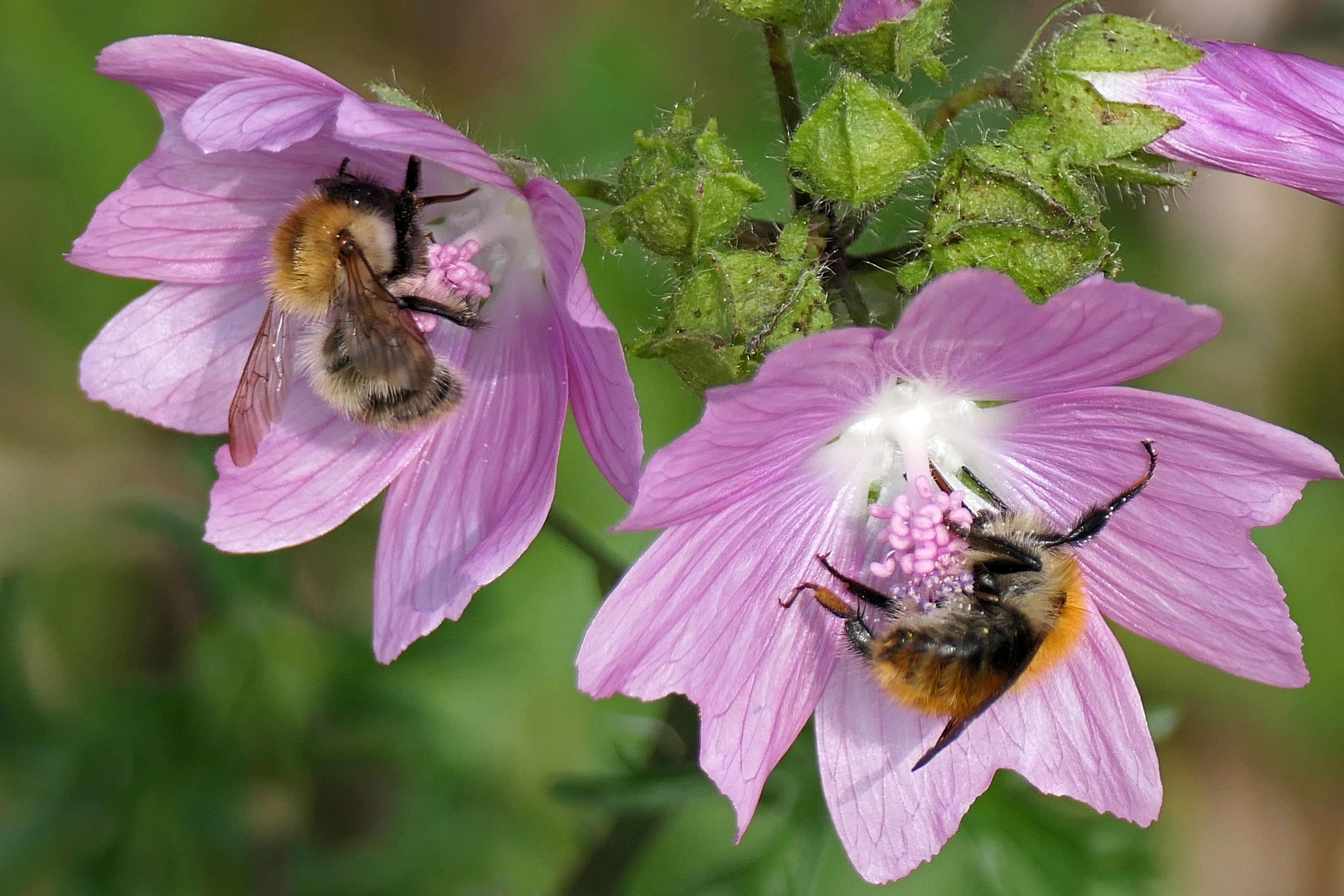
As it’s been grey here for several days, I decided to share a recent happy scene from a sunny day, a pair of bumblebees feasting on Mallow pollen. Let’s consider this a mid-week time-line cleanser. Tomorrow will see the return of the insects!
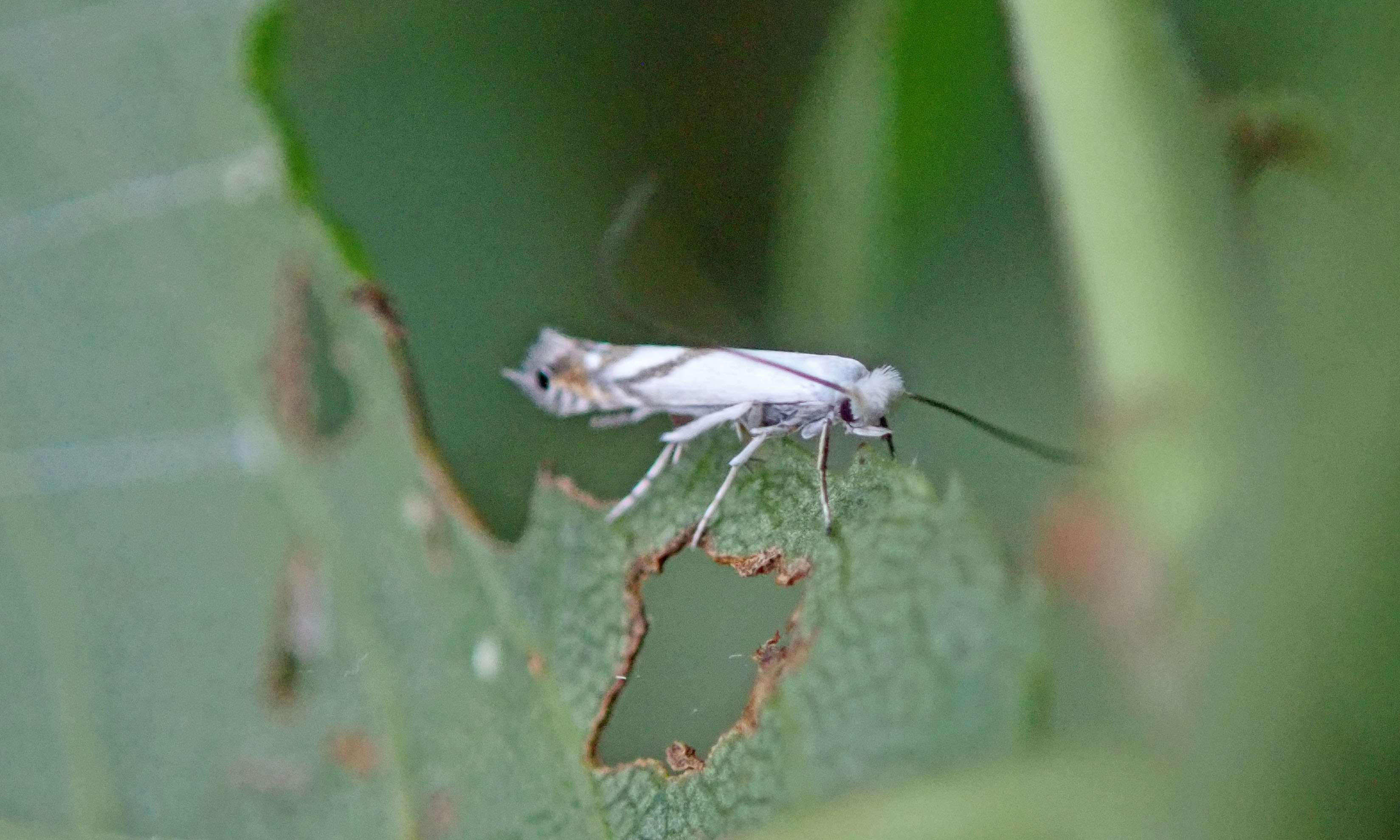
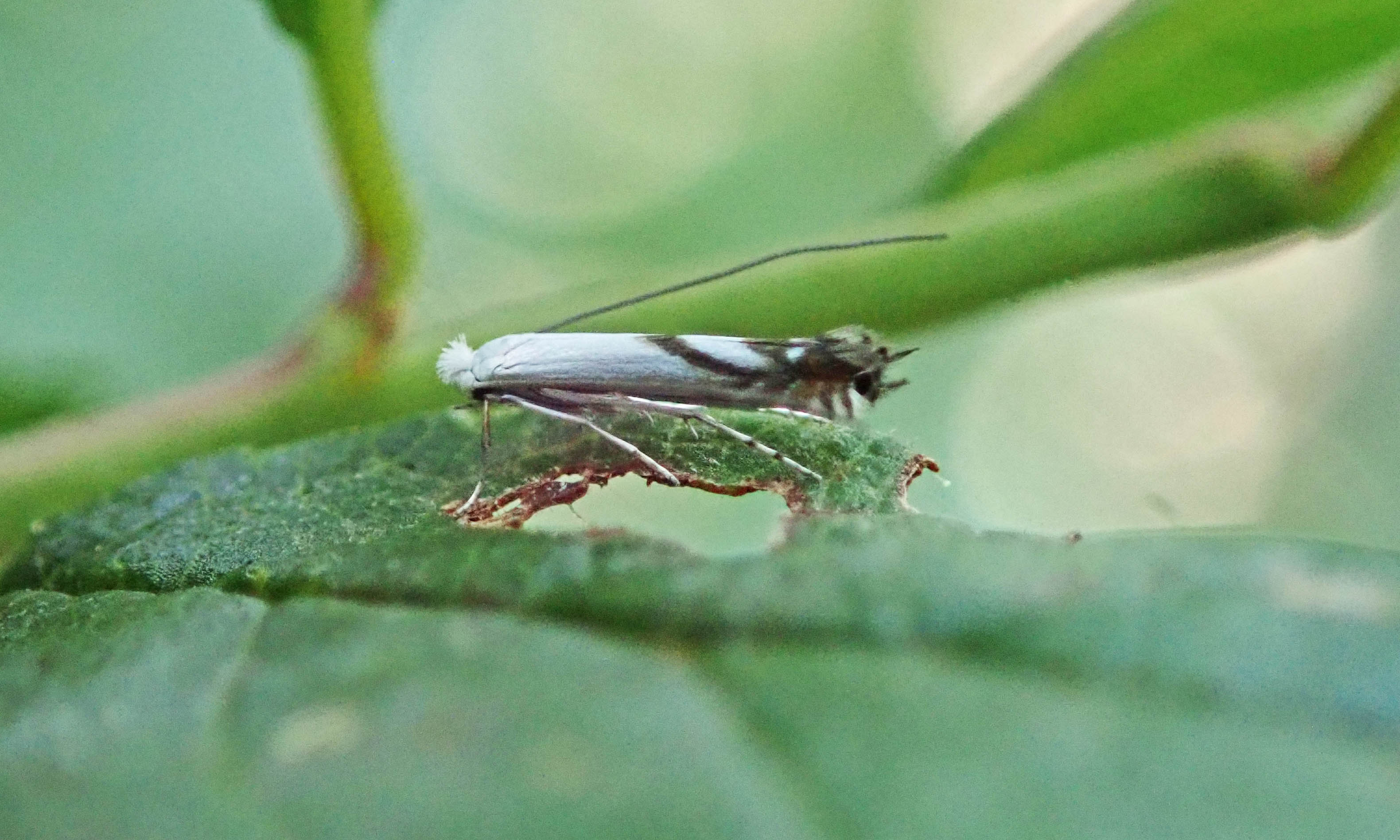
As you will have gathered from the ‘2’ in the title, I’ve blogged about this leafmine before (Leafmines: Lyonetia prunifoliella, 9 October 2023).
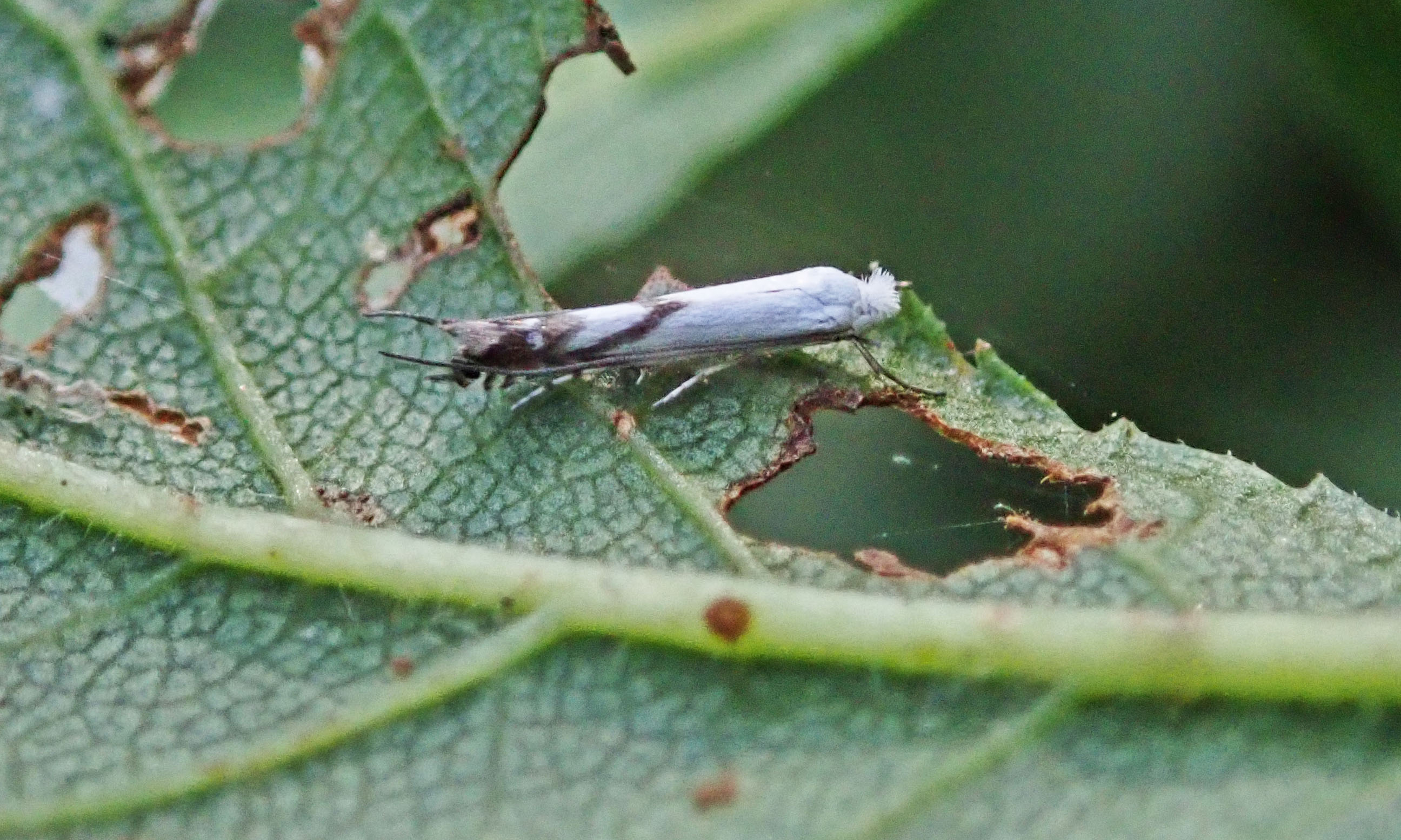
The reason I’m revisiting this species is that, by sheer chance, I turned over a couple of Blackthorn leaves at Cosmeston Lakes Country Park last week and discovered an adult moth sitting next to the ‘hammock’ cocoon from which it had, presumably, very recently emerged.
My photos aren’t sharp as the Blackthorn was growing just inside the edge of a woodland and the light wasn’t good but I was still delighted to find this gorgeous little moth.
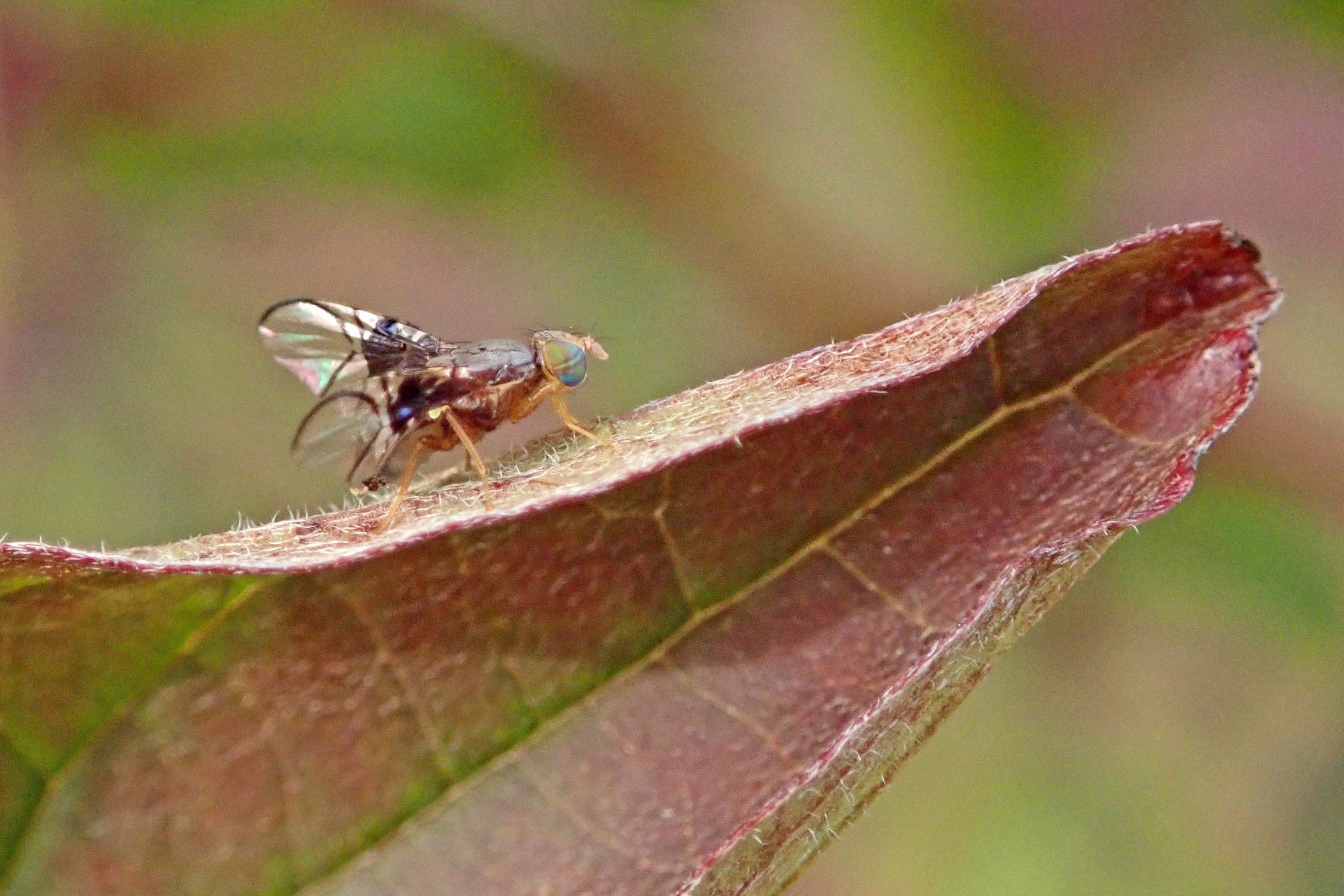
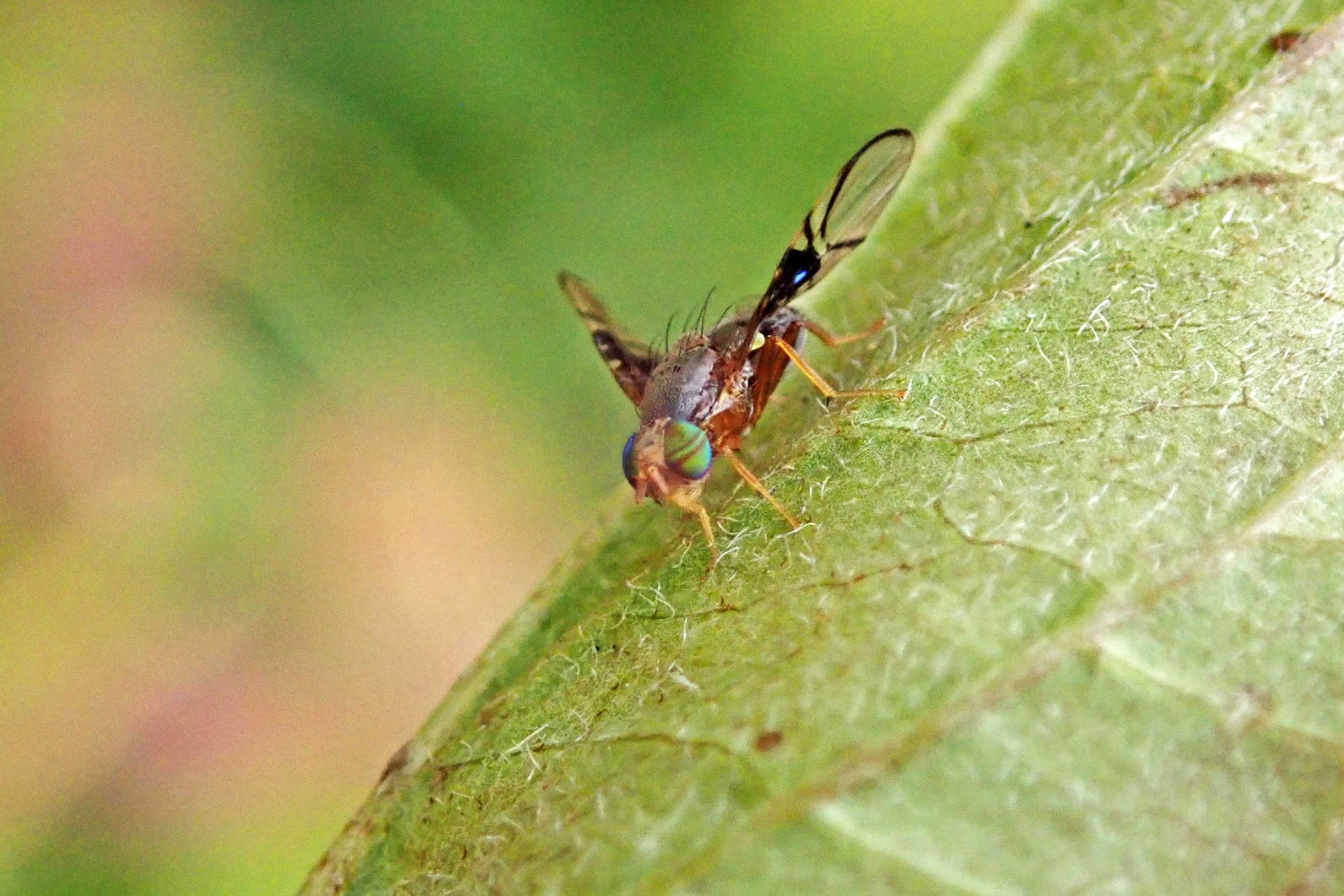
I see tiny fruit flies, little wing-wagglers, quite often. In fact, for some reason, on warm summer days when I’m wearing a tshirt, they frequently come and sit on my arms (drawn by the coconut scent of my moisturiser perhaps, or maybe to lick my salty skin?). However, during a recent walk, when I spotted this little fruit fly sitting on a leaf, I knew immediately that it was a different species as the markings on its wings were quite different.
It was tricky to photograph as it constantly flashed its wings at me, but I managed a few reasonable close-ups. And, though I often have trouble identifying flies, with the two red stripes across its green eyes and those distinctive wing patterns, this one proved much easier. Say hello to Anomoia purmunda, a fruit fly that can often be found around Hawthorn as its larvae feed inside Hawthorn berries.
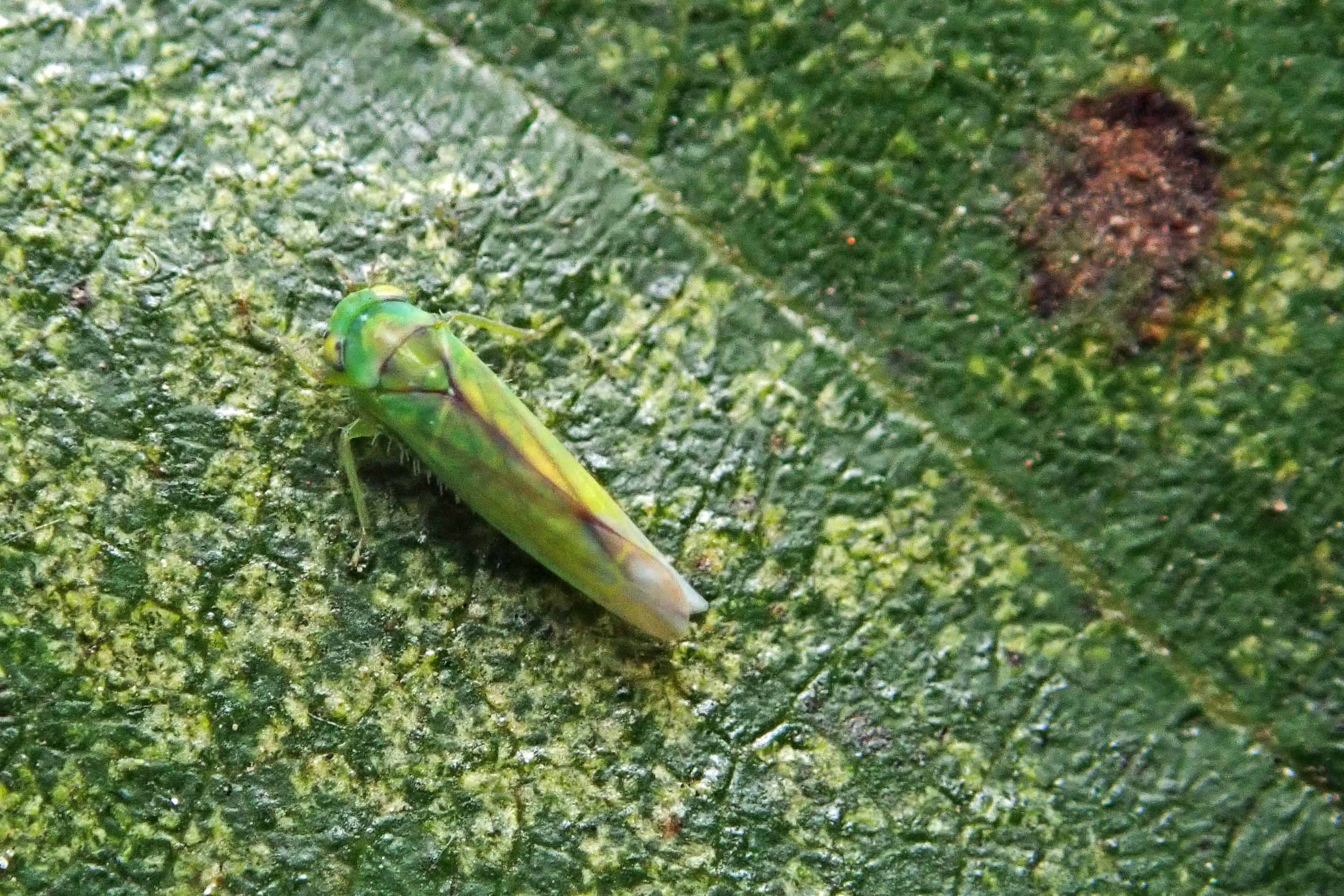
The checklist of Auchenorrhyncha on the British Bugs website includes eight species from the Kybos genus of Cicadellidae, all of which appear to be indistinguishable from each other unless through dissection. As the website specifies ‘The host-plant is a useful guide to identification, but is not sufficient in itself.’
Still, I think my indeterminable leafhoppers are very attractive and worth this brief post. The Kybos in my first image was found on Sycamore in Cardiff’s Cathays Cemetery on 15 August, the second on Alder in nearby Heath Park on 23 July.








 earthstar
You must be logged in to post a comment.