• ABOUT
  • BIRDING 2018
  • Birding 2019
  • BLOG POSTS
  • Butterflies 2018
  • Resources

earthstar

~ a celebration of nature

earthstar

Category Archives: insects

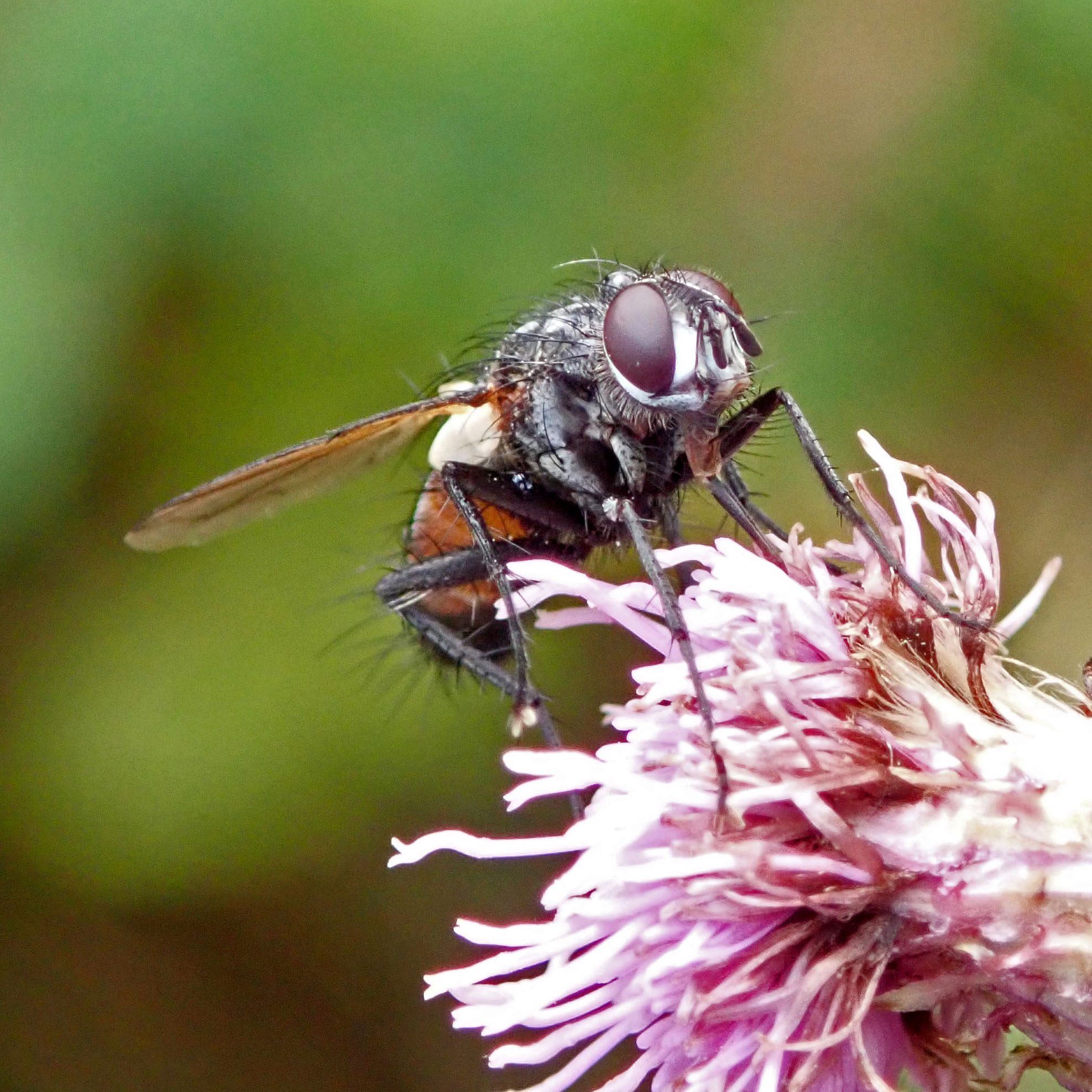
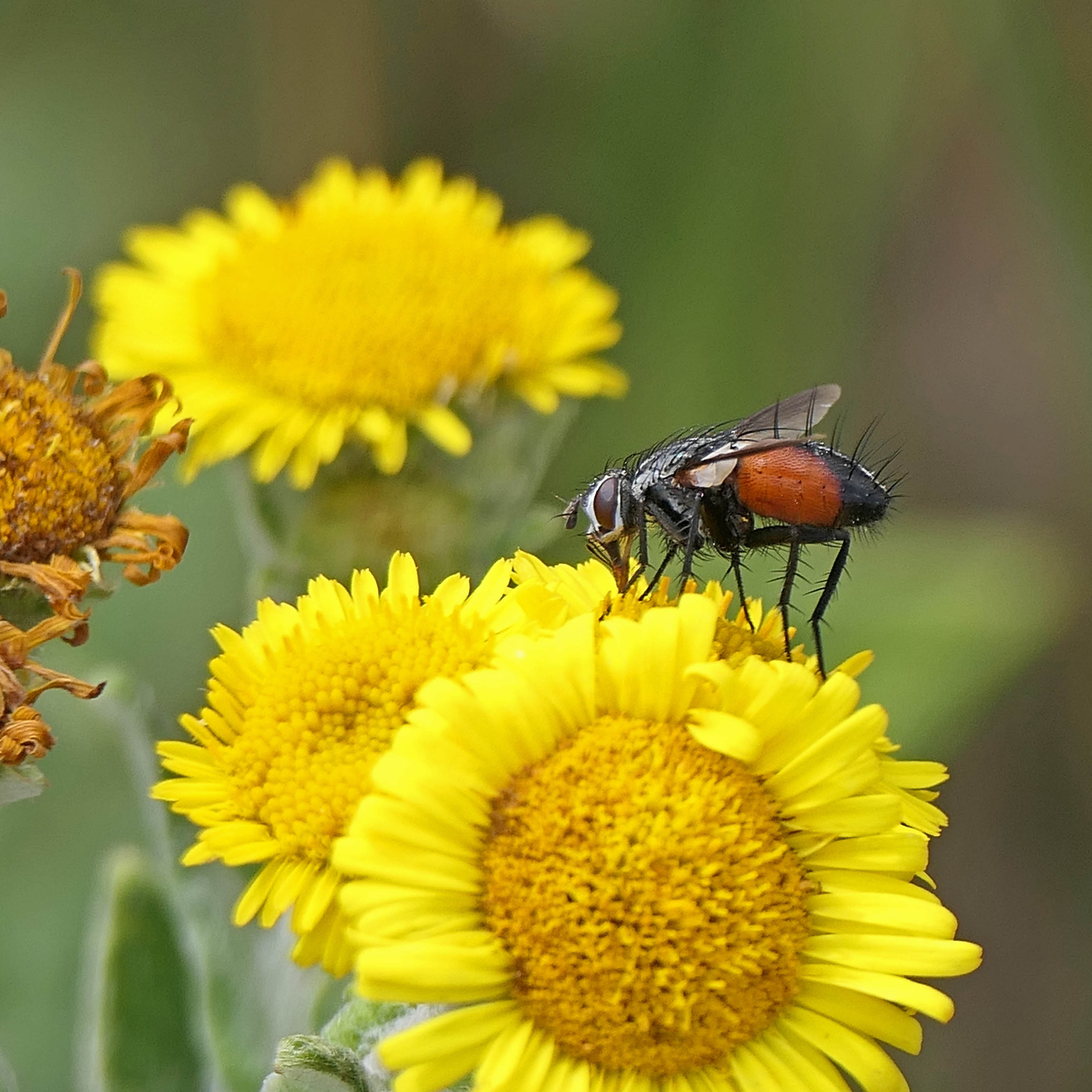
Fly: Eriothrix rufomaculata

25 Friday Jul 2025

Posted by sconzani in insects

≈ Leave a comment

Tags

bristly black and red fly, British flies, British insects, Eriothrix rufomaculata, fly, insect, parasitic fly larvae

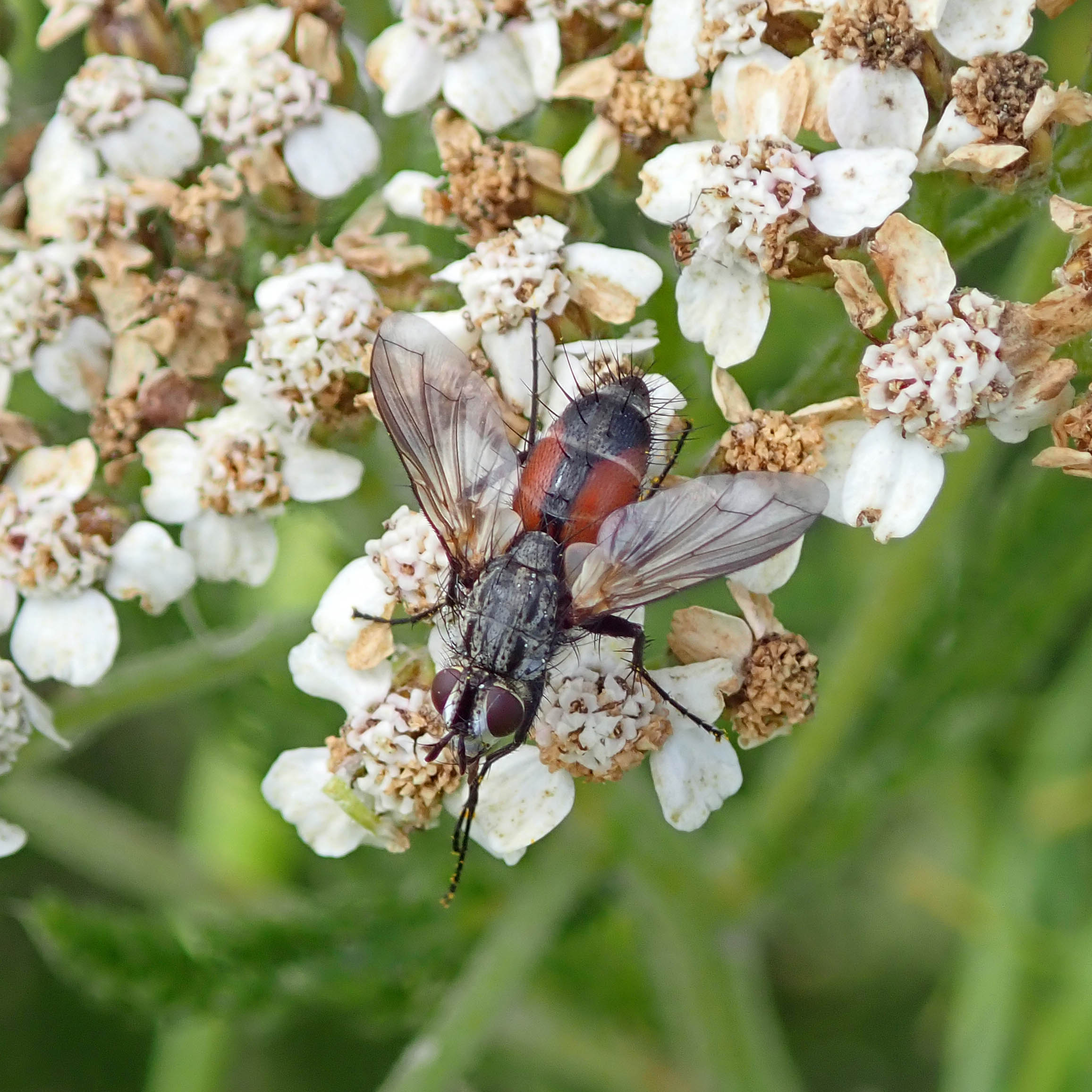
Over the past week I’ve had several sightings of this little fly, Eriothrix rufomaculata, and, though I usually shy away from trying to identify flies, this one is very distinctive. Amongst the checklist of features to look for that are listed on the Naturespot website entry for Eriothrix rufomaculata are the ‘red abdominal side patches’ ♥, ‘silvery face’ ♥, ‘projecting mouth edge’ ♥, and ‘slightly shaded wings’ ♥. It’s also very bristly.

Though the adults are supposedly active from June to October, I presume I’m seeing more of these flies now due to recent hatchings. Look for them feeding on flowers, particularly umbellifers and flowers from the Daisy family, which includes everything from Ragwort to Fleabane, Yarrow to Hemp-agrimony, thistles to Knapweeds, and many more.

Like many creatures, these flies have a dark side to their life cycle: their larvae are parasitic, feeding on the larvae of various moth species, including the little grass moths (the Crambidae) and the very beautiful tiger moth species (the Erebidae).

Like Loading...

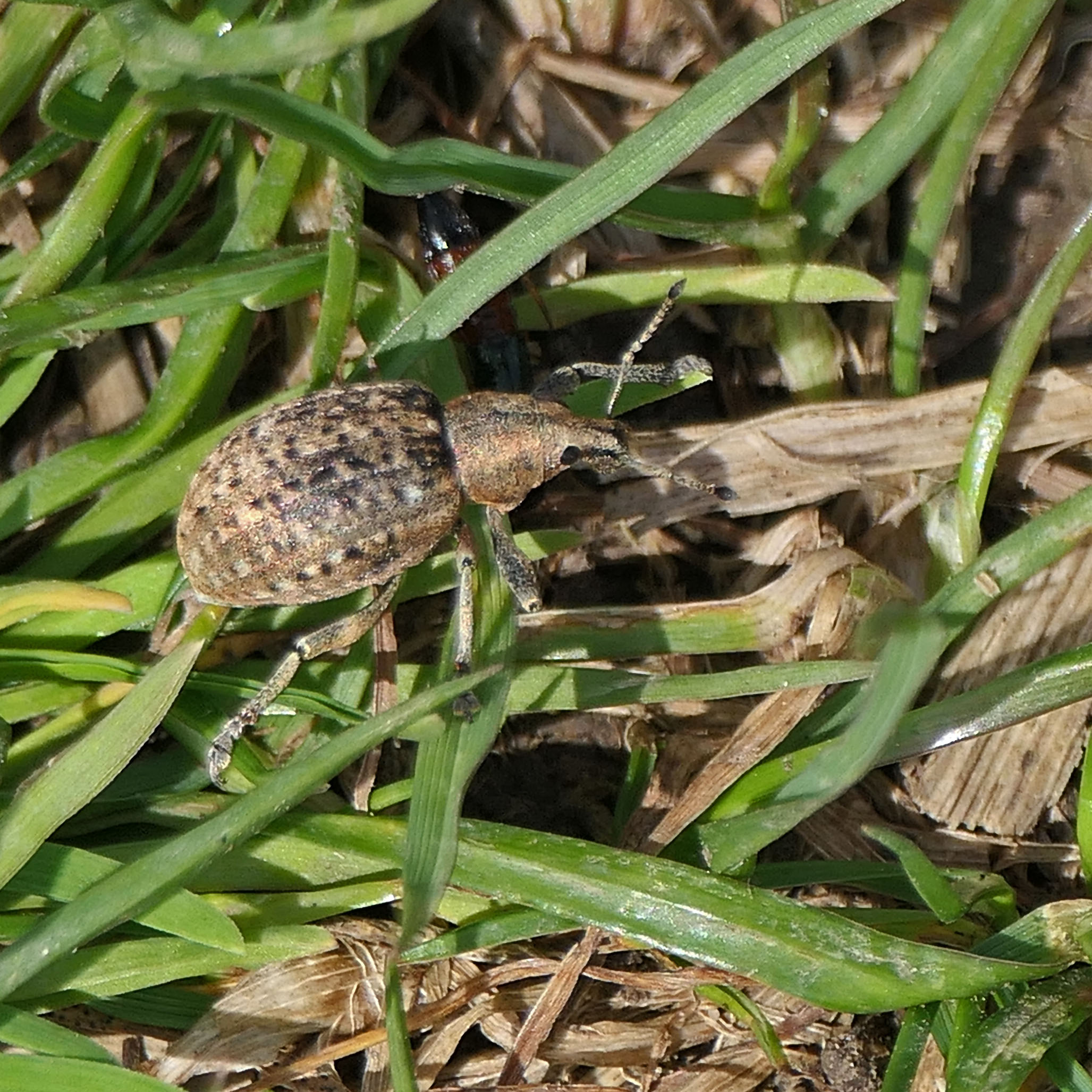
Weevil: Barynotus obscurus

24 Thursday Jul 2025

Posted by sconzani in insects

≈ Leave a comment

Tags

Barynotus obscurus, British weevils, ground weevil, weevi

I don’t often go searching for, or find, creatures at ground level – I’m at an age where, if I get down on the ground, I might not be able to get back up again! But I happened to glance down and spotted this little fellow trundling across the path in front of me so I quickly got my camera out and followed its progress in to the short grass, hoping I’d be able to get a few shots.

As per the species description on the Naturespot website, Barynotus obscurus is a ‘large broad-nosed ground weevil’, whose ‘light brown elytra [wing casings] have a slight mottling of paler blotches’. Its body also has a light covering of short bristly hairs. Adults of the species can be found all year round pottering about at ground level, sometimes exploring under stones, other times pootling about in low bushes, though its camouflage can make it tricky to spot.

Like Loading...

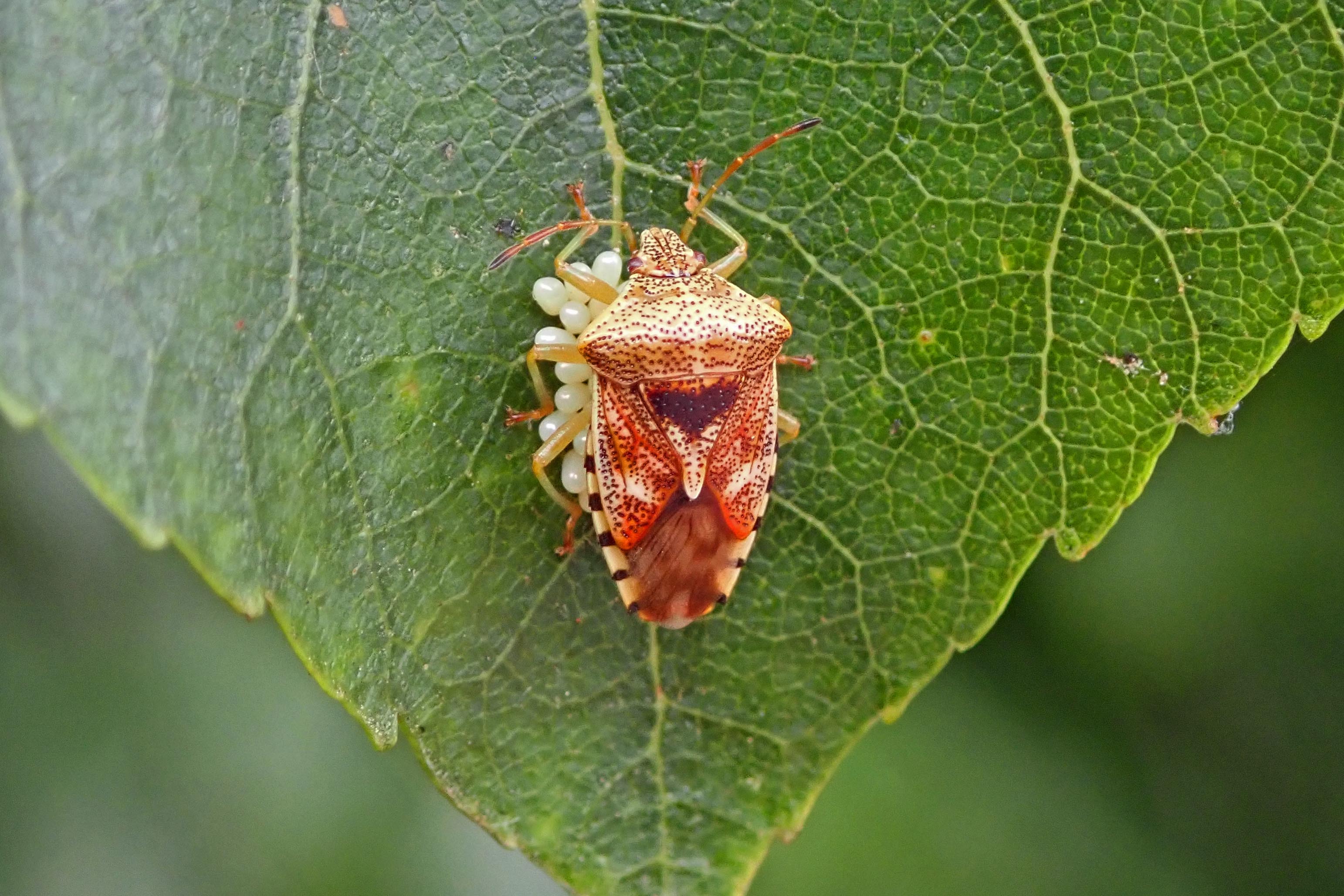
Parent bug mother and eggs

23 Wednesday Jul 2025

Posted by sconzani in insects

≈ Leave a comment

Tags

British insects, British shieldbugs, Elasmucha grisea, Parent bug, Parent bug eggs, Parent bug female brooding eggs, shieldbug

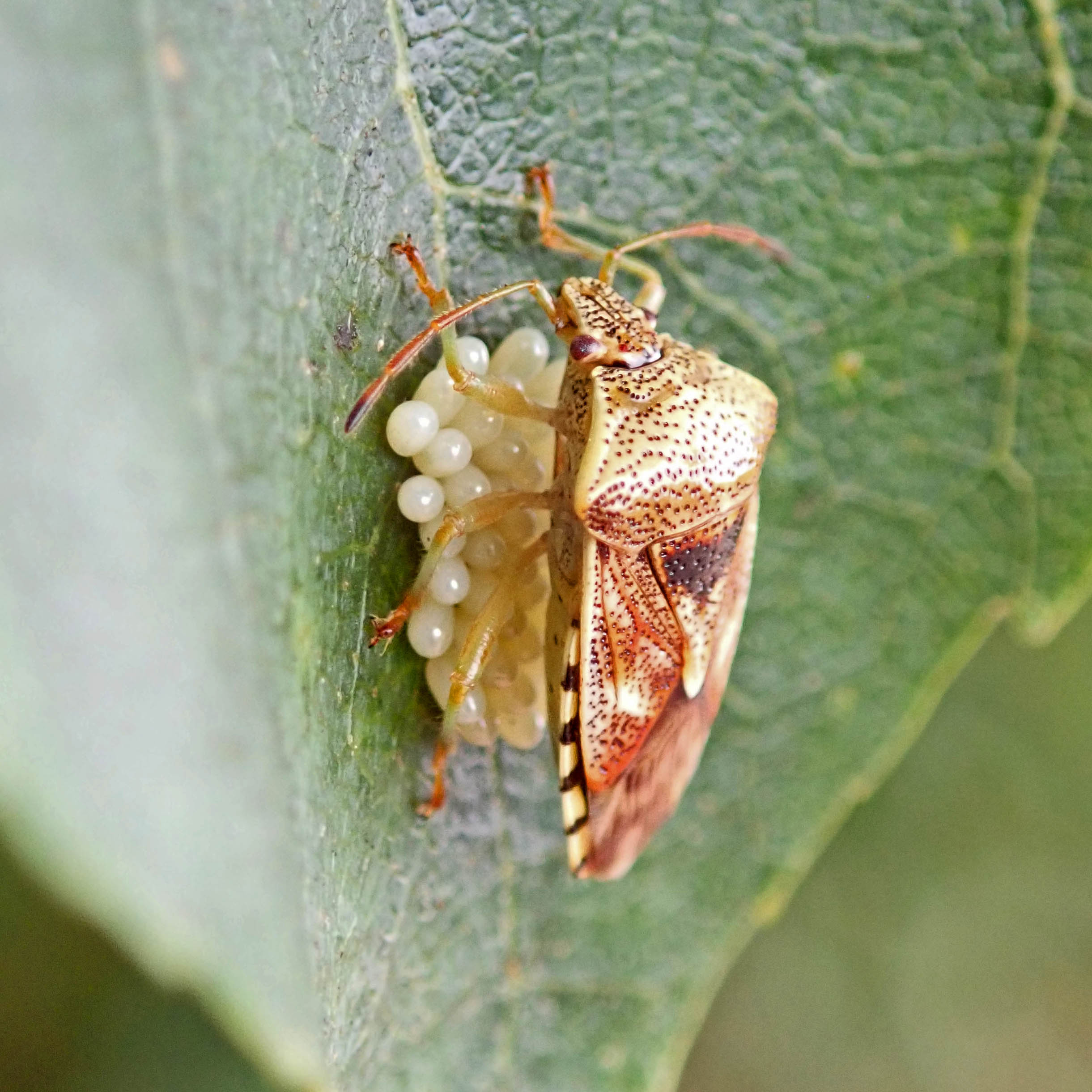
You might remember a very colourful and joyful blog from July last year (Parent bug mother and babies) when I shared a sighting of a Parent bug (Elasmucha grisea) female with her huge brood of young buglets (or, more correctly, nymphs, but I quite like buglet!). Well, just as I was heading home from a recent wander around Cardiff’s Grangemoor Park, I was fossicking through the leaves of an Italian alder tree and spotted this scene.

Though her colouring is quite pale, this is also a Parent bug mother, only this time she’s huddling over and protecting her eggs. Whether or not she was still in the process of laying the eggs or whether these eggs were a few days old I don’t know, and I didn’t want to disturb her by looking more closely. I grabbed a couple of quick photos and left her to her mothering duties.

Like Loading...

Hoverfly: Ferdinandea cuprea

22 Tuesday Jul 2025

Posted by sconzani in insects

≈ 2 Comments

Tags

British hoverflies, Ferdinandea cuprea, hoverfly, hoverfly in woodland

You could easily be fooled into thinking you were looking at a fly when you first saw the hoverfly Ferdinandea cuprea – I’m happy to admit I was. Fortunately, it looked unusual enough – and was settled enough – for me to take a few photos and, when I got home and looked more closely at those on my laptop, I realised this was no ordinary fly.

Now that I’ve seen one and know what to look for, I can agree with what’s written in my Britain’s Hoverflies guide book: ‘An instantly recognisable and very attractive hoverfly with a metallic, brassy abdomen, grey stripes running along the thorax, wing markings and yellow legs’. Ferdinandea cuprea favours wooded areas, mostly in southern parts of Britain and are, apparently, quite common. I presume I’ve been overlooking them for years!

Like Loading...

Leafhopper: Ribautiana ulmi

21 Monday Jul 2025

Posted by sconzani in insects, leaves, trees

≈ Leave a comment

Tags

British leafhoppers, Cicadellidae, leafhoppers on elm trees, leafhoppers on Wych elm, Ribautiana ulmi

I’ve found this tiny leafhopper, between 3.5 and 4mm long, a few times now, and hope to see more this year, as the adults are out and about from May through to November.

The trouble is that, as my eyes are not the best and these hoppers are so small, I find them hard to identify in the field. My solution is to take as many photos as I can of the many small green species of leafhopper I spot, noting their location and which tree species I found them on, then I try to work out what I’ve found when I get home.

Fortunately, the five British Ribautiana species have quite distinctive markings, and this one, Ribautiana ulmi, has three black spots that are unique to the species. You might think from the ‘ulmi’ in its name that this species is only found on Elm / Wych elm trees but it has been recorded on several other trees, which can be confusing. It’s a little cutie though, so keep your eyes peeled if you find yourself staring at leaves in the next few months (though I do realise that I may be the only of us who does that 😉 ).

Like Loading...

Glorious Graylings

16 Wednesday Jul 2025

Posted by sconzani in insects

≈ Leave a comment

Tags

Aberbargoed coal tip, Aberbargoed spoil tip, British butterflies, butterfly, endangered butterfly, endangered Grayling, Grayling, Grayling butterfly

Last Tuesday’s walk was strenuous but the result of my efforts was magical!

As I try to do around this time every year, I caught a train up to Bargoed, then trudged down to the River Rhymney, up the steep slope on the other side to Aberbargoed, then up the even steeper hill that is the former colliery spoil tip.

Why? Because this is the closest and most accessible location I know where I might find Grayling butterflies.

And, yes, as you can clearly see from the extravagance of photographs in this post, my quest was successful.

In fact, I saw more Graylings this year than in any previous year, and they were also more widely spread across the site than I have seen previously.

The national population of Graylings has plummeted in recent decades and they are now officially classified as an endangered species, so their abundance was particularly heartening to see.

It may be that this year’s warm weather suits them, though I think it is likely also to be at least one of the reasons they have dispersed more widely across the tip; the heat means plants are not producing as much nectar so the butterflies have to fly further to find food.

That did mean I was able to photograph these glorious Graylings on a variety of wildflowers and in settings other than them simply sitting on the coal spoil, which made my time spent amongst them even more special.

Like Loading...

Leafmines: Phyllonorycters on Alder

14 Monday Jul 2025

Posted by sconzani in insects, trees

≈ Leave a comment

Tags

British leafmines, British moths, leaf-mining moth larvae, leafmines on Alder, moth larvae on Alder, Phyllonorycter rajella, Phyllonorycter stettinensis

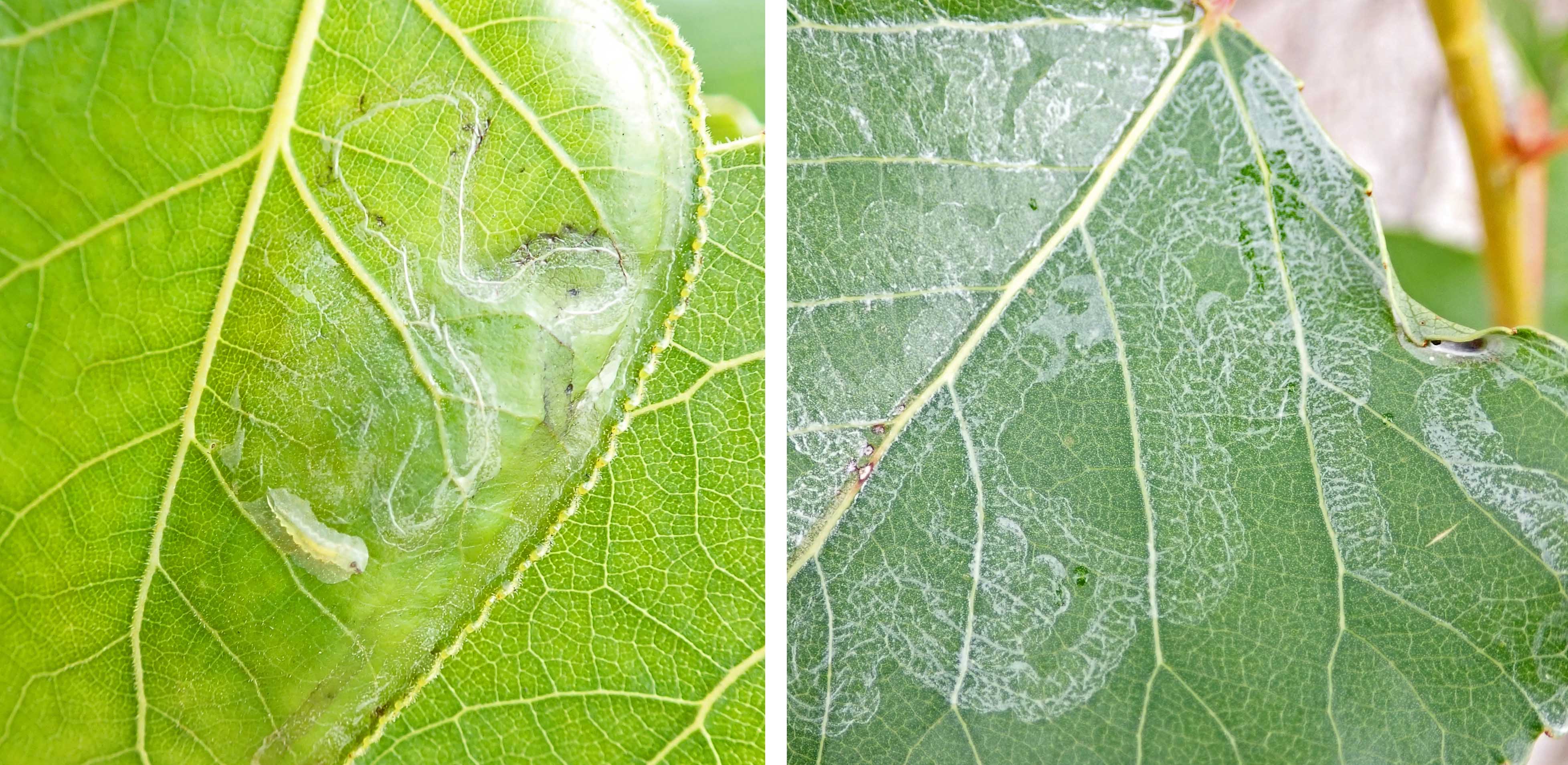
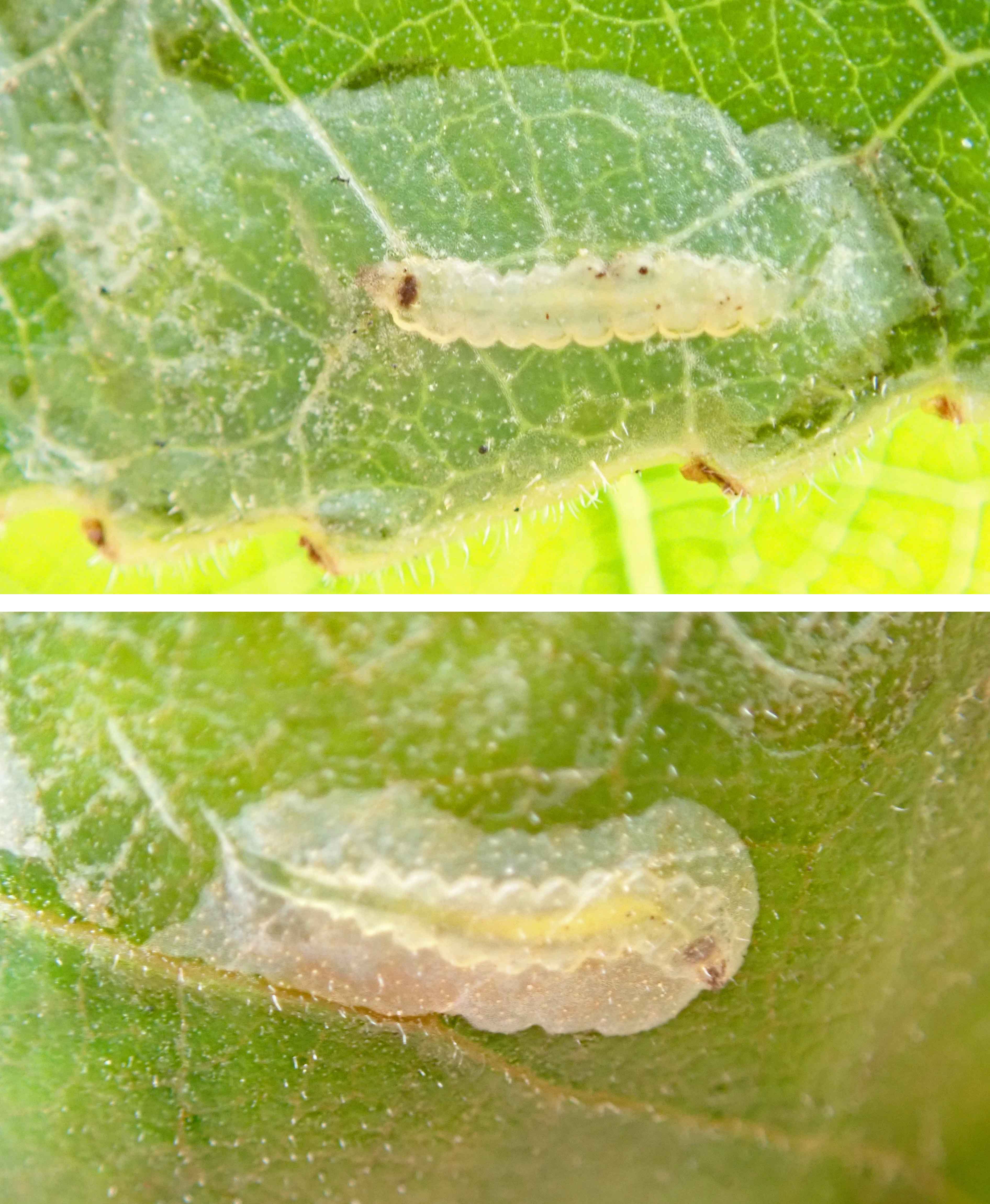
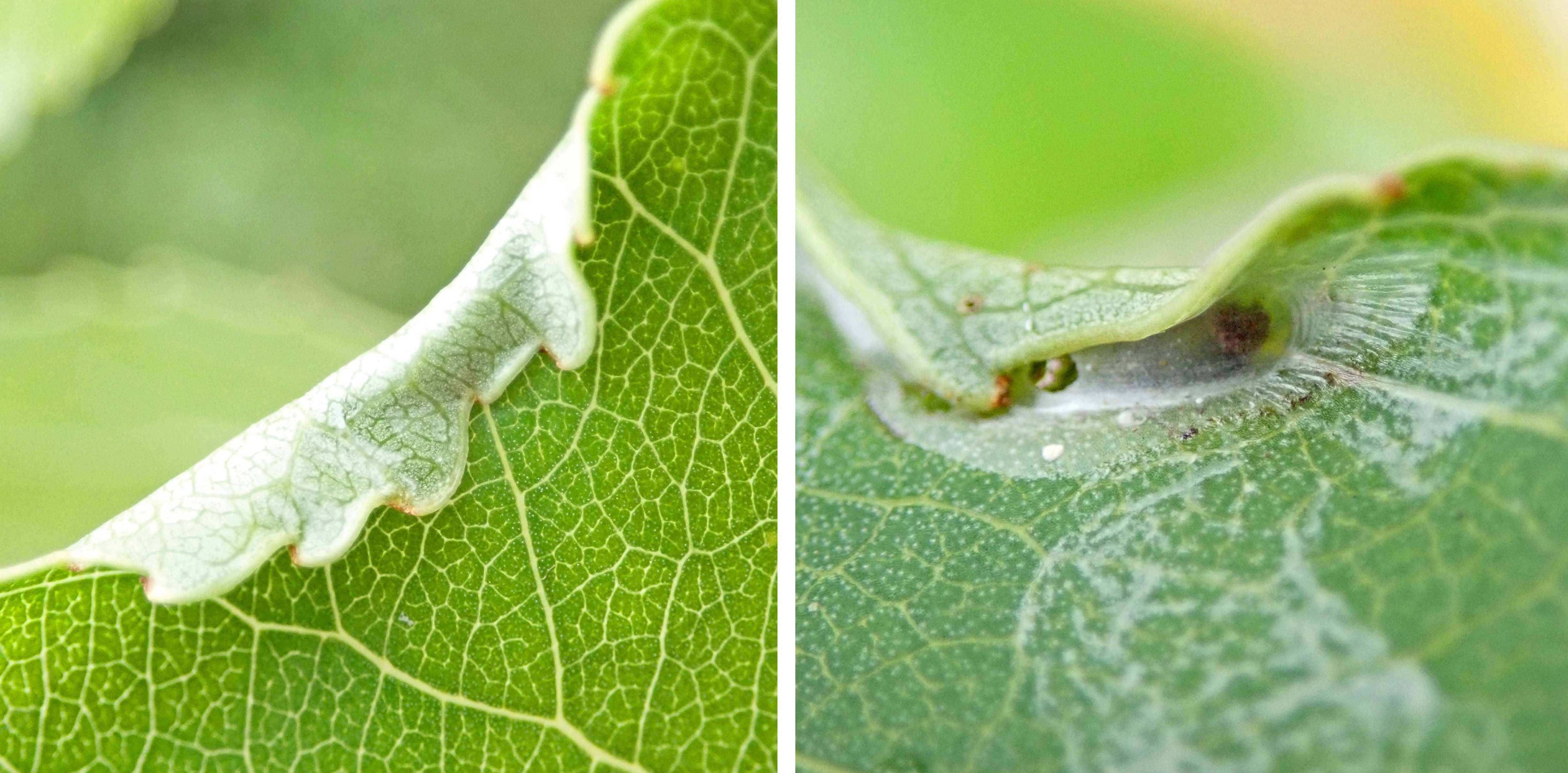
It’s been a while since I’ve blogged about a new leaf-mining moth, and today you get two for the price of one.

You see, the larvae of both these moths mine the leaves of Alder trees, creating a blotch with a single strong crease along the mine’s centre but, fortunately for those of us trying to identify these mines, there is one vital difference: the larval mines of Phyllonorycter rajella (below) can be found on the underside of the leaf, whereas the mines of Phyllonorycter stettinensis (above) are on the upper side of the leaf.

Both moths are bivoltine, i.e. they produce two generations each year; in both cases, the adult moths are active in May and again in August, so there’s a good chance of seeing the mines right through the summer. Amazingly, I’ve actually seen the adult Phyllonorycter rajella moth several times – two instances are shown below, but you can see better images of the very pretty adult moths of both these species on the UK Moths website: click the name to see Phyllonorycter rajella here, and Phyllonorycter stettinensis here.

Like Loading...

Bug: Arocatus roeselii

12 Saturday Jul 2025

Posted by sconzani in insects, trees

≈ Leave a comment

Tags

Arocatus longiceps, Arocatus longiceps / roeselii, Arocatus roeselii, British bugs, bugs on Alder trees

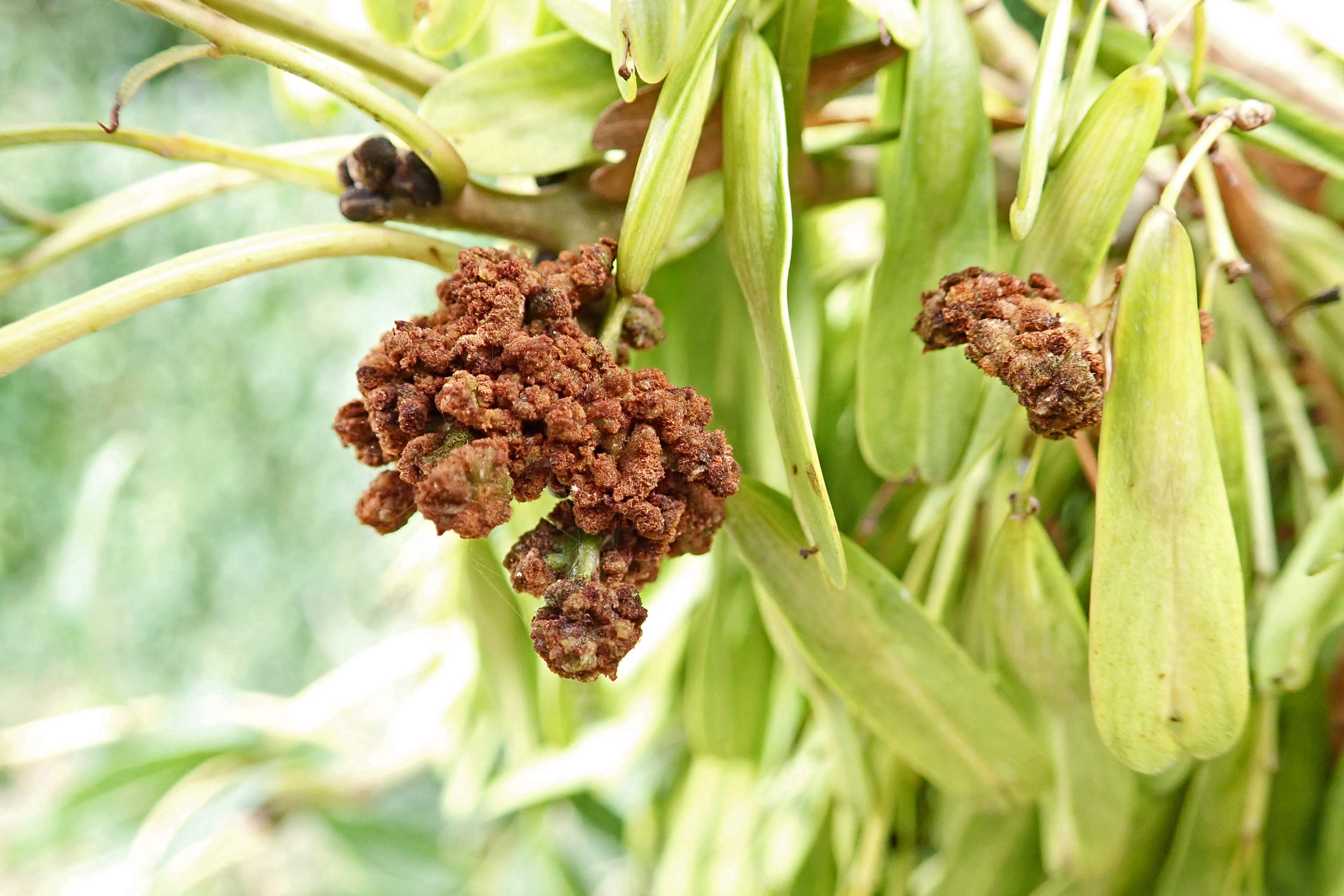
This new bug is intriguing. According to the British Bugs website, it was only found in England in 2007, and only on Plane trees in London and the southern counties. Due to that association with Plane trees, the experts decided that the bug they’d found was Arocatus longiceps, and, when an extremely similar-looking bug was found in the same locations several years later, but was found to be feeding only on the seeds of Alder trees, the consensus was that it must be Arocatus roeselii. Since that time, German scientists have checked the genes of the two species and found no difference between them; the red and black colours of the Alder seed-eaters are apparently more intense but this is likely to be due to their diet, rather than an indication that they are two separate species.

So, if you were to google or research these bugs, you might see them referred to as Arocatus longiceps / roeselii. I found my bugs, both the nymph in the photos above and the adult in the image below, on a roadside Alder tree last Sunday, so I’m going to stick with the name Arocatus roeselii until any possible species confusion is irrevocably settled. And aren’t they super looking little bugs, whatever you might want to call them?

** EDIT: I found out on 1 August that this find was the first for Wales! **

Like Loading...

Roaming Rodborough Common

11 Friday Jul 2025

Posted by sconzani in insects, walks

≈ 2 Comments

Tags

British butterflies, butterfly, Common blue, Dark Green Fritillary, Gloucestershire butterflies, Marbled white, Rodborough Common, Silver-washed fritillary, Small heath

On my last full day in Gloucestershire I caught the train to Stroud and spent several hours roaming around Rodborough Common, another hot spot for butterflies and a location with stunning views over the beautiful surrounding hills and valleys of the Cotswolds.

And here they were again, those gorgeous flying black-and-white chequerboards, the Marbled whites. After Tuesday’s remarkable butterfly numbers, I already had more than enough photos of Marbled whites but, as any photographer knows, you can always do better, so I couldn’t resist taking more images.

Though the top plateau of the Common is relatively flat, the hillsides are steep and criss-crossed with narrow paths, for use by people and the cattle that help to maintain the grassland habitat.

This was a 15-butterfly-species day, with many of the more common butterflies I see in other locations. This Small heath posed very prettily for me. And the sight of the blue caused a slight heart flutter, as the very rare Large blues have been re-introduced and are thriving here, and there was a slight chance I might see one. However, my sighting was of a Common blue; it was the end of the season for Large blues and I understand they are more likely to be seen on neighbouring Minchinhampton Common, so an earlier visit to this location is already on the list for next year.

Fortunately, a refreshing breeze was blowing across the Common so my choice of this bench for a lunch stop was just perfect.

Prior to my visit, a fellow butterfly enthusiast I follow on social media had posted of his sighting of singles of Dark green fritillary and Silver-washed fritillary, and had kindly given me details of where I might look for them. And I was lucky – I also saw singles of these two beauties.

And then it was time to walk back down the hill and in to Stroud to catch the train back to Cheltenham. What a fabulous day to end the fabulous three days of my mini break!

Like Loading...

A day in Tiddesley Wood

10 Thursday Jul 2025

Posted by sconzani in insects

≈ Leave a comment

Tags

British butterflies, Brown argus, butterflies in Tiddesley Wood, butterfly, Painted Lady, Silver-washed fritillary, Tiddesley Wood, White admiral, Worcestershire butterflies

My main aim for my little trip to Cheltenham was to try to see my first ever Purple emperor butterfly: I failed. Yet, in spite of that failure, and the late afternoon train chaos (caused by a fault at Birmingham New Street station) that meant I arrived back at my guest house almost two hours later than planned, I had the most wonderful day in Tiddesley Wood in Worcestershire.

The reason this was such a wonderful day was the sheer abundance of butterflies I saw in this woodland, an abundance that has been very sadly lacking in recent years at the various locations I visit in south Wales. The first treat was getting very good views of several White admirals as they were gliding along the woodland rides. (The previous week I’d been to Slade Wood, in Gwent, the only local place I can find this species and seen two, but only distantly and fleetingly.)

The second source of delight was the profusion of Silver-washed fritillaries living in the wood. These are big showy butterflies, the largest of Britain’s fritillaries, and they thrive in the wide wildflower-filled rides of woodlands like Tiddesley. The only location where I’d ever seen such a large quantity before was on a visit to Lower Woods Nature Reserve in south Gloucestershire back in 2019 so I was in butterfly heaven watching them at Tiddesley.

And then there were the ‘ordinary’ butterflies, like this handsome little Brown argus, a gang of which were patrolling small territories along the edges of the rides.

And this stunning Painted lady that flew right to my feet, as if to insist that it was also worthy of a photograph. I was happy to oblige.

For those interested, the total butterfly species list for the day was 19. They were: Ringlet, Meadow brown, Speckled wood, Gatekeeper, Small skipper, Large skipper, Brown argus, Small white, Large white, Green-veined white, Marbled white, Brimstone, Red admiral, Comma, Peacock, Small copper, Painted lady, White admiral, and Silver-washed fritillary. I may have missed out on seeing my first Purple emperor but I headed home smiling after a magical day in the woods.

Like Loading...
← Older posts
Newer posts →

About me

sconzani

sconzani

I'm a writer and photographer; researcher and blogger; birder and nature lover; countryside rambler and city strider; volunteer and biodiversity recorder.

View Full Profile →

Follow earthstar on WordPress.com

Enter your email address to follow this blog and receive notifications of new posts by email.

Recent blog posts

  • Three Common sandpipers February 17, 2026
  • Beetle: Athous bicolor February 16, 2026
  • Crocus flower power February 15, 2026
  • Delightful doves February 14, 2026
  • Fan-like fungi February 13, 2026

From the archives

COPYRIGHT

Unless otherwise acknowledged, the text and photographs on this blog are my own and are subject to international copyright. Nothing may be downloaded or copied without my permission.

Fellow Earth Stars!

  • Unknown's avatar
  • Unknown's avatar
  • Unknown's avatar
  • Unknown's avatar
  • Unknown's avatar
  • Unknown's avatar
  • Unknown's avatar
  • Unknown's avatar
  • Unknown's avatar
  • Unknown's avatar
  • Unknown's avatar
  • Unknown's avatar
  • Unknown's avatar
  • Unknown's avatar
  • Unknown's avatar
  • Unknown's avatar
  • Unknown's avatar
  • Unknown's avatar
  • Unknown's avatar
  • Unknown's avatar
  • Unknown's avatar
  • Unknown's avatar
  • Unknown's avatar
  • Unknown's avatar
  • Unknown's avatar
  • Unknown's avatar
  • Unknown's avatar
  • Unknown's avatar
  • Unknown's avatar
  • Unknown's avatar
  • Unknown's avatar
  • Unknown's avatar
  • Unknown's avatar
  • Unknown's avatar
  • Unknown's avatar
  • Unknown's avatar
  • Unknown's avatar
  • Unknown's avatar
  • Unknown's avatar
  • Unknown's avatar
  • Unknown's avatar
  • Unknown's avatar
  • Unknown's avatar
  • Unknown's avatar
  • Unknown's avatar
  • Unknown's avatar
  • Unknown's avatar
  • Unknown's avatar
  • Unknown's avatar
  • Unknown's avatar

Blog at WordPress.com.

Privacy & Cookies: This site uses cookies. By continuing to use this website, you agree to their use.
To find out more, including how to control cookies, see here: Cookie Policy
  • Subscribe Subscribed
    • earthstar
    • Join 670 other subscribers
    • Already have a WordPress.com account? Log in now.
    • earthstar
    • Subscribe Subscribed
    • Sign up
    • Log in
    • Report this content
    • View site in Reader
    • Manage subscriptions
    • Collapse this bar
 

Loading Comments...
 

You must be logged in to post a comment.

    %d