• ABOUT
  • BIRDING 2018
  • Birding 2019
  • BLOG POSTS
  • Butterflies 2018
  • Resources

earthstar

~ a celebration of nature

earthstar

Category Archives: ladybird

What do ladybirds eat?

10 Friday Aug 2018

Posted by sconzani in flowers, insects, ladybird, nature, plants, wildflowers

≈ 1 Comment

Tags

7-spot ladybirds, aphids, Cosmeston, Cosmeston Lakes Country Park, harlequin ladybird, ladybirds, Wild parsnip

I googled ‘What do ladybirds eat?’ today because I was trying to work out why there are so many ladybirds – about a 50 / 50 split between 7-spots and Harlequins – on the Wild parsnip plants at Cosmeston Lakes Country Park. It turns out ladybirds are particularly keen on aphids and, as you can see in some of my photos, there are rather a lot of aphids on these plants. Good news for the ladybirds!

180810 ladybirds on wild parsnip (1)
180810 ladybirds on wild parsnip (2)
180810 ladybirds on wild parsnip (3)
180810 ladybirds on wild parsnip (4)
180810 ladybirds on wild parsnip (5)
180810 ladybirds on wild parsnip (6)
180810 ladybirds on wild parsnip (7)
180810 ladybirds on wild parsnip (8)
180810 ladybirds on wild parsnip (9)
180810 ladybirds on wild parsnip (10)
180810 ladybirds on wild parsnip (11)
180810 ladybirds on wild parsnip (12)
180810 ladybirds on wild parsnip (13)
180810 ladybirds on wild parsnip (14)
Like Loading...

It’s a miracle!

07 Thursday Sep 2017

Posted by sconzani in insects, ladybird, nature

≈ 4 Comments

Tags

Halyzia 16-punctata, Halyzia secedimguttata, ladybird, ladybird larva, ladybird lifecycle, ladybird pupa, ladybug, Orange ladybird

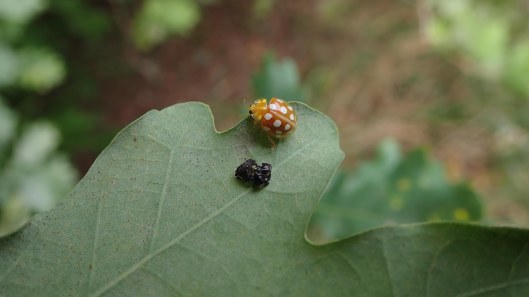
I believe I may have an addiction to ladybirds! When I decided to write this post, I thought I’d just check that I hadn’t covered this topic already: of course, I knew I had written about ladybirds before but I didn’t realise quite how many times. There’s a post here and here and again here and another one here. Well, in spite of all those, here’s another one because, when I found all the Orange ladybirds pictured here within five minutes of each other yesterday, I was struck yet again by just how incredible is their transformation from egg to larva …

170907 Orange ladybird (1)

to pupa …

170907 Orange ladybird (2)
170907 Orange ladybird (3)
170907 Orange ladybird (4)

to ladybird. It really is quite miraculous!

170907 Orange ladybird (5)

Like Loading...

Bioblitzing again

03 Sunday Sep 2017

Posted by sconzani in fungi, insects, ladybird, nature

≈ Leave a comment

Tags

Amelia Trust Farm, bioblitz, biodiversity, biological diversity, biological recording

Ten days ago I spent the day bioblitzing with my friend Hilary at Amelia Trust Farm (with their permission, of course). Hilary volunteers there so was keen to see what we might discover around the grounds.

170903 Harvestman Dicranopalpus ramosus

The habitats were a mix of woodland, arable fields, and flower and vegetable gardens, though we kept to the various footpaths, only looked at the fields from the fence lines, and didn’t venture far into the vegie patch. As previously, Hilary surveyed the plants and I did everything else. For a late summer’s day, in a site full of noisy families, I thought my total of 59 species was respectable enough. Here are some of the things I spotted …

170903 7-spot ladybird
170903 Common European earwig
170903 Green shieldbug
170903 Honey bees
170903 Hoverfly Eristalis sp
170903 Nettle-tap moth
170903 Pantilius tunicatus
170903 Scorpion fly
170903 Small white

170903 Trametes versicolor Turkeytail

Like Loading...

Bishy-barnabee & Co

02 Tuesday May 2017

Posted by sconzani in insects, ladybird, nature

≈ 3 Comments

Tags

14-spot ladybird, 18-spot ladybird, 22-spot ladybird, 7-spot ladybird, Bishy-barnabee, harlequin ladybird, ladybird, Orange ladybird, Robert Macfarlane, vernacular names for ladybird

If you’re on Twitter and follow one of my favourite authors, Robert Macfarlane, you’ll know that he tweets a ‘word of the day’. Yesterday’s was ‘Bishy-barnabee’, a vernacular name for the ladybird used by folk who live in the English county of Norfolk. I adore these common names – they are often old, come from a time when folk paid more attention to the natural world, observing the habits and customs of the creatures around them, or they named creatures after concepts and ideas that were important to them. Macfarlane listed other ladybird names too: cushcow, goldie-bird, red-sodger, and kingcollawa. In Fauna Britannica, Stefan Buczacki lists even more: as well as bishie barni-bee, he has bishop barnabee, bishop is burning, bishop that burneth (all from Norfolk); clock-o’clay and cow lady (from Yorkshire); God Almighty’s cow, God’s little cow and King Galowa (from Scotland); and ladycow, lady fly, lady lanners, Mary gold and sodger (from Northumberland). I’m sure there are many many more.

Here is a selection of the Bishy-barnabees I have photographed (using the mostly numerical descriptions we more commonly use these days: two 7-spots, a 14-spot, an 18-spot, a 22-spot, 3 Harlequins and an Orange).

170501 ladybird 7-spot (1)
170501 ladybird 7-spot (2)
170501 ladybird 14-spot
170501 ladybird 18-spot
170501 ladybird 22-spot
170501 ladybird Harlequin (1)
170501 ladybird Harlequin (2)
170501 ladybird Harlequin (3)
170501 ladybird Orange
Like Loading...

Signs of Spring, 3

25 Saturday Mar 2017

Posted by sconzani in insects, ladybird, nature, spring, wildflowers

≈ 7 Comments

Tags

bees, butterflies, flies, hoverflies, insects, insects in springtime, ladybird, shieldbugs, Spring has sprung

You know Spring has well and truly arrived when the insects start appearing in reasonable quantities so, judging by the numbers of insects I’ve seen on my walks over the past two days, I would say Spring has most definitely sprung, wouldn’t you?

170325 Spring insects (1)
170325 Spring insects (2)
170325 Spring insects (3)
170325 Spring insects (4)
170325 Spring insects (5)
170325 Spring insects (6)
170325 Spring insects (7)
170325 Spring insects (8)
170325 Spring insects (9)
170325 Spring insects (10)
170325 Spring insects (11)
170325 Spring insects (12)
Like Loading...

There’s a cannibal in my kitchen

12 Saturday Dec 2015

Posted by sconzani in insects, ladybird, nature, nature photography, winter

≈ Leave a comment

Tags

harlequin ladybird, hibernation, insect, invasive species, ladybird, ladybug, winter

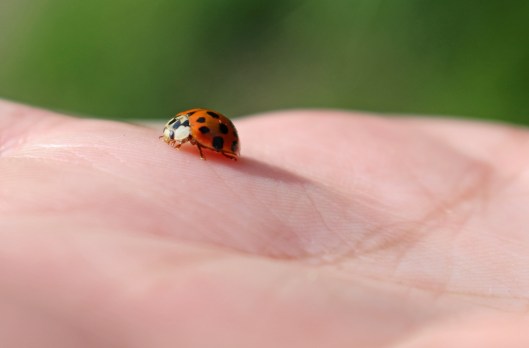
For the third time in as many weeks a Harlequin ladybird (Harmonia axyridis) has appeared as if from nowhere in my kitchen. They like to find somewhere cosy to hibernate the winter away so I’m sure a warm spot near my gas boiler would suit them very well and normally I wouldn’t mind but this is the most invasive ladybird on earth.
151212 ladybird harlequin (1)

The voracious little Harlequin originated in Asia but was introduced firstly to North America and later to Europe to control aphids. Though it only arrived in Britain in 2004 – perhaps blown across the Channel, or it may have hitched a ride on a vehicle – it has already spread throughout half these isles. The problem is that the Harlequin doesn’t just eat aphids; not only does it compete with native ladybirds for food but it also devours their eggs and larvae, as well as the eggs and caterpillars of butterflies and moths. It may look cute but it has the devastating potential to wipe out all 26 resident species of ladybird.

This is one time when I really wish this ladybird would fly away home!

151212 ladybird harlequin (2)

Like Loading...
Newer posts →

About me

sconzani

sconzani

I'm a writer and photographer; researcher and blogger; birder and nature lover; countryside rambler and city strider; volunteer and biodiversity recorder.

View Full Profile →

Follow earthstar on WordPress.com

Enter your email address to follow this blog and receive notifications of new posts by email.

Recent blog posts

  • Weevil: Mecinus pyraster January 10, 2026
  • Red in beak and claw January 9, 2026
  • Who’s watching who? January 8, 2026
  • Springtail: Orchesella cincta January 7, 2026
  • A good year for Redwings January 6, 2026

From the archives

COPYRIGHT

Unless otherwise acknowledged, the text and photographs on this blog are my own and are subject to international copyright. Nothing may be downloaded or copied without my permission.

Fellow Earth Stars!

  • Unknown's avatar
  • Unknown's avatar
  • Unknown's avatar
  • Unknown's avatar
  • Unknown's avatar
  • Unknown's avatar
  • Unknown's avatar
  • Unknown's avatar
  • Unknown's avatar
  • Unknown's avatar
  • Unknown's avatar
  • Unknown's avatar
  • Unknown's avatar
  • Unknown's avatar
  • Unknown's avatar
  • Unknown's avatar
  • Unknown's avatar
  • Unknown's avatar
  • Unknown's avatar
  • Unknown's avatar
  • Unknown's avatar
  • Unknown's avatar
  • Unknown's avatar
  • Unknown's avatar
  • Unknown's avatar
  • Unknown's avatar
  • Unknown's avatar
  • Unknown's avatar
  • Unknown's avatar
  • Unknown's avatar
  • Unknown's avatar
  • Unknown's avatar
  • Unknown's avatar
  • Unknown's avatar
  • Unknown's avatar
  • Unknown's avatar
  • Unknown's avatar
  • Unknown's avatar
  • Unknown's avatar
  • Unknown's avatar
  • Unknown's avatar
  • Unknown's avatar
  • Unknown's avatar
  • Unknown's avatar
  • Unknown's avatar
  • Unknown's avatar
  • Unknown's avatar
  • Unknown's avatar
  • Unknown's avatar
  • Unknown's avatar

Blog at WordPress.com.

Privacy & Cookies: This site uses cookies. By continuing to use this website, you agree to their use.
To find out more, including how to control cookies, see here: Cookie Policy
  • Subscribe Subscribed
    • earthstar
    • Join 669 other subscribers
    • Already have a WordPress.com account? Log in now.
    • earthstar
    • Subscribe Subscribed
    • Sign up
    • Log in
    • Report this content
    • View site in Reader
    • Manage subscriptions
    • Collapse this bar
 

Loading Comments...
 

You must be logged in to post a comment.

    %d