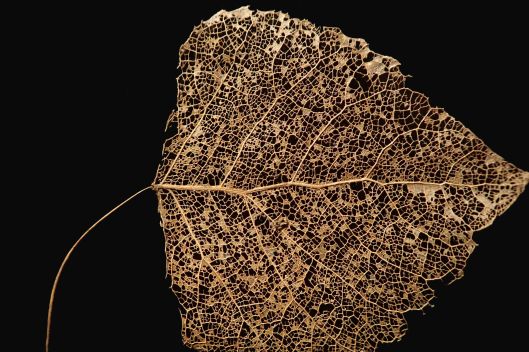
This Oak leaf looks to me like a lesson in geography, maybe a topographical map or perhaps a close view of the earth from a satellite, where the veins are rivers, the green the agricultural fields nurtured by their water, the brown the dry uplands.


05 Thursday Nov 2020
This Oak leaf looks to me like a lesson in geography, maybe a topographical map or perhaps a close view of the earth from a satellite, where the veins are rivers, the green the agricultural fields nurtured by their water, the brown the dry uplands.
28 Wednesday Oct 2020
Tags
Aceria macrochela, gall mites, gall-causing mites, galls, galls on Field maple, galls on Spindle, mite galls, Stenacis euonymi
October is a good month to check out life on leaves (and I’ll be writing some posts about the various leaf mines I’ve been finding) but today I want to show you a couple of gall species that are new to me. The first is quite common and easy to find, the second perhaps less so.
The first species is Aceria macrochela, a microscopic mite that spends its larval life in these tiny bumps on the leaves of Field maple (Acer campestre). You can read more about them and see more images on the mighty Nature Spot website.


And the second is also a mite, this one called Stenacis euonymi, whose larvae make their homes in the rolled-up edges of leaves on Spindle (Euonymus europaeus). If you have trouble with tree identification, as I often do, this is a good time to look for these as the gloriously obvious fruit of the Spindle are easy to spot.
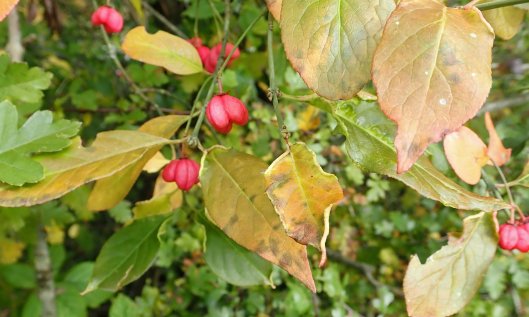
Looking on the NBN (Nature Biodiversity Network) Atlas I see there are currently only 112 UK records for this species (113 including mine, which doesn’t show yet) but that’s probably due to it being under-recorded, so if you spot these, please do record your sighting.


19 Monday Oct 2020
Tags
British moths, Field maple, leaf mines on maple, leaf-mining moth larvae, leafminer, Norway maple, Scarce Maple pigmy, Stigmella aceris
I’ve been hunting for leaf mines in recent days, the mines made by the larvae of the micro moth Stigmella aceris, which can be found at this time of year on the leaves of Norway and Field maples. Unfortunately, I haven’t made any finds of my own but my Twitter pal Gareth had the honour of finding the first mines in the Vale of Glamorgan last week so I went and checked out his find site to get a look at the mines for myself.

According to the UK Moths website, this moth was classified as rare until 40 years ago, when it began increasing its range ‘dramatically’. It can now be found throughout central and southern England, and also in south Wales – it was found for the first time in Cardiff in November 2019.

I’ve never seen the adult moth, which has the common name of Scarce maple pigmy – and probably never will – but you can see a photo of it on the British Lepidoptera weebly site here.


And now I’m heading out to check more Maple trees before their leaves all fall and turn to mush …

22 Monday Jun 2020
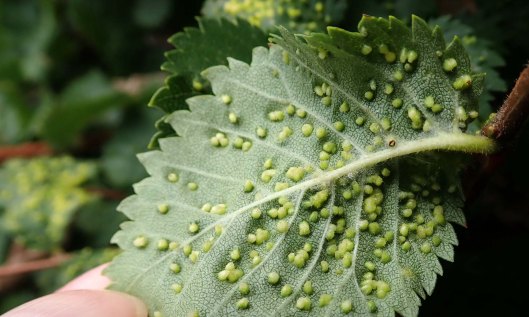
When walking along a narrow path between fields last week, I turned to face into the neighbouring hedgerow so that two other walkers could safely pass behind me. In so doing, I noticed these galls, which I think are Aceria campestricola (also known as Aceria ulmicola).

These growths betray the presence of the hundreds, perhaps thousands of the tiny mites that have caused these galls to form.
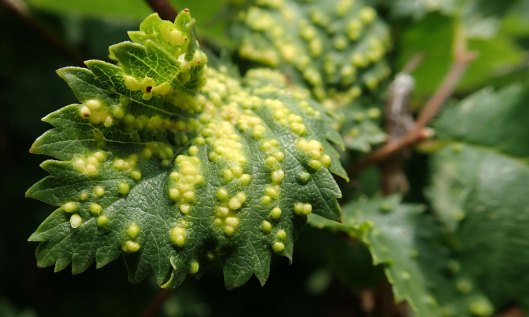
These particular galls can only be found on specific elm species, which in Britain include English elm and Small-leaved elm.
15 Monday Jun 2020
I don’t see many beetles, perhaps because I don’t spend enough time looking for them, but I could hardly miss these ones, because there were hundreds of them.

I’m not entirely sure what they are and there are many species of leaf beetle that look very similar but, as these were munching on umbellifer leaves – possibly hogweed (I’m not good at identifying umbellifers either!), I think they might be Celery leaf beetles (Phaedon tumidulus).


As well as munching on the correct type of leaf, these beetles were about the right size (tiny, just 3-4mm), and, although they have lines of dimples on the elytron (the wing covers on the abdomen), they don’t have any on the centre of the pronotum (the thorax), which also fits with Phaedon tumidulus. However, I may have got the ID wrong, so do let me know in the comments box if you can positively identify these hungry creatures.

18 Saturday Jan 2020
Tags
It was minus 2°C this morning, the first time we’ve seen frost this year – indeed, for many weeks – so, of course, I went looking for signs of the touch of Jack Frost’s crisp finger on the vegetation. Here’s what I found …


23 Saturday Nov 2019
Tags
bramble leaf mines, British leaf mines, British moths, Golden pigmy moth, leaf mines on brambles, leaf-mining moth, Stigmella aurella, stigmella species
Before the heavy rain came in yesterday I managed a quick local walk, part of which was to look at maple trees for the leaf mines of a tiny moth called Stigmella aceris, which has slowly been expanding its range in south Wales. I didn’t find any on the few trees I looked at, though I will continue to look and will report back here if I do manage to find any.


I decided to switch my focus on to another of the Stigmella moth species, Stigmella aurella, the Golden pigmy moth, which lives its larval life in mines burrowed in bramble leaves. Though you might never see the adult moth, you will undoubtedly be able to find its leaf mines as they are common and widespread throughout most of Britain, and I easily found several examples during my local meander. Now to find the maple-leaf-burrowing variety!


09 Saturday Nov 2019
Tags
autumn, autumn at Forest Farm, autumn colour, autumn leaves, autumn trees, Forest Farm Nature Reserve
Here are some of the colours of autumn from my walk around Forest Farm Nature Reserve yesterday. It was magical!


29 Tuesday Oct 2019
Tags

I’m not sure what creature had eaten all the holes in this leaf as I couldn’t find the culprit but it certainly must’ve been hungry. I rather like the pretty little artwork it had created.

20 Sunday Oct 2019
One of the ghosts of the many beautiful fallen leaves …
 earthstar
You must be logged in to post a comment.