• ABOUT
  • BIRDING 2018
  • Birding 2019
  • BLOG POSTS
  • Butterflies 2018
  • Resources

earthstar

~ a celebration of nature

earthstar

Category Archives: nature photography

The trooping of the funnels

26 Saturday Dec 2015

Posted by sconzani in fungi, nature, nature photography

≈ 2 Comments

Tags

fungi, fungus, Monk's Head, Trooping funnel

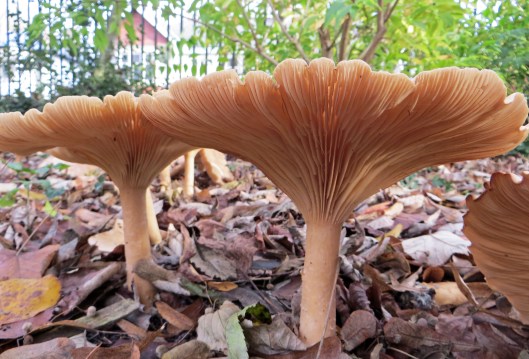
My photos of this most majestic of mushrooms were taken on 16 November, yet these fungi have only just disappeared, succumbing eventually to the almost constant rain we’ve had in the past month. But what a show they put on! Clumped together in twos or threes and standing up to eight inches tall, they trooped grandly across a garden bed at my local park in an arc that was at least five metres long, as if they were parading for royalty!

Clitocybe geotropa Trooping Funnel (2)

This is the aptly named Trooping funnel, until recently known by the scientific name Clitocybe geotropa – clitocybe means ‘sloping head’ and geotropa, in ancient Greek, means ‘towards the earth’ – but now reclassified Infundibulicybe geotropa. Such reclassifications are common in the fungi world now that their individual characteristics can be more accurately identified with the benefit of modern technology. This fungus also has other common names: Monk’s Head (I guess its soft leathery texture does look a bit like a shaven pate) and, in Scotland, the Rickstone Funnel-cap (its shape resembles a particular method of stacking corn, straw or hay).

Clitocybe geotropa Trooping Funnel (1)

The Trooping funnel is a common enough woodland fungus but is most famous for its impressive fairy rings. One such ring in France was recorded at more than half a mile wide and was believed to be 800 years old!
Clitocybe geotropa Trooping Funnel (5)

Like Loading...

The lion’s tooth: Dandelion

25 Friday Dec 2015

Posted by sconzani in nature, nature photography, wildflowers

≈ Leave a comment

Tags

dandelion, medicinal plant, wildflowers, yellow flowers

One of my favourite wildflowers is the humble dandelion. On grey winter days it provides a welcome burst of cheery yellow, and seeing the fluffy seed heads brings me fond childhood memories, of dandelion clocks to tell the time from the number of blows it takes to remove the seeds, and of making a wish when the last of the seeds blows away.

151224 dandelion (1)

Officially labelled Taraxacum officinale agg., the common name dandelion comes from the French dent de lion, lion’s tooth, a reference to its deeply toothed leaves. In England, it is also commonly called ‘wet-the-bed’ and ‘pissy-beds’, from the idea that just touching a dandelion causes bed-wetting. Luckily, that’s not true, though the dandelion is a scientifically proven diuretic.

151224 dandelion (2)

In fact, the dandelion is an extremely useful plant. It’s a good source of beta-carotene, is rich in Vitamin C and the B-complex vitamins and also high in protein, so has been used for thousands of years to improve the functioning of the liver, gallbladder, and urinary and digestive systems. And, though I’ve never tried it, dandelion is also widely used to make wine. So, the next time you’re tempted to eradicate these ‘weeds’ from your garden, think again and, instead, make use of Nature’s bounty.

Like Loading...

Image

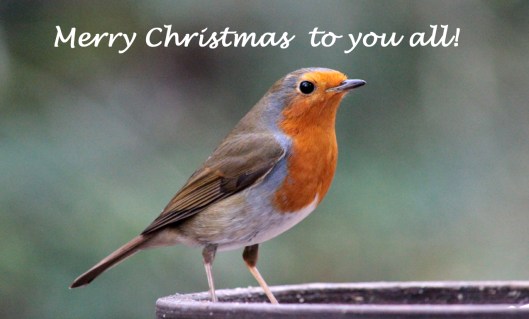
Christmas greetings

24 Thursday Dec 2015

Tags

birding, British birds, Christmas greeting, Merry Christmas, robin

Xmas robin tw

Like Loading...

Posted by sconzani | Filed under birds, nature, nature photography

≈ Leave a comment

A tree a day for a year

23 Wednesday Dec 2015

Posted by sconzani in nature, nature photography, trees

≈ Leave a comment

Tags

a tree a day, photography project, trees

I love trees! Not only are they beautiful to look at, trees provide food and shelter for humans and for wildlife; trees release oxygen and clean our air by absorbing greenhouse gases; trees help reduce flooding and water pollution, and stabilise ground at risk of erosion; trees are the source of many medicines; trees provide income for a huge number of the world’s people; and so much more.

151223 year of trees (1)

Each year I like to set myself a photographic challenge and, in 2015, my project has been to photograph a tree (or trees) every day for the whole year. These are two of those images.

151223 year of trees (2)

Spending so much time with trees this year has brought me enormous pleasure. The Japanese have a term for walking in the woods that I particularly like – it’s shinrin yoku, which literally  means ‘forest bathing’. I think the world would be a much better place if we all bathed regularly in forests.

Like Loading...

What’s small, brown and often polygamous?

22 Tuesday Dec 2015

Posted by sconzani in birds, nature, nature photography

≈ 3 Comments

Tags

birding, birds, birdwatching, British birds, dunnock

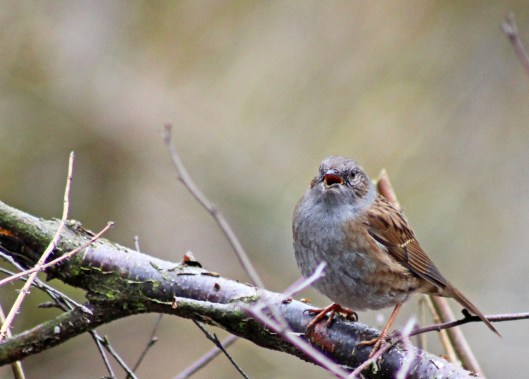
151222 dunnock (2)

I am a huge fan of this small sparrow-like bird. Its name, Dunnock (Prunella modularis), comes from the Old English word for ‘little brown’ and its brown and grey colouring is certainly nothing flashy but it does blend in perfectly with the hedges and shrubs, bracken and leaf litter through which it constantly shuffles to find its snacks of beetles, ants and spiders.

151222 dunnock (1)

The dunnock may look rather drab but its sex life is anything but. It may have an incredibly short copulation time, of a fraction of a second, but it more than makes up for that by being the most frequent fornicator of Britain’s small birds, recorded at once or twice an hour for a 10-day period! What’s more, it frequently dabbles in polygyny, polyandry and polygynandry. It seems that by mating with two or more males a female not only increases the diversity of the breed, she also helps to prevent rival males from destroying her eggs and encourages more than one male to feed her ravenous offspring. Smart female!

151222 dunnock (3)

Like Loading...

The quintessential mushroom

20 Sunday Dec 2015

Posted by sconzani in fungi, nature, nature photography

≈ Leave a comment

Tags

autumn, autumn colour, Fly agaric, Fly amanita, fungi, fungus, Scarlet flycap

I was living in Auckland, New Zealand, when I first spotted one of these mushrooms and I admit to having had a ‘wow’ moment. It was like walking into a fairytale … I half expected fairies and elves to emerge and perform a magical dance amongst the leaf litter. This is, after all, the classic what-every-kid-would-draw-if-you-asked-them mushroom.

151220 Amanita muscaria fly agaric (1)

The Fly agaric (Amanita muscaria), also known as the Fly amanita and the Scarlet flycap, isn’t native to New Zealand but was unintentionally introduced there due to its rather intimate relationship with pine trees. Since its arrival, it has been quite wanton and, as it has now begun forming relationships with native trees, to the detriment of native fungi, it is considered a pest.

151220 Amanita muscaria fly agaric (2)

On the left, a young mushroom; on the right, an aging specimen

As the flesh of the Fly agaric contains psychoactive substances it has been used for centuries in religious and shamanistic rituals in Asia and parts of northern Europe. This fungus is, however, classified as poisonous, so forget the hallucinogenic adventure and feast with your eyes only!

Like Loading...

The little Great tit

19 Saturday Dec 2015

Posted by sconzani in birds, nature, nature photography

≈ 3 Comments

Tags

birding, birds, birdwatching, British birds, Forest Farm Nature Reserve, Great tit

151219 great tit (2)

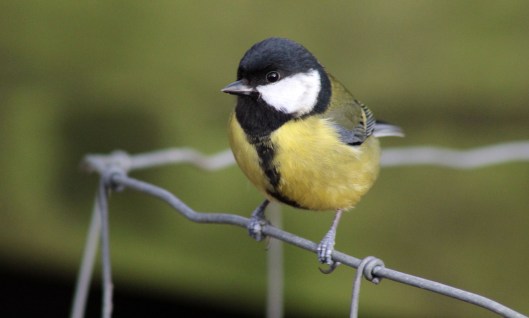
One of the three different Great tits in these photographs may well be ‘George’, a cheeky little chap who’s earned himself a nickname from the birders who regularly visit the hides at Forest Farm Nature Reserve near Cardiff because he is quite brazen in his visits inside the hide to demand food. His favourite, apparently, is nyjer seeds and, if these are offered in an outstretched hand, he will quite happily sit on the hand and feed. He is fussy though and turned his beak up pretty smartly at my suet pellets!

151219 great tit (3)

Though the Great tit (Parus major) is a popular visitor to many people’s bird feeders, it’s not normally quite as friendly as ‘George’, and its usual habitat is deciduous woodland though, as you see, this tit adapts well to different situations. It’s a melodious little bird, with a standard song that sounds a bit like ‘teach-er’ (which is how it came to be known in days past by the common name of ‘saw sharpener’), but it’s also rather skilled at jamming a variety of tunes and rhythms.

151219 great tit (1)

Like Loading...

The common daisy

18 Friday Dec 2015

Posted by sconzani in nature, nature photography, wildflowers

≈ Leave a comment

Tags

bruisewort, Common daisy, English daisy, lawn daisy, woundwort

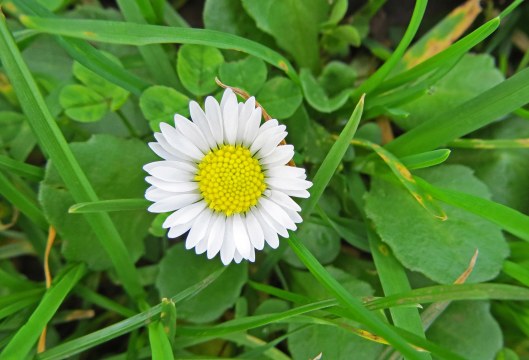
Gardeners hate them, greenkeepers detest them, grounds(wo)men loathe them. Yet, little Bellis perennis, the common, lawn or English daisy, is an attractive wee plant, its dainty white flowers twinkling like tiny stars even on the dullest of days. I recall many happy childhood hours spent making daisy chains.

151218 common daisy (2)

How charming that the word daisy comes from ‘day’s eye’, referring to the fact that the little flowers close up at night and reopen each morning. In the Middle Ages, the English called it Mary’s Rose, and its other common names include bruisewort and woundwort. These refer to the plant’s medicinal properties: the ancient Romans extracted the juice from the common daisy to soak the bandages with which they bound sword and spear cuts in times of battle. And herbalists and homeopaths still use the plant today, to help heal soft tissue injuries, sprains and bruises, and to treat skin infections like acne and boils, amongst other things.

151218 common daisy (1)

Like Loading...

Lovin’ the lichen

17 Thursday Dec 2015

Posted by sconzani in lichen, nature, nature photography, trees

≈ 2 Comments

Tags

algae, copper beech trees, lichen, winter

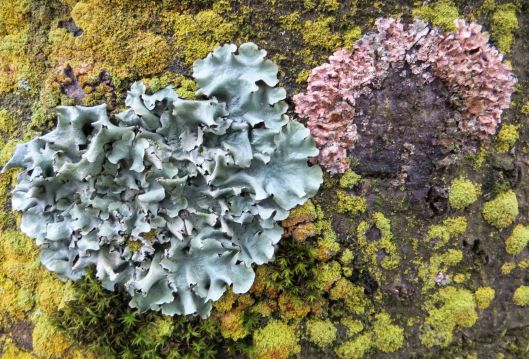
Bordering the recreation grounds opposite where I live is a magnificent long line of copper beech trees. Their leaves provide a glorious show of colour in spring, summer and autumn but the trees look rather barren during the winter months. However, if you look closer, you’ll find their bark is alive with algae, mosses and lichens, and the colours, shapes and patterns of these small organisms are, indeed, many and splendid.

151217 lichen on copper beech (2)

A lichen is a complicated entity – it is not actually one single organism but rather a fungus living in a symbiotic relationship with a photosynthetic partner, which might be a green alga or a cyanobacterium or both. The fungus is the farmer and the alga and/or bacterium produce/s the food it survives on.

151217 lichen on copper beech (1)

Next time you see a lichen, look closer and be amazed!

151217 lichen on copper beech (3)

Like Loading...

Fox and cubs

16 Wednesday Dec 2015

Posted by sconzani in autumn, nature, nature photography, wildflowers

≈ 1 Comment

Tags

autumn, autumn colour, cemetery, Fox and cubs, Grim the collier, orange hawkweed, wildflowers

151216 Pilosella aurantiaca Orange hawkweed aka fox and cubs

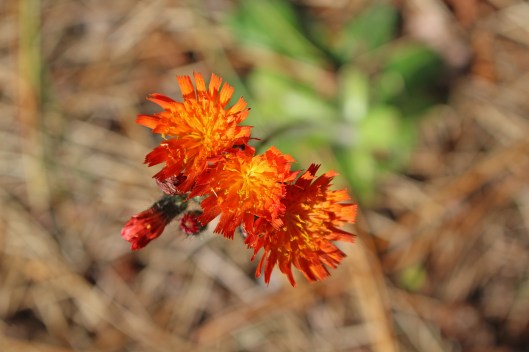
Just two short weeks ago, my local cemetery was dotted with these vibrant little bursts of orange. Now they’ve all disappeared. This pretty little member of the daisy family is officially known as Pilosella aurantiaca but I much prefer its many common names: orange or tawny hawkweed (‘hawk’ because the Romans believed hawks ate the blossoms to enhance their vision and ‘weed’ because it can be very invasive in the right conditions); Grim-the-collier (after the character Grim, who appeared in English devil plays in the 1600s); devil’s paintbrush (another reference to the devil in those old plays or, maybe, because it can be a devil of a plant to get rid of!); and, my favourite, fox-and-cubs (perhaps because the yet-to-open flowers seem to hide beneath those that are open or, more likely, because the furry rosette of leaves sends out runners to produce more furry little plants). Love it or curse it, this little plant is rich in nectar so a favourite of bees.

Like Loading...
← Older posts
Newer posts →

About me

sconzani

sconzani

I'm a writer and photographer; researcher and blogger; birder and nature lover; countryside rambler and city strider; volunteer and biodiversity recorder.

View Full Profile →

Follow earthstar on WordPress.com

Enter your email address to follow this blog and receive notifications of new posts by email.

Recent blog posts

  • Spring messengers February 1, 2026
  • Kestrel 2026 : 86 January 31, 2026
  • Birch polypore January 30, 2026
  • The Marl Med gull January 29, 2026
  • Recording Grey squirrels January 28, 2026

From the archives

COPYRIGHT

Unless otherwise acknowledged, the text and photographs on this blog are my own and are subject to international copyright. Nothing may be downloaded or copied without my permission.

Fellow Earth Stars!

  • Unknown's avatar
  • Unknown's avatar
  • Unknown's avatar
  • Unknown's avatar
  • Unknown's avatar
  • Unknown's avatar
  • Unknown's avatar
  • Unknown's avatar
  • Unknown's avatar
  • Unknown's avatar
  • Unknown's avatar
  • Unknown's avatar
  • Unknown's avatar
  • Unknown's avatar
  • Unknown's avatar
  • Unknown's avatar
  • Unknown's avatar
  • Unknown's avatar
  • Unknown's avatar
  • Unknown's avatar
  • Unknown's avatar
  • Unknown's avatar
  • Unknown's avatar
  • Unknown's avatar
  • Unknown's avatar
  • Unknown's avatar
  • Unknown's avatar
  • Unknown's avatar
  • Unknown's avatar
  • Unknown's avatar
  • Unknown's avatar
  • Unknown's avatar
  • Unknown's avatar
  • Unknown's avatar
  • Unknown's avatar
  • Unknown's avatar
  • Unknown's avatar
  • Unknown's avatar
  • Unknown's avatar
  • Unknown's avatar
  • Unknown's avatar
  • Unknown's avatar
  • Unknown's avatar
  • Unknown's avatar
  • Unknown's avatar
  • Unknown's avatar
  • Unknown's avatar
  • Unknown's avatar
  • Unknown's avatar
  • Unknown's avatar

Blog at WordPress.com.

Privacy & Cookies: This site uses cookies. By continuing to use this website, you agree to their use.
To find out more, including how to control cookies, see here: Cookie Policy
  • Subscribe Subscribed
    • earthstar
    • Join 670 other subscribers
    • Already have a WordPress.com account? Log in now.
    • earthstar
    • Subscribe Subscribed
    • Sign up
    • Log in
    • Report this content
    • View site in Reader
    • Manage subscriptions
    • Collapse this bar
 

Loading Comments...
 

You must be logged in to post a comment.

    %d