• ABOUT
  • BIRDING 2018
  • Birding 2019
  • BLOG POSTS
  • Butterflies 2018
  • Resources

earthstar

~ a celebration of nature

earthstar

Category Archives: nature photography

Gossamery goslings

03 Tuesday May 2016

Posted by sconzani in birds, nature, nature photography

≈ 6 Comments

Tags

birding, birdwatching, British birds, gosling, Greylag goose, Roath Park Lake

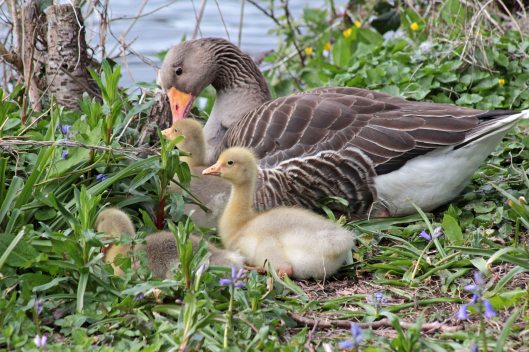
I’ve always thought Ryan Gosling was rather cute but, sorry Ryan, you pale in comparison to these little guys and gals.

160503 goslings (2)

The Greylag geese (Anser anser) at Cardiff’s Roath Park Lake have produced at least three nests of goslings so far this spring, and they are the most delightful little creatures: awkward on their feet, quick to learn, well trained to stay close to mum and dad, playful little jokesters, fast growing, bundles of fluff.

160503 goslings (1)
160503 goslings (4)
160503 goslings (3)

160503 goslings (5)

Greylags usually lay between five and eight eggs, often in a large floating nest hidden amongst reeds, though at Roath Park they seem to nest under the vegetation on the small islands, where they’re protected from predatory Lesser black-backed gulls. Unlike many waterbirds, Mr and Mrs Greylag stay together to feed and guard their offspring, and the family will remain together until the adult birds are ready to mate again.

160503 goslings (6)160503 goslings (7)

160503 goslings (8)

Like Loading...

Fluttering butterflies, no.1

26 Tuesday Apr 2016

Posted by sconzani in insects, nature, nature photography

≈ 14 Comments

Tags

Aglais io, butterflies, butterfly, Cabbage white, Pararge aegeria, Peacock, Pieris rapae, Small white, Speckled wood

‘The butterfly counts not months but moments, and has time enough,’ wrote Bengali Nobel Laureate Rabindranath Tagore – perhaps a lesson for us all.

The first butterflies of spring-summer 2016 have now begun fluttering around me when I’m out walking. Like the bees and the hoverflies, I find they add an extra dimension to my wanderings, a whisper of magic, a hint of fairies …

Small White male Pieris rapae Bute 100416

The Small white (Pieris rapae) was the first butterfly I saw, a couple of weeks ago, during a walk around Cardiff Bay, but it eluded my attempts to photograph it. Both this and the Large white are known as the ‘Cabbage Whites’ for the damage their caterpillars do to the cabbage and other vegetable plants; I have childhood memories of my father regularly checking the undersides of his cabbage leaves and cursing those caterpillars! Though this butterfly has been known to fly as far as 100 miles in its lifetime, it couldn’t fly to New Zealand – in the days before strict agricultural border controls, it was accidentally introduced there, to Australia and to North America.

Peacock Aglais io Cosmeston 200416
Peacock Ty Rhiw

What a glorious creature the Peacock butterfly is and how lovely it looks on this blackthorn blossom, though this Peacock has seen better days; it’s a little faded and has parts of its wings missing. Aglais io gets its common name, obviously, from the unmistakable ‘eyes’ on its wings, so reminiscent of a peacock’s spectacular tail, but its underwings are quite the opposite, dark and easily mistaken for dead leaves in a woodland setting.

Speckled wood Cathays Cem 240416 (4)
Speckled wood Pararge aegeria Penarth railtrail 200416

The Speckled Wood (Pararge aegeria) is the butterfly I’ve seen most often in the past couple of weeks, in the woodlands of Cosmeston and Bute Park and also in tree-filled Cathays Cemetery, where the two shown together above charmed me with their delicate spiralling dance. Is it love or the love of the chase, I wonder?

Like Loading...

In nesting news …

23 Saturday Apr 2016

Posted by sconzani in birds, nature, nature photography, spring

≈ 6 Comments

Tags

birding, birdwatching, British birds, chicks, Coot, Great Crested Grebe, Mute swan, nesting, nesting birds

I checked out the nesting neighbourhood again a couple of days ago so here’s the latest family news.

160423 grebe

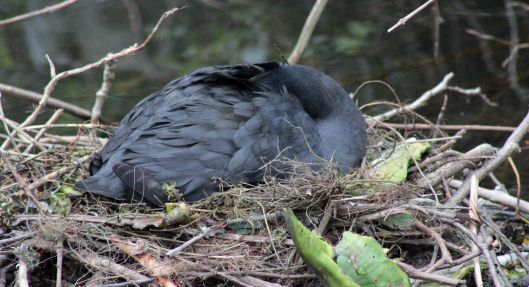
At the original three-nest site: the Mute swans appear to have abandoned their nest, which was empty – maybe they just weren’t ready for parenthood. The Great crested grebe that had chicks but lost them was still sitting on her second nest, and she was sitting tight again so I still don’t know what she’s sitting on.

160423 coot A (1)
160423 coot A (2)

The Coots that had three chicks in my last update now have just one chick remaining. The family has left the nest, though are still in the same general area. Both parents are actively feeding the little guy but, sadly, I’m not overly optimistic about its chances as there were a lot of gulls, flying overhead and perched on nearby lamp posts, just looking for the right scavenging opportunity.

160423 coot B

Nearby, at the other Great crested grebe nest, the grebe has been usurped by a Coot. Her partner was about and feeding her but she didn’t stand up so I have no egg update for her.

160423 coots C (1)
160423 coots C (2)
160423 coots C (3)
160423 coots C (4)

I recently learnt of another Coot nest, also nearby, and seeing that was the highlight of the afternoon. Six chicks, all well developed and seemingly ravenous, were frantically being fed by both parents. Very cleverly, the parents were keeping them sitting under a lip of concrete at the water’s edge, so they were quite well protected. Let’s hope they continue to thrive.

Like Loading...

Slime moulds: nobody knows how they do it!

21 Thursday Apr 2016

Posted by sconzani in nature, nature photography

≈ 7 Comments

Tags

False puffball, Lycogala sp., Metatrichia floriformis, Mucilago crustacea, Reticularia lycoperdon, slime mould

Slime moulds are the most fascinating things! The text for today’s post was written by my Glamorgan Fungi Club friend Graham Watkeys, who has very kindly allowed me to quote his words here.

160419 Metatrichia floriformis Slime mould

Metatrichia floriformis

‘Usually existing as separate single cells, slime moulds congregate at this time of year (nobody knows how they do this) creating a gooey super-predator consuming everything in their path.

‘The slime mould actively travels, hunting for its food of bacteria, fungi and other organic matter (nobody knows how it does this), a mass of single cells without a nervous system or any kind of brain acting like a single entity (nobody knows how it does this).

‘Out of the chaos of the multitude, order is created, simulating purpose and direction where none exists beyond the relentless need for food.

‘When the food runs out, this conglomeration decides it’s time to reproduce (nobody knows how it does this). The millions of identical cells spontaneously reorganise themselves into a wholly new configuration, creating mushroom-like structures, some become stems, some spores (nobody knows how it does this), the simple becoming complex, the uniform becoming specialised.

‘The spores are released into the wind and the slime mould becomes a disparate unicellular organism again. The world has some extraordinary inhabitants.’

160419 Mucilago crustacea plasmodial slime mould

Mucilago crustacea, commonly known as Dog’s vomit

160419 Reticularia lycoperdon

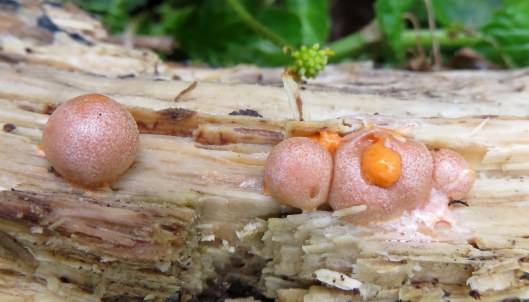
Reticularia lycoperdon (False puffball): new specimen on the left, mature on the right

160419 Lycogala sp. Slime mould

Lycogala sp.

Like Loading...

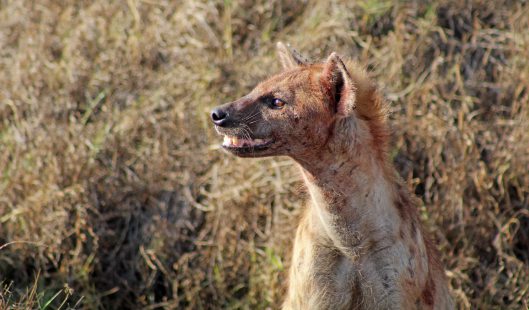
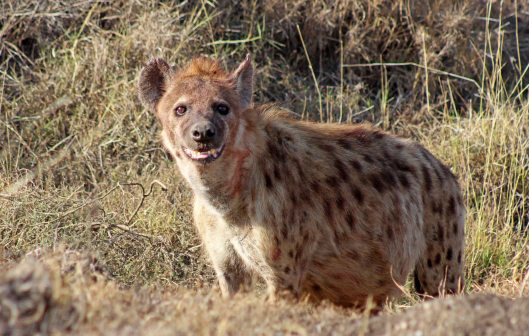
The laughing hyena

20 Wednesday Apr 2016

Posted by sconzani in animals, nature, nature photography

≈ 2 Comments

Tags

Hyena, Serengeti National Park, Serengeti Plains, Spotted hyena, Tanzania

‘A sense of humor is good for you. Have you ever heard of a laughing hyena with heart burn?’ ~ Bob Hope

160420 hyena (4)

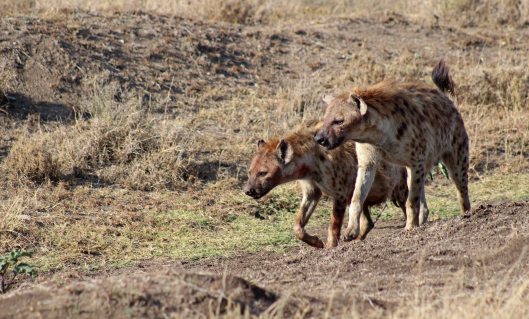
‘HYENA, n. A beast held in reverence by some oriental nations from its habit of frequenting at night the burial-places of the dead. But the medical student does that.’ ~ Ambrose Bierce

160420 hyena (3)

‘There’s always the hyena of morality at the garden gate, and the real wolf at the end of the street.’ ~ D. H. Lawrence

160420 hyena (1)

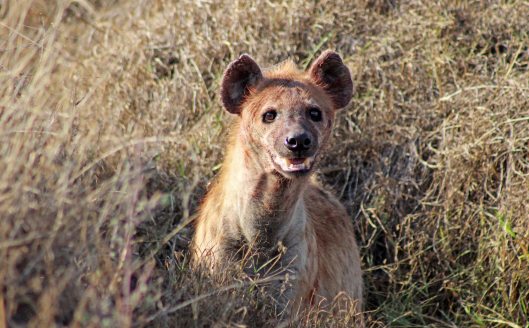
‘Do let’s pretend that I’m a hungry hyena, and you’re a bone!’ ~ Lewis Carroll

160420 hyena (2a)

‘We slander the hyena; man is the fiercest and cruellest animal.’ ~ Henry David Thoreau

160420 hyena (5)

Like Loading...

When we went down to the woods today …

15 Friday Apr 2016

Posted by sconzani in fungi, nature, nature photography

≈ 9 Comments

Tags

Armillaria mellea, Auricularia mesenterica, Coed Ty Rhiw, Coprinellus micaceus, Daedaleopsis confragosa, fungi foray, Hypoxylon multiforme, Lycogala sp., Metatrichia floriformis, Piptoporus betulinus, Polyporus brumalis, Reticularia lycoperdon, Scutellinia scutellata, Terana caerulea, Trametes versicolour, Xylaria hypoxylon

Well, there weren’t any teddy bears in the Coed Ty Rhiw woods today but we did get lots of lovely surprises. Five friends and fellow members of the Glamorgan Fungi Club and I went on a foray, mostly looking for spring fungi but, as we had a ton of other wildlife expertise in our group, we were also drawn to birds and bugs, bees and butterflies.

Here’s a selection of our fungi finds: Piptoporus betulinus Birch polypore; Auricularia mesenterica Tripe Fungus; Daedaleopsis confragosa Blushing bracket; an unidentified crust fungus; Hypoxylon multiforme Birch woodwart; Terana caerulea Cobalt crust; Reticularia lycoperdon False puffball; Metatrichia floriformis – a slime mould; Lycogala sp. – another slime mould; Trametes versicolour Turkey tail and Xylaria hypoxylon Candlesnuff; Polyporus brumalis Winter Polypore; Trametes versicolour Turkey tail (lovely patterns on this one); Scutellinia scutellata Eyelash fungus; Armillaria mellea rhizomorphs Honey fungus bootlaces; and Coprinellus micaceus Glistening inkcap.

160415 Coed Ty Rhiw foray (1)
160415 Coed Ty Rhiw foray (2)
160415 Coed Ty Rhiw foray (3)
160415 Coed Ty Rhiw foray (4)
160415 Coed Ty Rhiw foray (5)
160415 Coed Ty Rhiw foray (9)
160415 Coed Ty Rhiw foray (10)
160415 Coed Ty Rhiw foray (13)
160415 Coed Ty Rhiw foray (14)
160415 Coed Ty Rhiw foray (15)
160415 Coed Ty Rhiw foray (17)
160415 Coed Ty Rhiw foray (18)
160415 Coed Ty Rhiw foray (19)
160415 Coed Ty Rhiw foray (20)
160415 Coed Ty Rhiw foray (21)
Like Loading...

Bottoms up!

11 Monday Apr 2016

Posted by sconzani in animals, nature, nature photography

≈ 13 Comments

Tags

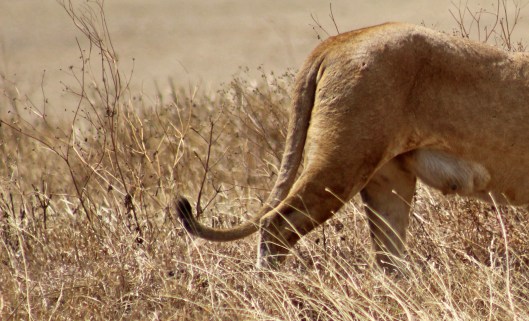
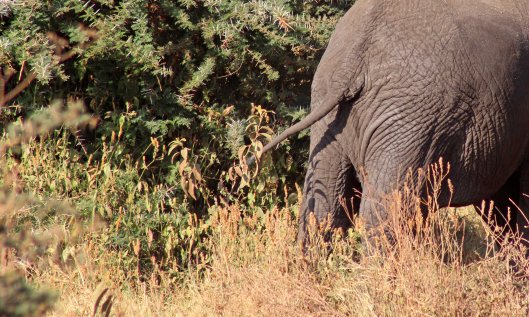
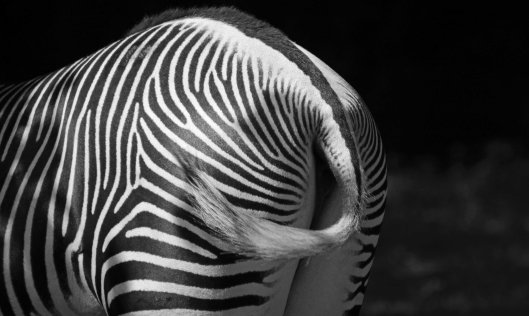
animal bottoms, elephant, giraffe, hippopotamus, lion, quotes about bottoms, sheep, Vervet monkey, zebra

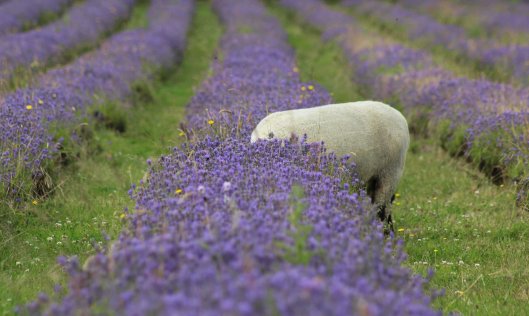
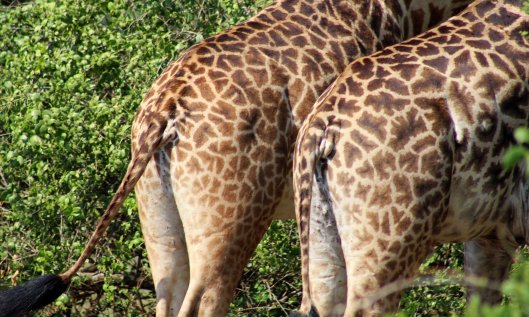
One thing about animal photography: your models don’t always co-operate, and you often end up with photos of the less flattering parts of their anatomy. I thought a selection of my photos of these might at least bring a smile (and, actually, the zebra photo is one of my all-time favourites).

160411 bottoms (1)

‘Froth at the top, dregs at the bottom, but the middle excellent.’ ~ Voltaire

160411 bottoms (2)

‘I know up on the top you are seeing great sights, but down at the bottom we, too, should have rights.’ ~ Dr Seuss, Yertle the Turtle and Other Stories

160411 bottoms (3)

‘Bottoms up or bottoms down, / Either way no one will frown.’ ~ Mike Anderson

160411 bottoms (4)

‘My mind is trouble, like a fountain stirred; / And I myself see not the bottom of it.’ ~ William Shakespeare

160411 bottoms (5)

‘My bottom is so big it’s got its own gravitational field.’ ~ Carol Vorderman

160411 bottoms (6)

‘One mustn’t look at the abyss, because there is at the bottom an inexpressible charm which attracts us.’ ~ Gustave Flaubert

160411 bottoms (7)

‘When you’re average, you’re just as close to the bottom as you are the top.’ ~ Alfred North Whitehead

160411 bottoms (8)

‘The artist needs to understand the truth that lies at the bottom of an enigma.’ ~ John Maeda

Like Loading...

Four more hoverflies

07 Thursday Apr 2016

Posted by sconzani in insects, nature, nature photography

≈ 8 Comments

Tags

Chequered hoverfly, Episyrphus balteatus, hoverfly, Long hoverfly, Marmalade hoverfly, Melanostoma scalare, Meliscaeva auricollis, Sphaerophoria scripta

Of the 250 different hoverfly species in Britain I now have photos of seven – just a wee way to go yet then. At least it’s still early in the season – hoverflies are normally around from March to November, and numbers tend to peak in the hottest months of summer. Here are my four new finds:

160407 Episyrphus balteatus cathays cem

Episyrphus balteatus
Rather deliciously called the Marmalade hoverfly, presumably not because it tastes good but because of the orange and black bands of colour on its upper abdomen. These give it a wasp-like appearance, which helps to deter predators but can scare people into thinking they’re a swarm of wasps when they group together. It’s the most common hoverfly in Britain, and large numbers also migrate here from Europe.

160407 Meliscaeva auricollis cathays cem

Meliscaeva auricollis
Like that previous one, I found this little guy enjoying the wood anemones at Cathays Cemetery. The cemetery has large numbers of mature trees, which is the perfect environment for Meliscaeva auricollis. This is one of the earliest hoverflies to wake from hibernation, sometimes appearing as early as January if the winter’s been mild.

160407 Melanostoma scalare  merthyr mawr

Melanostoma scalare
Though its name literally means ‘Laddered Black-mouth’, this little creature’s common name is the Chequered hoverfly and you can perhaps just make out the chequerboard pattern on its upper abdomen. I found this one  at Merthyr Mawr National Nature Reserve last weekend. It prefers open grassland, damp rather than dry, and is usually to be found flying and feeding close to ground level.

160407 Sphaerophoria scripta methyr mawr

Sphaerophoria scripta
This was another find from Merthyr Mawr. Its common name is the Long hoverfly, presumably because, as you can see in my photo, the body of the male extends past the end of the wings which is unusual in hoverflies. This critter is a prolific breeder, with the ability to complete a full life cycle (eggs to adult) in just 16 days, which means up to 9 generations can occur in one year. Amazing!

Like Loading...

The rock hyrax

06 Wednesday Apr 2016

Posted by sconzani in animals, nature, nature photography

≈ 6 Comments

Tags

Procavia capensis, rock hyrax, Serengeti National Park, Serengeti Plains, Tanzania

On safari in the Serengeti even the places where we stopped for lunch had amazing wildlife, some of them lazing around in the sun as if just waiting for the animal paparazzi to show up. These critters are Rock hyraxes (Procavia capensis), also known as Cape hyraxes and rock badgers. Incredibly, though they look a bit like huge hamsters, their closest living relatives – cousins many times removed – are elephants and sea cows. Just like their cousins, they have prominent (though obviously much smaller) tusk-like upper incisors, and the males’ testes are permanently enclosed inside their abdomens.

160406 hyrax (4)

Their bodies do not regulate heat very efficiently so, though they look rather fat and lazy, they are more active in the early morning and in the evening but need simply to bask during the hottest hours of the day. Hyraxes live in large social groups, using sentries to warn of danger when foraging for their favourite food plants, and communicating through a series of at least 21 different vocalisations which can, apparently, inform other hyraxes of their age, size, body weight, social status and hormonal condition. They can be found in most of the sub-Saharan countries in Africa, and are just plain cute!

160406 hyrax (1)
160406 hyrax (2)
160406 hyrax (3)
Like Loading...

The larva before the worm

04 Monday Apr 2016

Posted by sconzani in insects, nature, nature photography

≈ 7 Comments

Tags

glow worm, glow worm larva, Lampyris noctiluca, Merthyr Mawr National Nature Reserve

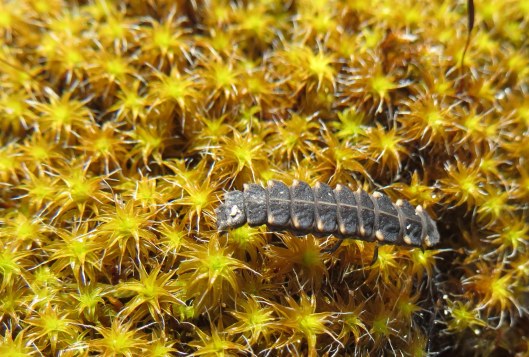
I saw my first Glow worm (Lampyris noctiluca) larva last weekend at the Merthyr Mawr National Nature Reserve, though I admit to thinking it was a caterpillar of some kind at first glance and needed an expert – luckily, I was with one! – to explain my mistake. Even more luckily, my expert Mike has two sons who are wildlife-obsessed and extremely talented young wildlife filmmakers. So, rather than attempt to tell you about this fascinating little insect myself, I am delighted that Rudi and Finn have very kindly agreed to let me link to their video. This is a must watch!

160404 Glow worm larva


Like Loading...
← Older posts
Newer posts →

About me

sconzani

sconzani

I'm a writer and photographer; researcher and blogger; birder and nature lover; countryside rambler and city strider; volunteer and biodiversity recorder.

View Full Profile →

Follow earthstar on WordPress.com

Enter your email address to follow this blog and receive notifications of new posts by email.

Recent blog posts

  • Kestrel 2026 : 86 January 31, 2026
  • Birch polypore January 30, 2026
  • The Marl Med gull January 29, 2026
  • Recording Grey squirrels January 28, 2026
  • Jimmy Wren January 27, 2026

From the archives

COPYRIGHT

Unless otherwise acknowledged, the text and photographs on this blog are my own and are subject to international copyright. Nothing may be downloaded or copied without my permission.

Fellow Earth Stars!

  • Unknown's avatar
  • Unknown's avatar
  • Unknown's avatar
  • Unknown's avatar
  • Unknown's avatar
  • Unknown's avatar
  • Unknown's avatar
  • Unknown's avatar
  • Unknown's avatar
  • Unknown's avatar
  • Unknown's avatar
  • Unknown's avatar
  • Unknown's avatar
  • Unknown's avatar
  • Unknown's avatar
  • Unknown's avatar
  • Unknown's avatar
  • Unknown's avatar
  • Unknown's avatar
  • Unknown's avatar
  • Unknown's avatar
  • Unknown's avatar
  • Unknown's avatar
  • Unknown's avatar
  • Unknown's avatar
  • Unknown's avatar
  • Unknown's avatar
  • Unknown's avatar
  • Unknown's avatar
  • Unknown's avatar
  • Unknown's avatar
  • Unknown's avatar
  • Unknown's avatar
  • Unknown's avatar
  • Unknown's avatar
  • Unknown's avatar
  • Unknown's avatar
  • Unknown's avatar
  • Unknown's avatar
  • Unknown's avatar
  • Unknown's avatar
  • Unknown's avatar
  • Unknown's avatar
  • Unknown's avatar
  • Unknown's avatar
  • Unknown's avatar
  • Unknown's avatar
  • Unknown's avatar
  • Unknown's avatar
  • Unknown's avatar

Blog at WordPress.com.

Privacy & Cookies: This site uses cookies. By continuing to use this website, you agree to their use.
To find out more, including how to control cookies, see here: Cookie Policy
  • Subscribe Subscribed
    • earthstar
    • Join 670 other subscribers
    • Already have a WordPress.com account? Log in now.
    • earthstar
    • Subscribe Subscribed
    • Sign up
    • Log in
    • Report this content
    • View site in Reader
    • Manage subscriptions
    • Collapse this bar
 

Loading Comments...
 

You must be logged in to post a comment.

    %d