• ABOUT
  • BIRDING 2018
  • Birding 2019
  • BLOG POSTS
  • Butterflies 2018
  • Resources

earthstar

~ a celebration of nature

earthstar

Category Archives: nature photography

A collective noun for robins

01 Friday Apr 2016

Posted by sconzani in birds, nature, nature photography

≈ 13 Comments

Tags

birding, birdwatching, British birds, collective noun for robins, robin

There are so many robins around at the moment, gracing our gardens, parks and woodlands with their songs and territorial squabbles and bright bursts of cheery redness, that I couldn’t help but wonder what collective noun is used for the robin. So, I googled, and found two different lists, though both had many of the same words. The British Bird Lovers website says their list was chosen by members of their Facebook page, though I’m not sure when that occurred, and the Bird Guides website reports on a poll conducted by BTO and the Sunday Express in 2011, where members of the public gave their suggestions.

160401 robins (8)

This is the combined list, accompanied, of course, by lots of photos of cute robins because you can never have too many robins! Which name is your favourite?

a round of robins                a breast of robins            a blush of robins
a bobbin of robins              a carol of robins              a gift of robins
a reliant of robins                a riot of robins                a rouge of robins
a ruby of robins                  a rabble of robins            a red of robbins
a squabble of robins           a rash of robins               a hood of robins

160401 robins (1)
160401 robins (2)
160401 robins (3)
160401 robins (4)
160401 robins (5)
160401 robins (6)
160401 robins (7)
160401 robins (9)
Like Loading...

Hoverflies: handsome and harmless

31 Thursday Mar 2016

Posted by sconzani in insects, nature, nature photography

≈ 3 Comments

Tags

Eristalis pertinax, Helophilus pendulus, hoverfly, Platycheirus albimanus, Tapered Drone Fly, The Footballer, The Sunfly, White-footed Hoverfly, Wood anemone

How is it that I am only just discovering hoverflies? Of course, I’ve seen them before, hovering silently over the garden bed and feeding on flower nectar, like the humming birds of the insect world, but I wasn’t aware of all their good qualities. For one thing, they’re clever – they mimic wasps and bees to deter predators, but they don’t sting. For another, because they feed on nectar and pollen, they’re excellent pollinators. And, for a third, many types of hoverfly larvae eat aphids and other plant-suckers so they’re every gardener’s friend and can potentially be used for biological control of those hugely damaging pests.

What I also discovered last weekend was that hoverflies love wood anemones and I found three species feasting on the beautiful drifts of plants currently flowering in my local cemetery. These are they – and I’m sure this is just the start of a beautiful new fascination!

Eristalis pertinax

Meet Eristalis pertinax, otherwise know as the Tapered Drone Fly. It’s a common sight throughout Britain, from March right through to November, and loves hedgerows and woodland trails.

Helophilus pendulus

As it’s a lover of fine sunny days, Helophilus pendulus is commonly known as The Sunfly, though some call it The Footballer because its stripy thorax resembles a team strip. Personally, I prefer its scientific name, which means ‘dangling marsh-lover’, a reference to its liking for watery places.

Platycheirus albimanus

And last and smallest for today is Platycheirus albimanus, the White-footed Hoverfly (though only the swelling on the front foot of the male is, in fact, pale). It’s another to be found throughout Britain, in gardens and hedgerows, from March to November.

Like Loading...

‘The king of the jungle’

30 Wednesday Mar 2016

Posted by sconzani in animals, nature, nature photography

≈ 2 Comments

Tags

king of the jungle, lion, Ngorongoro Crater, Serengeti National Park, Serengeti Plains, Tanzania

Did you know …

160330 lions (1)

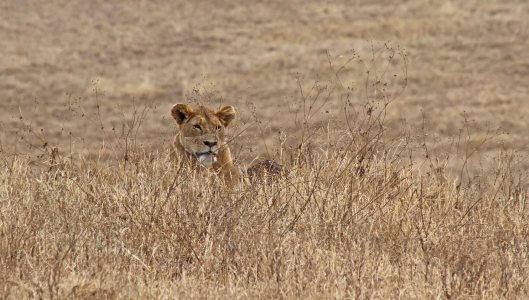
The ‘king of the jungle’ is just an expression as lions actually live in grasslands and plains.

160330 lions (2)

The roar of a lion can be heard up to 8kms (5 miles) away.

160330 lions (3)

A lion can run at 50 mph but only for short distances and can leap as far as 36 feet.

160330 lions (4)

When it walks, a lion’s heels don’t touch the ground.

160330 lions (5)

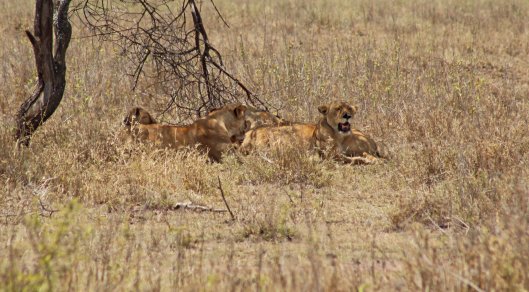
Lions are the only big cats to live in family groups, known as prides.

160330 lions (6)

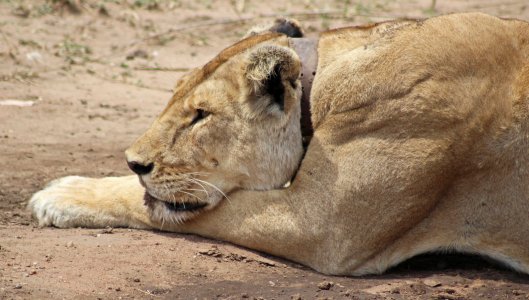
The reason lions spend up to 20 hours a day resting and sleeping is because their bodies have very few sweat glands so it is easier for them to be active in the cool of the night.

160330 lions (7)

Lions’ eyes are six times more sensitive to light than human eyes, which means they have excellent night vision.

160330 lions (8)

The darker the mane, the older the lion, and lionesses seem to prefer males with darker manes.

My photographs of lions were taken on the Serengeti Plains and in the Ngorongoro Crater in Tanzania in 2014, at the end of a week-long trip with The Giving Lens, an organisation that combines photography workshops with mentoring, media and financial support for local NGOs.

Like Loading...

Frogs in flagrante

26 Saturday Mar 2016

Posted by sconzani in amphibian, nature, nature photography

≈ 2 Comments

Tags

Common frog, frog spawn, frogs mating, Rana temporaria

My social media feeds have been full of the frog spawn people have been finding in ponds all over these isles but it wasn’t till last Thursday, while up the Welsh valleys on a wildlife recorders course, that I was in frog-full countryside. And as we meandered along a track in the Cwn Saerbren SSSI at Treherbert, searching for biology to record, what should we find but two Common frogs (Rana temporaria) enjoying a tender moment together. I hadn’t seen a Common frog before so, though it seemed a tad voyeuristic, I took rather a lot of photos.

160326 common frog (3)

At this time of year, the males celebrate the joys of spring with a croaking fiesta to attract the females. The male with the loudest croak wins the contest, and gets to climb on the female’s back, grasping her under her forelegs with the special nuptial pads on his front legs. The pair stay attached like this until the female lays her 1000 – 2000 eggs, over which the male sprays his sperm to fertilise them. We left our couple to continue the process but did collect a small sample of frog spawn elsewhere, for scientific examination. The rest, as they say, is tadpoles!

160326 common frog (2)
160326 common frog (1)
Like Loading...

Juffits & fuffits & long-tailed chitterings

24 Thursday Mar 2016

Posted by sconzani in birds, nature, nature photography

≈ 8 Comments

Tags

birding, birds, birdwatching, British birds, long-tailed tit

160324 long tailed tit (1)

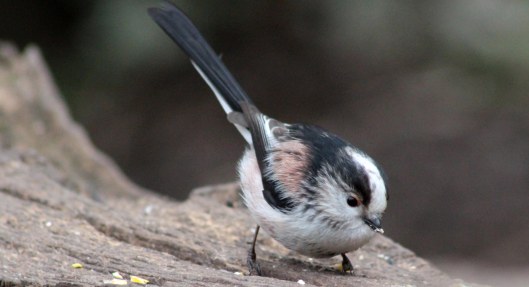
It’s taken me many months of following these little birds to get any half decent photographs. The Long-tailed tit (Aegithalos caudatus) rarely keeps still, spending most of its day with its extended family of 10 to 20 birds, flitting and fluttering through trees, shrubs and hedgerows, chattering all the way. In fact, that’s often how you first realise they’re about, by their very characteristic call, which the BTO website describes as ‘a sharp tsurp, repeated several times’.

160324 long tailed tit (2)

most of my photos are like these, of tits behind twigs in trees

They are probably the cutest of Britain’s small birds, like little bundles of fluff with tails too long for their bodies, and, judging by the long list of charming common names they have attracted, I’m not the only one who thinks they’re cute. These are just a selection from the list in Buczacki’s Flora Britannica: in Yorkshire, they’re known as ‘Bottle jugs’; in the Midlands, it’s the ‘bottle tom’, the ‘bottle tit’ and the ‘bum barrel’; in Warwickshire, the ‘buttermilk can’; in East Lothian, the ‘feather poke’ and the ‘fuffit’; in Warwickshire, the ‘hedge mumruffin’; in Nottinghamshire the ‘jack-in-a-bottle’ and the ‘juffit’; and in Shropshire and Worcestershire the ‘miller’s thumb’ and the ‘long-tailed chittering’.

160324 long tailed tit (3)

160324 long tailed tit (4)

Like Loading...

Hello, Paddington Bear!

23 Wednesday Mar 2016

Posted by sconzani in animals, nature, nature photography

≈ 12 Comments

Tags

Chaparri Nature Reserve, Paddington Bear, Peru, Spectacled bear, Tremarctos ornatus

I must’ve had a deprived childhood – I never read the Paddington Bear books and I didn’t even know Paddington came from ‘deepest, darkest Peru’ until a few years ago. However, when I finally met Paddington in real life, at the Chaparri Nature Reserve in northern Peru, he wasn’t wearing a red hat or a blue duffel coat or spectacles. He was, though, the cutest creature, perhaps even more cute than Paddington.

160323 spectacled beer (1)

These particular Spectacled Bears (Tremarctos ornatus) are wildlife rescues. Twenty-five-year-old Papa Bear came from a circus where he had been so badly mistreated that he cannot be rehabilitated into the wilds of the reserve. He lives with Mama Bear and Baby Bear, who will be released into the reserve to fend for himself as soon as he’s able. Wild bears live in the hills behind the area where the tourist trails and accommodation are located, so visitors rarely see them, except in September, when one particular tree flowers and fruits, drawing the bears down from the hills to enjoy these treats.

160323 spectacled beer (4)

Spectacled Bears are so-named because many have lighter-coloured circular markings around their eyes, and every face marking is different so individuals are easily identifiable. The bears live to about 30 years or age and are mostly vegetarian – they really liked the sweet potatoes our guide was feeding them.

160323 spectacled beer (2)160323 spectacled beer (3)

Like Loading...

It’s World Sparrow Day!

20 Sunday Mar 2016

Posted by sconzani in birds, nature, nature photography

≈ 3 Comments

Tags

birding, birds, birdwatching, British birds, Cambodia sparrow, house sparrow, New Zealand sparrow, Red list, rufous-collared sparrow, sparrow, Tanzanian sparrow

I miss sparrows.

160320 sparrow (1)

In my homeland, New Zealand, they are probably the most common and well known bird, though the New Zealand sparrow is not a native – it was introduced there several times between 1866 and 1871, and has clearly made itself at home. Sparrows were also familiar birds during the time I lived in Peru and in Cambodia but, here in Wales, I seldom see them, because, in recent years, the humble house sparrow (Passer domesticus domesticus) has undergone a huge decline in Britain. And I do mean huge – the British Trust for Ornithology website reports that the population has declined by 71% since 1977, possibly due to loss of habitat but also to a decline in the insects adult birds feed their young. The house sparrow is now on Britain’s red list, as a bird of the highest conservation concern.

160320 sparrow (2)

Around the world there are 26 species of house sparrow, native to Europe, Asia and north-west Africa. There are also American sparrows (from a separate family, the Emberizidae) and birds with similar names, like the Java sparrow (also a different family, the Estrildidae). Still, the world would be much the poorer if it lost the lovely British house sparrow, so it is gratifying to know that various wildlife organisations are working to improve its situation and increase its population. Today, let’s celebrate the humble sparrow!

160320 sparrow nz (1)

female (left) and male (right) New Zealand sparrows

160320 sparrow cambodia (1)

a sparrow in Cambodia

160320 sparrow tanzania & rufous-collared peru

left, a sparrow in Tanzania (far too busy gathering nest materials to pose for a photo), and, right, a rufous-collared sparrow in Peru

Like Loading...

Cat climbs a tree

19 Saturday Mar 2016

Posted by sconzani in animals, nature, nature photography

≈ Leave a comment

Tags

Earth Hour, leopard, leopard climbs a tree, Serengeti National Park, Serengeti Plains, Tanzania

Today, at varying times around the globe, we celebrate Earth Hour, a movement in which 7000 cities and towns around the world unite in turning off their power, as a way of showing their support for environmental issues, as a way of uniting in their desire to protect planet earth.

160319 leopard (1)

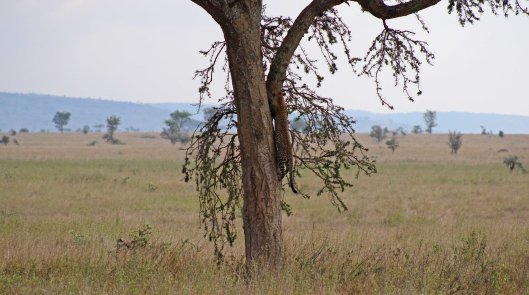
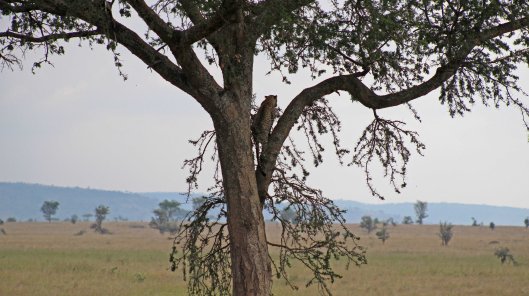
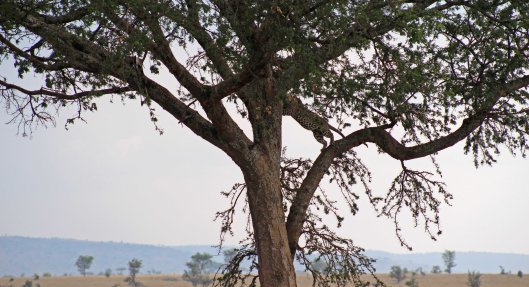
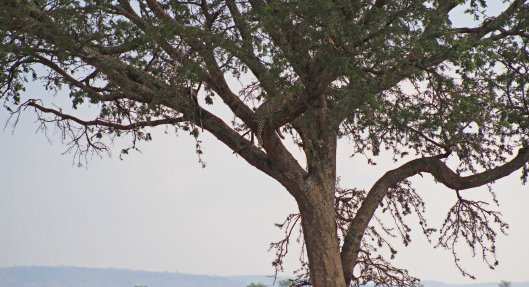
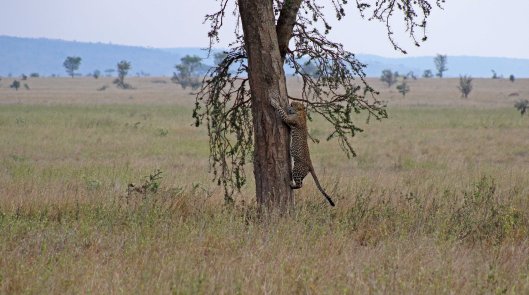
In honour of this special day I thought I would share one of the most special times I have experienced on this amazing planet we call home. If we don’t unite to protect our earth, sights like this will disappear forever. It is a simple act – a cat climbs a tree – but this is not just any cat, this is a pregnant female leopard, climbing the tree where she has previously stashed a kill, in the Serengeti, in Tanzania.

I hope we can all work together to protect our planet so that everyone has the opportunity to see this. I hope one day you get to see this. I hope one day your grandchildren get to see this.

160319 leopard (2)160319 leopard (3)160319 leopard (4)160319 leopard (5)160319 leopard (6)160319 leopard (7)160319 leopard (8)160319 leopard (9)160319 leopard (10)160319 leopard (11)

Like Loading...

Giraffe necking

16 Wednesday Mar 2016

Posted by sconzani in animals, nature, nature photography

≈ 4 Comments

Tags

giraffe, giraffe necking, Serengeti National Park, Serengeti Plains, Tanzania

160315 giraffes 1 (1)

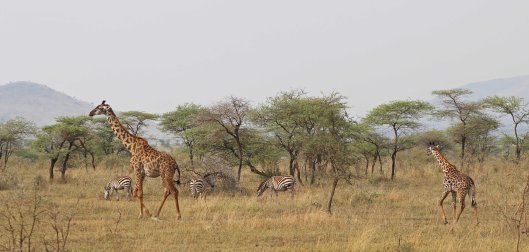
Though I had seen giraffes in zoos, it was a totally different experience to see wild creatures like these in their natural environment, on the Serengeti Plains, in Tanzania, in 2014. In a zoo, you are safe: the animal is confined and, if not tame, at least partially used to human interaction. In the Serengeti, though I never felt unsafe, I was very much aware that I was out of place, an intruder in a savage world, where death and violence are commonplace.

160315 giraffes 1 (2)160315 giraffes 1 (3)

I felt this most when we were watching these three young male giraffes. Initially, they looked like they were just hanging out like good buddies but, as we watched, they started necking. This is a common, often violent ritual to establish dominance in the herd or to impress a female. They swing their necks and try to hit each other with those hard bumps (ossicles) on the tops of their heads. And it must hurt – those whacks and thumps sounded brutal and can apparently be heard up to a kilometre away. These three didn’t injure each other but older males have been known to knock each other unconscious with the power of their blows. It was certainly sobering to watch.

160315 giraffes 1 (4)
160315 giraffes 1 (5)
160315 giraffes 1 (6)
160315 giraffes 1 (7)
Like Loading...

Prime lakefront real estate at Cosmeston

14 Monday Mar 2016

Posted by sconzani in birds, nature, nature photography

≈ 2 Comments

Tags

birding, birds, birdwatching, British birds, Coot, Great Crested Grebe, nesting

During my wonderful exploration of Cosmeston Lakes Country Park on Friday, I went into the bird hide on the west lake to check out the view.

160314 nesting site (1)

There before me in the reed beds – prime lakefront real estate to a wetland bird – was a coot, pottering about on the beginnings of a nest, tweaking the position of a reed or two.

160314 nesting site (2)160314 nesting site (3)

It headed off along the lake unaware that a pair of Great crested grebes had their eye on the same piece of real estate. Seeing an opportunity to gazump the coot, they quickly paddled over.

160314 nesting site (4)

Mrs Grebe tried the ‘nest’ for size.

160314 nesting site (5)

A conversation ensued. Did it have potential? Was it cosy enough? Did it have a good view? What about the neighbours?

160314 nesting site (6)

The property seemed to meet with the grebes’ approval as one of them sailed off along the lake, leaving the other to stand guard.

160314 nesting site (7)

I didn’t stick around to find out what happened when the coot returned!

Like Loading...
← Older posts
Newer posts →

About me

sconzani

sconzani

I'm a writer and photographer; researcher and blogger; birder and nature lover; countryside rambler and city strider; volunteer and biodiversity recorder.

View Full Profile →

Follow earthstar on WordPress.com

Enter your email address to follow this blog and receive notifications of new posts by email.

Recent blog posts

  • Kestrel 2026 : 86 January 31, 2026
  • Birch polypore January 30, 2026
  • The Marl Med gull January 29, 2026
  • Recording Grey squirrels January 28, 2026
  • Jimmy Wren January 27, 2026

From the archives

COPYRIGHT

Unless otherwise acknowledged, the text and photographs on this blog are my own and are subject to international copyright. Nothing may be downloaded or copied without my permission.

Fellow Earth Stars!

  • Unknown's avatar
  • Unknown's avatar
  • Unknown's avatar
  • Unknown's avatar
  • Unknown's avatar
  • Unknown's avatar
  • Unknown's avatar
  • Unknown's avatar
  • Unknown's avatar
  • Unknown's avatar
  • Unknown's avatar
  • Unknown's avatar
  • Unknown's avatar
  • Unknown's avatar
  • Unknown's avatar
  • Unknown's avatar
  • Unknown's avatar
  • Unknown's avatar
  • Unknown's avatar
  • Unknown's avatar
  • Unknown's avatar
  • Unknown's avatar
  • Unknown's avatar
  • Unknown's avatar
  • Unknown's avatar
  • Unknown's avatar
  • Unknown's avatar
  • Unknown's avatar
  • Unknown's avatar
  • Unknown's avatar
  • Unknown's avatar
  • Unknown's avatar
  • Unknown's avatar
  • Unknown's avatar
  • Unknown's avatar
  • Unknown's avatar
  • Unknown's avatar
  • Unknown's avatar
  • Unknown's avatar
  • Unknown's avatar
  • Unknown's avatar
  • Unknown's avatar
  • Unknown's avatar
  • Unknown's avatar
  • Unknown's avatar
  • Unknown's avatar
  • Unknown's avatar
  • Unknown's avatar
  • Unknown's avatar
  • Unknown's avatar

Blog at WordPress.com.

Privacy & Cookies: This site uses cookies. By continuing to use this website, you agree to their use.
To find out more, including how to control cookies, see here: Cookie Policy
  • Subscribe Subscribed
    • earthstar
    • Join 670 other subscribers
    • Already have a WordPress.com account? Log in now.
    • earthstar
    • Subscribe Subscribed
    • Sign up
    • Log in
    • Report this content
    • View site in Reader
    • Manage subscriptions
    • Collapse this bar
 

Loading Comments...
 

You must be logged in to post a comment.

    %d