• ABOUT
  • BIRDING 2018
  • Birding 2019
  • BLOG POSTS
  • Butterflies 2018
  • Resources

earthstar

~ a celebration of nature

earthstar

Category Archives: nature photography

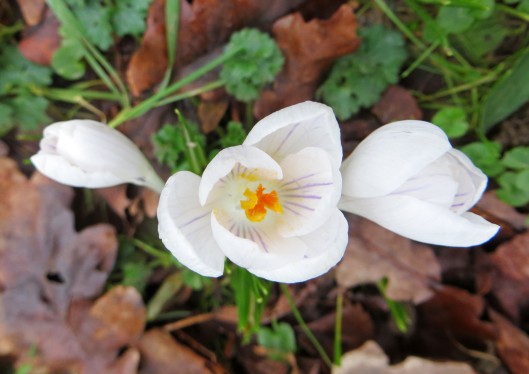
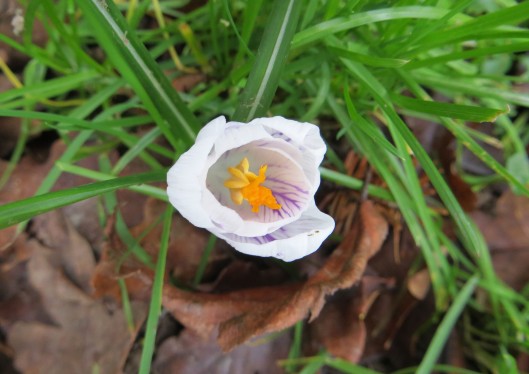
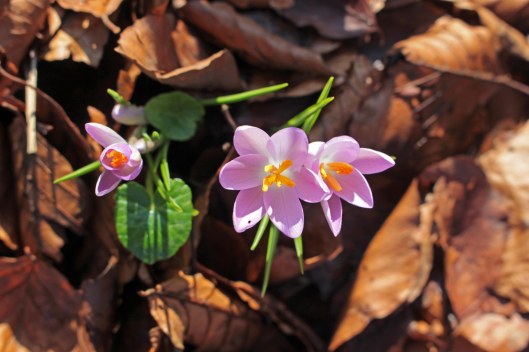
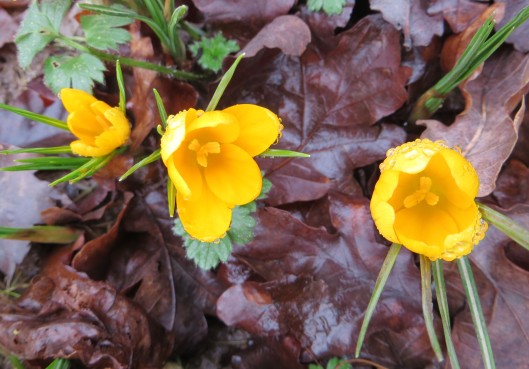
‘The Crocus’s Soliloquy’

26 Tuesday Jan 2016

Posted by sconzani in flowers, nature, nature photography, spring, wildflowers

≈ 4 Comments

Tags

crocus, spring flowers, wildflowers

160126 crocus (1)

‘Soon as the frost will get out of my bed,
From this cold dungeon to free me,
I will peer up with my little bright head;
And all will be joyful to see me.

Then from my heart will young petals diverge,
As rays of the sun from their focus;
I from the darkness of earth shall emerge
A happy and beautiful Crocus!’

From the poem ‘The Crocus’s Soliloquy’ by Miss H. F. Gould in The Poetry of Flowers and Flower of Poetry, ed. Frances Sargent Locke Osgood, J. B. Lippincott & Co, Philadelphia, 1863.

160126 crocus (2)160126 crocus (3)160126 crocus (4)160126 crocus (5)160126 crocus (6)160126 crocus (7)160126 crocus (8)

Like Loading...

Hawthorn Shield Bug

25 Monday Jan 2016

Posted by sconzani in insects, nature, nature photography

≈ 4 Comments

Tags

Hawthorn Shield Bug, minibeasts, shield bugs

Some might think the Hawthorn Shield Bug has a rather unfortunate scientific name, Acanthosoma haemorrhoidale, but it’s really quite descriptive: acantho is from the ancient Greek for thorn, soma means body, and haemorrhoida derives from the Greek for discharging blood or bleeding, so this bug has a thorn-like body with red patterning that looks like bleeding. The common name is also appropriate: it has a body shaped like the shields of knights of olden times, and the food of choice for its larvae is the hawthorn berry (though they will also eat the berries of rowan, cotoneaster and whitebeam).

160125 Hawthorn Shieldbug (3)

Growing up to 17mm (0.67in) long, the Hawthorn Shield Bug is the largest and most common of the five types of shield bug found in Britain, and is also found throughout Europe, in woodlands, parks and gardens. Its colouring means it is usually very well camouflaged and I only found these three bugs by chance today – my eye was attracted to their leaf and they were inside when I uncurled it. The adult bugs usually hibernate during the winter months but often emerge to snack on the leaves during milder weather. I curled them back up in their leaf after taking these photographs so they could continue their snooze.

160125 Hawthorn Shieldbug (2)160125 Hawthorn Shieldbug (1)


Like Loading...

Not one but three

24 Sunday Jan 2016

Posted by sconzani in birds, nature, nature photography

≈ 2 Comments

Tags

bird identification, birding, birds, birdwatching, British birds, Pochard

I saw my first male Pochard on Roath Park Lake three weeks ago and was charmed by his handsome colours and markings. During my frequent subsequent walks around the lake, I keep seeing him and always stop to say hello and, as he comes very close to the lake edge, to take more photos. As I only ever see him on his own each time, albeit in different places around the lake, it never occurred to me that there was more than one bird … until today, when I looked more closely at my photos. Can you see the differences?

160124 pochard males (1)

Each of these birds – it seems there have been at least three! – has different markings on its bill, and this patterning of dark and light pigmentation on the bill is the main way to distinguish individual ducks of many species when conducting field surveys and research. So, if ducks used ID cards, they wouldn’t need finger prints or retina scans, they’d need bill prints!

160124 pochard males (2)

Perhaps he’s thinking, ‘Well, yes, did you really think we all looked the same?’.

Like Loading...

King Alfred’s cakes

23 Saturday Jan 2016

Posted by sconzani in fungi, nature, nature photography

≈ 1 Comment

Tags

Daldinia concentrica, fungi, fungus, King Alfred's Cakes

Do you know the story? Alfred became king of the West Saxons on the death of his brother Aethelred in April 871, at a time when the Vikings had conquered most of what is now England. Alfred retained his kingdom of Wessex by negotiating a peace treaty with the Vikings but, in 878, their King Gudrum attacked unexpectedly, forcing Alfred and his loyal supporters to flee into the Somerset levels. There, Alfred was sheltered by the local people while he planned how to regain his kingdom. The story goes that he was asked by the woman he was staying with to keep an eye on the cakes (small loaves of bread) she was baking while she did some chores. Alfred’s mind wandered off to his rather more important worries and he allowed the cakes to burn, much to his hostess’s annoyance.

King Alfreds Cakes (2)

The immature fungi are a wonderful rich brown colour

Whether or not it’s true, it’s a wonderful story and a very apt common name for Daldinia concentrica, a fungus that, when mature, looks very like a small round burnt cake. You’ll find it growing most often on hardwood trees, in particular beech and ash, throughout Britain and in many other countries. One of its other common names is cramp balls, but that’s a story for another day.

King Alfreds Cakes (1)

Like Loading...

Lecanora the lichen

22 Friday Jan 2016

Posted by sconzani in lichen, nature, nature photography

≈ Leave a comment

Tags

Lecanora chlarotera, lichen on trees

I keep thinking I see letters of the alphabet in these photographs as if this lichen is trying to tell me something but I can’t quite make out the message!

160122 lecanora chlarotera (2)

Though I’m finding lichens quite difficult to identify, even with my newly acquired guide charts, I’m fairly sure this is Lecanora chlarotera, a very common and widespread British lichen. As it will tolerate moderate amounts of air pollution, it can frequently be seen on the twigs and trunks of young semi-urban tree plantings, of the sort you might see around a shopping centre. It is also found in sparsely planted woodlands, where it benefits from more light than a densely planted forest would provide.

160122 lecanora chlarotera (1)

The lichen’s base colour ranges from cream to pale grey, it varies in texture from smooth to what one website describes as ‘strongly warted … like lumpy porridge’, and its apothecia (the little saucer-shaped fruiting bodies) range in colour from pale beige to a rusty brown. As with most lichens, you have to look closely to see how pretty it is.

160122 lecanora chlarotera (3)

Like Loading...

Sleeping caterpillar

21 Thursday Jan 2016

Posted by sconzani in insects, nature, nature photography

≈ 2 Comments

Tags

caterpillar, cutworm, Large Yellow Underwing moth, moth

You never know what might be lurking under a piece of bark on a dead tree but I certainly didn’t expect this little guy, especially in the middle of winter. It’s the caterpillar of the Large Yellow Underwing moth (Noctua pronuba) and, as well as being one of Britain’s most common moths, it can also be found throughout Europe and the Middle East, in central Asia and in North America. This moth also migrates so often arrives in southern Britain in huge numbers.

160121 Large Yellow Underwing moth caterpillar

Though the moth is a harmless nectar-feeder, the caterpillar is a ‘cutworm’, a nasty critter that chews through the base of herbaceous plants, both in the garden and on the farm, causing the plants to die. Though I would have expected it to overwinter as a pupa, it seems these minibeasts usually overwinter in their final caterpillar stage and, in mild weather, even emerge to continue feeding. This little guy certainly had a cosy spot for himself under the tree bark … until I came along.

Big thanks to Steve Ogden at Wildlife Insight, who very kindly identified this caterpillar for me. Check out his most excellent website on British moths and butterflies, birds and things to see when watching the sea.

Like Loading...

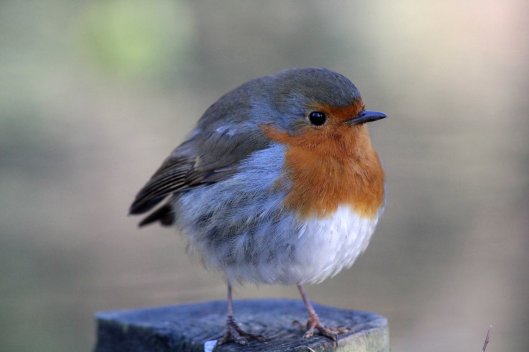
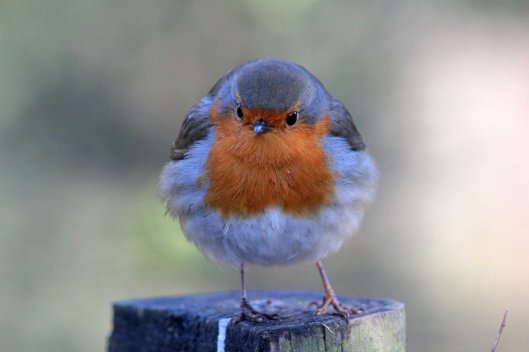
Conversations with robins: 1

20 Wednesday Jan 2016

Posted by sconzani in birds, nature, nature photography

≈ 8 Comments

Tags

birding, birds, birdwatching, British birds, robin

Forest Farm Nature Reserve, a very chilly day after a heavy frost …

robin1

Me: ‘Hello, robin. You look like you’re feeling the cold today.’
Robin: ‘Yes, I could do with some food.’

robin2

Me: ‘What a little cutie, you are.’
Robin: ‘I’d look even cuter with food.’

robin3

Me: ‘I’m sorry I don’t have any food for you today.’
Robin: ‘I’ll sing if you give me food.’

robin4

Me: ‘You’re posing so nicely. Thank you for the photos.’
Robin: ‘You can pay me in food.’

robin5

Me: ‘You’re making me feel guilty that I don’t have anything for you.’
Robin: ‘Lady, FOOD!’

robin6

Me: ‘I do have a muesli bar for my lunch. Maybe you’d like some of that?’
Robin: ‘At last! Where is it?’

robin7

Me: ‘There you go. Just a few crumbs to warm you up.’
Robin: ‘Bit miserly but better than nothing.’

robin8

Me: ‘Gotta go. Nice to talk to you.’
Robin: ‘Tra la la la la!’

Like Loading...

Tales of Turkey tails

19 Tuesday Jan 2016

Posted by sconzani in fungi, nature, nature photography

≈ 2 Comments

Tags

fungi, fungus, Trametes versicolour, Turkey tail

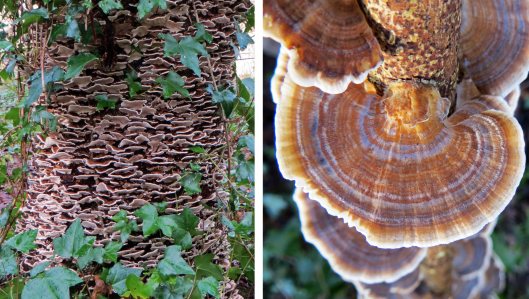
The Turkey tail (Trametes versicolour) is surely the multi-storey condominium of the fungus world. This is one of a huge range of bracket fungi and, as the name suggests, bracket fungi resemble shelves or brackets growing from the sides of tree trunks, branches and logs in forests and woodlands (or condominiums, with large balconies, ranging down the sides of cliffs, if you have an imagination like mine).
160119 Trametes versicolour Turkey Tail (1)

Turkey tail brackets range in size from 20 to 100mm wide and display concentric zones of colour in shades of beige, yellow, orange, brown and even blue. The common name of Turkey tail originated in North America, as these bands of colour apparently resemble the multi-hued tail of their wild turkey, and this is an extremely variable fungus so no two groupings have the same colour patterns (see slideshow below).

Not only lovely to look at, the Turkey tail is also useful medicinally. Asian people have long extolled the virtues of Turkey tail tea, and science has now proven that this fungus contains polysaccharides, derivatives of which have proven effective both in boosting the body’s immune systems in the fight against cancer and in the actual treatment of certain types of cancer.

This slideshow requires JavaScript.

Like Loading...

Trouble and strife

18 Monday Jan 2016

Posted by sconzani in birds, nature, nature photography

≈ 3 Comments

Tags

birding, birds, birdwatching, British birds, Canada goose

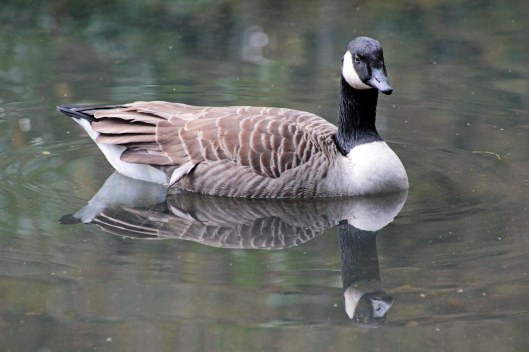
It may officially be called the Canada goose (Branta canadensis) but this bird should probably be called the Global goose as it seems to have made itself at home in many countries around the world. It was originally introduced to English parklands around 1665, specifically for King Charles II to add to his wildfowl collection in St James’s Park in London, but these birds have since gone forth and multiplied to such an extent that they are frequently considered a nuisance. As well as being aggressive pursuers of the bread so many people dispense freely in parks (watch out for nips!), they also have the digestive capacity to process three times as much grass as the average sheep and the more alarming ability to poop every four minutes!

160118 canada goose (1)

The Canada geese at my local lake can be as entertaining as any television soap opera. This morning another male tried to muscle in on this chap’s female so, firstly, he chased the other male away (love the tongue!), then he returned to honk sternly at his wife as if she had been the cause of the trouble (note her submissive posture), and then they both glared at the other male. What a hoot!

160118 canada goose (2)
160118 canada goose (3)
160118 canada goose (4)
Like Loading...

From Goose barnacle to Barnacle goose?

17 Sunday Jan 2016

Posted by sconzani in birds, nature, nature photography

≈ Leave a comment

Tags

Barnacle goose, birding, birds, birdwatching, British birds, Goose barnacle

Who could possibly believe that the Barnacle goose (Branta leucopsis) originated from driftwood? That was the ancient legend, that these geese were produced from the timber of fir trees that had been tossed about in the sea. The barnacle molluscs that can frequently be seen hanging from ships’ hulls were believed to be the birds’ ‘eggs’ and were named after the geese. This may seem crazy nowadays but the legend explained why these geese disappeared for months every year and were never seen breeding. The truth, of course, is that Barnacle geese usually migrate to foreign breeding grounds but our medieval ancestors weren’t to know that.

160117 barnacle goose (1)

Barnacle geese from the Arctic tundra over-winter in the north and west of Britain in huge numbers, with as many as 40,000 birds from Svalbard in Norway flocking to the Solway Firth and equally large numbers overwintering in the Scottish Hebrides and in Ireland. The geese in my photographs, however, live permanently at Roath Park Lake in Cardiff. They are friendly little birds and are happy to approach humans, pleading for food by making a noise that sounds a bit like a dog barking, though they are happiest eating leaves, roots and seeds.

160117 barnacle goose (2)
160117 barnacle goose (4)
160117 barnacle goose (3)
Like Loading...
← Older posts
Newer posts →

About me

sconzani

sconzani

I'm a writer and photographer; researcher and blogger; birder and nature lover; countryside rambler and city strider; volunteer and biodiversity recorder.

View Full Profile →

Follow earthstar on WordPress.com

Enter your email address to follow this blog and receive notifications of new posts by email.

Recent blog posts

  • Spring messengers February 1, 2026
  • Kestrel 2026 : 86 January 31, 2026
  • Birch polypore January 30, 2026
  • The Marl Med gull January 29, 2026
  • Recording Grey squirrels January 28, 2026

From the archives

COPYRIGHT

Unless otherwise acknowledged, the text and photographs on this blog are my own and are subject to international copyright. Nothing may be downloaded or copied without my permission.

Fellow Earth Stars!

  • Unknown's avatar
  • Unknown's avatar
  • Unknown's avatar
  • Unknown's avatar
  • Unknown's avatar
  • Unknown's avatar
  • Unknown's avatar
  • Unknown's avatar
  • Unknown's avatar
  • Unknown's avatar
  • Unknown's avatar
  • Unknown's avatar
  • Unknown's avatar
  • Unknown's avatar
  • Unknown's avatar
  • Unknown's avatar
  • Unknown's avatar
  • Unknown's avatar
  • Unknown's avatar
  • Unknown's avatar
  • Unknown's avatar
  • Unknown's avatar
  • Unknown's avatar
  • Unknown's avatar
  • Unknown's avatar
  • Unknown's avatar
  • Unknown's avatar
  • Unknown's avatar
  • Unknown's avatar
  • Unknown's avatar
  • Unknown's avatar
  • Unknown's avatar
  • Unknown's avatar
  • Unknown's avatar
  • Unknown's avatar
  • Unknown's avatar
  • Unknown's avatar
  • Unknown's avatar
  • Unknown's avatar
  • Unknown's avatar
  • Unknown's avatar
  • Unknown's avatar
  • Unknown's avatar
  • Unknown's avatar
  • Unknown's avatar
  • Unknown's avatar
  • Unknown's avatar
  • Unknown's avatar
  • Unknown's avatar
  • Unknown's avatar

Blog at WordPress.com.

Privacy & Cookies: This site uses cookies. By continuing to use this website, you agree to their use.
To find out more, including how to control cookies, see here: Cookie Policy
  • Subscribe Subscribed
    • earthstar
    • Join 670 other subscribers
    • Already have a WordPress.com account? Log in now.
    • earthstar
    • Subscribe Subscribed
    • Sign up
    • Log in
    • Report this content
    • View site in Reader
    • Manage subscriptions
    • Collapse this bar
 

Loading Comments...
 

You must be logged in to post a comment.

    %d