• ABOUT
  • BIRDING 2018
  • Birding 2019
  • BLOG POSTS
  • Butterflies 2018
  • Resources

earthstar

~ a celebration of nature

earthstar

Category Archives: nature

More Bird’s-nests with eggs!

11 Monday Sep 2017

Posted by sconzani in fungi, nature

≈ Leave a comment

Tags

Bird's nest fungi, British fungi, Cyathus striatus, Fluted Bird's-nest fungi, fungi

How lucky am I? In the short space of just two weeks, I’ve been privileged to see two different types of Bird’s-nest fungi (the post about the Common Bird’s-nests is here), both with eggs in their nests. This second lot are Fluted Bird’s-nest fungi (Cyathus striatus; Cyathus from the Greek kyath, meaning cup-shaped, and striatus to indicate the striated or ribbed sides).
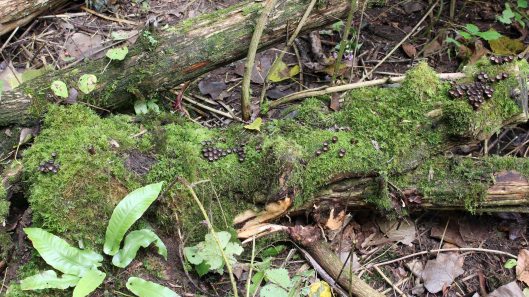
170911 Cyathus striatus Fluted Bird's Nest (1)

Fungi expert Pat O’Reilly (on his First Nature website) likens the reproduction of these fungi to a game of Tiddlywinks: I wrote about their ‘eggs’ in my previous post but Pat’s description is much the better read, of course.

170911 Cyathus striatus Fluted Bird's Nest (5)
170911 Cyathus striatus Fluted Bird's Nest (6)
170911 Cyathus striatus Fluted Bird's Nest (7)

Although these fungi are probably common, both their preferred habitat (of rotting logs in shady woodlands) and their excellent camouflage make them difficult to spot so they are rarely seen. As you can probably imagine, I was very excited when told their location by a friend and then to see them for myself. Many photographs were taken!

170911 Cyathus striatus Fluted Bird's Nest (2)
170911 Cyathus striatus Fluted Bird's Nest (3)
170911 Cyathus striatus Fluted Bird's Nest (4)
Like Loading...

The Young’uns at Forest Farm

10 Sunday Sep 2017

Posted by sconzani in birds, nature, parks

≈ Leave a comment

Tags

birding, birdwatching, British birds, dunnock, Forest Farm, Forest Farm Nature Reserve, Greenfinch, Grey heron, juvenile birds, robin

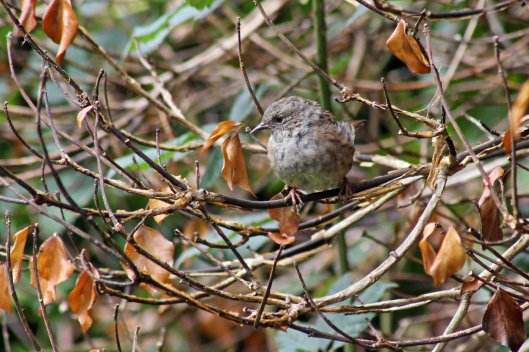
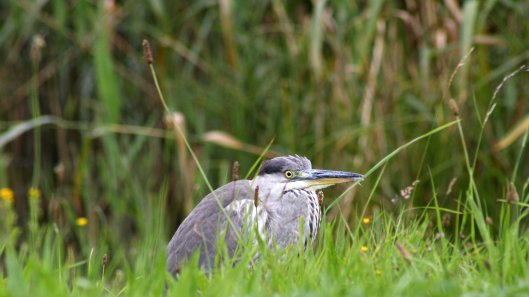
I hadn’t been to Forest Farm for a while but, when I heard some rather nice fungi had been found, I was there like a shot (more on that tomorrow). And, of course, whilst there I had to spend some quality time with the lovely birds that can be seen in this beautiful nature reserve at any time of the year. Now, in early autumn, there are a lot of young birds, and they’re always fun, and hungry, and often quite confiding.

170910 Dunnock170910 Greenfinches170910 Robin
170910 Grey heron (1)170910 Grey heron (2)170910 Grey heron (3)

Like Loading...

Oak galls: spangles & oysters

09 Saturday Sep 2017

Posted by sconzani in insects, nature, trees

≈ 1 Comment

Tags

gall wasps, galls on oak trees, Neuroterus albipes, Neuroterus anthracinus, Oak gall wasps, oak galls, oak tree, Oyster gall, Smotth spangle gall

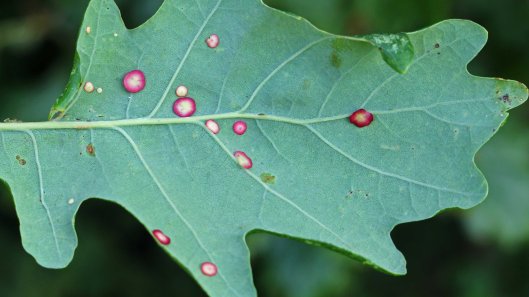
I know you’re all just dying to find out more about oak galls, right? RIGHT? I also know that I covered spangles in a previous post (see Currants & spangles here) but there are two different spangle galls to be found on the much be-galled oak tree: one is the hairy Common spangle and this is the second, the Smooth spangle gall.

170909 Smooth spangle gall (1)

This pretty little gall comes in combinations of pink and yellowish-green. It’s the work of Neuroterus albipes, a tiny wasp that you will probably never see, and inside each colourful saucer is a single larva that you will also probably never see. The galls drop to the ground in autumn and the larvae pupate over winter then female-only wasps hatch out in Spring to lay eggs that cause the entirely different Schenck’s gall (not one I’ve yet seen), from which male and female wasp hatch in the summertime. And so the cycle begins again.

170909 Smooth spangle gall (2)
170909 Smooth spangle gall (3)
170909 Smooth spangle gall (4)

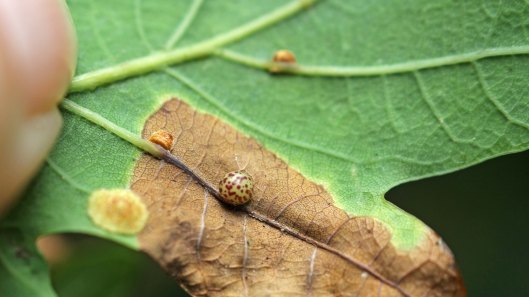
This second gall, the Oyster gall, is also caused by a tiny wasp that has two distinct generations and forms two different galls. The wasp is Neuroterus anthracinus and the Oyster gall also contains the agamic generation of wasps (i.e. the females that need no males to fertilise their eggs). As you can see, these galls form on the veins on the undersides of oak leaves – once they’ve fallen to the ground, you can still see the two brown flaps of tissue where they were attached to the veins. 

170909 Oak Oyster gall (1)
170909 Oak Oyster gall (2)

Once again, the sexual generation of wasps hatch in the Spring to mate and lay their eggs, this time in the buds of the oak tree, hence the name of the gall they produce: the April-bud gall. That’s another I need to look out for come the Spring.

170909 Oak Oyster gall (3)


Like Loading...

Butter and eggs

08 Friday Sep 2017

Posted by sconzani in flowers, nature, wildflowers

≈ 6 Comments

Tags

British flora, British wildflowers, Bunny mouths, Butter and eggs, Common toadflax, Linaria vulgaris

It’s a pretty little thing, this Butter and eggs. There’s none of the bold bright brashness of the stark sunflower; instead, it has a mouth-watering combination of soft warm creamy butter and that bright pop of yellow of a perfectly cooked free-range egg yolk. Mmmmmmmm!

170908 Common toadflax (2)

This is Linaria vulgaris, which has the very bland and rather uninspiring name of Common toadflax. I much prefer the vernacular Butter and eggs or, indeed, its other vernacular name, Bunny mouths, which appeals instantly to the child in me and brings back memories of snapdragon flowers, which these resemble and which can be gently squeezed to make the bunny ‘talk’.

170908 Common toadflax (1)
170908 Common toadflax (3)

Linaria vulgaris beautifies waysides and waste grounds, as well as open grassy areas, flowering from late spring right through till November. Because of its bunny-shaped mouth, the flower can be difficult for insects to access – it takes a strong bee or bumblebee to make the bunny ‘talk’. And, as well as providing bees and bumbles with nectar and pollen in exchange for pollination, L. vulgaris is also a favourite food plant for several species of moth, including the Silver Y, the Toadflax pug, and the Brown rustic. Butter and eggs all round then!

Like Loading...

It’s a miracle!

07 Thursday Sep 2017

Posted by sconzani in insects, ladybird, nature

≈ 4 Comments

Tags

Halyzia 16-punctata, Halyzia secedimguttata, ladybird, ladybird larva, ladybird lifecycle, ladybird pupa, ladybug, Orange ladybird

I believe I may have an addiction to ladybirds! When I decided to write this post, I thought I’d just check that I hadn’t covered this topic already: of course, I knew I had written about ladybirds before but I didn’t realise quite how many times. There’s a post here and here and again here and another one here. Well, in spite of all those, here’s another one because, when I found all the Orange ladybirds pictured here within five minutes of each other yesterday, I was struck yet again by just how incredible is their transformation from egg to larva …

170907 Orange ladybird (1)

to pupa …

170907 Orange ladybird (2)
170907 Orange ladybird (3)
170907 Orange ladybird (4)

to ladybird. It really is quite miraculous!

170907 Orange ladybird (5)

Like Loading...

Grim the collier

06 Wednesday Sep 2017

Posted by sconzani in flowers, nature, wildflowers

≈ 5 Comments

Tags

British flora, British wildflowers, Fox and cubs, Grim the collier, orange hawkweed, Pilosella aurantiaca

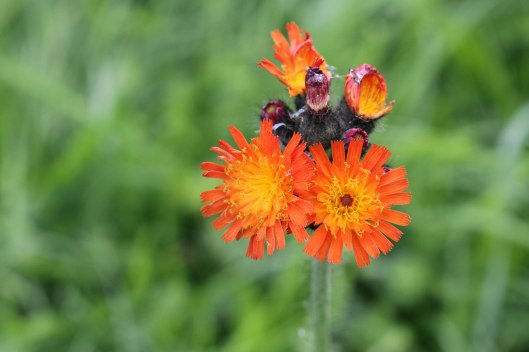
Although Pilosella aurantiaca (more commonly known as Fox-and-cubs) is a native of northern Europe, it must’ve been introduced to Britain a very long time ago as it gets a mention in Gerard’s 1633 Herbal. Gerard called it Grimme the Collier, which seems to me a most intriguing name.

170906 Grim the collier (2)

I’ve read speculation that the name may have been coined because the plant’s hairs resemble coal dust on a miner’s beard (really?) but there was also a play that originated in the early 1600s called Grim the Collier of Croydon and that was apparently based on a real-life character from the mid 16th century.

170906 Grim the collier (1)

It would seem more likely that the plant’s name relates to the person or the play but, in that case, I can’t help wondering: was Grim tall with a head of bright orange hair? Was Grim an invader from northern Europe? Were these particular flowers mentioned in the play? So many questions! If you can shed any light on the collier story, please do tell.

Like Loading...

Dock bug baby

05 Tuesday Sep 2017

Posted by sconzani in insects, nature

≈ 2 Comments

Tags

British insects, Coreus marginatus, Dock bug, Dock bug nymph, Late instar dock bug

I blogged about the Dock bug (Coreus marginatus) back in October last year and mentioned then that, in common with most bugs, these mini-beasties go through five larval / nymph stages before they become adults, though I had only ever seen the adult bugs … until yesterday.

170905 Dock bug Late instar (1)

I was indulging in the odd mouthful of ripe blackberry as I wandered around Cathays Cemetery when my hand was stopped in its reach by the glare of this little critter. It obviously had its eye on the succulent ripeness of that very same blackberry and was certainly not going to be intimidated by any gigantic human hand reaching towards it. I relinquished the berry!

170905 Dock bug Late instar (2)

Like Loading...

Viburnum beetles

04 Monday Sep 2017

Posted by sconzani in insects, nature, plants

≈ 4 Comments

Tags

British insects, Pyrrhalta viburni, viburnum, Viburnum beetle

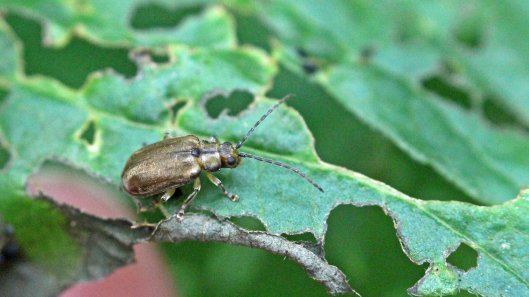
If you’re a gardener who cultivates any of the viburnum species of plant for their frothy flowers, vibrant berries and heady scent, then you probably won’t be very keen on these little beetles as they can make a pretty good job of chewing up all the leaves on your viburnum shrubs, as you can see from my photos.

170904 Viburnum beetle (4)

Rather unimaginatively but most accurately, they’re called Viburnum beetles (Pyrrhalta viburni) and, as a flat-living non-gardener, I find them rather cute. Both the voracious larvae (when they hatch in spring and early summer) and the less hungry adults (when they emerge from pupation in late summer) like to feed on viburnum leaves though it seems plants usually survive ‘even the most severe defoliation’. Personally, I think it would be best to enjoy the lacy appearance of the chewed leaves rather than resort to killing the beetles – all creatures have their place in the overall scheme of things, and the beetles won’t affect the stunning flowers and berries.

170904 Viburnum beetle (1)
170904 Viburnum beetle (2)
170904 Viburnum beetle (3)
170904 Viburnum beetle (5)
Like Loading...

Bioblitzing again

03 Sunday Sep 2017

Posted by sconzani in fungi, insects, ladybird, nature

≈ Leave a comment

Tags

Amelia Trust Farm, bioblitz, biodiversity, biological diversity, biological recording

Ten days ago I spent the day bioblitzing with my friend Hilary at Amelia Trust Farm (with their permission, of course). Hilary volunteers there so was keen to see what we might discover around the grounds.

170903 Harvestman Dicranopalpus ramosus

The habitats were a mix of woodland, arable fields, and flower and vegetable gardens, though we kept to the various footpaths, only looked at the fields from the fence lines, and didn’t venture far into the vegie patch. As previously, Hilary surveyed the plants and I did everything else. For a late summer’s day, in a site full of noisy families, I thought my total of 59 species was respectable enough. Here are some of the things I spotted …

170903 7-spot ladybird
170903 Common European earwig
170903 Green shieldbug
170903 Honey bees
170903 Hoverfly Eristalis sp
170903 Nettle-tap moth
170903 Pantilius tunicatus
170903 Scorpion fly
170903 Small white

170903 Trametes versicolor Turkeytail

Like Loading...

Autumn leaves, 1

02 Saturday Sep 2017

Posted by sconzani in autumn, leaves, nature, seasons

≈ 4 Comments

Tags

#loveautumn, autumn colour, autumn leaves, red leaves

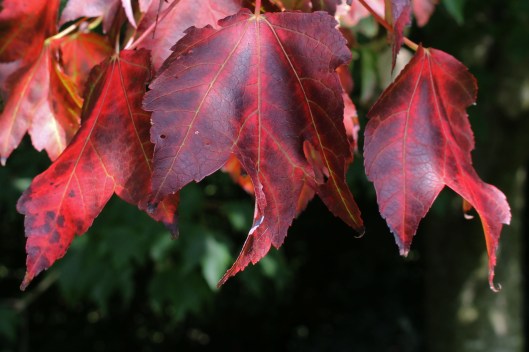
And so it begins …

170902 Autumn leaves

Like Loading...
← Older posts
Newer posts →

About me

sconzani

sconzani

I'm a writer and photographer; researcher and blogger; birder and nature lover; countryside rambler and city strider; volunteer and biodiversity recorder.

View Full Profile →

Follow earthstar on WordPress.com

Enter your email address to follow this blog and receive notifications of new posts by email.

Recent blog posts

  • Peak Wild garlic April 26, 2026
  • First damsels of 2026 April 25, 2026
  • NFY: Green-veined white April 24, 2026
  • The return of the Willow warblers April 23, 2026
  • Bug: Harpocera thoracica April 22, 2026

From the archives

COPYRIGHT

Unless otherwise acknowledged, the text and photographs on this blog are my own and are subject to international copyright. Nothing may be downloaded or copied without my permission.

Fellow Earth Stars!

  • Unknown's avatar
  • Unknown's avatar
  • Unknown's avatar
  • Unknown's avatar
  • Unknown's avatar
  • Unknown's avatar
  • Unknown's avatar
  • Unknown's avatar
  • Unknown's avatar
  • Unknown's avatar
  • Unknown's avatar
  • Unknown's avatar
  • Unknown's avatar
  • Unknown's avatar
  • Unknown's avatar
  • Unknown's avatar
  • Unknown's avatar
  • Unknown's avatar
  • Unknown's avatar
  • Unknown's avatar
  • Unknown's avatar
  • Unknown's avatar
  • Unknown's avatar
  • Unknown's avatar
  • Unknown's avatar
  • Unknown's avatar
  • Unknown's avatar
  • Unknown's avatar
  • Unknown's avatar
  • Unknown's avatar
  • Unknown's avatar
  • Unknown's avatar
  • Unknown's avatar
  • Unknown's avatar
  • Unknown's avatar
  • Unknown's avatar
  • Unknown's avatar
  • Unknown's avatar
  • Unknown's avatar
  • Unknown's avatar
  • Unknown's avatar
  • Unknown's avatar
  • Unknown's avatar
  • Unknown's avatar
  • Unknown's avatar
  • Unknown's avatar
  • Unknown's avatar
  • Unknown's avatar
  • Unknown's avatar
  • Unknown's avatar

Blog at WordPress.com.

Privacy & Cookies: This site uses cookies. By continuing to use this website, you agree to their use.
To find out more, including how to control cookies, see here: Cookie Policy
  • Subscribe Subscribed
    • earthstar
    • Join 642 other subscribers
    • Already have a WordPress.com account? Log in now.
    • earthstar
    • Subscribe Subscribed
    • Sign up
    • Log in
    • Report this content
    • View site in Reader
    • Manage subscriptions
    • Collapse this bar
 

Loading Comments...
 

You must be logged in to post a comment.

    %d