• ABOUT
  • BIRDING 2018
  • Birding 2019
  • BLOG POSTS
  • Butterflies 2018
  • Resources

earthstar

~ a celebration of nature

earthstar

Category Archives: nature

Salt as far as the eye can see

15 Wednesday Mar 2017

Posted by sconzani in nature

≈ 1 Comment

Tags

Bolivia, Bolivian Altiplano, Lago Minchin, Salar de Tunupa, Salar de Uyuni, salt, salt mining, salt-block construction, Uyuni

I’m running out of world wildlife to share every Wednesday so I thought I’d simplify my theme to plain old world Wednesday instead, sharing little parts of the world I’ve visited but still with an overall ‘Isn’t Nature amazing?’ theme. The first lies near Uyuni, in Bolivia.

170315 Salar de Uyuni (7)

Covering a massive 10,582 square kilometres, the Salar de Uyuni, or Salar de Tunupa as it’s also called, contains the world’s largest area of salt flats. In prehistoric times, this area was Lago Minchín, a huge lake with very high salinity levels, but, over thousands of years, a combination of no drainage and the super strong sunlight of the Andean Altiplano has caused the lake to dry up, leaving the salt pans, springs and seasonal shallow ponds that today bring tourists in their thousands to gaze in wonder.

170315 Salar de Uyuni (1)
170315 Salar de Uyuni (3)
170315 Salar de Uyuni (2)

The salt is still mined by enterprising locals, who also use blocks of salt to construct everything from furniture and buildings – I stayed in a salt-block hotel and slept on a salt-block bed – to artworks. You can read about and see more of my adventures in this area on my sconzani blog.

170315 Salar de Uyuni (6)
170315 Salar de Uyuni (4)
170315 Salar de Uyuni (5)
170315 Salar de Uyuni (8)
170315 Salar de Uyuni (9)


Like Loading...

Fluttery things

14 Tuesday Mar 2017

Posted by sconzani in insects, nature

≈ 8 Comments

Tags

butterflies, moths

According to the numerous websites that list the various events, holidays and celebrations that happen around the world each day, today is both ‘Learn about butterflies Day’ and ‘Moth-er Day’. I do sometimes think these days are inventions to fill out their websites, as I’ve found no organisations celebrating either of these days in Britain and, though moths are around almost all year and butterflies are just starting to make their Spring appearance, this doesn’t seem to be the optimum time to celebrate either of these wing-ed species. Still, any excuse to share photos of some of my favourite creatures!

Peacock Aglais io Cosmeston 200416
Peacock Ty Rhiw
Small White male Pieris rapae Bute 100416
Speckled wood Cathays Cem 240416 (4)
160604 Kenfig NNR (1)
160606 howardian (13)
160607 CathaysCem biodiversity (4)
160607 CathaysCem biodiversity (8)
160607 CathaysCem biodiversity (11)
cinnabar (2)
160624 Common Blue
160624 Large Skipper
160705 Small skipper (1)
160710 5-spot Burnet (2)
160716 ringlet (2)
160716 Meadow Brown (2)
160814 Rye Harbour (7)
160814 Rye Harbour (14)
160814 Rye Harbour (15)
160816 7 sisters (3)
160904 Common carpet (1)
160904 Small fan-footed wave
160904 Square-spot Rustic (1)
160904 Common Rustic agg
160929-brimstone
Like Loading...

Mr Grumpy Robin

13 Monday Mar 2017

Posted by sconzani in birds, nature

≈ 4 Comments

Tags

birding, birdwatching, British birds, conversations with robins, Mr Grumpy, robin

170313-mr-grumpy-robin-1

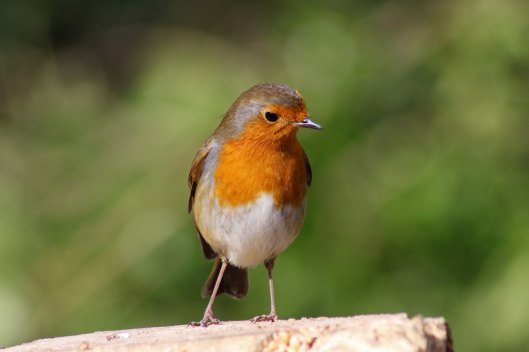
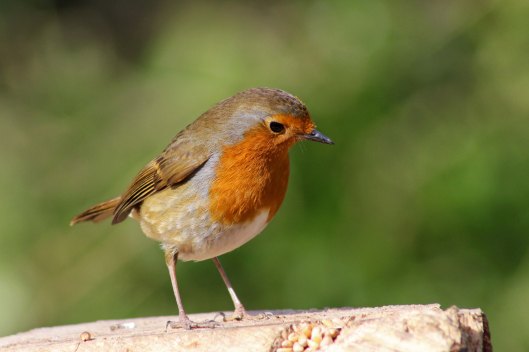
It looks like Mr Grumpy is not at all happy with the food he’s been given – maybe it doesn’t have the fruity flavoured suet pellets he likes best.

170313-mr-grumpy-robin-2

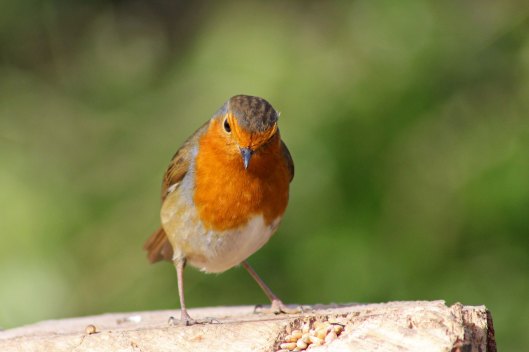
Perhaps Mr Grumpy doesn’t like the fact that the food has been tucked into a crack in the wooden post – maybe that makes it too hard to get at.

170313-mr-grumpy-robin-3

Or perhaps Mr Grumpy is really Mr Fusspot or even Mr Lazy in disguise.

170313-mr-grumpy-robin-4

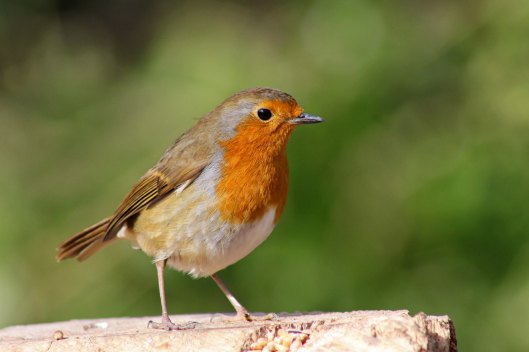
Mr Grumpy is certainly glaring very rudely at Ms Happy.

170313-mr-grumpy-robin-5

Unfortunately, Mr Tickler is nowhere to be found so there is no way to make Mr Grumpy less grouchy so I think Ms Happy will just leave him to wallow in his bad mood all by himself.

170313-mr-grumpy-robin-6

Like Loading...

Herb Robert

12 Sunday Mar 2017

Posted by sconzani in nature, spring, wildflowers

≈ 6 Comments

Tags

Cranesbill, Death comes quickly, Geranium Robertianum, Herb Robert, herbal medicine, Knecht Ruprecht, Red Robin, Robin Goodfellow, Storksbill

One of the highlights of yesterday’s walk was seeing this little geranium in flower. Though thought to have an offensive odour – some say it smells of burning tyres, others that it emits has an unpleasant mousey smell, hence one of its common names, ‘stinking Bob’ – I admit I haven’t noticed its stink and instead find myself attracted to its delicate ferny foliage, its reddish stalks, and its pretty pink flowers.

170312 Herb Robert (1)

This is Geranium robertianum, most commonly known in Britain as Herb Robert but with a plethora of other common names which, in part, reflect the folklore around it: Storksbill, Crow’s foot, Death comes quickly and Red Robin are just a few of its 100-odd regional variants. The origins of the name ‘Robert’ are disputed – some attribute it to the abbot and herbalist Robert of Molesme, others to Saint Robert or Rupert of Salzburg, and there appear also to be associations with the German hobgoblin Knecht Ruprecht and the English equivalent Robin Goodfellow (Puck in Shakespeare’s A Midsummer Night’s Dream). (You can read more in this excellent blog on the Metropolitan Museum of Art’s website.)

170312 Herb Robert (2)
170312 Herb Robert (3)

Herb Robert has long been valued by herbalists, for its healing properties – everything from wounds and toothache to its supposed ability to increase oxygen at a cellular level in the human body, thus assisting in the body’s fight against cancer. Personally, rather than ingest it, I think I’ll just continue to enjoy the dainty dabs of colour this pretty little plant adds to the countryside of my walks.

170312 Herb Robert (4)

p.s. Some of these photos were taken last summer.

Like Loading...

Grangemoor Park: a first look

11 Saturday Mar 2017

Posted by sconzani in fungi, insects, lichen, nature, parks, spring, wildflowers

≈ 4 Comments

Tags

biodiversity, Cardiff parks, Grangemoor Park, old rubbish tip, Penarth Moors, River Ely, signs of spring

I had my first wander around Grangemoor Park yesterday and I’ll definitely be going back, though perhaps when it’s a little drier underfoot. With an extensive area of grass and scrub that rises up to two central mounds (from which you get quite good 360-degree views over Cardiff), this land wasn’t always a park. You have only to look at old maps to see that, once upon a time, the River Ely meandered through Penarth Moors here but, once the river was realigned, the hollows thus created were used as one of Cardiff’s rubbish tips. When the tip was full, Cardiff Council had a load of underground drains built, as well as ventilation pipes to allow the methane to escape, covered the lot with tons of clay – hence the very soggy ground, edged it all around with a solid stone wall, and changed its designation to a park in 2000.

170311 Grangemoor (1)
170311 Grangemoor (2)
170311 Grangemoor (3)
170311 Grangemoor (4)
170311 Grangemoor (5)
170311 Grangemoor (6)

That may sound like a sad history but, according to locals, the park now hosts quite a broad range of flora and fauna, and I certainly saw many of the stirrings of Spring. There were bumblebees and flies, a butterfly and a ladybird, masses of primroses almost hidden under bushes, golden coltsfoot and dandelions in bloom all around and horsetail pushing through everywhere, as well as incredibly vibrant lichens and a healthy growth of Oak curtain crust fungi. I will be going back!

170311 Grangemoor (7)
170311 Grangemoor (8)
170311 Grangemoor (9)
170311 Grangemoor (10)
170311 Grangemoor (11)
170311 Grangemoor (12)
Like Loading...

Floral Friday: Glorious geraniums

10 Friday Mar 2017

Posted by sconzani in flowers, nature

≈ 2 Comments

Tags

Auckland Domain, geranium, Geranium maderense, Giant herb-Robert, Madeira cranesbill, Wintergarden

170310-geranium-maderense-1

No, summer has not come early to Wales – these photos of gorgeous geraniums were taken in New Zealand, at the Wintergarden in Auckland’s Domain, in October 2014. I think these are Geranium maderense, also known as Giant herb-Robert and the Madeira cranesbill (their original homeland was the island of Madeira). They are the largest of the many species of geranium and, as you can see, their pollen is much favoured by bees and flies. My photo of the blue-bottle’s bottom protruding from the flower always makes me smile. Happy Floral Friday!

170310-geranium-maderense-3
170310-geranium-maderense-4
170310-geranium-maderense-2
Like Loading...

Whiskers

09 Thursday Mar 2017

Posted by sconzani in animals, nature

≈ 6 Comments

Tags

cat's whiskers, functions of whiskers, vibrissae, whiskers, whiskers in mammals

170311-whiskers-10

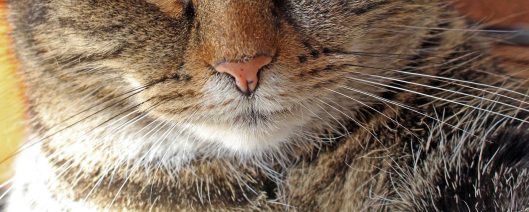
Most land mammals, and even some sea creatures and birds, have whiskers, or vibrissae as they’re more correctly known. Like hair, whiskers are nerve-less and made of keratin but, unlike hair, they are extremely sensitive because they grow from a special hair follicle that contains a nerve-filled capsule of blood. Those nerves mean whiskers are almost like having a sixth sense – they act as well-honed sensors that help with spatial awareness; they help animals detect movement and feel vibrations in the air; they assist with texture and shape discrimination; they help with exploration, especially in low light conditions; and they are believed to play a role in social behaviour. And, let’s face it, they can also be incredibly cute!

170311-whiskers-8
170311-whiskers-5
170311-whiskers-2
170311-whiskers-6
170311-whiskers-7
170311-whiskers-3
170311-whiskers-11
170311-whiskers-4
170311-whiskers-1
170311-whiskers-9
Like Loading...

The Yellow-billed stork

08 Wednesday Mar 2017

Posted by sconzani in birds, nature

≈ 4 Comments

Tags

African birds, birding, birdwatching, Kuala Lumpur Bird Park, Mycteria ibis, stork, Yellow-billed stork

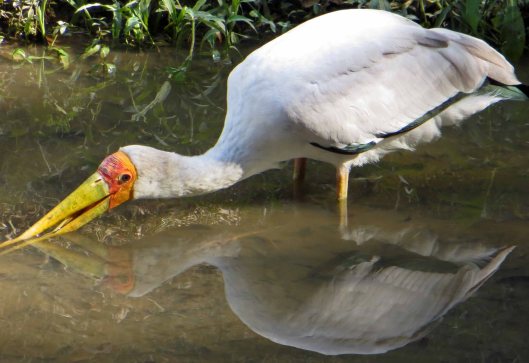
Today’s World Wildlife Wednesday comes to you from Kuala Lumpur, in Malaysia, though that is not the homeland of the Yellow-billed storks (Mycteria ibis). I found these storks in KL’s world-famous Bird Park but they are natives of sub-Saharan Africa, though most numerous in the swamps and marshlands, lagoons and mudflats of the east African countries of Zambia, Zimbabwe and Madagascar.

170309-yellow-billed-stork-1

The storks in my photos may look a bit odd, as if they’re drinking an awful lot of water, but they are, in fact, fishing. Rather than using their vision to see their prey, of small fish and frogs, crustaceans, worms and insects, they use their sense of touch, detecting movement and vibrations through their bills and then quickly snapping shut those bills to secure their food before gulping it down whole.

170309-yellow-billed-stork-2
170309-yellow-billed-stork-3

The Yellow-billed stork – also known as the Wood stork or the Wood ibis – stands about a metre tall when fully grown, and, just like us humans, their foreheads seem to get more and more wrinkly with age. The bird shown below left is a juvenile, so it is still wearing its mottled brown baby feathers.

170309-yellow-billed-stork-4
170309-yellow-billed-stork-5
Like Loading...

Nom, nom, nom

07 Tuesday Mar 2017

Posted by sconzani in birds, nature, plants

≈ 2 Comments

Tags

birding, birdwatching, Branta canadensis, Canada goose, diet of Canada goose

Until a couple of days ago I had only ever seen the Canada goose (Branta canadensis) grazing the grass on farmland in Cheshire and around Roath Park Lake or guzzling the offerings of generous humans, so it had never really occurred to me to wonder about what else they might consume. Now I find they are quite partial to aquatic vegetation like pondweed, horsetail, bulrushes and various reeds. This particular bird was not fussy as to preparation – it was a simple case of rip, roll, rinse, ruminate, repeat.

170307-canada-goose-1170307-canada-goose-2170307-canada-goose-3170307-canada-goose-4170307-canada-goose-5

Like Loading...

Sweet-potato-pink primroses

06 Monday Mar 2017

Posted by sconzani in flowers, nature, spring, wildflowers

≈ 4 Comments

Tags

British native flora, British wildflowers, genetic variation in primrose, pink-purple primrose, primrose, Primula vulgaris

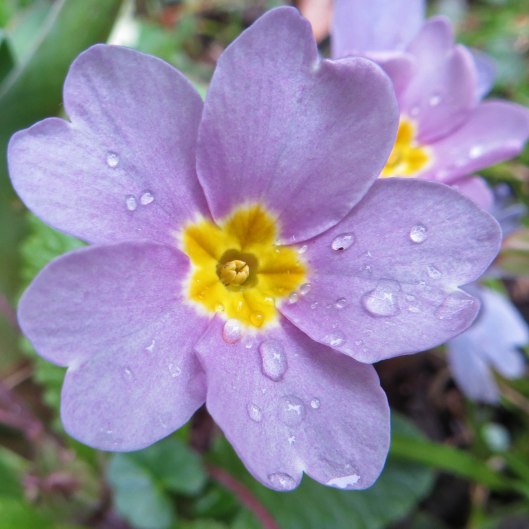
One of the earliest signs of Spring here in Britain is the flowering of the native primrose (Primula vulgaris). Its flowers range in colour from milk white through clotted cream to buttery yellow but there is also a sweet-potato-pink variation. In a delectable continuation of my comestible metaphors, in his Flora Britannica author Richard Mabey labels this form rhubarb-and-custard.

170306-primrose-1

I found these flowers growing locally in the now-public grounds of an old house, built between 1790 and 1810. Though some areas of the grounds have obviously been cultivated, there are also wilder areas where native flowers grow, and these lilac-flowered primroses are sprinkled in amongst the more common yellow forms, suggesting they are not garden escapees. In Flora Britannica, Mabey goes on to say that the rhubarb-and-custard variety ‘is most frequent in churchyards and on banks close to villages, so there is some doubt about its origins. But it also occurs in much wilder sites, especially in west Wales, and is so constant in its colouration that it is almost certainly a genetically different form.’ Delicious!

170306-primrose-2

Like Loading...
← Older posts
Newer posts →

About me

sconzani

sconzani

I'm a writer and photographer; researcher and blogger; birder and nature lover; countryside rambler and city strider; volunteer and biodiversity recorder.

View Full Profile →

Follow earthstar on WordPress.com

Enter your email address to follow this blog and receive notifications of new posts by email.

Recent blog posts

  • Lifer: Box bug April 27, 2026
  • Peak Wild garlic April 26, 2026
  • First damsels of 2026 April 25, 2026
  • NFY: Green-veined white April 24, 2026
  • The return of the Willow warblers April 23, 2026

From the archives

COPYRIGHT

Unless otherwise acknowledged, the text and photographs on this blog are my own and are subject to international copyright. Nothing may be downloaded or copied without my permission.

Fellow Earth Stars!

  • Unknown's avatar
  • Unknown's avatar
  • Unknown's avatar
  • Unknown's avatar
  • Unknown's avatar
  • Unknown's avatar
  • Unknown's avatar
  • Unknown's avatar
  • Unknown's avatar
  • Unknown's avatar
  • Unknown's avatar
  • Unknown's avatar
  • Unknown's avatar
  • Unknown's avatar
  • Unknown's avatar
  • Unknown's avatar
  • Unknown's avatar
  • Unknown's avatar
  • Unknown's avatar
  • Unknown's avatar
  • Unknown's avatar
  • Unknown's avatar
  • Unknown's avatar
  • Unknown's avatar
  • Unknown's avatar
  • Unknown's avatar
  • Unknown's avatar
  • Unknown's avatar
  • Unknown's avatar
  • Unknown's avatar
  • Unknown's avatar
  • Unknown's avatar
  • Unknown's avatar
  • Unknown's avatar
  • Unknown's avatar
  • Unknown's avatar
  • Unknown's avatar
  • Unknown's avatar
  • Unknown's avatar
  • Unknown's avatar
  • Unknown's avatar
  • Unknown's avatar
  • Unknown's avatar
  • Unknown's avatar
  • Unknown's avatar
  • Unknown's avatar
  • Unknown's avatar
  • Unknown's avatar
  • Unknown's avatar
  • Unknown's avatar

Blog at WordPress.com.

Privacy & Cookies: This site uses cookies. By continuing to use this website, you agree to their use.
To find out more, including how to control cookies, see here: Cookie Policy
  • Subscribe Subscribed
    • earthstar
    • Join 642 other subscribers
    • Already have a WordPress.com account? Log in now.
    • earthstar
    • Subscribe Subscribed
    • Sign up
    • Log in
    • Report this content
    • View site in Reader
    • Manage subscriptions
    • Collapse this bar
 

Loading Comments...
 

You must be logged in to post a comment.

    %d