• ABOUT
  • BIRDING 2018
  • Birding 2019
  • BLOG POSTS
  • Butterflies 2018
  • Resources

earthstar

~ a celebration of nature

earthstar

Category Archives: nature

Fungi Friday: Not just a park bench

25 Friday Nov 2016

Posted by sconzani in fungi, nature, parks

≈ 4 Comments

Tags

Dacryomyces stillatus, Orange Jelly fungus, park bench, Tremella mesenterica, Yellow Brain Fungus

This looks like an ordinary park bench, right?

161125-roath-park-bench-1

But, if you look closer …

161125-roath-park-bench-2

No, closer …

161125-roath-park-bench-3

Then you will see that, even here, on a presumably treated and processed and painted (or stained) piece of wood, fungi are active.

161125-dacryomyces-stillatus-orange-jelly
161125-tremella-mesenterica-yellow-brain

The bright orange blobs are the aptly named Orange Jelly fungus (Dacryomyces stillatus) and the washed-out yellow blobs are probably Yellow Brain Fungus (Tremella mesenterica) – I say probably because there’s another fungus that looks a lot like this one, Tremella aurantia, but it’s parasitic on a third fungus, Hairy Curtain crust (Stereum Hirsutum), which does not appear to be present here – but who knows what’s lurking inside the wood?

Like Loading...

‘Cones in the rich sungold of autumn’

24 Thursday Nov 2016

Posted by sconzani in nature, trees

≈ Leave a comment

Tags

cone, conifer cone, forests, John Muir, John Muir quotes, pine cone, seeds

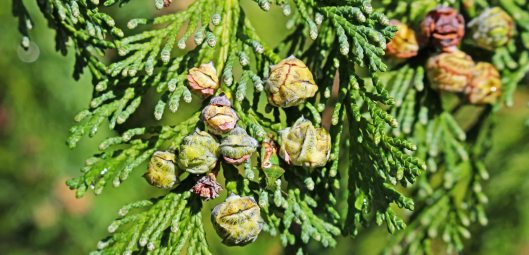
161124-cones-1

‘But few indeed, strong and free with eyes undimmed with care, have gone far enough and lived long enough with the trees to gain anything like a loving conception of their grandeur and significance as manifested in the harmonies of their distribution and varying aspects throughout the seasons, as they stand arrayed in their winter garb rejoicing in storms, putting forth their fresh leaves in the spring while steaming with resiny fragrance, receiving the thunder-showers of summer, or reposing heavy-laden with ripe cones in the rich sungold of autumn.’ ~ John Muir, The Mountains of California

161124-cones-2
161124-cones-3
161124-cones-4

161124-cones-5

Like Loading...

World wildlife Wednesday: Shackleton’s Penguin

23 Wednesday Nov 2016

Posted by sconzani in birds, nature

≈ 2 Comments

Tags

Aptenodytes patagonicus, British Antarctic Expedition 1907-09, Ernest Shackleton, King penguin, Macquarie Island, National Museum Cardiff, Nimrod Expedition

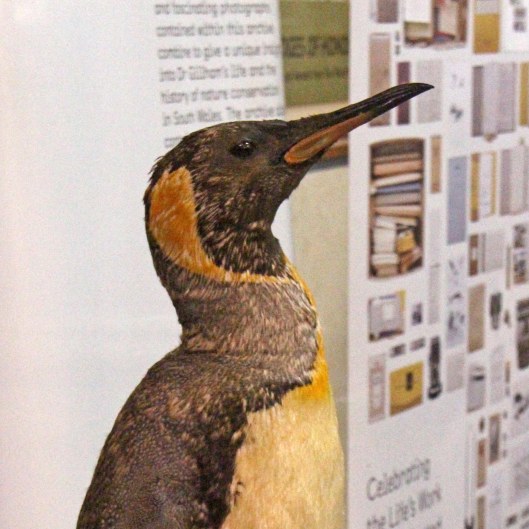
Meet Aptenodytes patagonicus, a King penguin that is over 100 years old! Sadly, it’s been dead for more than 100 years as well, transported from its chilly sub-Antarctic-island home in the southern Pacific Ocean to the smelly smoggy London of the early 1900s in the bowels of Ernest Shackleton’s schooner, the Nimrod, on his return home from the 1908-09 British Antarctic expedition.

king-penguin

In its heyday, this penguin stood almost a metre tall, was probably born and lived its short life in and around Australia’s Macquarie Island, and thrived on a diet of fish and squid, diving down as far as 100 metres to catch its prey. It began life as an egg, propped on the feet of one of its parents for the 50-odd days it took to hatch and remained there for another 30-40 days once it had hatched (its parents took turns brooding it in the warm and cosy confines of a special flap of skin that covered their egg), before emerging as a cute brown bundle of fluff that would make even the hard-of-heart go “Awwww”.

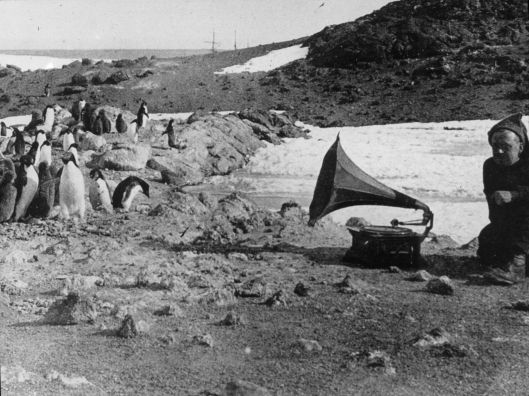
shackleton_nimrod_48

Photographs of the Nimrod Expedition (1907-09) to the Antarctic, led by Ernest Shackleton; image dated 1908; source: Archive of Alfred Wegener Institute for Polar and Marine Research. This image is in the Public Domain.

As it grew and fledged, this King penguin developed a brilliant splash of yellow colour around its neck, making it one of the most vibrant of all the world’s penguins, though sadly its vibrancy has now mostly faded away. Still, this little penguin has travelled much further than most of its peers and even today brings much joy to those who see it, in its smart glass case in the National Museum Cardiff. If you’re curious about how it got to Cardiff, you can read more here, but if you’re curious about why a member of Shackleton’s crew was playing the gramophone to the Antarctic penguins, I have no idea – I just loved the photo! Perhaps you can tell me.

Like Loading...

After the rain, the foot-paddling

22 Tuesday Nov 2016

Posted by sconzani in birds, nature

≈ 4 Comments

Tags

earthworm, gull behaviour, gull foot-paddling, gull gets the worm

Over the past few days, much of Britain has experienced its first major storm of the 2016-17 winter season. Its name was Angus – he came, shed copious bucket-loads of rain on us, battered us with hail bullets, and blew away the last of the autumn leaves.

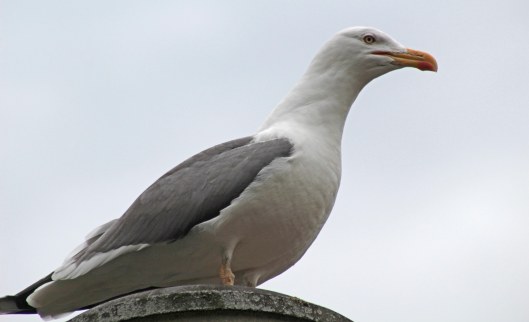
161122-gull-foot-paddling

For some species of gulls though, Angus has brought bounty, in the form of a thin layer of surface water on areas of saturated meadows and lawns. Gulls are smart enough to take advantage of this. When it rains, earthworms head to the soil surface to avoid being flooded out, so gulls quickly make a meal of them. But some gulls go one step further: through repeatedly paddling on the wet grass, they cause vibrations which, in turn, cause the worms to think it’s raining even when it’s not so, once again, the worms head to the surface. Result? More gull snacks! It’s fascinating behaviour to watch.

As I only have a free WordPress blog, I can’t upload my video of the gulls performing their rain dance but you can see it here.


Like Loading...

‘Dedicated Naturalist’: A mouse in the house

21 Monday Nov 2016

Posted by sconzani in 'Dedicated Naturalist' Project, animals, nature

≈ Leave a comment

Tags

Dr Mary Gillham, Mary Gillham Archive Project, Mary Gillham drawing, Mary Gillham nature diary, mice, mouse, mouse in house

A snippet from my volunteer work on the ‘Dedicated Naturalist’: Mary Gillham Archives Project, to celebrate Explore Your Archive, a campaign co-ordinated jointly by The National Archives and the Archives and Records Association that aims ‘to showcase the unique potential of archives to excite people, bring communities together, and tell amazing stories’.

From one of Mary’s nature diaries, July 1981:

Cat food was shared by 2 mice this month. An adult was holed up in carpet sweeper – the entrance the spiral gap between the brushes – to nest of carpet fluff. Had used for several minutes sweeping carpet before I sensed that all was not well and tipped contents into bucket. Bemused mouse, near asphyxiated and with nerves shattered by the trundling and rumbling, did not jump out of bucket but was tipped into garden and scuttled off under old fridge at end of path. Offered water and a gooseberry, neither of which was seen to be touched.

The 2nd mouse, less than half grown, was surprised feeding on kit-e-kat, the only provender accessible. We played tag round the buckets and mops but this one took refuge under the new fridge. Presumably both were brought in originally by cat, whose ailment of tapeworm inhibits her hunting ability not at all.


161121-gillham-mouse-sketch-1
161121-gillham-mouse-sketch

For the full story about the Mary Gillham Archive Project, check out our website, and follow our progress on Facebook and on Twitter.

Like Loading...

Autumn in Cardiff: Bute Park

20 Sunday Nov 2016

Posted by sconzani in autumn, nature, parks, trees

≈ Leave a comment

Tags

autumn colour, autumn leaves, Bute Park, Cardiff, River Taff

161120-2

Bute Park is, well, beaut! Cardiff’s green heart has wilderness and playing fields; cycling tracks and walking paths; a stone circle; an ambling canal on one side and a roaring river on the other; grand avenues of ginkgoes and limes, and a botanical treasury of trees. Though some of my photos were taken 10 days ago, on a bright blue-sky day, the majority were taken during this afternoon’s long ramble hither and yon. Luckily, winter’s first official storm, Angus, which blasted the city with rain, hail and high winds over the past couple of days, hadn’t blown away all the splendid autumn hues but I fear this may be my last autumn post for this year … so, enjoy!

161120-6
161120-13
161120-12
161120-3
161120-11
161120-9
161120-8
161120-5
161120-7
161120-1
161120-4
Like Loading...

‘Dedicated Naturalist’: Paradise found

19 Saturday Nov 2016

Posted by sconzani in 'Dedicated Naturalist' Project, birds, nature

≈ Leave a comment

Tags

Blue Penguin, Dr Mary Gillham, Explore Your Archives, Mary Gillham Archive Project, Mary Gillham in New Zealand, Naturalist in New Zealand, Ringa Ringa Beach

A snippet from my volunteer work on the ‘Dedicated Naturalist’: Mary Gillham Archives Project, to celebrate Explore Your Archive, a campaign co-ordinated jointly by The National Archives and the Archives and Records Association that aims ‘to showcase the unique potential of archives to excite people, bring communities together, and tell amazing stories’.

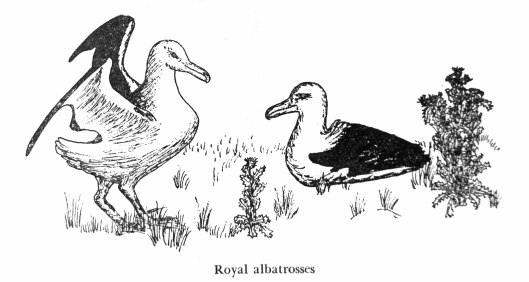
Dr Mary Gillham spent 1957 in my homeland, New Zealand and, though officially on an exchange lecturership at Massey University, she also used her time for field research into the country’s unique flora and fauna. Mary had a particular passion for seabirds so the huge range of avian life to be found along New Zealand’s lengthy coastline must have seemed like paradise found.
161119-royal-albatrosses

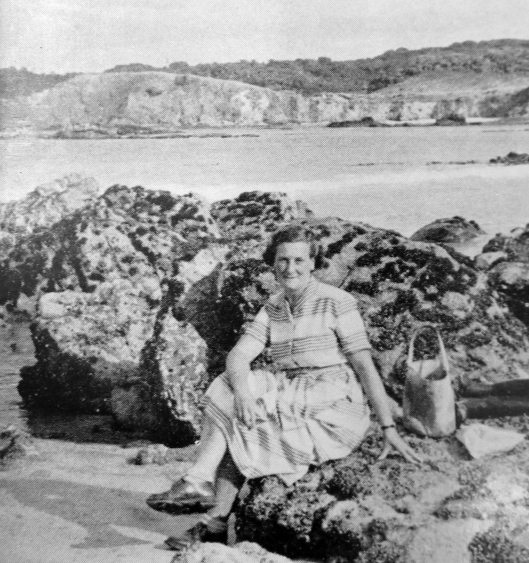
Within weeks of her arrival she was marvelling at a magnificent male Royal Albatross on Otago Peninsula with ranger Stanley Sharpe: ‘a lone male was sitting out on the hillside and we were able to watch it at close quarters for almost an hour – he, having no natural enemies, taking little notice of us’; and, a week later, delighting in the antics of penguins at Ringa Ringa Beach on Stewart Island (pictured below): ‘[we] were entertained by a yellow crested penguin who had come inshore to moult and wasn’t going back to sea for any humans’.
161119 Mary Gillham at Ringa Ringa

Mary was unsettled by the kakas on Kapiti Island: ‘it was most disconcerting to be firing the [camera] trigger at a couple of wekas and a tui with a kaka landing plomp on my head’; and entertained by blue penguins on The Brothers: ‘2 of them ran into a fallen Hebe bough and one got annoyed and blamed the other, leaping across his back and then slapping the bird’s sides with resounding thwacks of his flippers’. (Mary’s sketch of them is shown below.)

161119-blue-penguins
161119-naturalist-in-new-zealand

When she eventually returned to Britain, Mary wrote a book about her Kiwi adventures (A Naturalist in New Zealand, Museum Press, London and Reed Books, New Zealand, 1966). Not surprisingly, a painting of birds graces its cover.

For the full story about the Mary Gillham Archive Project, check out our website, and follow our progress on Facebook and on Twitter.

Like Loading...

Fungi Friday: Diplocarpa bloxamii

18 Friday Nov 2016

Posted by sconzani in fungi, nature

≈ 2 Comments

Tags

ascomycete, cup fungi, Diplocarpa bloxamii, Kew Mycology, SEWBReC

Considering I am exceedingly short-sighted, I am amazed at how many exceedingly tiny fungi I have been finding lately. More on those soon but today I want to share a rare one I found in one of my local Cardiff parks last week. In fact, my find is only the second record for Wales and was the first record in Wales in 42 years and 3 days. As Kew mycologist Brian Douglas wrote, ‘it’s not bad coming second to Derek Reid, ex-head of Kew Mycology’. Needless to say, I’m delighted, though I suspect this fungus is under-recorded rather than as rare as those statistics make it sound!

161118-diplocarpa-bloxamii-1

Diplocarpa bloxamii (no common name) is an ascomycete, a cup fungus, with an olive-black disc-shaped cup growing on a short stem. The external surface of the cup is pustulate (think coarse pimples, without the actual pus) and it has light brown hairs sprouting both from the pustules and around the edge of the cup, which is much lighter, almost beige, in colour. The cups are tiny – no more than 5mm across – I actually had my glasses off and my face about 15cms from the decaying piece of log, looking at something else, when I spotted them.

161118-diplocarpa-bloxamii-2
161118-diplocarpa-bloxamii-3
161118-diplocarpa-bloxamii-4

Of course, I had no idea what they were but took some macro photos to post that evening on Facebook. Luckily, Brian Douglas spotted my post, alerted me to what they might be, sent me some literature, and had me heading back to the woods the next day for a sample. Talk about looking for a needle in a haystack! Fortunately, I’ve been training myself to remember where I spot things so that I can later record my findings, so I found them again quite quickly.

161118-diplocarpa-bloxamii-5
161118-diplocarpa-bloxamii-6

I am very grateful to Brian for his help in determining the identity of my little fungi and to Amy Hicks, of SEWBReC, who very kindly undertook the microscope work needed to confirm their ID and provided me with the stunning photographs (above) that resulted from her work.

diplocarpa-bloxamii-heath-st179799-7

Like Loading...

Autumn in Cardiff: Cathays Cemetery

17 Thursday Nov 2016

Posted by sconzani in autumn, nature, trees

≈ Leave a comment

Tags

autumn colour, autumn leaves, Cathays Cemetery

161117-cathays-cemetery-1

I sure am glad I had a wander around my beautiful local cemetery yesterday, getting these photos, as today is cold and wet, with strong blustery winds, so I imagine most of the leaves will have been blown off their trees by tomorrow. I’ve blogged about the diversity of flora and fauna at this cemetery many times before but, in autumn, its huge variety of tree species becomes very apparent through the enormous range of shades to be seen in the dying leaves. Who would’ve thought there could be such beauty in death?

This slideshow requires JavaScript.

Like Loading...

Donkeys of Peru

16 Wednesday Nov 2016

Posted by sconzani in animals, nature

≈ 3 Comments

Tags

donkey, donkey and agriculture, donkey as beast of burden, donkeys in Peru, Equus africanus asinus, Peru rural economy

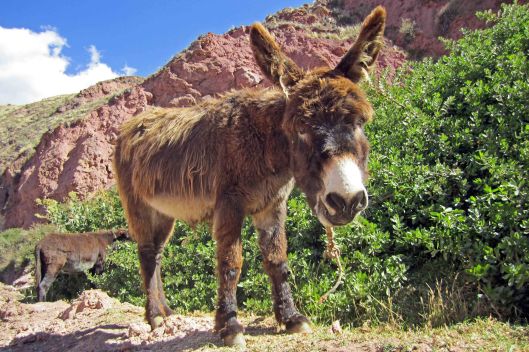
I’ve blogged previously about donkeys in Ireland but, as donkeys are so adorable and today is world wildlife Wednesday, let me introduce you to some of the donkeys I met in Peru.

161116-donkeys-peru-6

Though originally native to Africa, the donkey (Equus africanus asinus) was introduced to the Americas when the ships of Christopher Columbus’s second expedition arrived at the Caribbean Island of Hispaniola in 1495. The monks and priests who quickly spread the Catholic religion throughout South America were also responsible for the spread of the donkey, specialising in the profitable business of breeding and selling donkeys and mules.

161116-donkeys-peru-2

Today in rural Peru, as in most under-developed countries around the globe, donkeys (as well as llamas) are still the principal beasts of burden. They can often be seen carrying loads for farmers, pulling carts or simply grazing in fields. Their burdens look heavy but donkeys are sturdy and strong and, as they represent a substantial monetary investment and their labour is vital to subsistence farmers, donkeys are usually very well cared for.

161116-donkeys-peru-8
161116-donkeys-peru-5
161116-donkeys-peru-7
161116-donkeys-peru-3
161116-donkeys-peru-9
161116-donkeys-peru-4
161116-donkeys-peru-1
Like Loading...
← Older posts
Newer posts →

About me

sconzani

sconzani

I'm a writer and photographer; researcher and blogger; birder and nature lover; countryside rambler and city strider; volunteer and biodiversity recorder.

View Full Profile →

Follow earthstar on WordPress.com

Enter your email address to follow this blog and receive notifications of new posts by email.
Recent blog posts

  • Nesting material April 28, 2026
  • Lifer: Box bug April 27, 2026
  • Peak Wild garlic April 26, 2026
  • First damsels of 2026 April 25, 2026
  • NFY: Green-veined white April 24, 2026

From the archives

COPYRIGHT

Unless otherwise acknowledged, the text and photographs on this blog are my own and are subject to international copyright. Nothing may be downloaded or copied without my permission.

Fellow Earth Stars!

  • Unknown's avatar
  • Unknown's avatar
  • Unknown's avatar
  • Unknown's avatar
  • Unknown's avatar
  • Unknown's avatar
  • Unknown's avatar
  • Unknown's avatar
  • Unknown's avatar
  • Unknown's avatar
  • Unknown's avatar
  • Unknown's avatar
  • Unknown's avatar
  • Unknown's avatar
  • Unknown's avatar
  • Unknown's avatar
  • Unknown's avatar
  • Unknown's avatar
  • Unknown's avatar
  • Unknown's avatar
  • Unknown's avatar
  • Unknown's avatar
  • Unknown's avatar
  • Unknown's avatar
  • Unknown's avatar
  • Unknown's avatar
  • Unknown's avatar
  • Unknown's avatar
  • Unknown's avatar
  • Unknown's avatar
  • Unknown's avatar
  • Unknown's avatar
  • Unknown's avatar
  • Unknown's avatar
  • Unknown's avatar
  • Unknown's avatar
  • Unknown's avatar
  • Unknown's avatar
  • Unknown's avatar
  • Unknown's avatar
  • Unknown's avatar
  • Unknown's avatar
  • Unknown's avatar
  • Unknown's avatar
  • Unknown's avatar
  • Unknown's avatar
  • Unknown's avatar
  • Unknown's avatar
  • Unknown's avatar
  • Unknown's avatar

Blog at WordPress.com.

Privacy & Cookies: This site uses cookies. By continuing to use this website, you agree to their use.
To find out more, including how to control cookies, see here: Cookie Policy
  • Subscribe Subscribed
    • earthstar
    • Join 642 other subscribers
    • Already have a WordPress.com account? Log in now.
    • earthstar
    • Subscribe Subscribed
    • Sign up
    • Log in
    • Report this content
    • View site in Reader
    • Manage subscriptions
    • Collapse this bar
 

Loading Comments...
 

You must be logged in to post a comment.

    %d