• ABOUT
  • BIRDING 2018
  • Birding 2019
  • BLOG POSTS
  • Butterflies 2018
  • Resources

earthstar

~ a celebration of nature

earthstar

Category Archives: nature

Autumn in Cardiff: Heath Park

15 Tuesday Nov 2016

Posted by sconzani in autumn, nature, parks, trees

≈ 2 Comments

Tags

autumn colour, autumn leaves, Cardiff, crunching leaves, Heath Park

161115-heath-1

I’ve blogged about Heath Park before: 37 hectares of fields, woodland, a stream and two ponds, lots of biodiversity and one of my favourite places for invertebrates during the summer and fungi over the winter months. And, right now, its trees are painting the park red and orange and gold. It’s another stunning place to soak in these stunning autumn hues and crunch a leaf or two!

161115-heath-2
161115-heath-3
161115-heath-4
161115-heath-5
161115-heath-6
161115-heath-7
161115-heath-8
161115-heath-9
Like Loading...

‘Dedicated Naturalist’: Meeting the locals

14 Monday Nov 2016

Posted by sconzani in nature

≈ 3 Comments

Tags

Brushtail possum, Dr Mary Gillham, Mary Gillham Archive Project, New Zealand animal, opossum, possum, Trichosurus vulpecula

A snippet from my volunteer work on the ‘Dedicated Naturalist’ Project, helping to decipher and digitise, record and publicise the life’s work of naturalist extraordinaire, Dr Mary Gillham. Today I’ve been reading Mary’s diaries from the year she spent in my homeland, New Zealand, and rather enjoyed her meeting with a local character called Percy.

Thursday 14 March 1957
On my way back to Mog [Moginie House, where she was living] thro’ the wood tonight I made the proper acquaintance of ‘Percy the Possum’. Previously we had only heard each other – he having formed the disquieting habit of sitting on the fire escape outside my window at dead of night and making the most disgusting noises. Ear-splitting grunts and croaks sufficient to wake even me. I spotted him on a low branch in the dusk, was foolish enough to stand underneath and got a large, partly eaten apple dropped on my head. We discoursed in squeaks and grunts for a period, then I descended to road level to get the torch from my bicycle the better to see him with. He waited obligingly, objected not at all to the light, and continued to fraternise for approximately ½ an hour, moving slowly around a few yards away from me to display his soft brown fur, handsome squirrel’s tail, pink nose and huge ears to advantage.

161114-possum

And a couple of weeks later …

Tuesday 9 April 1957
Percy, the big bright brown ’possum, is now a regular feature of the last part of my walk home through the dark or moonlit bush – sitting crunching apples on the kowhai next the Mog orchard. Persephone, his smaller greyer companion, is equally friendly to the passing stranger but remains in the lower part of the Mog wood.

I should perhaps add here that, although Mary creates a charming picture of this Australian marsupial, the Brushtail possum (Trichosurus vulpecula) is considered a major pest in New Zealand due to its destruction of our native flora and fauna.

For the full story about the Mary Gillham Archive Project, check out our website, and follow our progress on Facebook and on Twitter.

Like Loading...

Autumn in Cardiff: Roath Park

13 Sunday Nov 2016

Posted by sconzani in autumn, nature, parks, trees

≈ 2 Comments

Tags

autumn colour, autumn leaves, Cardiff, Roath Park

161113-roath-park-autumn

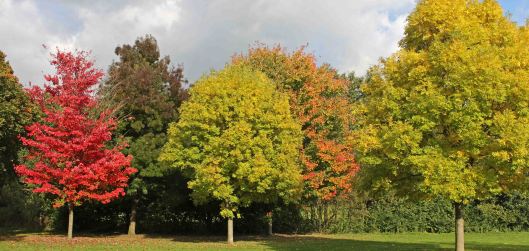
We are having such a spectacular autumn here in Cardiff that I feel the need to share some of the stunning colour I’m seeing in my almost-daily walks in my local parks. I chose well when I found a flat across the road from Roath Park – or, at least, part of it, the recreation grounds, a large grassy area of playing fields. There are also pleasure gardens, a botanical and rose garden, a large lake, and an area called the wild gardens. The park contains a huge variety of trees, both native and exotic, so the colour at this time of year is just magical.

161113-roath-park-autumn-8
161113-roath-park-autumn-6
161113-roath-park-autumn-2
161113-roath-park-autumn-7
161113-roath-park-autumn-9
161113-roath-park-autumn-1
161113-roath-park-autumn-3
161113-roath-park-autumn-4
161113-roath-park-autumn-5
Like Loading...

Draethen Fungi Foray update

12 Saturday Nov 2016

Posted by sconzani in 'Dedicated Naturalist' Project, fungi, nature

≈ Leave a comment

Tags

British fungi, Dr Mary Gillham, Draethen woodlands, fungi foray, Mary Gillham Archive Project, Walking with Mary

When I posted about our ‘Walking with Mary’ fungi foray in Draethen Woodlands last Saturday, I said I would report back with our final species list. Just as Mary and her colleagues had walked these woods in both October and November, so did we, with a site recce on 19 October and then our group foray on 6 November, so this is actually the combined list for both walks. Mary had recorded more than 90 different species of fungi; our total is 79. Being optomistic, I think the lesser number can probably be attributed to our dry autumn weather this year rather than any species loss.

161112-draethen

Here are more photos of the fungi we found, followed by the full species list for any keen fungi fans out there. You can see details of the walk and Mary’s species lists on the Mary Gillham Archive Project website here.

161112-draethen-agaricus-sp
161112-draethen-cortinarius
161112-draethen-dog-stinkhorn
161112-draethen-dusky-puffball
161112-draethen-green-elfcup
161112-draethen-jelly-ear
161112-draethen-jellybaby
161112-draethen-mycena-sp-2
161112-draethen-mycena-sp
161112-draethen-porcelain
161112-draethen-sulphur-tuft
161112-draethen-turkeytail
Scientific name Common name
Agaricus sp.
Amanita sp. Possibly Death Cap Amanita phalloides
Amanita vaginata Grisette
Armillaria gallica Bulbous Honey Fungus
Armillaria mellea Honey Fungus
Ascocoryne sarcoides Purple Jellydisc
Auricularia auricula-judae Jelly ear
Bisporella citrina Lemon Disco
Bjerkandera adusta Smoky Bracket
Chlorociboria sp. Green elf cup
Clavaria vermicularis White Spindles
Collybia butyracea var. asema Butter cap
Collybia sp.
Coprinellus micaceus Glistening inkcap
Coprinus sp. Possibly Shaggy Inkcap
Coprinus sp. Possibly Common Inkcap
Cortinarius sp.
Crepidotus applanatus Flat oysterling
Crepidotus mollis Peeling oysterling
Cystolepiota seminuda
Daedaleopsis confragosa Blushing bracket
Daldinia concentrica King Alfred’s cakes
Diatrype disciformis Beech Barkspot
Exidia nucleata Crystal brain
Exidia sp. Either E. plana or E. glandulosa
Ganoderma sp. Either G. adspersum or G. applanatum
Gymnopus dryophilus Russet Toughshank
Hydnum sp. Possibly H. repandum Hedgehog Fungus
Hygrocybe conica Conical Wax-Cap
Hygrophorus discoxanthus Yellowing woodwax
Hygrophorus eburneus Ivory Woodwax
Hypholoma capnoides Conifer tuft
Hypholoma fasciculare Sulphur tuft
Hypholoma marginatum Snakeskin Brownie
Hypoxylon fragiforme Beech woodwart
Hypoxylon fuscum Hazel Woodwart
Kretzschmaria deusta Brittle cinder
Laccaria amethystina Amethyst deceiver
Lactarius aurantiacus Orange Milkcap
Leotia lubrica Jellybaby
Lepista sp. Possibly Lepista nuda Wood Blewitt
Lycogala sp. Orange slime mould
Lycoperdon excipuliforme Pestle puffball
Lycoperdon nigrescens Dusky puffball
Lycoperdon pyriforme Stump Puffball
Marasmius wynnei Pearly parachute
Mutinus caninus Dog stinkhorn
Mycena arcangeliana Angel’s bonnet
Mycena diosma
Mycena haematopus Burgundydrop bonnet
Mycena rosea Rosy bonnet
Mycena sp.
Mycena vitilis Snapping Bonnet
Oudemansiella mucida Porcelain Fungus
Phallus impudicus Stinkhorn
Pholiota squarrosa Shaggy Scalycap
Phragmidium bulbosum Rubus leaf rust fungus
Phragmidium violaceum Violet Bramble Rust
Piptoporus betulinus Birch polypore
Pluteus phlebophorus Wrinkled shield
Postia caesia Conifer blueing bracket
Postia sp. A crust fungus
Psathyrella sp. One of the Brittlestem fungi
Ramaria sp. Coral fungus
Rhodocollybia butyracea Butter cap
Rhytisma acerinum Sycamore Tarspot
Russula sp.
Sarea resinae
Scleroderma sp. Earthball
Stereum hirsutum Hairy curtain crust
Terana coerulea Cobalt crust
Thelephora terrestris Earth-Fan
Trametes gibbosa Lumpy Bracket
Trametes versicolor Turkey tail
Tricholoma terreum Grey Knight
Xylaria carpophila Beechmast Candlesnuff
Xylaria hypoxylon Candlesnuff
Xylaria longipes Dead Moll’s Fingers
Xylaria polymorpha Dead Man’s Fingers
Like Loading...

Lest we forget

11 Friday Nov 2016

Posted by sconzani in flowers, nature

≈ Leave a comment

Tags

Remembrance Day

‘At the going down of the sun and in the morning
We will remember them’
~ Laurence Binyon, ‘For the Fallen’

161111-poppies-7

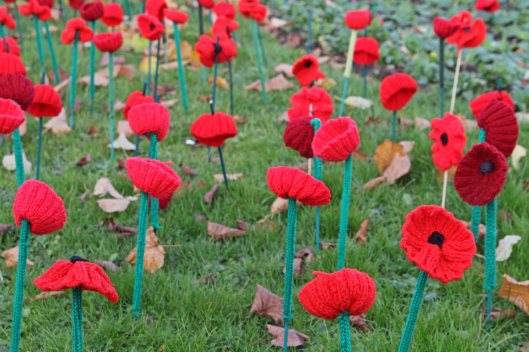
‘These poppies were made by members of the Penylan Craft Group, members of the WI in south Wales and members of the U3A. They were made in recognition of the sacrifices made during conflicts that have enabled each one of us to have a future.’ The poppies are on display in a small lawned area near Roath Lake in Cardiff.

161111-poppies-1
161111-poppies-2
161111-poppies-3
161111-poppies-4
161111-poppies-5
161111-poppies-6
Like Loading...

Green elfcups

10 Thursday Nov 2016

Posted by sconzani in fungi, nature

≈ 16 Comments

Tags

Chlorociboria aeruginascens, Chlorociboria aeruginosa, cup fungi, cup fungus, Elfcups, Green elfcup, Nant Fawr Woodlands, Turquoise elfcup

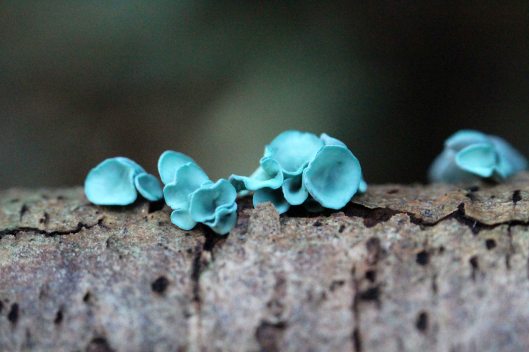
I’d seen these gorgeous little cup fungi a few times before but last Saturday was the first time I’d found them myself, in nearby Nant Fawr Woodlands, and it’s fair to say I was over the moon! They’re tiny – I deliberately took a photo of my hand holding the fallen branch they were growing on to show their size – but their colour is so unusual that it catches the eye, so they’re not that difficult to spot, though they’re also not very common.

green-elfcup-4

Now, I don’t know about you but I would describe their colour as turquoise, or near as dammit, but there are two very similar species of these cups and these are more likely to be Green elfcups (Chlorociboria aeruginascens) rather than Turqoise elfcups (Chlorociboria aeruginosa), as the latter are smaller and quite rare. Microscope work is needed to distinguish the two and even that is reported to be difficult.

green-elfcup-1

One fascinating thing about these beautiful fungi is the green staining they cause in wood, and, not surprisingly, that wood is highly prized by woodturners. In fact, in Victorian times, green-stained oak was one of the woods used to make Tunbridge ware, the name given to a type of inlaid decorative woodwork that haled originally from the towns of Tonbridge and Tunbridge Wells in Kent. The antique pieces are still highly sort after by collectors and just a little out of my price range but they certainly are lovely.

green-elfcup-2
green-elfcup-3
Like Loading...

The Sacred kingfisher

09 Wednesday Nov 2016

Posted by sconzani in birds, nature

≈ 5 Comments

Tags

birding, birdwatching, Kingfisher, New Zealand kingfisher, Sacred kingfisher

For World wildlife Wednesday this week we head to my homeland to check out one of our many beautiful birds. The aptly named ‘king of the fishers’ is a highly entertaining bird to watch, especially when fishing. New Zealand’s Sacred kingfisher (Todiramphus sanctus) sits patiently on a strategically placed branch, pole or railing overlooking a mudflat or estuary then, with a sudden flash of turquoise, it’s off to snatch, catch or grab whatever has caught its sharp eye. Though its habits and habitats are similar to those of the British kingfisher I now see on local rivers and streams, the Sacred kingfisher’s colouring is somewhat different, as you can see from these photos – the British bird is on the left, the New Zealand bird on the right.

161109-british-kingfisher
161109-new-zealand-kingfisher-1

With its loud ‘kek kek kek’ call, the Sacred kingfisher is sure to announce its presence, especially if you stray within its territory during the mating season, when it will also dive-bomb other birds and even humans if it considers them a threat. Its burrows can often be seen up high in muddy cliffs and banks at the coast but it also nests in holes in trees. Luckily, the population is numerous and widespread so New Zealanders and visitors alike can enjoy its antics.

161109-new-zealand-kingfisher-2

Like Loading...

The caring earwig mother

08 Tuesday Nov 2016

Posted by sconzani in insects, nature

≈ 2 Comments

Tags

Common earwig, earwig, earwig maternal care, earwig mothers and their young, earwig parental care, Forficula auricularia

As I’m sure you all know by now, I spend a couple of days each week volunteering at the Mary Gillham Archive Project, part of which involves extracting wildlife records from a huge number of folders absolutely stuffed full of the long lists of species Mary saw every time she stepped outside her house (and some inside her house as well). From attending lectures, watching television programmes, talking to people, reading journal articles, Mary also amassed a wealth of information about the flora and fauna of Britain so we learn a lot of fascinating details just from reading through all the paperwork.

161107-common-earwig-3

Today I was reading about the Common earwig (Forficula auricularia) and was struck by this incredible detail: ‘The earwig mother cares for her young. She licks them – very necessary to keep them free of fungal infection.’ Apparently, the female earwig, who can be recognised by her straight rear pincers (the male’s are curved), spends the wintertime in a tunnel in the soil looking after her eggs, restacking them, sometimes moving them to a different part of the tunnel, and cleaning them to keep them fungi free. From the time they are born until they reach the second instar stage and leave the nest, she brings them plant and animal matter to eat and also regurgitates food for them. Perhaps the gardeners among you will now look more kindly on the earwigs that are chewing your dahlias – they might just have babies to feed.

161107-common-earwig-1
161107-common-earwig-2
161107-common-earwig-4
Like Loading...

The food of reindeer

07 Monday Nov 2016

Posted by sconzani in lichen, nature

≈ 13 Comments

Tags

caribou food, Cladonia, cup lichen, reindeer food

From my reading I’ve discovered that these cup lichen – Cladonia, by name – are what reindeer and caribou like to eat most. Well, I did see a jolly looking man wearing a bright red jacket walk past just before I took these photos, but I doubt there’s enough Cladonia in my local park to keep Santa’s sleigh-pullers going for more than a kilometre of their round-the-world trip in December, so I don’t think he was Father Christmas looking for potential refuelling stops!

161107-cladonia-1

I don’t know exactly which species of Cladonia I’ve found (and I haven’t yet waded through the 42-page key I downloaded!) and it seems you need a certain level of scientific vocabulary to determine this anyway (the first 5 pages of the key are devoted to a glossary of terms!) but I love the common names many of them have: Pixie cup lichen and Red-fruited pixie cup, Lipstick powderhorn, Trumpet lichen and Felt horn lichen, Dragon lichen, Wand lichen and British soldiers. The references to the colour red and to lipstick are due to the red-coloured fruit that appear on top of their goblet-shaped stalks (podetia). Unfortunately, there is only the merest hint of red in the photo above but, if I do manage to see them in full fruiting display, I’ll post another blog to show you.

161107-cladonia-2
161107-cladonia-3

161107-cladonia-4

Like Loading...

‘Dedicated Naturalist’: Walking with Mary in Draethen Woodlands

06 Sunday Nov 2016

Posted by sconzani in 'Dedicated Naturalist' Project, autumn, fungi, nature, trees

≈ 2 Comments

Tags

Dr Mary Gillham, Draethen, Draethen woodlands, fungi foray, Glamorgan Fungus Club, Mary Gillham Archive Project, Walking with Mary

161106-draethen-walk-with-mary-1

Today I joined my fellow members of the Mary Gillham Archive Project, my friends in the Glamorgan Fungus Club, and members of the local Wildlife Trust and Cardiff Naturalists’ Society to walk in the footsteps of Mary Gillham in Draethen Woodlands. And what a fabulous day it has been!

Mary visited these woods many times from the 1960s to the 1990s, sometimes with friend and fungi expert Roy Perry, sometimes with groups similar to ours, and they recorded over 90 different species of fungi during the months of October and November. Our aim today was to recreate Mary’s walks, to see how many fungi species we could find, and to compare those past records with ours.

161106-draethen-walk-with-mary-3

It’s been a dry autumn in South Wales so we weren’t sure how much fungi we would find but, turns out, fungi are plentiful and fruiting well under the leafy boughs of this beautiful woodland. From the lower car park our group of almost 50 people strolled along the metalled forestry road, venturing left and right amongst the tall beech trees, eyes peeled for fungi, and we were not disappointed.

161106-draethen-walk-with-mary-6
161106-draethen-walk-with-mary-4

From the obvious mushroom shapes of the wood-rotting Honey fungi and the shelf-like protrusions of various brackets to the less easy to spot black blobs of Dead Moll’s Fingers, the common fungi species were what we’d expected to see and were relatively easy to find. We were delighted to also find some unexpected treasures: sprinklings of the charmingly named Jellybabies, a wealth of Earthfans carpeting a large area and the delicate bonnets of various Mycena species.

161106-draethen-walk-with-mary-5
161106-draethen-walk-with-mary-7
161106-draethen-walk-with-mary-2

We’ve still to collate and tally up our fungi finds, so I’ll report back in a couple of days with the full list and a few more photos. If you live in the area and want to do this walk for yourself, the details can be found here.

For the full story about the Mary Gillham Archive Project, check out our website,  and follow our progress on Facebook and on Twitter.

Like Loading...
← Older posts
Newer posts →

About me

sconzani

sconzani

I'm a writer and photographer; researcher and blogger; birder and nature lover; countryside rambler and city strider; volunteer and biodiversity recorder.

View Full Profile →

Follow earthstar on WordPress.com

Enter your email address to follow this blog and receive notifications of new posts by email.

Recent blog posts

  • Nesting material April 28, 2026
  • Lifer: Box bug April 27, 2026
  • Peak Wild garlic April 26, 2026
  • First damsels of 2026 April 25, 2026
  • NFY: Green-veined white April 24, 2026

From the archives

COPYRIGHT

Unless otherwise acknowledged, the text and photographs on this blog are my own and are subject to international copyright. Nothing may be downloaded or copied without my permission.

Fellow Earth Stars!

  • Unknown's avatar
  • Unknown's avatar
  • Unknown's avatar
  • Unknown's avatar
  • Unknown's avatar
  • Unknown's avatar
  • Unknown's avatar
  • Unknown's avatar
  • Unknown's avatar
  • Unknown's avatar
  • Unknown's avatar
  • Unknown's avatar
  • Unknown's avatar
  • Unknown's avatar
  • Unknown's avatar
  • Unknown's avatar
  • Unknown's avatar
  • Unknown's avatar
  • Unknown's avatar
  • Unknown's avatar
  • Unknown's avatar
  • Unknown's avatar
  • Unknown's avatar
  • Unknown's avatar
  • Unknown's avatar
  • Unknown's avatar
  • Unknown's avatar
  • Unknown's avatar
  • Unknown's avatar
  • Unknown's avatar
  • Unknown's avatar
  • Unknown's avatar
  • Unknown's avatar
  • Unknown's avatar
  • Unknown's avatar
  • Unknown's avatar
  • Unknown's avatar
  • Unknown's avatar
  • Unknown's avatar
  • Unknown's avatar
  • Unknown's avatar
  • Unknown's avatar
  • Unknown's avatar
  • Unknown's avatar
  • Unknown's avatar
  • Unknown's avatar
  • Unknown's avatar
  • Unknown's avatar
  • Unknown's avatar
  • Unknown's avatar

Blog at WordPress.com.

Privacy & Cookies: This site uses cookies. By continuing to use this website, you agree to their use.
To find out more, including how to control cookies, see here: Cookie Policy
  • Subscribe Subscribed
    • earthstar
    • Join 642 other subscribers
    • Already have a WordPress.com account? Log in now.
    • earthstar
    • Subscribe Subscribed
    • Sign up
    • Log in
    • Report this content
    • View site in Reader
    • Manage subscriptions
    • Collapse this bar

Loading Comments...

You must be logged in to post a comment.

    %d