• ABOUT
  • BIRDING 2018
  • Birding 2019
  • BLOG POSTS
  • Butterflies 2018
  • Resources

earthstar

~ a celebration of nature

earthstar

Category Archives: nature

Autumn in Cardiff: Cefn Onn

05 Monday Dec 2016

Posted by sconzani in nature, parks

≈ Leave a comment

Tags

autumn colour, autumn in Cardiff, autumn leaves, Cefn Onn, Parc Cefn Onn

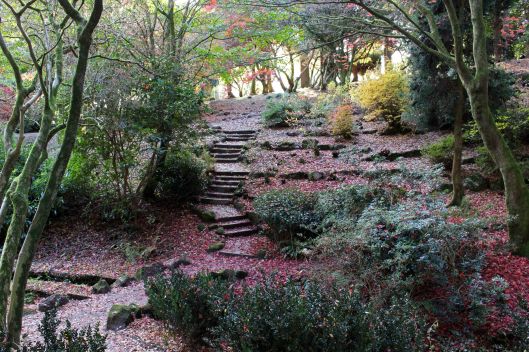
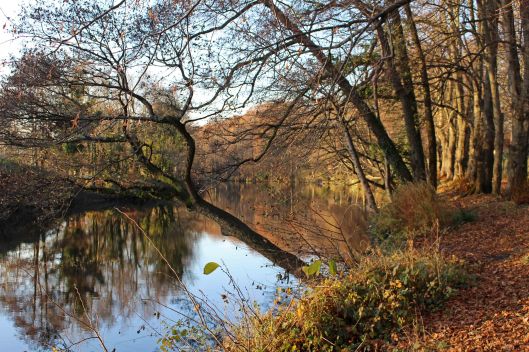
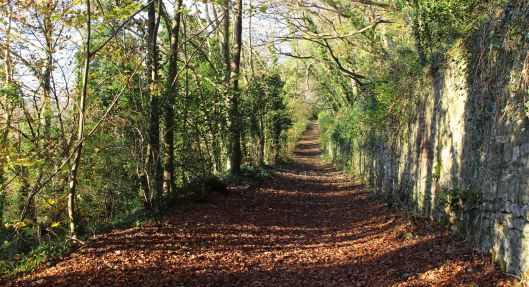
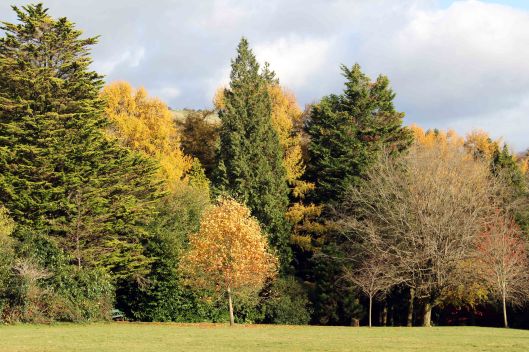
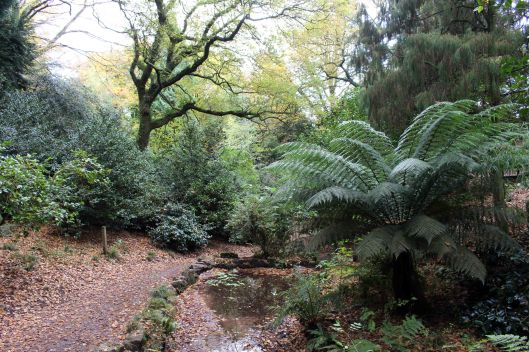
The meteorologists tell us it is now officially winter and, if last week’s cold snap was anything to go by, they’re probably right. But, as I walk my familiar trails through Cardiff’s parks and green spaces, I’m still finding plenty of traces of autumn colour. So, I thought I would share these few shots from my recent visit to Parc Cefn Onn, on Cardiff’s northern outskirts.

161204-cefn-onn-1

161204-cefn-onn-2

The formal part of the park was designed around 90 years ago so many of the native and exotic trees have now grown tall and statuesque, though these are prettily interspersed with colourful maples which, in autumn, carpet the ground in gorgeous shades of red and crimson. The planting is sculpted around a valley through which runs the burbling Nant Fawr stream, there’s a large pond and formal paths and, my favourite, a wild area with meandering woodland trails.

161204-cefn-onn-3

When I visited, the rangers had lit a fire to burn off some of the smaller branches from recently felled storm-damaged trees. The effect of the sun’s rays lighting up the smoke as it curled through the trees was simply magical, and the smell of the wood smoke took me back to my childhood and happy memories of family nights spent around the open fire.

161204-cefn-onn-4

Like Loading...

Down by the riverside

04 Sunday Dec 2016

Posted by sconzani in nature, parks, trees, winter

≈ 8 Comments

Tags

Blackweir, Cardiff, Llandaff Weir, River Taff, Taff Trail, Taffside trail

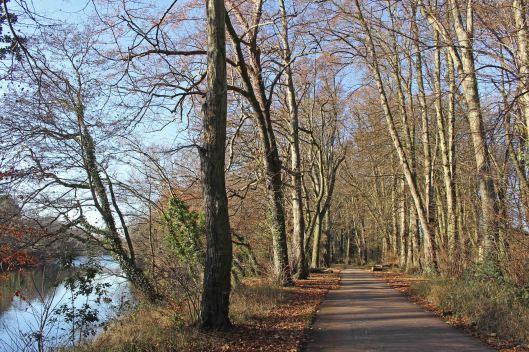
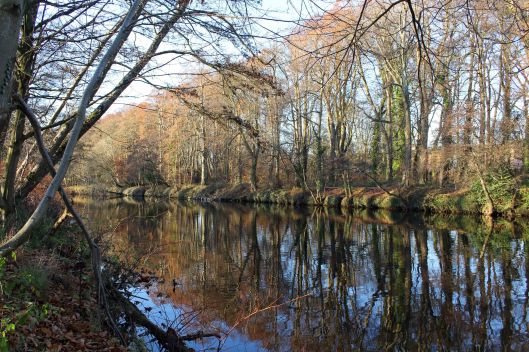
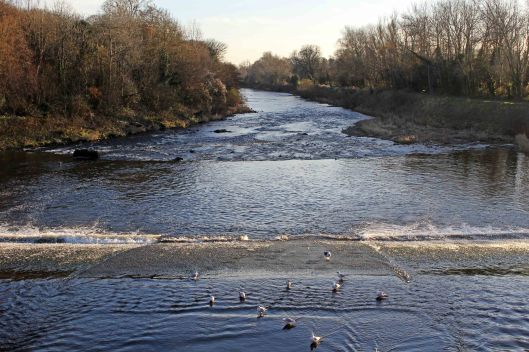
Today was a glorious early winter day: bright blue skies; chilly enough to wrap up in winter woollies, hat, scarf and gloves; crisp underfoot. So, duly rugged up, I headed down to the riverside. I walked part of the Taff Trail north from Blackweir, crossed the river at the next bridge and continued on along the riverside trail to Llandaff, then completed the circuit back to Blackweir on the western side of the river. I hope you can see from my photos why I think it has been the most perfect day!

161204a-taff-trail-1

The Taff Trail heading north alongside the River Taff

161204b-taff-trail-2

Still on the Taff Trail

161204c-llandaff-weir

Gulls enjoying a bath at Llandaff Weir

161204d-riverside-trees

Trees along the edge of Pontcanna Fields

161204e-river-taff

River Taff, almost directly opposite where I took the first photo

161204f-blackweir-bridge

The footbridge across the Taff at Blackweir

161204g-river-taff-from-blackweir-bridge

From the bridge looking south down the Taff

161204h-riverside

Almost back to where I started, with the riverside looking glorious in the late afternoon sun

Like Loading...

The beauty in the details

03 Saturday Dec 2016

Posted by sconzani in lichen, nature

≈ 11 Comments

Tags

beauty of small things, nature quote

151203-lichen-1

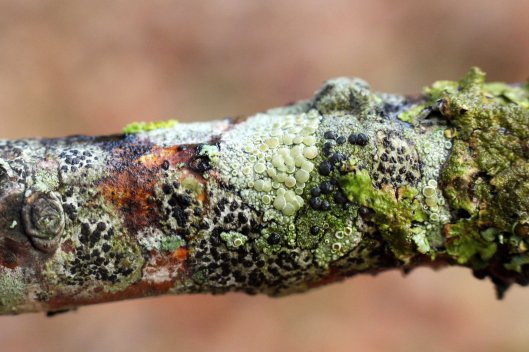
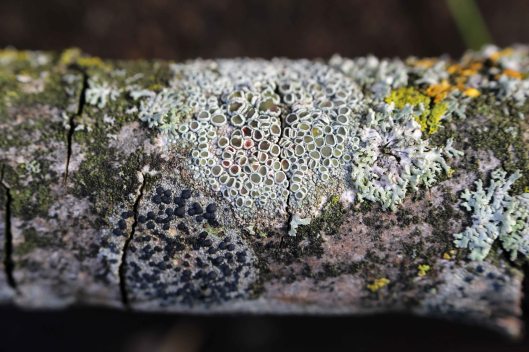
‘In all things of nature there is something of the marvellous.’ ~ Aristotle
 151203-lichen-2

‘The beauty of the natural world lies in the details.’ ~ Natalie Angier
 151203-lichen-3

‘A multitude of small delights constitutes happiness.’ ~ Charles Baudelaire

Like Loading...

Fungi Friday: Purple Jellydisc fungi, maybe

02 Friday Dec 2016

Posted by sconzani in fungi, nature

≈ 4 Comments

Tags

Ascocoryne, Ascocoryne cylichnium, Ascocoryne sarcoides, fungi identification, Purple Jellydisc

I am frequently frustrated in my quest to identify the fungi I find on my daily walks and today’s fungi provide yet another example of how difficult a task identification can be.

161202-ascocoryne-sp-1

I can say with a high degree of certainty that the fungi shown in my photos are of the Ascocoryne species, but there are two species of Ascocoryne that look almost identical at certain stages in their development, A. sarcoides and A. cylichnium. The latter only ever forms a cup shape, whereas the former goes through a cup-shaped stage but then goes on to form gelatinous brain-like blobs, hence the common name Purple Jellydisc. (One stage is asexual, the other a sexual spore-producing stage.) It’s highly likely, then, that the blobby fungi in my photos are indeed Purple Jellydisc. In fact, it’s highly likely that all my photos show Ascocoryne sarcoides, as that is said to be the most common species, but is it really? It could be that people assume they have found A. sarcoides and record their finds as such, even though the only way to be absolutely certain is to examine the spores of the fungi under a microscope.

161202-ascocoryne-sp-2
161202-ascocoryne-sp-3
161202-ascocoryne-sp-4

I am booked on a course to learn how to use a microscope in February. Until then, I’ll just have to content myself with admiring Ascocoryne’s beautiful colours, shapes and textures. I hope you enjoy them too.

161202-ascocoryne-sp-5
161202-ascocoryne-sp-6
161202-ascocoryne-sp-7
161202-ascocoryne-sp-8
161202-ascocoryne-sp-9
161202-ascocoryne-sp-10
Like Loading...

Watch the birdie!

01 Thursday Dec 2016

Posted by sconzani in birds, nature

≈ 8 Comments

Tags

birding, birdwatching, British birds, coal tit, Forest Farm Nature Reserve, Kingfisher, Mallard, Moorhen, nuthatch, robin

When deciding on a title for this post, I couldn’t help but wonder where the phrase ‘Watch the birdie’ originated, and I quickly discovered that as early as 1879 Victorian portrait photographers were using trained live birds and then mechanical chirping birds to hold the attention of their subjects. (This blog has more details if you’re interested.) My intentions were a little different: I was carrying small pottles of bird seed to try to hold the birdies’ attention so I could take their photographs! However, plenty of folk had beaten me to it and the birds were already scoffing into all their food presents.

161201-forest-farm

I hadn’t been to Forest Farm for a month or two so it was lovely to wander along the towpath of the old Glamorgan Canal and the meandering woodland paths, listening to bird song all around. A highlight was watching a kingfisher trying to spot the sprats in the canal – I only saw it dive once and that was unsuccessful but it was still an absolute delight to watch. It was a truly wonderful day watching the very-much-alive birdies.

161201-coal-tit
161201-kingfisher
161201-mallard
161201-moorhen
161201-nuthatch
161201-robin
Like Loading...

‘Dedicated Naturalist’: Horace and other tuataras

30 Wednesday Nov 2016

Posted by sconzani in 'Dedicated Naturalist' Project, nature, reptiles

≈ 4 Comments

Tags

A Naturalist in New Zealand, Dr Mary Gillham, Horrible Horace, living dinosaur, Mary Gillham Archive Project, Rodger Blanshard, Sphenodon punctatus, Stephens Island, tuatara, Unique New Zealand fauna

A snippet from my volunteer work on the ‘Dedicated Naturalist’ Project, helping to decipher and digitise, record and publicise the life’s work of naturalist extraordinaire, Dr Mary Gillham.

On 13 May 1957, the day I turned one, Mary Gillham wrote in her New Zealand diary:

The 13th, not perhaps the most auspicious day on which to undertake the most hazardous voyage of my stay in NZ, but it proved a perfect day.
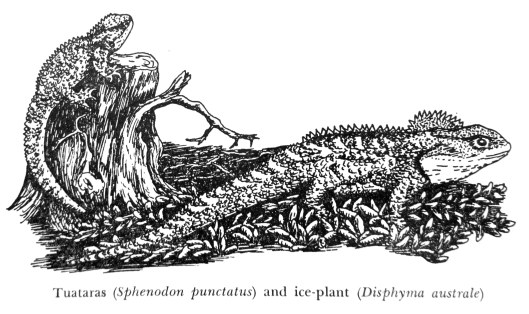
161130-mary-gillhams-tuatara-drawing

Mary was sailing to Stephens Island through the often turbulent waters of Cook Strait to spend a week with lighthousekeeper Rodger Blanshard and family, to continue her studies into the flora and fauna of New Zealand’s many islands. On this day, too, Mary met her very first dinosaurs, though she went on to write:

Horace, the lighthouse tuatara or dinosaural lizard for which these islands are famous, was not at home but we found plenty more up to 2’ 6” long, some of which we took inside and put in the sink to photograph next day.

And the next day:

… Then back to the house for Rodger to photograph me festooned about with tuataras which had spent an uneventful night in the sink.

161130-tuatara

So, what is a tuatara? Here’s a little of what Mary later wrote in her book A Naturalist in New Zealand:

The reptile, whose full title is Sphenodon punctatus …
Its ancestors were Triassic and Jurassic saurians which, with the exception of Sphenodon, are thought to have died out 150 million years ago … a living fossil …
Its chief claim to fame is the vestigial third eye lying in a cavity in the top of the skull. This retains both retina and lens, but the retina is no longer able to reflect an image and its nerve supply degenerates as the animal grows. …
The lighthousekeepers of the various tuatara islands I visited took a proprietary interest in their tuataras and vied with each other to produce the biggest measurements – almost as if they were fish!
… live to a ripe old age; to such a ripe age in fact, that we mortals in our transience can barely keep account of it. Anyone who marks a young tuatara is unlikely to live long enough to record its decease.
… so the Blanshard family, who were on especially good terms with “Horrible Horace” the tuatara who lived in their woodpile. Numbers of Horace’s cronies dwelt within a few yards of the house …
I was surprised to learn that the dark warts with which they were beset were actually their own private brand of tick, Aponomma sphenodonti, and that the rusty patches on their flanks were untold numbers of minute red mites. Even these ancients are subject to the law that “great fleas have little fleas …”

161130-mary-gillham-and-tuatara
161130-mary-gillhams-tuataras

Above left, a newspaper clipping of Mary and a tuatara, and, right, Mary’s photos of tuataras – and Rodger Blanshard – on Stephens Island.

For the full story about the Mary Gillham Archive Project, check out our website, and follow our progress on Facebook and on Twitter.

Like Loading...

No bees in these bonnets

29 Tuesday Nov 2016

Posted by sconzani in fungi, nature

≈ 8 Comments

Tags

Bonnet fungi, Bonnet mushroom, Mycena, Mycena fungus, Mycenoid fungi

As mushroom expert Michael Kuo writes, Mycena fungi are ‘some of the most beautiful and elegant mushrooms on earth’ but, due to their often tiny size, they’re frequently overlooked. His advice is that we should all slow down and take the time to appreciate the beauty of small things. And I couldn’t agree more!

161129-mycena-fungi-2

I think you can easily see why the Mycenoid fungi usually have a common name that includes the word bonnet: that cap shape is a dead giveaway. And their common names are often delightful, sometimes intriguing: Pinkedge bonnet, Frosty bonnet, Snapping bonnet, Pelargonium bonnet, Bleeding bonnet, Ferny bonnet, Nitrous bonnet, Vulgar bonnet and Cryptic bonnet, to name just a few. Like nearly all fungi, the Mycenoids can be difficult to identify and I don’t know the names of all of those in my photographs but I do think they’re all rather lovely.

161129-mycena-fungi-5
161129-mycena-fungi-3
161129-mycena-fungi-6
161129-mycena-fungi-4
161129-mycena-fungi-1
Like Loading...

It’s National Tree Week

28 Monday Nov 2016

Posted by sconzani in nature, trees

≈ 3 Comments

Tags

avenue of trees, Celebration of trees, festival of trees, National Tree Week, Pontcanna Fields, The Tree Council, tree planting

I love how there is always some nature-related initiative happening somewhere in Britain. I do think they’re not always well advertised – I only found out about National Tree Week by chance when scrolling through my Twitter feed yesterday – but, wherever possible, if I find out about something, I will try to support it, if only by spreading the word in my own rather limited way.

161128-pontcanna-trees-1-summer

Anyhoo, National Tree Week, which is now in its 41st year, is the brainchild of The Tree Council and is punted as Britain’s ‘biggest annual festival of trees’. It’s a time to improve your view, to fight the ravages of time, weather and tree diseases, to provide a home for wildlife, to renew and restore the landscape, to provide natural flood defences, to improve air quality, all by planting trees. Even a small tree in your own backyard will make a significant contribution so, choose wisely, and get out and a plant a tree this week.

161128-pontcanna-trees-2-autumn

The trees in my photographs today are in Pontcanna Fields here in Cardiff. It’s a wonderful young avenue of trees that looks glorious whatever the season.

161128-pontcanna-trees-3-winter

Like Loading...

Sixteen shades of brown

27 Sunday Nov 2016

Posted by sconzani in autumn, leaves, nature

≈ 21 Comments

Tags

autumn, autumn colour, autumn leaves, brown leaves, shade of brown

‘Cardiff Dreaming’
All the leaves are brown
And the sky is grey
I’ve been for a walk
On an autumn day
(with apologies to The Mamas and Papas for degrading their lyrics)

Are you singing along?

161127-brown-leaves-1
161127-brown-leaves-2
161127-brown-leaves-3
161127-brown-leaves-4
161127-brown-leaves-5
161127-brown-leaves-6
161127-brown-leaves-7
161127-brown-leaves-8
161127-brown-leaves-9
161127-brown-leaves-10
161127-brown-leaves-11
161127-brown-leaves-12
161127-brown-leaves-13
161127-brown-leaves-14
161127-brown-leaves-15
161127-brown-leaves-16
Like Loading...

‘Dedicated Naturalist’: Laugh with the kookaburra

26 Saturday Nov 2016

Posted by sconzani in 'Dedicated Naturalist' Project, birds, nature

≈ 4 Comments

Tags

Australian birds, autograph book, Dr Mary Gillham, Explore Your Archives, Mary Gillham Archive Project

A snippet from my volunteer work on the ‘Dedicated Naturalist’: Mary Gillham Archives Project, to celebrate Explore Your Archive, a campaign co-ordinated jointly by The National Archives and the Archives and Records Association that aims ‘to showcase the unique potential of archives to excite people, bring communities together, and tell amazing stories’.

I just love this piece Mary wrote in the autograph book of Lynette A. Smith, from the small town of Lady Barron, on Flinders Island, Australia, on 18 December 1958. Not only does it show Mary’s keen observation of bird life (also apparent in her drawings), but it also offers some interesting pearls of wisdom.

161126-gillham-gannets

Pursue your ideals as a gannet dives for fish – straight and undeviating;
Show constancy of purpose, like a mutton bird returning yearly to the same burrow;
Seek diligently for what is worthwhile as the Cape Barren goose seeks titbits of vegetation;
Guard your morals jealously against the tempter, as the oyster-catcher guards its eggs against intruders;
Go about your business without fuss, like a storm petrel flitting through the night;
Be patient as the penguin chick waiting for mum to come home with supper;
Be decorative, like the tern which cleaves the air in soaring flight;
Be thrifty like the silver gull which leaves no fruitful possibility unexplored;
Laugh with the kookaburra, sing with the magpie and you will soar as high as the sea eagle.

161126-gillham-kookaburra
161126-gillham-magpie
161126-gillham-oystercatchers
161126-gillham-penguins
161126-gillham-petrels
161126-mary-gillham-big-dog-island-1959

For the full story about the Mary Gillham Archive Project, check out our website, and follow our progress on Facebook and on Twitter.
Like Loading...
← Older posts
Newer posts →

About me

sconzani

sconzani

I'm a writer and photographer; researcher and blogger; birder and nature lover; countryside rambler and city strider; volunteer and biodiversity recorder.

View Full Profile →

Follow earthstar on WordPress.com

Enter your email address to follow this blog and receive notifications of new posts by email.

Recent blog posts

  • Nesting material April 28, 2026
  • Lifer: Box bug April 27, 2026
  • Peak Wild garlic April 26, 2026
  • First damsels of 2026 April 25, 2026
  • NFY: Green-veined white April 24, 2026

From the archives

COPYRIGHT

Unless otherwise acknowledged, the text and photographs on this blog are my own and are subject to international copyright. Nothing may be downloaded or copied without my permission.

Fellow Earth Stars!

  • Unknown's avatar
  • Unknown's avatar
  • Unknown's avatar
  • Unknown's avatar
  • Unknown's avatar
  • Unknown's avatar
  • Unknown's avatar
  • Unknown's avatar
  • Unknown's avatar
  • Unknown's avatar
  • Unknown's avatar
  • Unknown's avatar
  • Unknown's avatar
  • Unknown's avatar
  • Unknown's avatar
  • Unknown's avatar
  • Unknown's avatar
  • Unknown's avatar
  • Unknown's avatar
  • Unknown's avatar
  • Unknown's avatar
  • Unknown's avatar
  • Unknown's avatar
  • Unknown's avatar
  • Unknown's avatar
  • Unknown's avatar
  • Unknown's avatar
  • Unknown's avatar
  • Unknown's avatar
  • Unknown's avatar
  • Unknown's avatar
  • Unknown's avatar
  • Unknown's avatar
  • Unknown's avatar
  • Unknown's avatar
  • Unknown's avatar
  • Unknown's avatar
  • Unknown's avatar
  • Unknown's avatar
  • Unknown's avatar
  • Unknown's avatar
  • Unknown's avatar
  • Unknown's avatar
  • Unknown's avatar
  • Unknown's avatar
  • Unknown's avatar
  • Unknown's avatar
  • Unknown's avatar
  • Unknown's avatar
  • Unknown's avatar

Blog at WordPress.com.

Privacy & Cookies: This site uses cookies. By continuing to use this website, you agree to their use.
To find out more, including how to control cookies, see here: Cookie Policy
  • Subscribe Subscribed
    • earthstar
    • Join 642 other subscribers
    • Already have a WordPress.com account? Log in now.
    • earthstar
    • Subscribe Subscribed
    • Sign up
    • Log in
    • Report this content
    • View site in Reader
    • Manage subscriptions
    • Collapse this bar
 

Loading Comments...
 

You must be logged in to post a comment.

    %d