• ABOUT
  • BIRDING 2018
  • Birding 2019
  • BLOG POSTS
  • Butterflies 2018
  • Resources

earthstar

~ a celebration of nature

earthstar

Category Archives: nature

Welsh Biodiversity: Colonising the walls

08 Wednesday Jun 2016

Posted by sconzani in nature

≈ 2 Comments

Tags

biodiversity, biological diversity, colonising the walls, Wales Biodiversity Week

Here’s something a little different for day five of Wales Biodiversity Week. This is not a specific location – it could be at your house, at the bottom of your garden, in the street where you live, in the middle of a city or in the depths of the countryside.
160608 colonising wall (1)

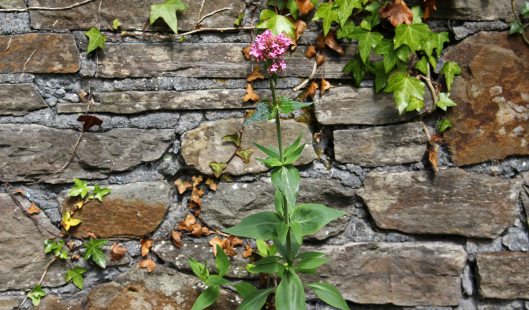
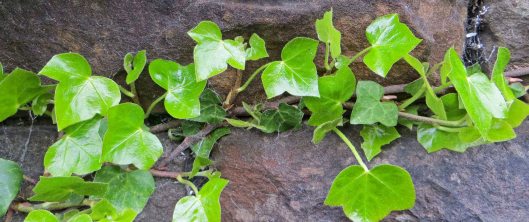
Stone and brick walls are all around us, and they frequently offer superb examples of a biodiverse environment in miniature. The roots of enterprising plants, like ivy and ivy-leaved toadflax, seek out the tiniest cracks and crannies to establish themselves, as do the many varieties of the garden-escapee Campanula species, which are providing magnificent displays in shades of lilac, blue and purple on the walls here in Cardiff right now. On the damper sides of walls and along the bottoms ferns, mosses and lichens make themselves right at home. Bees, birds and ants frequently nest in the larger holes, as do the occasional rats and mice, and a damp crevice at ground level can make the perfect home for a toad.
160608 colonising wall (2)

And then we have the smaller critters – bees and butterflies often bask in the sunshine on walls; slaters, millipedes and snails inhabit the dark spaces between stones and old bricks; and spiders find the gaps convenient places to string their webs. When you’re next out walking, don’t ignore the walls – take a closer look. You might be surprised what you find.

160608 colonising wall (3)
160608 colonising wall (4)
160608 colonising wall (5)
160608 colonising wall (6)
160608 colonising wall (7)
160608 colonising wall (8)
160608 colonising wall (9)
160608 colonising wall (10)
160608 colonising wall (11)
160608 colonising wall (12)
160608 colonising wall (13)
160608 colonising wall (14)
Like Loading...

Welsh biodiversity: Cathays Cemetery

07 Tuesday Jun 2016

Posted by sconzani in nature

≈ 9 Comments

Tags

biodiversity, Cathays Cemetery, Green Flag Award, Site of Importance for Nature Conservation, Wales Biodiversity Week, wildflowers

For day four of Wales Biodiversity Week we’re heading to a wonderfully biodiverse location just 10 minutes’ walk from where I live – my local cemetery!

160607 CathaysCem biodiversity (2)

Although Cathays Cemetery was first opened in 1859, its 110-acre grounds have remained largely undisturbed since the cemetery closed to new burials about 35 years ago, so it is the perfect environment for native plants to thrive, and that means it also provides a rich habitat for the birds, animals and insects that live in, amongst and on those plants. The cemetery also contains an arboretum of trees, both native and exotic, and some remnants of shrubs and flowers planted in Victorian times. No wonder the cemetery has been classified by Cardiff Council as a Site of Importance for Nature Conservation, and has held the Green Flag Award since 2009.

160607 CathaysCem biodiversity (1)

When it first opened, the cemetery wasn’t just a place to bury Cardiff’s dead; with few parks and recreation spaces available at that time, this was also considered a pleasant place to walk – and it still is!

160607 CathaysCem biodiversity (3)
160607 CathaysCem biodiversity (4)
160607 CathaysCem biodiversity (5)
160607 CathaysCem biodiversity (6)
160607 CathaysCem biodiversity (7)
160607 CathaysCem biodiversity (8)
160607 CathaysCem biodiversity (9)
160607 CathaysCem biodiversity (10)
160607 CathaysCem biodiversity (11)
Like Loading...

Welsh biodiversity: Howardian NR

06 Monday Jun 2016

Posted by sconzani in nature, wildflowers

≈ 7 Comments

Tags

30 Days Wild, biodiversity, Howardian Nature Reserve, Wales Biodiversity Week

Another day, more biodiversity! On day three of Wales Biodiversity Week I explored another of my local nature reserves, Howardian, a 30-odd-acre triangle of woods and meadows, at the intersection of two major Cardiff roads, which was once a domestic rubbish tip. Oh how times have changed for the better!

160606 howardian (2)

After more than 40 years of tireless labour, firstly by the pupils of the Howardian High School Natural History Society and now by the Friends of Howardian LNR (where would the environment be without these Friends groups!), the reserve is a treasure trove of biodiversity. You only need to look at the website galleries and the impressive species’ lists to get an idea of the richness of life in this reserve: field voles and dormice (!); slow worms and palmate newts; bees, butterflies and damselflies; chiffchaffs and whitethroats; moths and hoverflies; fungi, lichen and mosses; and, during the months of June and July (now!), a breathtaking display of native orchids.

160606 howardian (1)

Howardian is a superb testament to how a former urban wasteland can, with time and a ton of hard work, be revitalised into a shining example of a biodiverse environment.

160606 howardian (3)
160606 howardian (4)
160606 howardian (5)
160606 howardian (6)
160606 howardian (7)
160606 howardian (8)
160606 howardian (9)
160606 howardian (10)
160606 howardian (11)
160606 howardian (12)
160606 howardian (13)
160606 howardian (14)
Like Loading...

Welsh biodiversity: Nant Fawr Woodlands

05 Sunday Jun 2016

Posted by sconzani in nature

≈ 2 Comments

Tags

30 Days Wild, biodiversity, Nant Fawr Woodlands, Wales Biodiversity Week, wildflowers, woodland

For day two of Wales Biodiversity Week (and day 5 of 30 Days Wild, which I am also following – more information on that Wildlife Trust initiative here) – I went for a wander around one of my local nature reserves, Nant Fawr Woodlands. Established as a green corridor by Cardiff City Council in 1993 and following the Nant Fawr stream from Roath Park Lake to Llanishen Reservoir, the woodlands are managed by a group of local conservation-minded residents, ‘The Friends of Nant Fawr’.

160605 nant fawr (1)

As well as two parcels of woodland harbouring some magnificent old trees, the area also includes three ancient meadows, once part of Rhyd-y-blewn farm, which are valuable habitats for wildflowers and the insects that thrive on them. The Friends are part of the Cardiff Biodiversity Partnership, have a well-developed biodiversity action plan, and manage the woodlands and meadows in accordance with agreed guidelines to conserve and enhance this wonderful environment.

160605 nant fawr (2)

It’s a wonderful place for a ramble, taking you from city to countryside, with much to enjoy along the way.

160605 nant fawr (3)
160605 nant fawr (4)
160605 nant fawr (5)
160605 nant fawr (6)
160605 nant fawr (7)
160605 nant fawr (8)
160605 nant fawr (9)
160605 nant fawr (10)
160605 nant fawr (11)
Like Loading...

Welsh biodiversity: Kenfig NNR

04 Saturday Jun 2016

Posted by sconzani in nature

≈ 4 Comments

Tags

biodiversity, Kenfig National Nature Reserve, Kenfig Pool, sand dunes, Wales Biodiversity Week

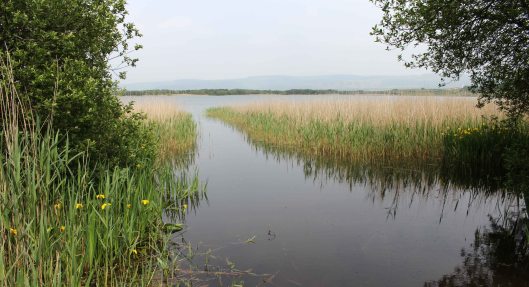
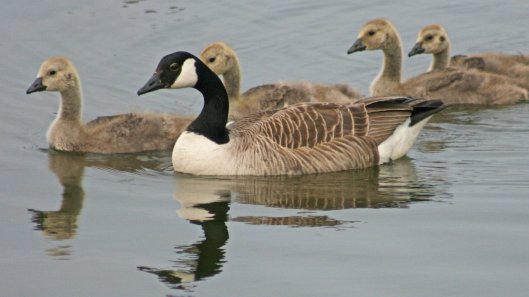
Today marks the beginning of Wales Biodiversity Week, which this year runs from 4 to 12 June, so it seems appropriate to celebrate one of the most biodiverse places in Wales, indeed in the whole of Britain, Kenfig National Nature Reserve. Kenfig is primarily a huge undulating sand dune system, though the reserve encompasses a range of habitats, from lagoons and salt marshes through bogs and fens to broad-leaved deciduous woodland. And Kenfig Pool is the largest freshwater lake in south Wales.

160604 Kenfig NNR (7)

Nature lovers can bird-watch from the hides around the pool, where damsel and dragonflies also abound during the summer months. For the plant-lover an estimated 550 species, including the rare Fen Orchid, grow within the reserve, and some very rare fungi make their home amongst the marram grass. If critters are your thing, there are bees and butterflies, (pink!) grasshoppers and weevils, newts and lizards, and there are even reports of otters, though you’d have to be exceptionally lucky to see them.

160604 Kenfig NNR (5)

Kenfig is a shining example of the biodiversity to be found in a coastal environmental and well worth a visit or six!

160604 Kenfig NNR (3)
160604 Kenfig NNR (6)
160604 Kenfig NNR (9)
160604 Kenfig NNR (10)
160604 Kenfig NNR (8)
160604 Kenfig NNR (11)
160604 Kenfig NNR (4)
160604 Kenfig NNR (1)
160604 Kenfig NNR (2)
Like Loading...

Floral Friday: The yellowing

03 Friday Jun 2016

Posted by sconzani in flowers, nature, wildflowers

≈ Leave a comment

Tags

spring flowers, summer flowers, yellow flowers, yellow wildflowers

Yellow is the colour of happiness, optimism, enlightenment, creativity, hope, cheerfulness, sunshine … and the quintessential colour of Spring.

160603 yellow wildflowers (1)

Yellow is also the most luminous in the colour spectrum – the colour that most easily catches the human eye but, more importantly, the eyes of bees, so it’s no surprise that yellow is the most common flower colour. Here in Wales, after experiencing only my second British winter in thirty-odd years, I have been delighted by the coming of Spring, and both charmed and uplifted by the yellow wildflowers everywhere. First came the Dandelion and Daffodil, the Lesser celandine and the paler shade of the Primrose and, in boggy places, the Marsh marigold.

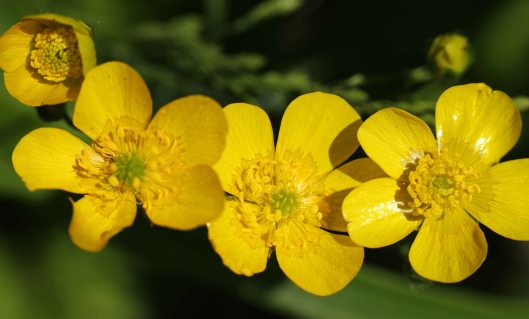
Now, as spring becomes summer, the succession of yellow continues with fields and meadows carpeted in yellow. We have the many varieties of Buttercup, vibrant Bird’s foot trefoil and Yellow archangel, the Dandelion look-alike Cat’s ear and Nipplewort, and in boggy places, Yellow flag iris. It is truly glorious.

160603 yellow wildflowers (9)
160603 yellow wildflowers (4)
160603 yellow wildflowers (2)
160603 yellow wildflowers (6)
160603 yellow wildflowers (5)
160603 yellow wildflowers (12)
160603 yellow wildflowers (8)
160603 yellow wildflowers (3)
160603 yellow wildflowers (11)
160603 yellow wildflowers (7)
160603 yellow wildflowers (10)
Like Loading...

Pretty in pink

02 Thursday Jun 2016

Posted by sconzani in insects, nature

≈ 13 Comments

Tags

Chorthippus parallelus, genetic mutation, Kenfig National Nature Reserve, Meadow grasshopper, pink grasshopper

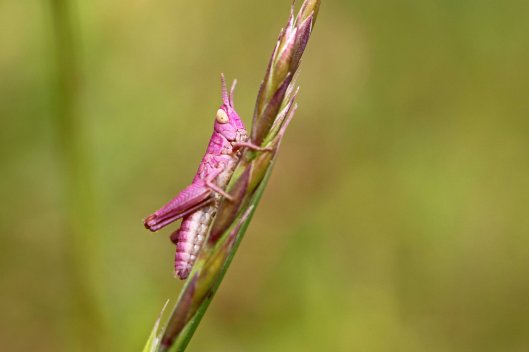
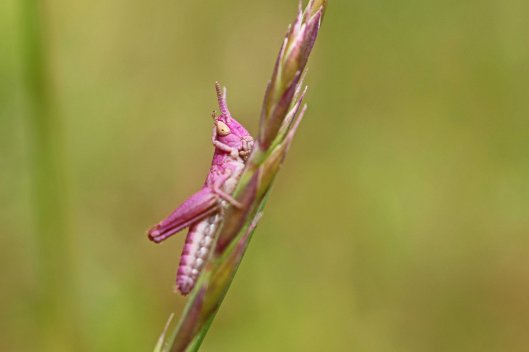
If someone had told me before last Saturday that there was such a thing as a pink grasshopper living in Wales, I would’ve laughed and assumed they were having me on … but, as they say, seeing is believing.

160602 Meadow grasshopper (1)

This is another of the amazing creatures I encountered at Kenfig National Nature Reserve last weekend. It’s a Meadow grasshopper (Chorthippus parallelus), a common species throughout Europe and in parts of Asia. With its lake and ponds, and its frequently damp dune slacks, Kenfig has the perfect habitat for this grasshopper which prefers moist vegetation rather than a dry environment. Although green is the most common colour, the Meadow grasshopper can also be completely or partially brown, a reddish-purple and, yes, pink. It appears that the pink colour is a result of a genetic mutation during the reproductive cycle, similar to that which causes albinism. And it is definitely a she as, apparently, only the females are affected by this recessive gene.

160602 Meadow grasshopper (2)

Like Loading...

The real teal

01 Wednesday Jun 2016

Posted by sconzani in birds, nature

≈ 4 Comments

Tags

Anas chlorotis, birding, birdwatching, Brown teal, endangered species, New Zealand birds, pateke

Earlier this week, we had The real peel; today we have The real teal, a look at another unique bird from my New Zealand homeland. The brown teal (Anas chlorotis) (known to the indigenous Maori people as pāteke) is listed ‘at risk’ so I consider myself very lucky to have seen this little beauty. Once widespread throughout New Zealand, the brown teal is now mostly confined to the northern parts of the North Island due to predation by introduced species like rats and stoats, and also to the loss of their preferred wetland habitat. The bird’s population is now estimated to be as low as 2000-2500, though conservation efforts to save the bird from extinction are underway and have thus far proven successful. (You can read more about efforts to conserve these pretty little creatures here.)

160530 brown teal (1)

If you get the opportunity, it’s an easy bird to identify – it’s slightly smaller than a mallard and predominantly dark brown. At breeding time, the male has a distinctive iridescent green sheen on the back of his head, as you can see in my photo below left.

160530 brown teal (2)
160530 brown teal (3)
Like Loading...

A Four-spotted Chaser or two!

31 Tuesday May 2016

Posted by sconzani in nature, nature photography

≈ 8 Comments

Tags

dragonfly, Four-spotted Chaser, Four-spotted skimmer, Kenfig National Nature Reserve, Libellula quadrimaculata

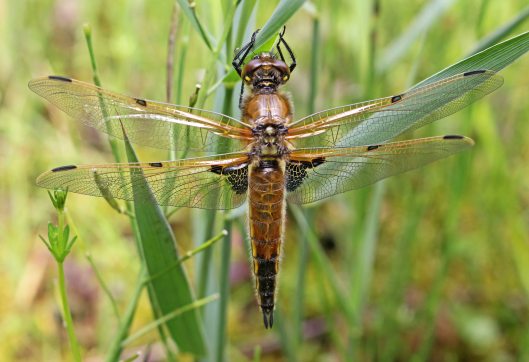
Last Saturday, at Kenfig National Nature Reserve, on a fungi foray with my friends from the Glamorgan Fungi Club, I saw my first dragonflies for the year, not one but two separate sightings of the Four-spotted Chaser (Libellula quadrimaculata), and what magnificent creatures they were!

160531 Four-spotted Chaser dragonfly (1)

Even if you don’t love dragonflies for the sheer beauty of their aeronautical design, which has remained unchanged for nigh on 300 million years (!), you’ve got to love them for the fact that the adults snack on mosquitoes, gnats and midges. Four-spotted chasers can usually be found from April to September around areas of standing water, typically ponds and small lakes, particularly those with lush vegetation. The males aggressively defend their territories, often favouring a prominent reed or stick near the water’s edge from which to launch their sorties against intruders and their foraging flights. Interesting fact: this dragonfly is the state insect of Alaska, where it’s known as the Four-spotted skimmer.

160531 Four-spotted Chaser dragonfly (2)

Like Loading...

The real peel

30 Monday May 2016

Posted by sconzani in fungi, nature

≈ 5 Comments

Tags

Aleuria aurantia, Bute Park, fungus, Orange peel fungus, SEWBReC

I owe the nifty title for this blog to my friend and colleague in fungi and biological recording, Amy, who works at SEWBReC, the South East Wales Biological Records Centre, and who can not only spin a good line but is extremely handy with a microscope. She checked the tiny aspects of my peel to confirm it really was Orange Peel fungus, despite this being entirely the wrong time of year.

160530 Orange peel fungus (1)

Orange peel fungus (Aleuria aurantia) usually appears in the autumn, fruiting between August and November, though anyone who observes the natural world on a regular basis will know that many things have been well out of sequence this year. The fungus starts out as a cup shape but often splits and contorts as it grows, making it appear even more like the discarded skin of an orange. Its bright orange colour makes it easy to spot in its preferred location, the disturbed soil alongside woodland paths, which is exactly where I found these specimens, in Cardiff’s Bute Park.

160530 Orange peel fungus (2)

Like Loading...
← Older posts
Newer posts →

About me

sconzani

sconzani

I'm a writer and photographer; researcher and blogger; birder and nature lover; countryside rambler and city strider; volunteer and biodiversity recorder.

View Full Profile →

Follow earthstar on WordPress.com

Enter your email address to follow this blog and receive notifications of new posts by email.

Recent blog posts

  • Blood bees April 29, 2026
  • Nesting material April 28, 2026
  • Lifer: Box bug April 27, 2026
  • Peak Wild garlic April 26, 2026
  • First damsels of 2026 April 25, 2026

From the archives

COPYRIGHT

Unless otherwise acknowledged, the text and photographs on this blog are my own and are subject to international copyright. Nothing may be downloaded or copied without my permission.

Fellow Earth Stars!

  • Unknown's avatar
  • Unknown's avatar
  • Unknown's avatar
  • Unknown's avatar
  • Unknown's avatar
  • Unknown's avatar
  • Unknown's avatar
  • Unknown's avatar
  • Unknown's avatar
  • Unknown's avatar
  • Unknown's avatar
  • Unknown's avatar
  • Unknown's avatar
  • Unknown's avatar
  • Unknown's avatar
  • Unknown's avatar
  • Unknown's avatar
  • Unknown's avatar
  • Unknown's avatar
  • Unknown's avatar
  • Unknown's avatar
  • Unknown's avatar
  • Unknown's avatar
  • Unknown's avatar
  • Unknown's avatar
  • Unknown's avatar
  • Unknown's avatar
  • Unknown's avatar
  • Unknown's avatar
  • Unknown's avatar
  • Unknown's avatar
  • Unknown's avatar
  • Unknown's avatar
  • Unknown's avatar
  • Unknown's avatar
  • Unknown's avatar
  • Unknown's avatar
  • Unknown's avatar
  • Unknown's avatar
  • Unknown's avatar
  • Unknown's avatar
  • Unknown's avatar
  • Unknown's avatar
  • Unknown's avatar
  • Unknown's avatar
  • Unknown's avatar
  • Unknown's avatar
  • Unknown's avatar
  • Unknown's avatar
  • Unknown's avatar

Blog at WordPress.com.

Privacy & Cookies: This site uses cookies. By continuing to use this website, you agree to their use.
To find out more, including how to control cookies, see here: Cookie Policy
  • Subscribe Subscribed
    • earthstar
    • Join 642 other subscribers
    • Already have a WordPress.com account? Log in now.
    • earthstar
    • Subscribe Subscribed
    • Sign up
    • Log in
    • Report this content
    • View site in Reader
    • Manage subscriptions
    • Collapse this bar

Loading Comments...

You must be logged in to post a comment.

    %d