• ABOUT
  • BIRDING 2018
  • Birding 2019
  • BLOG POSTS
  • Butterflies 2018
  • Resources

earthstar

~ a celebration of nature

earthstar

Category Archives: nature

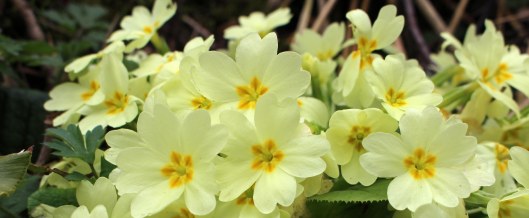
‘Dedicated Naturalist’: The Primrose

29 Friday Apr 2016

Posted by sconzani in 'Dedicated Naturalist' Project, flowers, nature

≈ 2 Comments

Tags

Dr Mary Gillham, primrose, wildflowers

A snippet from my volunteer work on the ‘Dedicated Naturalist’ Project, helping to decipher and digitise, record and publicise the life’s work of naturalist extraordinaire, Dr Mary Gillham.

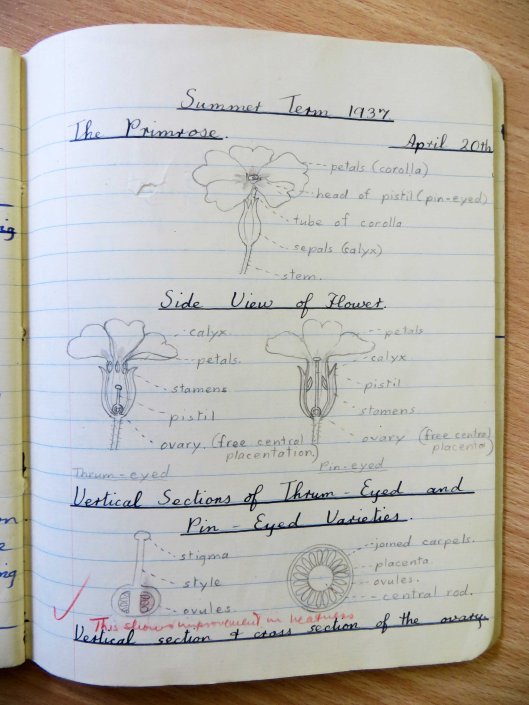
It’s almost 79 years to the day since fifteen-year-old Mary Gillham drew these very precise illustrations of the anatomy of a primrose. (Note the teacher’s comment: ‘This shows improvement in neatness’!)
160429 primrose (1)

She was in her final, fifth form year at Ealing Grammar School for Girls, and, as you can see from her work, she already had well-developed powers of observation and a fine drawing style. Though she was raised in the London suburb of Ealing, Mary’s love of the natural world began early,

looking at birds and flowers in the local parks and on family Saturdays in the country. I brought bits and pieces for the wild flower shelf in my Junior School and began collecting and pressing specimens of the commoner species. One such collection, classified not very scientifically under flower colour, was sent by the school to a museum in Russia, as an example of an eleven-year-old’s work. 

From small beginnings come great naturalists! 

You can follow our progress with this project on Facebook and on Twitter. A website will follow soon.
160429 primrose (2)

Like Loading...

Magpies: sorrow or joy?

28 Thursday Apr 2016

Posted by sconzani in birds, nature

≈ 9 Comments

Tags

birding, birdwatching, British birds, Magpie, Pica pica

One for sorrow,
Two for joy,
Three for a girl,
Four for a boy,
Five for silver,
Six for gold,
Seven for a secret,
Never to be told.
Eight for a wish,
Nine for a kiss,
Ten for a bird,
You must not miss. 

So the modern version of the rhyme goes. The original version, first recorded in 1780, was a little more sinister – One for sorrow, Two for mirth, Three for a funeral, Four for birth, Five for heaven, Six for hell, Seven for the devil, his own self – reflecting the common perception of magpies as birds of ill omen.

160428 magpie (1)

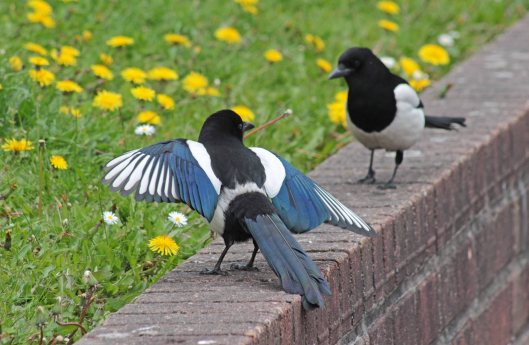
The magpie, with the easiest-to-remember scientific name of Pica pica, is a member of the corvidae family which also includes jays and crows, ravens and jackdaws. One look at that strong beak shows the similarity. But these birds also have other things in common: they are intelligent, able to solve problems and have excellent memory. They have a strong sense of curiosity, are sociable and are brilliant mimics. Many people think of magpies as black and white but, of course, they’re not. As soon as the sunshine strikes their back, wing and tail feathers, you can see what a gorgeous bluish sheen they feathers have.

 160428 magpie (3)

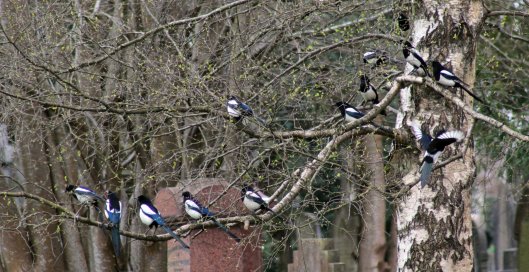
My question is: what does it mean when you see 12 magpies together?

160428 magpie (2)

Like Loading...

The cats of Morocco

27 Wednesday Apr 2016

Posted by sconzani in animals, nature

≈ 4 Comments

Tags

cats, Moroccan cats, Morocco

One of the reasons I love Morocco is because it’s a country crawling with cats. Moggies can be found everywhere, sleeping in mosques and medinas, lurking in the corners of market squares, and soaking up the sun near fishing boats.

160427 cats Morocco (9)

Due in part to their cleanliness, cats are revered in the Islamic religion. According to tradition, Muhammad prohibited the persecution and killing of cats, and Islam teaches that cats should not be sold for money or other goods, and must be treated well.

These are some of the furry felines I found in Morocco.

160427 cats Morocco (10)
160427 cats Morocco (11)
160427 cats Morocco (1)
160427 cats Morocco (2)
160427 cats Morocco (3)
160427 cats Morocco (4)
160427 cats Morocco (5)
160427 cats Morocco (6)
160427 cats Morocco (12)
160427 cats Morocco (8)
160427 cats Morocco (7)
Like Loading...

Fluttering butterflies, no.1

26 Tuesday Apr 2016

Posted by sconzani in insects, nature, nature photography

≈ 14 Comments

Tags

Aglais io, butterflies, butterfly, Cabbage white, Pararge aegeria, Peacock, Pieris rapae, Small white, Speckled wood

‘The butterfly counts not months but moments, and has time enough,’ wrote Bengali Nobel Laureate Rabindranath Tagore – perhaps a lesson for us all.

The first butterflies of spring-summer 2016 have now begun fluttering around me when I’m out walking. Like the bees and the hoverflies, I find they add an extra dimension to my wanderings, a whisper of magic, a hint of fairies …

Small White male Pieris rapae Bute 100416

The Small white (Pieris rapae) was the first butterfly I saw, a couple of weeks ago, during a walk around Cardiff Bay, but it eluded my attempts to photograph it. Both this and the Large white are known as the ‘Cabbage Whites’ for the damage their caterpillars do to the cabbage and other vegetable plants; I have childhood memories of my father regularly checking the undersides of his cabbage leaves and cursing those caterpillars! Though this butterfly has been known to fly as far as 100 miles in its lifetime, it couldn’t fly to New Zealand – in the days before strict agricultural border controls, it was accidentally introduced there, to Australia and to North America.

Peacock Aglais io Cosmeston 200416
Peacock Ty Rhiw

What a glorious creature the Peacock butterfly is and how lovely it looks on this blackthorn blossom, though this Peacock has seen better days; it’s a little faded and has parts of its wings missing. Aglais io gets its common name, obviously, from the unmistakable ‘eyes’ on its wings, so reminiscent of a peacock’s spectacular tail, but its underwings are quite the opposite, dark and easily mistaken for dead leaves in a woodland setting.

Speckled wood Cathays Cem 240416 (4)
Speckled wood Pararge aegeria Penarth railtrail 200416

The Speckled Wood (Pararge aegeria) is the butterfly I’ve seen most often in the past couple of weeks, in the woodlands of Cosmeston and Bute Park and also in tree-filled Cathays Cemetery, where the two shown together above charmed me with their delicate spiralling dance. Is it love or the love of the chase, I wonder?

Like Loading...

A birder’s bliss

25 Monday Apr 2016

Posted by sconzani in birds, nature, parks

≈ 6 Comments

Tags

birding, birdwatching, Blackcap, Blue tit, British birds, chaffinch, Cosmeston Lakes Country Park, Great tit, jackdaw, robin, Woodpigeon

We’ve seen some of the landscape at Cosmeston Lakes Country Park; we’ve checked out the prime lakefront real estate; and we’ve been tit-elated by some of its small birds. Now, here’s what was on Nature’s menu last Wednesday.

160425 blackcap

The absolute highlight of the day was seeing my first Blackcap, and not just one, but five in total, at different times, in different locations, including a female (she wears a brown cap). I was well pleased with that!

160425 tits

After a quiet birding day last time I visited, I was delighted to see more of my favourites this time: a robin was feeding its fledgling; the great and blue tits were demanding food; chaffinches and wood pigeons were getting tucked in to seed left by others; two buzzards were gliding overhead, looking for lunch; a jackdaw was collecting nest-making materials.

160425 wood pigeon
160425 robins
160425 jackdaw
160425 chaffinch

As well as these and many other birds, there was a wonderful assortment of butterflies and bees feasting on the lesser celandine and wild violets flowering along the path edges. There were occasional clumps of bluebells and wafts of wild garlic flowers, and it was a gloriously warm spring day. A man I met during my wandering told me I looked happy, and so I was, doing what I love most – being with nature.

Like Loading...

Cosmeston Lakes Country Park

24 Sunday Apr 2016

Posted by sconzani in nature, parks

≈ 3 Comments

Tags

birding, Cosmeston Lakes Country Park, countryside, walks, wildflowers

I’ve mentioned Cosmeston Lakes Country Park a couple of times previously in this blog so I thought I would show you what a wonderful place it is for a visit. With two lakes and over 100 hectares of woodland and meadows, it’s a place you can get lost in – or, at least, find somewhere to escape the madding crowd.

160424 cosmeston (5)

Where the lakes now provide homes to a myriad of waterbirds there used to be limestone quarries, providing the raw material for the since demolished British Portland Cement works. And the northern part of the park, which was once the site of two rubbish tips – the air vents can still be seen dotted around the grasslands, is now the perfect environment for wildflowers, birds and insects. It is a splendid example of a landscape reclaimed from the ravages of mankind to provide a home for wildlife, and so successful has that transformation been that some areas are now designated Sites of Special Scientific Interest.

160424 cosmeston (2)

The park is not far from Penarth, a seaside town on the outskirts of Cardiff. It is easily accessible by car or public bus, though I prefer to catch the train to Penarth then walk along the now-disused railway track that has been converted to a tree-lined trail heading west. For me, that provides the perfect start to a wonderful long wander in the park.

160424 cosmeston (6)
160424 cosmeston (4)
160424 cosmeston (3)
160424 cosmeston (1)
Like Loading...

In nesting news …

23 Saturday Apr 2016

Posted by sconzani in birds, nature, nature photography, spring

≈ 6 Comments

Tags

birding, birdwatching, British birds, chicks, Coot, Great Crested Grebe, Mute swan, nesting, nesting birds

I checked out the nesting neighbourhood again a couple of days ago so here’s the latest family news.

160423 grebe

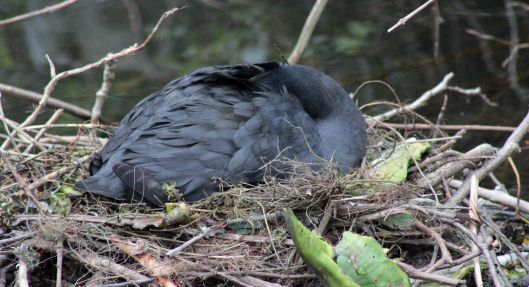
At the original three-nest site: the Mute swans appear to have abandoned their nest, which was empty – maybe they just weren’t ready for parenthood. The Great crested grebe that had chicks but lost them was still sitting on her second nest, and she was sitting tight again so I still don’t know what she’s sitting on.

160423 coot A (1)
160423 coot A (2)

The Coots that had three chicks in my last update now have just one chick remaining. The family has left the nest, though are still in the same general area. Both parents are actively feeding the little guy but, sadly, I’m not overly optimistic about its chances as there were a lot of gulls, flying overhead and perched on nearby lamp posts, just looking for the right scavenging opportunity.

160423 coot B

Nearby, at the other Great crested grebe nest, the grebe has been usurped by a Coot. Her partner was about and feeding her but she didn’t stand up so I have no egg update for her.

160423 coots C (1)
160423 coots C (2)
160423 coots C (3)
160423 coots C (4)

I recently learnt of another Coot nest, also nearby, and seeing that was the highlight of the afternoon. Six chicks, all well developed and seemingly ravenous, were frantically being fed by both parents. Very cleverly, the parents were keeping them sitting under a lip of concrete at the water’s edge, so they were quite well protected. Let’s hope they continue to thrive.

Like Loading...

Hello, Blossom

22 Friday Apr 2016

Posted by sconzani in nature, spring, trees

≈ 7 Comments

Tags

blackthorn, blossom, Bute Park, Cathays Cemetery, cherry trees, magnolias, prunus species

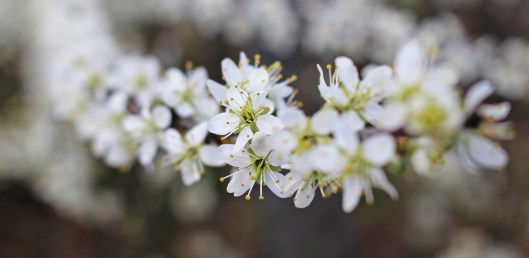
‘Tis that time of year when everywhere you look there are trees in blossom. The whites and pinks of the various prunus species grace the lawns in Bute and the various other public parks, and line the pathways at Cathays Cemetery. In wilder places, blackthorns are covered in their snow-like blooms, providing a feast for the bees and hoverflies now emerging in huge numbers from their winter hibernation. And, here in Cardiff, magnolias are often used as street trees – I take my hat off to the urban planner who made that decision! – and are currently making a gorgeous spectacle of themselves.
160422 blossom (1)

On my daily walks I seem constantly to be smiling at the beauty of the blossom all around me, and I ignore the strange looks of those who appear to think that stopping to admire a tree means I’m a crazy woman. I often think the world would be a better place if more people took the time to drink in the beauty all around them – so, please, if it’s spring where you are, stop, look and love the blossom!

160422 blossom (2)
160422 blossom (3)
160422 blossom (4)
160422 blossom (5)
160422 blossom (6)
160422 blossom (7)
160422 blossom (8)
160422 blossom (9)
160422 blossom (10)
Like Loading...

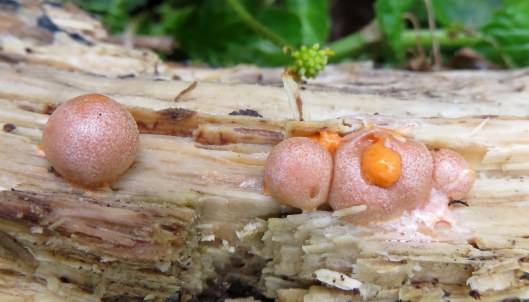
Slime moulds: nobody knows how they do it!

21 Thursday Apr 2016

Posted by sconzani in nature, nature photography

≈ 7 Comments

Tags

False puffball, Lycogala sp., Metatrichia floriformis, Mucilago crustacea, Reticularia lycoperdon, slime mould

Slime moulds are the most fascinating things! The text for today’s post was written by my Glamorgan Fungi Club friend Graham Watkeys, who has very kindly allowed me to quote his words here.

160419 Metatrichia floriformis Slime mould

Metatrichia floriformis

‘Usually existing as separate single cells, slime moulds congregate at this time of year (nobody knows how they do this) creating a gooey super-predator consuming everything in their path.

‘The slime mould actively travels, hunting for its food of bacteria, fungi and other organic matter (nobody knows how it does this), a mass of single cells without a nervous system or any kind of brain acting like a single entity (nobody knows how it does this).

‘Out of the chaos of the multitude, order is created, simulating purpose and direction where none exists beyond the relentless need for food.

‘When the food runs out, this conglomeration decides it’s time to reproduce (nobody knows how it does this). The millions of identical cells spontaneously reorganise themselves into a wholly new configuration, creating mushroom-like structures, some become stems, some spores (nobody knows how it does this), the simple becoming complex, the uniform becoming specialised.

‘The spores are released into the wind and the slime mould becomes a disparate unicellular organism again. The world has some extraordinary inhabitants.’

160419 Mucilago crustacea plasmodial slime mould

Mucilago crustacea, commonly known as Dog’s vomit

160419 Reticularia lycoperdon

Reticularia lycoperdon (False puffball): new specimen on the left, mature on the right

160419 Lycogala sp. Slime mould

Lycogala sp.

Like Loading...

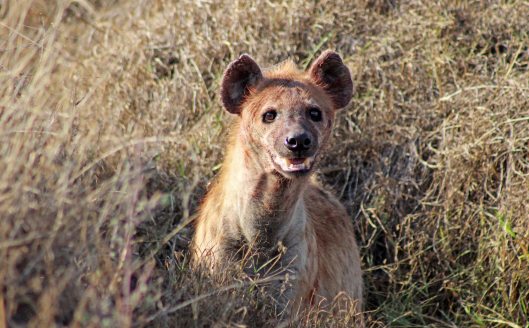
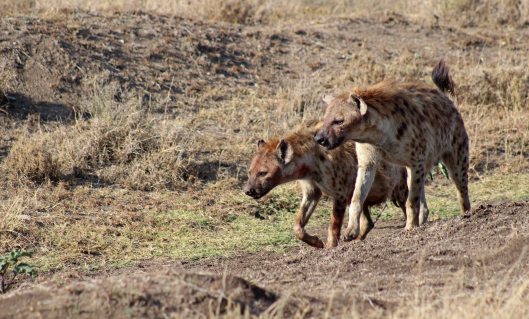
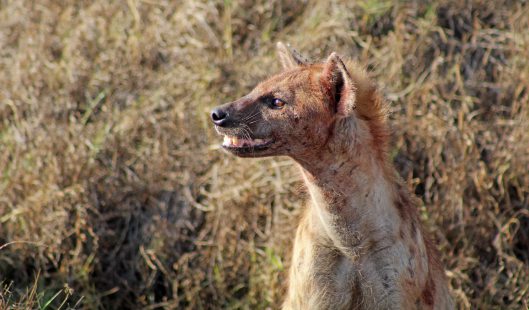
The laughing hyena

20 Wednesday Apr 2016

Posted by sconzani in animals, nature, nature photography

≈ 2 Comments

Tags

Hyena, Serengeti National Park, Serengeti Plains, Spotted hyena, Tanzania

‘A sense of humor is good for you. Have you ever heard of a laughing hyena with heart burn?’ ~ Bob Hope

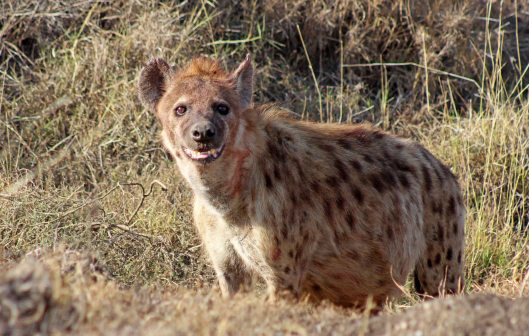
160420 hyena (4)

‘HYENA, n. A beast held in reverence by some oriental nations from its habit of frequenting at night the burial-places of the dead. But the medical student does that.’ ~ Ambrose Bierce

160420 hyena (3)

‘There’s always the hyena of morality at the garden gate, and the real wolf at the end of the street.’ ~ D. H. Lawrence

160420 hyena (1)

‘Do let’s pretend that I’m a hungry hyena, and you’re a bone!’ ~ Lewis Carroll

160420 hyena (2a)

‘We slander the hyena; man is the fiercest and cruellest animal.’ ~ Henry David Thoreau

160420 hyena (5)

Like Loading...
← Older posts
Newer posts →

About me

sconzani

sconzani

I'm a writer and photographer; researcher and blogger; birder and nature lover; countryside rambler and city strider; volunteer and biodiversity recorder.

View Full Profile →

Follow earthstar on WordPress.com

Enter your email address to follow this blog and receive notifications of new posts by email.

Recent blog posts

  • Blood bees April 29, 2026
  • Nesting material April 28, 2026
  • Lifer: Box bug April 27, 2026
  • Peak Wild garlic April 26, 2026
  • First damsels of 2026 April 25, 2026

From the archives

COPYRIGHT

Unless otherwise acknowledged, the text and photographs on this blog are my own and are subject to international copyright. Nothing may be downloaded or copied without my permission.

Fellow Earth Stars!

  • Unknown's avatar
  • Unknown's avatar
  • Unknown's avatar
  • Unknown's avatar
  • Unknown's avatar
  • Unknown's avatar
  • Unknown's avatar
  • Unknown's avatar
  • Unknown's avatar
  • Unknown's avatar
  • Unknown's avatar
  • Unknown's avatar
  • Unknown's avatar
  • Unknown's avatar
  • Unknown's avatar
  • Unknown's avatar
  • Unknown's avatar
  • Unknown's avatar
  • Unknown's avatar
  • Unknown's avatar
  • Unknown's avatar
  • Unknown's avatar
  • Unknown's avatar
  • Unknown's avatar
  • Unknown's avatar
  • Unknown's avatar
  • Unknown's avatar
  • Unknown's avatar
  • Unknown's avatar
  • Unknown's avatar
  • Unknown's avatar
  • Unknown's avatar
  • Unknown's avatar
  • Unknown's avatar
  • Unknown's avatar
  • Unknown's avatar
  • Unknown's avatar
  • Unknown's avatar
  • Unknown's avatar
  • Unknown's avatar
  • Unknown's avatar
  • Unknown's avatar
  • Unknown's avatar
  • Unknown's avatar
  • Unknown's avatar
  • Unknown's avatar
  • Unknown's avatar
  • Unknown's avatar
  • Unknown's avatar
  • Unknown's avatar

Blog at WordPress.com.

Privacy & Cookies: This site uses cookies. By continuing to use this website, you agree to their use.
To find out more, including how to control cookies, see here: Cookie Policy
  • Subscribe Subscribed
    • earthstar
    • Join 642 other subscribers
    • Already have a WordPress.com account? Log in now.
    • earthstar
    • Subscribe Subscribed
    • Sign up
    • Log in
    • Report this content
    • View site in Reader
    • Manage subscriptions
    • Collapse this bar

Loading Comments...

You must be logged in to post a comment.

    %d