• ABOUT
  • BIRDING 2018
  • Birding 2019
  • BLOG POSTS
  • Butterflies 2018
  • Resources

earthstar

~ a celebration of nature

earthstar

Category Archives: nature

I’m following a tree: month 4

09 Monday May 2016

Posted by sconzani in nature, spring, trees

≈ 11 Comments

Tags

autumn leaves, Bute Park, Cardiff, Dawn redwood, I'm following a tree, tree following, trees

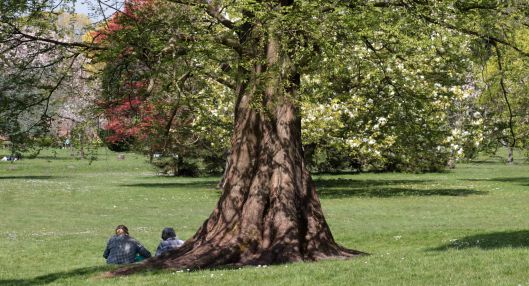
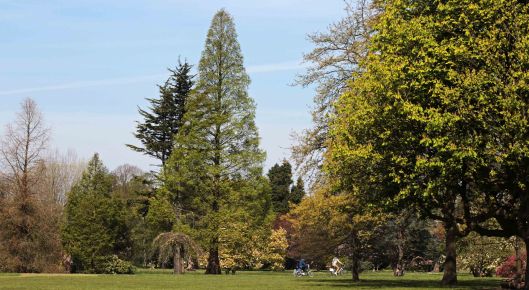
Dawn is no longer a naked lady. As April progressed, she gradually acquired her vibrant new covering of leaves, though it has been a slow process, perhaps because we haven’t had much rain to help stimulate leaf production.

160509 dawn redwood (2)

Considering her stature resembles that of a giantess, Dawn’s leaves are surprisingly fine, feathery and delicate, so her new attire is still coquettishly flimsy, seductively see-through.

160509 dawn redwood (4)
160509 dawn redwood (3)

It was lovely to see Dawn being enjoyed by the locals when I popped by on an unseasonably warm day late last week. Her leaf covering may not yet be lush but she was providing ample shade for a picnic lunch.

160509 dawn redwood (5)

Why not join the tree following community. You can find out more here.

160509 dawn redwood (1)

Like Loading...

Cute coots!

08 Sunday May 2016

Posted by sconzani in birds, nature

≈ 4 Comments

Tags

birding, birdwatching, British birds, Coot, Eurasian coot, Fulica atra, nesting birds

Around the British Isles, near rivers and lakes, ponds and meres, reservoirs, flashes and gravel pits, the Eurasian coot (scientific name Fulica atra, and commonly just called coot) can currently be found nesting. In shallow water, sometimes using the support of an underwater obstacle (two pairs in Cardiff are using the lights that illuminate the council building!), they build nests of sticks and grasses, and bits of human detritus like plastic, paper and other assorted rubbish.

160509 cute coots (1)160509 cute coots (3)

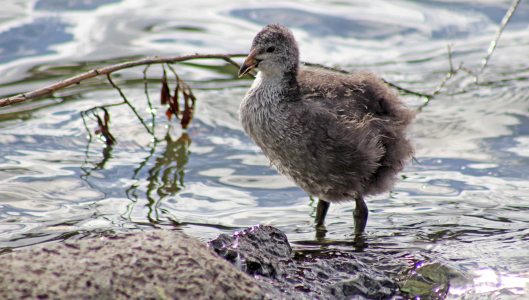
Mrs Coot lays between 5 and 10 eggs then incubates these for around three weeks, while hubby brings her food and continues to beautify the nesting platform. Though exceptionally cute, the chicks are bizarre-looking wee things, little bundles of black fluff with reddish-orange heads and a ruff of yellow feathers around their necks. The vibrant colour fades during their two-month fledgling period and juveniles look more greyish-brown, with a lighter throat and face.

160509 cute coots (5)
160509 cute coots (4)

Though both parents feed the chicks, they rarely all survive. This can be due to predation by Lesser black-backed gulls, mink and pike, though sometimes, if there is a lack of food, coot parents will occasionally kill their own chicks, sacrificing one for the good of the others.

160509 cute coots (6)
160509 cute coots (7)

160509 cute coots (7)

Like Loading...

When is a magpie not a magpie?

07 Saturday May 2016

Posted by sconzani in birds, nature

≈ 10 Comments

Tags

Australian magpie, birding, birdwatching, British birds, European magpie, Gymnorhina tibicen, Magpie, New Zealand birds, New Zealand magpie, Pica pica

What I grew up in New Zealand thinking of as a magpie is nothing like the magpies I see here in Wales, which is not really surprising as they are totally different species and the New Zealand bird is actually Australian. Confused?

European magpie (1)
European magpie (2)

The bird that lives in Britain is the European magpie (Pica pica) (pictured above) and is a member of the corvid family, a relative of crows, rooks and jackdaws. The bird that lives in New Zealand is Gymnorhina tibicen, one of the nine species of Australian magpie (there were thought to be two Australian species in New Zealand but this is now in doubt).

New Zealand 1 magpie male
New Zealand 2 magpie male

The Australian birds are called magpies because of their physical resemblance to the European birds – it was quite common for British settlers to name birds, animals and plants after similar ones ‘at home’. Australian birds from Tasmania and Victoria were introduced into several areas of New Zealand in the 1860s and 1870s by local Acclimatisation Societies to control pasture pests like grass grubs, and their supposed importance to New Zealand agriculture was the reason they were afforded legal protection till 1951.

New Zealand 3 magpie female
New Zealand 4 magpie juvenile

The magpies in New Zealand can be very aggressive birds, occasionally attacking both animals and humans that stray too close to their nests during the breeding season, though their nests are usually built high up in tall trees so their attacks are, in fact, unwarranted.

Like Loading...

Floral Friday: Tulips

06 Friday May 2016

Posted by sconzani in flowers, nature, spring

≈ 10 Comments

Tags

spring bulbs, tulips

‘Tulips from Cardiff’ doesn’t have quite the same ring as ‘Tulips from Amsterdam’ but tulips do seem to be the bulb of choice for spring displays in Cardiff’s public parks. And what brilliant displays they make! The colours are so strong and vibrant you almost need to wear sunglasses to view them. You have been warned!

160506 tulips (1)
160506 tulips (2)
160506 tulips (3)
160506 tulips (4)
160506 tulips (5)
160506 tulips (6)
160506 tulips (7)
160506 tulips (8)
160506 tulips (9)
160506 tulips (10)
160506 tulips (11)
160506 tulips (12)
Like Loading...

‘Dedicated Naturalist’: Scientific names

05 Thursday May 2016

Posted by sconzani in 'Dedicated Naturalist' Project, nature

≈ 9 Comments

Tags

binomial nomenclature, biological recording, biological records, Dr Mary Gillham, scientific names, SEWBReC, volunteering

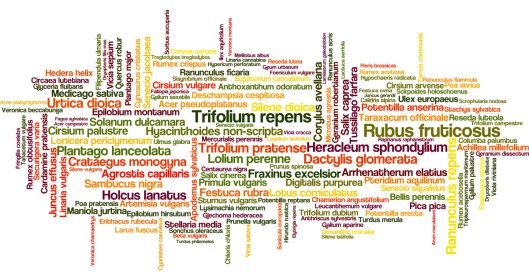
A snippet from my volunteer work on the ‘Dedicated Naturalist’ Project, helping to decipher and digitise, record and publicise the life’s work of naturalist extraordinaire, Dr Mary Gillham.
160505 Scientific names

When project officer Al Reeve sent round his monthly volunteer newsletter, he attached this image of the many and varied scientific names we volunteers have been typing up from Dr Mary Gillham’s records. It makes a pretty picture but these things are the stuff of volunteer nightmares! Seriously, what was Linnaeus thinking when he invented binomial nomenclature?

Take, for example, the Eurasian wren, a delicate and tiny bird but its scientific name, Troglodytes troglodytes, makes it sounds like a huge stomping dinosaur. Admittedly, the double-barrel names are easier to remember. There’s Pica pica the Eurasian magpie, Buteo buteo the Common buzzard and Anser anser the Greylag goose.
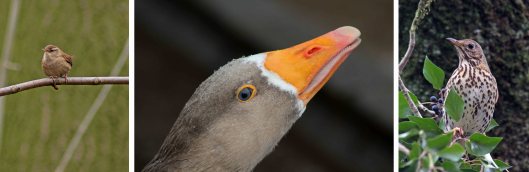
160505 wren greylag thrush

Troglodytes troglodytes, Anser anser and Turdus philomelos

I feel sorry for the rather unfortunately named Turdus family of true thrushes. There are more than 50 family members, with names like Turdus pilaris the Fieldfare, Turdus merula the Blackbird, and Turdus philomelos the melodic Song Thrush.

Then there are the plants with girls’ names, or should that be girls with plant names? Whenever I type Prunella (as in Prunella vulgaris, the herb Selfheal) I always think of Prunella Scales, the actress who played John Cleese’s exceedingly patient wife in Fawlty Towers, and, though it’s not spelt the same, Silene dioica, the pretty wildflower Red campion, reminds me of singer Celine Dion. And there are plenty more: Veronica, Iris, Lotus, Viola …
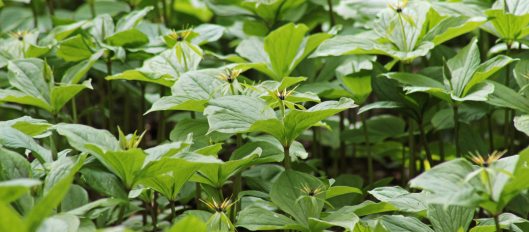
160505 Herb Paris

Then there are the misnomers. You might quite reasonably expect names beginning with Trifolium (tri = three, folio = leaf) to have three leaves, except that plants are often not true to their names: witness Trifolium repens, which can, if you’re lucky, be a four leaf clover! Or there’s Paris quadrifolia, the supposedly four-leaf Herb Paris (shown above), which can have from 5 to 8 leaves.

It’s enough to drive a volunteer to drink, so I’ll end with my favourite cocktail, Sambucus nigra. Cheers!

You can follow our progress with this project on Facebook and on Twitter. A website will follow soon.

Like Loading...

It’s Hedgehog Awareness Week!

04 Wednesday May 2016

Posted by sconzani in animals, nature

≈ 10 Comments

Tags

#hedgehogweek, Erinaceus europaeus, hedgehog, Hedgehog Awareness Week, Mrs Tiggy-Winkles

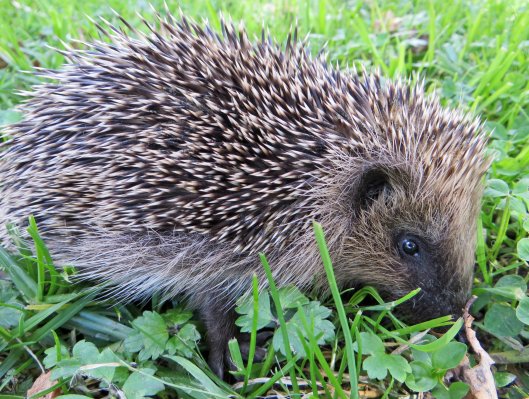
My photos here are of a New Zealand hedgehog, though it is, in fact, the European species, Erinaceus europaeus, which British colonists introduced in the 1870s, partly to remind them of ‘home’ and partly to control garden pests like slugs and snails. As often happens when humans interfere with Nature, their introduction was not a wise move, as the hedgehog preys on some New Zealand native creatures and competes with them for food. It is considered a pest by many.

160504 hedgehog (1)

In Britain, their home, hedgehogs can be found almost everywhere, except in bogs and up mountains, and they are mostly certainly not pests. I’m sad to say I’ve never seen a hedgehog in Britain, neither in the six months I spent in Cheshire, nor since moving to Wales nine months ago. This may be an unfortunate side-effect of living in a first-floor flat with no garden access but it may also be because hedgehog numbers have declined rapidly in recent years, from an estimated 30 million in the 1950s to around 1.5 million in the 1990s.

160504 hedgehog (2)

Hedgehogs need our help. The British Hedgehog Preservation Society runs Hedgehog Awareness Week each year, to ‘highlight the problems hedgehogs face and how you can help them’. Check out their website for more information, and please help. After all, where would Britain be without its Mrs Tiggy-Winkles?

160504 hedgehogweek

Like Loading...

Gossamery goslings

03 Tuesday May 2016

Posted by sconzani in birds, nature, nature photography

≈ 6 Comments

Tags

birding, birdwatching, British birds, gosling, Greylag goose, Roath Park Lake

I’ve always thought Ryan Gosling was rather cute but, sorry Ryan, you pale in comparison to these little guys and gals.

160503 goslings (2)

The Greylag geese (Anser anser) at Cardiff’s Roath Park Lake have produced at least three nests of goslings so far this spring, and they are the most delightful little creatures: awkward on their feet, quick to learn, well trained to stay close to mum and dad, playful little jokesters, fast growing, bundles of fluff.

160503 goslings (1)
160503 goslings (4)
160503 goslings (3)

160503 goslings (5)

Greylags usually lay between five and eight eggs, often in a large floating nest hidden amongst reeds, though at Roath Park they seem to nest under the vegetation on the small islands, where they’re protected from predatory Lesser black-backed gulls. Unlike many waterbirds, Mr and Mrs Greylag stay together to feed and guard their offspring, and the family will remain together until the adult birds are ready to mate again.

160503 goslings (6)160503 goslings (7)

160503 goslings (8)

Like Loading...

‘The Snail’

02 Monday May 2016

Posted by sconzani in nature

≈ 9 Comments

Tags

molluscs, snail, The Snail poem, William Cowper

160502 snail (7)

To grass, or leaf, or fruit, or wall,
The snail sticks close, nor fears to fall,
As if he grew there, house and all
Together.

Within that house secure he hides,
When danger imminent betides
Of storm, or other harm besides
Of weather.

Give but his horns the slightest touch,
His self-collecting power is such,
He shrinks into his house, with much
Displeasure.

160502 snail (4)
160502 snail (3)
160502 snail (6)
160502 snail (5)
160502 snail (2)
160502 snail (1)

Where’er he dwells, he dwells alone,
Except himself has chattels none,
Well satisfied to be his own
Whole treasure.

Thus, hermit-like, his life he leads,
Nor partner of his banquet needs,
And if he meets one, only feeds
The faster.

Who seeks him must be worse than blind,
(He and his house are so combin’d)
If, finding it, he fails to find
Its master.

By William Cowper, 1731 – 1800

160502 snail (8)

Like Loading...

The beeches of Cwm George

01 Sunday May 2016

Posted by sconzani in nature, trees

≈ 10 Comments

Tags

ancient woodland, beech, beech trees, Cwn George, Dinas Powys, trees, Wild garlic, woodland, Woodland Trust

160501 cwm george beeches (1)

Yesterday I feel in love. His name is George, George Wood, and he lives near the charming little village of Dinas Powys, west of Cardiff.

160501 cwm george beeches (3)

He’s part ancient semi-natural woodland and part new native woodland, primarily dominated by oak and ash but also more recently planted with beeches.

160501 cwm george beeches (4)

Although these beeches are recent, they are now considered an essential part of George’s personality.

160501 cwm george beeches (2)

George is a bit smelly at the moment because of his preference for masses of wild garlic, but his stunning good looks more than make up for this passing phase.

160501 cwm george beeches (5)

Though it’s his beeches that made me fall in love with him, I’m sure I will also come to love his oaks and ashes just as much. I can’t wait to get to know George better!

Like Loading...

Damsels or dragons?

30 Saturday Apr 2016

Posted by sconzani in insects, nature

≈ 4 Comments

Tags

Aeshna grandis, Beautiful Demoiselle, Brown Hawker, Calopteryx Virgo, damselfly, dragonfly

One of the best things about writing this blog is that I’m constantly learning new things. When this gorgeous creature flitted across my path in Bute Park on Wednesday, I thought ‘Ooooo, my first dragonfly of the year!’ Wrong! This is a damselfly, a female of the very aptly named species Beautiful Demoiselle (Calopteryx Virgo).

damselfly Beautiful Demoiselle female (2)

So, I asked myself, ‘how do I tell the difference between a dragonfly and a damselfly?’ It seems there are four basic differences that even I should be able to spot:
1) Body shape: dragonflies are bulkier, shorter and thicker, whereas damselflies are slender and delicate.
2) Eyes: a dragonfly’s eyes are much larger, wrapping around from the side to the front of the head, often touching. The eyes of the damselfly are also big, but tend to be more to the side of the head, with a definite gap between.

Damselfly Beautiful Demoiselle female

3) Wing shape: the hind wings of the dragonfly are larger than the fore wings and broaden at the base, but the damselfly’s wings are both the same size and shape, and narrow markedly where they connect to the body.
4) Wing position: when resting, the dragonfly always spreads its wings, whereas the damselfly rests with its wings together above its body.

dragonfly brown hawker female

Above is a photo of a female Brown Hawker dragonfly (Aeshna grandis), taken last year, so you can see the differences. And, hopefully, my rather early Beautiful Demoiselle will just be the first of many of these heavenly creatures.

Like Loading...
← Older posts
Newer posts →

About me

sconzani

sconzani

I'm a writer and photographer; researcher and blogger; birder and nature lover; countryside rambler and city strider; volunteer and biodiversity recorder.

View Full Profile →

Follow earthstar on WordPress.com

Enter your email address to follow this blog and receive notifications of new posts by email.

Recent blog posts

  • Blood bees April 29, 2026
  • Nesting material April 28, 2026
  • Lifer: Box bug April 27, 2026
  • Peak Wild garlic April 26, 2026
  • First damsels of 2026 April 25, 2026

From the archives

COPYRIGHT

Unless otherwise acknowledged, the text and photographs on this blog are my own and are subject to international copyright. Nothing may be downloaded or copied without my permission.

Fellow Earth Stars!

  • Unknown's avatar
  • Unknown's avatar
  • Unknown's avatar
  • Unknown's avatar
  • Unknown's avatar
  • Unknown's avatar
  • Unknown's avatar
  • Unknown's avatar
  • Unknown's avatar
  • Unknown's avatar
  • Unknown's avatar
  • Unknown's avatar
  • Unknown's avatar
  • Unknown's avatar
  • Unknown's avatar
  • Unknown's avatar
  • Unknown's avatar
  • Unknown's avatar
  • Unknown's avatar
  • Unknown's avatar
  • Unknown's avatar
  • Unknown's avatar
  • Unknown's avatar
  • Unknown's avatar
  • Unknown's avatar
  • Unknown's avatar
  • Unknown's avatar
  • Unknown's avatar
  • Unknown's avatar
  • Unknown's avatar
  • Unknown's avatar
  • Unknown's avatar
  • Unknown's avatar
  • Unknown's avatar
  • Unknown's avatar
  • Unknown's avatar
  • Unknown's avatar
  • Unknown's avatar
  • Unknown's avatar
  • Unknown's avatar
  • Unknown's avatar
  • Unknown's avatar
  • Unknown's avatar
  • Unknown's avatar
  • Unknown's avatar
  • Unknown's avatar
  • Unknown's avatar
  • Unknown's avatar
  • Unknown's avatar
  • Unknown's avatar

Blog at WordPress.com.

Privacy & Cookies: This site uses cookies. By continuing to use this website, you agree to their use.
To find out more, including how to control cookies, see here: Cookie Policy
  • Subscribe Subscribed
    • earthstar
    • Join 642 other subscribers
    • Already have a WordPress.com account? Log in now.
    • earthstar
    • Subscribe Subscribed
    • Sign up
    • Log in
    • Report this content
    • View site in Reader
    • Manage subscriptions
    • Collapse this bar

Loading Comments...

You must be logged in to post a comment.

    %d