• ABOUT
  • BIRDING 2018
  • Birding 2019
  • BLOG POSTS
  • Butterflies 2018
  • Resources

earthstar

~ a celebration of nature

earthstar

Category Archives: nature

The night the sun stands still

21 Monday Dec 2015

Posted by sconzani in nature, seasons, winter

≈ Leave a comment

Tags

solstice, sunrise, sunset, winter

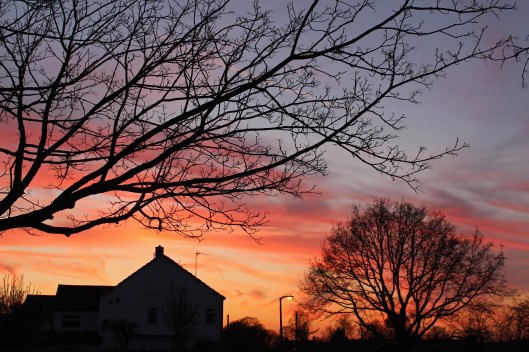
Are you getting up early tomorrow to see the sunrise? Crowds will gather at England’s ancient monument Stonehenge, and around the world various cultures will be celebrating because this is the solstice, from the Latin solstitium meaning ‘the sun stands still’.

151221 sunrise

As our modern calendar (of 365 days and a leap year of 366) does not equate exactly with the solar calendar of 365.2422 days, the precise time of the solstice varies each year. This year, at 4:49am (GMT) on 22 December, the earth will reach the point where the North Pole is tilted furthest from the sun. For us northerners, this means that, in the coming days, we will begin to see an increase in the hours of daylight.
151221 sunset

For the ancient Romans, this was the festival of Saturnalia, seven days of partying and gift-giving. For the Scandinavians, it was the Feast of Yuul when the Juul (Yule) log was ceremonially brought in and one end placed in the fire as a tribute to the Norse god Thor, protector of mankind. In China, the celebration is called Dong Zhi (‘winter arrival’), a time for family get-togethers, eating glutinous-rice-ball soup and becoming one year older! Whether or not you are celebrating perhaps, just like the sun, pause, savour the stillness, reflect, then take a deep breath and move boldly into the year ahead.

Like Loading...

The quintessential mushroom

20 Sunday Dec 2015

Posted by sconzani in fungi, nature, nature photography

≈ Leave a comment

Tags

autumn, autumn colour, Fly agaric, Fly amanita, fungi, fungus, Scarlet flycap

I was living in Auckland, New Zealand, when I first spotted one of these mushrooms and I admit to having had a ‘wow’ moment. It was like walking into a fairytale … I half expected fairies and elves to emerge and perform a magical dance amongst the leaf litter. This is, after all, the classic what-every-kid-would-draw-if-you-asked-them mushroom.

151220 Amanita muscaria fly agaric (1)

The Fly agaric (Amanita muscaria), also known as the Fly amanita and the Scarlet flycap, isn’t native to New Zealand but was unintentionally introduced there due to its rather intimate relationship with pine trees. Since its arrival, it has been quite wanton and, as it has now begun forming relationships with native trees, to the detriment of native fungi, it is considered a pest.

151220 Amanita muscaria fly agaric (2)

On the left, a young mushroom; on the right, an aging specimen

As the flesh of the Fly agaric contains psychoactive substances it has been used for centuries in religious and shamanistic rituals in Asia and parts of northern Europe. This fungus is, however, classified as poisonous, so forget the hallucinogenic adventure and feast with your eyes only!

Like Loading...

The little Great tit

19 Saturday Dec 2015

Posted by sconzani in birds, nature, nature photography

≈ 3 Comments

Tags

birding, birds, birdwatching, British birds, Forest Farm Nature Reserve, Great tit

151219 great tit (2)

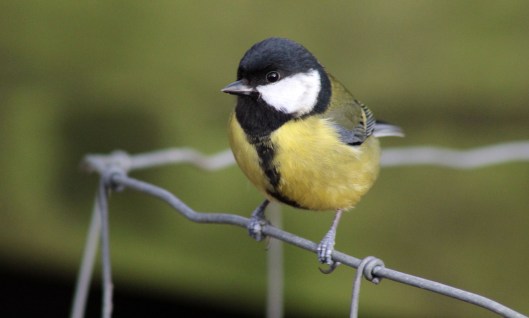
One of the three different Great tits in these photographs may well be ‘George’, a cheeky little chap who’s earned himself a nickname from the birders who regularly visit the hides at Forest Farm Nature Reserve near Cardiff because he is quite brazen in his visits inside the hide to demand food. His favourite, apparently, is nyjer seeds and, if these are offered in an outstretched hand, he will quite happily sit on the hand and feed. He is fussy though and turned his beak up pretty smartly at my suet pellets!

151219 great tit (3)

Though the Great tit (Parus major) is a popular visitor to many people’s bird feeders, it’s not normally quite as friendly as ‘George’, and its usual habitat is deciduous woodland though, as you see, this tit adapts well to different situations. It’s a melodious little bird, with a standard song that sounds a bit like ‘teach-er’ (which is how it came to be known in days past by the common name of ‘saw sharpener’), but it’s also rather skilled at jamming a variety of tunes and rhythms.

151219 great tit (1)

Like Loading...

The common daisy

18 Friday Dec 2015

Posted by sconzani in nature, nature photography, wildflowers

≈ Leave a comment

Tags

bruisewort, Common daisy, English daisy, lawn daisy, woundwort

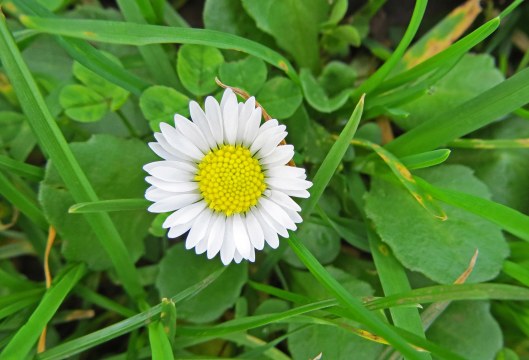
Gardeners hate them, greenkeepers detest them, grounds(wo)men loathe them. Yet, little Bellis perennis, the common, lawn or English daisy, is an attractive wee plant, its dainty white flowers twinkling like tiny stars even on the dullest of days. I recall many happy childhood hours spent making daisy chains.

151218 common daisy (2)

How charming that the word daisy comes from ‘day’s eye’, referring to the fact that the little flowers close up at night and reopen each morning. In the Middle Ages, the English called it Mary’s Rose, and its other common names include bruisewort and woundwort. These refer to the plant’s medicinal properties: the ancient Romans extracted the juice from the common daisy to soak the bandages with which they bound sword and spear cuts in times of battle. And herbalists and homeopaths still use the plant today, to help heal soft tissue injuries, sprains and bruises, and to treat skin infections like acne and boils, amongst other things.

151218 common daisy (1)

Like Loading...

Lovin’ the lichen

17 Thursday Dec 2015

Posted by sconzani in lichen, nature, nature photography, trees

≈ 2 Comments

Tags

algae, copper beech trees, lichen, winter

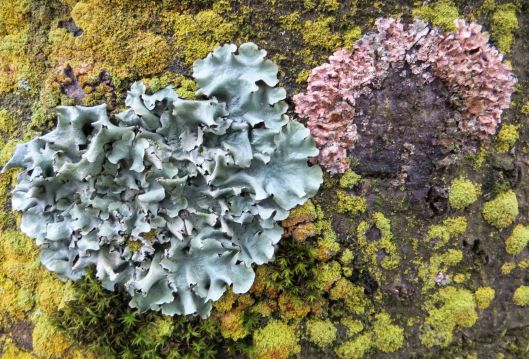
Bordering the recreation grounds opposite where I live is a magnificent long line of copper beech trees. Their leaves provide a glorious show of colour in spring, summer and autumn but the trees look rather barren during the winter months. However, if you look closer, you’ll find their bark is alive with algae, mosses and lichens, and the colours, shapes and patterns of these small organisms are, indeed, many and splendid.

151217 lichen on copper beech (2)

A lichen is a complicated entity – it is not actually one single organism but rather a fungus living in a symbiotic relationship with a photosynthetic partner, which might be a green alga or a cyanobacterium or both. The fungus is the farmer and the alga and/or bacterium produce/s the food it survives on.

151217 lichen on copper beech (1)

Next time you see a lichen, look closer and be amazed!

151217 lichen on copper beech (3)

Like Loading...

Fox and cubs

16 Wednesday Dec 2015

Posted by sconzani in autumn, nature, nature photography, wildflowers

≈ 1 Comment

Tags

autumn, autumn colour, cemetery, Fox and cubs, Grim the collier, orange hawkweed, wildflowers

151216 Pilosella aurantiaca Orange hawkweed aka fox and cubs

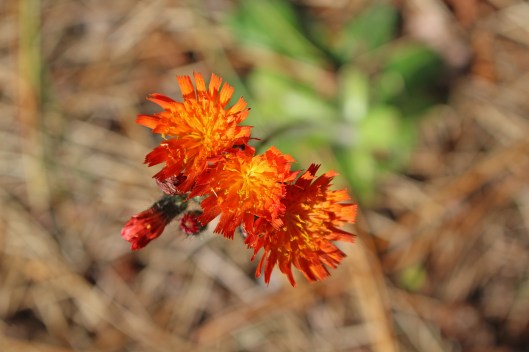
Just two short weeks ago, my local cemetery was dotted with these vibrant little bursts of orange. Now they’ve all disappeared. This pretty little member of the daisy family is officially known as Pilosella aurantiaca but I much prefer its many common names: orange or tawny hawkweed (‘hawk’ because the Romans believed hawks ate the blossoms to enhance their vision and ‘weed’ because it can be very invasive in the right conditions); Grim-the-collier (after the character Grim, who appeared in English devil plays in the 1600s); devil’s paintbrush (another reference to the devil in those old plays or, maybe, because it can be a devil of a plant to get rid of!); and, my favourite, fox-and-cubs (perhaps because the yet-to-open flowers seem to hide beneath those that are open or, more likely, because the furry rosette of leaves sends out runners to produce more furry little plants). Love it or curse it, this little plant is rich in nectar so a favourite of bees.

Like Loading...

Hungry trees

15 Tuesday Dec 2015

Posted by sconzani in nature, trees

≈ 2 Comments

Tags

cemetery, hungry trees, post box, tree swallowing post box, trees devouring objects, urn wedged in trees

Trees are rooted in the earth. Except for their upward and outward growth, they are basically static – unless they’re blown over or chopped down, they’re not going anywhere. So, if humans are crazy enough to put an object close to a growing tree, sooner or later the tree will begin to engulf that object. All around the world, hungry trees are consuming fences and posts, signs and park benches, gravestones, bicycles and even cars.

hungry tree

I’ve only been in Cardiff a short while, but already I’ve discovered two hungry trees. One is slowly but surely wrapping itself around a post box in my street. And not just any post box – this tree has style. It’s consuming a Grade II-listed Victorian post box that was probably erected around 1900. Not surprisingly, the post box has now been decommissioned.

hungry tree 1

My other hungry tree is growing in the local cemetery and it has an urn in its clutches. Perhaps the urn toppled off its pillar on a neighbouring grave, perhaps a vandal knocked it off, and it fell between some saplings. Whatever happened, it’s now wedged tight and, as the saplings grow, the urn is raised higher and higher above the ground.

So, stay alert! You might well have hungry trees in your neighbourhood.

hungry tree 2


Like Loading...

When is a parrot not a bird?

14 Monday Dec 2015

Posted by sconzani in autumn, fungi, nature, nature photography

≈ 2 Comments

Tags

autumn, cemetery, fungi, fungus, parrot toadstool, parrot waxcap, waxcap

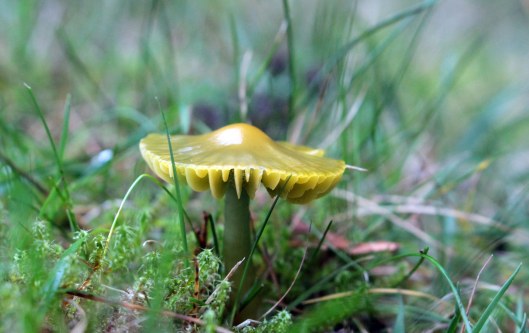
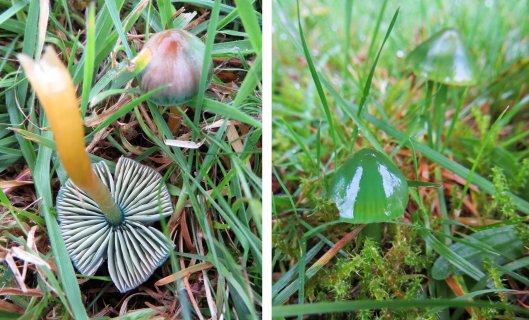
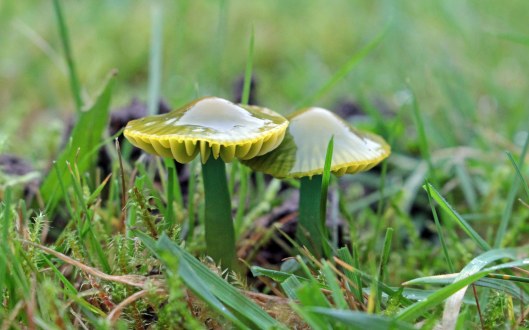
When it’s a waxcap, of course. Still none the wiser? Well, meet Gliophorus psittacinus (the fungus formerly known as Hygrocybe psittacina), the gorgeous little Parrot waxcap or toadstool.

151214 parrot waxcap (2)

Latin names are a bit of a mouthful but both gliophorus and hygrocybe (tissue carrying / watery head) refer to the tendency for all waxcaps to look and feel quite slimy. Psittacinus is Latin for parrot, and it’s easy to see where this little fungus gets that name – it’s just as colourful as any parrot you’ll ever see, ranging in colour from green, yellow and orange through to pink, purple and brown. Bright green seems to be its predominant hue when young, then the other colours are more easily seen as the green slime washes off its cap.

151214 parrot waxcap (3)

Like all waxcaps it can be found in summer and autumn in grassy areas that have received no artificial fertilisers for 30 years or more, so look for it on roadside verges, in cropped paddocks and in older cemeteries, often in mossy areas. In Britain, it’s more likely to be found in the western counties and in Wales, and it also grows in the cooler parts of mainland Europe and in parts of North America.

151214 parrot waxcap (1)

Like Loading...

Is it a mouse or is it a bird?

13 Sunday Dec 2015

Posted by sconzani in birds, nature, nature photography

≈ Leave a comment

Tags

birds, British birds, treecreeper

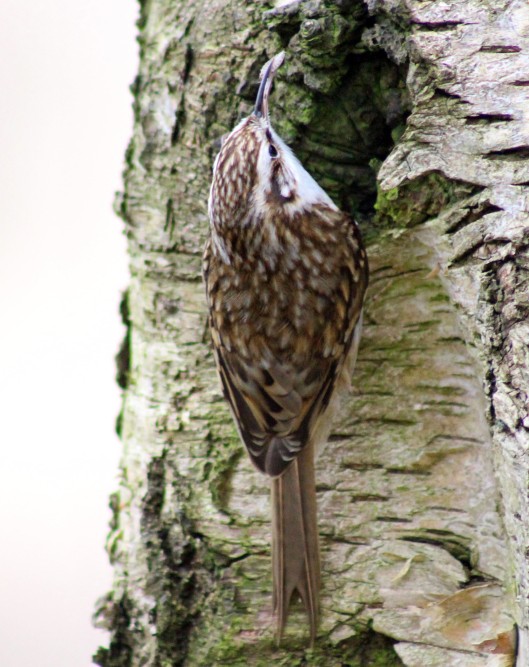
With its extremely effective mottled brown colouring, the little Eurasian treecreeper (Certhia familiaris) can look very like a mouse as it creeps up a tree trunk searching for food, hence one of its common names, tree mouse. That’s if you can see the treecreeper at all. It’s so well camouflaged that it’s almost impossible to see when stationary, and you need to focus really hard on a tree trunk to notice its scuttling creep upwards in search of the tiny beetles, earwigs and woodlice that inhabit the crevices in a tree’s bark.

151213 tree creeper (1)

The treecreeper has particularly large and sharp arched claws, which help it scale trees with ease, and its tail is stiff, which helps provide support when climbing. You will never see a treecreeper moving down a tree – it spirals its way to the top then flies down to the base of the next tree to start its climb all over again. And this feeding routine is almost constant – in fact, it’s so active that it’s been estimated treecreepers can climb as much as 2500 metres in a single day. That’s quite a feat for a bird that’s only 13cms in length. Its common name should really be mountain climber!

151213 tree creeper (2)


Like Loading...

There’s a cannibal in my kitchen

12 Saturday Dec 2015

Posted by sconzani in insects, ladybird, nature, nature photography, winter

≈ Leave a comment

Tags

harlequin ladybird, hibernation, insect, invasive species, ladybird, ladybug, winter

For the third time in as many weeks a Harlequin ladybird (Harmonia axyridis) has appeared as if from nowhere in my kitchen. They like to find somewhere cosy to hibernate the winter away so I’m sure a warm spot near my gas boiler would suit them very well and normally I wouldn’t mind but this is the most invasive ladybird on earth.
151212 ladybird harlequin (1)

The voracious little Harlequin originated in Asia but was introduced firstly to North America and later to Europe to control aphids. Though it only arrived in Britain in 2004 – perhaps blown across the Channel, or it may have hitched a ride on a vehicle – it has already spread throughout half these isles. The problem is that the Harlequin doesn’t just eat aphids; not only does it compete with native ladybirds for food but it also devours their eggs and larvae, as well as the eggs and caterpillars of butterflies and moths. It may look cute but it has the devastating potential to wipe out all 26 resident species of ladybird.

This is one time when I really wish this ladybird would fly away home!

151212 ladybird harlequin (2)

Like Loading...
← Older posts
Newer posts →

About me

sconzani

sconzani

I'm a writer and photographer; researcher and blogger; birder and nature lover; countryside rambler and city strider; volunteer and biodiversity recorder.

View Full Profile →

Follow earthstar on WordPress.com

Enter your email address to follow this blog and receive notifications of new posts by email.

Recent blog posts

  • Blood bees April 29, 2026
  • Nesting material April 28, 2026
  • Lifer: Box bug April 27, 2026
  • Peak Wild garlic April 26, 2026
  • First damsels of 2026 April 25, 2026

From the archives

COPYRIGHT

Unless otherwise acknowledged, the text and photographs on this blog are my own and are subject to international copyright. Nothing may be downloaded or copied without my permission.

Fellow Earth Stars!

  • Unknown's avatar
  • Unknown's avatar
  • Unknown's avatar
  • Unknown's avatar
  • Unknown's avatar
  • Unknown's avatar
  • Unknown's avatar
  • Unknown's avatar
  • Unknown's avatar
  • Unknown's avatar
  • Unknown's avatar
  • Unknown's avatar
  • Unknown's avatar
  • Unknown's avatar
  • Unknown's avatar
  • Unknown's avatar
  • Unknown's avatar
  • Unknown's avatar
  • Unknown's avatar
  • Unknown's avatar
  • Unknown's avatar
  • Unknown's avatar
  • Unknown's avatar
  • Unknown's avatar
  • Unknown's avatar
  • Unknown's avatar
  • Unknown's avatar
  • Unknown's avatar
  • Unknown's avatar
  • Unknown's avatar
  • Unknown's avatar
  • Unknown's avatar
  • Unknown's avatar
  • Unknown's avatar
  • Unknown's avatar
  • Unknown's avatar
  • Unknown's avatar
  • Unknown's avatar
  • Unknown's avatar
  • Unknown's avatar
  • Unknown's avatar
  • Unknown's avatar
  • Unknown's avatar
  • Unknown's avatar
  • Unknown's avatar
  • Unknown's avatar
  • Unknown's avatar
  • Unknown's avatar
  • Unknown's avatar
  • Unknown's avatar

Blog at WordPress.com.

Privacy & Cookies: This site uses cookies. By continuing to use this website, you agree to their use.
To find out more, including how to control cookies, see here: Cookie Policy
  • Subscribe Subscribed
    • earthstar
    • Join 642 other subscribers
    • Already have a WordPress.com account? Log in now.
    • earthstar
    • Subscribe Subscribed
    • Sign up
    • Log in
    • Report this content
    • View site in Reader
    • Manage subscriptions
    • Collapse this bar

Loading Comments...

You must be logged in to post a comment.

    %d