• ABOUT
  • BIRDING 2018
  • Birding 2019
  • BLOG POSTS
  • Butterflies 2018
  • Resources

earthstar

~ a celebration of nature

earthstar

Category Archives: nature

Birding at Cefn Cadlan and Cwm Cadlan

17 Thursday May 2018

Posted by sconzani in birds, nature, plants, wildflowers

≈ Leave a comment

Tags

British flora, British wildflowers, Cefn Cadlan, Common butterwort, Cwm Cadlan, Dog violet, Greater stitchwort, Green-veined white butterfly, Marsh lousewort, marsh marigold, Micropterix calthella, Native bluebell, Opposite-leaved golden saxifrage, Redstart, Water avens, Wood sorrel

You may be surprised to learn that birding trips aren’t always dominated by birdwatching.
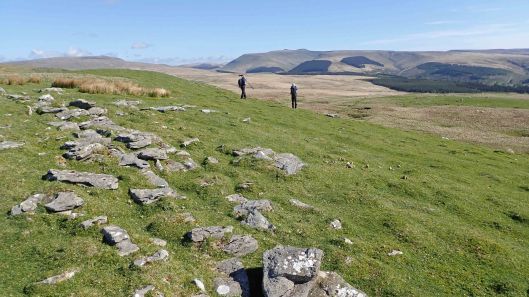
180517 near Cefn Cadlan

Last Sunday’s Glamorgan Bird Club trip saw 22 people striding firstly around the high moorland near Cefn Cadlan, north of Cardiff on the way to Brecon, and then exploring nearby Cwm Cadlan National Nature Reserve, an area renowned for the rare plants that thrive in its wet grasslands.

180517 lane to Cwm Cadlan

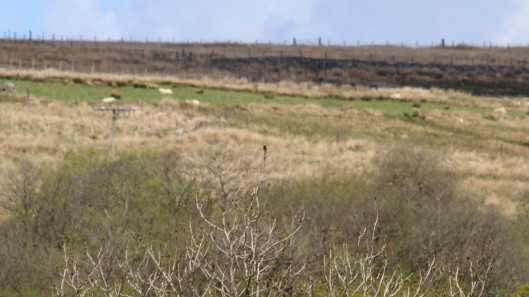
Of course, we were on the trip primarily to look for birds – and I saw my first Redstarts for the year (always on distant tree tops) and heard my first Cuckoo (exactly a year since my very first Cuckoo).
180517 Redstart

You’ll just have to believe me when I say that the dot in the centre of this photo is a Redstart

But, when the birds proved elusive, our team of talented amateur naturalists turned their attention to all the other wildlife and wildflowers that surrounded us. We saw frogs and a hare; speculated on what had left its footprints in the mud; enjoyed all the Green-veined white and Orange-tip butterflies that were nectaring on the abundant Cuckkoflowers …
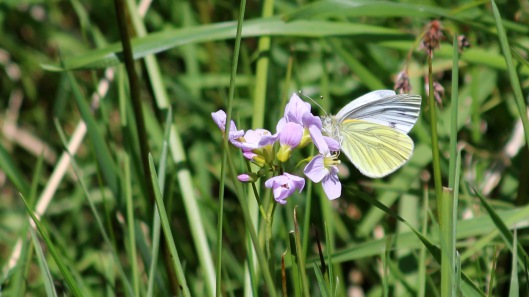
180517 Green-veined white

and we turned our heads downwards to admire all the special wildflowers that surrounded us. It was a glorious sunny day, the scenery was stunning, and the flora and fauna superb.
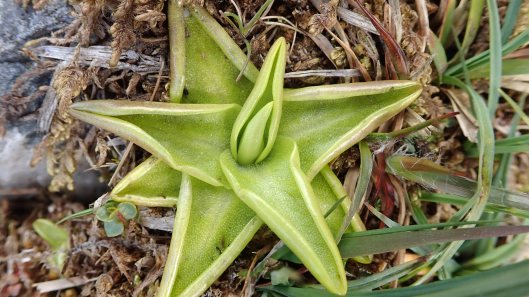
180517 Common butterwort

Common butterwort, not yet in flower

180517 Dog violet

Dog violet

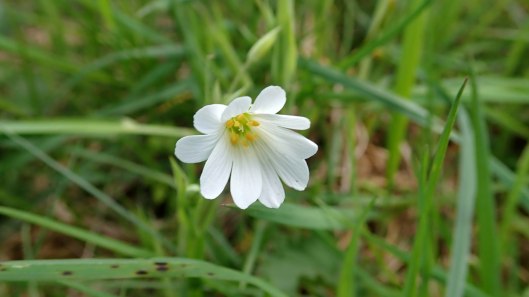
180517 Greater stitchwort

Greater stitchwort

180517 Lousewort

Lousewort

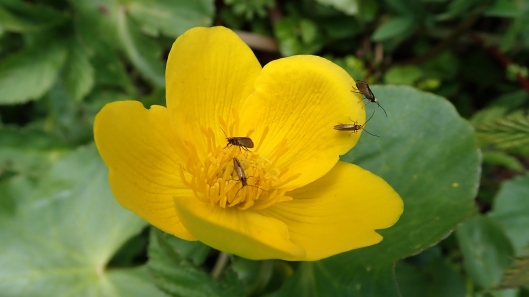
180517 Marsh marigold and Micropterix calthella

Marsh marigold, and the tiny moths are Micropterix calthella
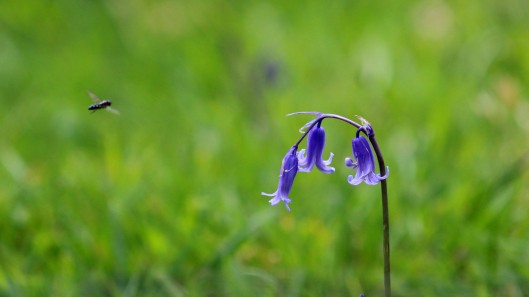
180517 Native bluebell

Native bluebell

180517 Opposite-leaved golden saxifrage

Opposite-leaved golden saxifrage

180517 water avens

Water avens, a very beautiful plant and a new one for me
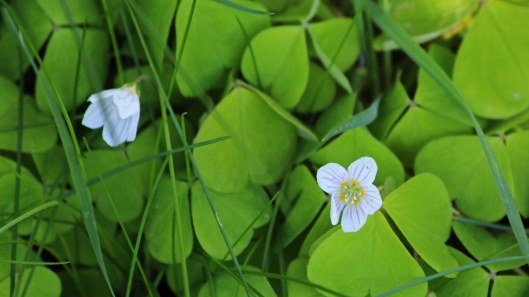
180517 Wood sorrel
Wood sorrel
Like Loading...

Wild word: ornithomancy

16 Wednesday May 2018

Posted by sconzani in birds, nature

≈ Leave a comment

Tags

#WildWords, augury, divination using birds, ornithomancy, wild words

180416 ornithomancy (1)

Ornithomancy: Noun; rarely used; divination by means of the flight and cries of birds; augury. From Byzantine Greek ὀρνιθομαντεία divination from birds, augury from ancient Greek ὀρνιθο- + μαντεία (Oxford Dictionary).

I predict that the person who eats fish and chips at the seaside will be attacked by gulls and is likely also to get pooped upon!

180416 ornithomancy (2)

Like Loading...

I love Puffins!

15 Tuesday May 2018

Posted by sconzani in birds, nature

≈ 6 Comments

Tags

birding, birdwatching, British birds, Farne Islands, Puffin, Puffins guarding burrows, Puffins in the water, Puffins on cliff tops, Puffins on Farne Islands

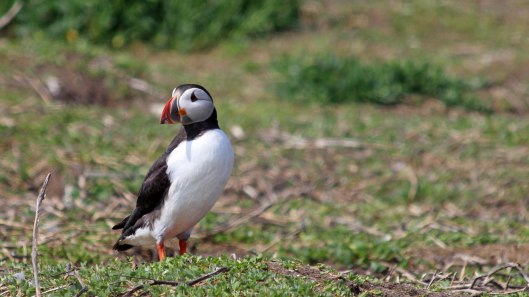
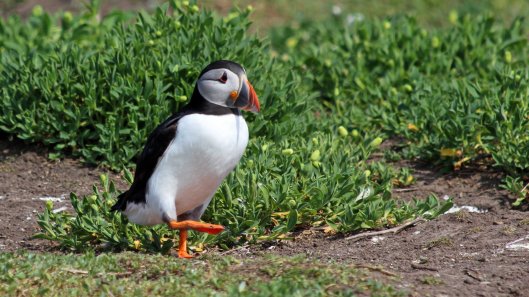
It’s taken me almost 62 years to see my first Puffins (yes, I am that old!) but they were worth the wait. What magnificent little characters they are!
First I saw them in the water, from the boat en route to the Farne Islands …

180515 puffins in the water (2)
180515 puffins in the water (1)

Next I saw them on the cliff tops, craning my neck and lens to look up from the boat …

180515 puffins on the cliff tops (1)180515 puffins on the cliff tops (2)

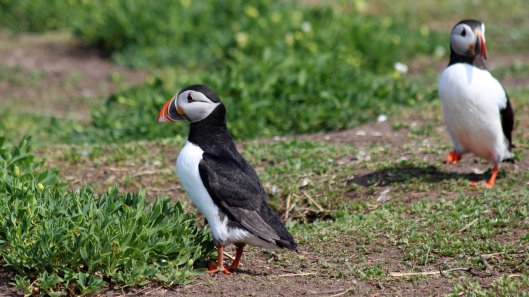
Then we were on the island, for a very brief 60 minutes that went by so very quickly, and I saw them marching around defending their burrows, trying ever so hard to look stern and menacing …

180515 puffins protecting their burrows (1)180515 puffins protecting their burrows (2)180515 puffins protecting their burrows (3)180515 puffins protecting their burrows (4)180515 puffins protecting their burrows (5)

I also saw them – well, one of them – trying very hard to impress the Puffin of his dreams, but she was having none of it …

180515 puffin trying to impress (1)180515 puffin trying to impress (2)180515 puffin trying to impress (3)

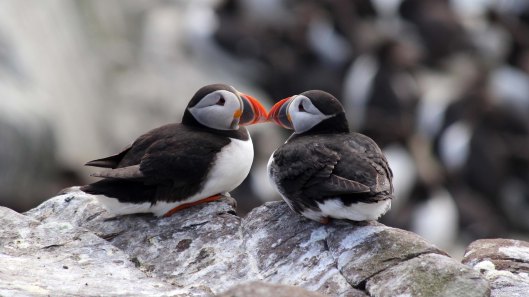
And, finally, I saw a couple in love. So very sweet!

180515 puffins in love

Like Loading...

I’m following a tree: April 2018

14 Monday May 2018

Posted by sconzani in nature, trees

≈ 3 Comments

Tags

#treefollowing, Acer mono, Acer pictum, Bute Park, I'm following a tree, tree following

What a difference a month makes!

180514 Acer pictum (1)

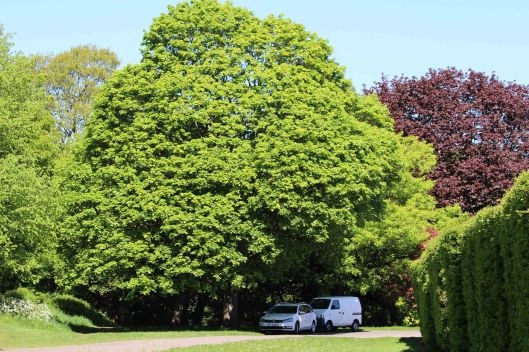
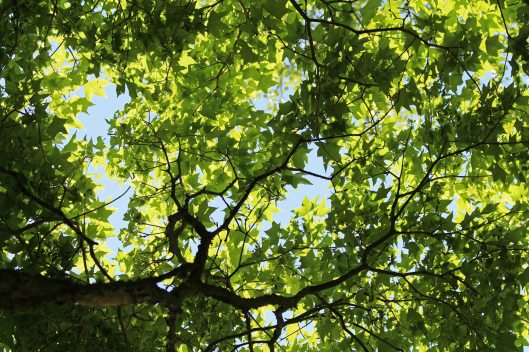
With a friend visiting for a week and then a week away on a birding trip, I hadn’t managed to visit Mono, my tree, until the very end of the month. In the few short weeks since my last visit, encouraged by some brilliantly fine weather and a definite rise in daytime temperatures, Mono’s buds have burst open to reveal her splendid summer foliage.

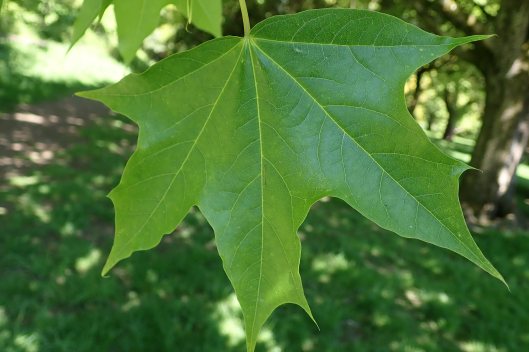
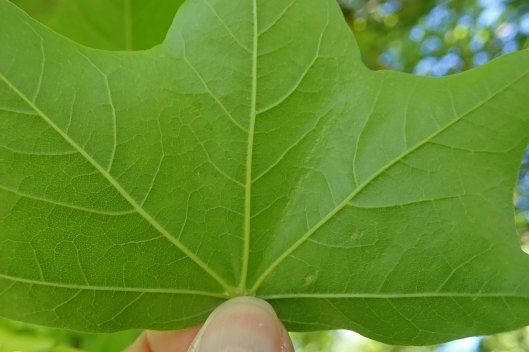
upper side of leaf

lower side of leaf

The scientific description for her leaves is as follows:

leaves depressed-orbicular; 7-15cm wide, deeply to rather shallowly 5- to 7-lobed, cordate to somewhat truncate at base, usually glabrous on upper side, short-pubescent to glabrous except for the axillary tufts of hairs beneath, the lobes deltoid to lanceolate, entire or with few coarse teeth, acuminate and awn-tipped, the petioles 4-12cm long, glabrous to short-pubescent.

I shall attempt to translate: the leaves are roughly circular, if somewhat heart-shaped, and range in size from 7 to 15 cm across. They are smooth on top, though sometimes have short hairs on the underside. Each leaf has between 5 and 7 projections that are roughly triangular and shaped a bit like the head of a lance. The edges of the leaves can be smooth or slightly jagged, like the teeth of a saw, and the stalk that joins the leaf to the stem ranges from 4 to 12 cms long, is sometimes smooth, sometimes a bit hairy.

OLYMPUS DIGITAL CAMERA

The upshot is that Mono, my tree, an Acer pictum aka Acer mono, is looking absolutely stunning in her lush and vibrant new foliage!

OLYMPUS DIGITAL CAMERA

180514 Acer pictum (2)

Like Loading...

Glossy ibis

13 Sunday May 2018

Posted by sconzani in birds, nature

≈ 3 Comments

Tags

birding, Birding in Druridge Bay, birdwatching, British birds, Druridge Pools, Glamorgan Bird Club, Glossy ibis, Northumberland birding, Plegadis falcinellus

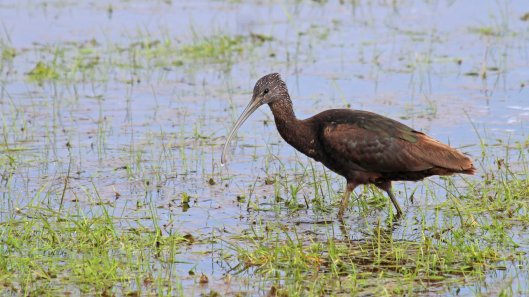
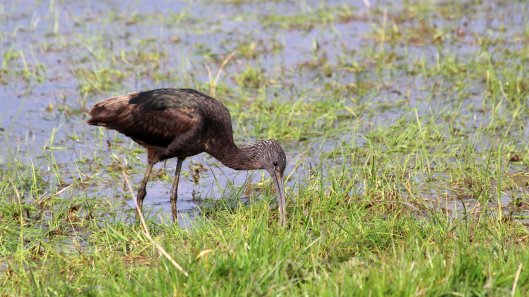
One of the nearest and clearest avian encounters on my recent birding trip to England’s north east was our sighting of a Glossy ibis (Plegadis falcinellus) at Druridge Pools.

180512 glossy ibis (2)

This is a large bird, similar in many ways to a heron, but the Glossy ibis has a beautifully rich plumage in vibrant shades of bronze and green. The Glossy is not strictly speaking a British bird – it can be found in the warmer parts of Europe, Asia and the Americas – but these birds have been visiting Britain more frequently in recent years (I saw my first at RSPB Ham Wall last year).

180512 glossy ibis (1)

This particular Glossy ibis eluded us when we first arrived at Druridge – it had been scared off by photographers getting too close and a tractor driving by – but, luckily for us, it later returned to the site and was grazing within a few yards of the fence so we had outstanding views of it. I even managed to take a short video.

Like Loading...

Eleven go birding in a minibus

12 Saturday May 2018

Posted by sconzani in birds, nature

≈ 2 Comments

Tags

barn owl, birding, birdwatching, British birds, Glossy ibis, Tree sparrow, Wood duck

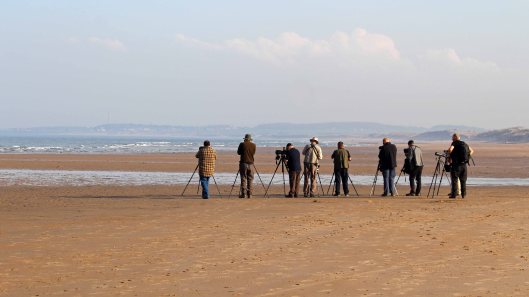
180512 Seawatching at Musselburgh

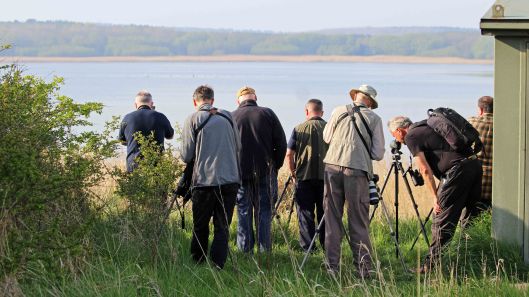
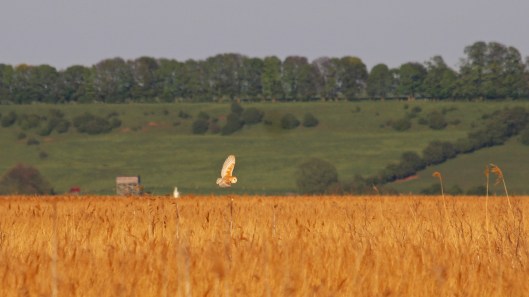
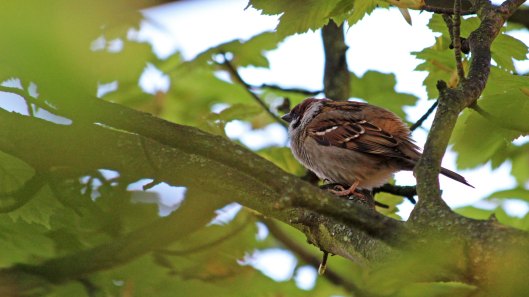
From 4 to 9 May, I joined a group of my fellow Glamorgan birders on a 6-day, multi-location, dawn-to-dusk, exhilarating (if a little exhausting), absolutely incredible birding blast to Northumberland and beyond.

180512 At East Chevington Nature Reserve

As a group we saw 149 different species of bird, I added 52 birds to my year list, of which 18 were first-in-my-lifetime sightings, and I increased my knowledge of birds well beyond my initial expectations. And I saw a wide range of magnificent sites and stunning scenery in England and Scotland that I hadn’t seen before. Huge thanks to my birding buddies Ade, Alan, Andrew, Ceri, John, Rob, Stuart, Tim, Trevor, and Trish. You’re the best!!!

180512 Seawatching at Druridge Bay

The photos below show just a few of the birds we saw – there will be blogs on individual species as soon as I get through processing my 1100+ photos. In the meantime, here’s a link to my updated birding list. I’ve now got 176 of the 200 species I’m aiming to see this year (though a couple of these are dubious ticks and I should probably aim for 204 to compensate). With most of the more common birds now ticked off and this trip done and dusted, the task of finding the final 24 (or 28) species becomes a whole lot harder.

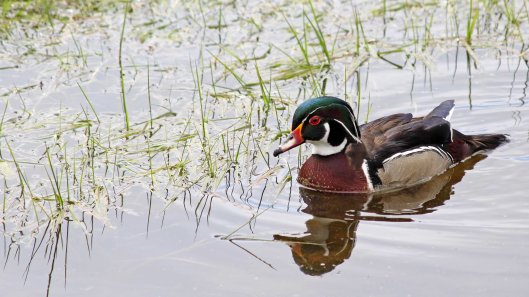
133 wood duck139 barn owl147 tree sparrow164 glossy ibis


Like Loading...

Some crane’s bills

11 Friday May 2018

Posted by sconzani in flowers, nature, spring, wildflowers

≈ 1 Comment

Tags

British wildflowers, crane's bills, geranium, Geranium lucidum, Geranium Robertianum, Geranium rotundifolium, Herb Robert, Round-leaved crane's-bill, Shining crane's-bill, spring flowers, spring wildflowers

The word geranium comes from the Greek geranos, meaning crane, so named because of the likeness of the plant’s seed case to the bill of the bird. Thus, in the plant world, the crane’s-bills are the wild geraniums.

180511 round-leaved crane's-bill

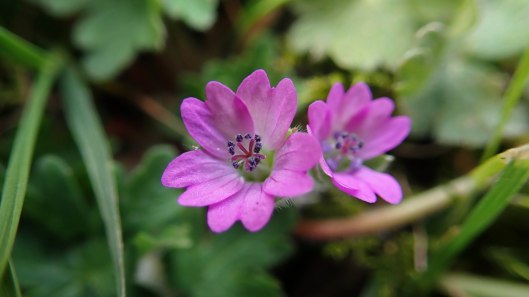
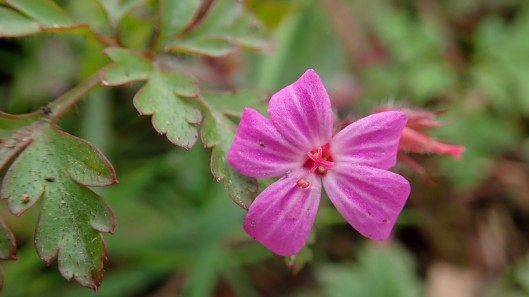
’Tis the time the geraniums begin to bloom and I’m trying to learn which is which, so I thought I’d share a few I’ve found during recent perambulations. The first is the Round-leaved crane’s-bill (Geranium rotundifolium).

180511 herb robert

This next is the one most people can name. It seems to grow almost anywhere and makes even a rubbish heap look beautiful: Herb Robert (Geranium robertianum).

180511 shining crane's-bill

At a quick glance, this Shining crane’s-bill (Geranium lucidum) looks a lot like Herb Robert … and then you notice how different the leaves are.

Like Loading...

Cool craneflies

10 Thursday May 2018

Posted by sconzani in insects, nature

≈ Leave a comment

Tags

British insects, crane fly, cranefly, Nephrotoma appendiculata, Tipula oleracea, Tipula species

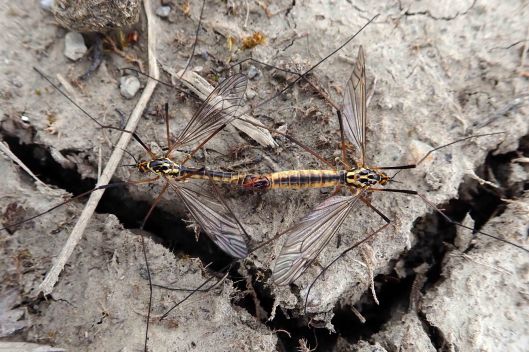
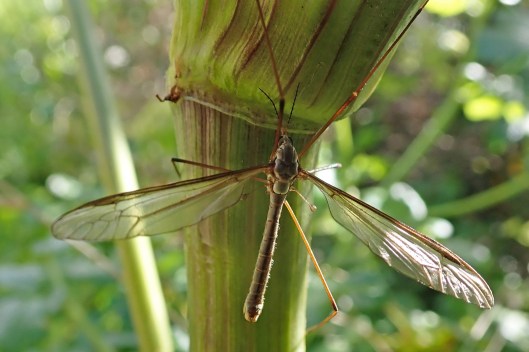
When I was a kid I always knew these insects as Daddy long legs and thought they were a bit creepy the way they fluttered wildly around. Now I know them as Craneflies and think they’re really cool. Incredibly, there are around 300 species of Cranefly in Britain – yet another insect species to try to learn – sometimes my brain hurts! Luckily, there is a Cranefly Recording Scheme (CRS) and they’re on Twitter so I’ve been able to get expert and very friendly help with my IDs for these recent sightings, and a little bit of information about each as well.

180510 Nephrotoma appendiculata

For this one, CRS said: ‘That will be Nephrotoma appendiculata at this time of the year. A side on photo would definitely confirm it but given it is still April I’m happy with this species, one of rough grassland, verges etc.’ And very soon there will be many more of them!

180510 Tipula oleracea

And this one is ‘Tipula oleracea, the other common Tipula (Tipula) species. [I had wrongly thought it might be Tipula paludosa.] Typically a May species in dampish grassland. Larvae feed on grass roots.’

So, if you’re fascinated by Craneflies, why not give the Cranefly Recording Scheme a follow on Twitter?

Like Loading...

Wild word: binomial

09 Wednesday May 2018

Posted by sconzani in nature

≈ Leave a comment

Tags

#WildWords, binomial, genus and epithet, Latin names for creatures, wild words

Binomial: noun; a two-part name, especially the Latin name of a species of living organism (consisting of the genus followed by the specific epithet) (Oxford Dictionary). I have just finished reading John Wright’s book about binomials, The Naming of the Shrew: A Curious History of Latin Names (Bloomsbury, 2014), and it’s surprisingly entertaining. I’m not going to start doing book reviews on here but I thought I’d just share a tiny sample of the weird and wonderful binomials John writes about and, if that tempts you to read the book, then all well and good.

180509 Naming of the ShrewSenecio squalidus (Oxford ragwort) translates as ‘dirty old man’ and Primula vulgaris (Primrose) is ‘first common girl’. There are names derived from fiction: Yoda purpurata, a genus of deep-sea acorn worms, is so named because the large lips on the sides of its head are reminiscent of Yoda’s ears; and, under the influence of the Harry Potter books, a dragon-like dinosaur is named Dracorex hogwartsia, dragon king of Hogwarts. There’s a midge named after a rock band: Dicrotendipes thanatogratus translates to Grateful Dead; and a land snail named after Australian zookeeper and conservationist Steven Irwin: Crikey steveirwini. There are carabid beetles named Agra vate and Agra vation (say them out loud), and there’s a horsefly with ‘a perfectly round and golden rear end’ called Scaptia beyonceae. Enough … check out the book for more.

Like Loading...

Gone birding: Starling

08 Tuesday May 2018

Posted by sconzani in birds, nature

≈ Leave a comment

Tags

birding, birdwatching, British birds, drudwy, starling, starling in Welsh mythology, Sturnus vulgaris

In Welsh, the word for Starling (Sturnus vulgaris) is drudwy, and a drudwy featured in one of the many ancient tales that now form The Mabinogion. The princess Branwen, who was ill-treated by her Irish husband, trained a starling to speak so the bird could carry messages to her brother Bendigeidfran, the king of Britain. Such clever birds!

180508 starling

Like Loading...
← Older posts
Newer posts →

About me

sconzani

sconzani

I'm a writer and photographer; researcher and blogger; birder and nature lover; countryside rambler and city strider; volunteer and biodiversity recorder.

View Full Profile →

Follow earthstar on WordPress.com

Enter your email address to follow this blog and receive notifications of new posts by email.

Recent blog posts

  • NFY: Orange-tip April 20, 2026
  • All the yellows April 19, 2026
  • Spider: Dysdera crocata April 18, 2026
  • Recent Reed buntings April 17, 2026
  • Tiny but feisty April 16, 2026

From the archives

COPYRIGHT

Unless otherwise acknowledged, the text and photographs on this blog are my own and are subject to international copyright. Nothing may be downloaded or copied without my permission.

Fellow Earth Stars!

  • Unknown's avatar
  • Unknown's avatar
  • Unknown's avatar
  • Unknown's avatar
  • Unknown's avatar
  • Unknown's avatar
  • Unknown's avatar
  • Unknown's avatar
  • Unknown's avatar
  • Unknown's avatar
  • Unknown's avatar
  • Unknown's avatar
  • Unknown's avatar
  • Unknown's avatar
  • Unknown's avatar
  • Unknown's avatar
  • Unknown's avatar
  • Unknown's avatar
  • Unknown's avatar
  • Unknown's avatar
  • Unknown's avatar
  • Unknown's avatar
  • Unknown's avatar
  • Unknown's avatar
  • Unknown's avatar
  • Unknown's avatar
  • Unknown's avatar
  • Unknown's avatar
  • Unknown's avatar
  • Unknown's avatar
  • Unknown's avatar
  • Unknown's avatar
  • Unknown's avatar
  • Unknown's avatar
  • Unknown's avatar
  • Unknown's avatar
  • Unknown's avatar
  • Unknown's avatar
  • Unknown's avatar
  • Unknown's avatar
  • Unknown's avatar
  • Unknown's avatar
  • Unknown's avatar
  • Unknown's avatar
  • Unknown's avatar
  • Unknown's avatar
  • Unknown's avatar
  • Unknown's avatar
  • Unknown's avatar
  • Unknown's avatar

Blog at WordPress.com.

Privacy & Cookies: This site uses cookies. By continuing to use this website, you agree to their use.
To find out more, including how to control cookies, see here: Cookie Policy
  • Subscribe Subscribed
    • earthstar
    • Join 642 other subscribers
    • Already have a WordPress.com account? Log in now.
    • earthstar
    • Subscribe Subscribed
    • Sign up
    • Log in
    • Report this content
    • View site in Reader
    • Manage subscriptions
    • Collapse this bar
 

Loading Comments...
 

You must be logged in to post a comment.

    %d